The Reason North Carolina Gardeners Are Planting Thyme Between Their Pavers This August
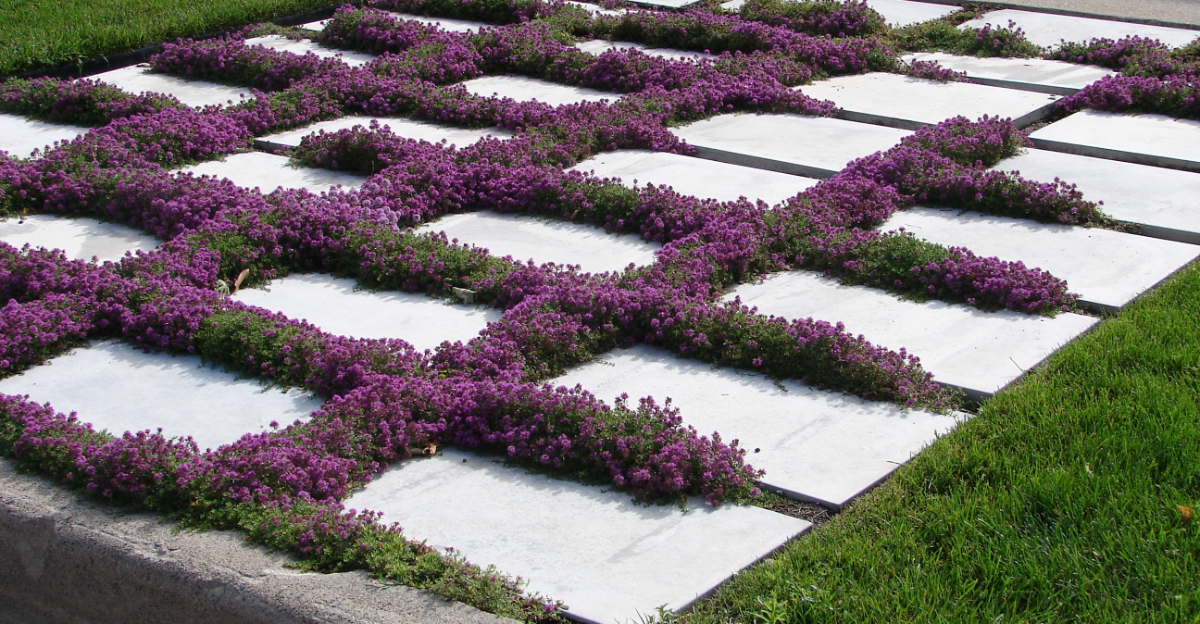
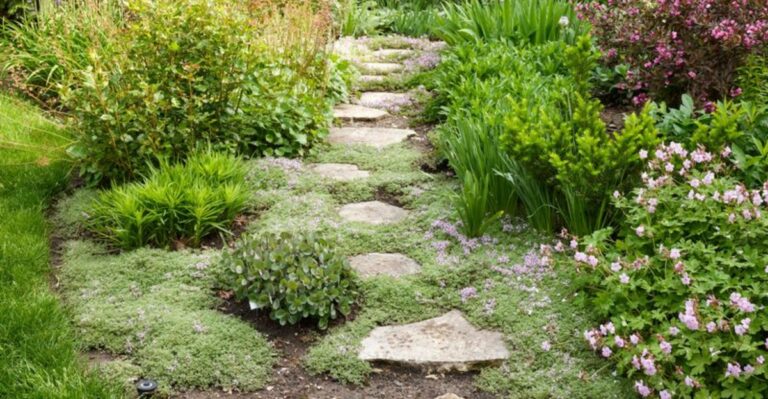
Thyme has become a popular choice for filling gaps between pavers, offering North Carolina gardeners a practical solution that looks intentional rather than neglected.
This low growing herb tolerates foot traffic surprisingly well, bouncing back quickly after being stepped on occasionally.
Its dense growth habit also helps prevent weeds from taking hold in those narrow, hard to maintain spaces between stones.
Thyme releases a pleasant fragrance when brushed against, adding a sensory element that plain gravel or mulch simply cannot provide.
This drought tolerant herb handles North Carolina’s hot August stretches without requiring frequent watering, making it especially low maintenance once established.
Its small flowers also attract pollinators, adding a functional benefit beyond its practical use between pavers.
Planting now gives thyme enough time to establish before cooler fall weather slows its growth. This simple addition transforms an often overlooked space into something both attractive and genuinely useful.
1. Creeping Thyme Stays Low Between The Pavers
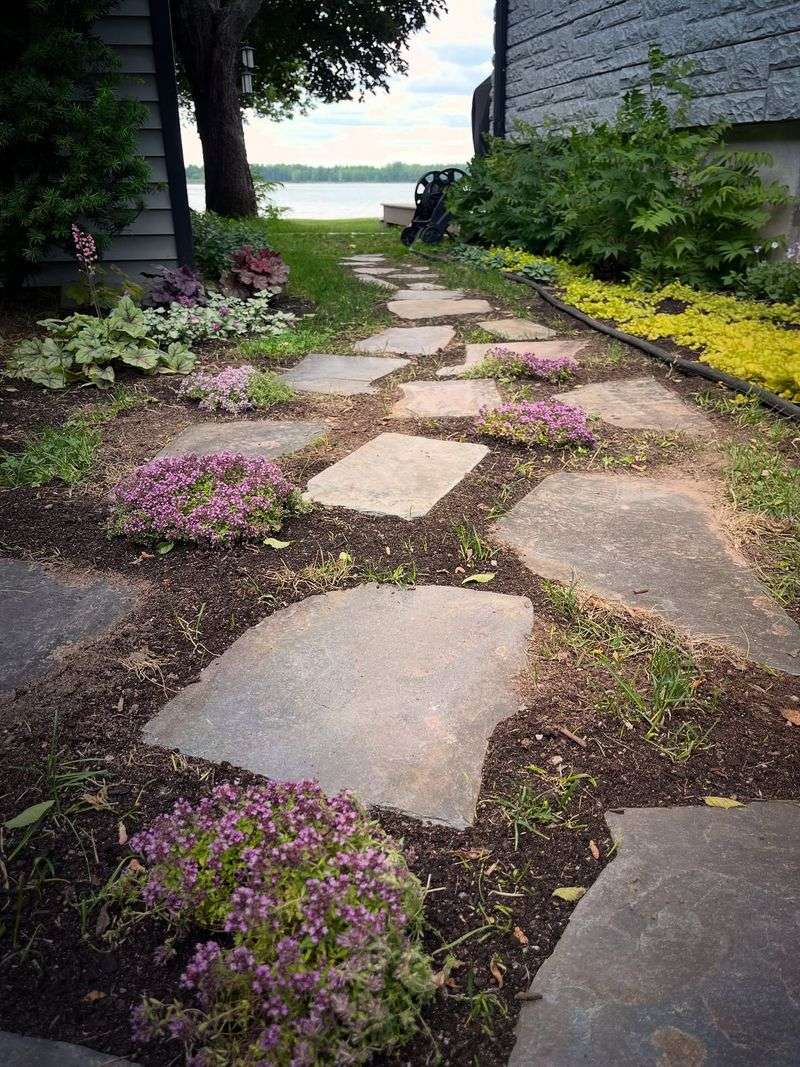
Not every type of thyme you find at the garden center is built for paver gaps. Many gardeners assume that any thyme plant will work, but the growth habit matters more than most people realize.
Creeping varieties like Thymus praecox and Thymus serpyllum are the ones designed for this job, forming a dense, ground-hugging mat that stays roughly three to six inches tall.
That low profile is exactly what makes them so useful. A taller culinary thyme would constantly flop over the pavers and create a messy, overgrown look that defeats the whole purpose.
Creeping thyme, on the other hand, fills the gaps with soft green foliage without interfering with the walking surface above it.
The result is a path that looks polished and intentional rather than neglected. Hard stone edges get softened by the gentle spread of foliage, giving the whole space a more natural, inviting feel.
Before you buy, always check the botanical name on the tag and confirm the mature height. Some nurseries group all thyme varieties together, so taking a moment to read the label can save you from bringing home the wrong plant for this specific purpose.
2. It Can Handle Moderate Foot Traffic
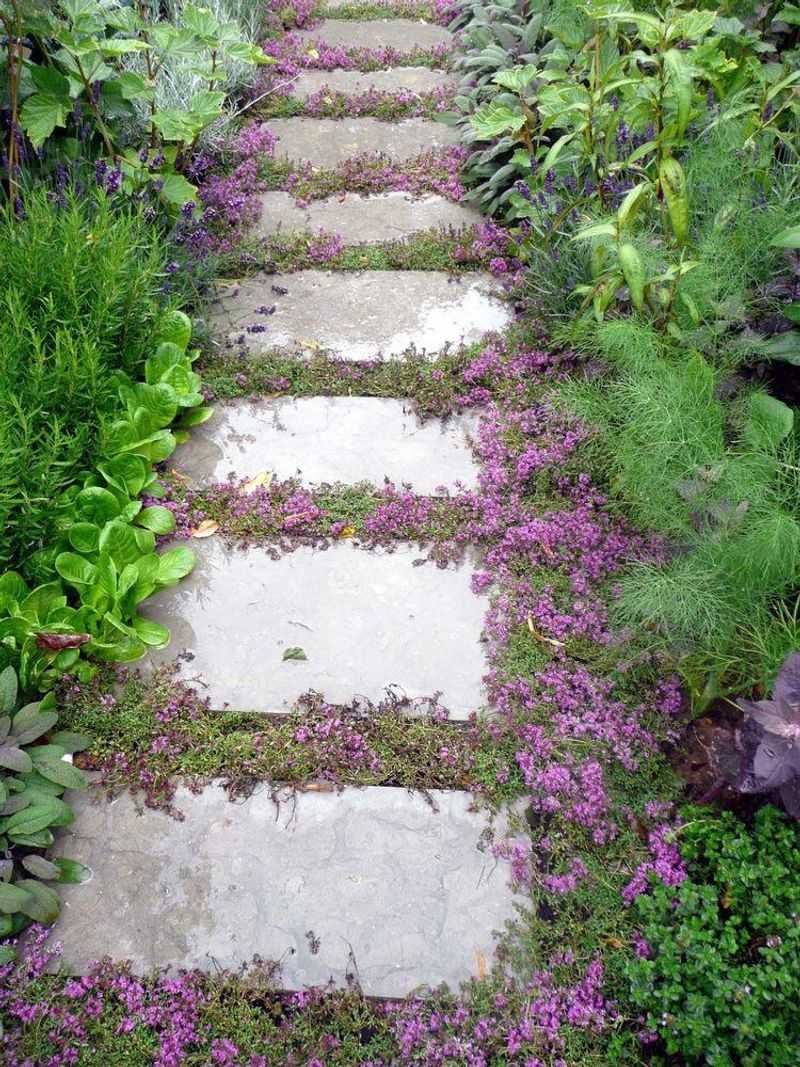
One of the biggest selling points of creeping thyme for paver gaps is its ability to bounce back after occasional footsteps.
NC State notes that Thymus praecox can tolerate moderate foot traffic, which makes it a practical choice for garden paths that see regular but not constant use.
That kind of resilience is rare among ground covers that also look this attractive. The key word here is moderate. The pavers themselves should be carrying most of a person’s weight as they walk.
Thyme fills the surrounding gaps beautifully, but those plants are not meant to absorb the full force of every step. Think of it as a supporting character rather than the main surface you rely on.
If your path gets heavy daily use with people stepping directly on the plants every single time they walk through, thyme is going to struggle to keep up.
Your North Carolina Garden Changes Every Week. Your Plan Should Too.
Gardening in North Carolina changes quickly throughout the season. Every Friday you’ll receive a simple weekly plan showing exactly what to plant, prune, fertilize, harvest, and protect so you never miss the right timing.
A high-traffic side entrance where multiple family members rush in and out several times a day is a different situation than a decorative garden path that gets a gentle stroll a few times a week.
Matching the plant to the realistic traffic level of your specific path is the smart move, and for most decorative garden walkways in North Carolina, creeping thyme fits the role surprisingly well.
3. Established Plants Handle Dry Sunny Conditions Well
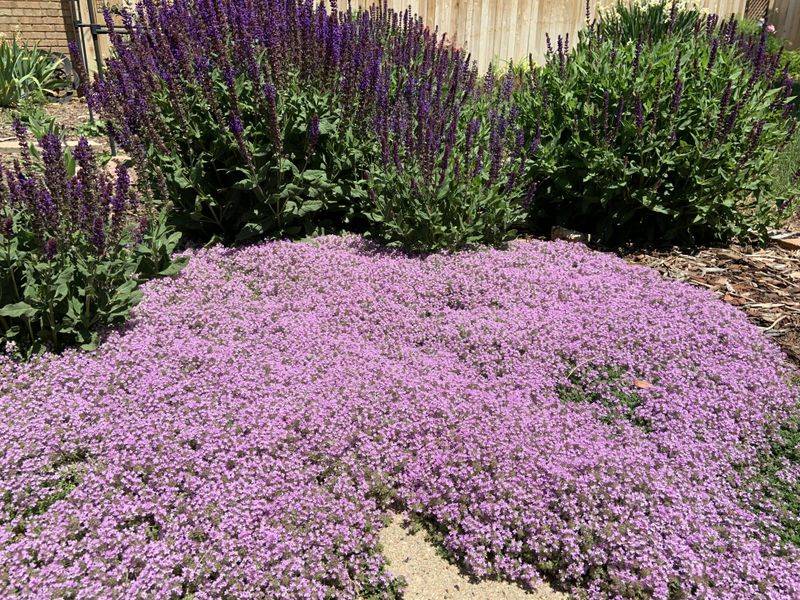
Thyme has been thriving in rocky, sun-baked Mediterranean landscapes for centuries, so it should come as no surprise that it handles dry, sunny conditions with ease once it settles in.
Full sun and well-drained, sandy or rocky soil are exactly the conditions where this plant feels most at home.
Stone paths in North Carolina can get intensely warm during summer, and the soil in those gaps tends to dry out faster than a regular garden bed, which actually works in thyme’s favor.
Established plants are genuinely drought tolerant, meaning you will not need to run the hose out to your paver path every other day once thyme has rooted in properly.
That kind of low-maintenance resilience is a huge draw for busy gardeners who want a beautiful yard without a demanding watering schedule.
The plant’s natural preference for leaner, drier conditions means it often struggles more from overwatering than from a dry spell.
However, newly planted thyme in August still needs consistent moisture while its roots are finding their footing in the surrounding soil. Drought tolerance kicks in after establishment, not before.
A fresh plug sitting in a narrow paver gap during a hot North Carolina August has a very small root ball and can dry out surprisingly fast.
Giving it dependable water during those first few weeks is the bridge between a struggling transplant and a thriving, self-sufficient ground cover that will reward you for years to come.
4. The Leaves Release Fragrance When Brushed
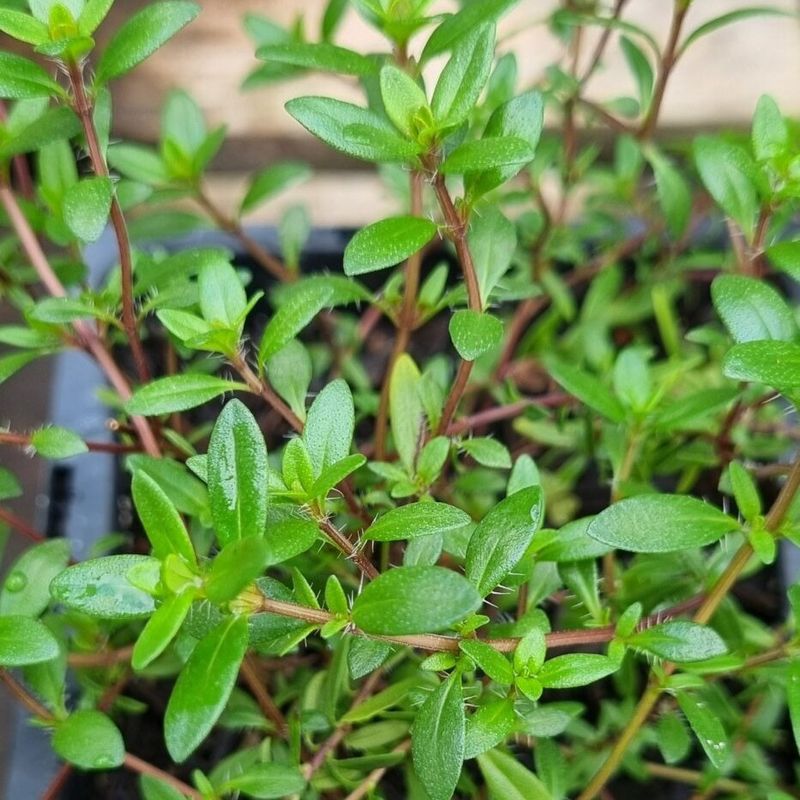
There is something genuinely delightful about walking through a garden path and catching a wave of fresh herbal fragrance without bending down or doing anything special.
Creeping thyme releases its scent when the foliage is lightly touched or brushed, which means every casual stroll past your pavers becomes a small sensory experience. That kind of effortless garden pleasure is hard to beat.
Different thyme species and cultivars can smell noticeably different from one another. Some have a classic herbal scent similar to what you might find in the spice aisle, while others carry hints of lemon or a more subtle, grassy quality.
The variety you choose will shape the character of that fragrance, so if scent is a priority for you, it is worth sniffing a few options at the nursery before committing.
Fragrance is best understood as a lovely bonus rather than the main reason to plant creeping thyme between pavers.
Some gardeners assume that any aromatic thyme growing in their garden is automatically ready for cooking, but ornamental creeping varieties are not always the best culinary choice.
If you want to harvest thyme for your kitchen, take time to verify the exact species and cultivar before pinching leaves into your soup pot.
For most North Carolina gardeners, though, the gentle scent that drifts up during an evening walk through the garden is reward enough on its own, no recipe required.
5. Summer Flowers Add Color Around Plain Stone
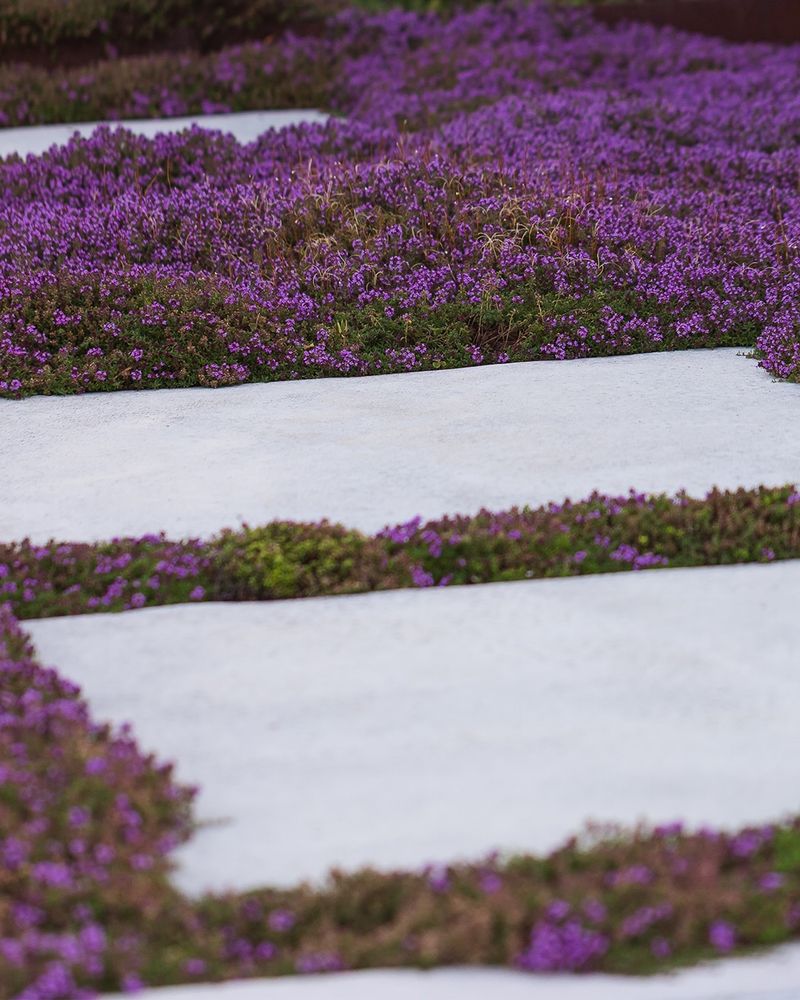
Plain stone pavers can look a little flat and uninspiring on their own, especially when they stretch across a large patio or garden path. Creeping thyme changes that equation completely when it bursts into bloom.
Thymus praecox produces masses of tiny pink or purple flowers that create a soft, colorful carpet effect between the stones, turning an ordinary walkway into something that looks genuinely designed and cared for.
NC State lists the flowering period for Thymus praecox from June through September, though the exact timing shifts depending on the cultivar, local weather patterns, and how much sun the planting spot receives.
That means North Carolina gardeners can enjoy blooms for a solid stretch of summer and into early fall, which is a generous return for a plant that asks for very little.
The flowers are small individually, but when a mat of creeping thyme is fully in bloom, the combined effect is striking.
Bees and other beneficial insects are drawn to those tiny flowers in impressive numbers. If you have a vegetable garden or fruit trees nearby, having a patch of flowering thyme along your path can actually support the pollinators working your whole yard.
Rather than trimming every flowering stem in the name of neatness, consider letting sections bloom freely through the season.
The color, the fragrance, and the buzzing activity of visiting insects all combine to make a paver path with creeping thyme feel genuinely alive and full of energy.
6. A Living Mat Can Fill Spaces That Would Otherwise Stay Bare
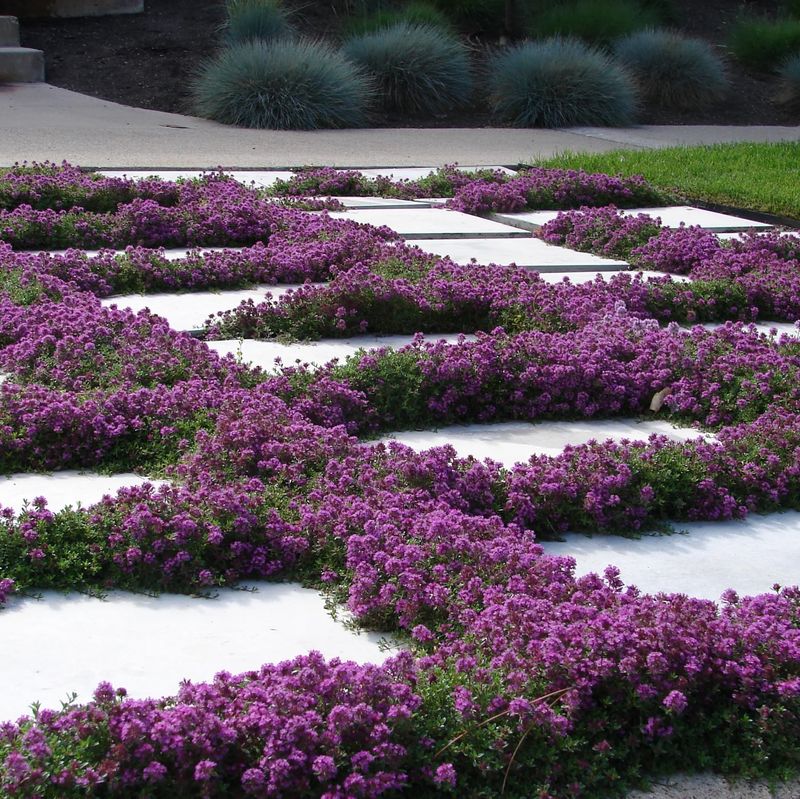
Bare soil between pavers is an open invitation for unwanted plants to move in. Wind carries seeds, birds drop them, and before long those tidy gaps between your stones turn into a patchwork of random seedlings that require constant attention.
Creeping thyme offers a more satisfying alternative by spreading horizontally through those spaces and forming a mat that occupies the ground rather than leaving it exposed.
The stems of creeping thyme root as they spread, gradually anchoring themselves into the soil and filling in the gaps over time. Once established, that living mat takes up space that might otherwise host weeds looking for an easy place to settle.
The coverage is not instant, and the claim here should stay realistic. Thyme is a relatively slow spreader, and it will not transform a bare paver path into a lush green carpet overnight.
NC State advises gardeners to expect regular weed management during the first year while thyme is becoming established. Young thyme plants can be overwhelmed if fast-growing weeds crowd them before they have a chance to spread.
Removing competing plants early and consistently gives the thyme room to do its job. Pull weeds when they are small, before they develop strong root systems that disturb the thyme nearby.
Think of that first season as an investment in a lower-maintenance future, because once the thyme mat fills in properly, the amount of bare soil available for unwanted plants shrinks considerably.
7. Good Drainage Is The Requirement Gardeners Cannot Ignore
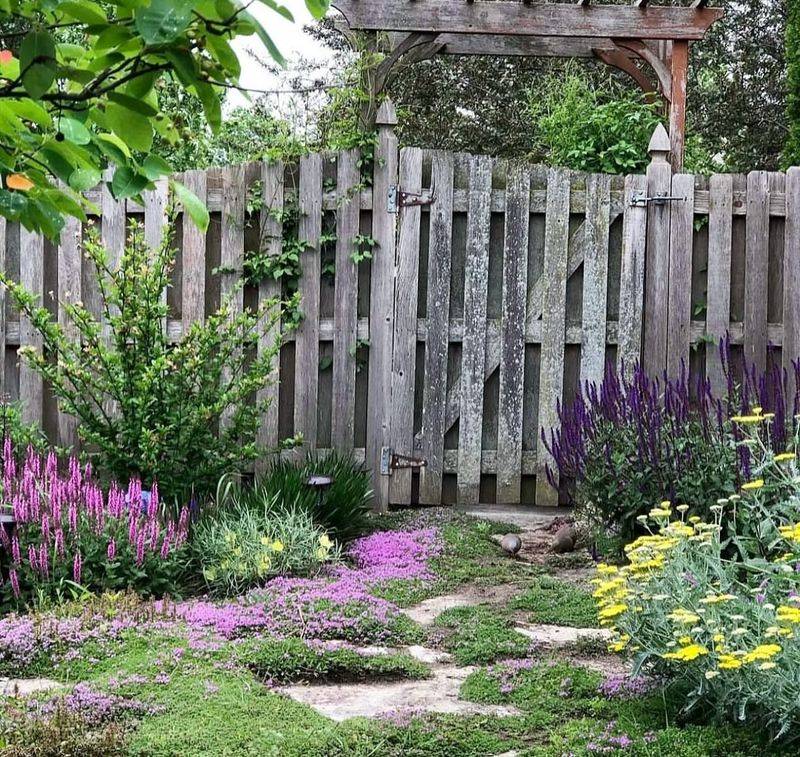
Ask any experienced thyme grower what the single most important growing condition is, and the answer almost always comes back to drainage.
Creeping thyme thrives in sandy, rocky, freely draining soil where water moves through quickly and roots never sit in moisture for long.
Put it in a spot where water pools or drains slowly, and the plant will struggle no matter how much sun it gets or how carefully you tend to it.
Before planting thyme between your pavers, take a few minutes to observe what happens after a heavy North Carolina rainstorm. Walk out to the path and check the gaps between the stones.
If water is still sitting there an hour or two after the rain stops, that location is not ready for thyme without some intervention.
Heavy clay soil packed into paver gaps can trap moisture and create conditions that work against this plant’s natural preferences. Improving drainage before planting is far easier than trying to fix problems after the fact.
Breaking up compacted clay, mixing in coarse sand or fine gravel, and ensuring the overall grade of the path allows water to move away rather than collect are all worthwhile steps.
Thyme genuinely prefers leaner, drier conditions over rich, moisture-retaining soil. A gap that stays saturated around the roots will stress the plant in ways that good sunlight and careful watering cannot compensate for.
Getting drainage right from the start is the foundation everything else depends on.
8. August Planting Requires Extra Establishment Care
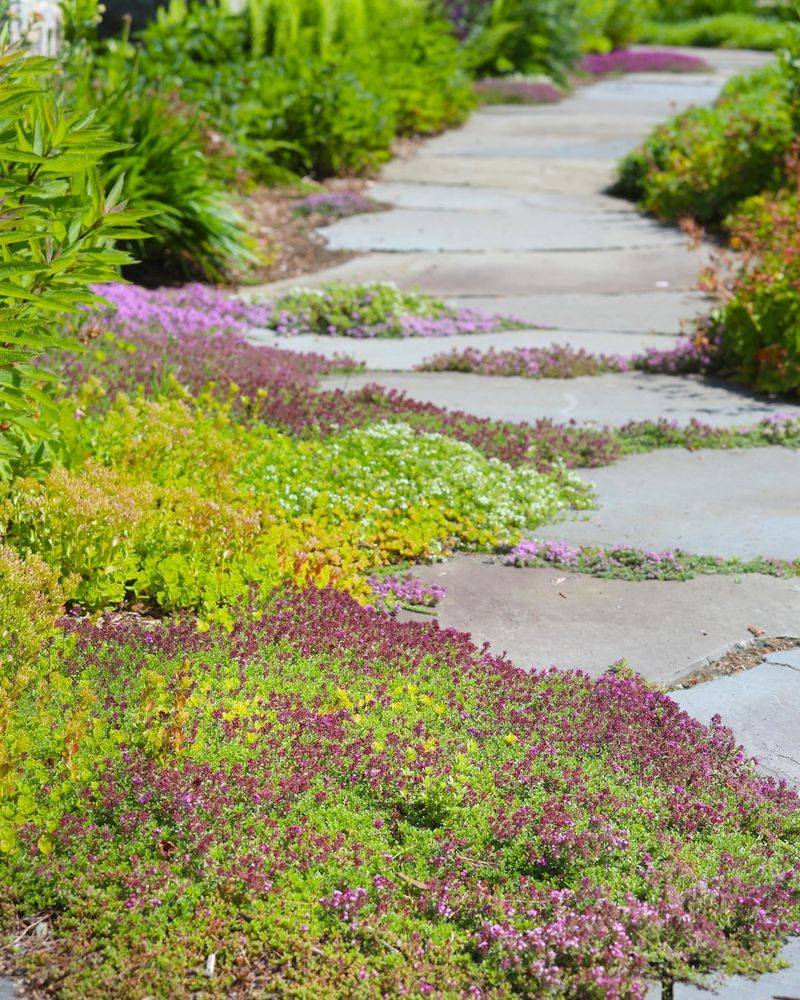
August sounds like a perfect time to get outside and freshen up the garden, but transplanting creeping thyme during the peak of summer heat comes with real challenges worth understanding before you head to the nursery.
NC State notes that summer transplantation from June through August is generally less reliable because high temperatures increase the stress on newly moved plants.
That does not mean August planting is impossible, but it does mean you need to go in with a clear plan. Container-grown thyme planted during August needs careful attention to the root ball specifically.
Paver gaps are narrow, and a small plug sitting in a tight space between stones can dry out much faster than you might expect, even if the surrounding soil feels reasonably moist.
Checking the root area directly rather than assuming the whole garden bed is fine is the smarter approach. Watering consistently until the plant shows new growth signals that establishment is happening.
Planting during a cooler stretch within August, if the forecast cooperates, gives transplants a better start. Avoiding prolonged saturation is equally important because waterlogged roots in hot weather create their own set of problems.
Gardeners who are not ready to provide this level of attentive care can simply wait for September or October, when North Carolina temperatures ease and transplanting conditions become much more forgiving.
The real appeal of thyme between pavers comes from its low growth, fragrance, moderate traffic tolerance, and long-term drought resilience after establishment, not from any special advantage August itself provides.