The Right Way To Stake A Young Tree In A California Yard
Every young tree needs a coach, not a bodyguard.
A good coach steps in when help is needed, then steps back and lets the athlete grow. A bodyguard hovers, holds tight, and rarely lets go.
Plenty of California yards accidentally hire the bodyguard.
A new tree goes in the ground. The wind picks up. Someone grabs a strap and ties everything down nice and snug.
Months later, the tree still looks fine from the street. Up close, though, a different story may unfold.
So how much help does a young tree really need?
The answer surprises many gardeners. A little support can protect a tree through its shaky first season.
Too much can quietly weaken the very trunk it was meant to guard.
The difference often comes down to a few small details. Where the stakes go. How the ties fit. When the support finally comes off.
Curious how to give your tree just the right amount of backup? Grab a mallet and some soft ties. Practice starts now.
1. Loose Ties Let The Trunk Move Naturally
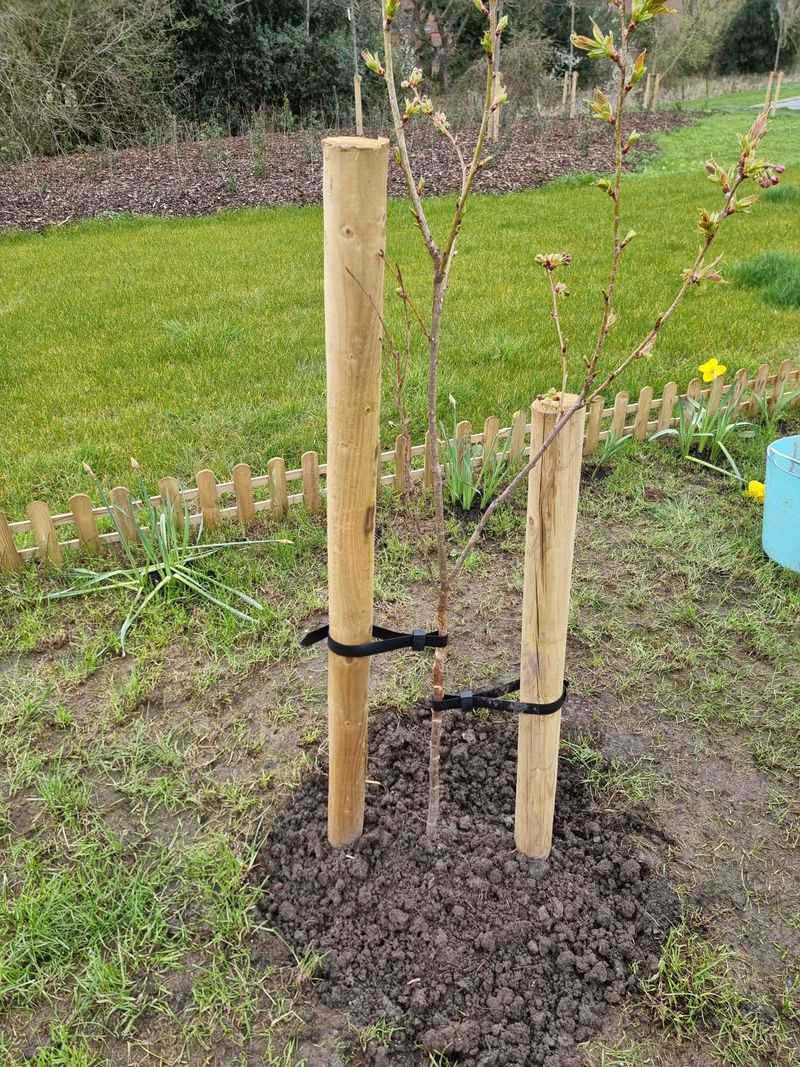
A breeze rolls across a Fresno backyard. A properly staked young tree should nod along with it, with an inch or two of sway at the top.
A tree that stays perfectly still in that breeze is tied too tight.
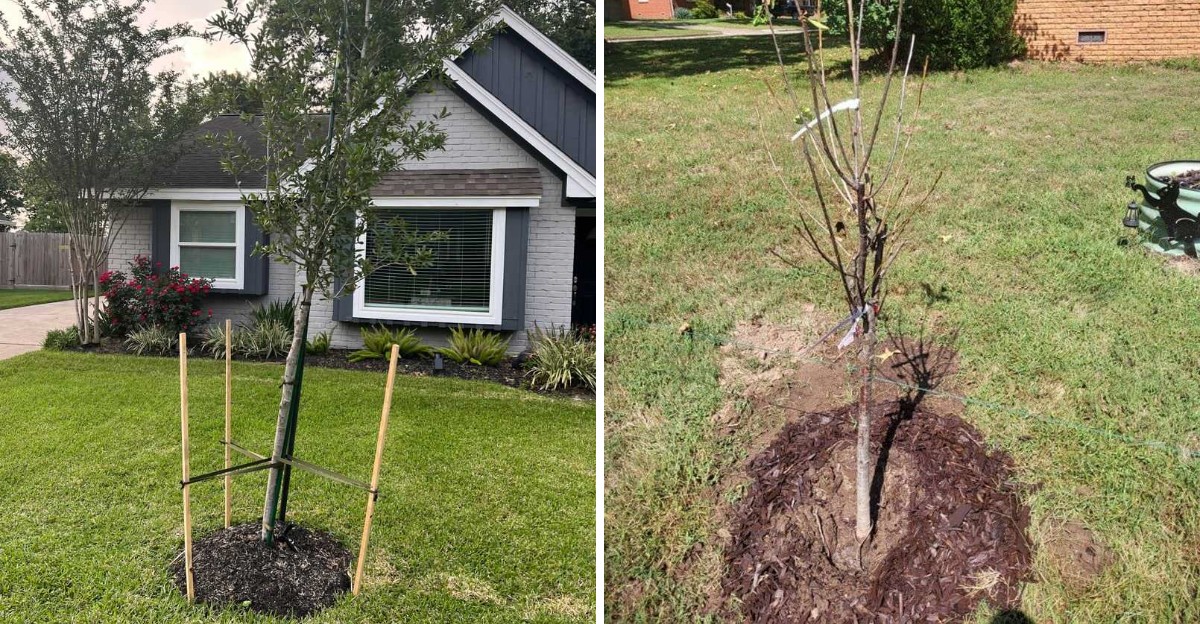
Good ties support the tree while the trunk still flexes. The best setup uses two stakes, one on each side, with ties looped loosely around the trunk.
Many arborists use a figure-eight pattern, with the tie crossed between stake and trunk. That loop cushions the bark and keeps the trunk off the wood.
Now give the trunk a gentle push, because this quick test tells you everything. Press lightly above the ties.
The trunk should move a bit and then spring back toward center. A trunk that refuses to budge needs looser ties.
Soft, wide, stretchy materials work best. Rubber tree ties, cloth strips, or flat plastic tree tape all do the job.
Skip bare wire, thin twine, and old garden hose threaded with wire. Those older methods may look sturdy, but they grip hard and offer no give.
A rigid trunk may seem safer, yet it hides a real cost. Trees held stiffly grow taller but not thicker.
They often lean or break once the stake comes off.
Loose ties work like a spotter at the gym. They catch a slip but still let the tree do the heavy reps on its own.
2. Stakes Go In At Planting Not After
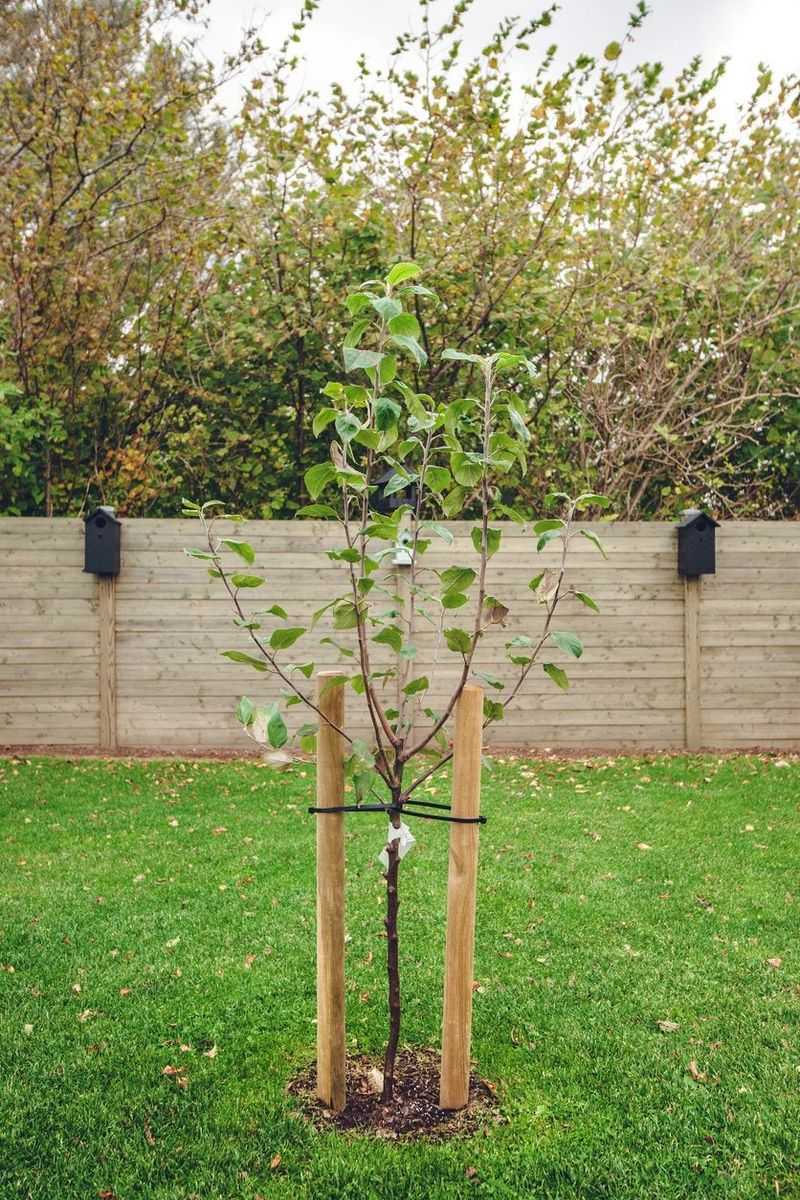
Grab the mallet while the hole is still open. Day one is the smartest moment for stakes, since the root ball sits in plain view.
Once soil fills in and roots spread, a stake driven blind becomes a gamble.
Drive stakes into firm, undisturbed soil just outside the root ball. Most California nursery trees need two stakes on opposite sides of the trunk.
Line them up across the direction of the strongest wind. In many coastal and valley yards, that wind blows from the west or northwest.
Your California Garden Changes Every Week. Your Plan Should Too.
Gardening in California changes quickly throughout the season. Every Friday you’ll receive a simple weekly plan showing exactly what to plant, prune, fertilize, harvest, and protect so you never miss the right timing.
A wait-and-see approach sounds reasonable, but roots grow faster than many people expect. A few months after the tree goes in, fresh roots already push into native soil.
A stake hammered through that zone can tear roots and slow growth.
Now check for a sneaky extra, because many nursery trees arrive with one. Container trees often come tied tight to a thin bamboo or wooden pole.
That pole was meant only for the trip from the nursery. Remove it right away, since it often causes rubs and a weak, whippy trunk.
Not every tree even needs stakes. A sturdy tree in a sheltered spot may stand upright just fine on its own.
Test it once it goes in. A trunk that holds itself up over a firm root ball may skip stakes entirely.
That saves you a chore and gives the tree a head start on independence. Some trees, it turns out, are born ready.
3. Ties Should Never Bite Into Bark
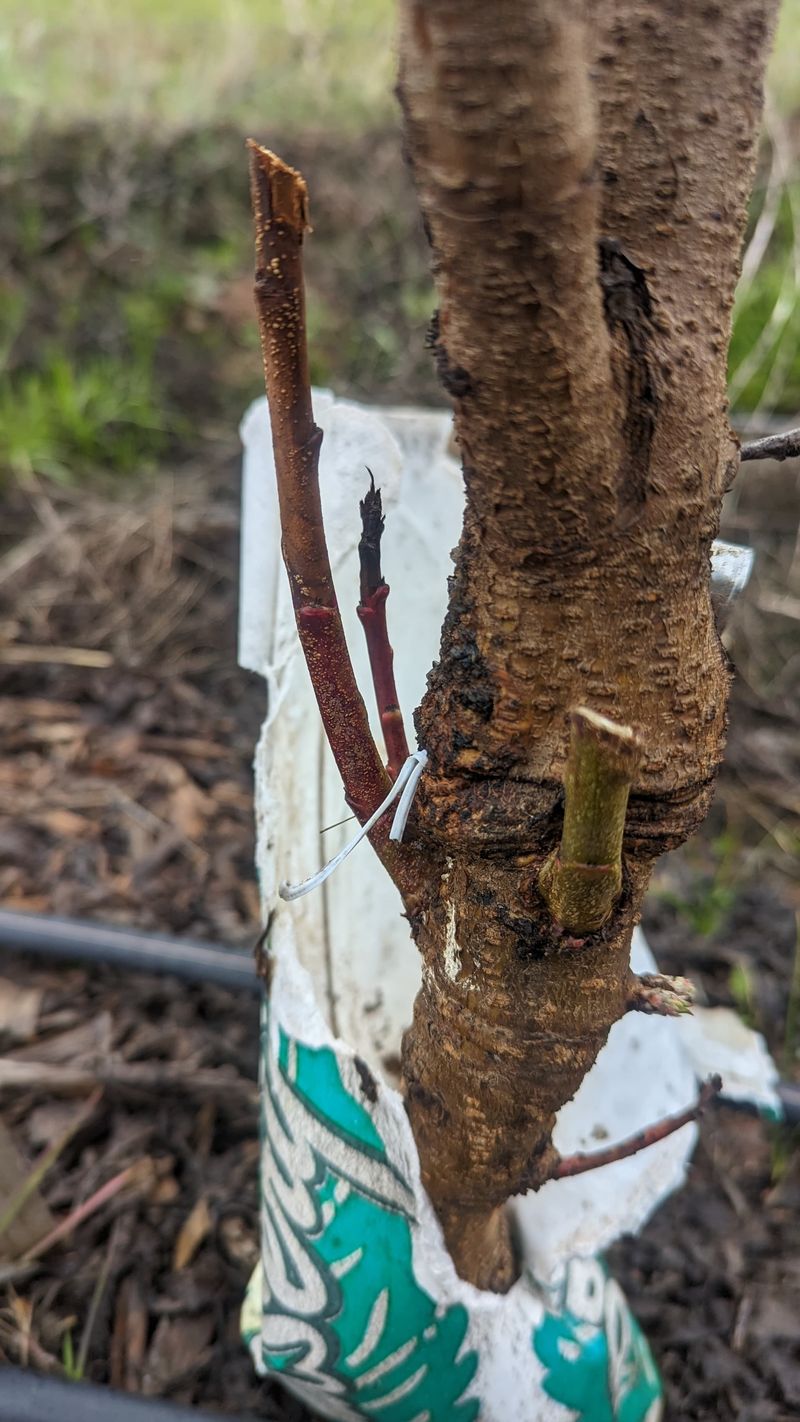
Bark is not armor. Just under that thin outer layer runs the tissue that carries water and sugar through the tree.
A tight tie squeezes that tissue and slows the tree’s own delivery system.
The trouble sneaks up slowly. A tie that fit nicely in March can feel snug by September.
Young trees in warm California climates can add noticeable girth in a single season. A neglected tie starts to sink into the bark.
Arborists describe the result as a girdled trunk, and it can leave a weak spot for life.
Now take a close look for warning signs, because early detection makes the fix easy:
A bulge or swollen ring of bark above or below the tie.
Dents, scrapes, or shiny rubbed patches where the trunk meets the tie or stake.
A tie that turned stiff, cracked, or brittle in the sun.
An early catch keeps the repair simple. Slide the tie to a fresh spot on the trunk and refasten it with more slack.
Replace any tie that has hardened, since sun-baked plastic often develops a sharp edge. Wider ties spread pressure better than skinny ones.
A handy habit helps a lot. Leave a finger’s width of space between the tie and the trunk.
That small gap gives the tree room to grow for a while. Your tree rewards you with a smooth, round, scar-free trunk.
A good tie fits like a comfy watch band, not one that leaves marks on your wrist.
4. Height Matters As Much As Tightness
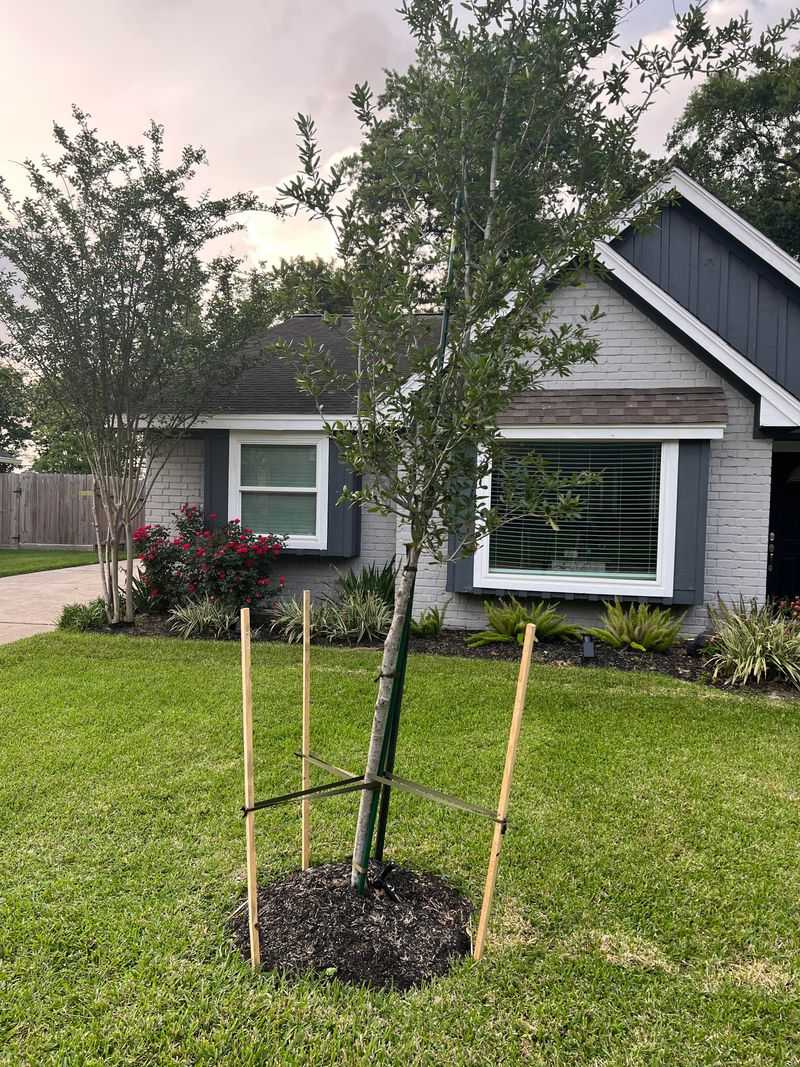
A common mistake puts the tie way up near the branches, as though taller support means better support. It usually does the opposite.
A tie placed too high holds the top rigid and keeps the trunk from a healthy bend.
The best tie sits at the lowest point that still keeps the tree upright. Hold the trunk loosely and slide your hand down.
Stop at the lowest point where the top stays upright and springs back after a gentle push. Place the tie just above that spot.
For many young trees, the tie lands somewhere between the lower third and halfway up the trunk. Every tree differs, so the hand test matters more than a fixed number.
Now trim the stakes, because tall ones cause their own trouble. Cut them so they sit below the lowest branches.
Tall stakes can rub leaves and scrape branches every time the wind blows.
Stake height also depends on the tree’s needs. A tree that just needs an anchor to keep the root ball steady may do fine with short stakes.
Ties near the ground work well there. A thin trunk that cannot hold itself up needs support ties a little higher.
Low support lets the upper trunk flex freely, which helps it taper from thick at the bottom to thinner at the top.
That shape is exactly what a strong tree needs. Your tree gets to stand tall without anyone holding its hand the whole time.
5. Remove Stakes Within A Year Or Two
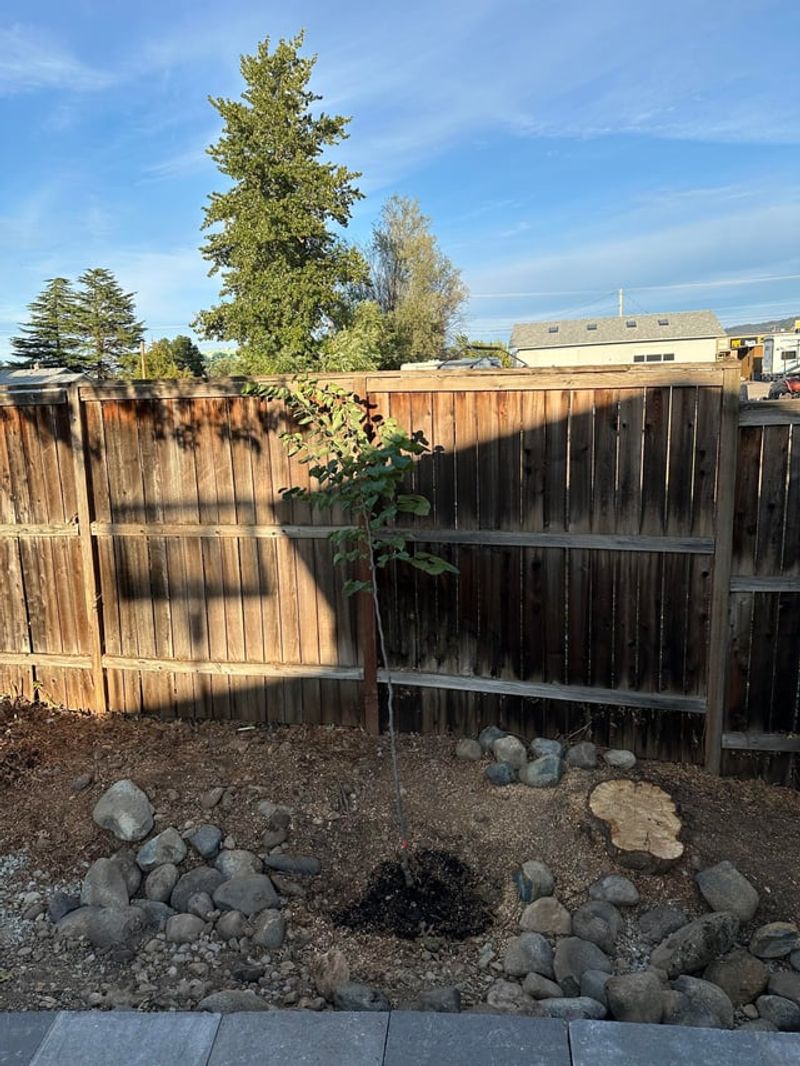
Stakes have a job, and the job has an end date. Remove stakes as soon as the tree can stand on its own.
For most young trees, that moment arrives within one season of growth. Stakes generally should not stay more than one to two years.
Many old, leaning street trees tell the story of stakes left far too long. The ties turned into scars, and the trunk missed its chance to build strength.
Some homeowners simply forget the stakes exist, since they blend into the yard.
Now try a trial run, because the tree will tell you when it is ready. Untie it on a calm day and watch closely.
A trunk that stands upright and bounces back after a gentle push is ready. One that flops or leans hard needs loose ties again and another check in a few months.
The calendar can matter in California. Fall makes a good time to test, before winter storms roll in.
Some gardeners leave stakes through a young tree’s first windy season, then remove them in spring. Your own yard’s weather makes the best guide.
Pull stakes straight up, or cut them at ground level when they refuse to budge. Toss old ties so they do not end up wrapped around a branch.
A tree freed from its stakes is a bit like a kid on a first bike ride without training wheels. A little wobbly at first, then off and rolling with a big grin.
6. Movement Actually Builds A Stronger Trunk
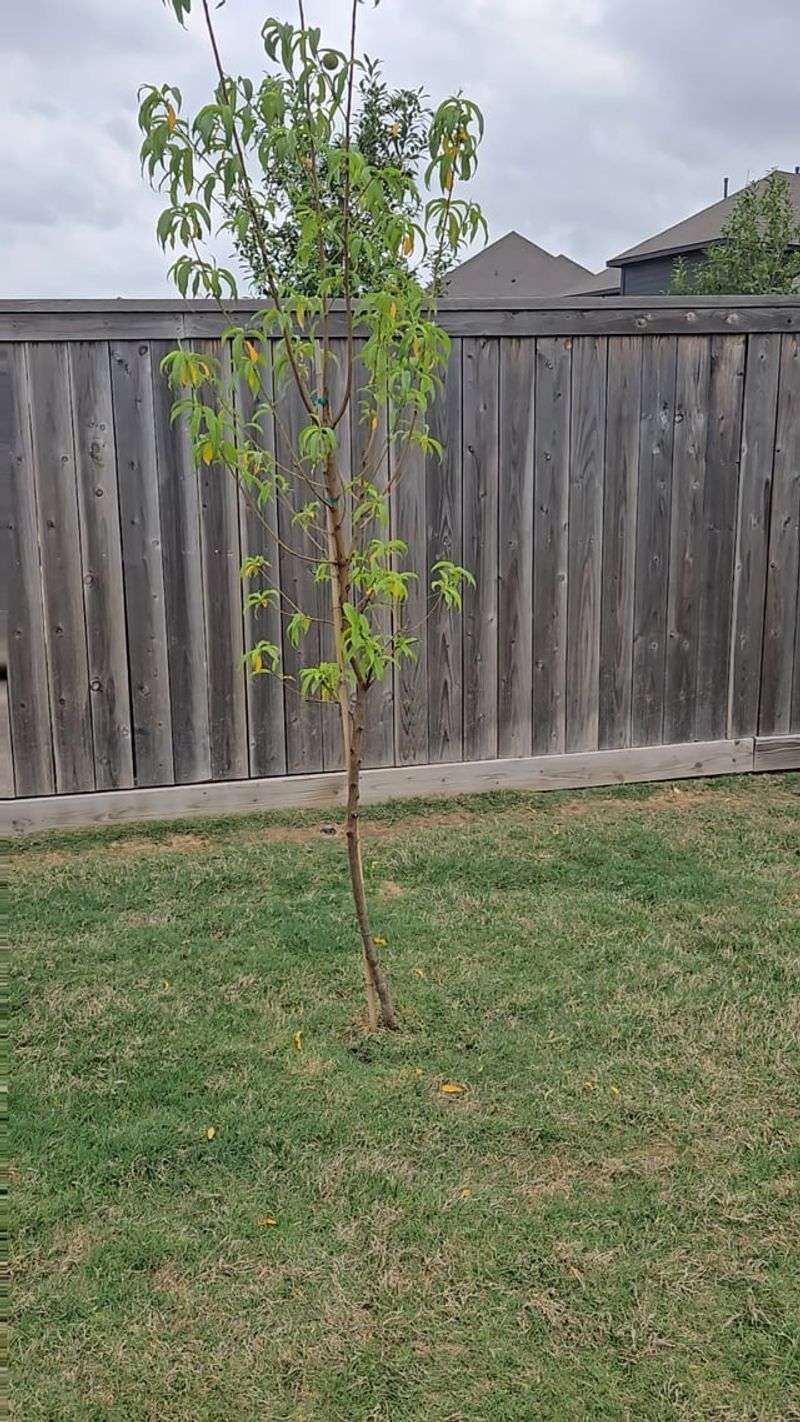
Trees can sense motion. Scientists even have a name for it: thigmomorphogenesis.
That mouthful simply means trees change how they grow once they get touched or bent. Wind acts as a personal trainer.
Each bend of the trunk prompts cells inside to build more wood, especially near the base. Over time, that response creates taper.
A tapered trunk is thick at the bottom and narrows toward the top, a lot like a flagpole. That shape spreads out stress and helps the tree handle wind.
Movement helps the roots too. As the top sways, roots feel the pull and grow stronger to anchor the tree.
A tree held perfectly still skips this workout. Research shows rigidly staked trees grow taller but develop less trunk taper and weaker roots than trees allowed to move.
Now compare two trees planted on the same day, because the contrast says it all. One is tied tight and high. The other is tied low and loose.
After a year, the first may stand taller, but its trunk stays skinny. Once the stake comes off, it bends over.
The second tree stays shorter but sturdier. Its trunk stands up to a Santa Ana wind with confidence.
So skip the urge to keep things perfectly still. A little sway is not a problem to fix.
It is how a young tree builds its own backbone, one breezy afternoon at a time. Every gust counts as a free gym session, no membership required.
7. Check Ties Every Few Months As It Grows
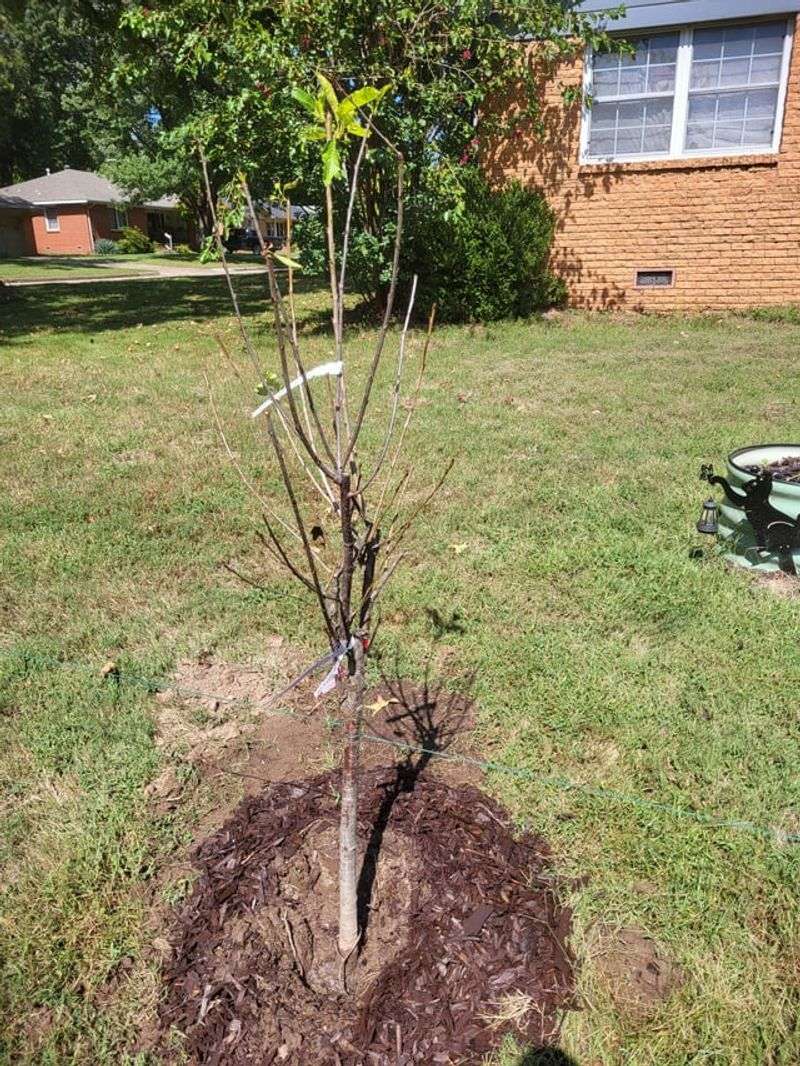
Set a reminder on your phone right now. A quick calendar alert every three or four months ranks among the easiest ways to protect a young tree.
Stakes are not a set-it-and-forget-it chore.
Each check takes just a few minutes. Walk around the tree and look at every tie.
Confirm that a finger’s width of space still surrounds the trunk. Make sure ties stay soft and flexible, not cracked from sun.
Look for anything that rubs the bark or scrapes branches.
Next, give the trunk a gentle push. A strong spring-back may mean you can lower or loosen the ties.
A rocking root ball or a lean may mean the stakes need a reset in firmer soil. After a big storm, add an extra check, since strong wind can shift stakes or break ties.
Now mark your calendar, because California seasons make the schedule easy to remember. Early spring works well, when growth starts.
Midsummer, during the fastest growth, is another good checkpoint. Fall, before winter storms, rounds out the year.
Pair each visit with a look at mulch and irrigation. Keep mulch a few inches from the trunk, and make sure drip lines reach the spreading roots.
A quick photo at each check helps too. Over a year, the trunk thickens and the stakes matter less and less.
Before long, the final check arrives. That is the day the stakes come out and the tree stands tall on its own.
The coach’s work is done.