The Sign On Connecticut Oaks That Predicts Next Spring’s Defoliation
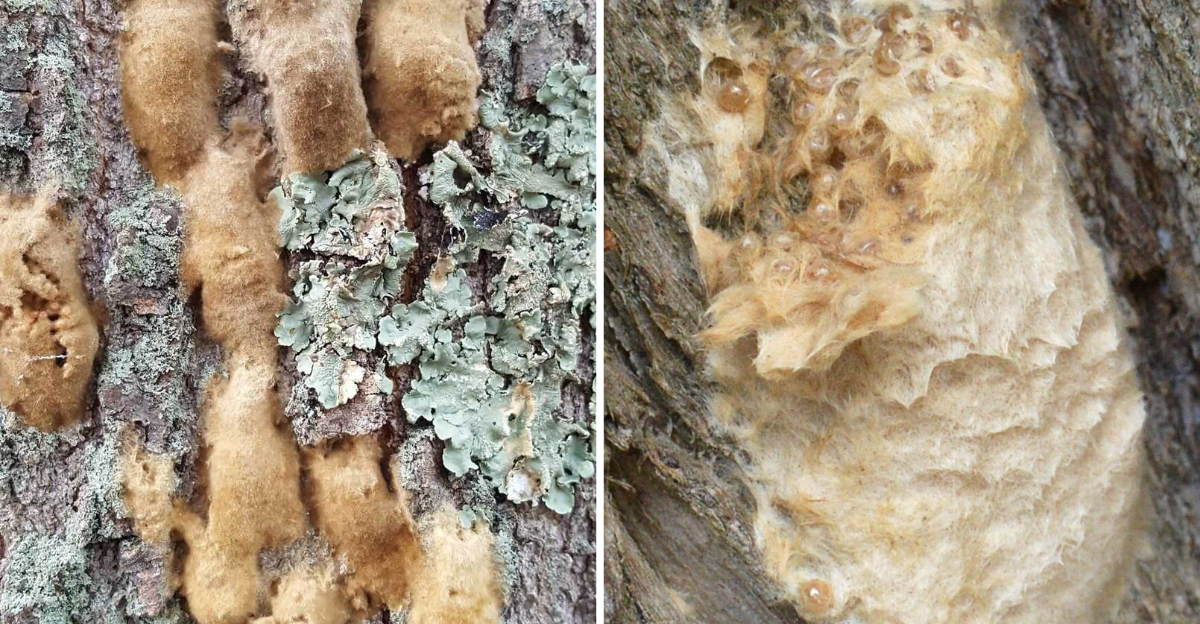
Bark holds secrets you probably walk right past this time of year. Small, tan-colored clusters begin showing up on trunks, sheds, and furniture across Connecticut every autumn, right where you’d least expect to look.
You might mistake them for dirt or rough bark at a glance. Closer inspection tells you a very different story, one written months before it actually happens.
These clusters hold eggs, deposited with quiet precision by an insect most residents couldn’t name on sight. Connecticut’s tree canopy absorbs the consequences the moment those eggs hatch each spring.
Counting the patches you find now gives you a startlingly accurate forecast for next year’s damage. Ignoring them, on the other hand, risks leaving you caught off guard later.
What you decide to do with this information now determines how much your trees suffer by spring.
Spongy Moth Egg Masses Reveal How Heavy The Coming Season Will Be
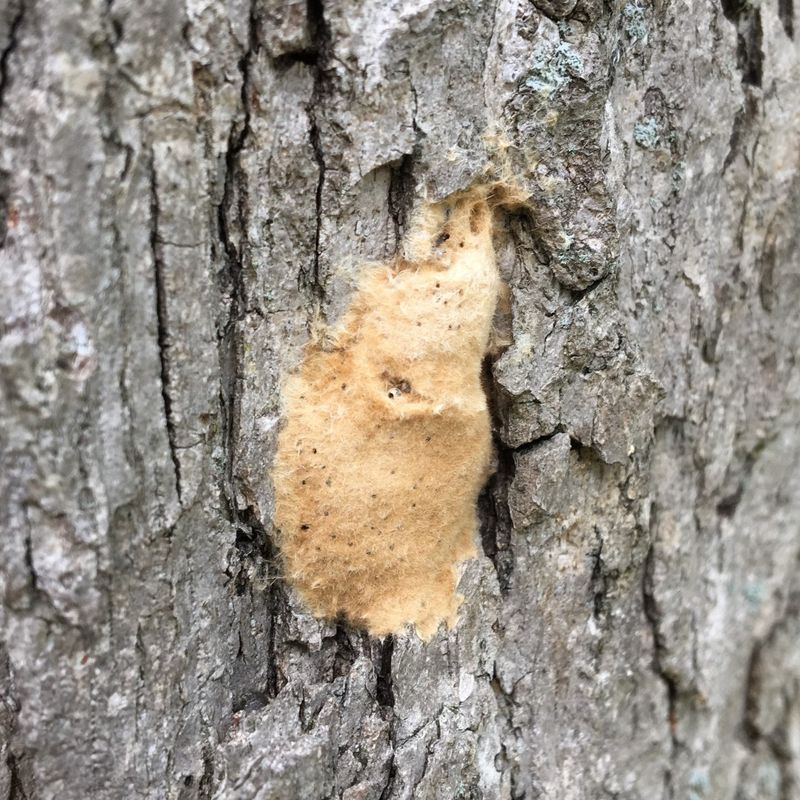
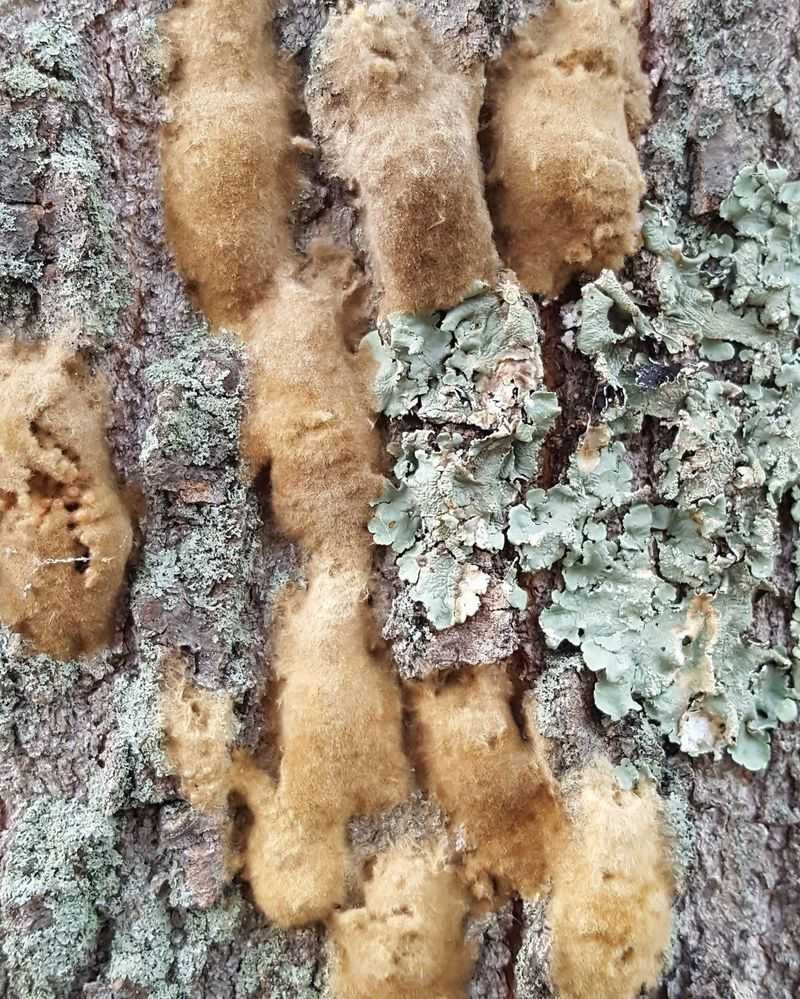
That fuzzy tan smear on your oak trunk is not tree disease. It is a spongy moth egg mass, and it holds the forecast for next spring.
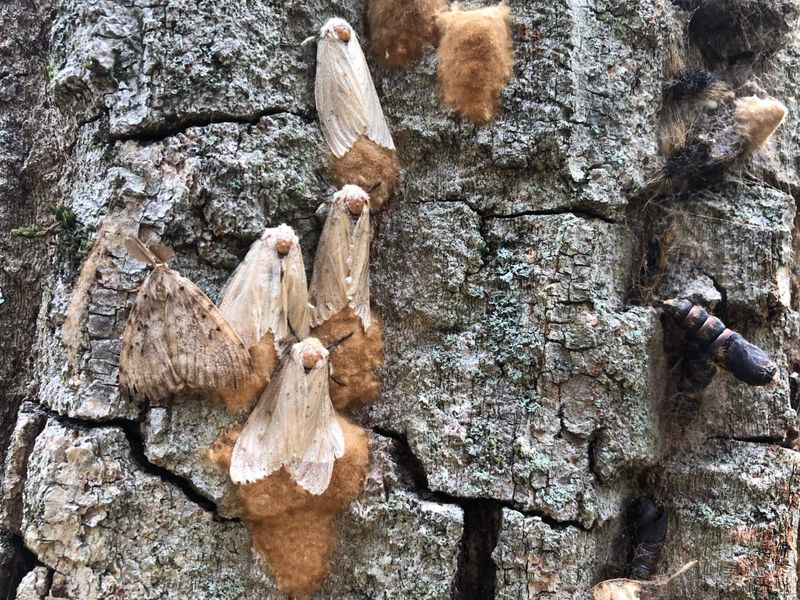
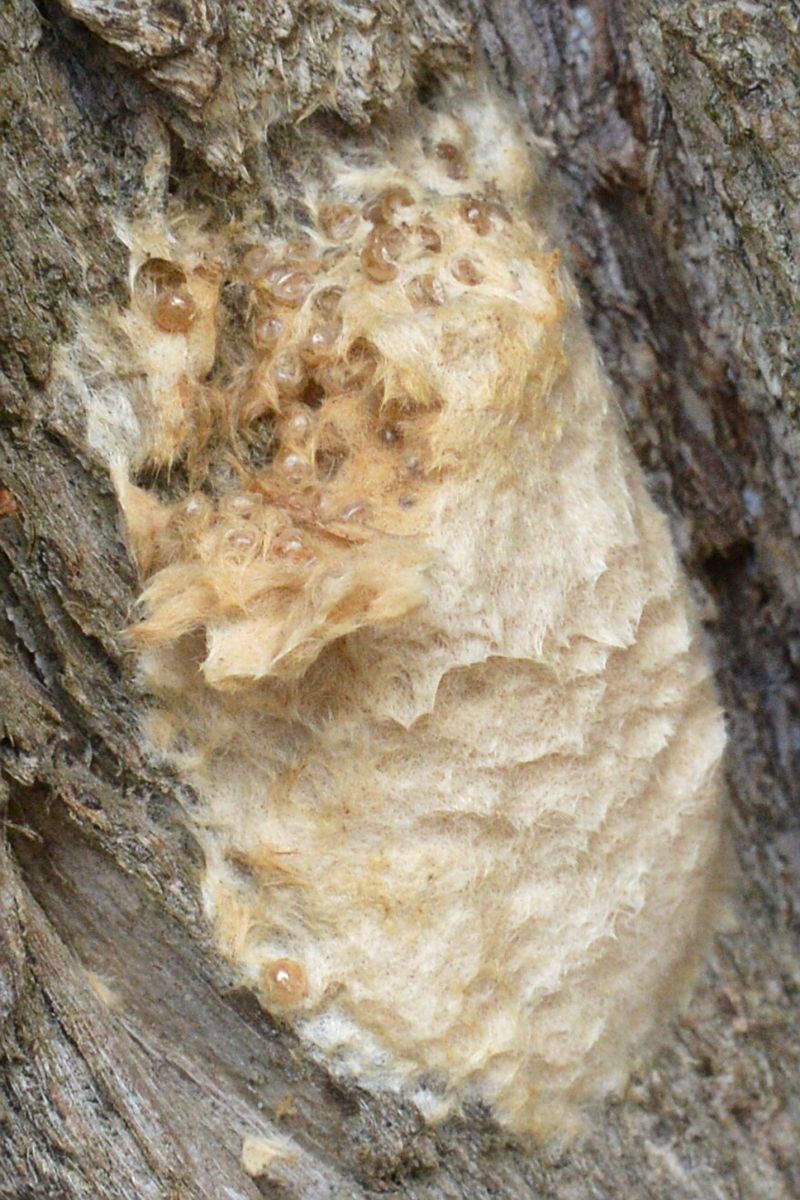
Each mass contains between 100 and 1,000 eggs packed under a layer of buff-colored hairs. The female moth deposits them in late summer, and they stay dormant until warm weather triggers hatching.
Spotting even one mass on your property is a signal worth taking seriously. A single mass can release hundreds of hungry caterpillars come May.
Spongy moths target oaks above almost any other tree species. Connecticut forests have been dealing with population cycles for decades, and the egg mass count each fall is the clearest early warning system available.
Scientists and foresters actually use egg mass surveys to predict regional defoliation pressure. You can do the same thing in your own yard with nothing more than sharp eyes and a little time.
The density of masses per acre directly correlates with how much leaf loss to expect. Low density means partial defoliation.
High density means trees may be stripped bare by June. Understanding what you are looking at transforms a walk around your property into a useful scouting mission.
Reading the pattern correctly now gives you a real head start before the first caterpillar ever hatches.
Where To Look On Trunks, Branches, And Outbuildings
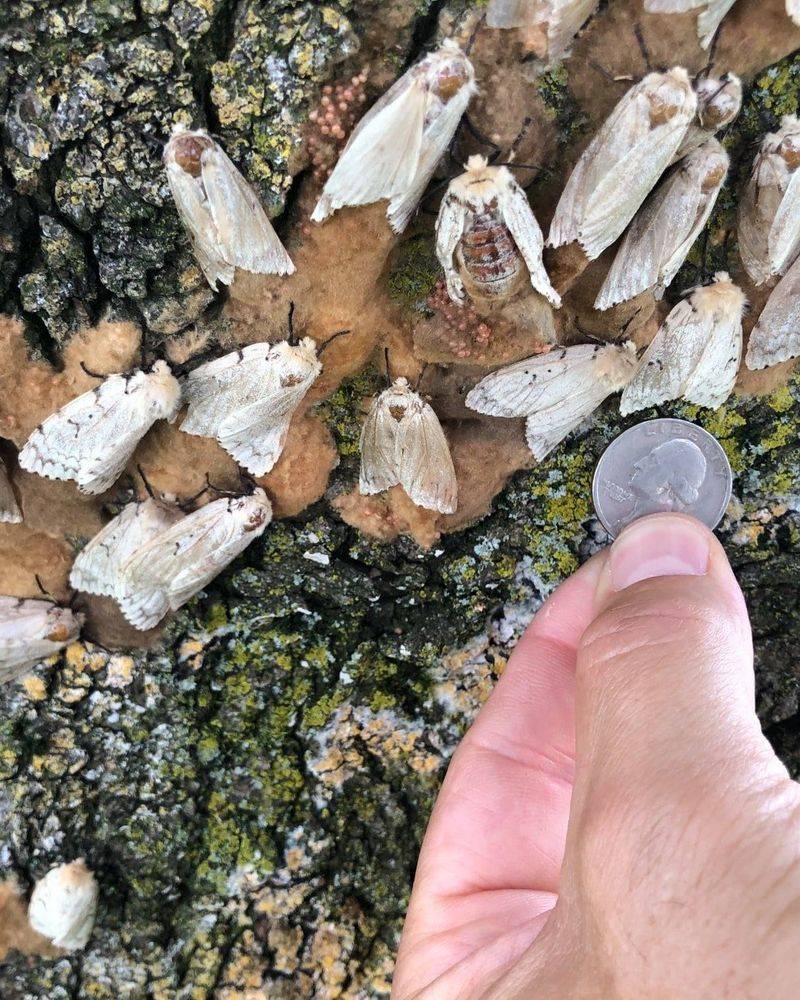
Most people walk right past egg masses because they look for them in the wrong spots. Knowing exactly where females deposit eggs changes everything about your search.
Start at the base of oak trunks and work your way up to about eye level. Rough, furrowed bark is prime real estate for egg-laying females.
Branch crotches are another hot spot. The sheltered angle where a limb meets the trunk gives eggs some protection from weather, so females favor those locations.
Do not stop at the tree itself. Spongy moths are famous for depositing masses on nearby structures, including wooden fences, sheds, and even stacked firewood.
Lawn furniture left outside through late summer is a surprisingly common hiding spot. Egg masses have been found under chairs, on table legs, and tucked into the folds of outdoor cushion covers.
Your Connecticut Garden Changes Every Week. Your Plan Should Too.
Gardening in Connecticut changes quickly throughout the season. Every Friday you’ll receive a simple weekly plan showing exactly what to plant, prune, fertilize, harvest, and protect so you never miss the right timing.
Stone walls bordering wooded areas deserve a close look too. The rough surface mimics bark texture, and females readily use it as a laying site.
Check the undersides of surfaces, not just vertical faces. Females often choose sheltered, downward-facing spots that shield the mass from direct rain.
A thorough search covers trees, structures, and any rough-surfaced object within about 50 feet of wooded edges. The more ground you cover, the more accurate your picture of local population pressure becomes.
How To Count Masses To Estimate Pressure On Your Property
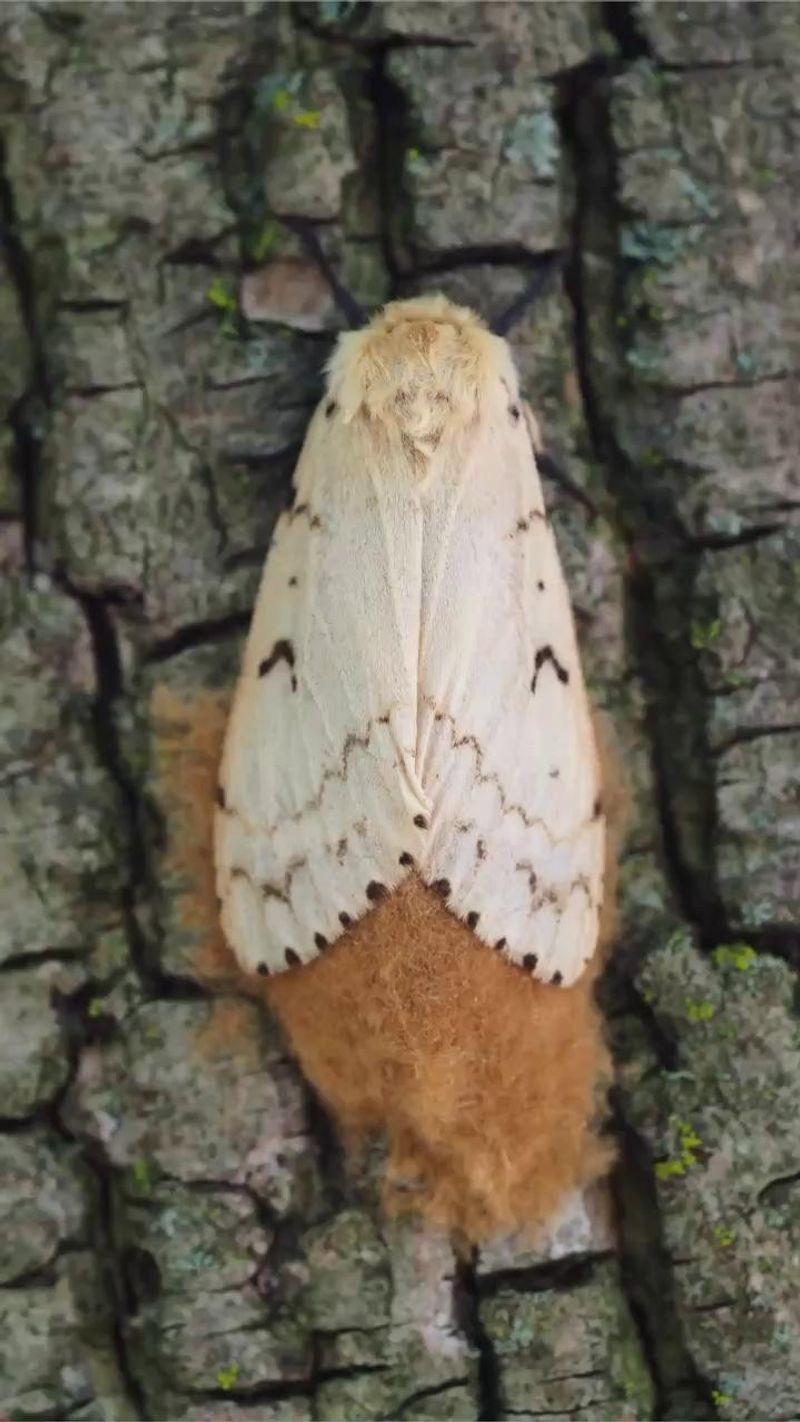
Counting egg masses sounds tedious, but it is genuinely the best way to gauge how bad your spring could get. A simple tally gives you real, actionable data.
Foresters use a standard method: survey a fixed area, count every mass, and calculate density per acre. You can adapt this for a home property without special tools.
Pick a consistent search area, like a 50-foot by 50-foot square around your most vulnerable trees. Walk a slow grid pattern and mark every mass you find on a notepad.
One to three masses per survey area generally signals low pressure. Expect some caterpillar activity but probably not severe leaf loss across the whole canopy.
Four to ten masses suggests moderate pressure. Trees may lose a noticeable portion of their leaves, especially on the outer canopy where young caterpillars feed first.
More than ten masses in your survey area puts you in the high-pressure zone. Full defoliation of susceptible oaks becomes a real possibility if populations follow historical patterns.
Record your count and the date so you can compare year over year. Tracking trends across multiple seasons helps you understand whether your local population is rising or crashing.
Your count is also useful if you plan to hire a licensed arborist for treatment. Professionals use similar density estimates to recommend appropriate intervention levels.
The Scraping Method That Actually Destroys The Eggs
Scraping egg masses off bark is satisfying, but doing it wrong just moves the problem around. The method matters as much as the effort.
You need a stiff plastic scraper or a putty knife, a bucket of soapy water, and a pair of gloves. The hairs covering the masses can irritate skin, so protection is worth the 30-second setup.
Hold the bucket directly below the mass before you scrape. Catching the eggs in soapy water drowns them and prevents any from falling to the ground and surviving.
Scrape firmly but carefully to avoid gouging bark. Deep wounds on oak trunks invite secondary problems that compound the original stress from defoliation.
Masses on smooth surfaces like metal or painted wood come off more cleanly than those on rough bark. Work slowly on bark to get as much of the egg mass as possible.
Leaving even a portion of a mass behind still allows partial hatching. Thorough removal beats speed every time when the goal is actually reducing next spring’s caterpillar population.
After scraping, leave the bucket of soapy water for at least 48 hours before disposing of the contents. This ensures eggs are fully suffocated rather than just wet.
Timing your scrape from late October through early April is ideal. The eggs are dormant during that window, making removal the most effective physical control available to homeowners.
Why Connecticut Populations Rise And Fall With A Soil Fungus
Nature has its own population control for spongy moths, and it lives in the soil beneath your feet. A fungus called Entomophaga maimaiga is one of the biggest reasons outbreaks eventually collapse.
This fungus infects caterpillars in wet spring conditions. Spores in the soil splash onto foliage, caterpillars consume them while feeding, and infection spreads rapidly through dense populations.
Dry springs are the enemy of fungal control. When April and May bring below-average rainfall, the fungus cannot spread efficiently, and caterpillar populations explode without their natural brake.
Connecticut has seen this pattern repeat across multiple outbreak cycles. A string of wet springs often follows a peak year, causing populations to crash dramatically within one or two seasons.
The fungus was intentionally introduced to the northeastern United States decades ago as a biological control agent. It has since established itself permanently in forest soils across the region.
Homeowners cannot directly apply or boost this fungus, but understanding its role helps set realistic expectations. A wet spring after a high egg mass count can mean far less damage than the numbers predicted.
A second natural control, a virus called nucleopolyhedrovirus, also suppresses populations during outbreaks. Both pathogens work together to create the boom-and-bust cycles foresters track over decades.
Knowing that natural forces are always at work alongside your own efforts makes the whole situation feel more manageable and less overwhelming.
What Homeowners Can Do Now To Reduce Spring Damage
Fall action beats spring panic more often than not. The window between now and April is your best opportunity to reduce next spring’s damage before it starts.
Start with a full property survey using the counting method described earlier. Knowing your egg mass density tells you how aggressively to respond before spending money on treatments.
Scrape every accessible mass into soapy water as soon as you complete your survey. Focus first on trees that already show signs of past stress, like thin canopies or slow growth.
Consider burlap banding for high-value oaks after egg masses are removed. Wrapping burlap around trunks in spring traps caterpillars as they migrate up the tree each day.
Check the band daily during peak caterpillar season, typically May through June. Collected caterpillars should be dropped into soapy water rather than knocked to the ground.
Talk to a licensed arborist about systemic treatments if your egg mass count is high. Soil-injected insecticides applied in spring can protect individual trees with minimal environmental impact.
Healthy trees tolerate defoliation better than stressed ones. Deep watering during dry periods and avoiding soil compaction around roots gives oaks the resilience they need to bounce back after a hard season.
One fall afternoon spent scouting and scraping can meaningfully shift the odds in your favor before the first caterpillar hatches.