The Small Tree Californians Are Planting Now To Shade Patios Without Cracking Concrete
Shade on a sunny patio can feel like the best room in the house. Finding the right source for it, though, proves trickier than expected.
Some trees deliver cool relief for years before revealing a costly side underground.
One familiar flowering option has earned a strong following across California for a different reason. It tends to keep the peace with nearby paving while offering more than shade.
Its appeal stretches across several seasons, not just the warmest months.
Choosing well, planting at the right time, and offering a little care in the early years all shape how it turns out.
The right pick planted this fall can turn a bare slab into the coolest gathering spot on the block.
Crape Myrtle Is The Patio Tree To Plant
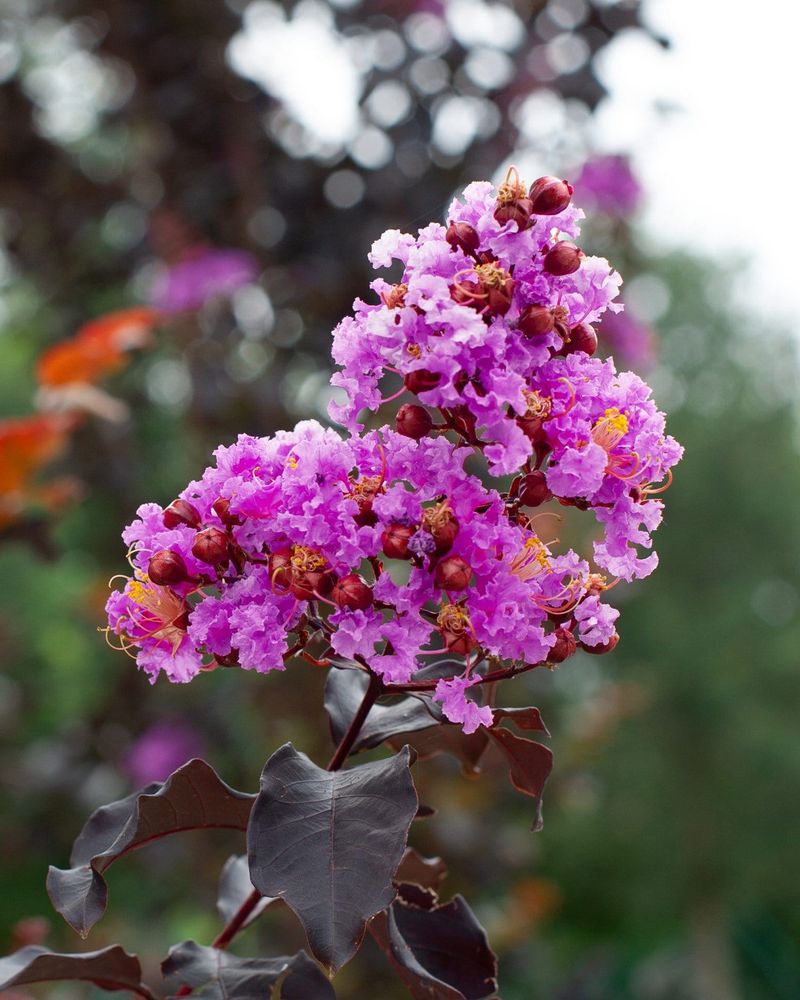
A hot August weekend calls for a patio people actually want to use. This small tree makes that possible without taking over the yard, and it has been a favorite in warm American gardens for well over a century.
Crape myrtle, native to Asia, suits California beautifully. It loves heat, full sun, and long dry summers, conditions that describe much of the state from the Central Valley to inland Southern California.
Once settled, it handles the dry season better than many flowering trees, though it still appreciates regular deep watering.
Size matters on a patio, and crape myrtle keeps things modest. Many varieties stay small enough to tuck beside a seating area without towering over the house.
Dwarf types can stay shrub-sized, while larger ones grow into true shade trees, offering a match for nearly every yard.
The canopy shines in cozy spaces, too. Light, airy branches cast filtered shade rather than deep gloom, so the patio stays bright but cooler.
Glimpses of sky through the leaves keep a small yard from feeling closed in.
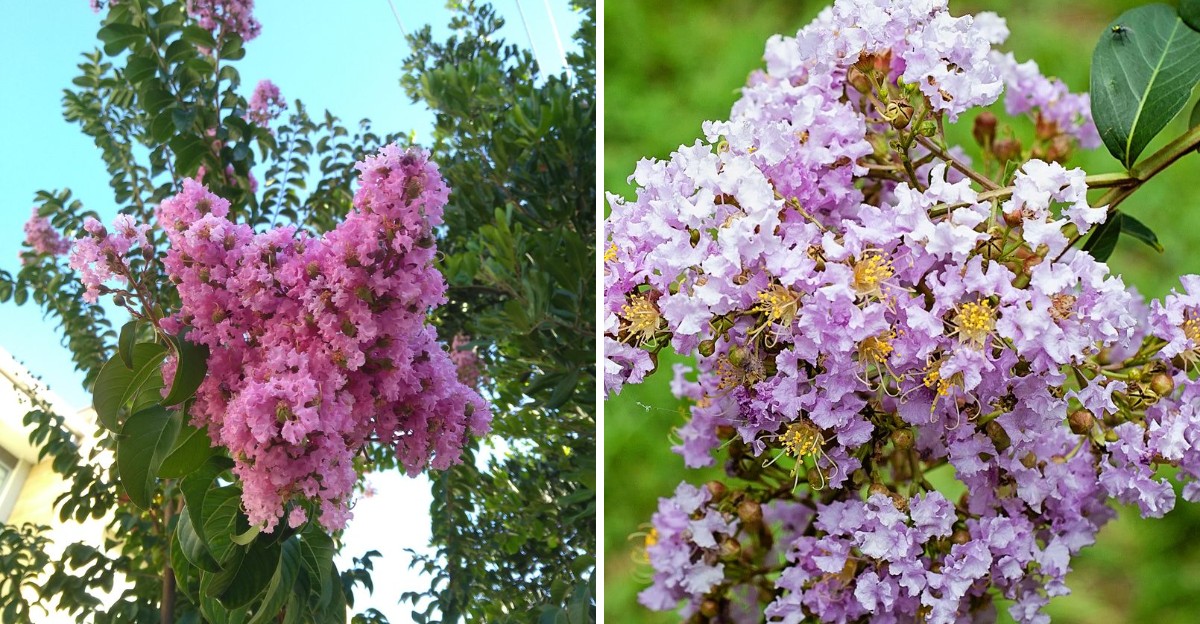
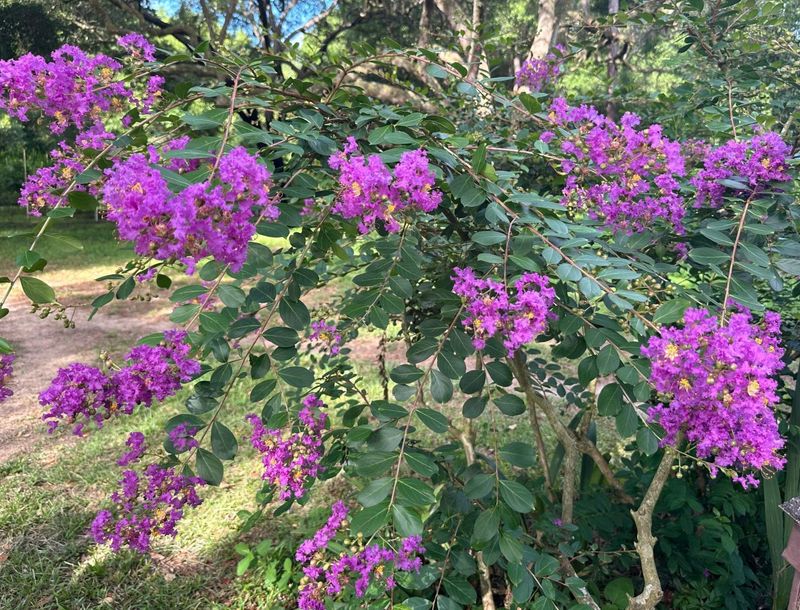
Looks count as well. Flowers arrive in pink, red, purple, lavender, and white, appearing when most trees have finished blooming.
Smooth, mottled trunks and fall color round out a tree that earns its spot all year. For a patio, that kind of steady performance is hard to beat, and October offers an ideal moment to plant one.
Roots Stay Shallow And Well Behaved
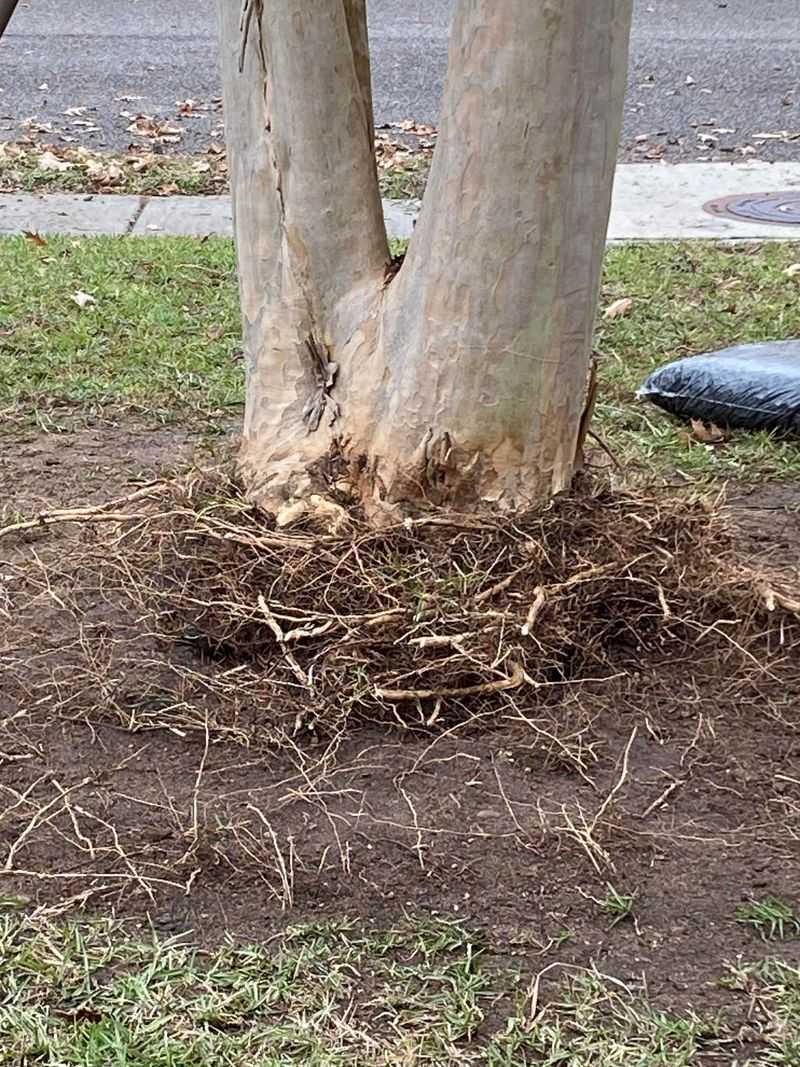
Cracked slabs usually tell a story about the wrong tree in the wrong place. Big, aggressive species such as some ficus and certain ashes can heave concrete as their thick roots swell, but crape myrtle tells a calmer tale.
Its roots are generally fibrous, shallow, and spreading. Rather than forming a few huge woody anchors that push upward with force, they branch into finer roots that roam the top layer of soil.
Cal Poly’s SelecTree database rates crape myrtle as having low potential for root damage, welcome news for patio owners.
Fine roots matter because force comes from girth. A root as thick as an arm can lift a sidewalk over time.
Thin, branching roots simply don’t build that kind of pressure under a slab. That explains why crape myrtle rarely appears in stories about broken hardscape, foundations, or pipes.
Your California Garden Changes Every Week. Your Plan Should Too.
Gardening in California changes quickly throughout the season. Every Friday you’ll receive a simple weekly plan showing exactly what to plant, prune, fertilize, harvest, and protect so you never miss the right timing.
Shallow roots do carry one quirk. They compete with plants growing right at the base, so lawn grass pressed against the trunk can struggle.
A ring of mulch two to three inches deep solves that, keeping soil cool and holding moisture where young roots feed.
Good habits help the roots stay polite. Deep, slow watering encourages them to grow downward instead of hunting near the surface for quick sips, while frequent light sprinkling does the opposite.
Watered well and less often, the tree and the concrete can share the yard on friendly terms. Starting those habits right after fall planting sets the pattern early.
Mid-Size Selections Fit Patios
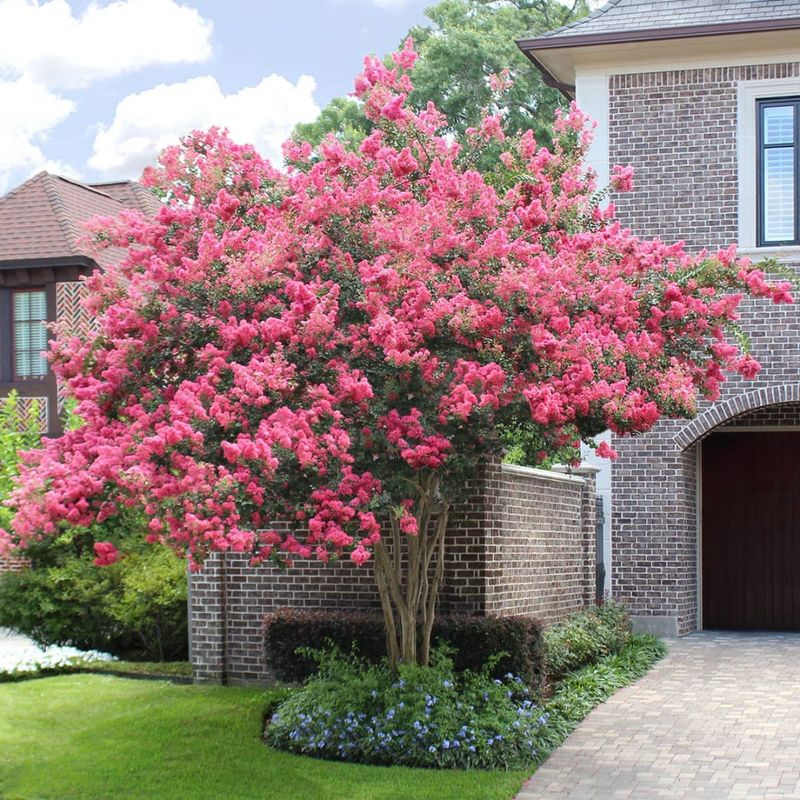
Nursery benches in June overflow with crape myrtles in every shade of pink and purple. Choosing one on color alone, however, can lead to regret within five years, so mature size deserves the first glance at the tag.
Crape myrtles span a wide range. Dwarf types may stay under five feet, while big tree forms can top 25 feet.
For most patios, the sweet spot lies with a mid-size cultivar reaching roughly 10 to 20 feet tall. That height delivers real shade without crowding the roofline or the neighbors.
A few names are worth asking about. ‘Tuscarora’ offers coral-pink flowers, ‘Zuni’ brings lavender blooms on a smaller frame, and ‘Muskogee’ carries lavender flowers on a somewhat larger tree.
Many of these come from the U.S. National Arboretum breeding program, which gave them Native American tribal names.
Disease resistance belongs on the checklist, too. Powdery mildew, a white, dusty coating on leaves and buds, can trouble older types, especially near the coast where air stays cool and damp.
The Arboretum hybrids were bred for strong mildew resistance, making them smart picks for California patios.
Width deserves equal attention. A tree spreading 15 feet needs elbow room over the seating area.
Measuring the space to be shaded and comparing it to the tag leads to a cultivar that fits naturally. Choosing right now means heavy pruning rarely becomes necessary later.
Summer Blooms Last For Weeks
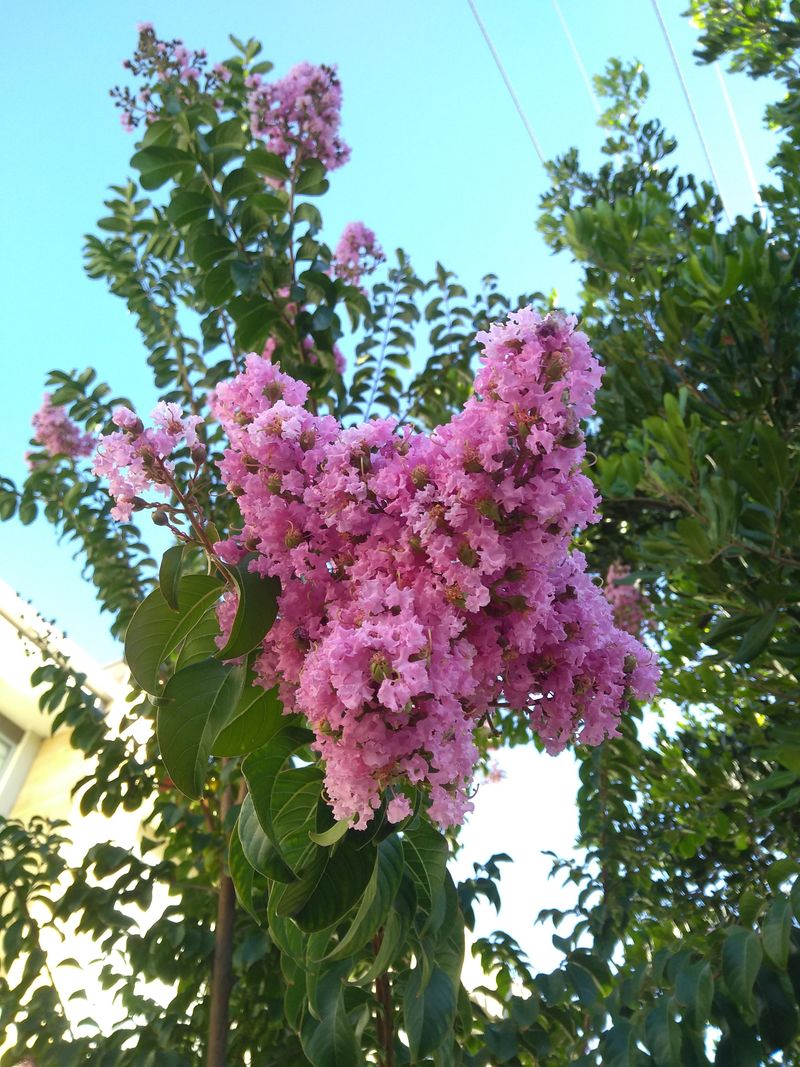
Most flowering trees put on a spring show, then go quiet. Crape myrtle waits for heat before throwing a party that lasts much of the summer, with blooms often starting in early summer and stretching well into September.
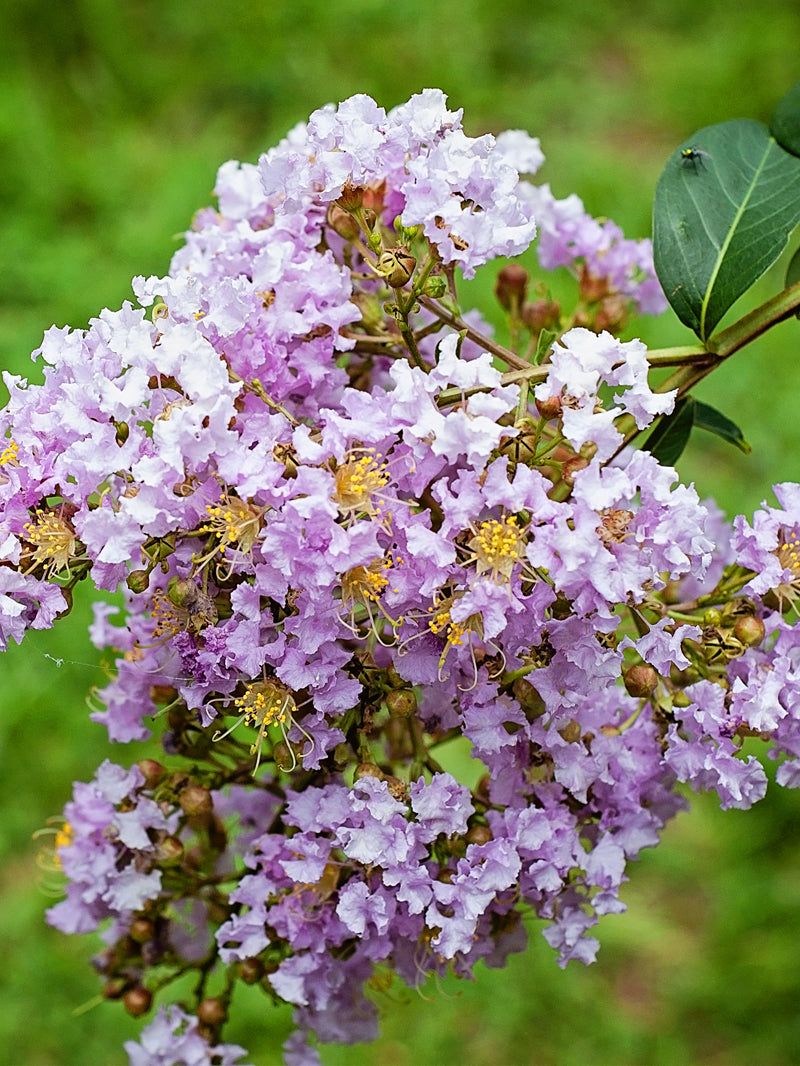
Each flower cluster forms a big cone of ruffled blossoms, and the petals resemble crinkled crepe paper. That texture gives the tree its name.
Clusters can measure six to eighteen inches long, so even a small tree looks loaded with color from across the yard.
Bees love the show as much as people do. A cheerful buzz around the branches on warm mornings is normal.
For anyone who eats outside often, a little activity overhead comes with the territory. The bees stay busy with the flowers rather than lunch.
Snipping off spent flower clusters early in the season, before seed pods form, encourages even more blooms. Many trees respond with a second, smaller wave of flowers.
Sun helps, too. Crape myrtle blooms best in full sun, and shady spots mean fewer flowers.
Petals will fall onto the patio like natural confetti. A quick sweep or a pass with a leaf blower handles the cleanup.
Many homeowners find that colorful scatter charming, a small price for weeks of flowers during the season when the rest of the garden wilts.
Trees planted this fall can deliver their first strong show next summer.
Fall Color And Peeling Bark Add Interest
Cooler October nights flip a switch. Leaves that stayed green all summer begin turning yellow, orange, and red, depending on the variety and climate, with inland gardens and their chilly nights usually getting the brightest show.
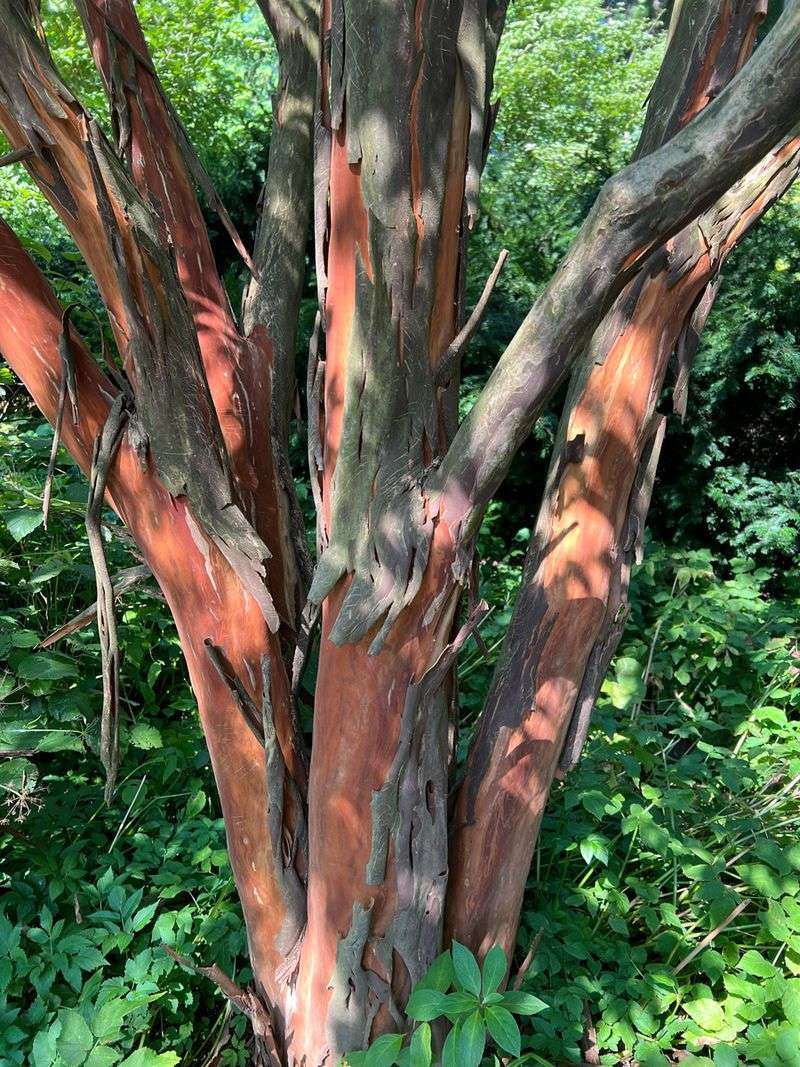
Once the leaves drop, a hidden feature takes center stage. Crape myrtle trunks shed their outer bark in thin flakes, revealing smooth patches of cinnamon, tan, gray, and cream.
The effect looks almost like camouflage and catches winter light beautifully. Few small trees look this good with bare branches.
Some cultivars are prized for bark alone. ‘Natchez,’ a larger white-flowered type, shows rich cinnamon trunks, while ‘Tuscarora’ and ‘Muskogee’ also display lovely mottling.
Nursery staff can point toward the trees with the best bark in a particular area.
Peeling bark is completely normal and healthy for crape myrtle. It flakes away on its own schedule, often in summer, so picking at it or treating it is unnecessary.
One look-alike deserves attention. Crape myrtle bark scale, an invasive pest spreading in parts of the country, appears as white, felt-like crusts on bark, often accompanied by black sooty mold.
Suspicious spots are worth reporting to the county Agricultural Commissioner, and UC IPM offers guidance on scale insects.
Healthy peeling bark looks clean and smooth rather than crusty or sticky. A quick look at the trunk in fall, as leaves drop, makes spotting the difference easy.
Plant It A Few Feet From The Slab
A tape measure belongs in hand well before a shovel. A common mistake places a young tree right against the patio edge because it looks tidy on day one, only to feel jammed in years later.
Spacing works best when based on mature size rather than the nursery pot. The expected width on the tag offers a starting point for picturing the trunk and lower branches at full size.
A simple guideline keeps the trunk far enough away that it won’t press against concrete as it thickens, with room left for mulch around the base.
Bigger cultivars need more space than smaller ones. A compact tree may sit comfortably a few feet from the slab, while one spreading 20 feet needs more breathing room.
Planting on the sunny side of the patio, often south or west, lets the canopy reach over the seating area and block the harshest afternoon light.
Overhead clearance matters, too. Spots under eaves, power lines, or right against walls lead to lopsided branches, while good air flow helps reduce powdery mildew.
Fire safety also shapes placement. In fire hazard areas, approved Zone 0 rules bar new trees within five feet of a home once they take effect, so patios hugging the house may need a tree set farther out.
With the right distance, the tree can grow into its natural shape without any awkward squeeze.
Fall Planting Builds Roots Before Summer
Summer is when crape myrtle looks most tempting at the nursery, yet autumn is when it settles into the ground most happily. UC ANR often recommends fall planting for many trees in California, and crape myrtle benefits, too.
Fall works because soil stays warm while air cools. Warm soil encourages roots to grow, while cooler air means leaves lose less water.
The tree can focus on settling in rather than simply surviving a heat wave.
Winter rain lends a helping hand. Across most of California, wet months follow fall planting, giving young roots natural moisture as they spread.
By the time summer heat returns, the tree has months of root growth behind it and handles hot days far better than one planted in June.
Planting itself stays simple. A hole about two to three times as wide as the root ball, but no deeper, makes a good start.
The top of the root ball sits level with, or slightly above, the surrounding ground. Circling roots get loosened, and native soil goes back in without heavy amendments.
A ring of mulch, kept a few inches from the trunk, and a shallow soil basin around the root zone help hold water. A long, slow soak finishes the job.
That fall head start works like a season of training before the tree’s big summer debut, which makes October one of the smartest months of the year to plant.