The Soil Trick Maryland Gardeners Use Before Heavy Rain
Rain can quickly turn your garden into a waterlogged mess. Maryland clay holds water longer than almost any soil type. Puddles form fast, and your roots can be affected within days. You can stop this cycle before it starts.
Smart gardeners never wait around for storms to hit. Drainage isn’t luck, it’s a strategy you apply early. Timing matters far more than most people ever admit. Soil structure decides whether water escapes or lingers.
Compacted beds slow root growth faster than any drought. Maryland’s humid summers make this problem worse yearly.
Aeration, amendments, and grading each play a critical role. Momentum builds once you understand what’s happening underground.
Every choice you make now shapes next season’s harvest. Water always moves somewhere, whether you plan for it.
Ignoring this problem only makes recovery harder. Fixing this early changes everything about your growing season. What happens next determines whether your garden thrives or fails.
Why Heavy Clay Soil Struggles With Drainage
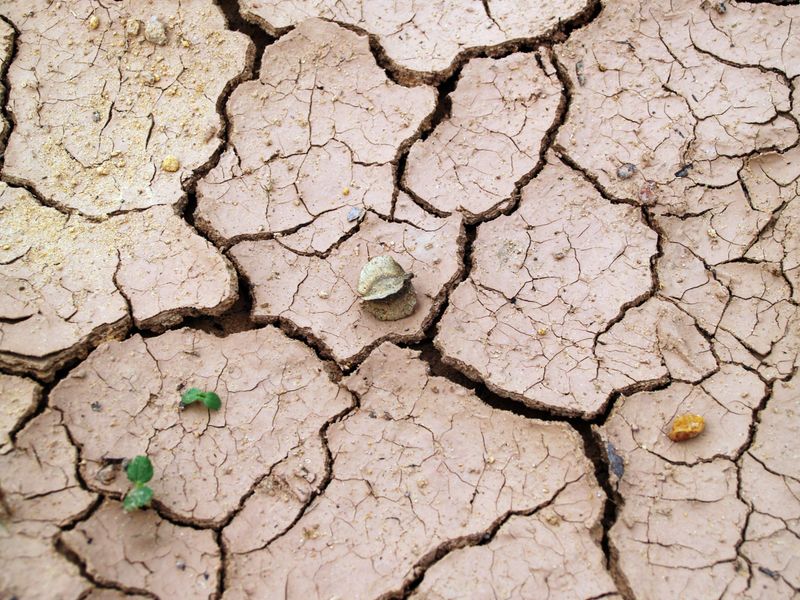
Clay particles are incredibly tiny. That small size means they pack together tightly, leaving almost no space for water or air to move through.
Sandy soil has large particles with big gaps between them. Clay is the opposite, and that difference changes everything about how your garden handles rain.
When water hits clay-heavy ground, it cannot absorb fast enough. The surface seals up almost like a lid, and runoff begins almost immediately.
Roots need both water and oxygen to stay healthy. Clay traps water but blocks the airflow roots depend on, creating an oxygen-poor environment underground.
Heavy rain makes this worse in a hurry. A heavy storm can overwhelm clay soil quickly, pushing water sideways across the yard instead of down into the earth.
The Mid-Atlantic region gets significant rainfall in spring and fall. Gardens here face repeated wet cycles that compact clay even further over time.
Soil compaction also comes from foot traffic and heavy equipment. Every time someone walks across wet clay, those tiny particles get pressed together even more tightly.
Freeze-thaw cycles in winter break down soil structure too. Clay that freezes and thaws repeatedly loses its ability to hold a crumbly, workable texture.
Understanding why clay drains poorly helps you pick the right fix. This soil strategy targets these exact problems at the structural level, not just the surface.
What Maryland Gardeners Are Adding To Clay Soil Before Rain
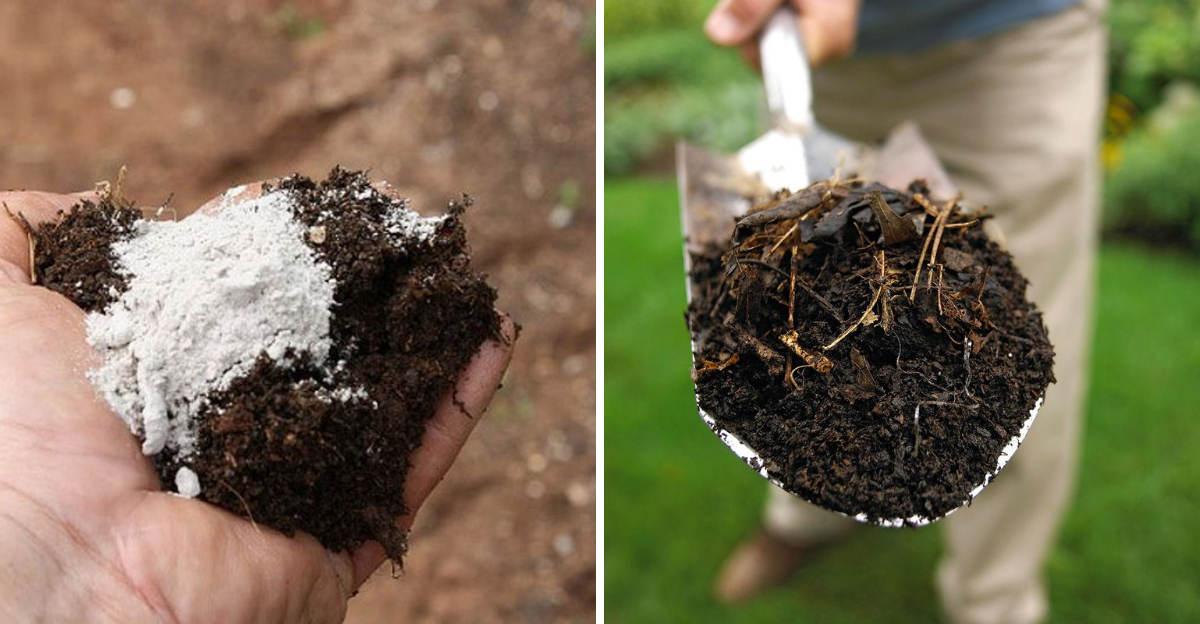
Extension gardening guides across the Mid-Atlantic increasingly recommend combining gypsum and compost. Many home gardeners have adopted the pairing, applying both right before a forecasted storm.
This combined approach tackles clay from two angles at once. Gypsum helps break apart the tight particle structure while compost feeds the soil life that keeps it loose long-term.
Some gardeners are also adding perlite to heavy beds. Perlite is a lightweight volcanic mineral that creates permanent air pockets, even in the densest clay ground.
Biochar is another amendment gaining fans in Mid-Atlantic gardens. This charcoal-like material holds nutrients and moisture while improving the overall porosity of clay-heavy soil.
Your Maryland Garden Changes Every Week. Your Plan Should Too.
Gardening in Maryland changes quickly throughout the season. Every Friday you’ll receive a simple weekly plan showing exactly what to plant, prune, fertilize, harvest, and protect so you never miss the right timing.
Cover crops are a popular pre-winter strategy too. Plants like crimson clover and winter rye push roots into clay, gradually helping loosen its structure over the cold months.
Raised beds are a more intensive solution for severe clay problems. Building up twelve inches of quality soil above the clay layer gives plants a fresh start without fighting the ground below.
Mulching heavily before a storm also helps. A thick layer of wood chips or straw slows surface runoff and gives water more time to soak in gradually.
The soil trick Maryland gardeners rely on is not one single product. It is a smart combination of timing, the right amendments, and a little patience applied consistently before each major rain event.
Start with one change this season and build from there. You’ll likely notice better drainage, healthier plants, and fewer post-storm puddles
Best Time And Method To Apply Soil Amendments
Timing matters more than most gardeners realize. Applying amendments right before a forecasted rain event is actually one of the smartest moves you can make.
Rain helps work materials into the soil naturally. Instead of spending hours watering amendments in, you let the storm do the heavy lifting for free.
Aim to apply your chosen amendment one to two days before heavy rain. That window gives the material time to settle without getting washed away before it can absorb.
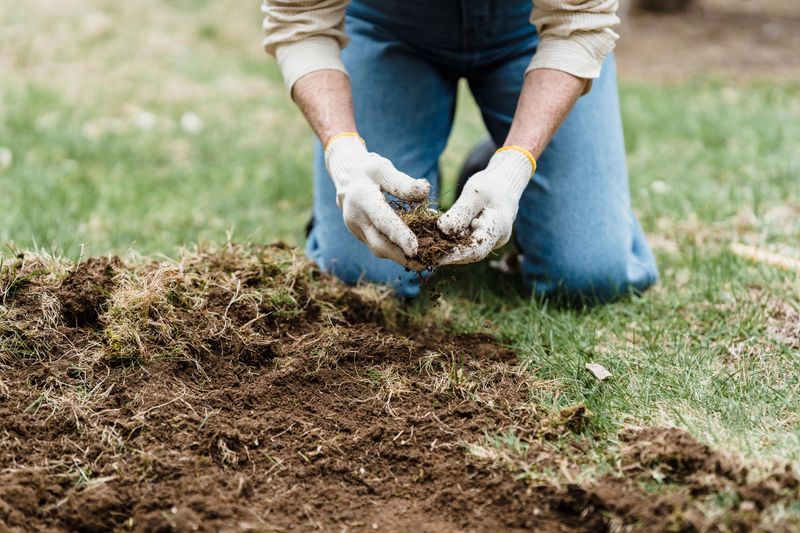
Always loosen the top few inches of soil before adding anything. A garden fork or tiller opens up channels that help amendments reach the root zone faster.
Spread your amendment evenly across the surface. Clumping it in one spot creates uneven results and can actually cause drainage problems in concentrated areas.
For large garden beds, a drop spreader works well for even coverage. For smaller areas, a garden rake and some elbow grease get the job done just as effectively.
Avoid applying amendments to soaking wet ground. Wet clay smears instead of mixing, and working it when it is already saturated does more harm than good.
The sweet spot is moist but not muddy soil. Press your finger into the ground, and if it holds shape without sticking, conditions are right for amending.
Getting the timing right makes the biggest difference. Nail the application window and your soil will be ready to handle whatever the next storm throws at it.
How Gypsum Improves Soil Structure Without Changing pH
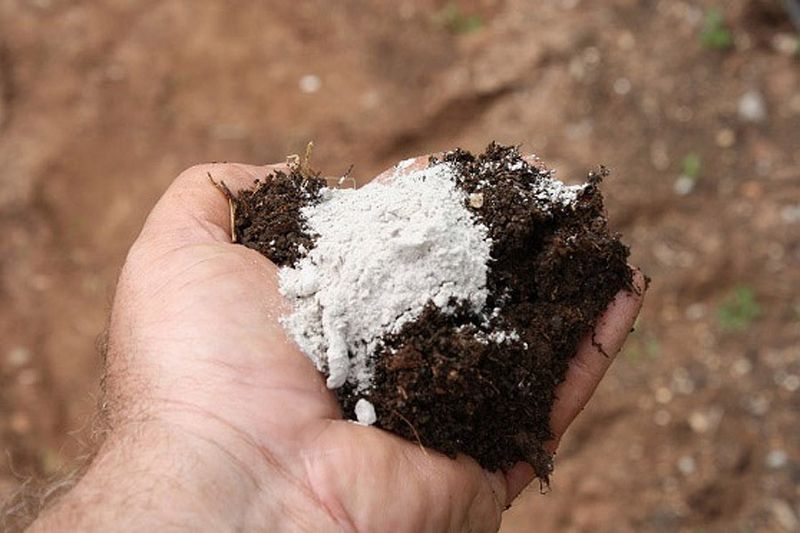
Gypsum is a widely used tool for clay soil, though its benefits depend on your soil’s specific makeup. It has been used to condition heavy clay soils for decades, and unlike lime, it works without changing your soil’s pH.
Most soil amendments change acidity levels when added. Gypsum is the rare exception, making it safe for plants that need a specific pH to thrive.
Gypsum can help loosen clay through a process called flocculation. This effect is strongest in soils with high sodium content, so a soil test is worth doing first to see how much benefit you can realistically expect on your particular clay.
Sulfur in gypsum also helps flush out sodium. This benefit matters most in soils near roads that get salted during winter, where sodium buildup is a common cause of compaction.
Applying gypsum before a heavy rain is a technique recommended in several university extension guides for the Mid-Atlantic region.
Gardening guides often cite forty pounds per one thousand square feet as a starting point, but a soil test is the only reliable way to confirm the right amount for your yard. Spread it evenly, rake it lightly into the top inch, and let the storm take it from there.
Results vary by soil type, and some gardeners report noticing improved drainage within a few weeks of the first application, though timelines differ from yard to yard.
Gypsum is also safe around edible plants, children, and pets. That peace of mind makes it a go-to amendment for family-friendly gardens across the Mid-Atlantic region. Simple, affordable, and effective, gypsum earns its place in every clay-fighting toolkit.
Compost And Organic Matter As A Long-Term Fix
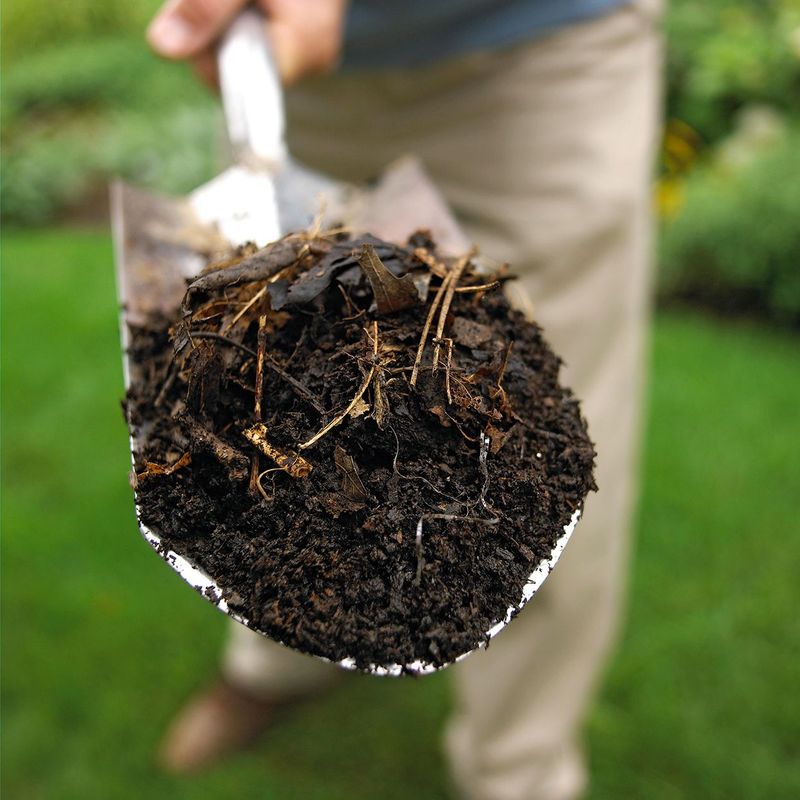
Compost is one of the most reliable long-term soil amendments. Nothing rebuilds broken soil structure quite like a steady diet of organic matter added season after season.
When compost breaks down, it creates tiny pockets between soil particles. Those spaces hold air and water in the right balance, which is exactly what clay soil lacks.
Organic matter also feeds the microbes living in your soil. Healthy microbial activity loosens compacted ground naturally, doing the work you would otherwise have to do by hand.
Earthworms follow the food. Add compost regularly and worm populations grow, and those worms dig tunnels that dramatically improve drainage over time.
Apply two to three inches of compost across your beds each season. Work it into the top six inches of soil for the best results before a storm rolls through.
Aged wood chips and leaf mold are excellent additions alongside compost. Both break down slowly, feeding soil life and improving structure throughout the growing season.
Do not rush organic matter results. Unlike gypsum, which works quickly on structure, compost needs multiple seasons to fully transform heavy clay into something workable.
Mixing compost with gypsum gives you both short-term and long-term benefits. Together, they tackle clay from two different angles at the same time.
Think of compost as your soil’s retirement fund. Every shovelful you add today pays dividends in better drainage, healthier roots, and fewer post-storm puddles for years to come.
Signs Your Clay Soil Needs Amending Before The Next Storm
Puddles that hang around for hours are a red flag. If your yard looks like a kiddie pool after rain, your soil is telling you something important.
Clay soil holds water instead of letting it pass through. Roots sitting in soggy ground can develop rot, which weakens your plants over time.
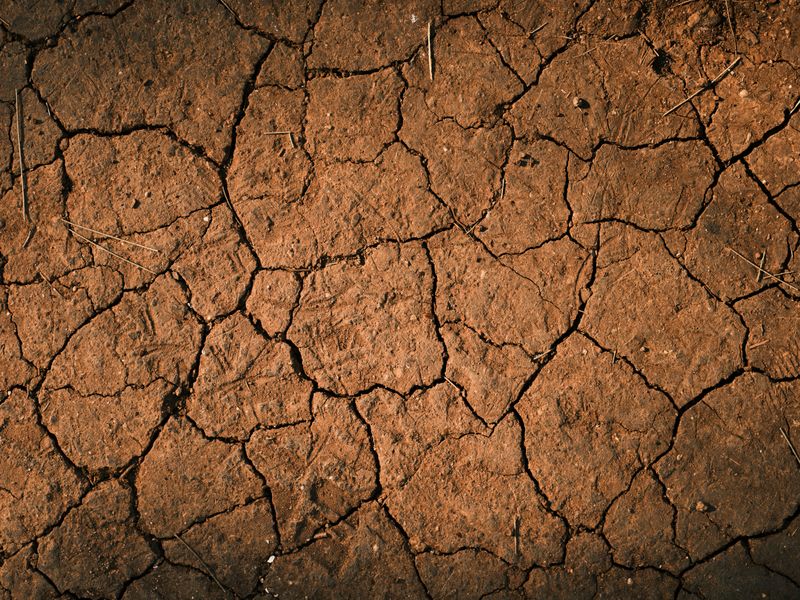
Another sign is soil that gets rock-hard when dry. You should not need a pickaxe to dig a basic garden bed.
Compaction is a major issue with clay-heavy ground. When you walk across the lawn and the surface barely gives, that is a sign the structure underneath is broken down.
Slow-draining soil also attracts fungal problems. Mold, root rot, and mildew love sitting moisture, and they will take over before you even notice.
Check your soil after a light rain. If water pools on the surface for more than thirty minutes, you have a drainage problem worth fixing before the next big storm hits.
One simple test is the jar test. Fill a jar with soil and water, shake it, and watch how the layers settle to figure out your clay percentage.
Knowing your soil type is the first step. Using this soil approach effectively starts with understanding what you are actually working with in your yard.