Think Twice Before Touching This Bright Green Caterpillar In Maryland Gardens
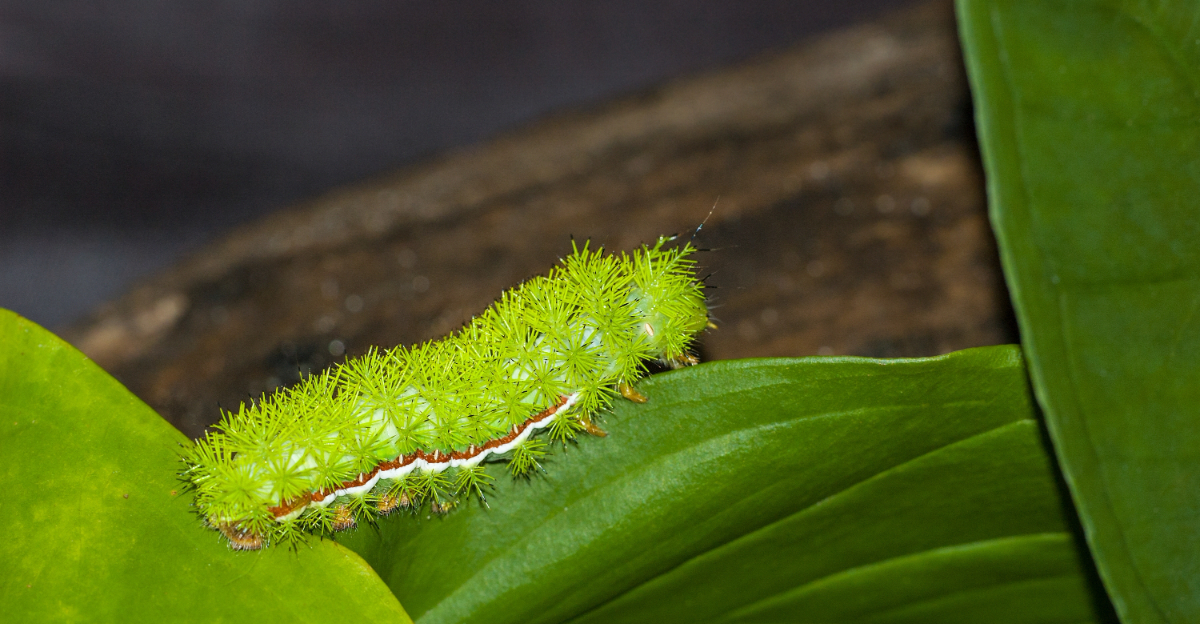
Your fingers itch to touch that bright green cushion of spines. Maryland gardeners whisper about a creature they refuse to name. Pain hits within seconds, sharp and impossible to ignore.
Those soft spines hide venom capable of serious damage. Children often mistake it for a friendly, colorful bug.
Gardeners across Maryland have learned to spot it fast. Some reactions last for hours, refusing to fade quickly.
Allergic responses can turn a sting into a medical emergency. Curiosity draws hands toward it before caution can intervene. Wildlife experts recommend observing from a safe distance only.
Touching it can cause pain to spread quickly through the arm. Doctors warn reactions can escalate quickly in sensitive people. Yet this mysterious creature eventually becomes something entirely different.
Knowing how to identify it protects you and your family. Every detail about its behavior matters before contact happens. You need to know what it is before touching anything.
What Is The Io Moth Caterpillar
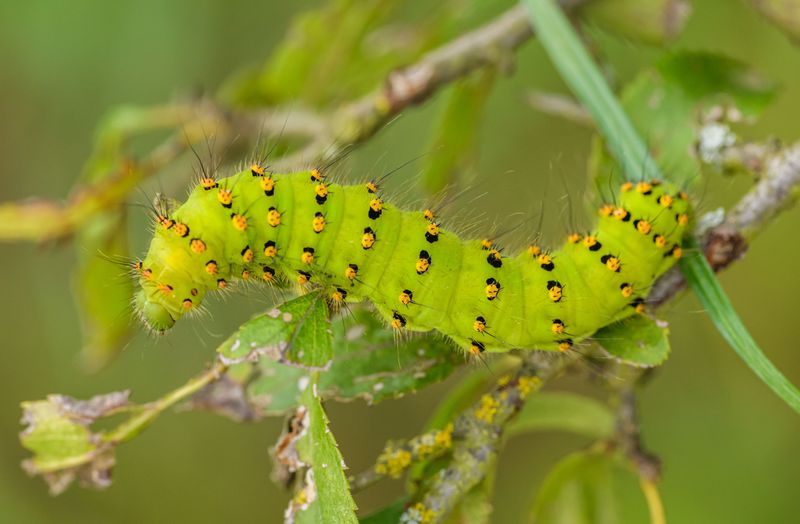
Bright colors on this caterpillar act as a warning sign to predators. The Io moth caterpillar, known scientifically as Automeris io, is one of the most striking insects you will find in a Maryland garden.
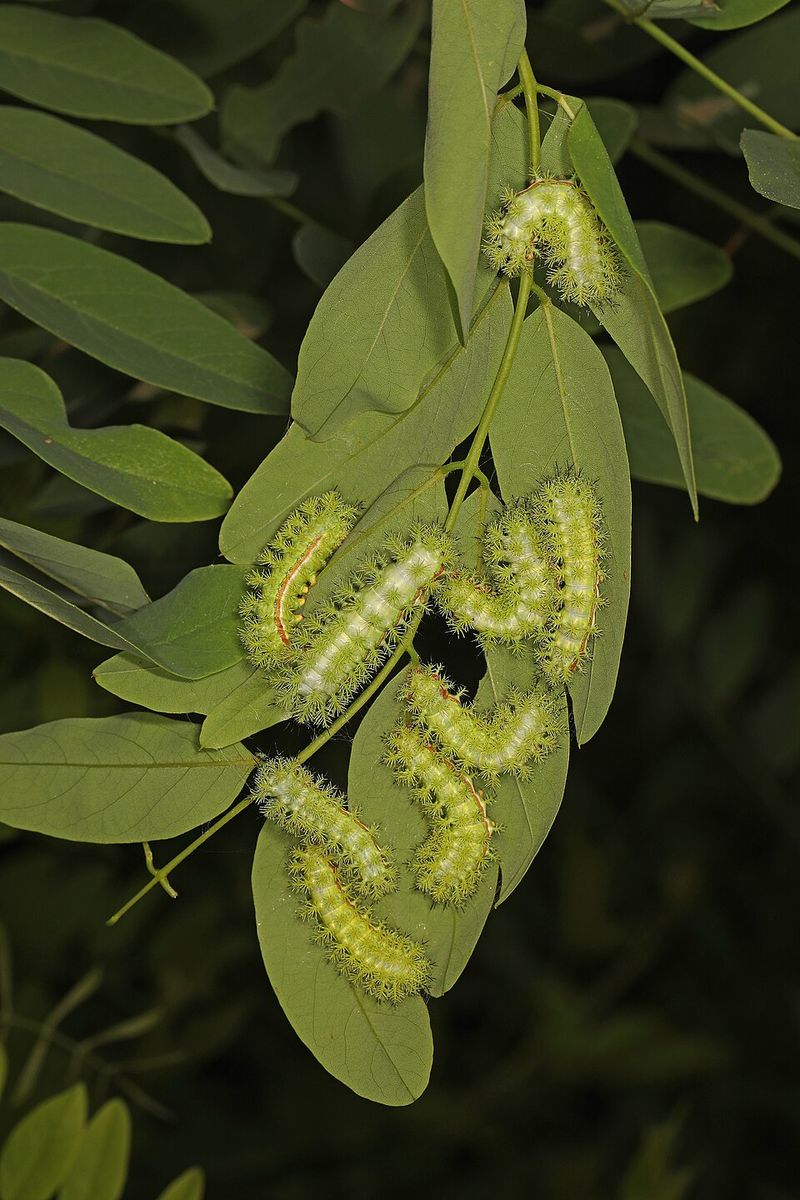
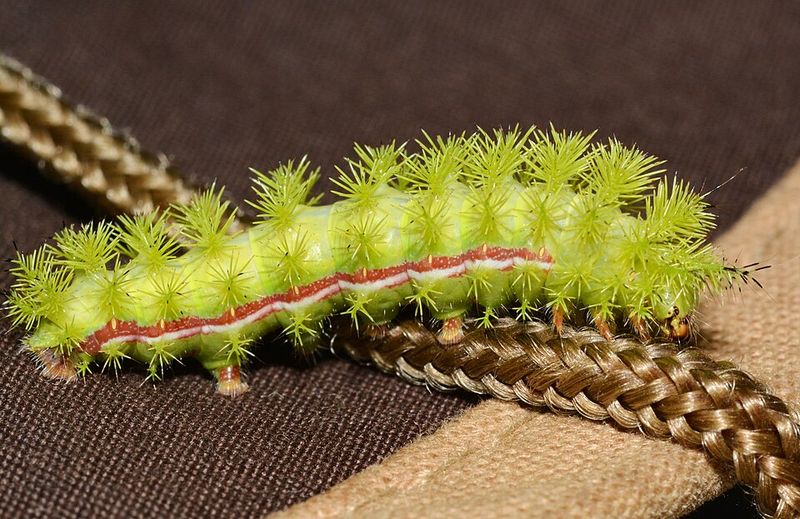
This caterpillar is lime green with bold red and white stripes running along each side. Those colors are not just for show. They signal danger to predators and, unfortunately, to curious humans too.
The body is covered in clusters of sharp, hollow spines called urticating hairs. Each spine connects to a venom gland underneath the skin. When pressure is applied, the spines break and release venom into whatever touched them.
Adult Io moths are actually beautiful, with yellow wings and bold eyespots on the hindwings. But the caterpillar stage is where the real hazard lives.
Most encounters happen between April and October, when the larvae are actively feeding across two generations.
These caterpillars go through several molts as they grow. Early instars are small and orange, making them easier to overlook. By the final instar, they can reach nearly two and a half inches long and are fully armed.
Knowing what this creature looks like is your first line of defense. Many gardeners mistake it for a harmless species because it blends in so well with foliage.
Once you recognize the bright green body and radiating spine clusters, you will never forget it.
Where It Rests In Maryland Gardens
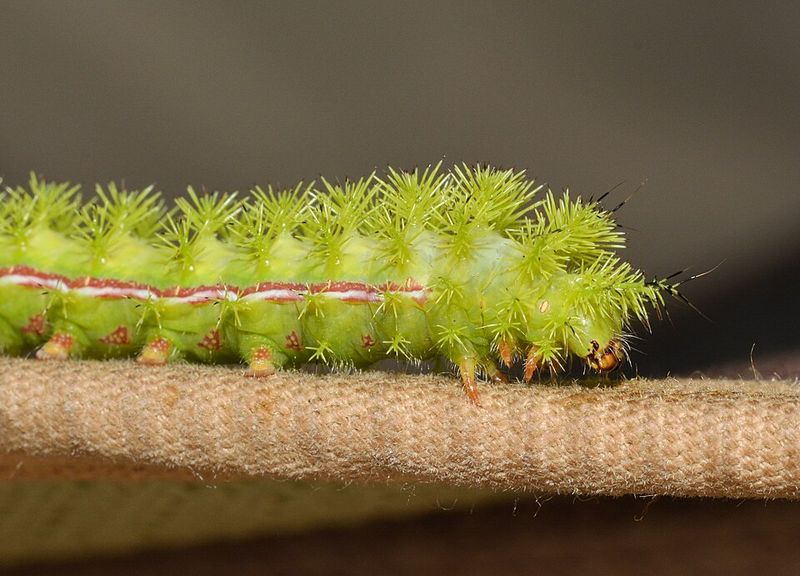
Finding one of these caterpillars is easier than you might think. The Io moth caterpillar feeds on a surprisingly wide range of host plants found in typical Maryland yards.
Common targets include roses, cherry trees, azaleas, and corn. Clover, hibiscus, and willow are also popular feeding spots. If you grow any of these, stay alert from spring through fall.
The caterpillar tends to rest on the underside of leaves during the day. This habit makes it easy to miss until your hand brushes right against it. Gardeners pruning shrubs or harvesting vegetables are especially at risk.
Your Maryland Garden Changes Every Week. Your Plan Should Too.
Gardening in Maryland changes quickly throughout the season. Every Friday you’ll receive a simple weekly plan showing exactly what to plant, prune, fertilize, harvest, and protect so you never miss the right timing.
In wooded areas near homes, oak and maple trees serve as additional hosts. These caterpillars are common along forest edges, which puts many Maryland properties in the danger zone.
Suburban gardens that back up to tree lines are particularly worth watching. Young caterpillars often feed in groups, which means one plant can host a whole cluster of them. As they mature, they spread out and become solitary feeders.
Spotting one usually means others are nearby on the same plant. The bright green color that seems so obvious in photos actually blends well with healthy foliage in real life.
Dappled sunlight and dense leaf coverage make them nearly invisible to the untrained eye. Slow down when working in the garden and check leaves carefully before grabbing anything.
Why Its Sting Causes Intense Pain
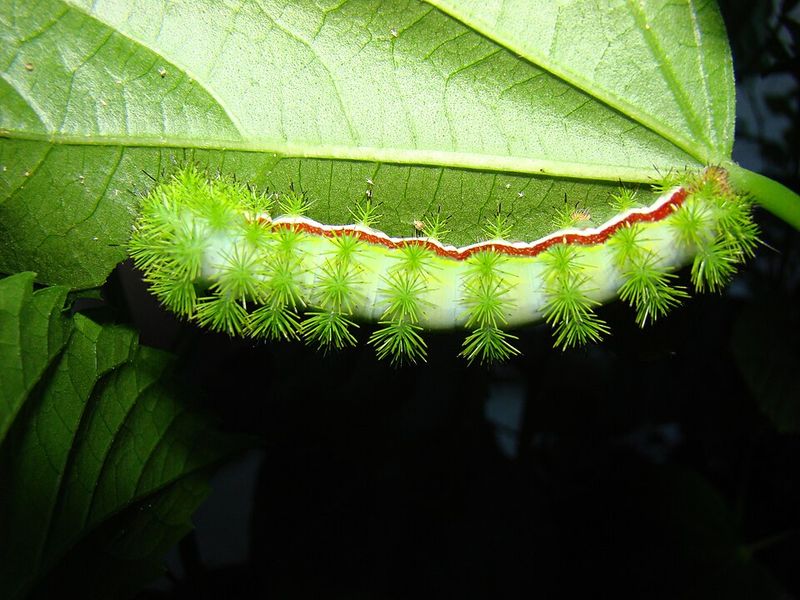
Pain develops quickly after contact. Within seconds of touching an Io moth caterpillar, a sharp burning sensation spreads across the skin. Many people describe it as feeling like a wasp sting, but more intense and longer-lasting.
The hollow spines are designed to break on contact. Once broken, they act like tiny syringes, injecting venom directly under the skin. The more spines that make contact, the worse the reaction.
The venom contains a mix of compounds that trigger inflammation. Histamines and other irritants cause the surrounding tissue to swell and redden quickly. The burning sensation can persist for several hours without treatment.
Children tend to have stronger reactions because their skin is more sensitive. Adults with allergies or skin conditions may also experience more severe symptoms. Even a brief, light touch is enough to cause a significant response.
The spines themselves are another problem. They often break off and remain embedded in the skin after contact.
Each broken spine continues to release venom as long as it stays lodged in the tissue. Removing them incorrectly can push them deeper, making things worse.
Interestingly, the caterpillar does not sting intentionally. It has no stinging mechanism in the way a bee or wasp does.
The spines are purely defensive, designed to discourage predators. But that passive defense system is effective, and it does not distinguish between a bird and a curious gardener.
Signs You Have Been Stung
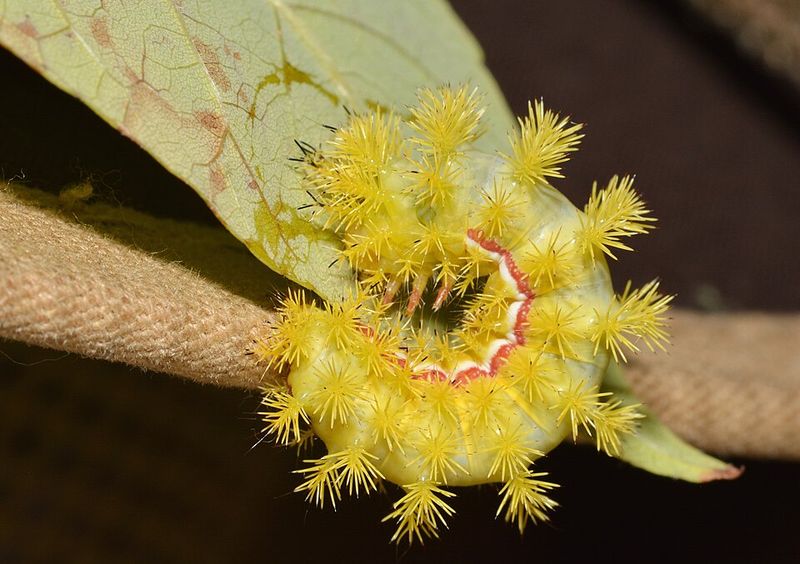
Your arm starts hurting out of nowhere while you are weeding the garden. That sudden sharp pain is often the first clue that you have made contact with an Io moth caterpillar. Recognizing the symptoms quickly helps you respond faster and more effectively.
The most immediate sign is a sharp, stinging pain at the point of contact. It usually starts within seconds and intensifies over the next few minutes. The area may feel like it is on fire or being pricked repeatedly.
Redness and swelling follow shortly after the initial sting. The skin around the contact site becomes inflamed and warm to the touch. A raised welt or hive-like patch often forms within minutes of contact.
Some people develop a grid-like rash that mirrors the pattern of the spine contact. This distinctive mark can help suggest what caused the reaction, though a doctor should confirm it. The rash may spread slightly as the venom moves through the surrounding tissue.
Itching typically sets in after the burning starts to ease. Scratching the area is tempting but makes symptoms worse by spreading the venom. Keeping your hands away from the site is harder than it sounds.
In rare cases, more serious reactions can occur. Nausea, headache, and swollen lymph nodes have been reported by some individuals.
Anyone experiencing breathing difficulty or chest tightness should seek medical attention right away, as these may signal an allergic response that needs professional care.
Steps To Take After Contact
Stay calm and act quickly. The faster you treat an Io moth caterpillar sting, the better your outcome will be. Panicking causes you to rub the area, which drives spines deeper into the skin.
Your first move should be to remove the spines without rubbing. Use a piece of tape, like duct tape or packing tape, and press it gently over the affected area. Lift it straight off to pull the broken spines out of the skin.
Repeat the tape method several times to get as many spines as possible. A magnifying glass can help you spot remaining fragments.
Tweezers can remove larger visible spines, but use them carefully to avoid breaking the spines further.
Once the spines are removed, wash the area thoroughly with soap and water. This helps clear any remaining venom from the surface. Pat the skin dry gently without rubbing or irritating the site further.
Applying an ice pack wrapped in a cloth helps reduce swelling and numbs the pain. Keep it on for fifteen to twenty minutes at a time. Over-the-counter hydrocortisone cream can also ease inflammation and itching.
Oral antihistamines like diphenhydramine can help manage the allergic response. Taking one as soon as symptoms appear can reduce the intensity of the reaction.
If symptoms worsen after a few hours or cover a large area of the body, contact a healthcare provider for guidance on next steps.
Tips To Avoid An Encounter
Prevention is generally easier than treating a sting after it happens. A few simple habits can keep you and your family safe from a painful run-in with the Io moth caterpillar in your Maryland garden all season long.
Always wear gloves when gardening, especially from spring through fall. Thick leather or rubber gloves provide a solid barrier against spines. Thin fabric gloves may not be enough if you press directly against a caterpillar.
Long sleeves are equally important when working near shrubs, trees, or dense plantings. Exposed forearms are one of the most common contact points.
A lightweight long-sleeve shirt keeps skin protected without making you overheat in warm weather.
Get into the habit of inspecting plants before grabbing them. Flip leaves over to check the undersides, where caterpillars tend to rest. A quick visual scan takes only seconds and can save you a lot of pain.
Teach children to look before they touch anything in the garden or yard. Kids are naturally curious and often pick up insects without thinking. A simple rule, like always asking an adult before touching a caterpillar, goes a long way.
If you spot an Io moth caterpillar, remove it using a stick or gloved hand and relocate it away from high-traffic areas. Avoid squishing it, as that can still cause spine contact.
Staying aware and taking small precautions turns your garden back into a safe, enjoyable space for everyone who spends time there.