The Texas Vine That Keeps Coming Back No Matter How Many Times You Cut It
Some plants are annoying. This one is downright stubborn. Texas gardeners know the routine all too well.
You spot a thorny vine creeping up the fence or twisting through a shrub. You grab your pruners, cut it back to the ground, and call it a win. A few weeks later, fresh green shoots are climbing right back up.
The reason is hidden below the surface. This native vine grows from thick, knobby roots that store a huge amount of energy underground. Cutting the top only removes what you can see.
The rest stays safe in the soil, ready to send up new growth whenever it gets the chance. Its sharp thorns don’t make the job any easier, either.
Tired of fighting the same vine year after year? Here’s why it keeps returning and how to finally get the upper hand.
The Vine That Won’t Quit
Ask any Texas homeowner about their toughest yard enemy, and greenbrier might top the list. Folks also call it catbrier or saw greenbrier. The name catbrier comes from the way its thorns snag clothes like a cat’s claws.
Greenbrier is a native vine. That means it grew in Texas long before anyone planted lawns or built fences. You can find it in shady woods, along fencerows, in empty lots, and yes, right in your backyard.
The vine climbs using tendrils. Tendrils are thin, curly strands that wrap around anything they touch.
A branch, a chain link fence, or even your rose bush will do just fine. Once the tendrils grab hold, the vine pulls itself higher and higher.
Over time, it forms thick, thorny tangles. These mats can cover whole shrubs and block sunlight from the plants underneath.
In some spots, greenbrier climbs twenty feet or more into trees. Walking through a patch of it is no fun at all.
Several kinds of greenbrier grow in Texas. They belong to a plant group called Smilax. Some have lots of thorns, while others have only a few. All of them share the same stubborn attitude, though.
Here’s a fun bit of history. Native Americans and early settlers ate young greenbrier shoots, which taste a little like asparagus. Some people still snack on the tender tips in spring.
So why should you care about this plant? Because knowing your opponent is the first step to winning. Greenbrier is not just a weed you can yank and forget.
It’s a survivor with some clever tricks, and learning them will help you decide what to do next.
How To Recognize It
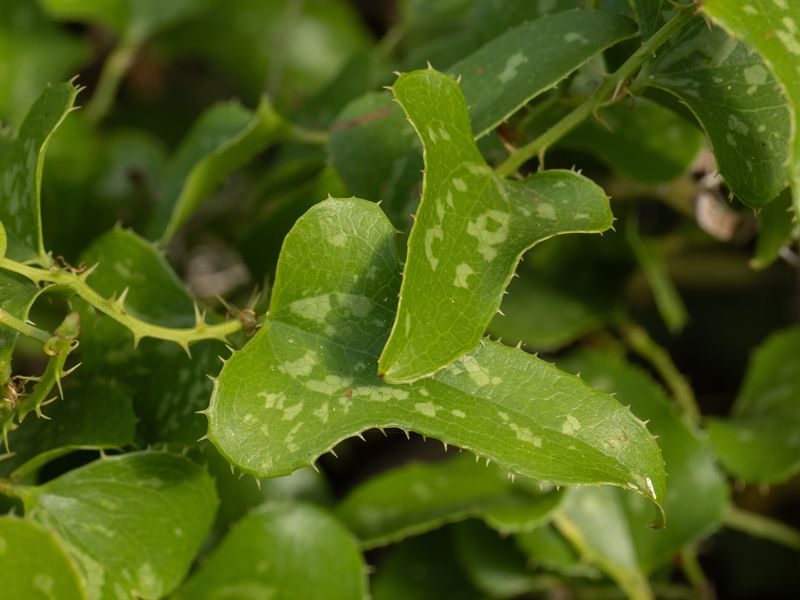
Spotting greenbrier is easier than you might think once you know the clues. Start by looking at the stems. They stay green all year, even in winter, and they often carry sharp thorns.
Run your eyes along the vine, but keep your fingers back. The thorns can be small and hooked or long and stiff. Gloves are a smart idea whenever you get close to this plant.
Your Texas Garden Changes Every Week. Your Plan Should Too.
Gardening in Texas changes quickly throughout the season. Every Friday you’ll receive a simple weekly plan showing exactly what to plant, prune, fertilize, harvest, and protect so you never miss the right timing.
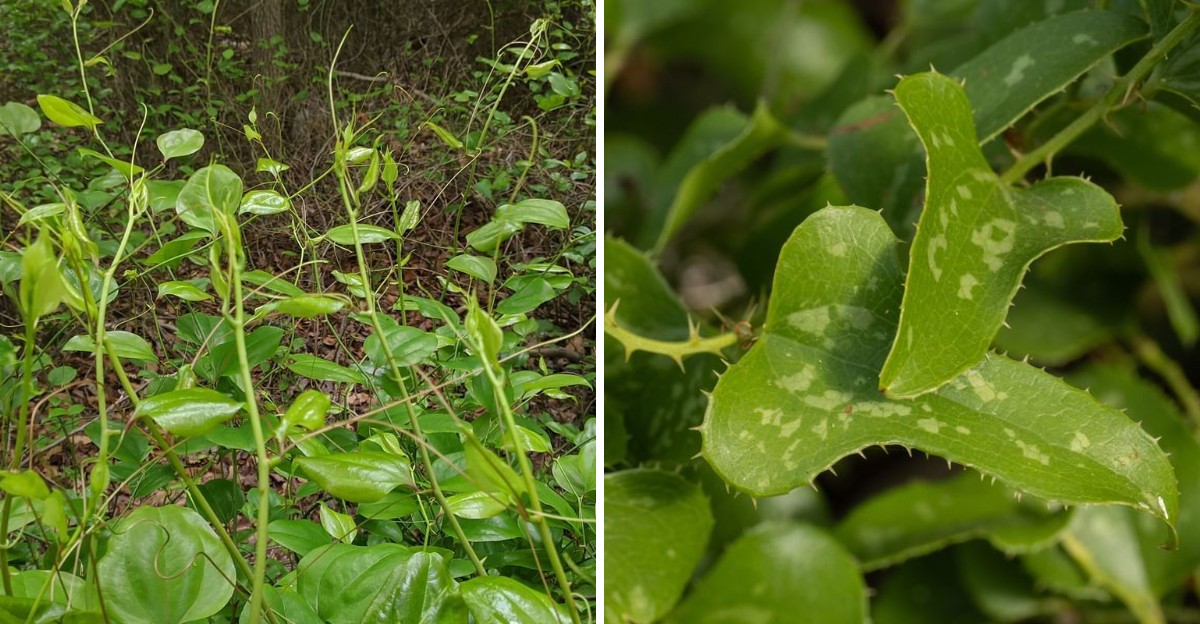
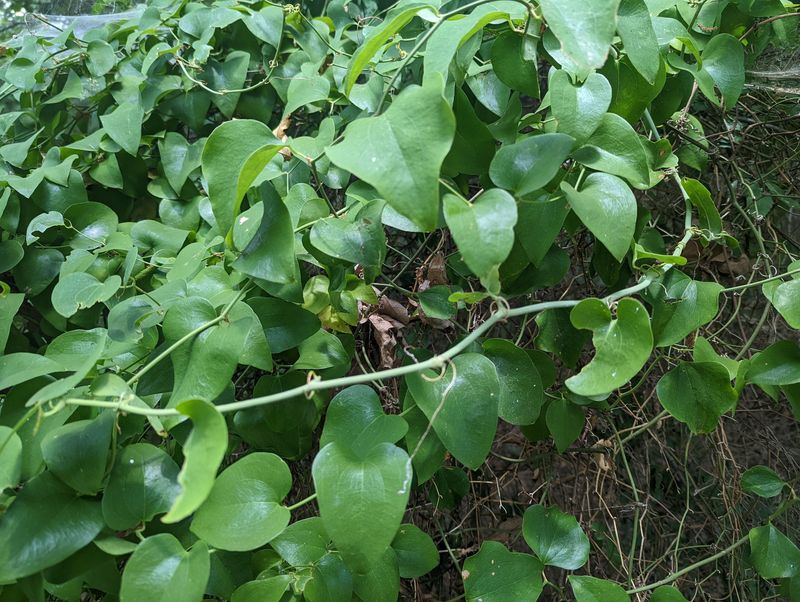
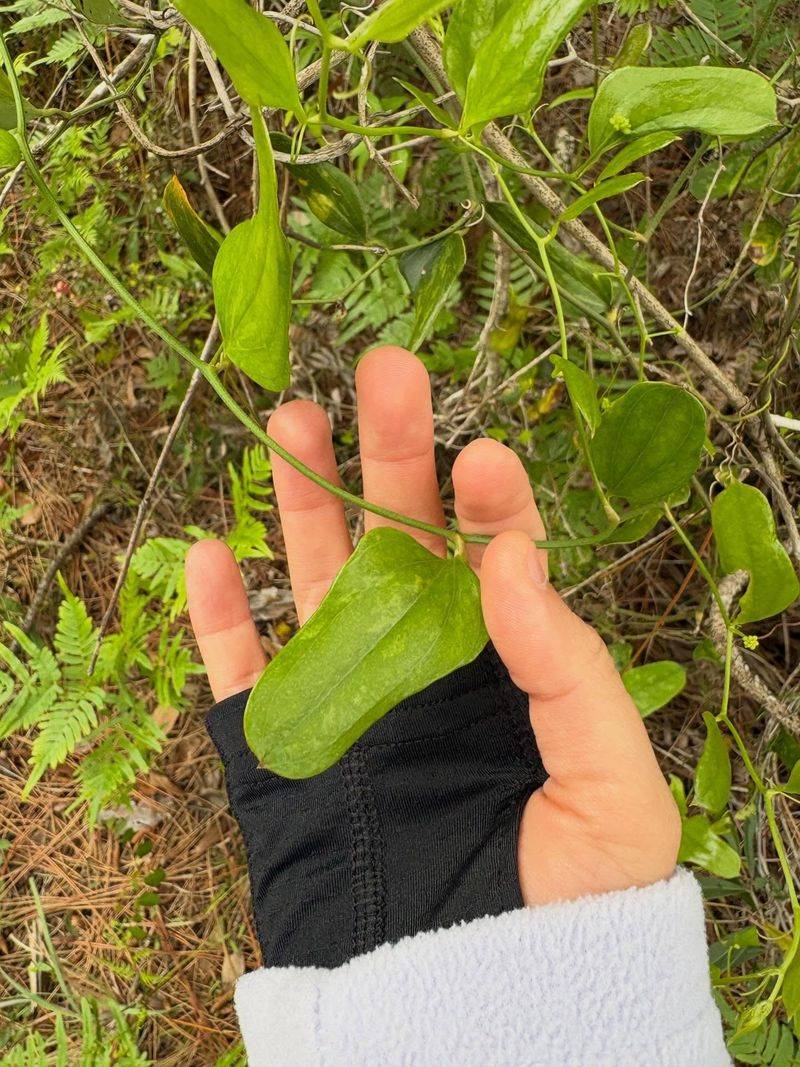
Next, check out the leaves. Greenbrier leaves are tough and glossy, almost like they’ve been waxed.
Many are shaped like a heart or a wide oval. Some leaves have lighter patches or spots, which gives them a mottled, marbled look.
On saw greenbrier, the leaf edges may have tiny prickles. That’s where the word saw comes from. If you gently rub the edge of a leaf and it feels scratchy, you’ve likely found your vine.
Leaves also have a neat detail. Look closely, and you’ll see several veins running from the base to the tip, side by side. Most other vines have veins that branch out like a feather instead.
In fall, greenbrier puts on small clusters of berries. They start green and turn a dark blue or black as they ripen. The berries often hang on through winter, making the vine easy to spot when other plants are bare.
Watch for a few look-alikes. Grapevines have tendrils too, but their stems are brown and shaggy with no thorns. Poison ivy has three leaflets and no thorns at all.
A quick tip: snap a photo and use a plant identification app. Pair that with these clues, and you’ll know for sure what you’re dealing with.
Why Cutting It Doesn’t Work
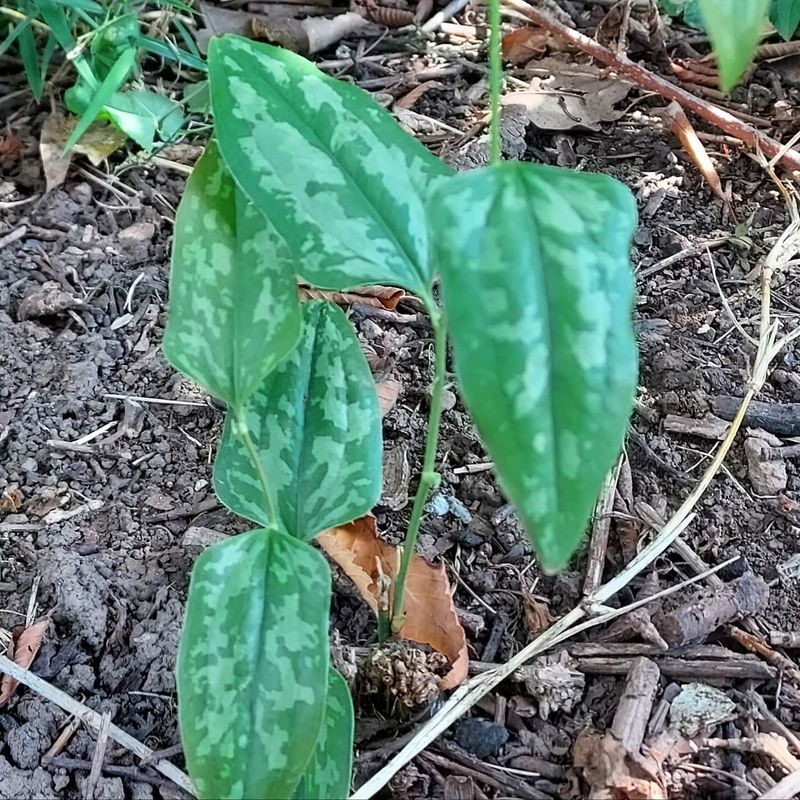
You spend a hot Saturday hacking away at a thorny tangle. Your arms are scratched and your shirt is soaked. Two weeks later, fresh green shoots are popping up in the very same spot.
Frustrating, right? The reason sits quietly under the soil. Greenbrier grows from large, woody tubers. A tuber is a thick underground storage part, a lot like a potato.
These tubers are packed with stored energy. The plant fills them up during the growing season. When you cut off the vine, the tuber just uses its savings to grow new stems.
And it doesn’t stop at one. Often the tuber sends up several shoots at a time. So cutting one vine can actually leave you with three or four to deal with later.
Some greenbrier tubers get huge. Old plants may have tubers as big as a football, and some weigh many pounds. They can be tangled with other roots and hard to reach.
Think of it like a bank account. Each time you cut the vine, the plant makes a withdrawal to regrow. A big account can handle a lot of withdrawals before it runs low.
So is cutting totally useless? Not quite. If you cut new shoots over and over, the tuber eventually uses up its stored energy. The catch is that this can take years of steady work.
Here’s a practical tip. If you choose the cutting method, stay on schedule. Clip every new shoot as soon as it appears, before its leaves can make more food.
Missing a few weeks lets the plant refill its tank and start over.
How It Spreads Across Your Yard
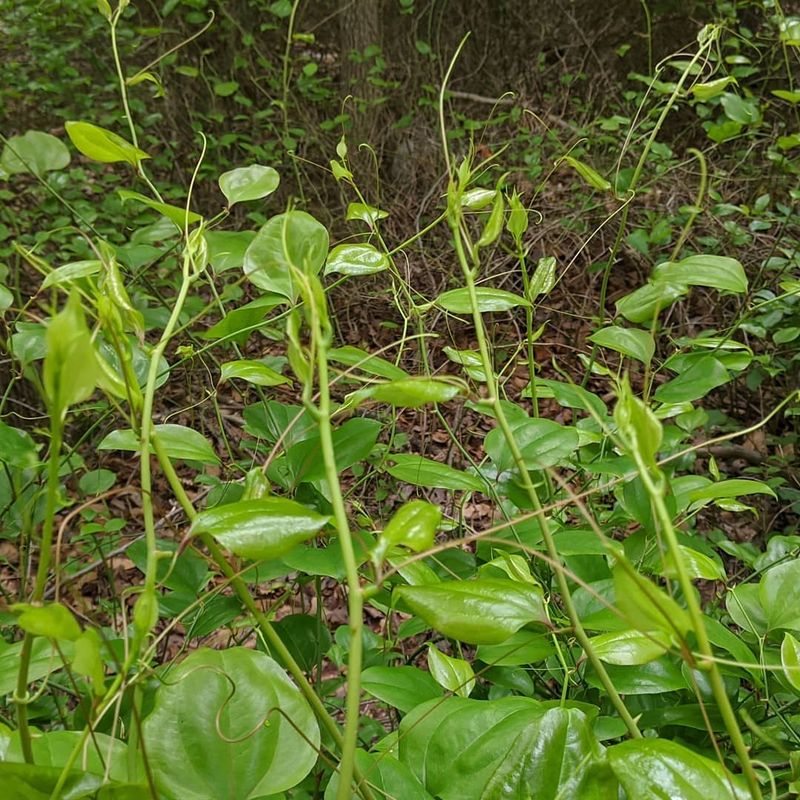
One small vine by the fence seems harmless enough. Then, a few years later, there’s a thorny patch under the oak tree, along the back fence, and near the shed. How did that happen so fast?
Greenbrier has two sneaky ways to travel. The first one happens underground. The plant grows rhizomes, which are long stems that creep sideways beneath the soil.
Along these rhizomes, new tubers form. Each new tuber can push up its own shoots. Over time, one plant turns into a whole colony connected under the dirt, slowly getting wider every year.
The second way happens in the air, thanks to birds. Mockingbirds, cardinals, robins, and other birds love the black berries. They eat them in fall and winter, when other food is hard to find.
The seeds pass right through the birds. Then the birds drop them wherever they rest. Where do birds like to rest? On fences, power lines, and tree branches, of course.
That’s why new greenbrier plants so often show up along fence lines and under trees. The birds are planting them for free. It’s a pretty clever system when you think about it.
So what can you do? Walk your yard a few times each year and look for small seedlings. Young plants are much easier to pull because their tubers are still tiny.
Pay extra attention to spots under bird perches, like feeders and fences. Also check the edges of any existing patch, since that’s where underground spreading shows up first. Catching new growth early can save you a big headache later.
It’s Not All Bad For Wildlife
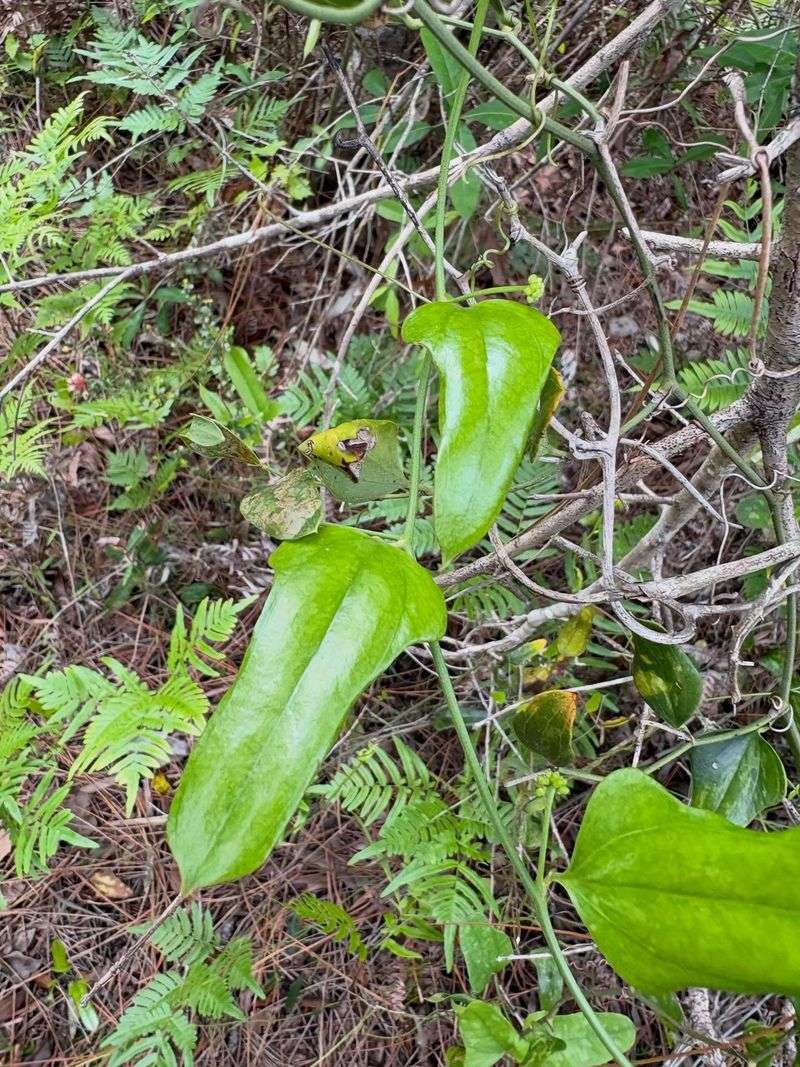
Believe it or not, some creatures would throw greenbrier a party. While gardeners grumble, wildlife is busy enjoying a free meal and a safe place to hide.
Because greenbrier is a native plant, local animals have depended on it for ages. Birds snack on the berries all winter long.
The fruit stays on the vine when most other food is gone, which makes it a real lifesaver in cold months.
Deer like it too. They browse the soft new shoots and leaves in spring. Hunters and land managers often call greenbrier good deer food for exactly that reason.
Then there’s the shelter. Those thorny tangles act like a fortress. Rabbits, quail, and small songbirds can duck inside where hawks, foxes, and cats can’t easily follow.
Many birds also build nests in thick greenbrier patches. The thorns help protect eggs and babies from hungry visitors. It’s a bit like living behind a prickly fence.
Here’s a fun fact. Some people call greenbrier a wildlife grocery store because it offers food in so many seasons. Bees also visit the tiny flowers in spring.
So should you keep it? That depends on where it grows. In a back pasture, a wooded lot, or a wild corner of a large yard, leaving it alone can help local animals thrive.
Near your patio, garden beds, or kids’ play area, it’s a different story. A good compromise is to remove greenbrier where people walk and play, but let a patch stay in a far corner.
That way, you get a neat yard and still support the birds and critters that call Texas home.
How To Finally Get Rid Of It
Good news: greenbrier can be beaten. It just takes the right plan and a little patience. Grab your thickest gloves and let’s get to work.
The most reliable method is digging out the tuber. Use a shovel or a sturdy digging tool to follow the vine down into the soil. Try to lift out the whole tuber, since any leftover piece can sprout again.
Digging works best on young plants. Their tubers are small and close to the surface. Wet soil after a good rain makes the job much easier, so plan your digging for those days.
Older vines are tougher. Their tubers may be deep, huge, or wrapped around tree roots. For these, try the cut and treat method instead.
First, cut each stem close to the ground. Then, right away, paint or dab the fresh cut with an herbicide labeled for woody vines.
Products with triclopyr or glyphosate are common choices. Speed matters, because the cut starts sealing within minutes.
Always read and follow the label. Wear gloves and eye protection. Keep the product away from plants you want to save, and don’t spray it on windy days.
Now comes the patience part. New shoots will likely appear in the weeks ahead. Treat them as they show up, and repeat as needed. It may take a full season or two.
A quick bonus tip: pull the old vines out of shrubs and trees after cutting. Dry vines left hanging can look messy and hide new growth. Stay steady, and your yard will finally be yours again.