These Are The Signs Your Texas Boxwood Has Blight And What To Do Immediately
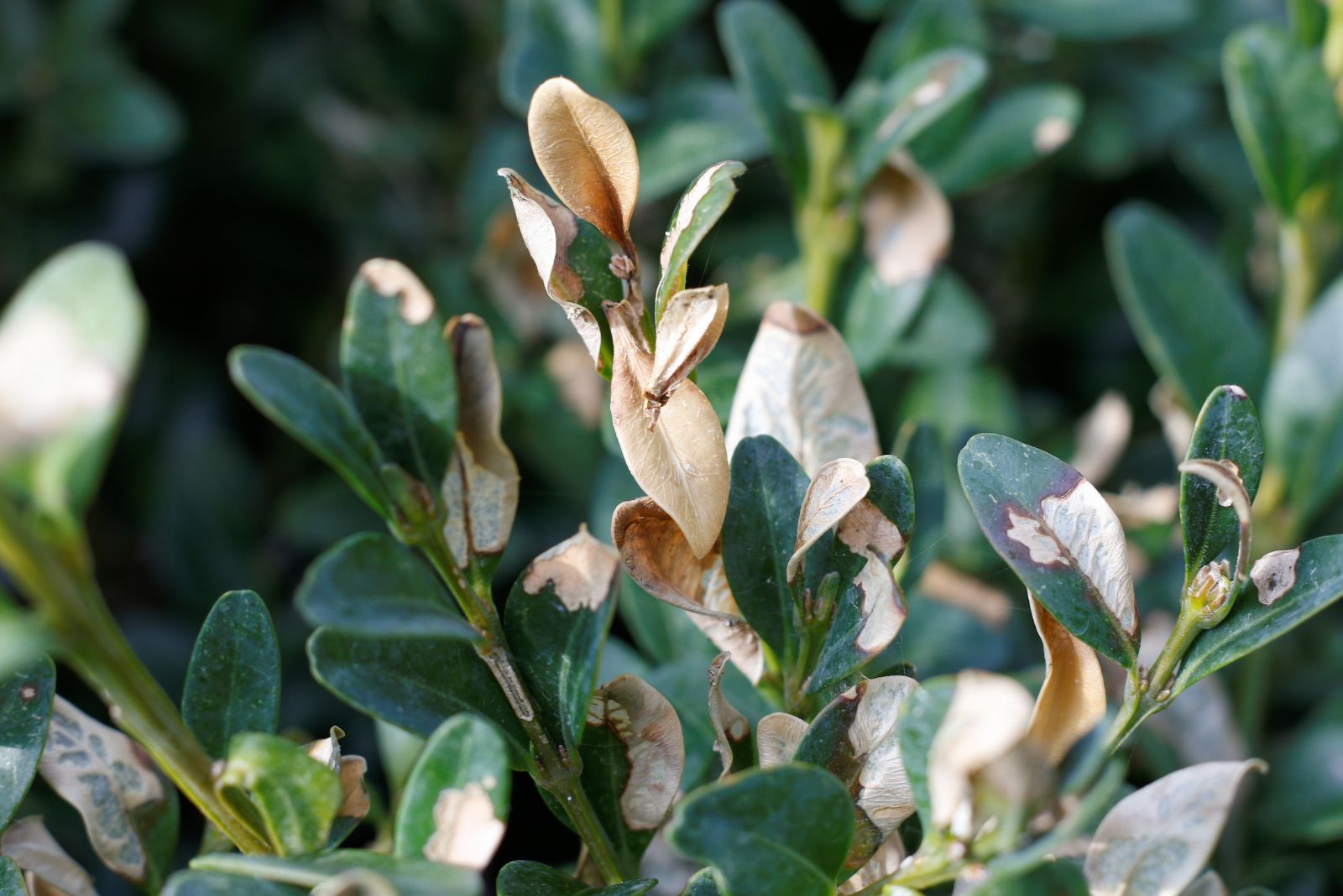
Boxwood blight is one of the more alarming things a Texas gardener can encounter, and the speed at which it moves through a planting is what makes it particularly stressful.
Healthy looking shrubs can deteriorate rapidly once the disease takes hold, and by the time the damage becomes visually obvious, it has often already spread further than it appears.
Texas growing conditions, with the heat and periods of humidity that summer brings, can accelerate that spread in ways that give gardeners very little time to respond effectively.
Recognizing the signs early is the single most important factor in how this situation plays out, because the window between early symptoms and significant damage is narrow and closes fast.
Knowing exactly what to look for, how to confirm what you are dealing with, and what steps to take immediately after gives your remaining boxwoods the best possible chance of coming through intact.
1. Leaf Spots Or Lesions
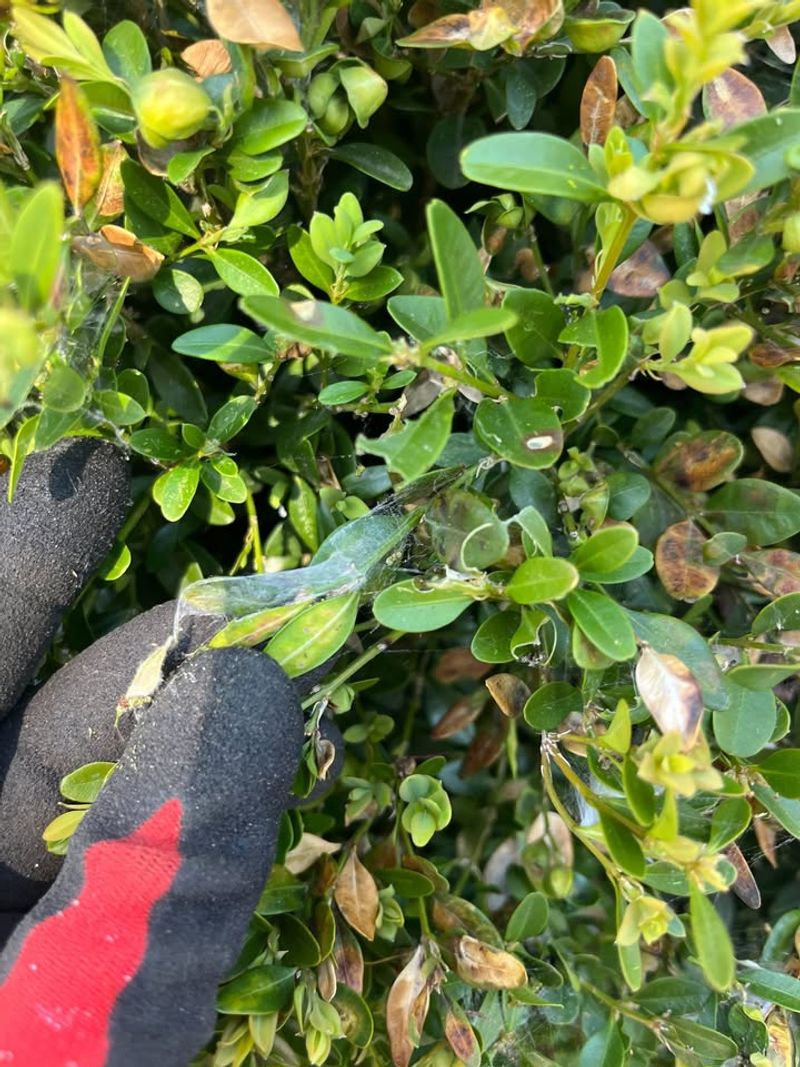
Brown or black circular spots showing up on your boxwood leaves are one of the earliest and most reliable signs that blight has arrived. These spots are usually small at first, but they grow quickly if conditions stay warm and wet.
Many of them are surrounded by a pale yellow halo, which makes them easier to spot against the green leaves.
Gardeners in Texas often mistake these spots for heat stress or insect damage, which is an easy error to make. The key difference is the distinct circular shape and the yellow border around each spot.
Heat stress tends to cause more general browning along leaf edges rather than defined circular marks.
As soon as you notice these spots, take action right away. Pull off every affected leaf you can find and place them in a sealed bag before throwing them in the trash.
Never toss diseased leaves into your compost pile, because the fungus can survive and spread from there.
After removing the leaves, clean your hands and any tools you used with a diluted bleach solution or rubbing alcohol. This simple step helps prevent you from accidentally spreading the fungus to other parts of your garden.
Washing your gloves is just as important as washing your tools. Keep an eye on the plant over the next few days. If new spots appear, repeat the removal process and consider applying a copper-based fungicide to help slow the spread.
Staying consistent with your inspections is one of the most effective habits a boxwood grower can build.
2. Leaf Drop
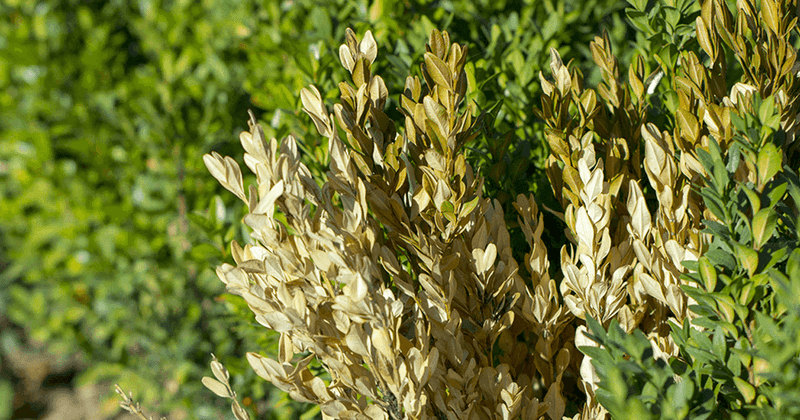
Healthy boxwoods hold their leaves year-round, so when you start seeing leaves falling off outside of the normal growth cycle, that is a red flag worth paying attention to.
Premature leaf drop is one of the most visible signs that your plant is under serious stress from blight. The leaves that fall are often spotted or discolored before they detach.
What makes this sign tricky is that some leaf drop is completely normal, especially in fall and early spring. The difference with blight-related leaf drop is the volume and the timing.
Your Texas Garden Changes Every Week. Your Plan Should Too.
Gardening in Texas changes quickly throughout the season. Every Friday you’ll receive a simple weekly plan showing exactly what to plant, prune, fertilize, harvest, and protect so you never miss the right timing.
If large amounts of leaves are falling during the summer months in Texas, something is definitely wrong, and blight should be near the top of your list of suspects.
Once you confirm that blight is the cause, pruning becomes your best tool. Use clean, sharp pruning shears to cut back the damaged branches.
Removing the most affected parts of the plant reduces the amount of fungal material present and helps the remaining healthy sections recover more effectively.
After every single cut, wipe your pruning shears with rubbing alcohol or a bleach-and-water solution.
This is a critical step that many people skip, but skipping it can spread the fungus from one branch to another with each cut you make. Keep a small spray bottle of disinfectant close by while you work.
Gather all the fallen leaves from the ground around the plant as well. Even fallen leaves carry active fungal spores that can splash back onto the plant during watering or rain. Bag them up and remove them from the garden completely.
3. Twig And Stem Dieback
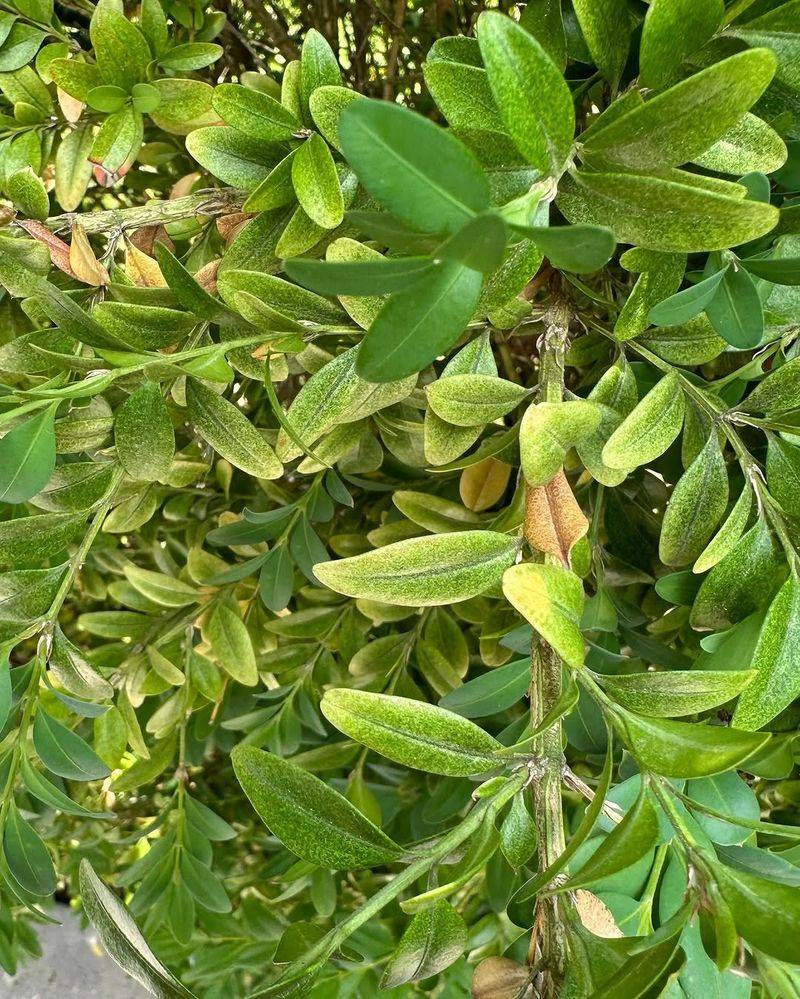
Picture the tips of your boxwood branches turning brown, then slowly darkening all the way down the stem.
That progression is called dieback, and it is one of the clearest signs that boxwood blight has moved beyond the leaves and into the woody parts of your plant. It usually starts at the very tip of a branch and works its way inward.
Dieback is serious because it means the fungus has penetrated deeper into the plant structure. Left unchecked, it can travel down an entire branch and eventually reach the main stems.
In Texas summers, where heat and humidity combine, this process can happen surprisingly fast, sometimes within just a few days of the first visible symptoms.
The right response is to prune back all affected twigs until you reach completely healthy, green tissue. Do not stop cutting at the first sign of brown.
Keep cutting until the inside of the stem looks clean and shows no dark streaking or discoloration. That is how you know you have removed all the infected material.
Sterilizing your tools between every single cut is not optional here. Blight spreads easily on blade surfaces, and one contaminated cut can introduce the fungus to a healthy section of the plant.
Use a 10 percent bleach solution or full-strength rubbing alcohol to wipe blades between cuts.
Dispose of all pruned material in sealed bags away from the garden. Do not leave cut twigs on the ground or pile them near the plant.
Cleaning up thoroughly after pruning is just as important as the pruning itself when it comes to managing this disease.
4. Black Streaks On Stems
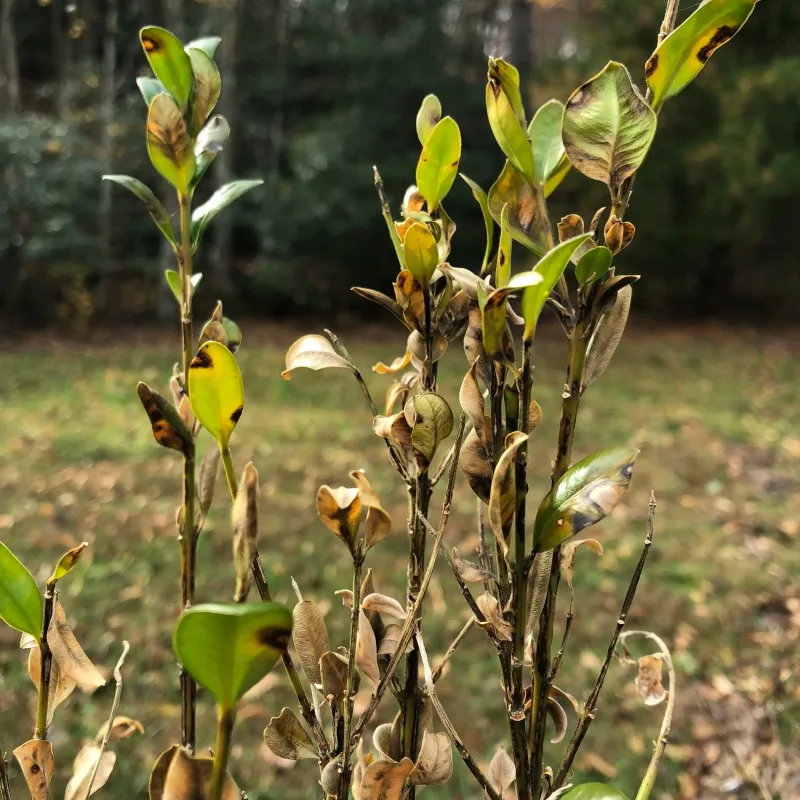
Run your fingers along the stems of your boxwood and look closely at the bark. Dark streaks running lengthwise along the stem are a sign that the fungus has moved well past the surface and is working its way through the inner tissue.
These streaks can range from dark brown to almost completely black, and they often appear before the branch shows any other visible damage.
Finding black streaks is actually useful information, even though it signals a more advanced stage of infection. It tells you exactly which stems need to come out and gives you a clearer picture of how far the blight has spread.
Think of it as the plant giving you a roadmap of where the problem is located. Cut out every stem that shows streaking. When you make your cuts, look at the cross-section of the stem.
If the interior shows any dark coloring, keep cutting lower until the tissue looks completely clean and healthy. A sharp pair of bypass pruners or loppers works best for clean cuts that do not crush the tissue.
After removing infected stems, watch the surrounding plants closely for the next week or two. Blight spores are microscopic and travel easily, so neighboring boxwoods or other susceptible plants could already be in the early stages of infection.
Early detection in surrounding plants gives you the best chance of limiting the overall spread. Avoid working with your boxwoods when the foliage is wet.
Wet conditions allow spores to move more easily from plant to plant, and even brushing against a wet infected plant can transfer the fungus to a healthy one nearby. Try to do your inspections and pruning during dry weather whenever possible.
5. Rapid Spread Across Plant
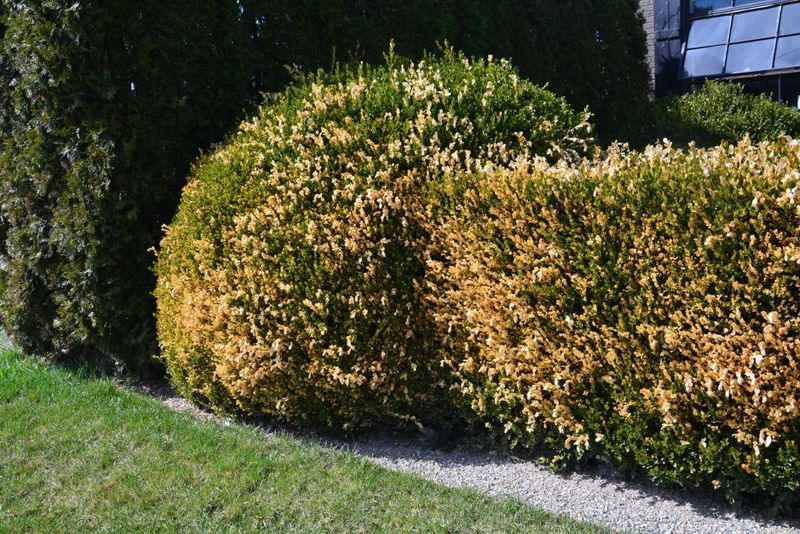
Boxwood blight does not move slowly. One day you might notice a few spotted leaves on one branch, and within a week, large sections of the plant can look completely brown and damaged.
That rapid spread is one of the most alarming characteristics of this disease, and it is exactly why acting immediately matters so much.
The fungus spreads through water splashing between branches, contact between leaves, and even through the air in humid conditions. Texas summers create a near-perfect environment for this kind of fast movement.
Warm nights, afternoon thunderstorms, and dense plantings all help the blight jump from one part of the plant to another with very little resistance.
When you see blight spreading quickly across a plant, your top priority should be isolation. Move any potted boxwoods away from affected plants right away.
For in-ground plants, create a physical barrier by removing any boxwoods that are growing directly against the infected one. The more space between plants, the harder it is for the disease to travel.
Avoid using overhead irrigation on affected boxwoods. Watering at the base of the plant with a soaker hose or drip system keeps the foliage dry and removes one of the main ways the fungus moves.
Wet leaves are a fast highway for blight spores, especially during the hottest months of the year. Talk to your neighbors if they also have boxwoods nearby.
Blight does not respect property lines, and a heavily infected plant next door can easily become the source of a new infection in your own yard. Sharing information and coordinating treatment efforts gives everyone a better outcome.
6. Soft, Decaying Tissue
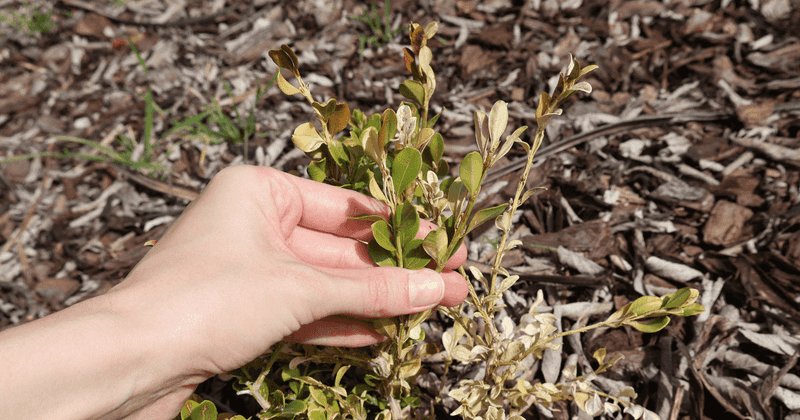
Here is something that catches a lot of gardeners off guard: infected boxwood tissue can actually feel soft and mushy when you touch it.
Most plant diseases show up visually first, but with advanced boxwood blight, the stems and leaves can start to break down at a cellular level, leaving behind tissue that feels almost spongy. That texture is a sign the fungus has been working hard for a while.
Soft tissue usually appears in areas where moisture has been trapped, such as dense inner branches with poor airflow.
In Texas, where humidity can be relentless during the summer, these pockets of trapped moisture create the perfect breeding ground for the fungus to move into a more destructive phase.
The tissue often looks darker and feels noticeably different from healthy stems nearby. When you find soft or decaying sections, remove them completely and carefully. Bag the material immediately and do not let it fall onto the soil around the plant.
The fungus can survive in the soil and reinfect the plant through root contact or water splashing upward during rain.
After pruning, apply a fungicide that is specifically labeled for boxwood blight. Products containing chlorothalonil or thiophanate-methyl are commonly recommended, but always read the label carefully before applying.
Follow the application schedule on the label for the best results, and do not skip treatments even if the plant starts to look better.
Improving airflow around your boxwoods is one of the best long-term strategies you can use. Thinning out dense inner branches allows air to move freely, which keeps foliage drier and makes the environment much less friendly for fungal growth going forward.