This Underrated Pennsylvania Native Ground Cover Creates A Natural Deer Barrier Along Your Garden Border
Deer browse along Pennsylvania garden borders is one of those problems that never fully resolves with sprays, fencing, or wishful thinking about the specific plants deer are supposed to avoid.
The most consistent long-term approach is building borders around plants that deer find genuinely unappealing, and one native Pennsylvania groundcover does this in a way that earns almost no attention compared to how well it actually works.
It spreads along a border with enough density to create a continuous planting presence that deer consistently pass over in favor of more palatable options elsewhere.
It handles Pennsylvania’s range of soil and light conditions without much coaxing, comes back reliably each year, and looks natural along a garden edge in a way that manufactured deterrents never quite manage to pull off.
The fact that it also supports local pollinators and suppresses weeds makes it one of the more quietly productive plants a Pennsylvania border can contain.
Meet Allegheny Spurge
Not every garden hero stands tall. Allegheny Spurge, or Pachysandra procumbens, is a quiet overachiever that stays low to the ground and gets the job done.
Native to the eastern United States, it has been growing in Pennsylvania’s forests and shaded landscapes for centuries. Most gardeners walk right past it without a second glance, and that is a real shame.
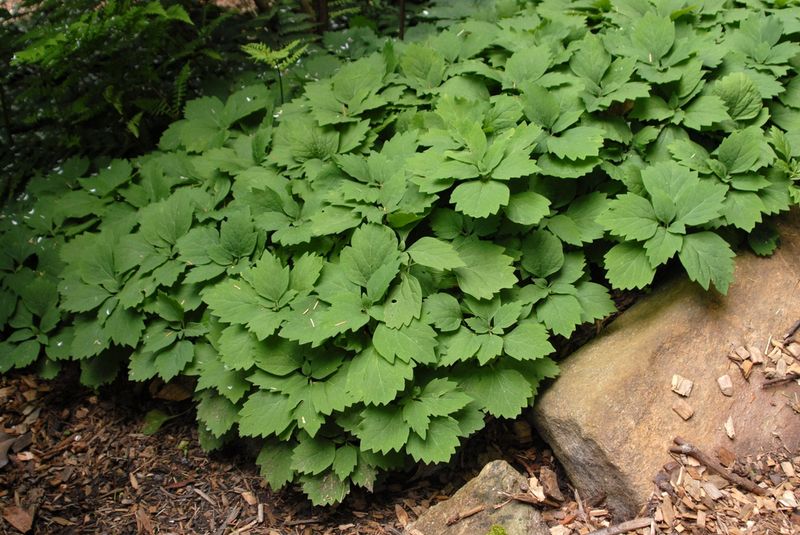
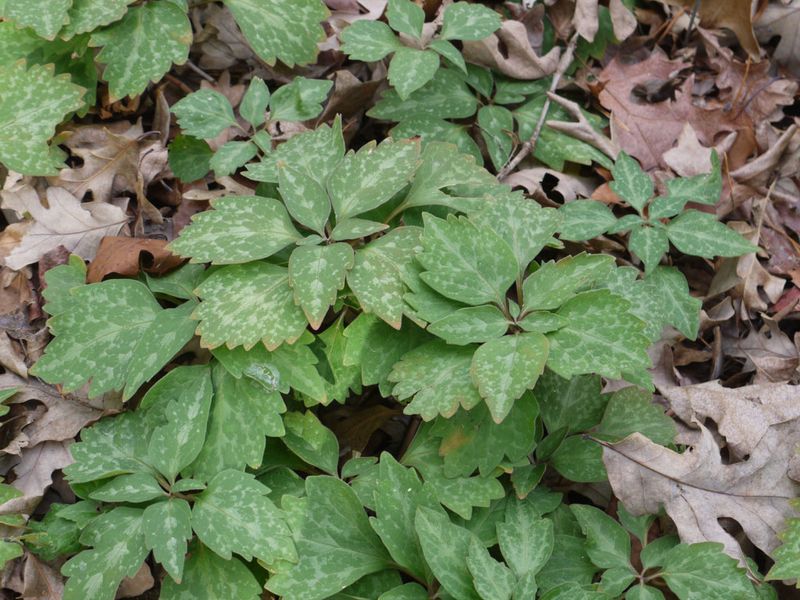
What makes this plant special is its dense, evergreen foliage. The leaves are broad, slightly mottled with silvery-green patterns, and they stay on the plant through winter.
That means your garden border looks full and lush even when most other plants have gone bare. Few native ground covers can claim that kind of year-round visual presence.
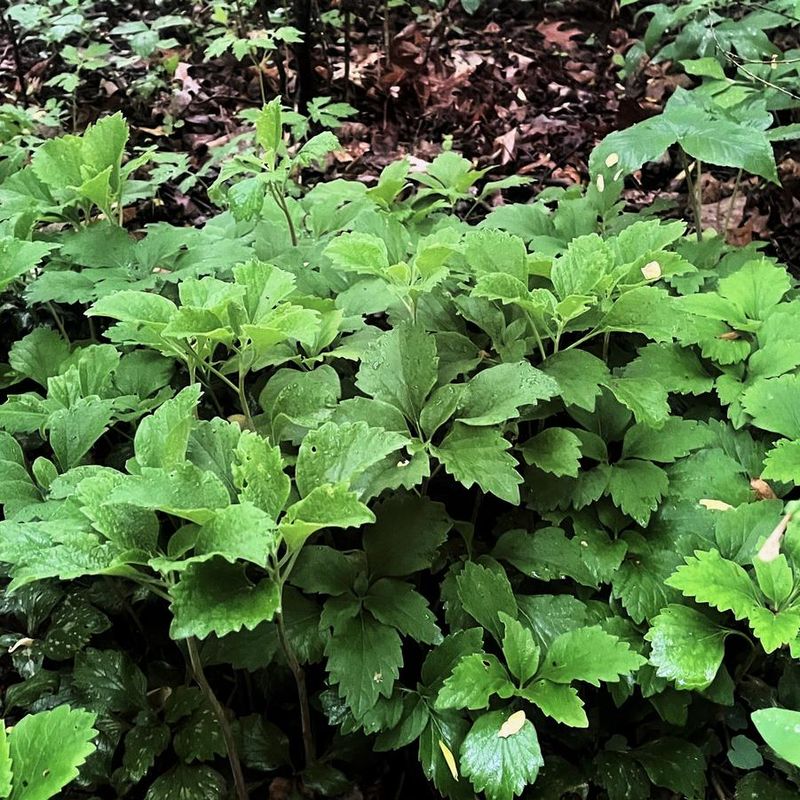
Allegheny Spurge grows only about six to twelve inches tall, making it a perfect low-profile border plant. It spreads slowly but steadily through underground stems called rhizomes.
Over time, it forms a thick mat that covers the soil completely. That dense coverage is one of its greatest strengths as a garden plant.
Many gardeners in Pennsylvania are used to seeing the Asian Pachysandra, which is a non-native relative. Allegheny Spurge is the American version, and it actually performs better in native soil conditions.
It supports local wildlife, blends naturally into woodland gardens, and requires far less fuss than many imported alternatives. Once you get to know this plant, you will wonder why it took so long to add it to your garden.
Natural Deer Deterrent
Deer are smart, cautious animals. They tend to avoid areas that feel cramped, unfamiliar, or difficult to navigate.
That is exactly why Allegheny Spurge works so well as a natural deer deterrent along garden borders. Its thick, low-growing mats create a physical and visual barrier that deer simply do not want to push through.
When you plant Allegheny Spurge in dense patches along your garden’s edge, you are essentially building a green wall at ground level. Deer prefer open, easy-to-access feeding areas.
A tightly packed mat of ground cover along a border makes your garden feel less inviting. Over time, deer learn to skip your yard and move on to easier spots.
Your Pennsylvania Garden Changes Every Week. Your Plan Should Too.
Gardening in Pennsylvania changes quickly throughout the season. Every Friday you’ll receive a simple weekly plan showing exactly what to plant, prune, fertilize, harvest, and protect so you never miss the right timing.
Beyond the physical barrier, Allegheny Spurge has a slightly bitter, unappealing taste that deer tend to dislike.
While no plant is completely deer-proof, this native ground cover sits near the top of the list for plants that deer consistently avoid. That makes it a smarter choice than many decorative plants that deer find irresistible.
Pairing Allegheny Spurge with taller deer-resistant plants like ferns or native shrubs creates an even stronger border defense. The ground cover fills in the lower layer while taller plants block access higher up.
Together, they form a layered barrier that is both beautiful and functional. For Pennsylvania gardeners tired of replanting the same flowers every spring after deer raids, this native ground cover offers a long-term, low-effort solution that actually holds up season after season.
Shade And Soil Adaptability
One of the trickiest spots in any Pennsylvania garden is the shaded area under large trees or along the north side of a fence. Grass struggles there. Many flowering plants give up. But Allegheny Spurge?
It practically thrives in those conditions. Full to partial shade is actually its sweet spot, making it a go-to solution for problem areas in the landscape.
Pennsylvania gardens often have a mix of heavy clay, loam, and rocky soil depending on the region. Allegheny Spurge handles all of these soil types with ease.
It does best in moist, well-drained soil with some organic matter, but it adapts surprisingly well even when conditions are less than ideal. That flexibility makes it one of the most versatile native plants available to Pennsylvania gardeners.
Under large oaks, maples, or hemlocks, where tree roots compete heavily with other plants, Allegheny Spurge holds its own. It does not need deep, rich soil to get established.
Its root system is shallow and efficient, allowing it to work within the same space as tree roots without much conflict. That is a rare and valuable quality in a shade plant.
Gardeners who have tried hostas, ferns, or other shade plants in tough spots often find that Allegheny Spurge outlasts them with far less effort. Once it settles in, it spreads steadily and fills in bare patches that used to look messy.
For shaded borders along paths, fences, or woodland edges, this native plant brings reliable greenery and soil coverage that few other plants can match in Pennsylvania’s varied growing conditions.
Low-Maintenance Growth
Busy gardeners, this one is for you. Allegheny Spurge is about as close to a plant-it-and-forget-it ground cover as you can get.
Once it establishes itself in your garden, it needs very little attention to keep growing strong. No constant watering, no fertilizing schedules, no complicated pruning routines. Just a little patience during the first season, and the plant takes over from there.
During the first year after planting, regular watering helps the roots settle in and spread. After that initial period, Allegheny Spurge becomes largely self-sufficient.
It draws on natural rainfall and moisture in the soil to stay healthy. In most Pennsylvania regions, supplemental watering is rarely needed once the plant is fully established. That means less time with a hose and more time enjoying your garden.
One of the biggest time-savers with this ground cover is weed suppression. The dense mat of leaves shades the soil so thoroughly that most weeds cannot get enough light to sprout.
Gardeners who switch to Allegheny Spurge often notice a dramatic drop in the amount of weeding they need to do along their borders. That benefit alone makes it worth planting.
There is also no need for seasonal replanting. Unlike annual flowers that need to be replaced every year, Allegheny Spurge comes back reliably each season.
Its evergreen foliage stays intact through most Pennsylvania winters without any extra protection.
For gardeners who want a beautiful, functional border without constant upkeep, this native ground cover delivers exactly that. It is a smart, long-term investment in both your time and your landscape.
Aesthetic And Seasonal Appeal
Some plants earn their place in the garden by being useful. Others earn it by being beautiful.
Allegheny Spurge manages to do both at the same time, and that is what makes it truly special. Its broad, mottled leaves have a silvery-green pattern that looks elegant against dark soil or mulch.
Even without flowers, the foliage alone makes a strong visual statement along any garden border.
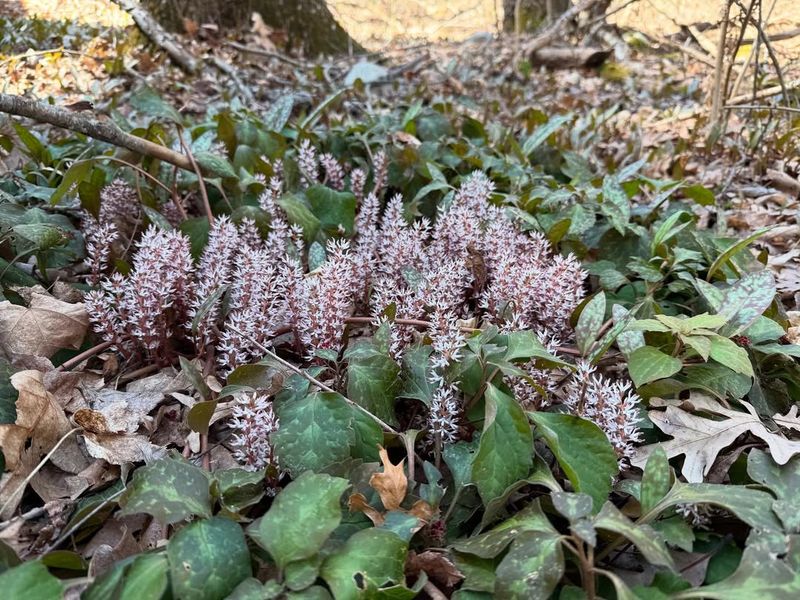
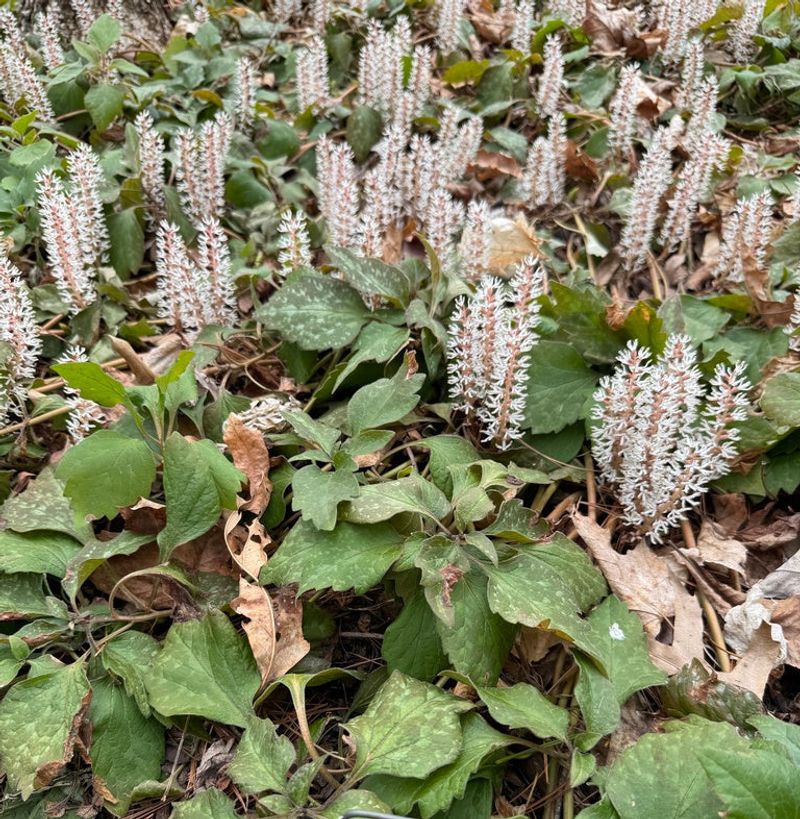
Come early spring, something magical happens. Allegheny Spurge sends up small, bottlebrush-shaped white flower spikes that rise just above the leaf canopy.
These blooms are subtle but lovely, and they carry a light, sweet fragrance that you notice when walking past. They typically appear in March or April in Pennsylvania, often before many other plants have even started waking up from winter.
Those spring flowers are also a welcome food source for early pollinators. Bees and small butterflies that emerge during early warm spells are drawn to the blooms, giving your garden a little buzz of life right when it needs it most.
Supporting native pollinators is a bonus that goes beyond just looking good. Through fall and winter, the evergreen leaves hold their color and texture, providing visual interest when the rest of the garden looks bare and dull.
The mottled pattern on the leaves actually becomes more pronounced as temperatures drop, adding a quiet, frosty beauty to the border.
For gardeners who want their outdoor spaces to look intentional and well-designed in every season, Allegheny Spurge brings that consistent, year-round presence without requiring any extra seasonal effort or decoration.
Planting And Care Tips
Ready to get started? Planting Allegheny Spurge the right way from the beginning sets you up for the best results.
The best time to plant in Pennsylvania is either spring or early fall, when temperatures are mild and rainfall is more consistent. These seasons give the roots time to establish before the stress of summer heat or hard winter frost arrives.
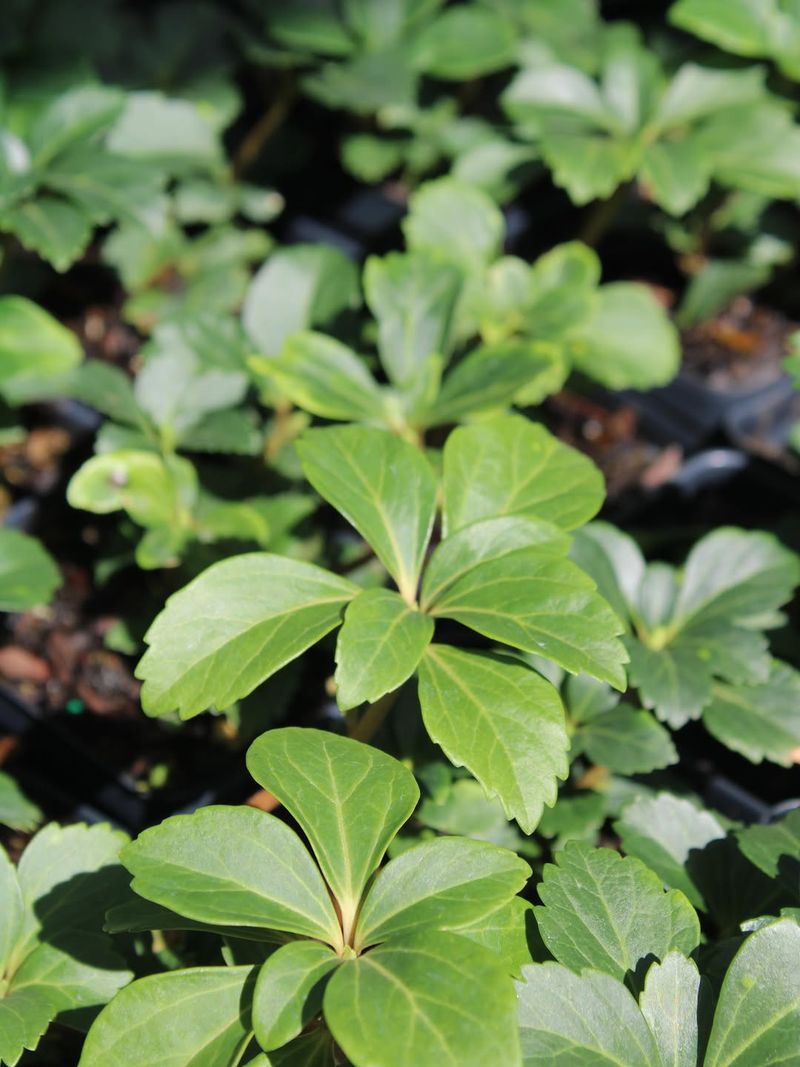
For maximum deer deterrence along your garden border, plant in dense groupings rather than spreading plants far apart. A spacing of about eight to twelve inches between plants works well for most situations.
Closer spacing means the mat fills in faster, which builds your green barrier sooner. Along fences or paths, plant in a continuous row two to three plants deep for the strongest effect.
Mulching lightly around newly planted Allegheny Spurge helps retain soil moisture and keeps weeds at bay while the plants get established. Use about one to two inches of shredded leaf mulch or wood chips.
Avoid piling mulch directly against the stems, as that can cause rot. Water consistently for the first growing season, aiming for moist but not soggy soil.
After the first year, step back and let the plant do its thing. Trim back any stray stems in early spring if you want to keep the border tidy, but it is not strictly necessary.
Avoid heavy fertilizing, as this can actually reduce the plant’s natural spreading habit. Allegheny Spurge rewards patience and minimal interference.
Give it space, a little shade, and decent soil, and it will reward you with a dense, beautiful, deer-resistant border for many years ahead.