These Oregon Garden Pests Get Worse In July If You Ignore Them
July in Oregon is peak garden season, and unfortunately it is also peak pest season.
The warm temperatures, ripening fruit, and dense vegetable growth that make midsummer so exciting for gardeners also make it extremely attractive for a long list of uninvited insects and mites.
The frustrating part is how fast things can escalate. A minor aphid situation on Monday can look genuinely alarming by the following weekend if conditions are right and nobody is paying attention.
The encouraging part is that Oregon gardeners who get into the habit of checking plants regularly catch most problems early enough to handle them without reaching for anything heavy duty.
Not every chewed leaf is a crisis, and not every pest needs an aggressive response. Knowing the difference is honestly most of the battle right there.
1. Climbing Cutworms Can Strip Foliage Fast
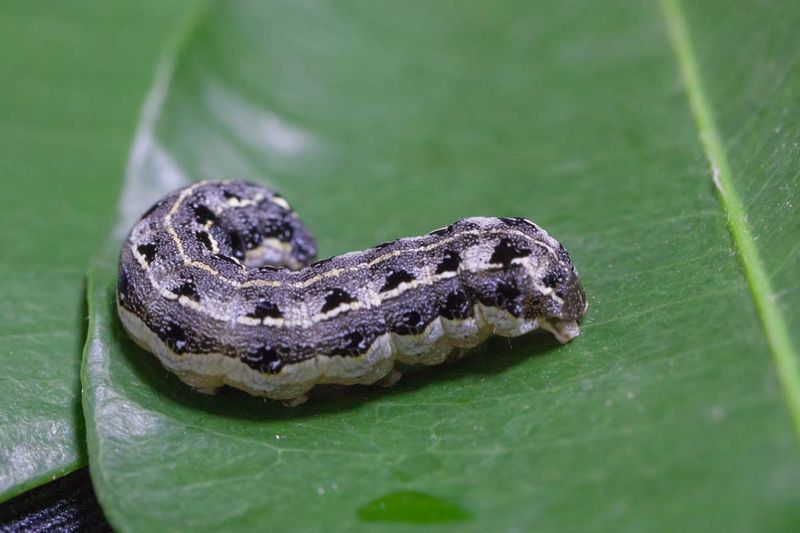
Walking out to a vegetable bed and finding large chunks of foliage missing is one of those July moments that stops Oregon gardeners in their tracks.
Climbing cutworms are often the culprit, and unlike the soil-dwelling cutworms that cut seedlings at the base in spring, these caterpillars move up into plants and feed on leaves, sometimes removing significant portions of foliage in a single night.
Most of the feeding happens after dark, which is why daytime inspections can leave gardeners puzzled. Going out with a flashlight after sunset and checking stems, undersides of leaves, and nearby soil can reveal the caterpillars in action.
They tend to curl up and hide in mulch or loose soil during the day, making them easy to miss.
Tomatoes, peppers, corn, and other warm-season vegetables can all show this kind of damage in midsummer. Removing caterpillars by hand during nighttime checks is a reasonable first step for light infestations.
Row covers or physical barriers around vulnerable plants can also help reduce access. Bacillus thuringiensis, commonly called Bt, is a naturally occurring option that targets caterpillars when applied according to label directions.
Monitoring regularly through July gives gardeners the best chance of catching activity before damage spreads.
2. Root Weevils Leave Notched Leaves Behind
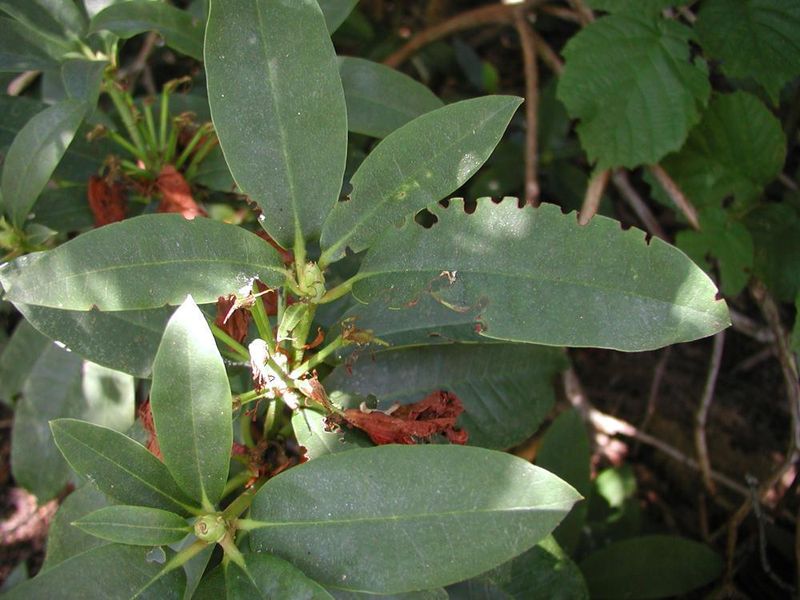
Notched or scalloped edges along the margins of leaves on rhododendrons, azaleas, and other ornamental shrubs are a classic sign that root weevils have been active.
The adult weevils do this feeding at night, chewing smooth, rounded notches into leaf edges in a pattern that is hard to mistake once you know what you are looking for.
In July, new notching on previously undamaged leaves suggests adults are still actively feeding.
Oregon landscapes with established rhododendrons, camellias, strawberries, and certain perennials can all show this kind of leaf damage. The adults themselves are small, dark, and slow-moving, often dropping off plants and staying completely still when disturbed.
Checking plants after dark with a flashlight gives gardeners a better chance of actually spotting the insects rather than just seeing their work.
The larval stage is where longer-term plant stress can come from, as the grubs feed on roots underground through fall and winter. Catching adult activity in July and acting at that stage can help reduce the population before egg-laying increases.
Your Oregon Garden Changes Every Week. Your Plan Should Too.
Gardening in Oregon changes quickly throughout the season. Every Friday you’ll receive a simple weekly plan showing exactly what to plant, prune, fertilize, harvest, and protect so you never miss the right timing.
Sticky barriers around container rims or on plant stems can intercept adults. Beneficial nematodes applied to moist soil can target larvae, though timing and soil conditions matter for effectiveness.
Correct identification is the essential first step.
3. Spider Mites Build During Hot Dry Weather
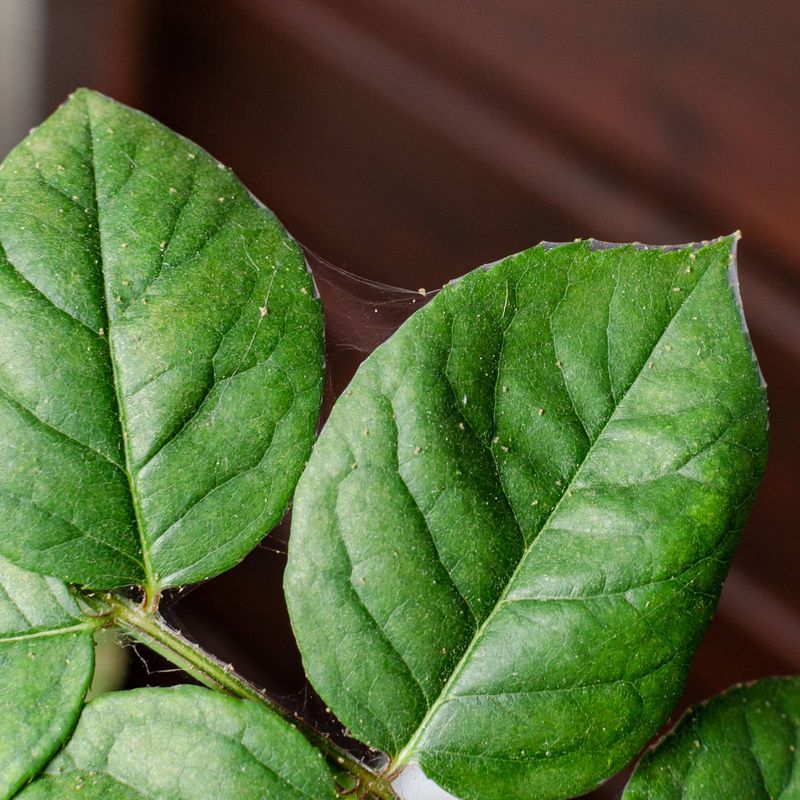
Hot, dry stretches of Oregon summer weather are practically an open invitation for spider mites to multiply. These tiny arachnids are barely visible to the naked eye, but the damage they leave behind on leaves is hard to ignore.
Fine stippling, pale or bronzed patches, and a dusty or washed-out look on foliage are common signs, and a close look with a hand lens may reveal the mites moving on leaf undersides.
Fine webbing between leaves or across growing tips is another clue that a population has built up. Spider mites tend to move fast when conditions favor them, and a plant that looks slightly off one week can look seriously stressed a week later if nothing changes.
Tomatoes, beans, cucumbers, strawberries, and ornamental plants are among those commonly affected in Oregon gardens during July heat.
A strong spray of water directed at leaf undersides can knock mite populations back and is a reasonable starting point for moderate infestations.
Keeping plants well-watered and avoiding dusty conditions also helps reduce stress that makes plants more vulnerable.
Predatory mites are natural enemies that can help bring populations down over time.
Avoiding broad-spectrum insecticides during mite outbreaks is worth considering, as those products can remove beneficial predators and sometimes make mite problems worse.
4. Codling Moth Can Ruin Apples And Pears
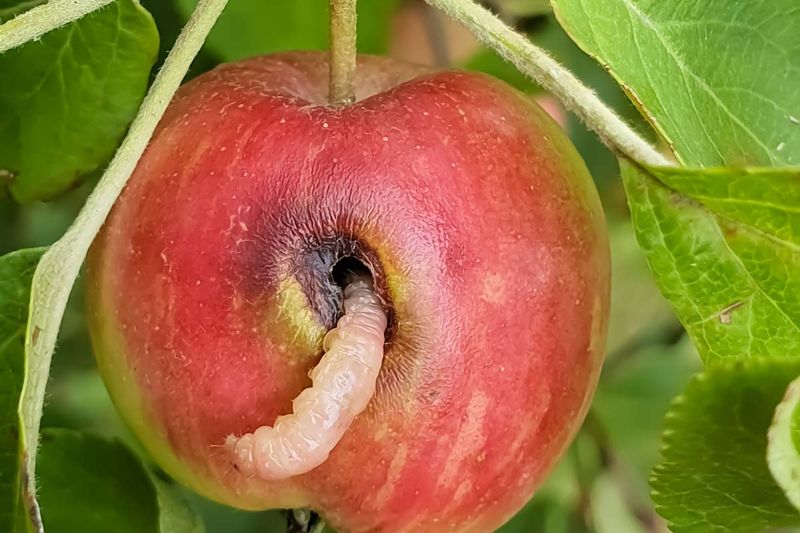
Biting into a homegrown apple and finding a tunnel leading to the core is one of the most discouraging moments of the Oregon fruit-growing season.
Codling moth larvae are responsible for that familiar damage, and by July the second generation of eggs may already be hatching in some parts of Oregon, meaning fruit that looked fine a few weeks ago can develop internal damage quickly.
Female moths lay eggs on fruit surfaces or nearby leaves, and the larvae bore into developing apples and pears soon after hatching. Entry holes may be small and easy to miss at first, sometimes showing a bit of frass or sawdust-like material near the surface.
Internal damage is usually not visible until the fruit is cut open or drops early.
Monitoring with pheromone traps helps track adult moth activity and can guide timing decisions for management. Traps alone do not reduce populations enough to protect fruit, but they provide useful information about when moths are flying.
Kaolin clay applied to fruit surfaces creates a physical barrier that can reduce egg-laying and larval entry. Spinosad-based sprays are another option when timed to target newly hatched larvae.
Following local extension guidance on spray timing is more reliable than guessing, especially since timing varies by Oregon region and season.
5. Apple Maggot Threatens Ripening Fruit
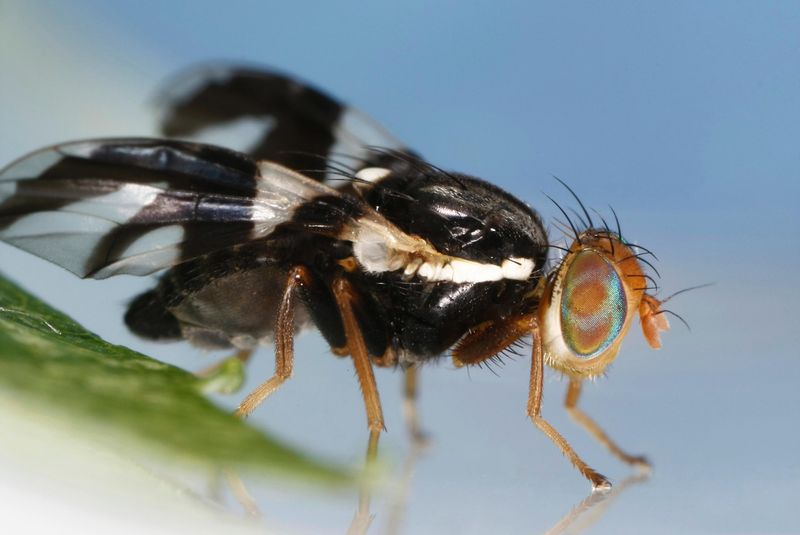
As Oregon apples begin to size up and color in July, apple maggot adults are searching for fruit to lay their eggs on, making this one of the more critical monitoring windows of the season.
The adult fly resembles a small housefly with distinctive banded wings, and females use a needle-like egg-laying structure to deposit eggs just beneath the fruit skin.
Larvae tunnel through the flesh, leaving winding brown trails that make fruit unmarketable and unpleasant to eat.
Surface dimpling or small puncture marks on developing apples can be early signs of egg-laying activity. Fruit that drops early and shows internal browning when cut open is another indicator worth investigating.
Apple maggot is present in parts of Oregon, though its distribution is not uniform across the state, and gardeners in affected areas benefit from staying informed about local pest status.
Red sticky sphere traps mimic the appearance of ripe apples and can attract and capture adult flies when hung in trees before fruit ripens. Traps are most useful as monitoring tools, and adding an apple-scented lure can improve catches.
Removing and disposing of dropped fruit promptly reduces the number of larvae that reach the soil to complete development.
Bagging individual fruit while still small is a non-chemical option that some home orchardists find practical for small tree numbers.
6. Spotted Wing Drosophila Targets Soft Fruit
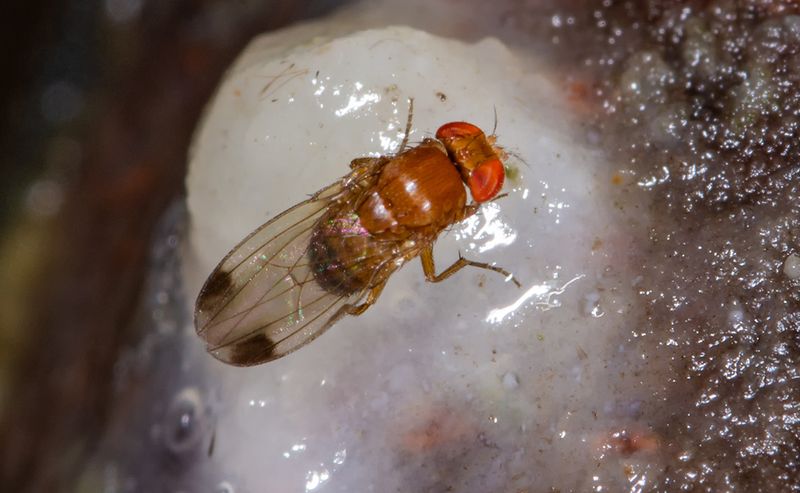
Berry season in Oregon brings one of the most frustrating pests soft-fruit growers deal with: spotted wing drosophila, often called SWD.
Unlike most fruit flies that prefer overripe or damaged fruit, this species targets intact, ripening berries, which is what makes it especially problematic.
Blueberries, raspberries, blackberries, strawberries, and cherries are all susceptible, and damage can go unnoticed until fruit is soft, mushy, or showing small larvae inside.
The adult male fly has distinctive spots on its wings, which can help with identification using a hand lens or close-up photo. Females use a saw-like egg-laying structure to cut into firm fruit skin, and larvae develop inside the berry within days.
Fruit that appears fine on the outside may already contain developing larvae, so checking ripening berries frequently is more useful than waiting for obvious signs.
Harvesting ripe fruit promptly and refrigerating it can slow larval development and reduce crop losses. Removing overripe or fallen fruit from the ground regularly takes away breeding material.
Fine mesh exclusion netting placed over berry plants before fruit ripens is one of the more effective physical barriers for home gardeners.
Monitoring traps made from a yeast-sugar-water mixture or commercial lures can help track adult activity and inform decisions about timing and urgency.
7. Cabbage Worms Chew Through Cole Crops
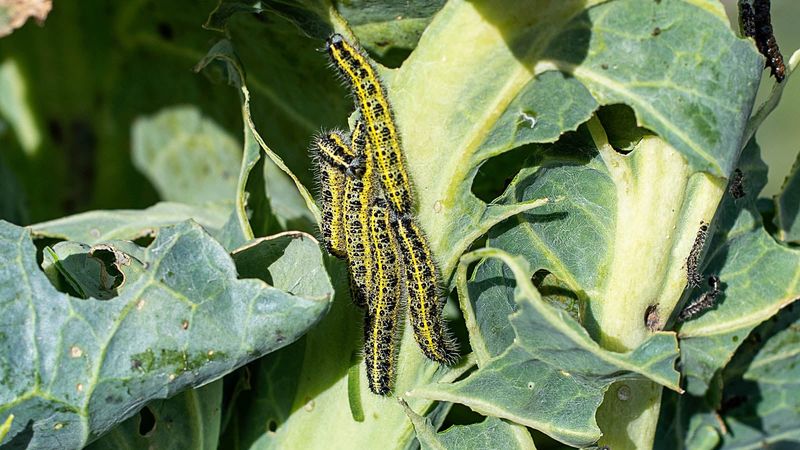
Ragged holes appearing in broccoli, cabbage, kale, and Brussels sprouts leaves during July are a familiar sight in Oregon vegetable gardens, and imported cabbageworm is one of the most common causes.
The adult stage is the white or pale yellow butterfly that flutters around cole crops and lays tiny, pale eggs on leaf surfaces.
Larvae hatch as small green caterpillars that blend in remarkably well with foliage, making them easy to overlook until damage is already noticeable.
Cabbage looper is another caterpillar that feeds on similar plants and leaves comparable damage, so checking for both when scouting is worthwhile.
Caterpillars tend to feed on outer leaves first but can work their way into heads of cabbage or the tight florets of broccoli if populations are left unchecked.
Finding dark green frass pellets on leaves or inside plant crowns is a helpful sign that caterpillars are present even when the insects themselves are hard to spot.
Checking plants at least once a week through July and removing caterpillars by hand is a practical approach for small gardens. Floating row cover placed over cole crops before butterflies arrive can prevent egg-laying entirely.
Bt-based sprays are effective against young caterpillars and have minimal impact on beneficial insects when used as directed. Timing applications in the evening can improve results.
8. Flea Beetles Leave Tiny Shot-Hole Damage
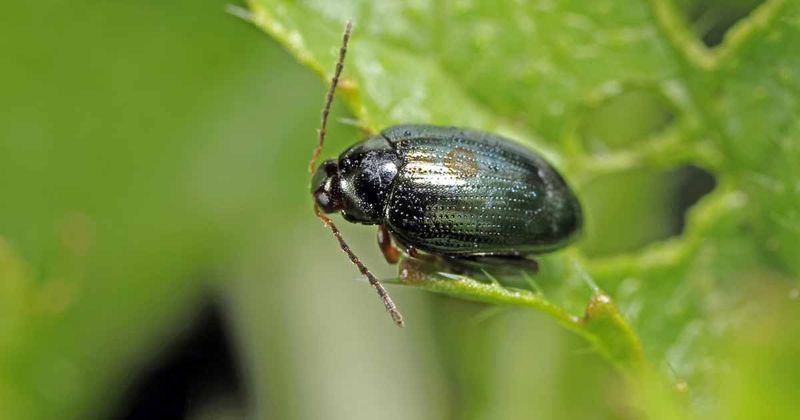
Leaves that look like they were peppered with a tiny hole punch are a telltale sign of flea beetle feeding, and this damage can appear quickly on young or stressed plants during Oregon’s July heat.
Flea beetles are small, shiny, and quick-jumping insects that feed on leaf surfaces, leaving behind clusters of tiny round holes that give the damage its characteristic shot-hole appearance.
Eggplant, arugula, radishes, turnips, kale, and other brassicas are among the most common targets in Oregon home gardens.
Seedlings and recently transplanted starts are especially vulnerable because the feeding can overwhelm small plants before they have a chance to establish.
Larger, well-established plants can often tolerate moderate flea beetle feeding without serious setback, which is one reason garden timing and transplant size can influence how much damage matters.
Covering vulnerable crops with floating row cover immediately after planting is one of the most reliable ways to limit flea beetle access. Sticky yellow traps placed near affected plants can capture adults and give a sense of population levels.
Keeping plants well-watered and growing vigorously helps them outpace light to moderate feeding pressure. Diatomaceous earth applied around plant bases may offer some deterrence, though it needs reapplication after rain or irrigation.
Correct identification helps avoid treating for the wrong pest.
9. Aphids Gather On Tender Summer Growth
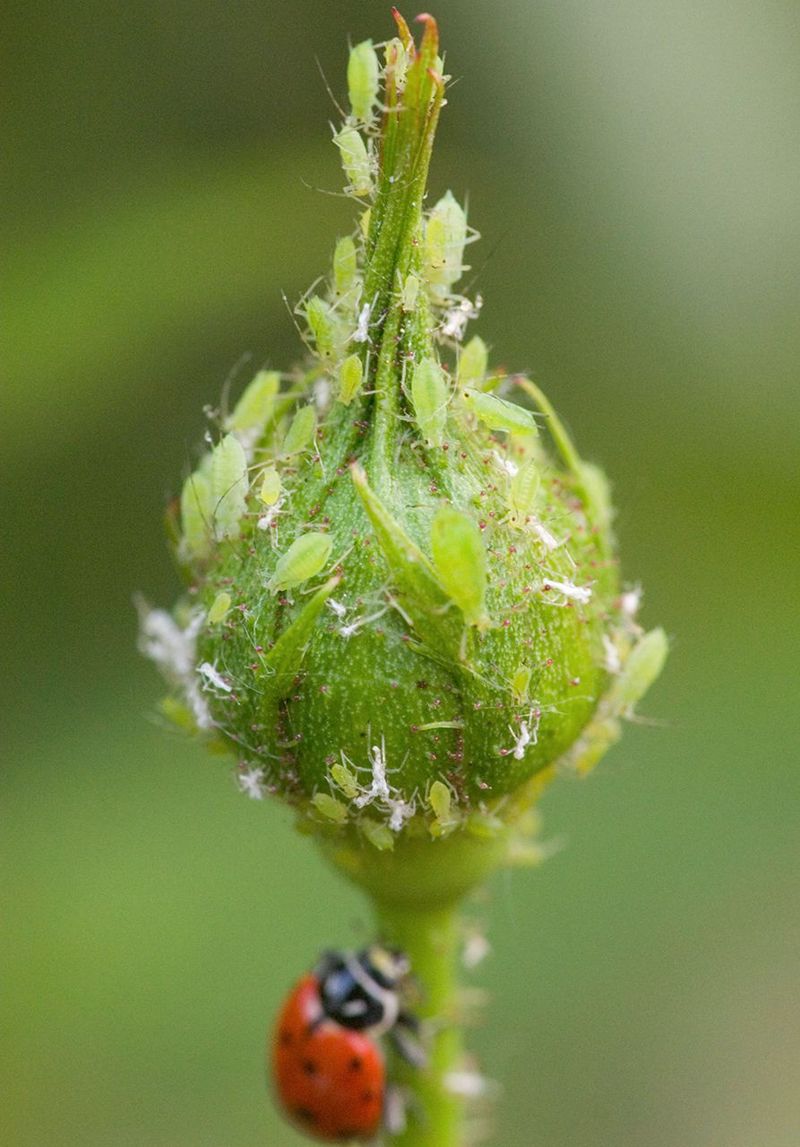
Soft, fast-growing summer shoots are exactly what aphids look for, and July’s flush of new vegetable and ornamental growth gives them plenty to work with in Oregon gardens.
Aphid colonies can build up quickly on tender growing tips, undersides of leaves, and along stems, especially during warm weather.
Curled or distorted new growth, sticky residue on leaves or surfaces below the plant, and the presence of ants moving up and down stems are all signs worth investigating.
Many different aphid species feed on Oregon garden plants, and they vary in color from pale green to yellow, black, or gray depending on the host plant and species.
Some aphids are more host-specific, while others move between multiple plant types through the season.
Correct identification is helpful because different species may respond differently to the same management approach.
A strong stream of water directed at infested shoots and leaf undersides can dislodge aphids and reduce colony size without harming beneficial insects.
Natural predators including lady beetles, lacewings, and parasitic wasps often move into aphid colonies on their own when given the chance.
Avoiding broad-spectrum insecticides preserves these helpful insects.
Insecticidal soap or neem oil-based products can help with persistent infestations when applied directly to colonies, though thorough coverage of leaf undersides is necessary for good results.
10. Twelve-Spotted Beetles Feed On Beans And Cucurbits
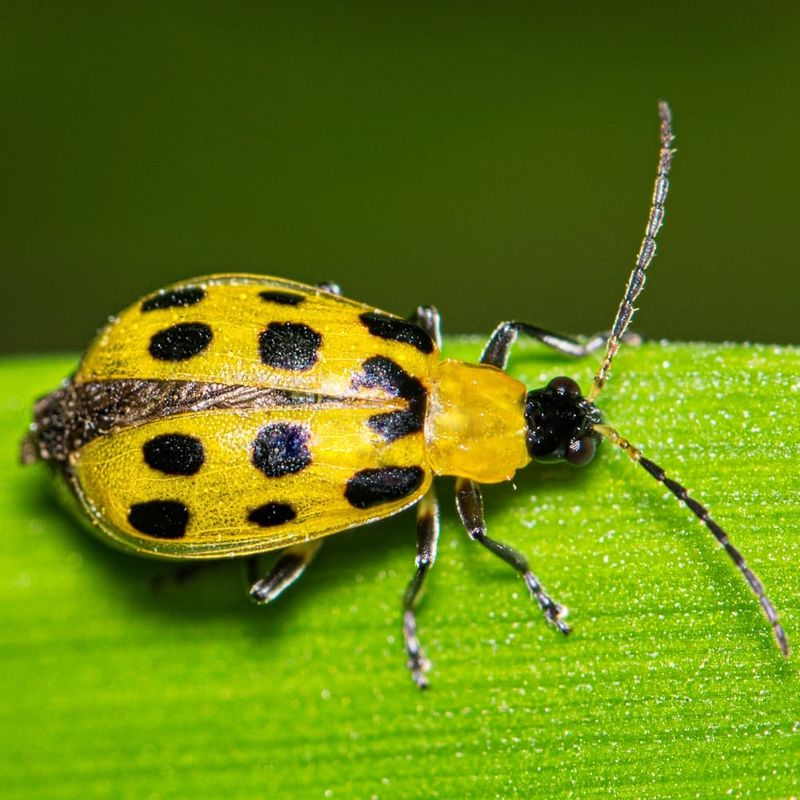
Checking bean rows and cucumber vines in July sometimes turns up a beetle that is hard to miss once you know what you are looking for.
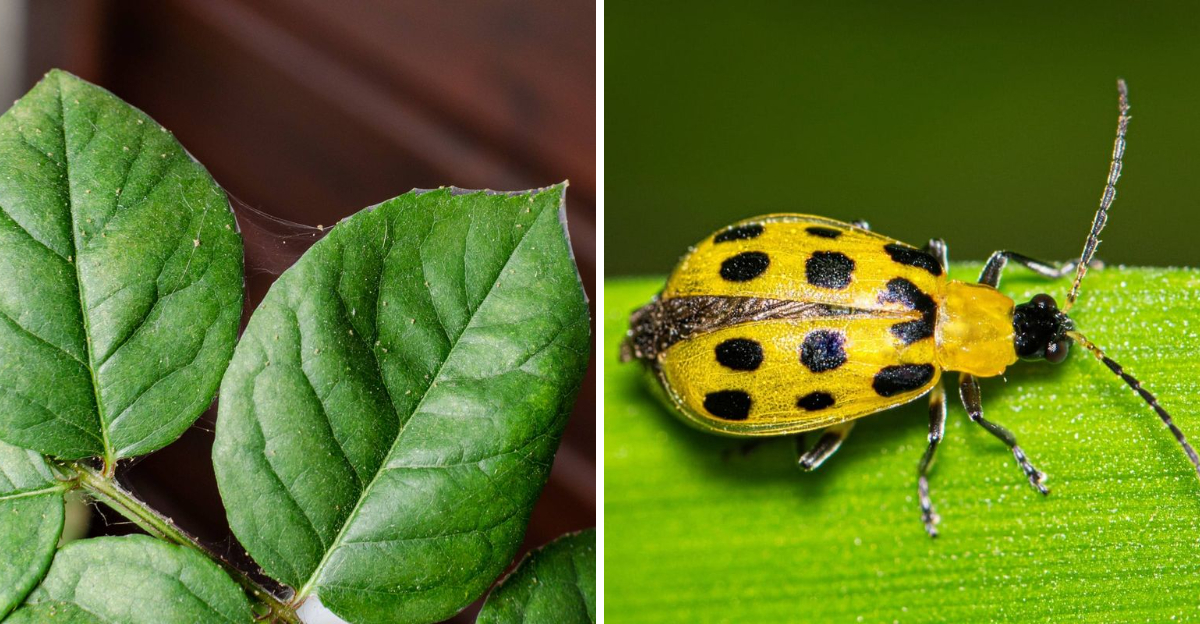
The twelve-spotted cucumber beetle is a yellowish-green insect with twelve black spots arranged across its wing covers, and it feeds on beans, cucumbers, squash, melons, and other cucurbit crops during summer.
Adults chew on leaves, flowers, and sometimes fruit surfaces, and the feeding can add up quickly when several beetles are working the same planting.
Beyond the visible chewing damage, cucumber beetles can spread bacterial wilt, a disease that causes rapid wilting and decline in susceptible plants like cucumbers and muskmelons.
Not every beetle is carrying the pathogen, but populations in some Oregon gardens have been associated with this problem, making early monitoring worthwhile.
Wilting that does not improve after watering, especially on individual vines rather than whole rows, is worth investigating more closely.
Row covers placed over cucurbit transplants at planting time can keep beetles off plants during early establishment. Covers need to be removed once flowers open to allow pollination.
Yellow sticky traps can help monitor adult activity and population levels. Kaolin clay applied to plant surfaces creates a deterrent coating that some gardeners find helpful.
Checking plants frequently through July gives the best picture of whether beetle numbers are rising.