These Pennsylvania Native Plants Come Back When You Let A Yard Section Rewild Naturally
Letting a section of yard go natural is one of the more interesting experiments a Pennsylvania homeowner can run.
What comes back on its own reveals a lot about the seed bank in the soil and the native plant community that existed in the landscape long before any formal gardening happened.
Pennsylvania has a rich native flora that persists in the ground and the surrounding environment, waiting for the right conditions to reassert itself when regular mowing and maintenance step back.
The results are not always tidy in a conventional landscaping sense, but they are often genuinely beautiful in a way that cultivated plantings rarely achieve, and the wildlife activity that follows a rewilded section tends to surpass anything a managed bed produces.
Understanding what Pennsylvania natives are likely to come back, what conditions favor their return, and how to guide the process without taking it over turns an intentional act of letting go into one of the most rewarding things a yard can do on its own.
1. Black-Eyed Susan (Rudbeckia Hirta)
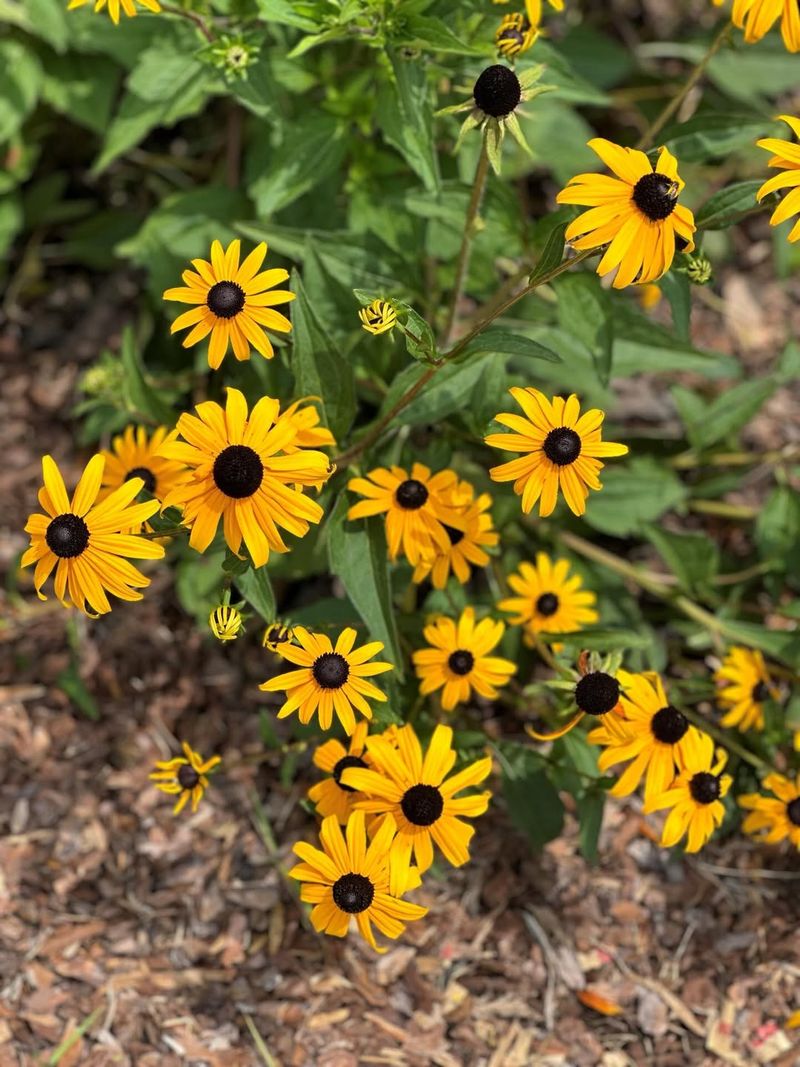
Few wildflowers are as cheerful and recognizable as the Black-Eyed Susan. Those bold yellow petals surrounding a deep, dark center are practically the face of summer in Pennsylvania.
Once this plant finds a sunny spot it likes, it does not need much encouragement to stick around.
Black-Eyed Susans are biennials or short-lived perennials, which means they rely heavily on self-seeding to keep coming back. Each flower head can produce dozens of seeds.
When you leave the spent blooms on the plant instead of cutting them off, those seeds fall naturally into the soil and sprout the following season.
Birds love the seeds too. Goldfinches, in particular, are known to snack on Black-Eyed Susan seed heads throughout the fall and winter months.
So by leaving them standing, you are feeding wildlife and planting next year’s garden at the same time.
In a rewilded yard section, these plants tend to pop up in slightly different spots each year, which gives your garden a natural, free-spirited look. They do well in full sun to partial shade and are very tolerant of dry or poor soil conditions.
That makes them ideal for low-maintenance areas. You can start a patch by scattering seeds in a sunny area in early spring or fall. After the first year, the plants will largely take care of themselves.
Just resist the urge to deadhead or tidy up too early. Leaving the plants standing through winter gives seeds time to drop and gives birds a reliable food source during colder months.
2. Wild Bergamot (Monarda Fistulosa)
Walk past a patch of Wild Bergamot on a warm summer day and you will immediately notice the smell.
It is earthy, herbal, and a little minty, which makes sense since this plant is a close relative of the herbs used in cooking and teas. That fragrance is not just pleasant for people. It is irresistible to pollinators.
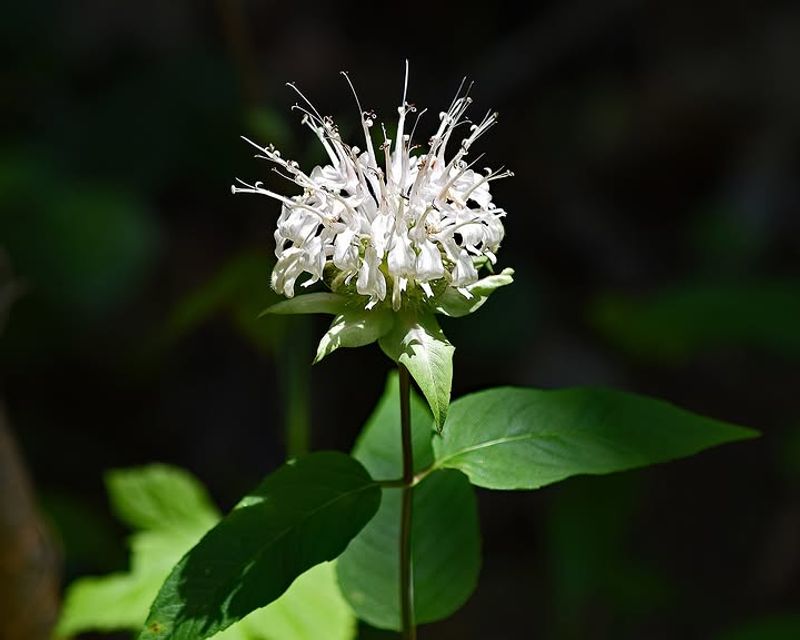
Bees, butterflies, and hummingbirds flock to Wild Bergamot from midsummer through early fall. The lavender-pink flower clusters sit atop tall, square stems and bloom in layers, giving pollinators plenty of landing spots.
Your Pennsylvania Garden Changes Every Week. Your Plan Should Too.
Gardening in Pennsylvania changes quickly throughout the season. Every Friday you’ll receive a simple weekly plan showing exactly what to plant, prune, fertilize, harvest, and protect so you never miss the right timing.
In a rewilded yard section, a thriving patch of Wild Bergamot can look like a little pollinator party every afternoon.
This plant spreads in two ways. It self-seeds, dropping new seeds around the parent plant each fall.
It also spreads through underground rhizomes, slowly expanding its footprint over time. Both methods mean that once you get Wild Bergamot established, it will likely return and grow without any help.
Wild Bergamot prefers open, sunny spots with well-drained soil. It handles dry conditions pretty well once it gets established, which makes it a great choice for sunny yard sections that do not get a lot of irrigation.
It can also handle partial shade, though it tends to bloom more heavily in full sun.
One fun fact: Native American communities historically used Wild Bergamot for medicinal purposes and as a flavoring. The plant has deep roots in North American history, both literally and culturally.
Letting it grow freely in your yard connects your outdoor space to a long and meaningful ecological story.
3. New England Aster (Symphyotrichum Novae-Angliae)
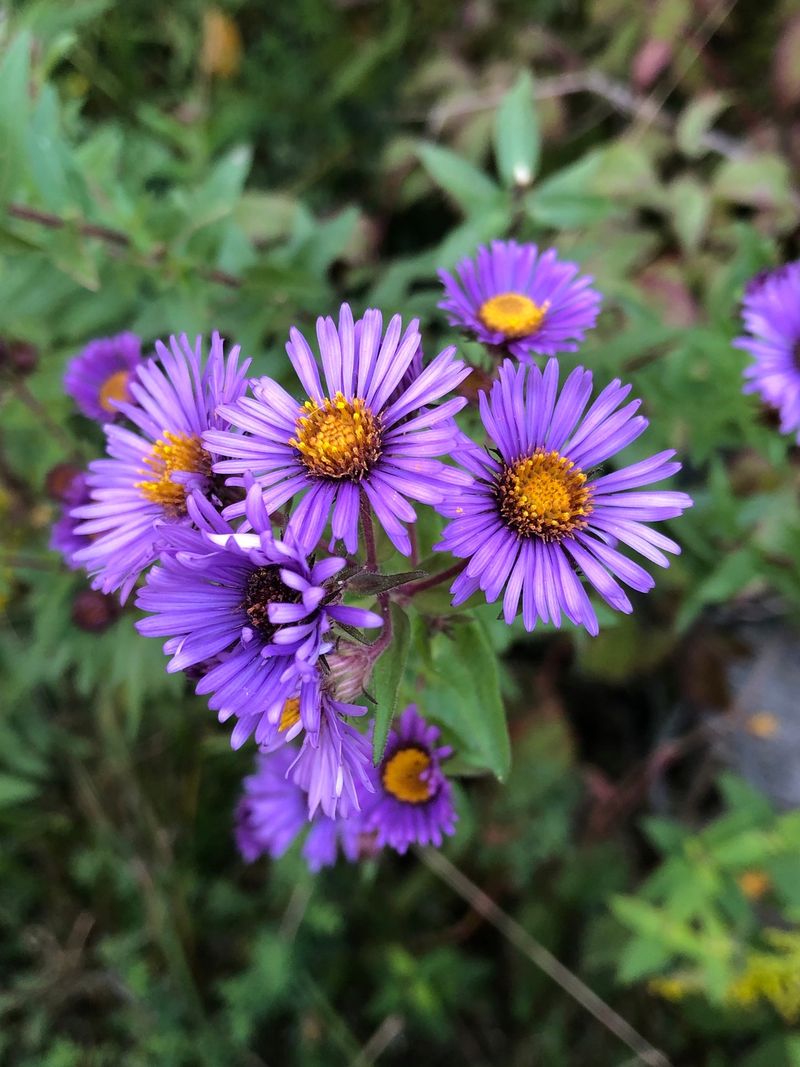
When most flowers have already called it a season, New England Aster is just getting started.
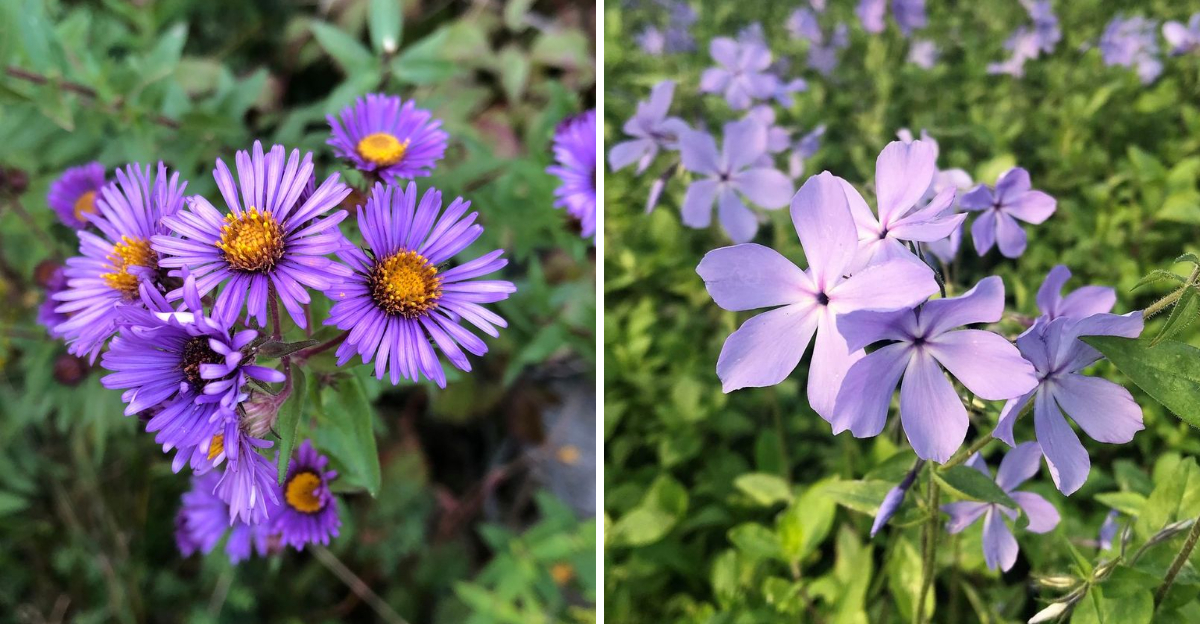
These stunning violet-purple blooms show up in late summer and keep going strong well into fall, providing one of the last bursts of color before the cold arrives. For pollinators trying to fatten up before winter, that timing is everything.
Monarch butterflies migrating south through Pennsylvania rely heavily on late-blooming flowers like New England Aster for fuel. Bees and other native insects also depend on these flowers for nectar when other food sources have already faded.
Planting or encouraging this aster in your yard is genuinely helpful for local wildlife survival.
New England Aster spreads through self-seeding with impressive enthusiasm. One plant can release hundreds of fluffy, dandelion-like seeds that drift on the breeze and settle into nearby soil.
In a rewilded section of your yard, you may find new plants popping up in surprising places from one season to the next.
These plants grow tall, sometimes reaching four to six feet in height. They do best in full sun but can tolerate partial shade.
They also prefer moist soil, though they are fairly adaptable once established. Because of their height, they work beautifully as a back-of-the-garden presence or as a natural screen along a fence line.
If you want to encourage New England Aster, simply avoid cutting down the spent plants in fall. Let the seeds disperse naturally.
By spring, you may notice tiny seedlings emerging around the base of last year’s plant. Leave them alone and watch a full colony develop over the next couple of seasons.
4. Joe-Pye Weed (Eutrochium Purpureum)
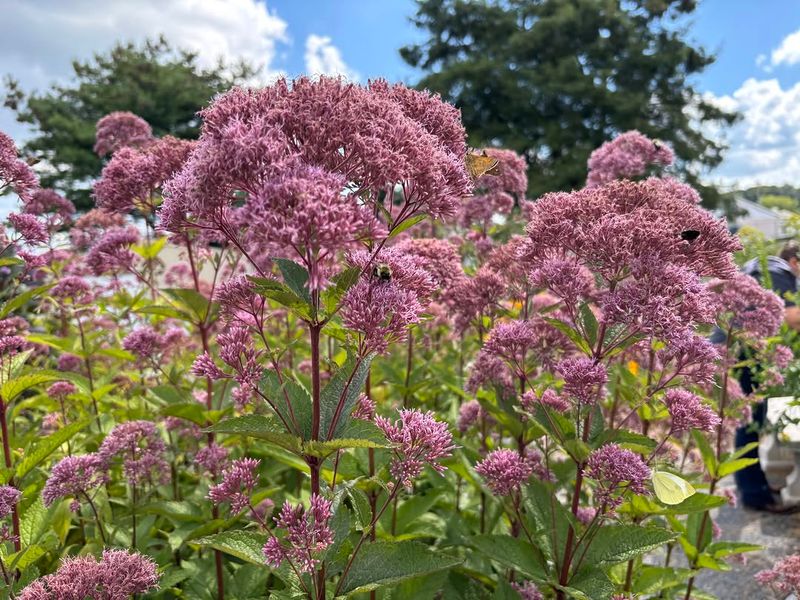
Do not let the name fool you. Joe-Pye Weed is anything but a nuisance.
It is one of the most majestic native plants you can have in a Pennsylvania yard, reaching heights of up to seven feet and producing enormous clusters of pinkish-purple flowers that practically glow in late summer sunlight.
The name itself has an interesting backstory. Legend says it comes from a man named Joe Pye, a Native American healer who reportedly used the plant to treat fevers in early colonial New England.
Whether or not that story is entirely accurate, it hints at the long relationship between this plant and the people of eastern North America.
Joe-Pye Weed is a magnet for butterflies, especially swallowtails and fritillaries. The large flower heads provide generous landing platforms, and the nectar is abundant.
In a rewilded yard section, a stand of Joe-Pye Weed can become one of the most active spots for butterfly watching during August and September.
This plant thrives in moist soil and does well in full sun or partial shade. It naturally returns year after year from its root system and also self-seeds, creating new plants nearby over time.
Once established, a colony of Joe-Pye Weed is remarkably self-sufficient and requires almost no maintenance.
To encourage it in your yard, start with a small plant or seeds in a moist area. Give it one full growing season to get comfortable.
By the second year, you will likely see noticeable growth and flowering. By the third year, it will feel right at home and may start spreading on its own.
5. Cardinal Flower (Lobelia Cardinalis)
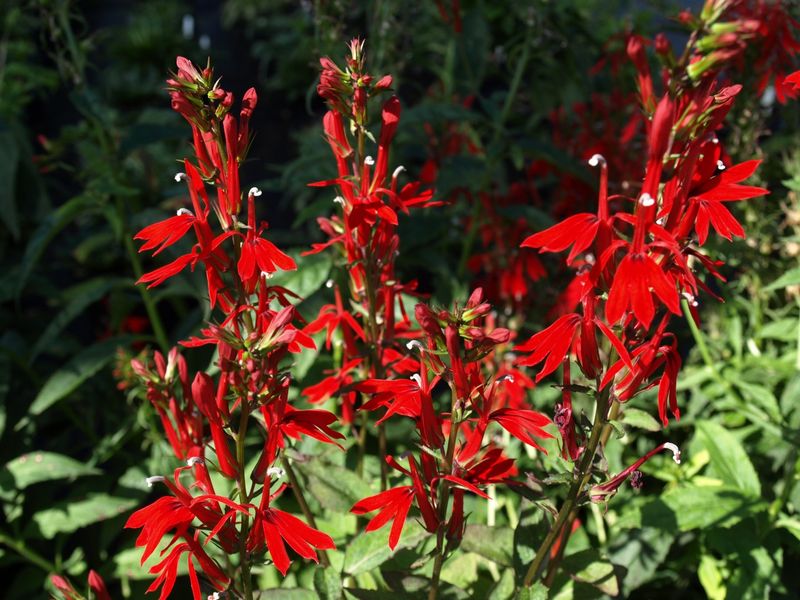
Spotting a Cardinal Flower in bloom feels a little like catching a glimpse of something magical.
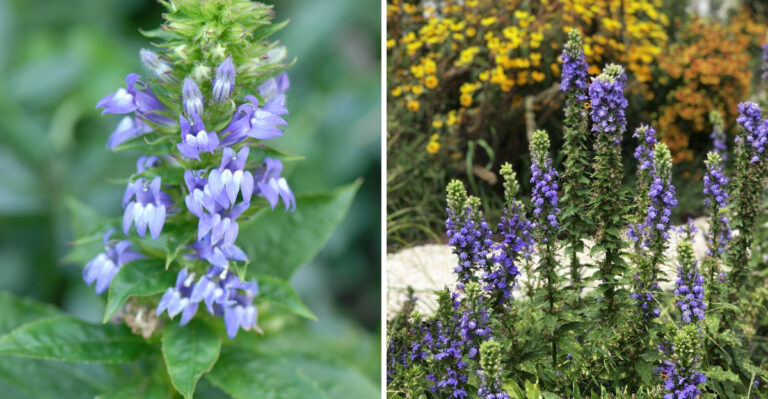
The spikes of deep, electric red stand out dramatically against green foliage, and if you watch quietly for a few minutes, there is a good chance a hummingbird will show up to visit. These two species have a relationship that goes back thousands of years.
Hummingbirds are the primary pollinators of Cardinal Flower. The tubular shape of each bloom is perfectly sized for a hummingbird’s beak, and the brilliant red color is one that hummingbirds are especially drawn to.
In a rewilded yard near a wet or moist area, Cardinal Flower can become a reliable hummingbird magnet from midsummer through early fall.
Cardinal Flower is a short-lived perennial, meaning individual plants may only last two or three years. But the plant compensates for this by producing enormous numbers of tiny seeds.
When you let spent flower stalks remain standing into fall and winter, those seeds fall into the surrounding soil and sprout new plants the following spring.
Moist soil is essential for this plant. It naturally grows along stream banks, pond edges, and low-lying wet areas.
In a rewilded yard section, look for the dampest spot available. Even a low area that collects rainwater can work well. Once Cardinal Flower finds the right conditions, it tends to establish itself confidently.
You can encourage re-establishment by lightly raking the soil around existing plants in late fall after seeds have dropped. This helps seeds make contact with the soil without washing away.
A little care at this stage can result in a much fuller and more vibrant patch by the following summer.
6. Woodland Phlox (Phlox Divaricata)
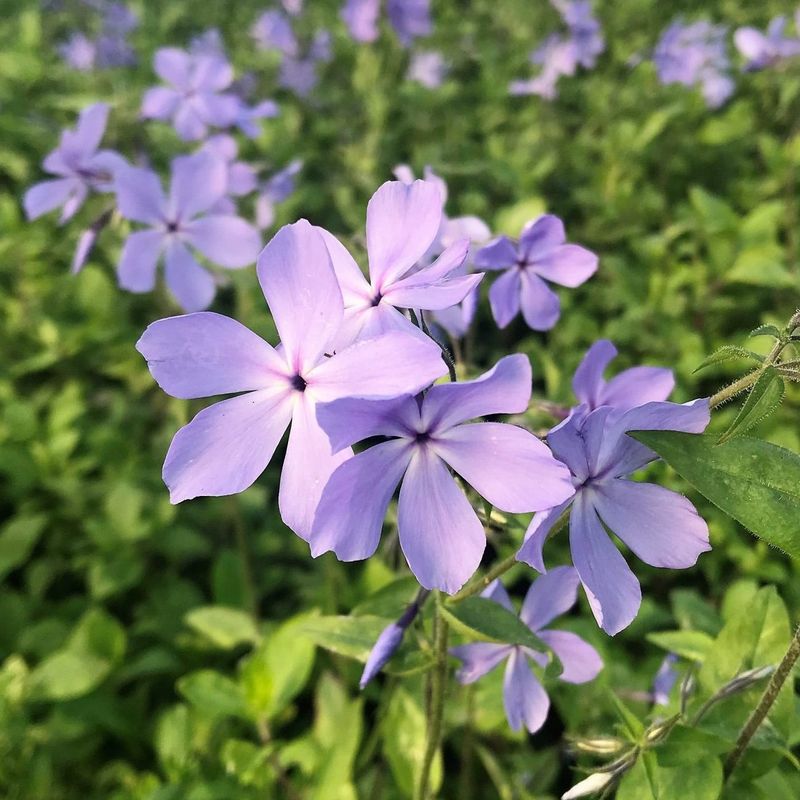
Spring in a Pennsylvania woodland feels incomplete without the soft lavender-blue haze of Woodland Phlox drifting through the understory.
This low-growing native blooms in April and May, often carpeting shaded areas with a gentle wave of color right when the forest floor is waking up from winter. It is one of the earliest native bloomers to offer nectar to pollinators each year.
Woodland Phlox works beautifully in the shadier sections of a rewilded yard. Under trees, along fence lines shaded by shrubs, or at the edge of a wooded border are all ideal spots.
It prefers partial to full shade and moist, well-drained soil that is rich in organic matter. Think of the kind of soil you would find on a forest floor covered in decomposing leaves.
Over time, Woodland Phlox spreads through natural reseeding and also through creeping stems that root where they touch the ground. A single plant can gradually expand into a lush, dense patch without any effort on your part.
This spreading habit makes it an excellent ground cover for suppressing weeds in shaded areas.
The fragrance of Woodland Phlox is another reason to love it. On a calm spring morning, a large patch can fill the air with a light, sweet scent that feels like the very essence of the season. Butterflies and native bees are attracted to both the scent and the nectar-rich blooms.
One helpful tip: avoid disturbing the soil around Woodland Phlox too much. The seeds are small and shallow, and heavy raking or digging can displace them before they get a chance to sprout.
A light hand and a patient approach will reward you with a spreading colony year after year.
7. Virginia Bluebells (Mertensia Virginica)
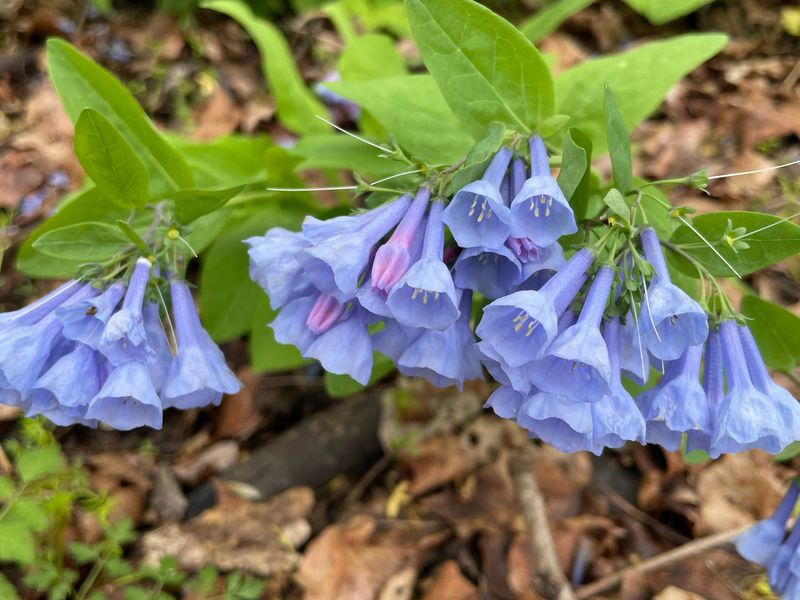
Virginia Bluebells are the kind of plant that makes you stop walking and just stare. In early spring, before most other plants have even woken up, these beauties push up from the ground and unfurl clusters of bright, sky-blue bell-shaped flowers that seem almost too vivid to be real.
They are one of the most beloved spring ephemerals in the eastern United States. The term ephemeral means they do not stick around all season. Virginia Bluebells bloom in March and April, then gradually fade and go dormant by early summer.
By June, they have completely disappeared underground, leaving no trace above the soil. This is perfectly normal behavior and not a sign that anything has gone wrong.
Because they vanish so quickly, it helps to plant them alongside later-emerging perennials that will fill in the gap once the Bluebells go dormant. Ferns, hostas, or Wild Ginger are great companions for shaded spots.
They will cover the bare patches left behind and keep the garden looking full throughout the rest of the growing season.
Virginia Bluebells multiply naturally in shady, moist garden beds through both self-seeding and by expanding their underground bulb clusters. Each year, a well-established colony tends to get a little bigger and produce a few more blooms.
In a rewilded shaded section of your yard, they can spread into a breathtaking spring display over just a few seasons.
To get them started, plant dormant roots or potted plants in fall or early spring in a shaded spot with rich, moist soil. After the first season, let nature handle the rest.
Resist the urge to dig or disturb the area in summer when the plants are resting underground and preparing for their next spring return.