These 9 Perennials Can Keep Your New York Garden Blooming Into October
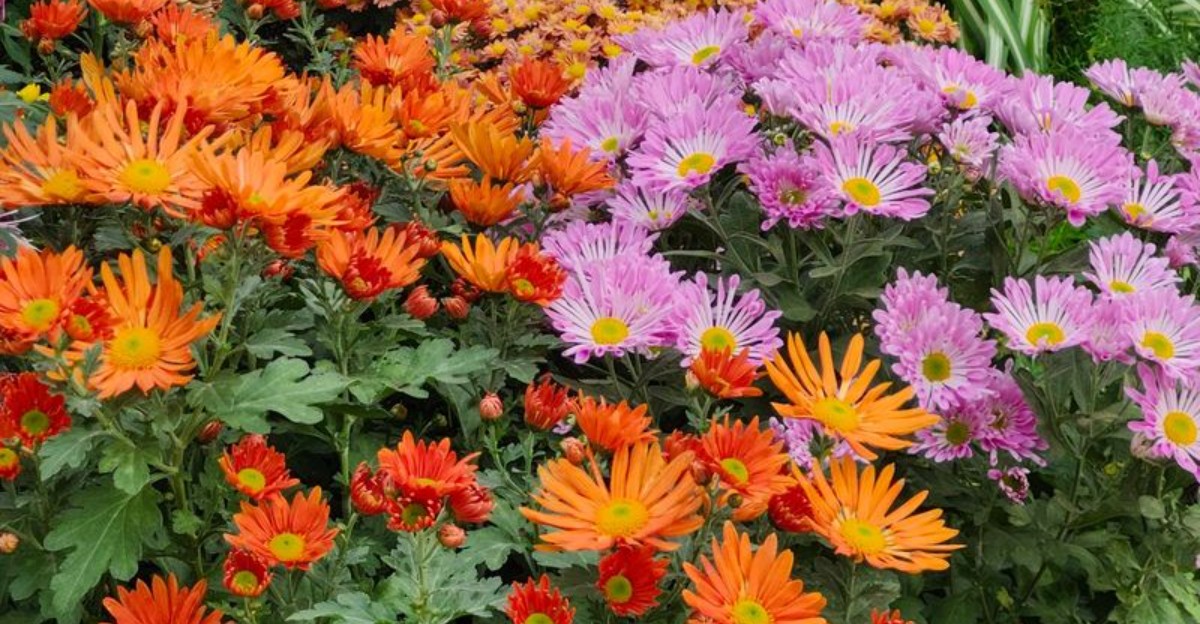
Your garden does not have to lose its color when summer fades. Some hardy perennials actually hit their stride in early fall, filling garden beds with colorful blooms while cooler temperatures settle in.
That makes fall a great time to rethink those empty-looking spots in your yard. The right plants can keep your garden looking lively well into October while giving bees and other pollinators a valuable late-season food source.
If you want your New York yard to stay interesting after summer blooms disappear, these fall-flowering perennials are worth a closer look.
1. New England Asters Bring Color To Gardens Through October
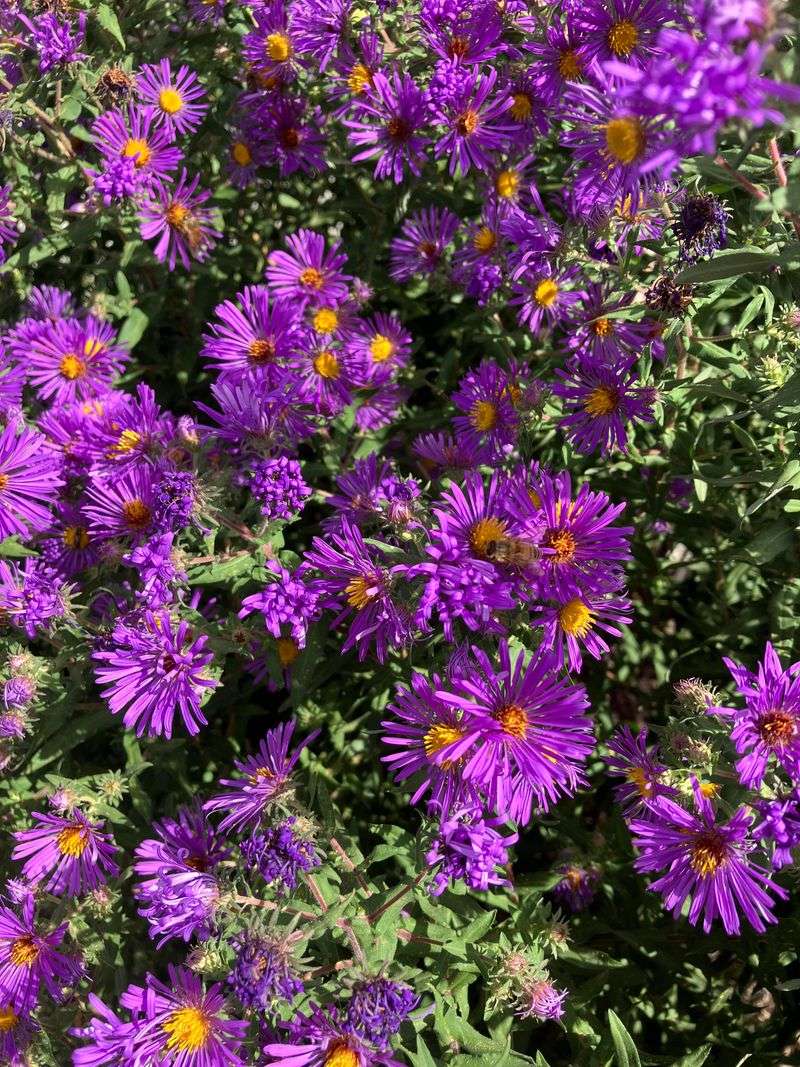
Few flowers make a bigger entrance at the end of the season than the New England aster. Its purple petals glow against a bright yellow eye, and bees swarm it like a final buffet.
Bloom time usually starts in late summer and rolls right through October, often holding on until the first real frost. That makes it one of the most reliable finishers in a garden.
Height varies a lot, from about 3 feet to a towering 7 feet in rich ground. Give the plant full sun and moist, well-draining soil, and it will reward you generously.
Tall stems can flop by September, which frustrates plenty of gardeners. The trick is a light pinch or shear in early summer, cutting stems back by about a third to encourage sturdier, bushier growth.
Lower leaves often brown out as the season goes on. Plant something leafy in front, like nepeta or low grasses, and nobody will notice the bare ankles.
Pollinators treat these blooms as a lifeline. Migrating monarchs, late bumblebees, and small native bees all refuel on aster nectar before the cold arrives.
Leave the stems standing through winter instead of tidying everything in fall. Birds pick at the seed heads, and hollow stems shelter beneficial insects until spring.
One fun bit of history: botanists reclassified this plant as Symphyotrichum novae-angliae, though most gardeners cheerfully ignore the new name and keep calling it an aster.
2. Goldenrod Keeps Yards Bright Into The Fall
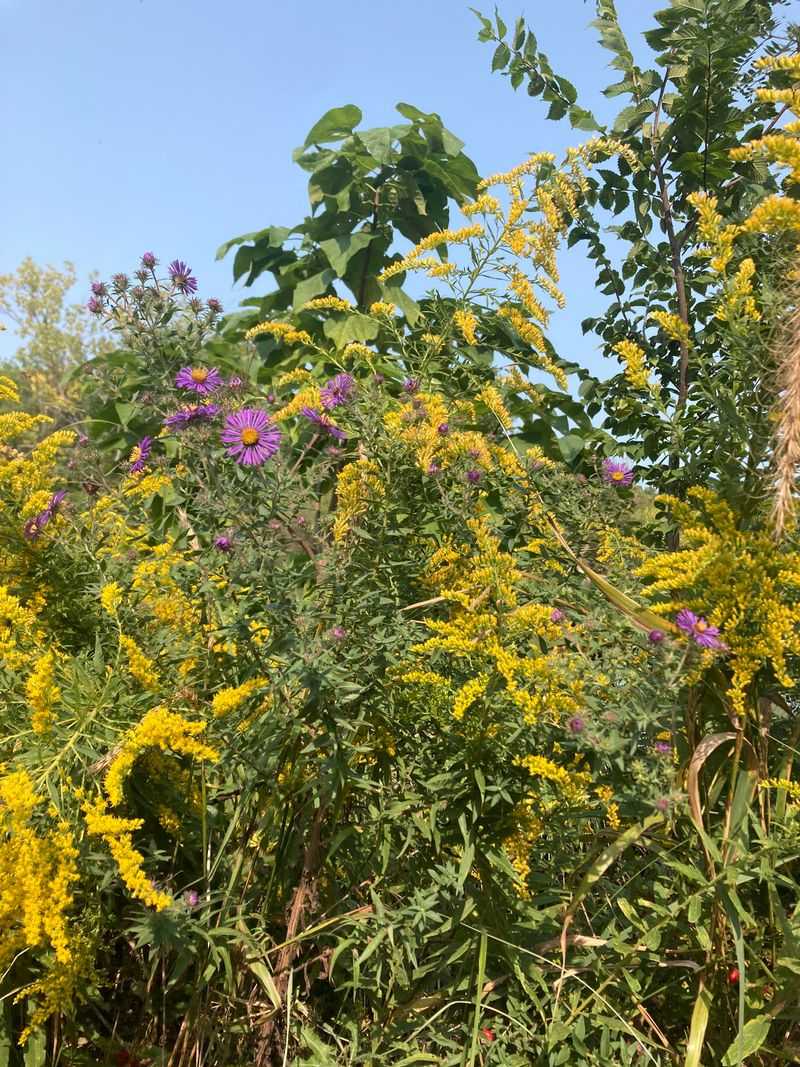
Goldenrod gets blamed for autumn allergies every single year, and it is innocent. Its pollen is heavy and sticky, carried by insects rather than wind, so ragweed is the real culprit.
Once you forgive it, you gain one of the hardest-working fall plants around. New York is home to numerous native goldenrod species, each with a slightly different look and habit
Most kinds peak in late summer and keep flowering until frost, which in many parts of the state arrives well into October. That timing matters enormously for pollinators.
Late-season bees, wasps, beetles, and butterflies pile onto those golden plumes. Goldenrod supports a wide range of late-season insects, including bees, wasps, beetles, and butterflies
Full sun suits it best, and it shrugs off dry spells once established. Poor or sandy soil is fine, since overly rich ground just makes floppy stems.
Worried about it taking over the bed? Choose clump-forming types such as showy goldenrod or the compact cultivar Fireworks, and skip the aggressive runners in tight spaces.
Your New York Garden Changes Every Week. Your Plan Should Too.
Gardening in New York changes quickly throughout the season. Every Friday you’ll receive a simple weekly plan showing exactly what to plant, prune, fertilize, harvest, and protect so you never miss the right timing.
Pair the yellow with purple asters for a combination that looks straight out of a roadside meadow. The two bloom together naturally, so the pairing feels effortless.
Cut a few stems for a vase and the color holds beautifully indoors. Just shake them outside first, because the tiny insects hiding in the flowers would rather not join dinner.
3. Sneezeweed Delivers Warm Blooms Through October
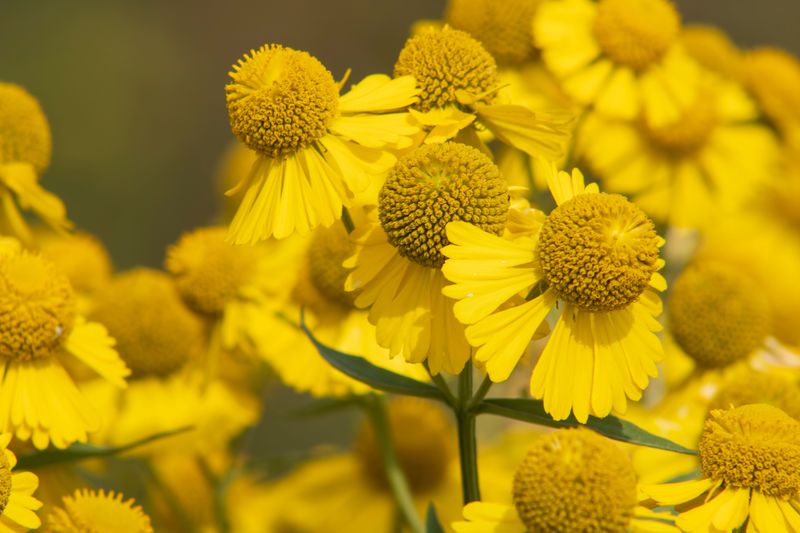
Blame early settlers for the unfortunate name. They dried the leaves to make snuff, not because the plant triggers sneezing fits.
Sneezeweed is primarily insect-pollinated, so its pollen is less likely to become airborne than pollen from wind-pollinated plants. What you get instead is a wave of cheerful daisy-shaped blooms with fat, domed centers.
Flowering runs from August straight through October, giving beds warm yellows, rusty oranges, and coppery reds. The petals look slightly ruffled at the tips, almost like tiny skirts.
Moist ground is the secret. Medium to damp soil keeps plants happy, which makes sneezeweed a natural pick for pond edges, rain gardens, or that low spot in a yard that stays soggy after storms.
Sun is the other requirement, though light afternoon shade is tolerated. Skimp on water and the lower leaves crisp up fast.
Plants can reach 4 or 5 feet, so a June trim keeps them compact and branching. Gardeners call the technique the Chelsea chop, and heleniums respond to it beautifully.
Divide clumps every few years in spring to keep flowering strong. The center tends to thin out otherwise.
Butterflies adore the nectar, and the seed heads feed goldfinches once blooms fade. Cultivars like Mardi Gras and Moerheim Beauty bring extra fire to the mix, blending gorgeously with ornamental grasses and deep purple asters in a late-season border.
4. Black Eyed Susans Keep Flower Beds Colorful Into Fall
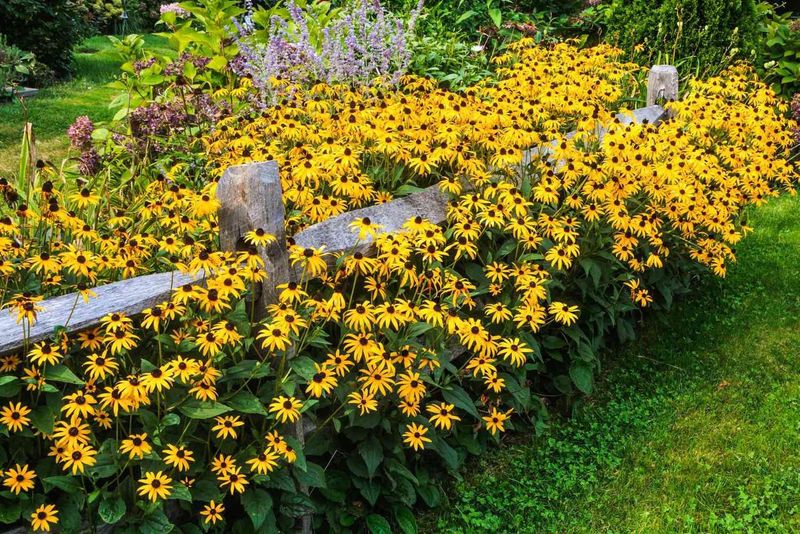
Golden petals, chocolate-brown centers, and an attitude that says frost can wait. Black-eyed Susans are the flower most people picture when they think of late summer, and they hang on far longer than expected.
Flowering typically begins in late July and keeps going until the first frost settles in. Long-blooming cultivars such as ‘Goldsturm’ can keep flowering from midsummer until the first fall frosts.
Full sun and well-drained soil are the main needs. Beyond that, these are forgiving plants that handle heat, clay, and neglect better than most.
Removing spent flowers during August encourages more buds. Stop around mid-September and let the remaining flowers form seed heads instead.
Those dark cones become winter bird feeders. Goldfinches and chickadees work them over on cold mornings, which is reason enough to leave stems standing in a garden.
Rudbeckia fulgida, the perennial type, returns dependably year after year. The common Rudbeckia hirta behaves more like an annual or short-lived plant, though it reseeds so freely you may never notice the difference.
Space plants with a little breathing room, since crowded clumps invite powdery mildew in humid stretches. Morning sun helps leaves dry quickly.
They look terrific massed in drifts rather than scattered singly. Combine with switchgrass, sedum, and asters, and the bed still reads as full and lively when October light turns golden.
5. Calico Asters Add Delicate Blooms In September And October
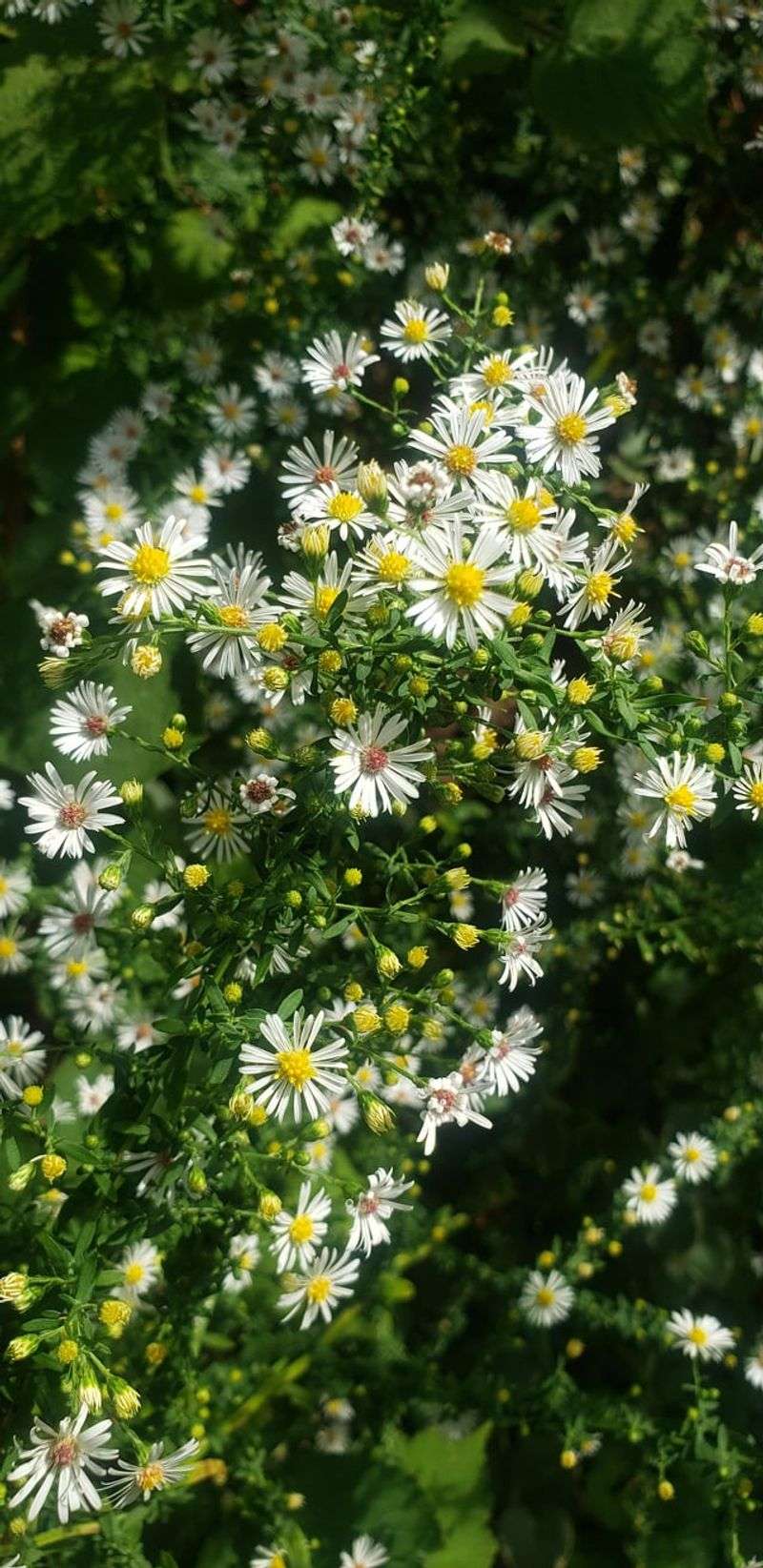
Look closely at a calico aster and you will see why it earned the name. The tiny white flowers carry centers that shift from yellow to reddish purple as they age, so one plant shows several colors at once.
Calico aster flowers in fall, often from September or October into November, depending on the local climate. Very few perennials go that late.
Size ranges from 1 to 4 feet, with arching, almost zigzag stems that look relaxed rather than stiff. The airy texture softens harder edges in a planting.
Part sun to light shade suits it perfectly, along with moist soil. Woodland edges are its natural home, which makes it ideal for that half-sunny strip along a fence or under high tree branches.
Gardeners often overlook it because the flowers are small. Step back and the effect is a cloud of white speckles, subtle and quietly beautiful.
Pollinators certainly notice. Small native bees and hoverflies work these blooms heavily when other nectar sources have thinned out.
Self-seeding happens, though seedlings pull easily if they wander. Some folks let them fill gaps naturally between shrubs.
Try it beside ferns, sedges, or woodland phlox for a layered look. Once the aster finishes, its fine stems still add winter interest, catching frost in a way that makes early morning walks worth the chill.
6. Rough Stemmed Goldenrod Provides Reliable October Color
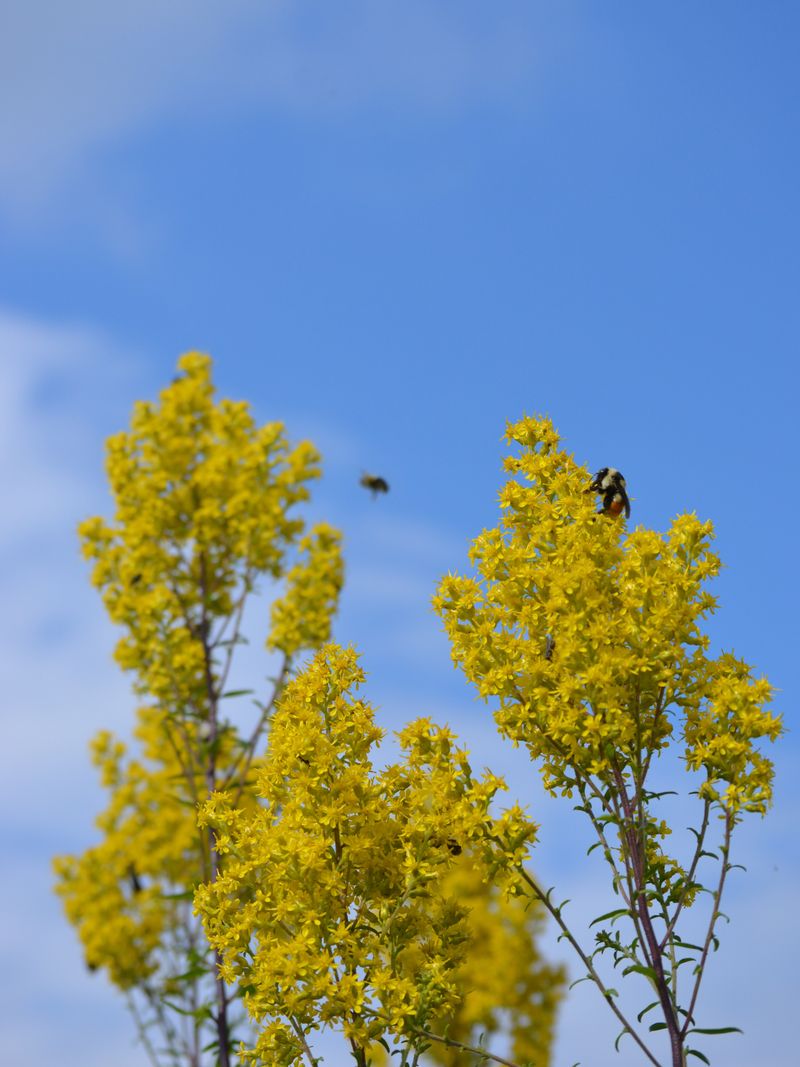
Some plants whisper. Rough stemmed goldenrod shouts, sending up stiff stalks topped with dense, plume-shaped clusters of bright yellow.
Flowering peaks in September and can continue into fall, making it a reliable source of late-season color in a landscape. The blooms hold their color well even as nights cool.
Plants generally reach 3 to 5 feet, adding real vertical presence to a border or meadow planting. That height plays nicely against low mounding perennials.
The common name comes from the stem itself, which feels noticeably sandpapery if you run a finger along it. Once you know the texture, identification becomes easy.
Solidago rugosa handles a wide range of conditions, including damp ground that frustrates other sun lovers. Average soil and full sun produce the best flowering.
The cultivar Fireworks stays tidier than the wild form, with sprays that arch outward like a sparkler frozen mid-burst. It behaves well in ordinary garden beds.
Spreading can happen through rhizomes, so give it room or plant it where a colony is welcome. Edging with a spade each spring keeps things in bounds.
Insects treat it as a late-season feast, from tiny wasps to soldier beetles. Combine it with purple asters and bronze grasses, and your October garden will look like a stretch of Hudson Valley meadow landed right outside the kitchen window.
7. White Snakeroot Adds Late Season Blooms To Shady Gardens
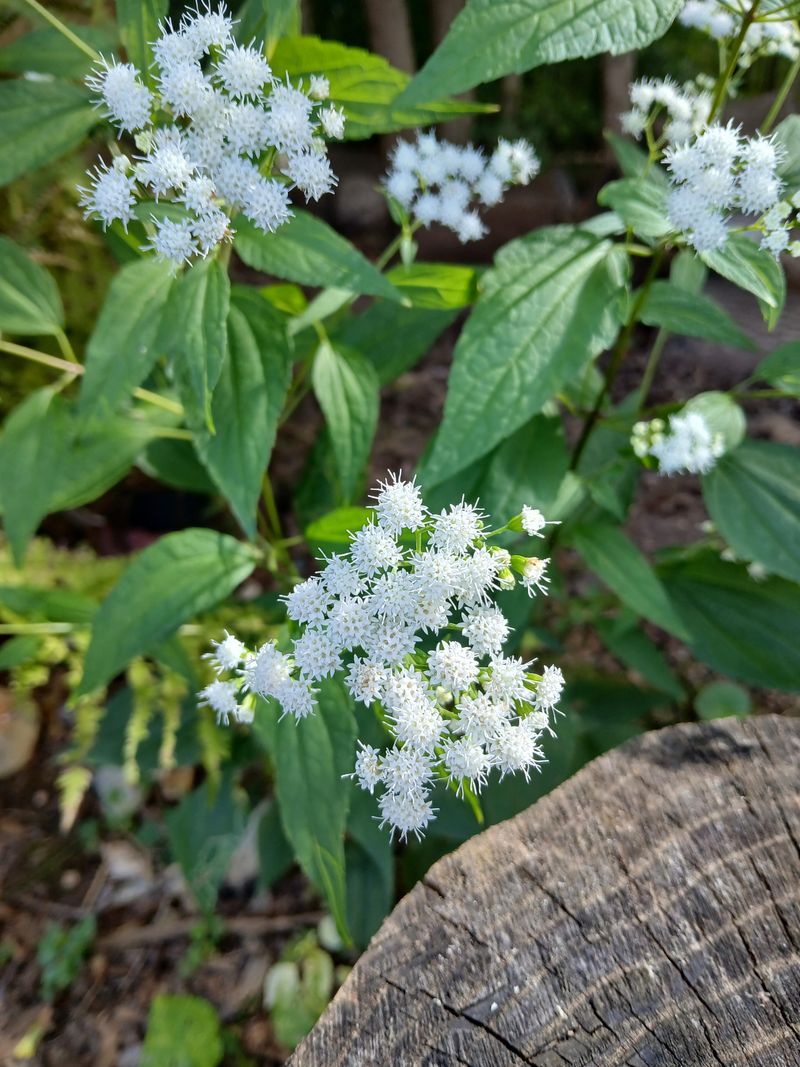
Shade gardeners usually run out of flowers by Labor Day. White snakeroot refuses to accept that schedule.
Fluffy white flower clusters open from September into October, and sometimes as early as August. Against dark green leaves in dim light, the effect almost glows.
Light requirements are unusually flexible, from partial sun all the way to full shade. Soil can be dry or wet, which explains why the plant shows up in so many woodlands without any help.
Mature height lands between 2 and 5 feet, with an upright, leafy habit. The foliage stays attractive through summer, so the plant earns its keep before flowering.
Spreading happens through rhizomes and self-sowing, forming colonies over time. Gardeners who want a naturalized woodland look will consider that a feature rather than a flaw.
A word of caution for anyone with livestock: the plant contains a toxin that historically passed into cow milk. Its main toxicity concern is livestock that consume the plant, so keep it away from grazing areas and handle it with care.
The cultivar Chocolate brings deep purple-bronze foliage that contrasts beautifully with the white blooms. It has become a favorite for shady borders.
Bees, small butterflies, and flies all visit. Plant it with hostas, ferns, and wild ginger, and that forgotten shady corner suddenly has something happening in October.
8. Canadian Burnet Can Keep Moist Garden Areas Blooming Into October
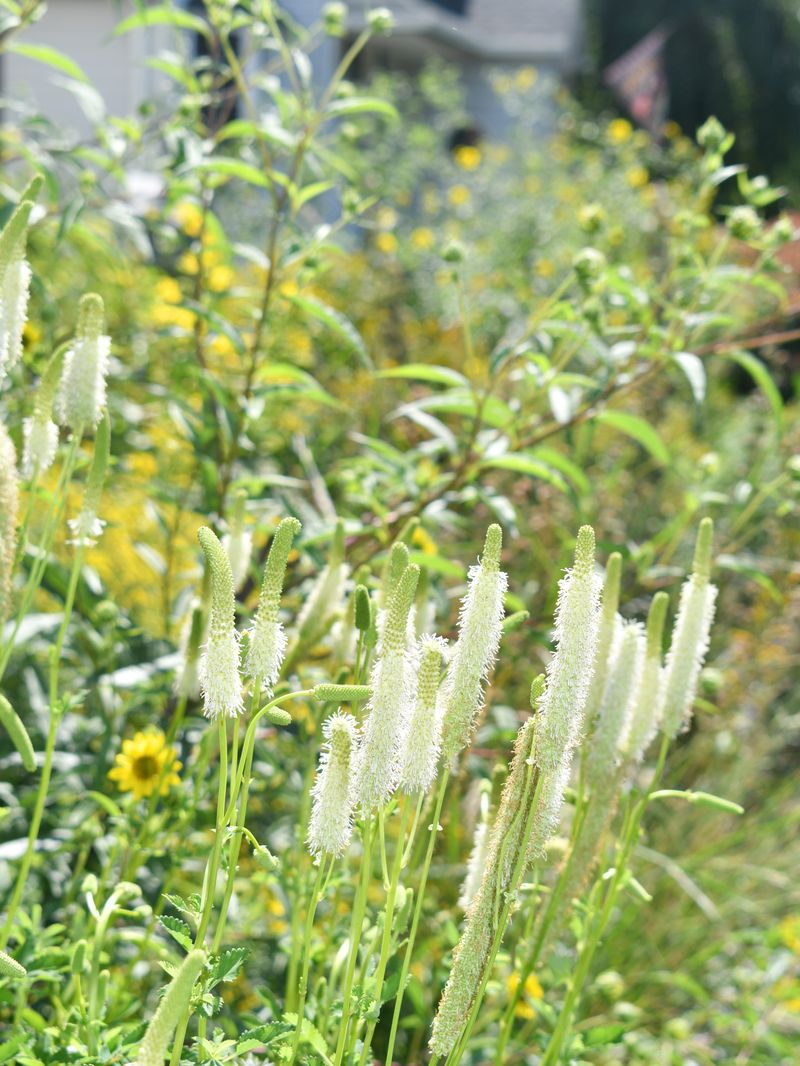
Picture slender white bottlebrushes swaying above a damp meadow and you have Canadian burnet. The flower spikes are unlike anything else blooming in fall.
Flowering runs from August into October, often holding for more than a month. That long window makes it valuable when other perennials have finished.
Height reaches 4 to 6 feet on strong, clump-forming stems. Despite the size, the plant rarely needs staking when grown in the right spot.
Moisture is non-negotiable. Consistently damp to wet soil rich in organic matter suits it, especially in boggy meadows, swamps, and rain-garden conditions.
Full sun to light shade works well. For gardeners dealing with a soggy low area or a rain garden, few plants handle those conditions with such elegance.
The foliage deserves mention too. Compound leaves with toothed edges look neat all season, a bit like a refined version of a fern frond.
Pollinators, especially small bees and flies, work the spikes steadily. Its flowers also provide a useful late-season resource for pollinators.
Give it a mulch of leaf compost each spring to hold moisture and feed the soil. Combine with sedges, blue flag iris, and Joe Pye weed for a wetland planting that keeps its looks well past the first cool nights.
9. Joe Pye Weed Can Extend Its Bloom Display Into Early Fall
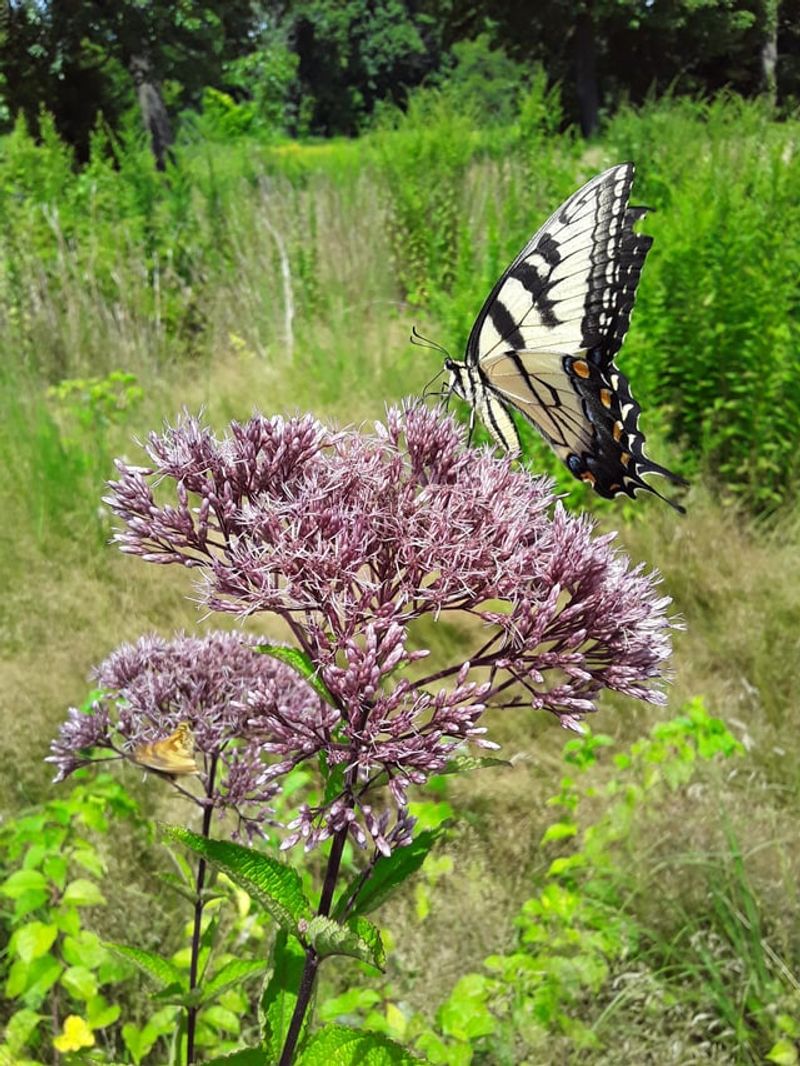
Legend says the plant was named for a Native American healer who used it to treat fevers. True or not, the story stuck, and so did the plant’s reputation as a butterfly magnet.
Blooming stretches from mid-summer into early fall, providing color as many summer perennials begin to fade. Removing spent clusters can nudge the display a little longer.
Flowers form huge domed clusters in dusty lavender-purple, held on stems that can climb anywhere from 3 to 10 feet depending on the species. Little Joe is the compact option for smaller yards.
Monarchs, swallowtails, and fat bumblebees cluster on those blooms in numbers that make people stop and stare. It is a valuable pollinator plant for New York gardens, especially for butterflies and bees.
Full sun to partial shade works, paired with moist, well-drained or occasionally wet soil. Dry ground causes leaf scorch and shorter flowering.
A June cutback by about a third keeps tall types from leaning over the path. The blooms come slightly later but on sturdier stems.
Leave the seed heads standing after flowering finishes. They turn a soft tan and hold snow beautifully through winter.
Plant it at the back of a border where its height becomes a backdrop rather than a wall. Behind asters and goldenrod, the whole October scene comes together.