This Common Florida Plant Is Toxic to Dogs, and It’s Probably on Your Street
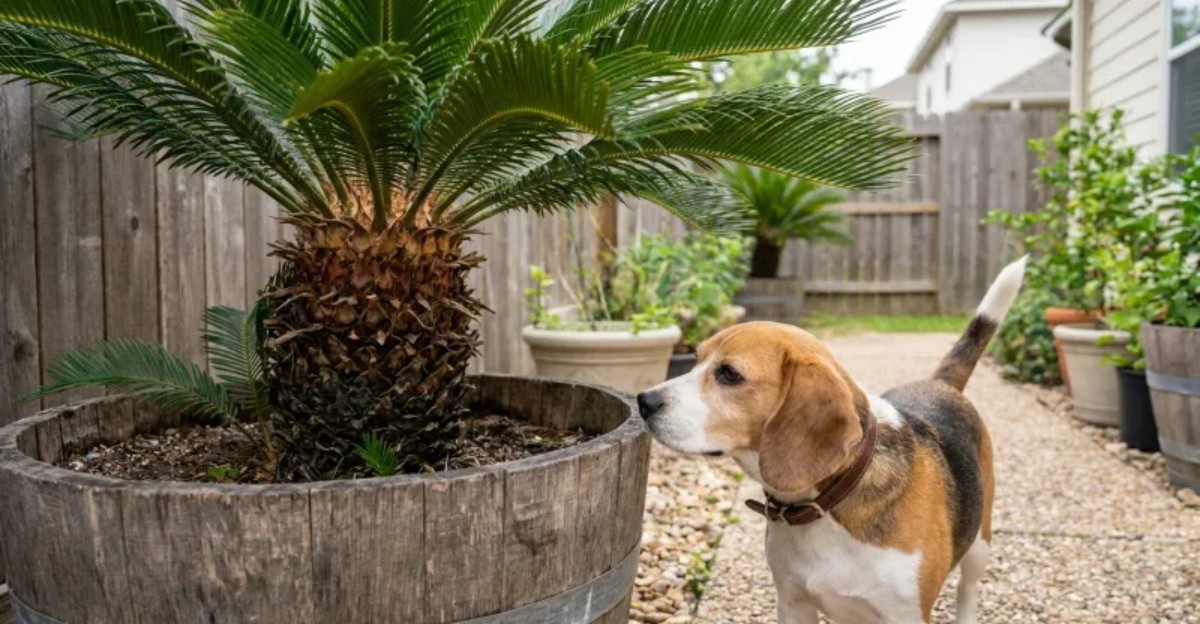
A single bright orange seed, smaller than a golf ball, can send a healthy dog to the emergency vet within hours. Veterinarians across Florida see these cases every year, and many owners had no idea the plant was a problem.
The culprit is no rare jungle oddity. It sits beside mailboxes, flanks condo entrances, and fills big pots on pool decks.
I walk past at least a dozen of them on my morning loop, and I bet you do too.
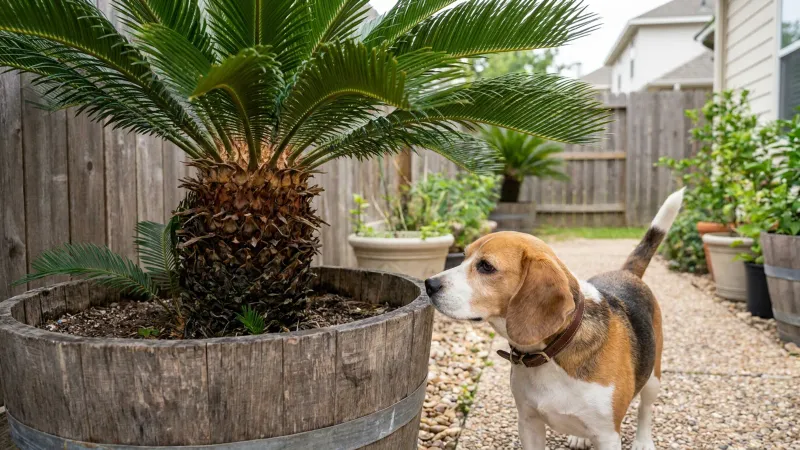
What surprises me most is how harmless it looks. Its stiff green leaves feel almost plastic, and its trunk resembles a shaggy pineapple.
Dogs see those fallen seeds as fun chew toys.
How do you spot it, and what should you do if your pup grabs a piece? The answers are simpler than you might expect, and they matter more than most yard decisions you will make this year.
That Shaggy Little Palm Isn’t Really a Palm at All
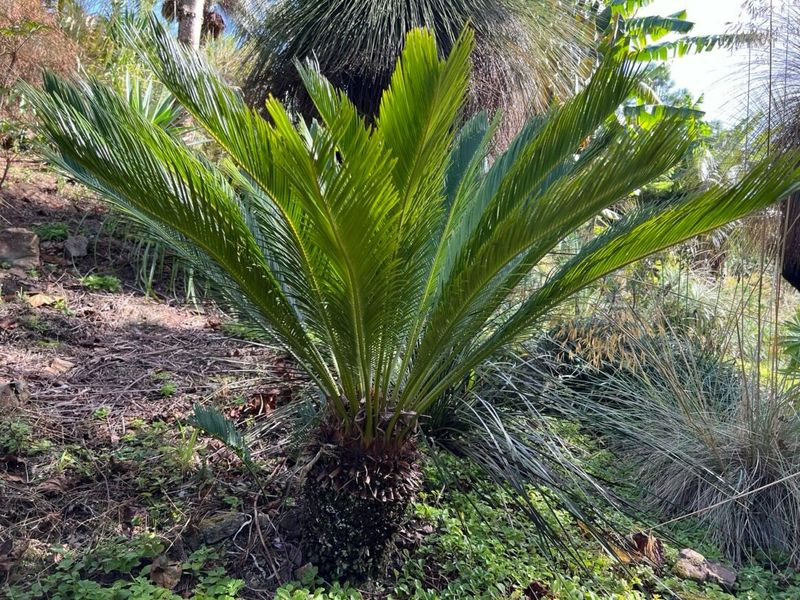
Ancient is the best word for this plant. The sago palm, known to botanists as Cycas revoluta, belongs to a group called cycads, which date back to the age of dinosaurs.
It only looks like a palm, and that disguise fools plenty of gardeners.
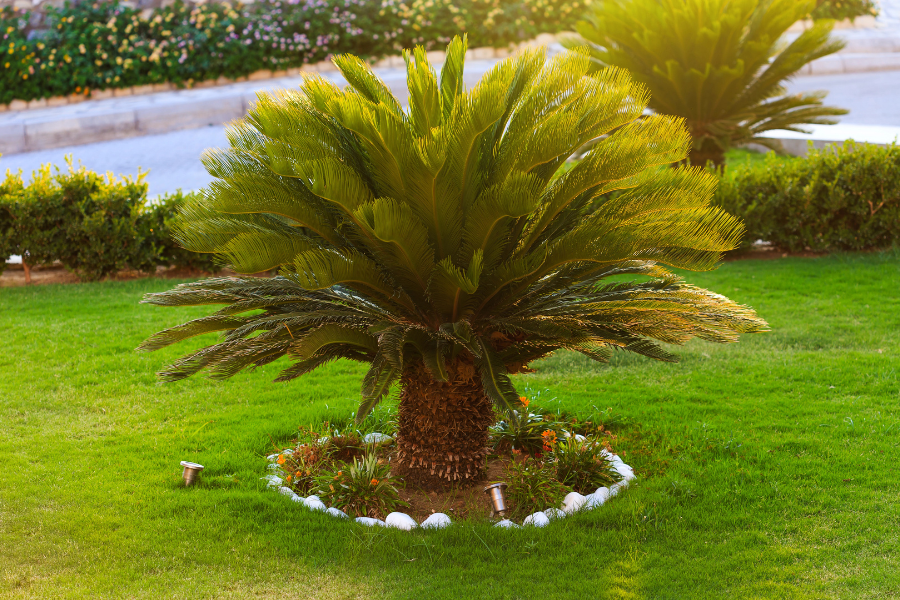
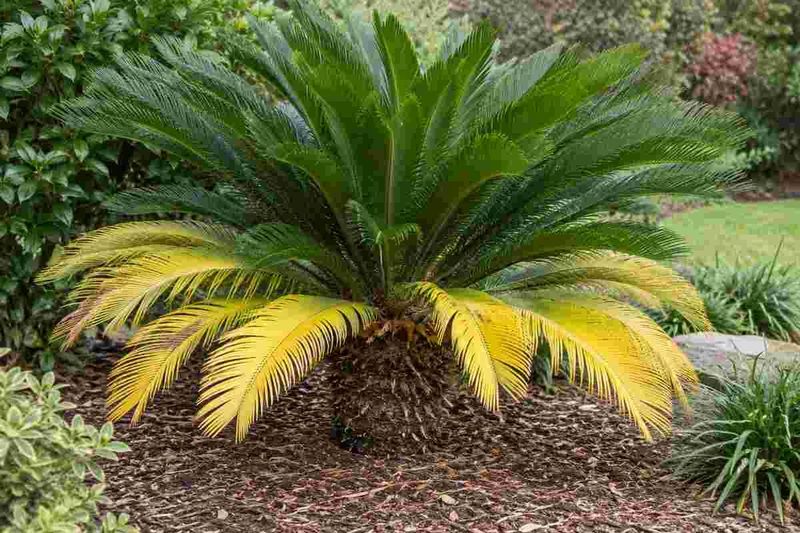
You can spot one by its glossy, dark green fronds that feel stiff and slightly prickly. Each frond can reach about four to five feet long on an older plant.
The fronds circle out from a thick, rough trunk covered in old leaf bases, which gives it that shaggy look.
Landscapers love it because it grows slowly, handles heat, and tolerates drought once settled. That makes it a favorite across Florida, from Jacksonville front yards to Miami shopping plazas.
University of Florida extension experts note it grows well in much of the state, which explains why it pops up on nearly every block.
I find it fascinating that a plant this old has stuck around in such a modern setting. Still, that toughness comes with a catch for pet owners.
Every part of the sago palm contains compounds that can seriously harm dogs, cats, and even people. Knowing what it looks like is your first line of protection.
Those Bright Orange Sago Seeds Are the Biggest Danger
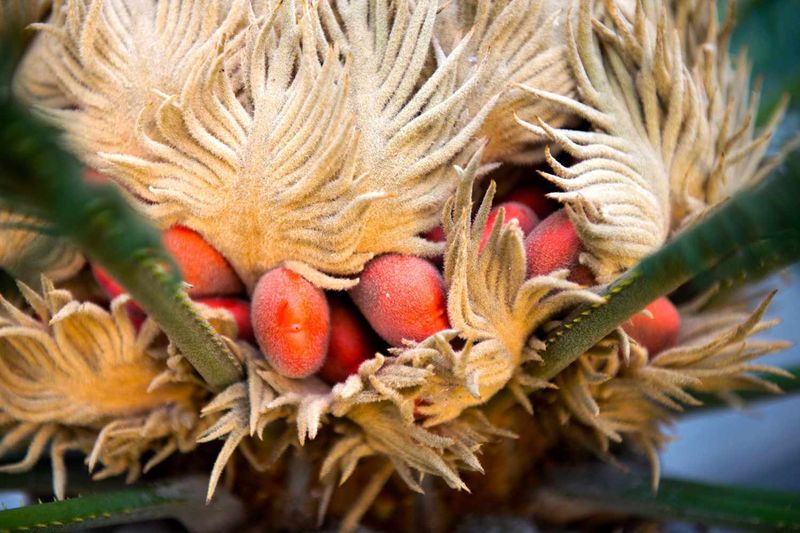
Dogs love anything round enough to roll. Sadly, that includes the bright orange seeds that grow on female sago palms.
These seeds sit in a fuzzy, golden cluster right in the center of the plant, and they often drop to the ground when ripe.
Veterinary sources, including PetMD, point out that the seeds hold the highest concentration of toxins. All parts of the plant are poisonous, but the seeds are the part pets eat most often.
Even one or two seeds can cause serious illness in a dog.
You can tell male and female plants apart fairly easily. Males grow a tall, cone-shaped structure in the center.
Females form a rounded, feathery dome that later fills with those orange seeds, roughly the size of a large walnut.
Personally, I would check any female sago in your yard often. Pick up fallen seeds with gloves and toss them in a sealed trash bag.
Some gardeners remove the seed cluster before it ripens to cut the risk even further.
Fallen seeds can also roll into grass, mulch, or under shrubs. A quick weekly sweep around the plant takes only a few minutes and could spare you a frightening vet trip.
Rush to the Vet if Your Dog Chews Any Part of a Sago Palm
Speed is everything here. If you suspect your dog ate any piece of a sago palm, treat it as an emergency, even if your pup seems perfectly fine.
Call your veterinarian or the nearest emergency animal hospital right away.
While you head out, you can also call the ASPCA Animal Poison Control Center or the Pet Poison Helpline. Their experts can share guidance with your vet and help plan treatment.
These services usually charge a consultation fee, but the advice is worth it.
Please skip home remedies. Do not try to make your dog vomit unless a veterinarian tells you to do it.
Inducing vomiting the wrong way can cause choking or other problems.
Bring a sample of the plant if you can grab one safely. A seed, leaf piece, or photo helps the vet confirm what your dog swallowed.
Note the time you think it happened too.
Vets often use early decontamination to reduce how much toxin enters the body. That may include induced vomiting at the clinic and activated charcoal.
The sooner this happens, the better your dog’s odds become, so do not wait and watch.
Cycasin Inside Sago Fronds Hits the Liver Hard
Science gets a little scary with this one. The main toxin in sago palms is called cycasin.
Once a dog swallows it, the body breaks it down into compounds that damage the liver and upset the stomach and intestines.
A second toxin, called BMAA, affects the nervous system. Researchers have linked it to tremors, weakness, and seizures in animals.
Together, these chemicals create a double hit on the body.
The liver takes the worst beating. It is the organ that filters toxins, so it sits right in the path of the damage.
As liver cells struggle, the body has trouble with clotting, digestion, and energy.
You might wonder why the plant packs such strong chemicals. Many scientists believe these compounds help protect cycads from hungry animals.
It worked well for millions of years, long before anyone planted them along driveways.
I find it helpful to remember that dogs do not need to eat a lot. Toxin levels vary between plants and plant parts, so there is no safe amount to guess at.
Any chewing on seeds, leaves, or roots deserves a vet visit, period.
Watch for Vomiting, Drooling, and Wobbly Steps After Sago Exposure
Sometimes the first clue is a messy carpet. Vomiting is one of the earliest signs of sago palm poisoning, and it can show up within minutes to several hours.
Some dogs throw up blood or have bloody diarrhea.
Other early signs include heavy drooling, a sudden loss of appetite, and acting tired or sad. Your dog may hide, refuse treats, or seem uncomfortable lying down.
Nervous system signs can follow within hours. Watch for weakness, stumbling, trembling, or seizures.
A dog that walks like it is dizzy needs care immediately.
Liver trouble often appears a few days later. Look for yellowing of the gums, eyes, or skin, which vets call jaundice.
Dark urine, bruising, increased thirst, and swelling in the belly can also point to liver failure.
Here is a tip I share with every dog owner friend. Take a quick photo of your dog’s normal gum color on a healthy day.
That way, you have something to compare if you ever worry about yellowing. Write down any symptoms and their timing, because your vet will ask for those details.
A Healthy-Looking Dog Can Still Be in Trouble Days Later
Calm can be misleading. A dog that ate part of a sago palm may play, eat, and wag its tail for the rest of the day.
Meanwhile, liver damage can quietly build over the next 24 to 72 hours.
That delay is what makes this plant so tricky. Owners often feel relieved when nothing happens right away.
By the time jaundice or bleeding shows up, the liver may already be badly hurt.
Veterinary reports show survival rates are sobering. Studies suggest roughly half of dogs with clinical signs of sago poisoning do not recover, even with strong treatment.
There is no specific antidote, so vets rely on supportive care.
Treatment often includes IV fluids, anti-nausea drugs, liver protectants, and sometimes plasma for clotting problems. Your vet may also run blood tests over several days to track liver values.
Those follow-up checks matter, so try not to skip them.
My honest advice is simple. Treat exposure like a broken bone, not a tummy ache.
Getting care before symptoms appear gives your dog the best possible chance, and those first hours count far more than anything you do later.
Puppies and Curious Chewers Near Sago Palms Need Extra Eyes
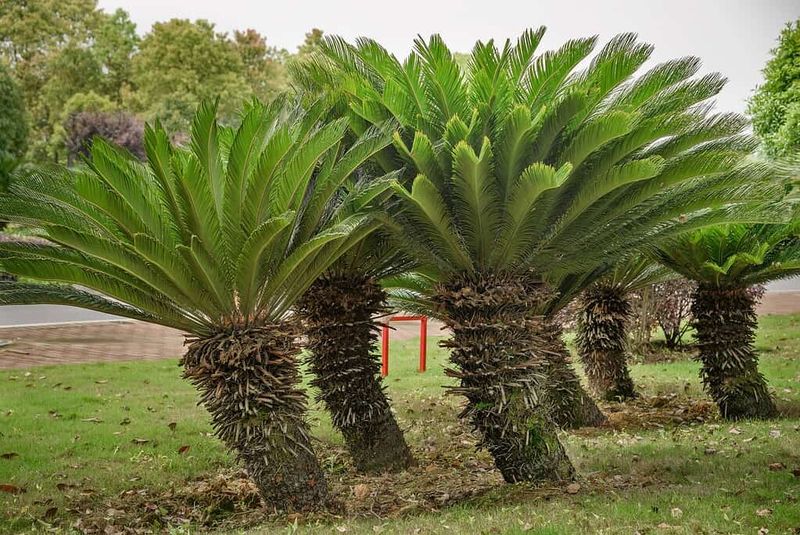
Puppies explore the world with their mouths. That habit makes them the most likely to grab a fallen sago seed or gnaw on a frond.
Teething pups and bored adult dogs fall into the same risk group.
Walks bring their own surprises. Many Florida neighborhoods have sago palms in common areas, apartment complexes, and parks.
Keep your dog on a short leash near landscaped beds, and steer clear of plants you do not recognize.
Training helps a lot here. A strong leave it or drop it command can stop a dangerous snack in seconds.
Practice with treats at home so it works when you really need it.
Cats are at risk too, though they chew plants less often. Potted sagos indoors can tempt pets of all kinds.
Move them out of reach or give them to a pet-free home.
I also like asking pet sitters, dog walkers, and family members to learn what a sago looks like. Show them a photo.
When everyone who cares for your dog knows the plant, you add another layer of safety without much effort.
Swapping Out Your Sago Palm Could Be the Smartest Yard Upgrade
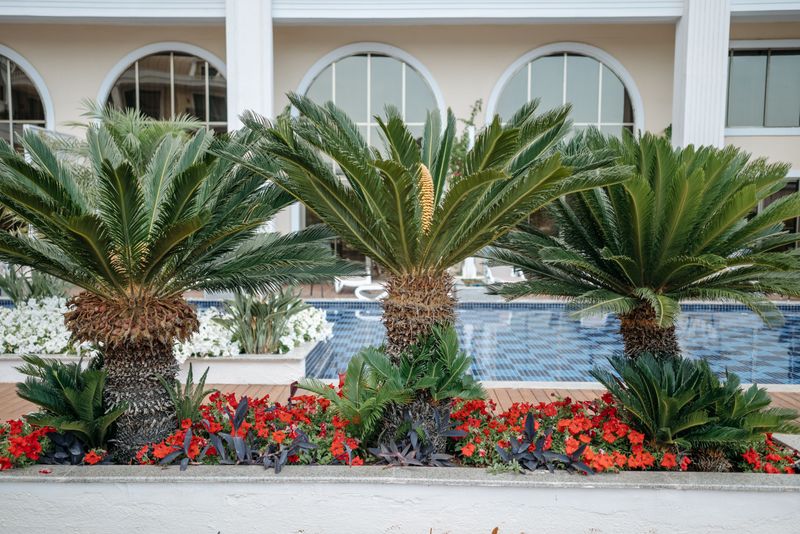
Removing the plant is the surest fix. If you have dogs and a sago palm in your Florida yard, digging it out takes away the risk for good.
Wear thick gloves and long sleeves, because the leaf tips are sharp.
Bag all seeds, fronds, and root pieces before tossing them. Do not leave scraps in a compost pile where pets can reach them.
Some local nurseries or plant swap groups may take healthy sagos for pet-free homes.
Choosing a replacement takes a little care. The native coontie, often suggested as a sago lookalike, is also a cycad and is toxic to pets.
It is wonderful for butterflies but not a pet-safe swap.
The ASPCA plant database is a handy tool for checking safer choices. Areca palm and parlor palm are listed as nontoxic to dogs, and both give a tropical feel.
Ask your local UF/IFAS extension office which options suit your area and zone.
If removal is not possible, fence off the plant and clean up seeds weekly. Your landscape can still look lush and inviting.
It just takes a few thoughtful choices to keep tails wagging safely.