This Eerie Mushroom Glows In The Dark And It’s Appearing In Virginia Yards – Should You Worry?
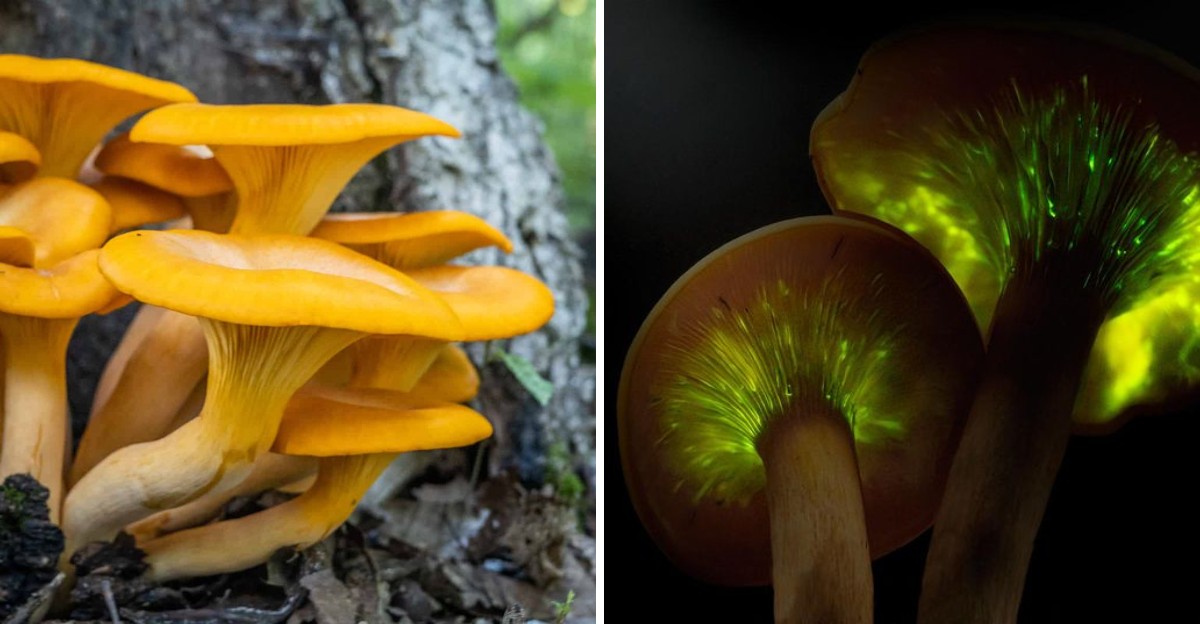
A cluster of pumpkin-orange mushrooms that faintly glows after dark sounds like a Halloween prop. It’s completely real, and it might be growing near you.
Across Virginia, warm and rainy stretches set the stage for this striking fall visitor. Homeowners spot bright orange bunches near old stumps and wonder whether they should worry.
Some think they’ve found a tasty treat, while others just want to know if their dog is safe. The truth is a mix of wonder and caution.
This fungus hides a glowing secret under its cap, along with a sneaky look-alike and a nasty surprise for anyone who eats it. It also has a surprisingly friendly side when it comes to your yard.
Turn off the flashlight, and you might just catch it glowing.
It’s Called The Jack-O’-Lantern Mushroom
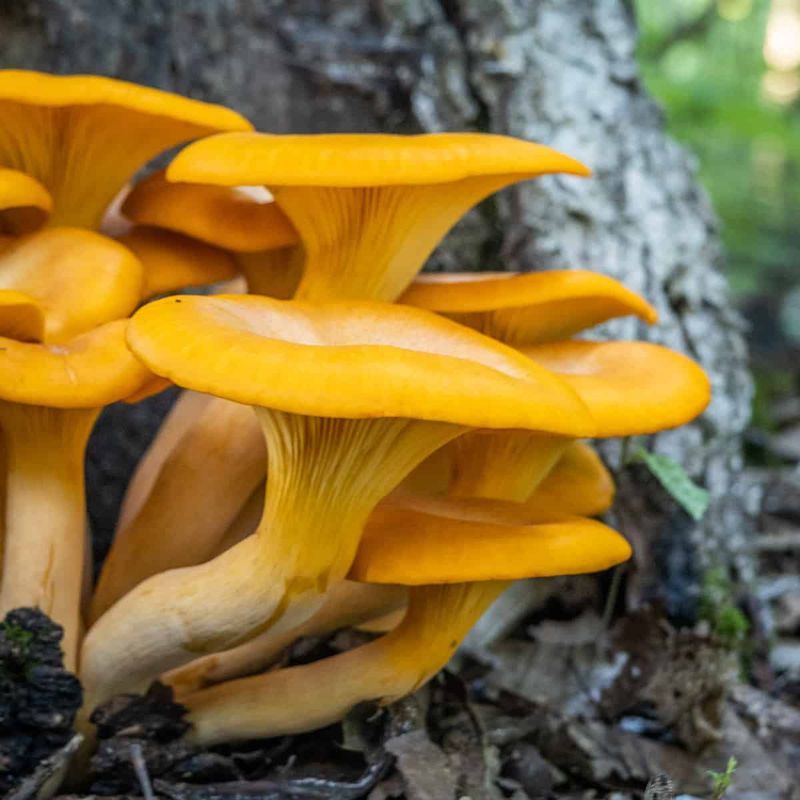
Some names fit perfectly, and this one was practically made for autumn. Folks call it the Jack-O’-Lantern mushroom because it is orange and it glows.
Scientists know it as Omphalotus illudens. The second part of that name comes from a Latin word meaning to fool or deceive.
That sneaky label makes sense once you learn about its edible look-alikes. Many curious people have been tricked by its cheerful, tasty-looking color.
You can find this species across much of eastern North America. Virginia sits right in the middle of its favorite range.
Mushrooms usually start showing up in late summer here. They often keep popping up well into October and sometimes early November.
Timing depends a lot on the weather each year. A warm summer with plenty of rain tends to bring bigger and showier crops.
Here is a fun fact to share with friends. A close cousin in Europe, Omphalotus olearius, grows on olive trees and glows too.
Knowing the proper name helps more than you might think. You can search it online, report sightings, or ask experts for help with identification.
Try snapping a photo when you spot a cluster. Apps like iNaturalist let you share sightings and help researchers track where these mushrooms grow.
Learning its name is the first step toward respecting it. Next comes knowing exactly how to recognize it in your yard.
Bright Orange Clusters Give It Away
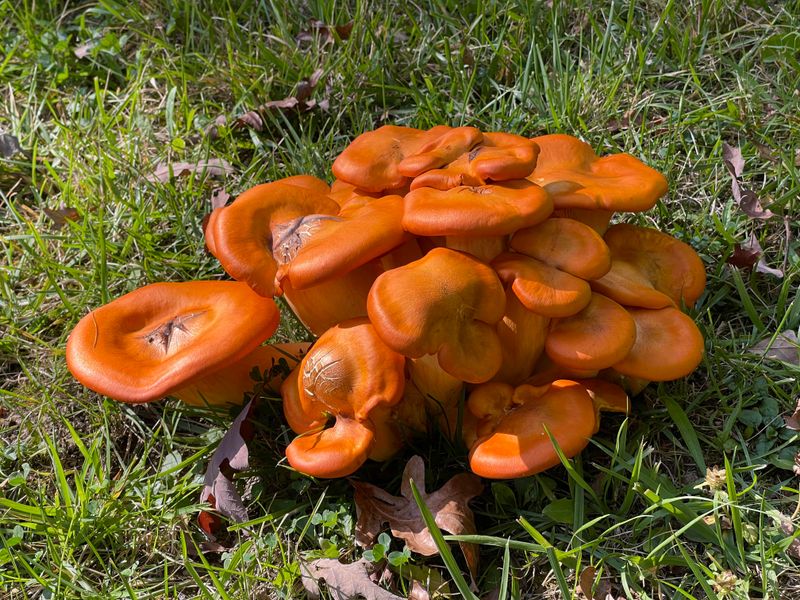
Walk past one of these clumps, and your eyes will snap right to it. The color is a bold pumpkin orange that stands out against brown fall leaves.
Clusters are the big clue here. Dozens of mushrooms often grow tightly together, their stems joined at the base like a bouquet.
Caps can stretch up to about six inches across. Young caps look rounded, then flatten out and develop a shallow dip in the center.
Older caps often get wavy edges that curl upward. Their surface feels smooth, and the color may fade a bit toward yellowish orange with age.
Flip one over with a stick, and you will see orange gills underneath. Stems share the same warm color all the way down.
Inside, the flesh is orange too. Many look-alikes have pale or white flesh, so a quick slice can offer another helpful hint.
Your Virginia Garden Changes Every Week. Your Plan Should Too.
Gardening in Virginia changes quickly throughout the season. Every Friday you’ll receive a simple weekly plan showing exactly what to plant, prune, fertilize, harvest, and protect so you never miss the right timing.
Remember to wear gloves if you plan to handle any part of it. Touching it is not dangerous, but washing up afterward is smart.
Here is a handy way to think about it. One orange mushroom alone may be something else, but a big glowing bundle points strongly to this species.
Homeowners in Virginia often notice these clusters after a rainy week. Check shady corners near old trees, especially where a tree was cut down years ago.
The Gills Really Do Glow In The Dark
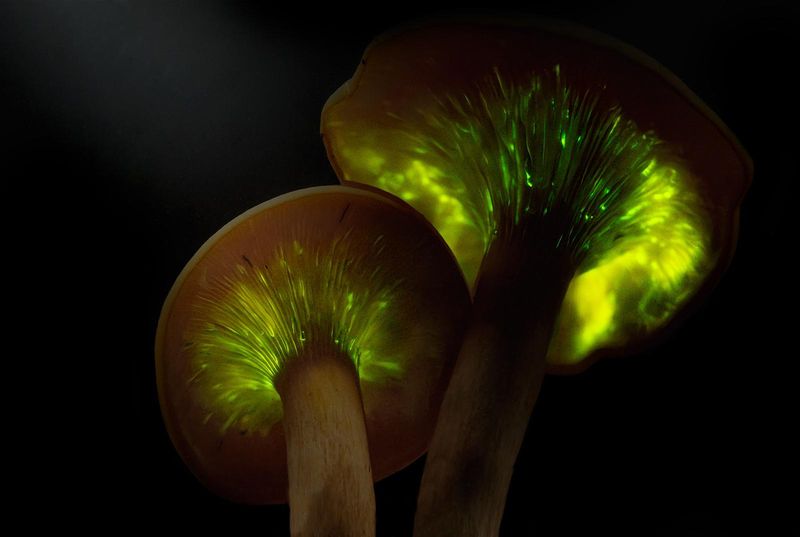
Ever wanted a nature-made night-light? Wait until a moonless night, step outside, and let your eyes adjust for several minutes.
If you are lucky, the gills under the cap will give off a soft green glow. Scientists call this natural light bioluminescence.
Do not expect a bright neon show, though. The light is faint and eerie, more like a ghostly shimmer than a glow stick.
Your eyes need real darkness to catch it. Porch lights, streetlights, and phone screens can easily wash out the effect.
Here is a cool trick many mushroom fans use. Sit in the dark for ten to fifteen minutes before looking closely at the gills.
Fresh, young mushrooms usually glow best. Some reports say a picked mushroom may keep glowing for up to 40 or 50 hours.
Why glow at all? Researchers think the light may attract insects that help spread the mushroom’s spores to new places.
Photographers love this challenge. A camera on a tripod with a long exposure can capture glowing gills your eyes might miss.
Ancient writers described glowing wood, sometimes called foxfire, from similar fungi. People once used it for faint light on dark paths.
Try this with kids as a fun science lesson, just from a safe distance. Explain that looking is great, but tasting is off the table.
It Grows On Stumps And Buried Roots
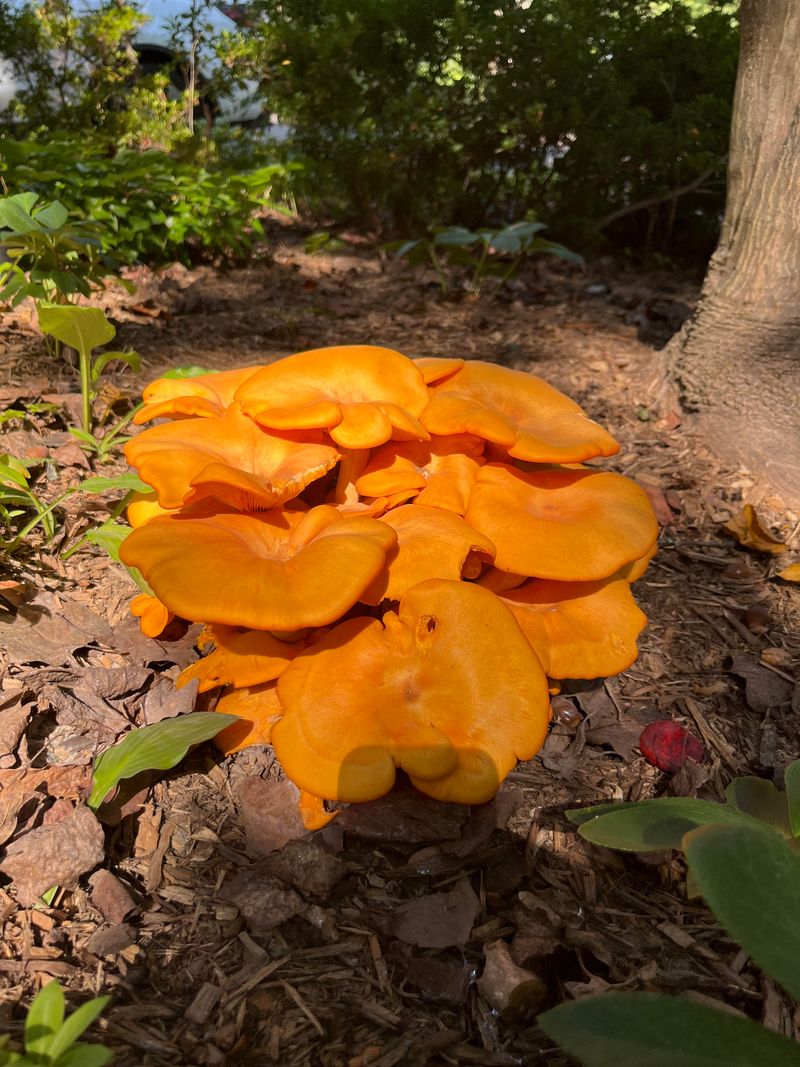
Think of this fungus as nature’s cleanup crew. It feeds on old wood that is no longer living, slowly breaking it down into rich soil.
Experts call this lifestyle saprobic. In simple terms, the mushroom eats decaying plant material instead of attacking healthy plants.
Look for clusters on old stumps or at the base of hardwood trees. Sometimes they sprout right from the lawn, which can be confusing.
In those cases, wood is hiding below the grass. Buried roots from a tree removed long ago can feed mushrooms for many years.
Here is a useful detective tip. If orange mushrooms appear in your lawn, think back to whether a tree once stood nearby.
You can also brush away soil gently with a stick. Often you will find a chunk of rotting root right under the cluster.
Wood-based growth is a key way to identify this species. Many look-alikes grow singly from soil, not in clumps tied to wood.
The mushrooms you see are just the fruiting part. Most of the fungus lives as thin threads inside the wood, quietly doing its work.
Grinding a stump can reduce future crops. Even so, leftover roots underground may keep sending up clusters for a few more seasons.
Patience pays off here. Once the buried wood fully breaks down, the mushrooms run out of food and simply stop appearing.
Oaks Are Its Favorite Neighbors
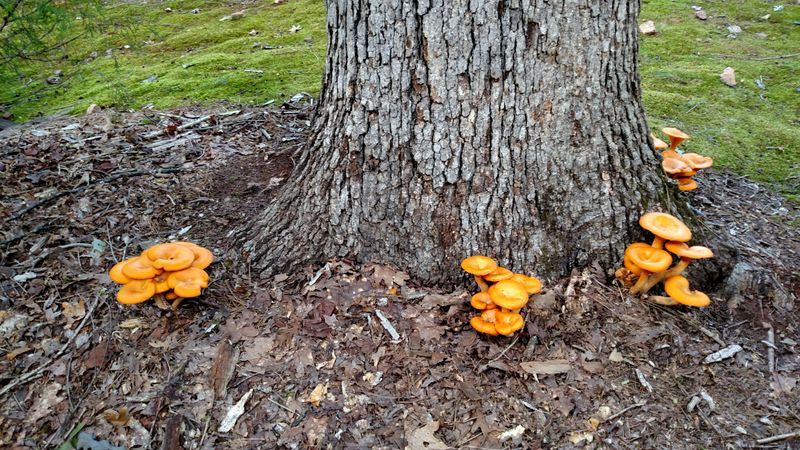
Got oaks? Then you may have the perfect setup for a fall mushroom show right in your own backyard.
Jack-O’-Lanterns favor hardwood trees, and oaks top the list. They also show up near maples, beeches, and other broadleaf species.
Virginia is famous for its oak-filled forests. From the Blue Ridge to the Tidewater, these trees shade countless neighborhoods and parks.
Homes built near wooded lots often see the most clusters. Construction can leave behind buried roots and stumps that feed fungi for years.
Here is a smart habit for fall walks. Scan the base of old oaks, especially ones with scars, hollows, or nearby stumps.
Pines and other evergreens are less likely hosts. If you spot orange clusters under a pine, double-check for buried hardwood nearby.
Acorns on the ground make a nice clue. Where acorns fall, oak roots likely spread underground, offering plenty of future mushroom food.
Wet weather boosts the chances even more. A few soaking rains in September can trigger sudden clusters almost overnight.
Fun fact for history buffs: Virginia’s state forests have long protected huge stands of white and red oaks. Those woods support a wide variety of fungi.
Keep a simple notebook of where you see clusters each year. Many patches return to the same spots, making them easy to watch every autumn.
It’s Easy To Mistake For Chanterelles
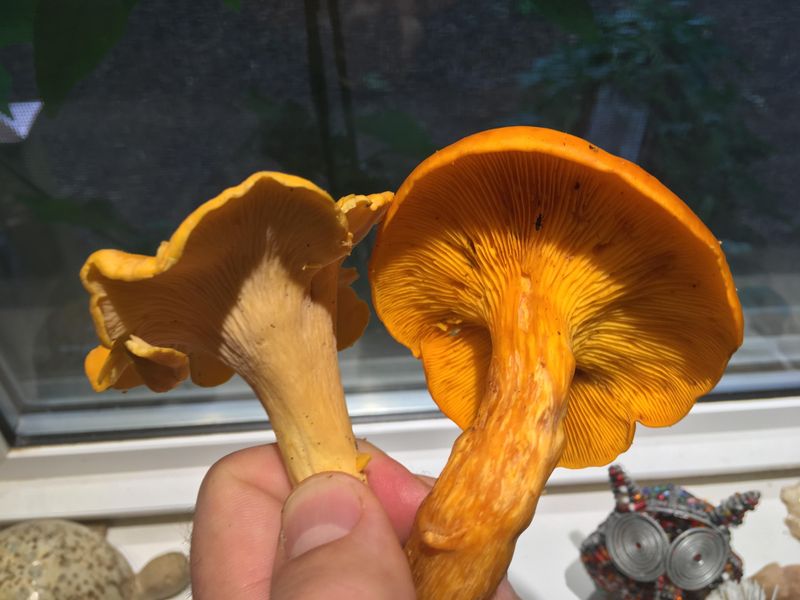
Picture a hopeful forager spotting a golden clump and dreaming of buttery chanterelles. Sadly, that tasty plan could turn into a very rough night.
Chanterelles are prized edible mushrooms with a similar warm color. Jack-O’-Lanterns often get mistaken for them by beginners.
Gills offer the clearest difference. Jack-O’-Lanterns have true gills that are thin, sharp, and run down the stem.
Chanterelles have blunt ridges instead, often called false gills. These look like soft wrinkles or folds that fork and blend together.
Growth habits help too. Chanterelles usually grow alone or scattered on the forest floor, not in tight clusters on wood.
Slice each open for one more clue. Chanterelle flesh is pale or whitish inside, while Jack-O’-Lanterns stay orange throughout.
Here is the golden rule for any forager. If you are not certain, leave it alone and ask an expert first.
Local mushroom clubs hold walks and identification events. Members love helping newcomers learn safe and smart foraging habits.
Field guides with clear photos are worth buying. Compare several features rather than trusting color alone, since many fungi share orange shades.
Remember that one wrong guess can ruin a weekend. Careful checking takes only minutes and saves a lot of misery.
Eating It Means Days Of Misery
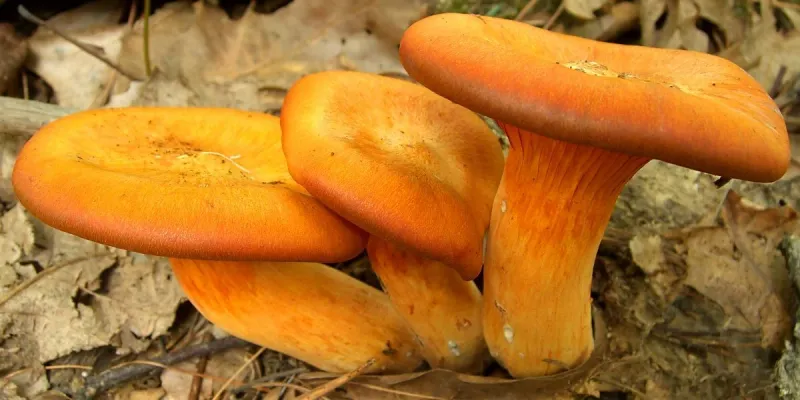
Nobody wants a stomach bug, let alone one they cooked for themselves. Unfortunately, that is exactly what happens when someone eats this mushroom.
Jack-O’-Lanterns contain toxins called illudins. These compounds upset the digestive system within a few hours of eating.
Symptoms often include intense vomiting, cramps, and diarrhea. Some people also feel weak, sweaty, or dizzy during the worst of it.
Cooking does not make the mushroom safe. Boiling, frying, or baking will not break down the toxins enough to help.
Healthy adults usually recover once the mushroom leaves their system. Still, the experience can last a day or two and feel awful.
Young kids, older adults, and people with health problems may face bigger risks. Dehydration can become serious, so medical care matters.
Here is a key safety step. If anyone eats a wild mushroom, call Poison Control at 1-800-222-1222 right away.
Save a sample if you can. Placing a piece in a paper bag helps doctors and experts identify what was eaten.
Interestingly, researchers have studied illudins for possible cancer treatments. Scientists created modified versions to test in labs, though the raw mushroom is still harmful.
Treat any wild orange mushroom with respect. Admire it, photograph it, and keep it off your dinner plate.
Keep Kids And Pets Away From It
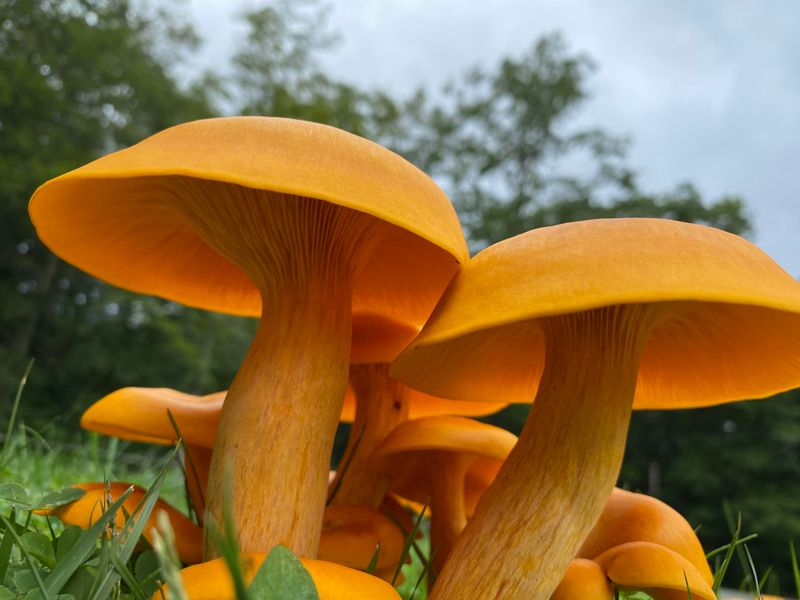
Curious dogs sniff everything, and toddlers love grabbing colorful objects. Bright orange mushrooms can tempt both in a single afternoon.
Dogs are especially likely to snack on random things. Vets see many mushroom-related cases every fall across the country.
Signs in pets may include vomiting, drooling, diarrhea, or acting tired. Call your vet quickly if you suspect your pet ate one.
The ASPCA Animal Poison Control line is another option. Keep the number saved in your phone during mushroom season.
Removing clusters is simple and safe with a little care. Wear gloves, pull or cut the mushrooms, and seal them in a plastic bag.
Toss the bag in the trash, not the compost pile. Wash your hands well afterward, even if you wore gloves.
Here is a helpful routine for busy families. Do a quick yard sweep each morning before letting kids or pets outside to play.
New mushrooms can pop up after rain overnight. A daily check makes it far less likely that anyone grabs one by surprise.
Teach older kids a simple saying, like look but do not touch. Making it a family rule helps the lesson stick.
Parents often share sightings on neighborhood apps. Posting a photo can alert nearby families with young children or playful pups.
It’s Harmless To Your Lawn And Trees
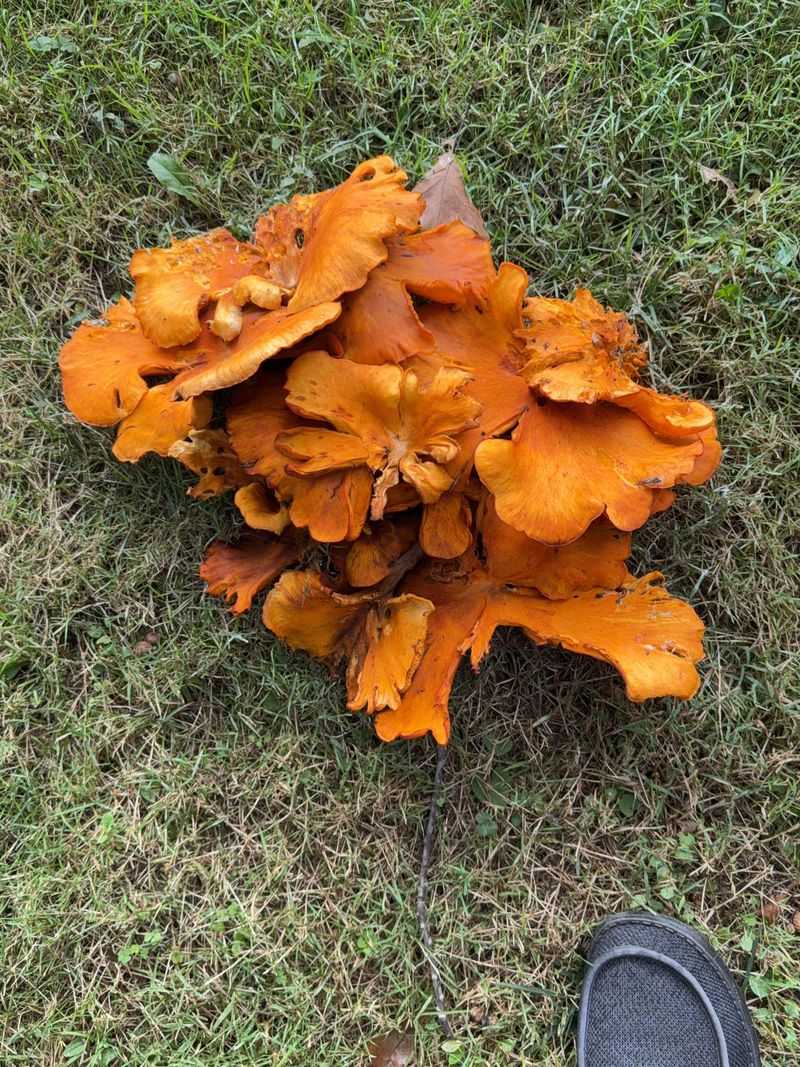
Good news for worried homeowners: your trees are not under attack. Jack-O’-Lanterns feed on old wood, not on healthy living plants.
Their job is recycling. As the fungus breaks down stumps and roots, it returns nutrients to the soil for other plants.
A cluster in your lawn simply means buried wood lies below. Grass around it should stay green and healthy.
Here is a myth worth clearing up. Mushrooms near a tree do not automatically mean the tree is sick or failing.
Still, some situations call for a closer look. Clusters growing directly from cracks in a living trunk may point to internal decay.
An ISA certified arborist can check the tree for safety. Many tree care companies offer affordable inspections.
Picking the mushrooms will not stop the fungus underground. Threads inside the wood stay put and may fruit again next fall.
Mowing over them works if you have no kids or pets around. Just bag the clippings rather than spreading pieces across the yard.
Many gardeners welcome these fungi as signs of healthy soil life. Rich, active soil helps lawns and flower beds thrive.
So next fall, enjoy the show from a safe distance. Across Virginia, these glowing guests are a quiet reminder of nature hard at work.