This Is The Invasive Insect Targeting Ohio Hemlock Trees At An Alarming Rate
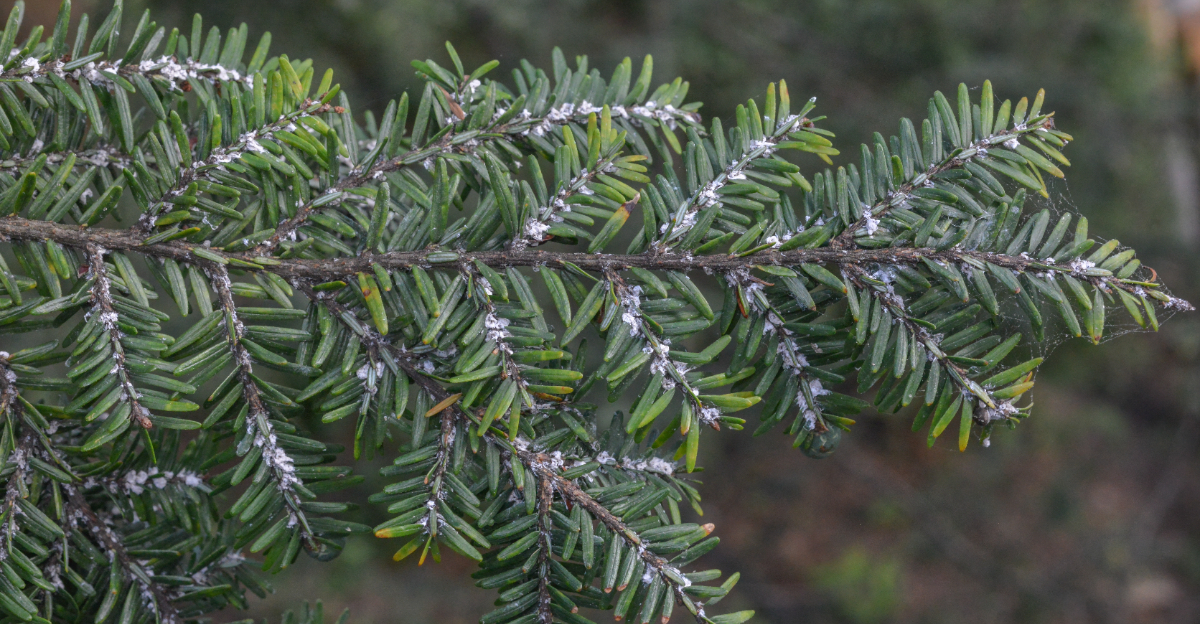
Ohio hemlock trees have a serious problem. An invasive insect has been spreading through the state steadily, and the trees it reaches do not recover without intervention.
It is tiny and works on the underside of branches where casual observation misses it entirely. By the time needles start dropping and branches go bare, the infestation has been established long enough to make recovery significantly harder.
This is not a wait-and-see situation. Untreated hemlocks decline over years, not decades, and treatment options narrow as the tree weakens.
Ohio still has time to protect a lot of its hemlocks. That window depends on property owners knowing what to check, what the early signs actually look like, and which treatment options have a real track record.
Your hemlocks are worth taking a closer look at this season.
1. Hemlock Woolly Adelgid Is The Tiny Pest To Watch
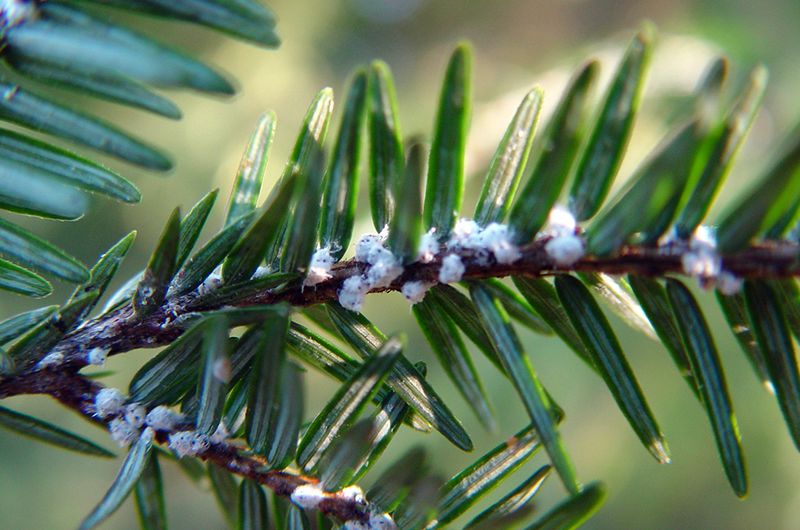
A white speck tucked under a hemlock twig can look harmless until you know what it may mean. Hemlock woolly adelgid, known scientifically as Adelges tsugae, is a non-native invasive insect that feeds directly on hemlock twigs.
Its small size makes it very easy to overlook during a casual walk through the woods or a quick glance at a backyard tree.
The insect itself is roughly the size of a sesame seed or smaller. Most people never actually see the adelgid body.
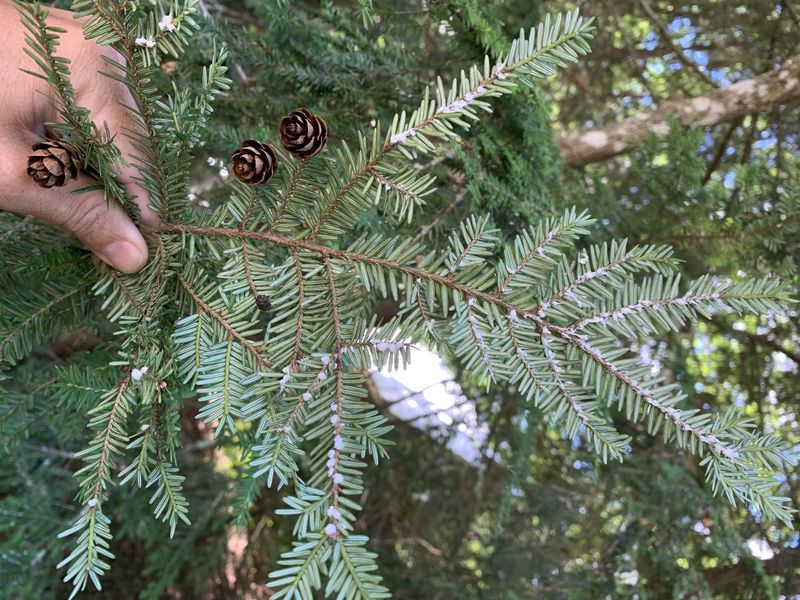
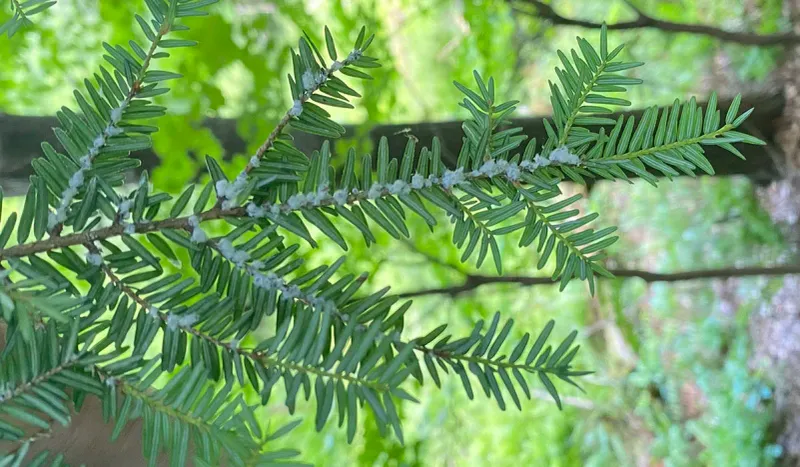
What they notice instead are the white woolly masses the insect produces, which look like tiny cotton swabs pressed against the twig. These masses protect the eggs the insect lays, and they persist on the tree even after the eggs hatch.
Adelgid feeding is not immediately obvious to most observers. The insect uses a needle-like mouthpart to pierce hemlock tissue and draw out nutrients stored at the base of the needles.
Over time, repeated feeding weakens the tree’s ability to sustain healthy foliage. Researchers and forest managers have confirmed that infestations left untreated can lead to serious decline in hemlock health.
Early awareness is the single most useful tool homeowners and woodland visitors have right now. Recognizing this insect by its distinctive white masses is the first step toward protecting hemlock stands.
2. White Woolly Masses Reveal Where It Is Feeding
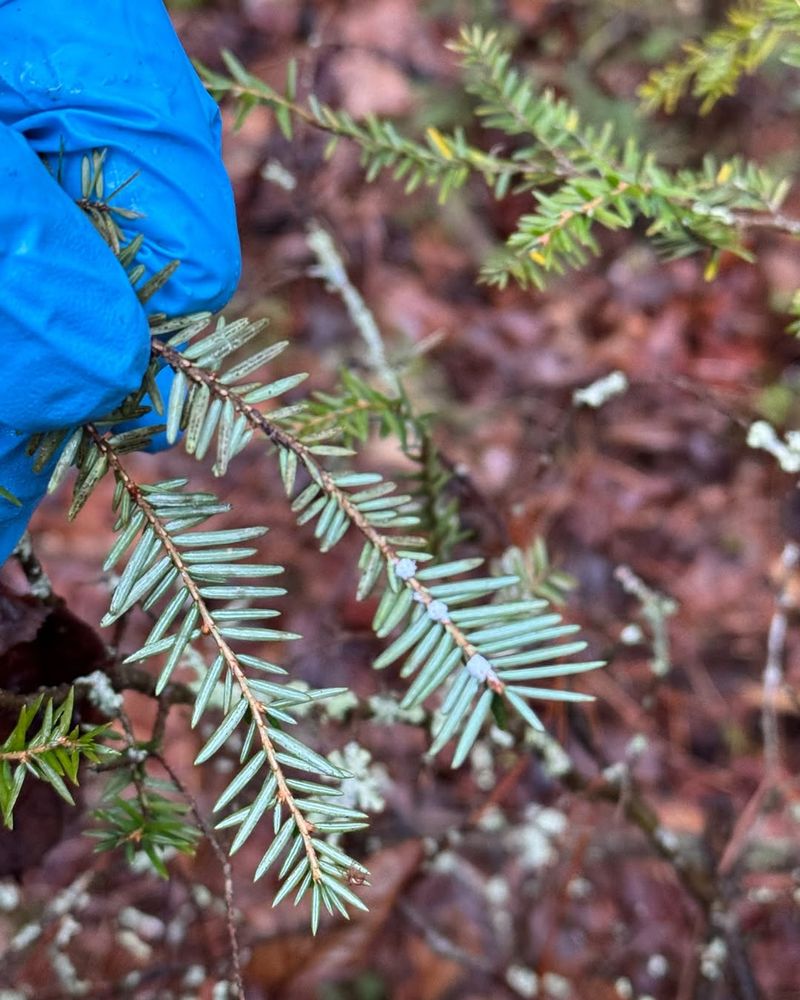
Spotting the white woolly masses on a hemlock branch is the clearest sign that hemlock woolly adelgid may be present. These masses form at the base of individual needles, usually on the underside of branches where they are sheltered from rain and direct sunlight.
They are small, round, and have a cottony or waxy texture that sets them apart from bird droppings or fungal growth.
Inspecting a hemlock properly takes a little patience. Hold a branch low enough to look at the underside of the needles rather than the top.
The masses are typically white to off-white and stay attached to the twig even after the insects inside have moved on. A hand lens or magnifying glass can help if you want a closer look at what you find.
Not every white mark on a hemlock branch is adelgid. Some hemlocks carry natural residues, dust, or other organisms that can look similar at first glance.
Your Ohio Garden Changes Every Week. Your Plan Should Too.
Gardening in Ohio changes quickly throughout the season. Every Friday you’ll receive a simple weekly plan showing exactly what to plant, prune, fertilize, harvest, and protect so you never miss the right timing.
The key detail to look for is the consistent placement of the woolly masses right at the needle base, arranged in a regular pattern along the twig. If you find something suspicious and are not sure, photograph it clearly.
Then contact your local county extension office or the Ohio Department of Agriculture for confirmation before drawing conclusions. Official confirmation keeps reporting accurate and helpful.
3. Eastern Hemlocks Are The Trees Most At Risk
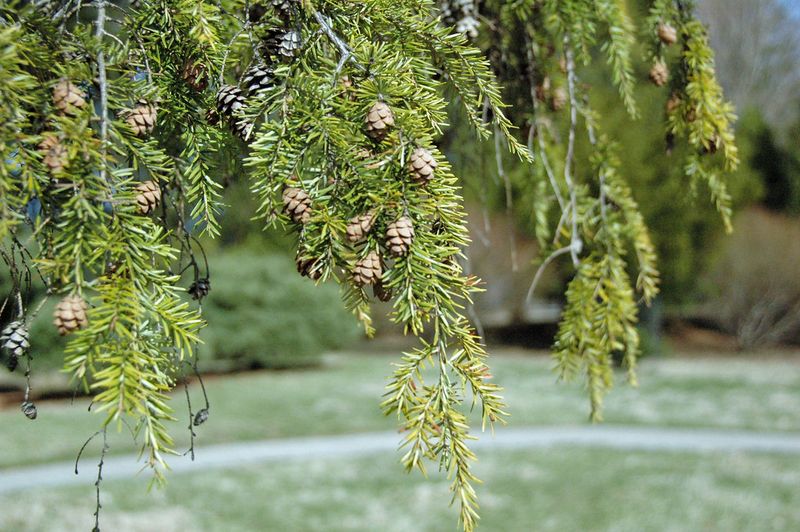
Among all the trees in local forests and home landscapes, eastern hemlock faces the greatest risk from this insect. Eastern hemlock, Tsuga canadensis, is the primary host tree for hemlock woolly adelgid in the eastern United States.
It grows widely across shaded ravines, cool stream corridors, forested slopes, and protected yards throughout much of this state.
Eastern hemlock is not a flashy tree, but it carries serious ecological weight. Its dense, layered branches provide year-round shelter for birds and other wildlife.
Its shade keeps stream temperatures cool enough to support aquatic life, including native fish. Losing mature hemlock canopy from a ravine or stream corridor changes the entire character of that habitat, not just for one season but for decades.
Carolina hemlock, Tsuga caroliniana, is another species that can serve as a host for the adelgid, though it is less common in this region. It is also worth noting that hemlock trees and poison hemlock are completely different plants.
Poison hemlock is an herbaceous weed with no relation to the hemlock trees discussed here. Tsuga species are evergreen conifers with flat, short needles arranged along the twig.
Knowing the difference helps homeowners and hikers focus on the right plant. That matters when checking for signs of infestation in woodland edges and shaded home landscapes.
4. Infested Branches Can Thin Before Homeowners Notice
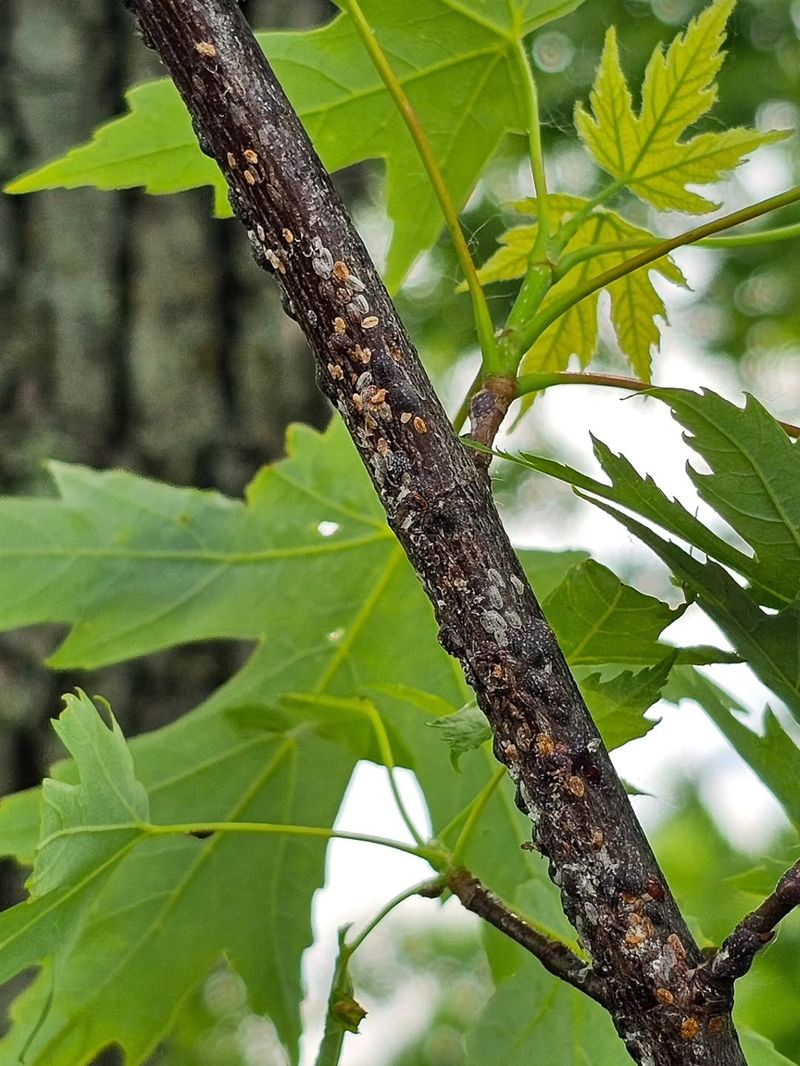
Thinning foliage on a hemlock branch does not always look dramatic at first. The earliest symptoms of adelgid feeding can be subtle enough that most homeowners walk past an infested tree many times before noticing anything unusual.
By the time the signs become obvious, the infestation may have been present for more than one growing season.
As feeding continues over time, affected hemlocks may show needles that turn a grayish or yellowish green rather than the deep, healthy green of an unaffected tree. Needle drop can increase, leaving branches looking thin and sparse from the tips inward.
Branch tips may stop producing new growth, and the overall canopy can begin to look less dense than it once did.
These symptoms do not appear the same way on every tree. Younger or already stressed hemlocks may show decline more quickly than older, well-established trees.
Environmental factors like drought, soil conditions, and surrounding shade can also influence how a tree responds to infestation. Homeowners who notice any of these changes should not assume adelgid is the only possible cause.
Consulting a certified arborist or contacting the local extension office for an on-site assessment gives you the most reliable information. Acting on a professional evaluation is safer and more effective than guessing based on appearance alone.
Early attention gives hemlocks a much better chance of recovery.
5. Cool Ravines And Shaded Slopes Make Hemlocks Vulnerable
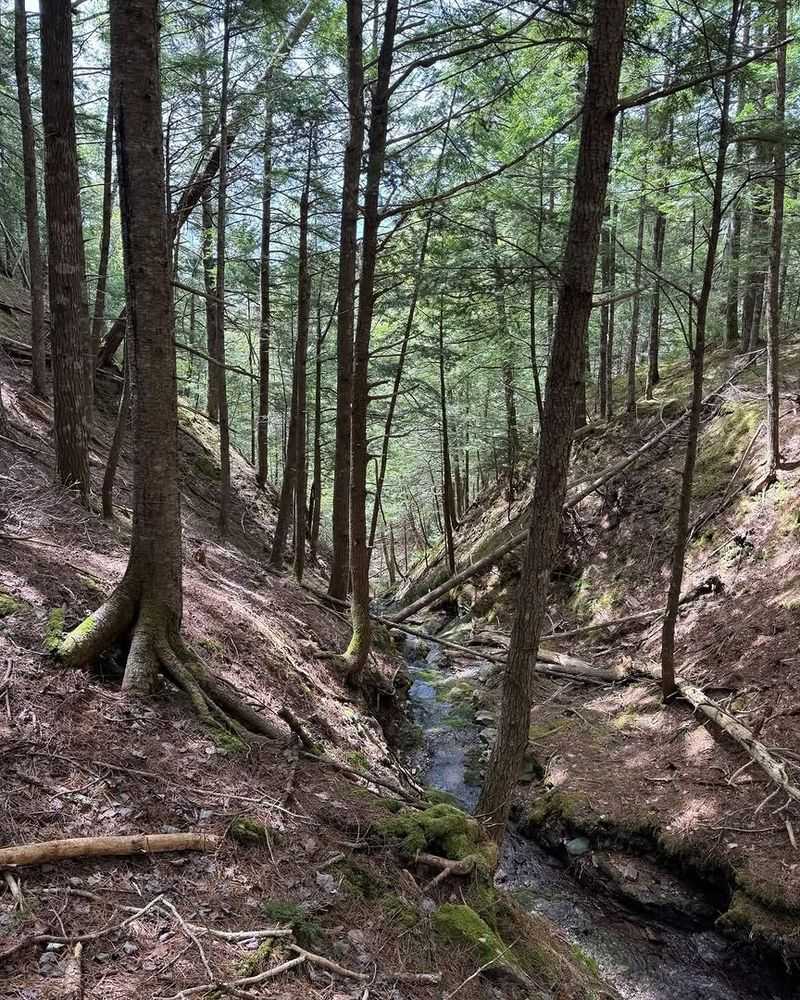
Walk into almost any cool, shaded ravine in this state and you are likely standing under eastern hemlock. These trees are drawn to moist, sheltered environments where temperatures stay lower than surrounding upland areas.
Ravine floors, north-facing slopes, stream banks, and protected hollows are classic hemlock territory. Those are also places where adelgid populations can establish without much notice.
The ecological role hemlocks play in these settings is significant. Their canopy filters sunlight and keeps the air and soil beneath them cooler and more humid.
Streams running through hemlock stands tend to stay cooler in summer, which benefits cold-water fish and the invertebrates they rely on.
When hemlock canopy is lost from a ravine, water temperatures can rise, understory plants shift, and the entire habitat changes in ways that affect many species at once.
Hemlocks also appear in regional parks, nature preserves, and managed forests across this state. These places attract hikers, photographers, and wildlife watchers throughout the year.
Many home landscapes in wooded neighborhoods include hemlocks planted for privacy or shade. All of these settings represent places where an early adelgid infestation could go unnoticed for a long time.
The combination of sheltered habitat, dense foliage, and limited foot traffic in some areas means infestations can develop quietly. Regular inspection of hemlock trees in these environments, especially in spring and fall, is a practical habit worth building.
6. Wind, Birds, Deer, And People Can Help It Spread
Hemlock woolly adelgid does not stay in one place on its own. Several natural forces and human activities can move crawlers, which are the tiny mobile stage of the insect, from one hemlock to another.
Understanding these pathways helps explain why managing the spread matters as much as treating existing infestations.
Wind can carry the lightweight crawlers short distances, especially when they are newly hatched and actively moving. Birds that perch or nest in hemlock trees can carry crawlers on their feathers or feet as they move through the landscape.
Deer moving through infested hemlock stands may also carry crawlers on their coats as they browse and travel between forest patches. These natural movement pathways are difficult to control, which is why early detection in new locations is so valuable.
Human activity adds another layer of risk. Moving infested nursery stock, ornamental hemlock plants, or hemlock branches can spread the pest.
It can introduce adelgid to places where it has not yet established. Hikers, loggers, and landscapers who work in infested areas and then move to uninvaded hemlock stands can inadvertently assist spread.
Following current quarantine and movement guidance from state and federal agencies helps reduce this risk. Avoid transporting hemlock plant material from areas with known infestations.
If you purchase hemlock nursery stock, buy from reputable sources that follow pest-management protocols. They should be able to confirm the plant’s health history before it reaches your property.
7. Reporting Suspected Adelgid Helps Track New Infestations
Finding what looks like hemlock woolly adelgid on a tree is genuinely useful information. That is true near a trail, in a park, or in your own yard.
Reporting a suspected sighting helps forest managers, extension specialists, and state agencies. It helps them build a more accurate picture of where infestations are present and where they may be moving next.
Before reporting, take clear photographs of the white woolly masses from multiple angles. Try to capture the placement of the masses at the base of the needles, and photograph the overall branch and tree as well.
Note the location as precisely as possible, using a GPS coordinate, address, or landmark description. Write down the date you found it and any other details that might help an expert assess the situation remotely.
The Ohio Department of Agriculture and Ohio Department of Natural Resources are good starting points for reporting.
The Ohio State University Extension system, including county extension offices, also assists with identification and can connect you with the right specialists.
Do not move infested branches, cuttings, or plant material from the site. Transporting material from a suspected infestation site can spread the insect before experts even confirm its presence.
Wait for guidance before doing anything beyond photographing and documenting. Accurate, well-documented reports from observant residents and visitors are highly practical tools.
They help experts track and respond to new hemlock woolly adelgid activity across the region.
8. Early Treatment Gives Hemlocks A Better Chance
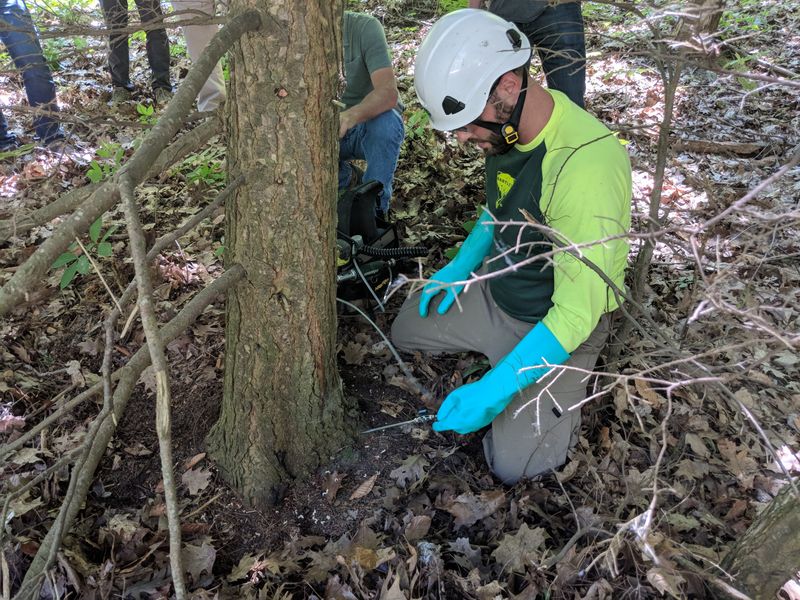
Catching an infestation early is the single most important factor in giving a hemlock a real chance at recovery.
Treatment options do exist for hemlock woolly adelgid, and they tend to work better when the tree still has adequate foliage and has not yet experienced severe decline.
Waiting until symptoms are dramatic often reduces the effectiveness of available options.
Several treatment approaches are used by professionals and homeowners. These include soil injections, soil drenches, trunk injections, and horticultural oil or insecticidal soap applications for smaller trees.
Each method has specific timing, application requirements, and suitability considerations. Homeowners with smaller, accessible hemlocks may be able to apply certain treatments themselves.
They should do so only after reading the product label carefully and following all instructions exactly.
Large trees, hemlocks growing near streams or wetlands, and trees in public forests or natural areas require special consideration. Some pesticide applications are restricted near waterways due to potential effects on aquatic life.
In those situations, working with a certified arborist or contacting a state or county forestry agency is the responsible path forward.
The Ohio Department of Natural Resources and Ohio State University Extension both offer guidance on treatment options appropriate for different settings and tree sizes.
No treatment is a guaranteed fix, but early action combined with professional advice gives hemlocks the strongest foundation for maintaining their health.
It also helps them continue anchoring the shaded landscapes and forest ravines where they have grown for generations.