This Is When to Wrap Michigan Arborvitae Before Winter
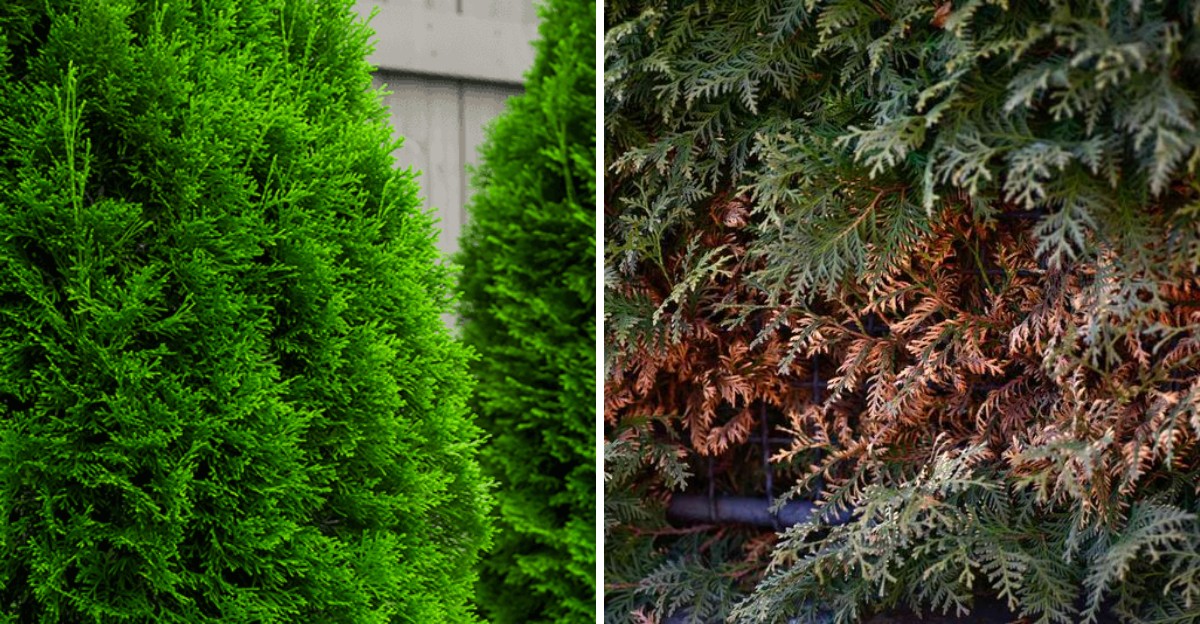
Evergreens keep losing water all winter long. Their roots sit in frozen soil and can’t send up a refill. That mismatch turns bright green needles into crispy brown patches by March.
Personally, I learned this the hard way. My hedge looked perfect in November. By spring, the side facing the wind looked toasted.
Michigan winters bring a nasty mix of drying wind, bright sun bouncing off snow, and hungry deer. Each one chips away at your plants in a different way. You’re in for a big surprise once you see how much timing matters.
One simple fall chore can protect all that summer growth. The trick is doing it at the right moment. So when should you actually grab the burlap?
1. The Calendar Isn’t Your Best Clue Here
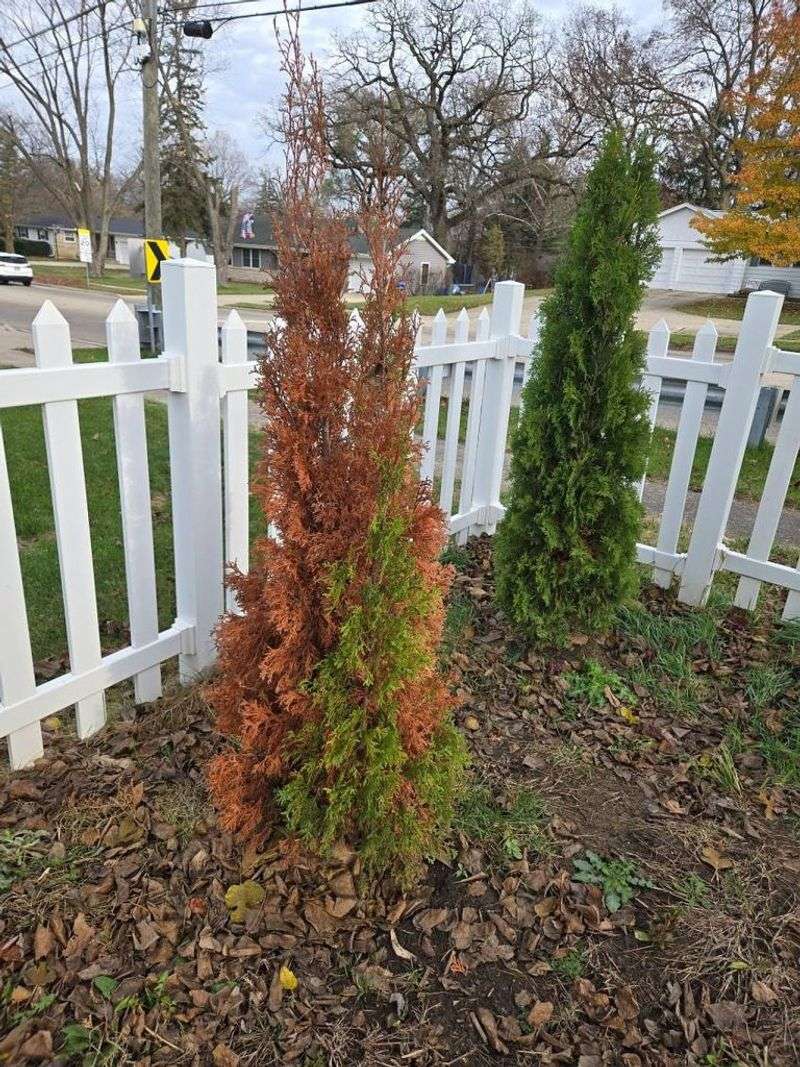
Most folks guess wrong on this one. They wrap their shrubs on the first chilly weekend in October, then wonder why the plants look stressed. Early wrapping can trap heat and moisture while the shrub is still active.
The better signal comes from the ground, not the calendar. Experts generally suggest waiting until after a few hard freezes and once the soil starts to freeze. In much of Michigan, that lands in late November to early December.
Timing shifts a bit depending on where you live. The Upper Peninsula and northern Lower Peninsula often reach that point weeks sooner. Gardeners near Detroit or along the Lake Michigan shoreline may wait a little longer.
Why hold off? Your arborvitae needs fall weather to harden off. Cool nights tell the plant to slow down and toughen its tissues for the cold ahead.
Wrap too soon, and you interrupt that natural process. Wait too long, and a surprise blizzard may beat you to it. A good rule is to have your supplies ready by early November.
Then watch the forecast and the soil. Once things lock up, it’s go time.
2. Winter Burn Is Sneakier Than You Expect
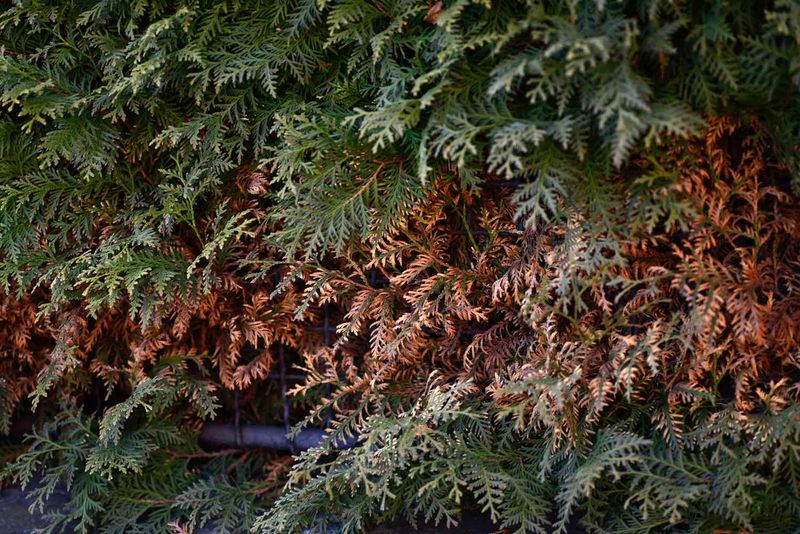
Brown needles in spring tell a story. Usually it’s not the cold alone. It’s a slow water loss called winter burn, or desiccation.
Here’s how it works. Arborvitae keep their leaves all year, and those leaves still release moisture. Sunny days and steady wind speed that up, while frozen roots can’t pull in replacement water.
Bright snow makes things worse. Sunlight bounces off the white ground and hits the foliage from below. South and west sides of shrubs often take the biggest hit for this reason.
Then there are the deer. Michigan has a large white-tailed deer population, and arborvitae is one of their favorite winter snacks. Many homeowners find their shrubs stripped bare up to about five or six feet high.
Heavy snow and ice add one more problem. Upright types like Emerald Green can split open when wet snow weighs down their branches.
So a wrap does several jobs at once. It blocks wind, softens harsh sun, discourages hungry deer, and holds branches together. Knowing these threats helps you choose the right protection for your yard.
3. Give Them a Deep Drink Before the Freeze
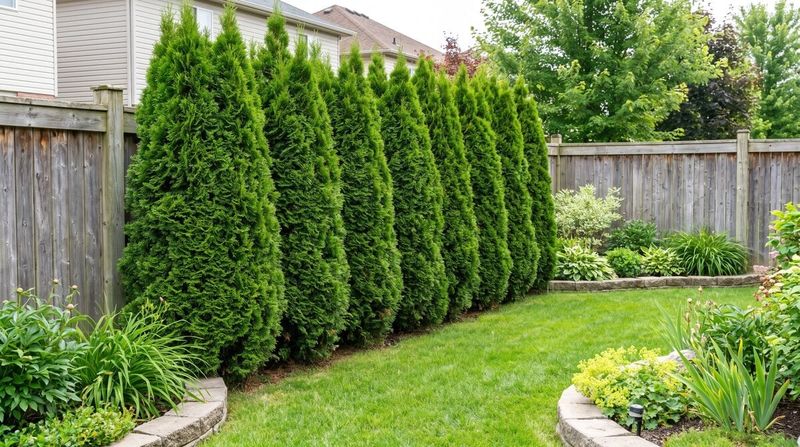
A thirsty shrub heads into winter at a real disadvantage. Water stored in roots and foliage acts like a savings account for the cold months. Fill it up while you still can.
Keep watering through fall until the ground freezes. Aim for a slow, deep soak about once a week if rain is scarce. A soaker hose or a trickling garden hose at the base works great.
Young plants need this most. Shrubs planted in the last two or three years have smaller root systems. They dry out faster and benefit hugely from extra attention.
Next comes mulch. Spread two to three inches of shredded bark or wood chips around the base. Cover the root zone out toward the edge of the branches.
Mulch keeps soil moisture steady and evens out temperature swings. It also helps slow deep freezing around the roots. That gives your arborvitae a better chance to sip water on milder days.
One caution matters. Keep mulch a few inches away from the trunk. Piling it up against the bark invites rot and gives rodents a cozy hiding spot.
4. Burlap Done Right Makes All the Difference
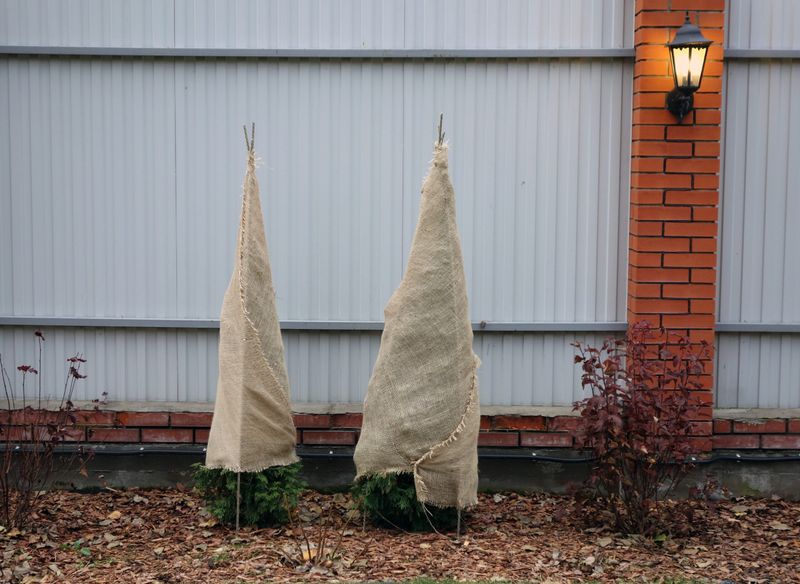
Burlap is the classic choice for a reason. It breathes, blocks wind, and filters sunlight without cooking the plant. Skip plastic, since it traps heat and moisture.
Many experts favor building a screen instead of wrapping the shrub itself. Pound three or four wooden stakes into the ground around the plant before the soil freezes. Then staple burlap to the stakes, leaving a few inches of space around the foliage.
That gap lets air move freely. It also reduces rubbing and keeps moisture from sitting against the needles. Leave the top open so light and air can still reach the plant.
Short on time or dealing with a hedge? A screen on just the windy or sunny side can still help a lot. For Michigan homes, that usually means the west and south sides.
For tall, skinny varieties, try a different trick. Loosely spiral soft twine or strips of cloth up the shrub to hold branches together. This helps prevent splitting under heavy snow.
Check your setup after big storms. Loose burlap flapping in the wind can scrape the foliage you’re trying to save.
5. Extra Backup Can Save Your Hedge From Deer
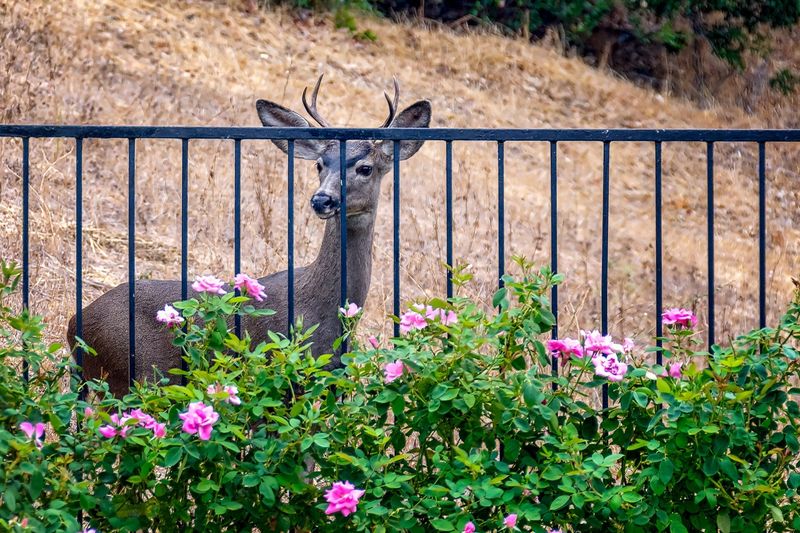
Deer are clever, and they get bolder as winter drags on. When food runs low, a tasty arborvitae hedge looks like a buffet. Burlap alone may not stop a determined deer.
Plastic deer netting is a popular extra layer. It’s lightweight, hard to see from a distance, and easy to drape over shrubs. Secure it at the bottom so deer can’t nose underneath.
Fencing works even better in heavy deer areas. A sturdy fence around a small group of plants keeps animals out most of the time. Taller fences work best, since deer can jump surprisingly high.
Repellent sprays are another option. They often work for a while but need reapplying, especially after rain or snow. Switching brands now and then may help, since deer can get used to one smell.
Anti-desiccant sprays are also worth a look. They coat foliage with a thin waxy film that may slow water loss. Research results are mixed, so think of them as a helper, not a guarantee.
Apply sprays on a dry day above freezing. Follow the label closely for the best results.
6. Skip These Slip-Ups That Hurt More Than Help
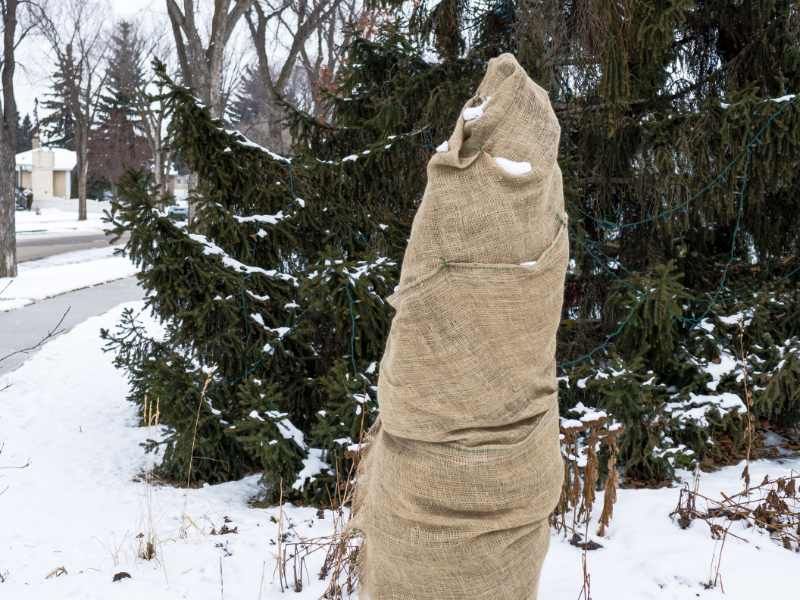
Good intentions can backfire fast. I once wrapped a young shrub so tightly it looked like a mummy. By spring, the inner branches had turned brown from poor airflow.
Wrapping too tight is a frequent mistake. Squeezed foliage can’t breathe, and trapped moisture invites mold and fungal trouble. Keep things snug but loose enough for air to pass through.
Plastic sheeting causes problems too. On sunny days, it heats up like a tiny greenhouse. Then the temperature crashes at night, which stresses the plant even more.
Late-season pruning is another trap. Cutting branches in fall can encourage tender new growth. That soft growth rarely survives a Michigan cold snap. Save major pruning for spring.
Fertilizing in late fall has the same effect. Extra nitrogen pushes growth when the plant should be resting. Hold off until spring arrives.
Finally, don’t forget about the wrap once it’s up. Leaving protection in place far into spring can trap heat and delay healthy growth. Set a reminder on your phone so the burlap comes off on time.
7. Spring Brings the Big Reveal
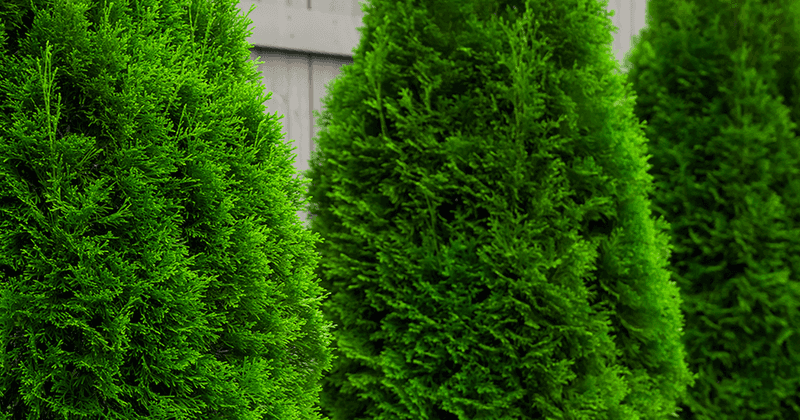
Unwrapping day feels a little like opening a present. You finally see how your shrubs handled the season. Hopefully, it’s a sea of green.
Timing still matters here. Remove protection once the ground thaws and the harshest cold has passed. For most of Michigan, that’s usually late March through April, with northern areas often closer to May.
Pick a cloudy day if you can. Foliage that sat in filtered light all winter may react to sudden bright sun. A gray sky gives it time to adjust.
Spot some brown patches? Don’t panic or start cutting right away. Wait a few weeks, since buds hidden under brown tips may still push out new growth.
Once new growth appears, trim away any branches that stay brown. Give the shrub a good drink if spring rain is light. A layer of fresh mulch can also help.
Store your burlap and stakes somewhere dry. Many supplies last for several seasons. Next fall, you’ll be ready to protect your evergreens again with less effort.