This Is Where Spider Mites Do The Most Damage First On Pennsylvania Fall Crops
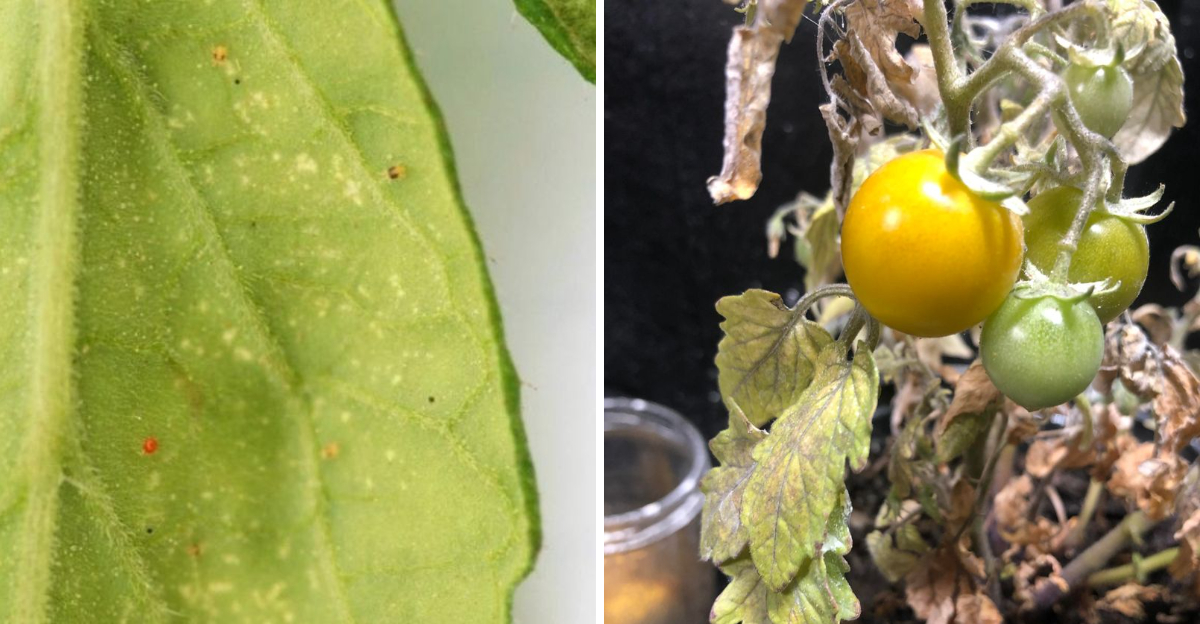
Something is happening on the underside of that bean leaf right now.
Not on the top, where you’d notice it. Underneath, along the midrib, where nothing gets checked during a normal pass through the garden.
By the time the damage shows on the upper surface, the population has been building for a week or two.
Here’s what makes spider mites frustrating in a Pennsylvania fall garden. They arrive during exactly the weather that already has your plants struggling.
Hot afternoons, spotty rainfall, dusty pathways. Those conditions favor the mites and work against the crops simultaneously.
So the plants least able to handle feeding are the ones getting hit hardest.
There’s a specific order to how the damage appears, and knowing that order is the whole difference between catching this early and finding webbing in October.
The first sign is subtle enough that most gardeners walk past it repeatedly.
Curious where to look?
Underside Leaves Show The First Stippling
Flip over a leaf and the mystery usually starts making sense.
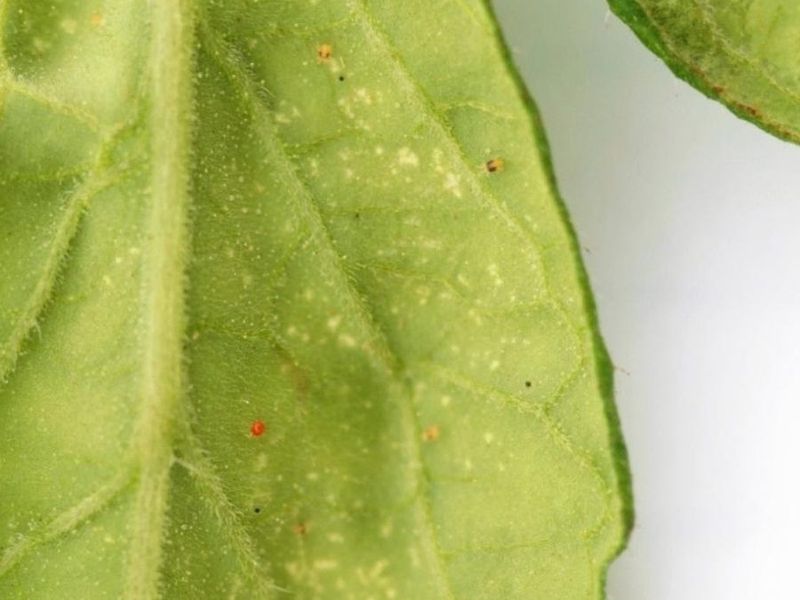
Spider mites are tiny, and they typically feed on undersides first, where they stay protected from rain, handling, and casual inspection.
Their mouthparts pierce leaf tissue and remove plant juices, leaving small pale dots called stippling.
That feeding injury appears well before webbing or bronzing shows up, which means gardeners waiting for dramatic symptoms miss the useful window entirely.
Look closely along the lower surface near the midrib and veins.
Mites, shed skins, and eggs collect there, particularly on beans, tomatoes, and cucurbits.
A hand lens helps considerably, though speckling on leaf tops already hints at feeding underneath.
Morning scouting works well since angled light makes stippling easier to see.
Turn several leaves from different parts of each plant rather than checking one.
Early colonies are patchy, so one clean leaf proves very little.
Continued feeding turns damaged areas yellow, dusty, or bronze, and leaves dry out sooner than they should.
That later stage reduces photosynthesis significantly. Catching mites at the stippling stage leaves time to rinse plants, reduce stress, and remove affected foliage.
One habit pays off fast. Make leaf turning part of every watering or harvest trip during warm dry stretches.
Water-Stressed Plants Take The Hardest Hit
A thirsty plant has a much harder time recovering once mites start feeding.
Hot afternoons, dry soil, and uneven watering all let populations build quickly, since stressed leaves lose vigor while mites keep reproducing.
Spider mite flare-ups link directly to hot dry conditions, and the worst injury usually shows up where watering has been inconsistent.
A plant short on moisture cannot replace what feeding removes, so leaves fade and drop earlier.
Watch rows beside sidewalks, fences, stone walls, and south-facing beds that heat up and dry out first.
Containers suffer sooner than in-ground crops since they hold less soil volume.
Simple care slows the damage considerably.
Water deeply, mulch to hold moisture, and avoid the repeated drought stress that gives mites an advantage.
Broad-spectrum insecticides applied without need remove predatory mites and other beneficials, which frequently allows populations to jump higher than before treatment.
Your Pennsylvania Garden Changes Every Week. Your Plan Should Too.
Gardening in Pennsylvania changes quickly throughout the season. Every Friday you’ll receive a simple weekly plan showing exactly what to plant, prune, fertilize, harvest, and protect so you never miss the right timing.
That outcome catches people off guard and is well documented.
When rain has been scarce, inspect stressed plants twice weekly rather than waiting for a convenient moment.
Check undersides rather than only wilted tops.
Good moisture won’t eliminate mites overnight, and it helps crops tolerate feeding through Pennsylvania’s uneven fall weather.
Beans And Tomatoes Are Early Targets
Walk past a bean row on a dry September afternoon and you may find mites before expecting them.
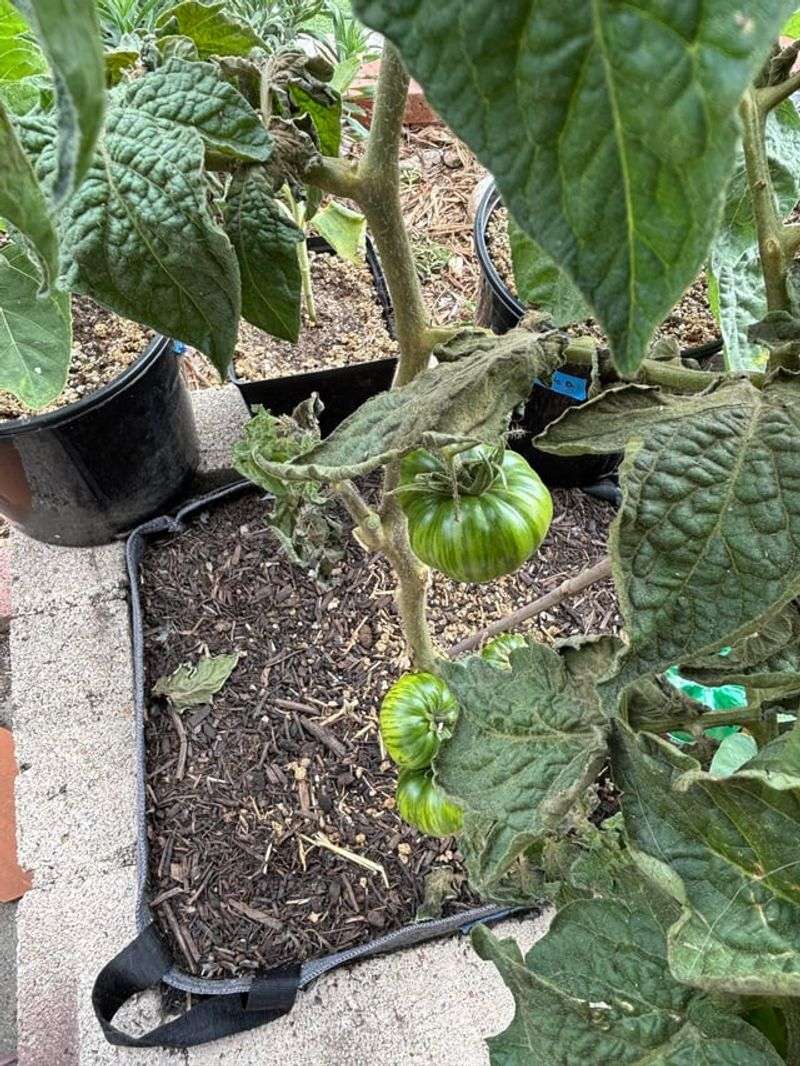
Beans are common hosts, and tomatoes attract early feeding, particularly when plants are warm, dusty, and carrying heavy foliage.
Pennsylvania gardens keep producing both crops while days stay warm and rainfall turns spotty.
That overlap favors mites directly. Once colonies establish on leaf undersides, the upper surface begins showing pale stippling that spreads from a few leaves to whole sections.
Beans often reveal damage quickly, since their leaves show speckling clearly in good light.
Tomatoes prove trickier at first, especially on lower or interior foliage.
By the time leaves look dusty, yellowed, or curled, the population is usually established.
Checking these two crops helps you notice patterns across the whole garden.
Stippling on beans near tomatoes justifies inspecting both beds promptly, since mites flare in multiple crops when weather stays favorable.
A hand lens is useful, and you can learn plenty without one.
Tap a leaf over white paper and watch for tiny moving specks, which is a reliable test costing nothing.
Host preference varies by season, so avoid assuming mites will always start in the same place.
Cucurbit Leaves Bronze Before Others
Squash and melon vines can shift from vigorous to tired-looking within a short warm stretch.
As feeding accumulates, cucurbit leaves move from pale stippling toward a bronzed cast that makes plants look dusty and worn.
That bronzing rarely appears as the first sign.
Feeding starts on leaf undersides where mites create pale dots, and as numbers rise those individual injuries blend together into color change.
Cucurbit foliage is broad and soft, which makes it readable once you know what to look for.
Older leaves generally bronze before new growth does.
Turn leaves near the crown and along the vines, since outer foliage rarely tells the full story.
Many gardeners blame disease when squash leaves turn tan or bronze.
Pattern and timing distinguish the two. Mite injury begins as stippling during hot dry periods and spreads across leaf surfaces before mildew or other disease signs appear.
Once bronzing spreads, photosynthesis drops and fruit quality suffers.
Leaf edges dry and tissue collapses sooner than expected.
Rinsing dusty plants, reducing water stress, and removing affected leaves all slow the decline while you continue scouting.
Not every cucurbit patch bronzes before other crops, so treat this as a common pattern rather than a rule.
Hot Dry Pockets Speed Up Damage
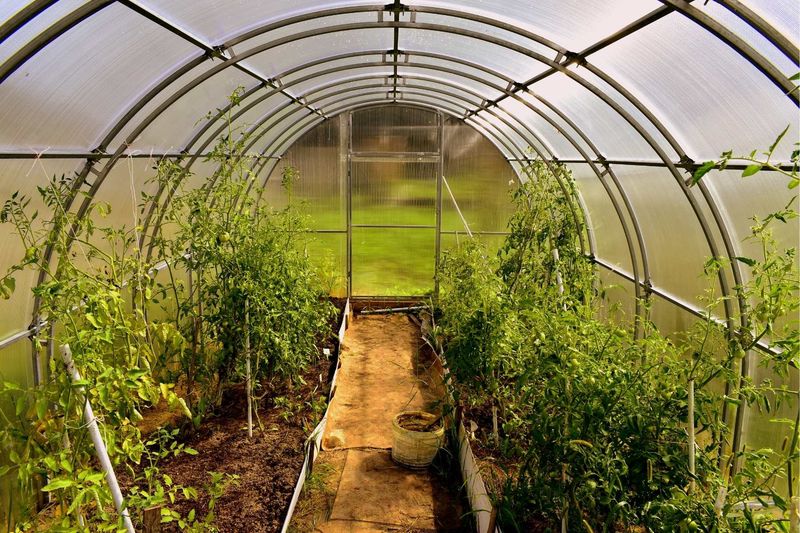
A garden contains its own small weather zones, and spider mites find them quickly.
The corner beside a brick wall, driveway, or fence stays hotter and drier than the rest, which lets mites reproduce faster while pushing plants into stress simultaneously.
Hot dry conditions favor outbreaks, which is exactly why microclimates matter so much here.
Beds with thin mulch, extra wind exposure, and full afternoon sun can become genuine problem areas.
Nearby plants may look fine while one stressed section declines rapidly.
Think about where soil dries first after rain.
Raised beds near pavement, containers on decks, and rows under roof overhangs all deserve closer watching.
Dust helps mites too, so pathways kicking up dry soil quietly support heavier feeding on adjacent plants.
When scouting, compare plant health across the yard instead of treating the garden as one uniform space.
Stippling on the sunny edge with none on the shadier side points toward heat and dryness driving the problem.
Small adjustments cool those pockets. Mulch bare soil, water deeply, reduce dust, and space plants so air moves without excessive drying.
Weed control matters as well, since some weeds host mites and shelter colonies near crops.
Finding a hot dry pocket early gives you a map for future inspections.
Fine Webbing Signals A Growing Problem
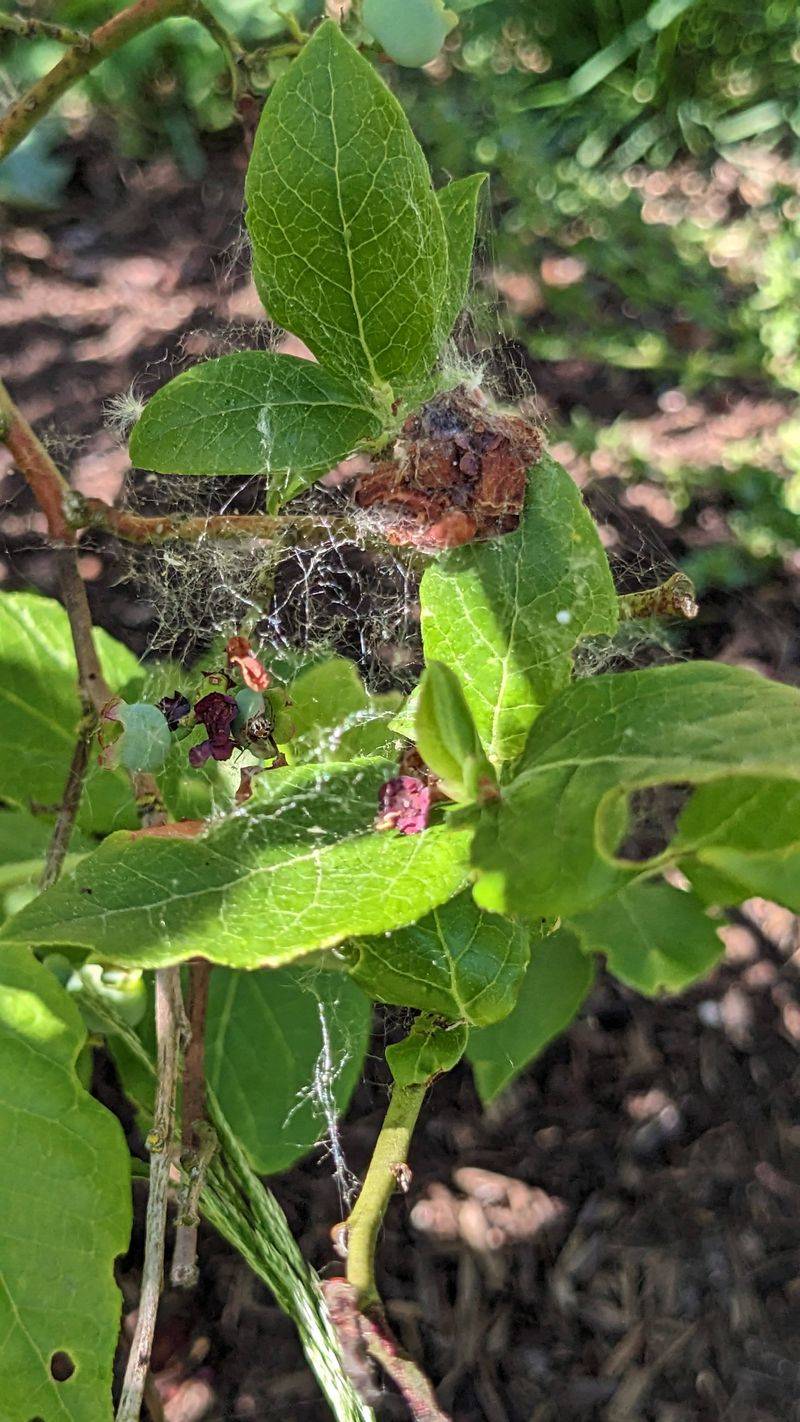
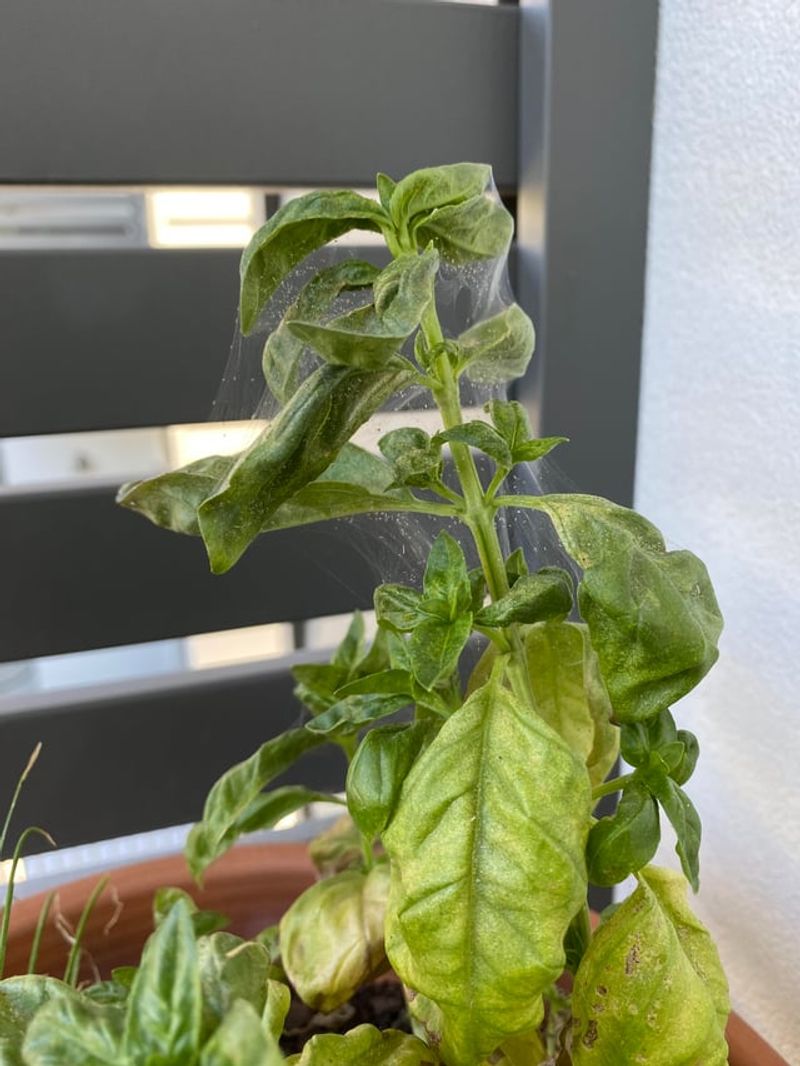
Spotting delicate webbing on a leaf feels like solving the case, and it also means the problem has advanced.
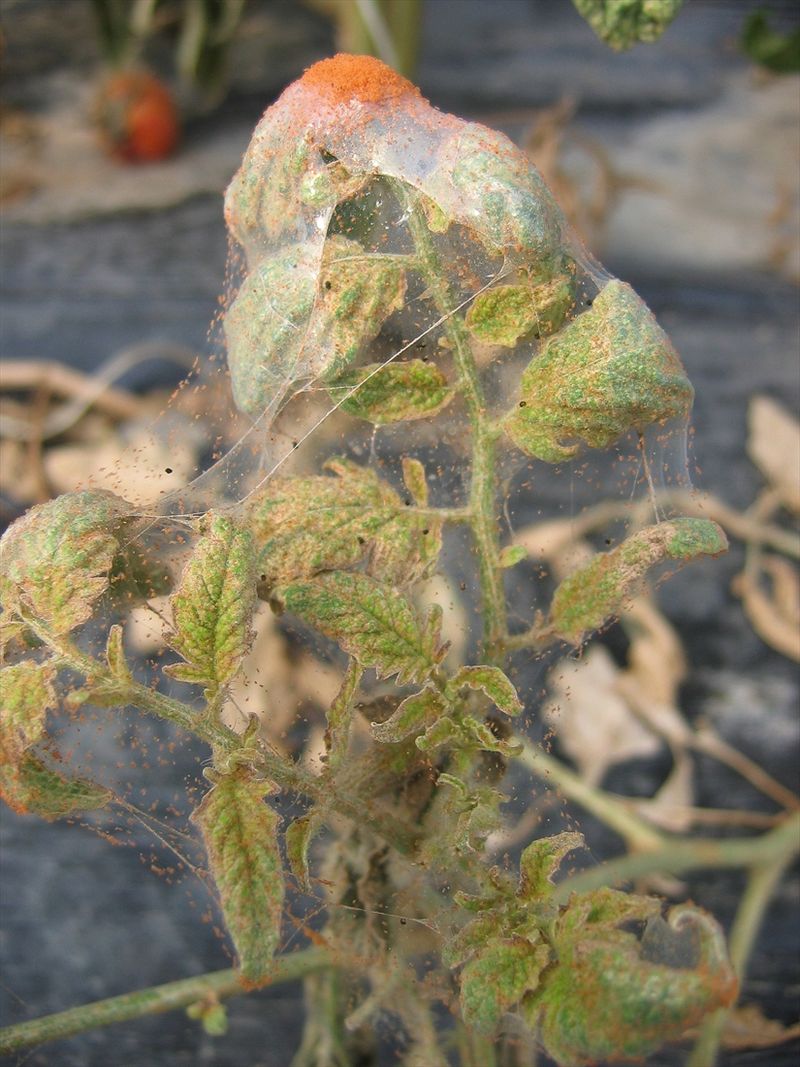
Spider mites produce fine silk once numbers climb, and that webbing shelters crowded colonies on infested plants.
Damage still begins before this stage, usually as stippling from underside feeding.
That order is the key thing to remember. Waiting for webs means the population already had time to multiply and spread injury widely.
Webbing stretches between leaf veins, across petioles, and over foliage near growing tips and crowded interiors.
Dust sticks to it, which makes plants look dirty in a distinctive way.
On beans, tomatoes, or cucurbits, that appearance should trigger immediate underside inspection.
Not every thread in the garden comes from mites.
Regular spiders build more open webs while mite webbing clings tightly against plant surfaces.
Pair the silk with stippling, yellowing, bronzing, and visible specks before concluding what you found.
Once webbing appears, rinsing alone may not be sufficient, though washing foliage still reduces numbers.
Remove leaves heavily coated and damaged, then keep monitoring since mites move readily to fresh growth.
Treat webbing as a late alarm rather than a first clue, which is why stippling checks stay more useful.
Interior Foliage Often Hides Early Signs
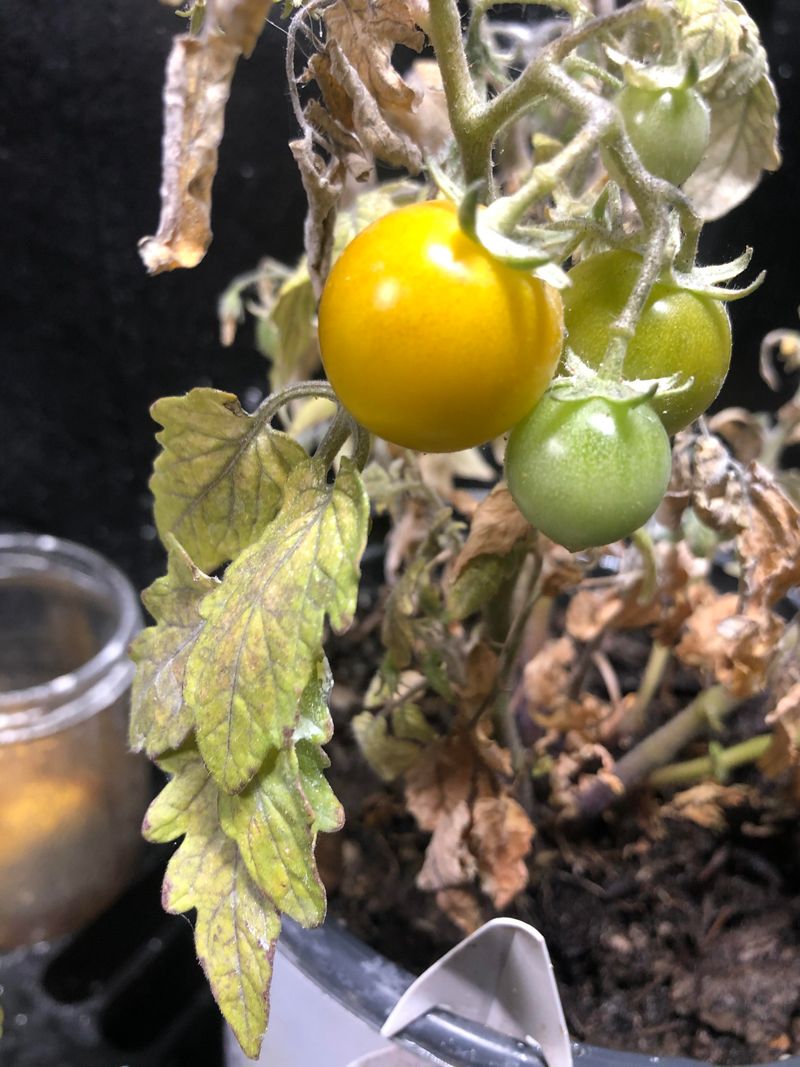
A plant’s exterior can look perfectly healthy while trouble builds in the middle.
Dense bean patches, staked tomatoes, and sprawling squash all hide sheltered interior leaves where mites feed, lay eggs, and avoid notice during harvest.
That hidden interior matters because mites prefer protected spots with less disturbance.
Outer leaves attract your attention simply because they’re easy to reach.
Meanwhile early stippling spreads on inner foliage long before the plant looks affected from outside.
Make a habit of parting foliage gently and checking leaves from the center, lower canopy, and shaded side.
Turn them over and compare several spots per plant.
One clean outer leaf proves nothing about the interior.
Good scouting depends on pattern rather than speed.
Choose leaves from different heights and depths, particularly during hot dry weather.
Finding pale speckles inside first may let you catch the problem before bronzing or webbing appears anywhere visible.
Interior checks matter especially after rinsing or treatment, since surviving mites remain where spray never reached.
Follow up in two or three days and look again.
Consistent rechecking is often what separates a manageable situation from a season-long problem.
Gardeners checking only the showy outer growth hand mites a real head start.