This Is Why Tomato Plants Across Virginia Are Drooping More Than Usual
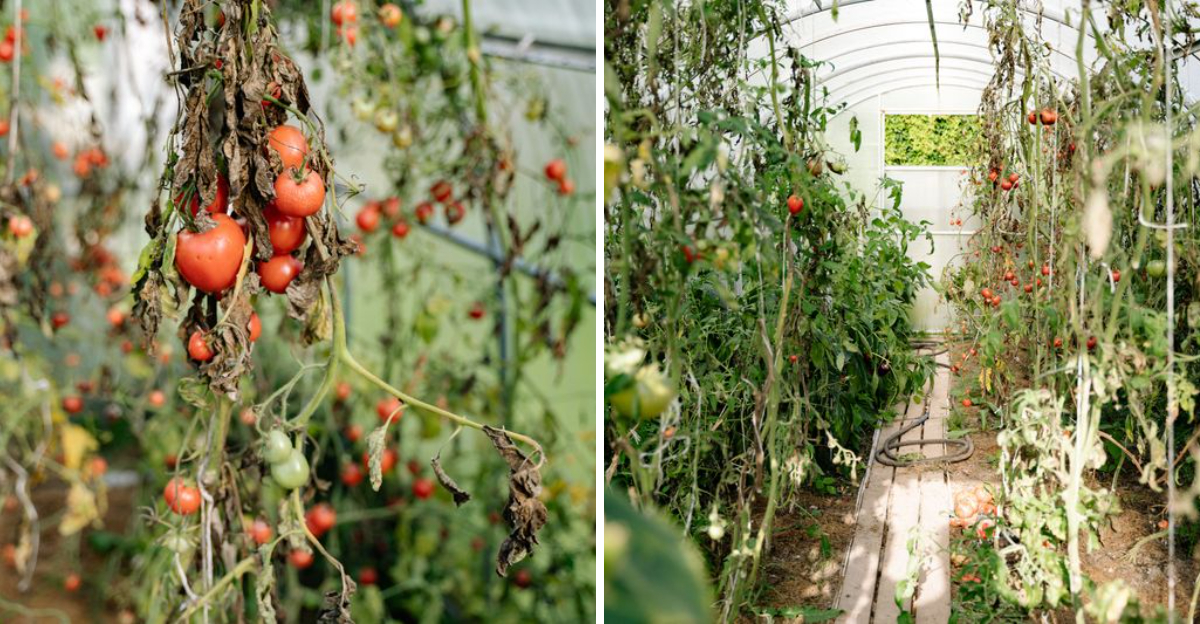
You step outside and your tomato plants look off already. Virginia weather swings hard enough to fool your instincts. Sometimes you are only watching stress, not disease.
Other times you are watching real trouble take hold. Roots can struggle while you assume the problem is heat. Fungal disease spreads fast once you notice Virginia humidity spikes.
Your watering habits might be doing more harm than good. Nutrient deficiencies can trick you into misdiagnosing everything. Pests hide beneath leaves while you search the stem.
Timing decides whether your plants recover or struggle further. Every hour you wait changes what happens next. Knowing the real cause changes exactly what you do next.
Diagnosis depends on details you might be ignoring right now. Some symptoms fade the moment shade returns to your garden.
Others signal something you cannot afford to miss. Ignore these signs, and your plants may not last the whole week.
Heat Wilt Causes Temporary Midday Drooping
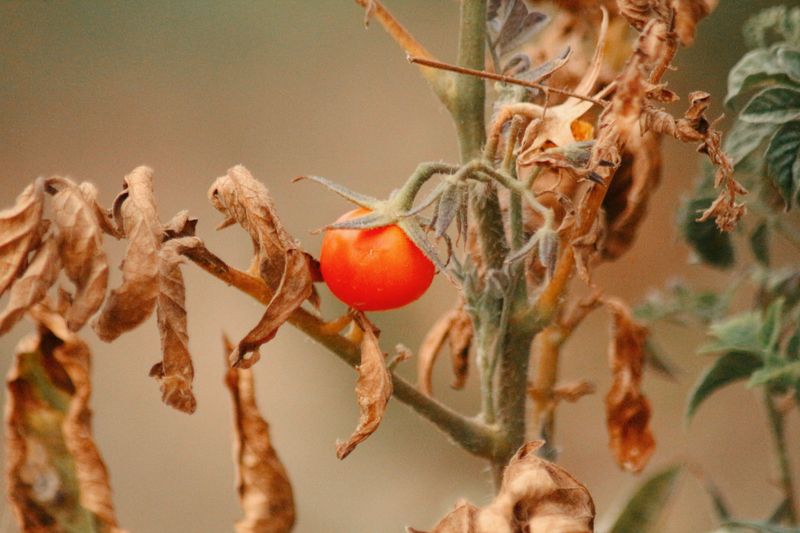
Your plants are not sick. They are just hot, and there is a big difference. When afternoon temperatures climb into the mid-80s or higher, tomato plants often droop on purpose. They close their leaf pores to slow water loss, and the whole plant looks limp as a result.
This is called heat wilt, and it is one of the most common reasons tomato plants across Virginia are drooping more than usual this season. The drooping usually starts around noon and gets worse by mid-afternoon.
Here is the key detail most gardeners miss: if your plants perk back up by evening, heat wilt was the culprit. No damage was done, and no treatment is needed.
But if your plants stay wilted after sundown, something else is going on. That evening recovery test is one of the fastest diagnostic tools available.
You can reduce heat wilt by watering deeply in the early morning. Wet soil holds heat differently than dry soil, and moist roots help the plant manage stress much better.
Mulching around the base of each plant also helps a lot. A two-to-three inch layer of straw or wood chips keeps the soil cooler and reduces how fast moisture escapes.
Shade cloth is another option for raised beds or container plants. Even a moderate-density shade cloth can help lower leaf temperature during peak sun hours. Heat wilt is annoying, but it is manageable once you recognize it for what it is.
Underwatering Leads To Persistent Wilting
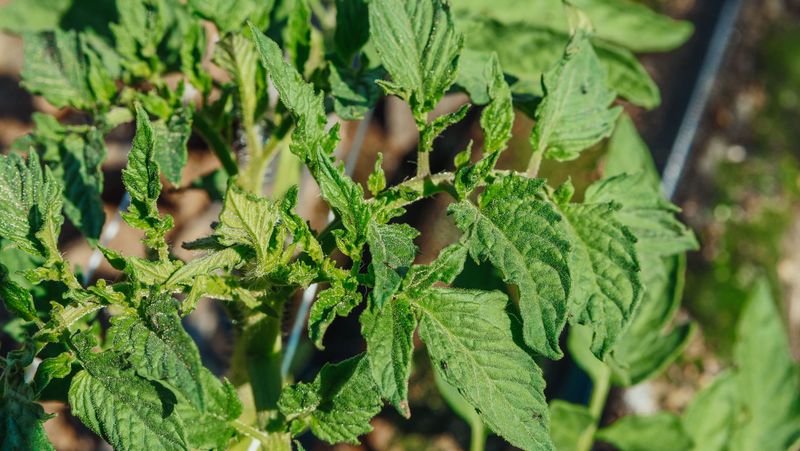
Dry soil is one of the fastest ways to send a tomato plant into a full droop. Unlike heat wilt, underwatering does not fix itself by nightfall.
Tomatoes need about one to two inches of water per week. During a hot Virginia summer, that number climbs even higher because evaporation speeds up dramatically in the heat.
The easiest way to check is to stick your finger two inches into the soil near the plant base. If it feels dry that deep down, your plant is thirsty and has probably been thirsty for a while.
Your Virginia Garden Changes Every Week. Your Plan Should Too.
Gardening in Virginia changes quickly throughout the season. Every Friday you’ll receive a simple weekly plan showing exactly what to plant, prune, fertilize, harvest, and protect so you never miss the right timing.
Wilting from underwatering often starts at the tips of the lower leaves. Those leaves curl inward slightly before the whole plant begins to slump.
A deep, slow watering session can help a stressed plant recover within hours. Shallow watering actually makes things worse because it trains roots to stay near the surface where soil dries fastest.
Drip irrigation is a smart upgrade for any serious tomato grower. It delivers water directly to the root zone and reduces waste from evaporation or runoff.
If you water by hand, aim for the base of the plant, not the leaves. Wet foliage sitting in heat creates its own set of problems down the road.
Tomatoes grown in containers dry out faster than those in the ground. Check pot-grown plants daily during heat waves, because they can go from healthy to severely wilted within 24 hours.
Consistent watering is one of the biggest factors in keeping plants upright and productive all season.
Overwatering And Poor Drainage Damage Roots
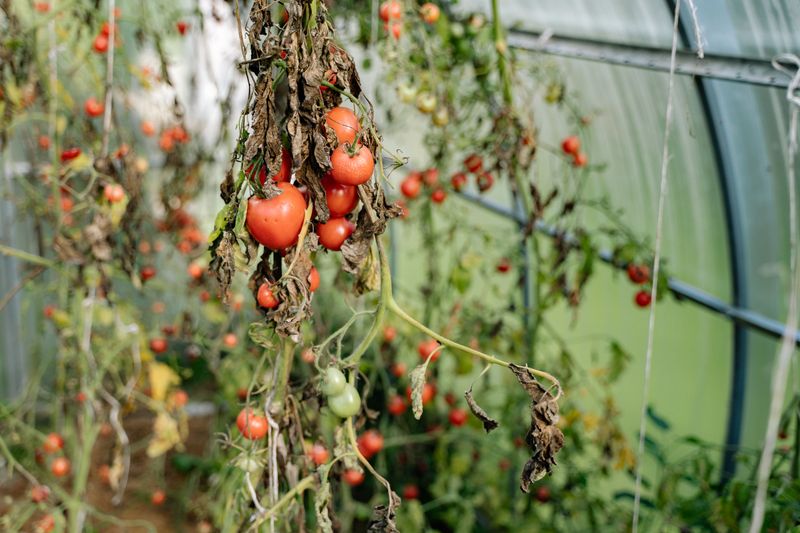
Too much water is just as damaging as too little, and the symptoms can look almost identical at first glance. That similarity is exactly what makes overwatering so tricky to catch.
When soil stays soggy for too long, roots cannot get the oxygen they need to function. Without oxygen, roots begin to break down, and a damaged root system cannot move water up to the rest of the plant.
Ironically, overwatered plants droop because they are not getting enough water to their leaves. The roots are failing, not the water supply.
Check for overwatering by squeezing a handful of soil from near the root zone. If it clumps tightly and feels wet even an inch below the surface, drainage is your problem.
Yellowing lower leaves paired with drooping is a strong sign of root stress from excess moisture. Healthy, well-watered plants have firm green leaves at the bottom of the stem.
Improving drainage starts with your soil mix. Adding perlite, coarse sand, or compost helps water move through more efficiently instead of pooling around roots.
Raised beds naturally drain better than in-ground plots in heavy clay soil. If your yard has clay-heavy ground, raised beds or large containers might be your best long-term solution.
Water your tomatoes only when the top inch or two of soil feels dry to the touch. That simple habit prevents most overwatering problems before they start. Healthy roots mean healthy plants, so always protect them from standing water.
Fusarium And Verticillium Wilt Block Water Flow
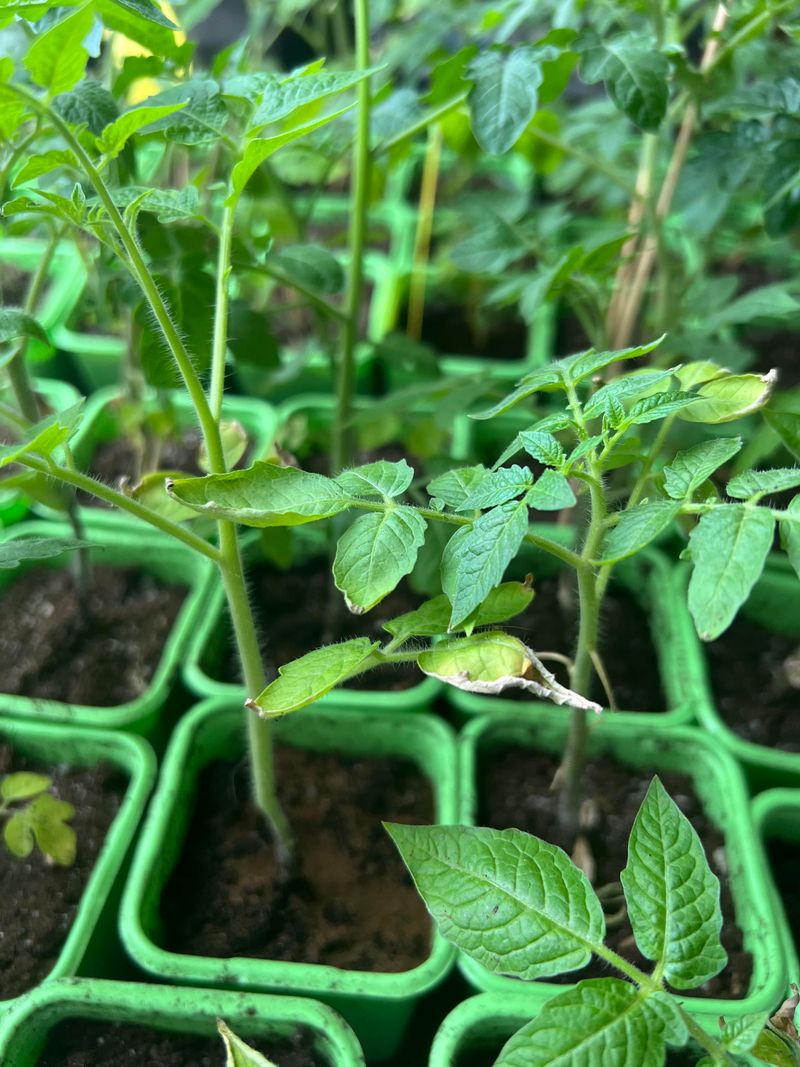
Some drooping has nothing to do with water or weather at all. Two soil-borne fungi called Fusarium and Verticillium wilt can gradually disrupt a plant’s internal water flow.
Both of these diseases work by invading the plant’s internal water-transport system. Once they are inside the stem, they block the channels that move water upward, and the plant begins to wilt even when the soil is perfectly moist.
Fusarium wilt is especially common in warm soil, which makes Virginia summers a prime time for outbreaks. Verticillium tends to strike in cooler, wetter conditions but can persist in soil for years.
The clearest way to tell if you have one of these diseases is to cut the main stem near the base. Brown or tan streaking inside the stem tissue is a strong indicator of fungal infection.
Plants infected with Fusarium or Verticillium wilt often show symptoms on one side first. One branch droops while the other stays firm, which is a pattern that heat or drought stress does not usually create.
There is no chemical cure once a plant is infected. Removing the plant and avoiding planting tomatoes or peppers in the same spot for several years is the standard approach.
The best long-term defense is choosing resistant varieties. Look for the letters F and V on seed packets or plant tags, which indicate built-in resistance to these specific fungi.
Soil solarization during summer can also reduce fungal populations before you plant next season.
Transplant Shock Causes Short-Term Drooping
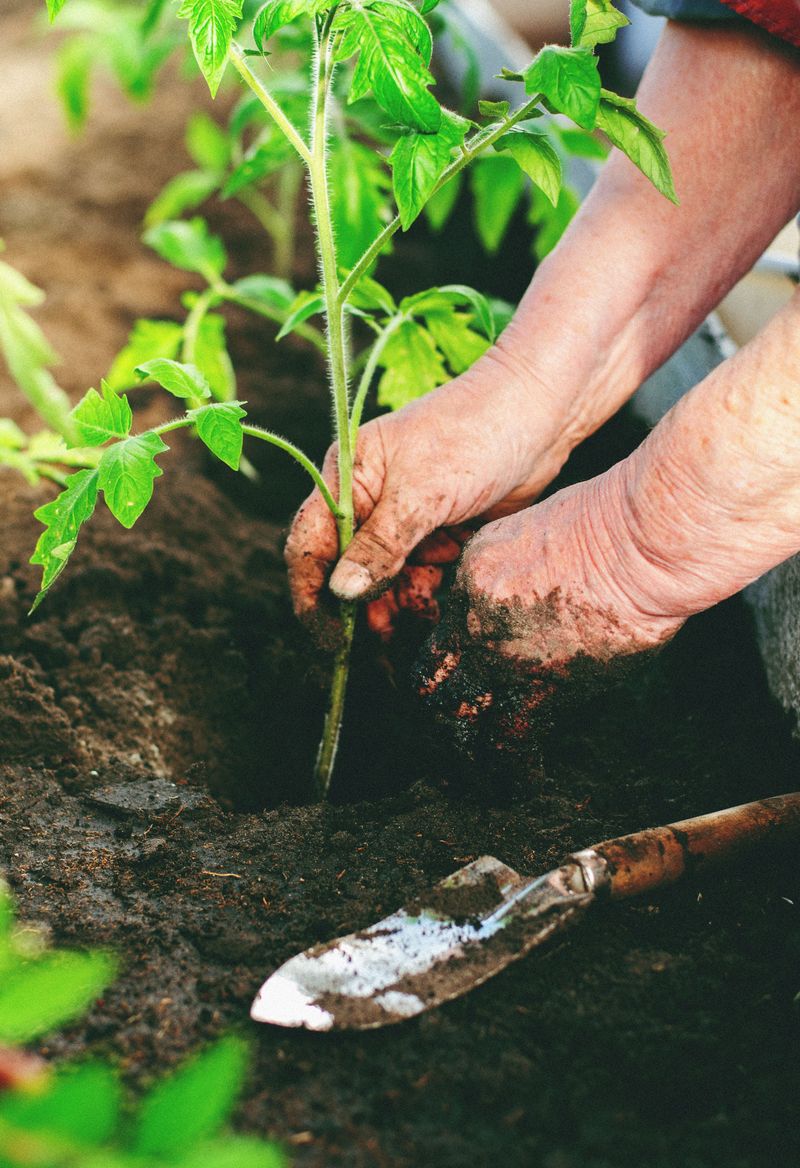
Moving a tomato plant from a small pot into the open ground is stressful for the plant, even when you do everything right. That stress has a name: transplant shock.
During transplanting, some roots inevitably get disturbed or broken. The plant suddenly has fewer roots working to supply water to the same number of leaves, and drooping is the natural result.
Transplant shock usually shows up within the first day or two after planting. The plant looks limp and stressed, which is a normal response to root disturbance during transplanting.
The good news is that most healthy seedlings bounce back within a week if you give them the right support. Consistent moisture and shade during the first few days make a big difference.
Avoid transplanting during the hottest part of the day. Early morning or late evening transplanting gives roots time to settle before intense heat hits.
Watering deeply right after planting helps the soil make close contact with the roots. Loose air pockets around the root ball slow recovery significantly.
Some gardeners use a diluted seaweed solution when watering new transplants. Seaweed extract contains natural compounds that help roots recover and establish faster in new soil.
Avoid fertilizing a newly transplanted tomato until it shows signs of new growth, typically around a week or so. Fertilizer pushes leaf growth, which puts more demand on a root system that is not yet ready to deliver.
A little patience after transplanting goes a long way toward a strong, productive plant all summer.
How To Tell Heat Stress From Disease
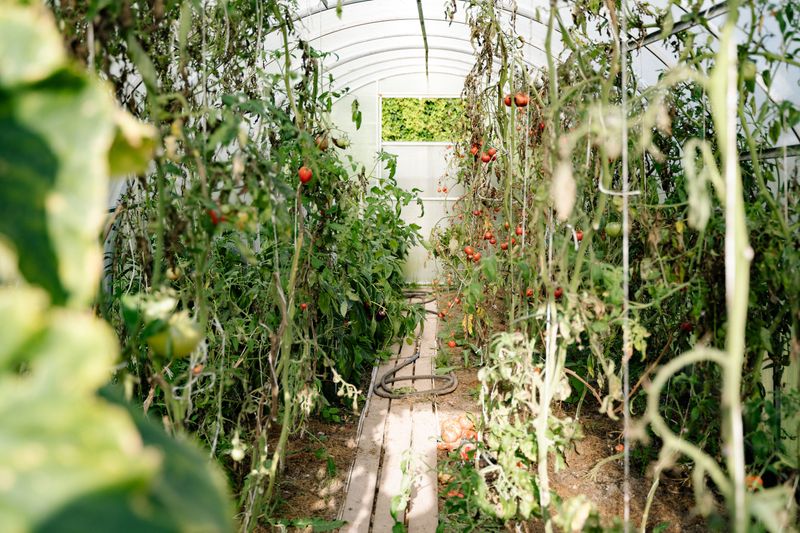
Figuring out what is actually wrong with your tomato plant is half the work. Heat stress and disease can look almost the same from a distance, but the details tell very different stories.
Start with timing. Heat-stressed plants droop during the hottest part of the day and recover by evening.
Disease-related drooping does not follow that pattern and often gets worse over several days. Look at which leaves are affected first. Heat stress tends to affect the whole plant more or less evenly.
Disease often starts on one side, or on lower leaves, and slowly moves upward or outward. Check the stem. A healthy stem cut open should show clean, white or light green tissue inside.
Brown or tan streaking inside the stem almost always points to a fungal wilt disease. Smell the soil around the base of the plant. A sour or musty smell can indicate root rot from overwatering or fungal activity in the soil.
Look for patterns across your garden. If one plant is drooping while nearby plants are fine, disease or root damage is more likely than heat stress, which affects all plants in a given area.
Check the undersides of leaves for pests like spider mites or aphids. Heavy infestations can stress a plant enough to cause wilting even without any disease or water issue.
Take a photo of the symptoms and compare them to your local extension office resources. Virginia Cooperative Extension offers free plant diagnostic help that is useful for home gardeners.
Knowing the difference between stress and disease helps you act faster and smarter in most cases.