This Native Shrub Is A Better Barberry Alternative For Michigan Homeowners Who Want Color Without Thorns
Barberry can make a Michigan border look polished fast.
The color is bold. The shape stays compact. Then you reach into the shrub for one weed and remember exactly what those thorns are capable of.
The bigger issue sits beyond the garden bed.
Japanese barberry can spread into natural areas, where it competes with native understory plants and adds more ecological baggage than most homeowners expect from one tidy shrub.
So what gives you the same strong color without the prickly maintenance or invasive concern?
One Michigan native deserves a much closer look.
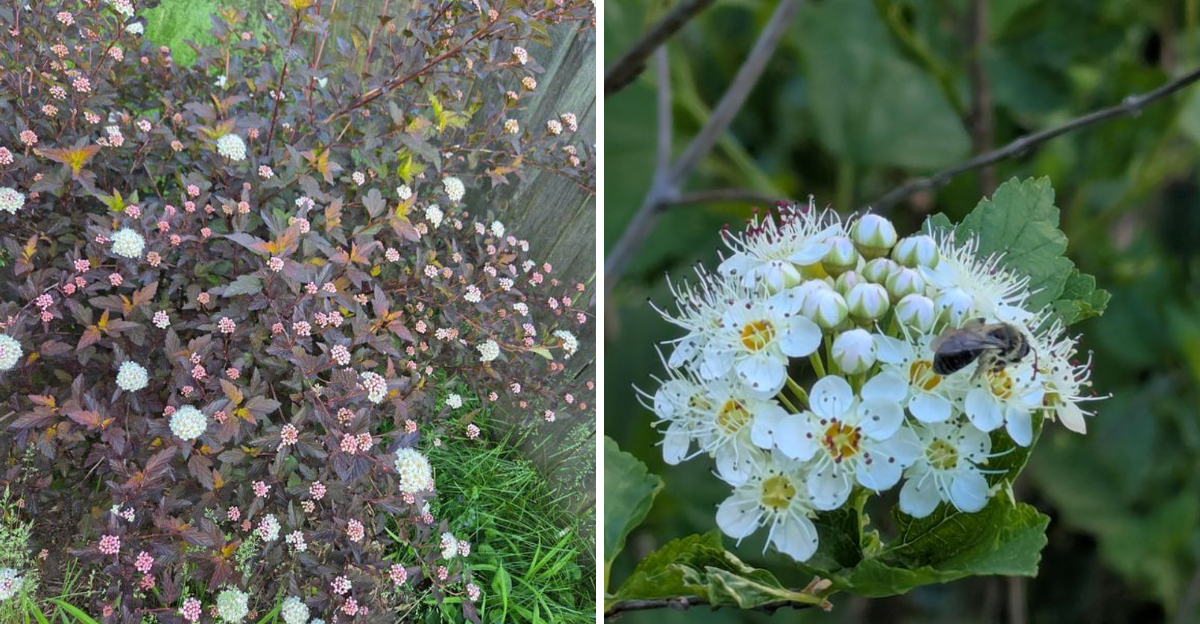
Common ninebark, Physocarpus opulifolius, brings burgundy, copper, gold, or green foliage depending on the selection.
It also adds spring flowers, peeling winter bark, and enough size to anchor a border or soften a property edge.
The best part is how adaptable it can be.
Give it the right sun, room, and soil, and this shrub can replace barberry without making the garden feel like it settled for second best.
That is a trade worth making in Michigan.
Swap Japanese Barberry For Common Ninebark
A thorny hedge may look tidy from the sidewalk, but maintenance tells the real story.
Japanese barberry can make weeding, pruning, and cleanup more annoying than they need to be. Common ninebark offers a softer route with smooth branches, a naturally rounded form, and enough presence to hold a border together.
It also belongs here.
Physocarpus opulifolius is native to Michigan, so it fits local landscapes without carrying the same concern about escape into natural areas.
That makes it especially useful near woodland edges, open lots, or places where birds can move seed beyond the yard.
The shrub brings structure without looking stiff.
Older stems develop peeling bark in thin layers, which adds texture after the leaves drop. Spring flowers give the plant another season of interest, and colorful cultivars can deliver the burgundy or gold tones that make barberry so popular in the first place.
Give mature size some respect.
Full-size ninebarks can become broad shrubs, so they need more room than a compact barberry. Smaller cultivars solve that problem in tighter front-yard beds.
This is not a one-for-one swap in shape.
It is a better long-term trade. You lose the thorns and invasive baggage, then gain flowers, winter bark, and a shrub that looks much more at home in a Michigan border.
Get Bold Color Without Thorny Branches
Color is usually the reason barberry gets invited into the yard.
Ninebark can handle that job without making every pruning session feel like a wrestling match.
Deep-leaved cultivars such as ‘Diabolo’ and ‘Summer Wine’ bring burgundy to purple foliage through much of the growing season.
‘Coppertina’ leans warmer, with copper and orange tones that shift as new growth matures. Gold selections can brighten a darker planting without relying on flowers alone.
The straight species stays green.
That version fits beautifully in naturalized areas where native function matters more than dramatic foliage. Front borders often benefit from a colored cultivar when the goal is a stronger visual anchor.
Your Michigan Garden Changes Every Week. Your Plan Should Too.
Gardening in Michigan changes quickly throughout the season. Every Friday you’ll receive a simple weekly plan showing exactly what to plant, prune, fertilize, harvest, and protect so you never miss the right timing.
Sun keeps the color sharper.
Dark and gold foliage generally looks richest with six or more hours of direct light. In partial shade, those tones can soften toward green, and the whole shrub may grow a little looser.
Smooth branches make upkeep easier too.
You can reach under the canopy for weeds, remove an old stem, or shape the plant without heavy gloves and a strategy meeting first.
That difference sounds small until you maintain the shrub for ten years.
Ninebark proves that bold foliage does not need defensive hardware. The border still gets its drama, but your forearms no longer have to pay admission every time the mulch needs attention.
Use Colorful Foliage For Border Contrast
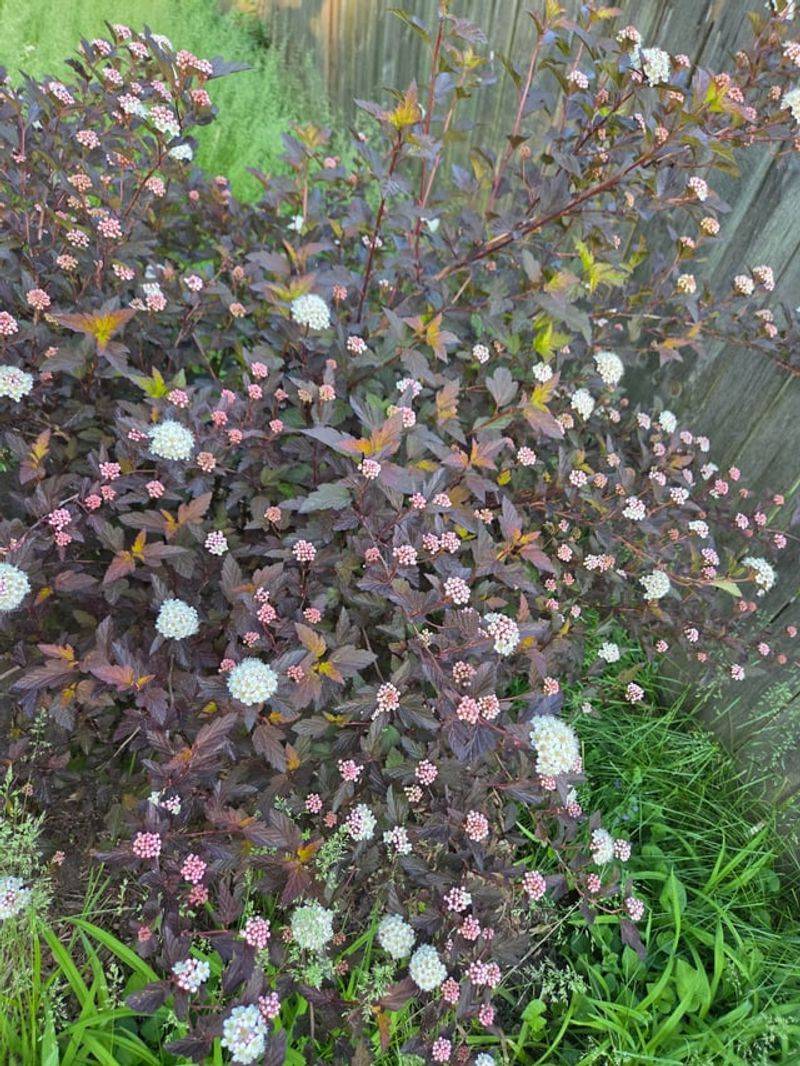
Dark foliage becomes much more useful when the plants around it are chosen on purpose.
A burgundy ninebark behind pale yellow coneflowers can make both plants look stronger. Chartreuse foliage nearby creates another sharp contrast, while white flowers keep the whole combination from feeling too heavy.
Copper-toned selections work well with grasses.
Little bluestem, another Michigan native, can echo warm fall color while adding a much finer texture. That difference between broad ninebark leaves and narrow grass blades gives the border more depth.
Gold-leaved forms can brighten blue and violet flowers.
Salvia, spiderwort, or asters can sit in front and let the shrub act as a warm backdrop. The result feels layered instead of crowded.
Use foliage color as structure, not the entire show.
A border built only from purple and gold shrubs can look flat once the novelty wears off. Add perennials with different bloom times, heights, and leaf shapes so the planting changes through the season.
Ninebark handles the anchor role well.
It gives the eye somewhere to rest while shorter plants move through spring, summer, and fall.
Leave enough room around the shrub for its natural arch.
Crowding it with tall neighbors can hide the shape and reduce airflow.
The goal is contrast without clutter. Ninebark does not need to shout from every corner. One well-placed shrub can make the rest of the border look much more intentional.
Let Spring Flowers Support Pollinators
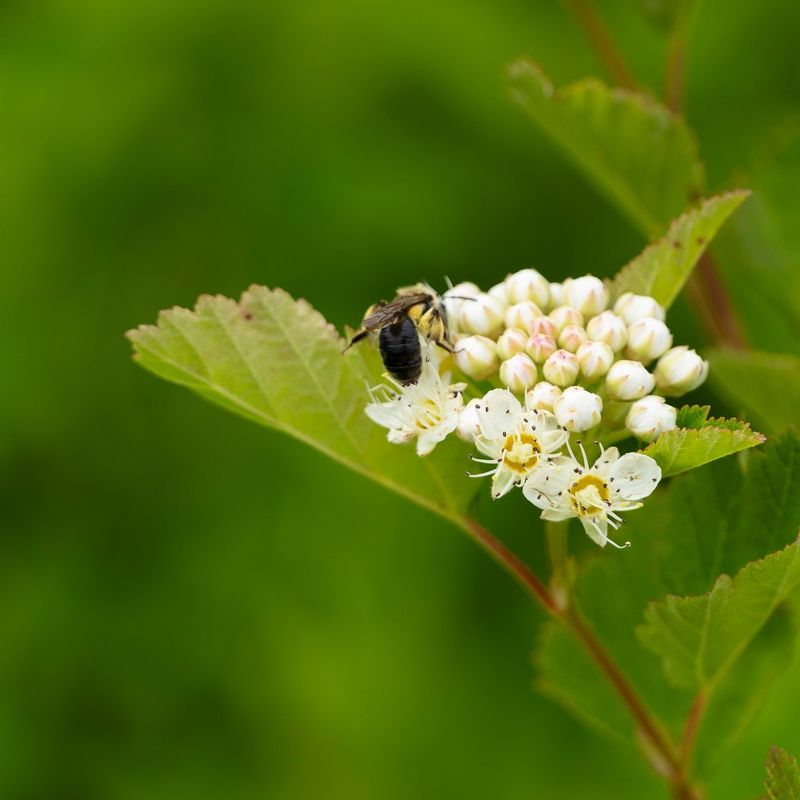
Late spring gives ninebark a completely different personality.
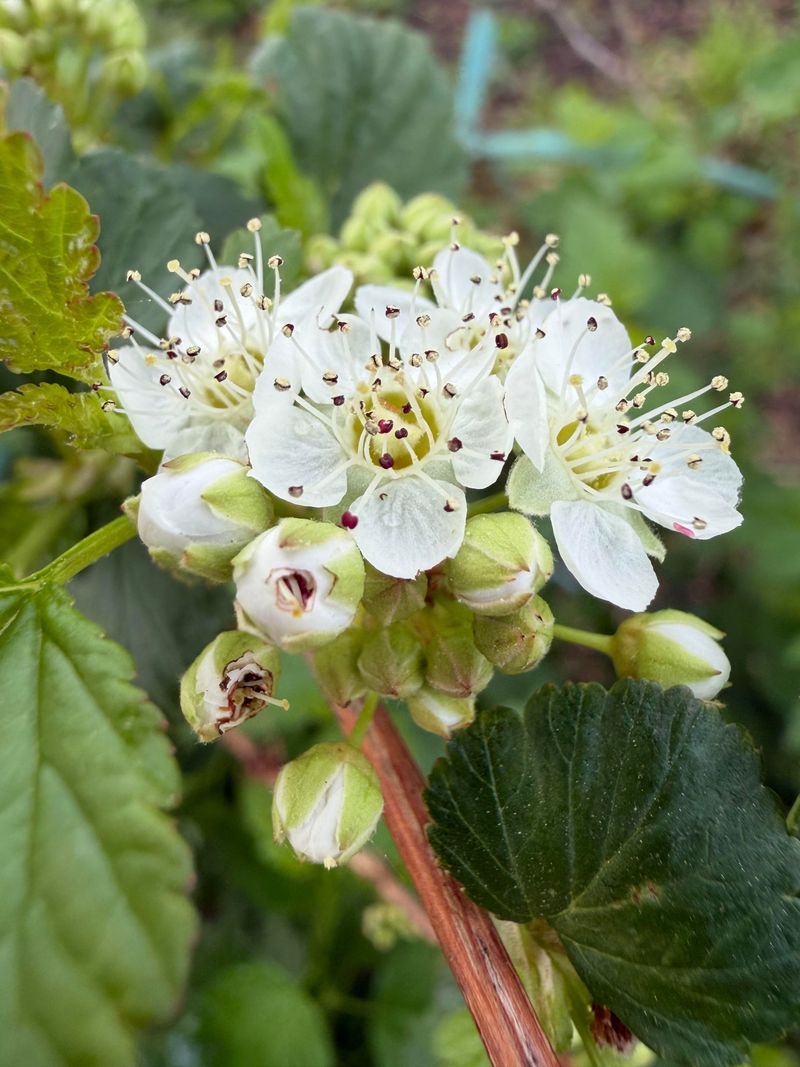
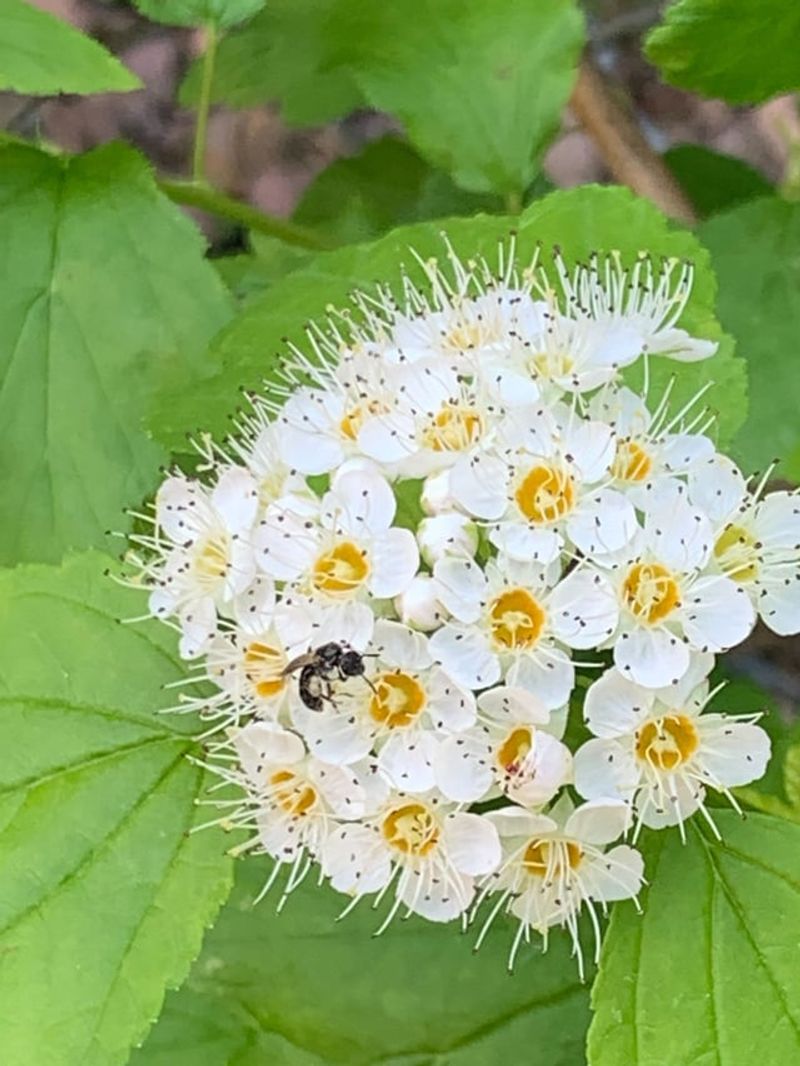
Clusters of small white to pale pink flowers appear across the branches, often from late May into June in Michigan. The blooms are not huge, but a mature shrub can carry enough of them to make the whole plant look softly covered.
Pollinators notice.
Native bees and other beneficial insects visit the flower clusters during a part of the season when some early spring bloomers have already finished and many summer perennials have not opened yet.
That timing gives the shrub extra value.
A plant chosen mainly for foliage suddenly becomes part of the garden’s pollinator schedule without asking for a separate patch or special treatment.
After bloom, reddish seed capsules can add another layer of interest.
Birds may investigate the seeds later, while the branching structure gives small wildlife more cover than a thorny ornamental planted only for color.
Avoid hard shearing after flowering.
Repeated cuts into a tight ball can remove much of the plant’s natural arch and reduce the wood that carries future blooms. Selective pruning keeps the shrub cleaner without erasing its character.
Older stems can come out at the base every few years.
That renewal keeps fresh growth moving and opens the center.
Ninebark does not turn the yard into a pollinator sanctuary by itself. It simply makes one common landscape job more useful, which is a very good deal for a shrub already earning its place on color alone.
Use Dense Branching For Natural Screening
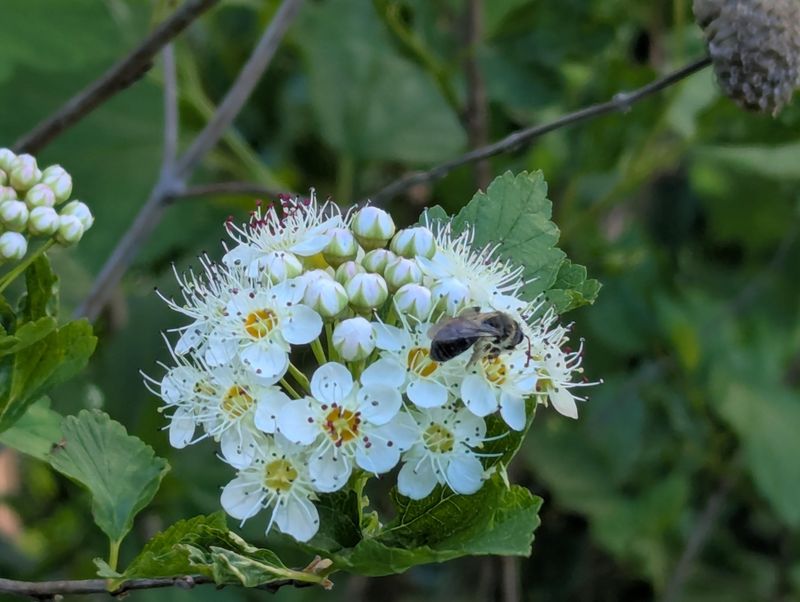
A privacy shrub does not need to look like a green brick.
Full-size ninebark can grow into a broad, arching mass that softens views without the clipped form of a formal hedge. Many selections reach roughly 6 to 10 feet tall and nearly as wide, though compact cultivars stay much smaller.
That size can hide a utility area, soften a property edge, or break up a direct sightline from a patio.
Use spacing based on mature width.
A row planted too tightly may fill fast, but crowded shrubs lose their natural shape and become harder to keep open inside. More room gives each plant the chance to arch instead of pushing straight upward for light.
Staggering can help.
Two loose, offset groupings often create better coverage than one rigid line. The planting looks more like a woodland edge and less like a replacement fence.
Winter still brings something to look at.
Once leaves fall, older stems reveal peeling bark that separates into papery layers. The screen becomes less solid, but the branching and bark keep the border from turning visually empty.
Compact cultivars belong in smaller yards.
‘Little Devil’ and ‘Tiny Wine’ can provide color and structure without swallowing a walkway or window.
Match the selection to the space first.
Ninebark is easy to live with when it has enough room. Squeeze a large cultivar into a narrow strip, and low maintenance can quickly become an annual argument with the pruners.