This Texas Native Shrub Is Worth Adding When Fall Planting Season Starts
Fall planting season in Texas gets overlooked more than it should, and that is honestly a missed opportunity worth correcting.
Cooler air temperatures take the stress off newly planted shrubs, while the soil stays warm enough to keep root systems actively growing through autumn.
It is genuinely one of the better times of year to get something meaningful in the ground, and American Beautyberry knows exactly how to take advantage of those conditions.
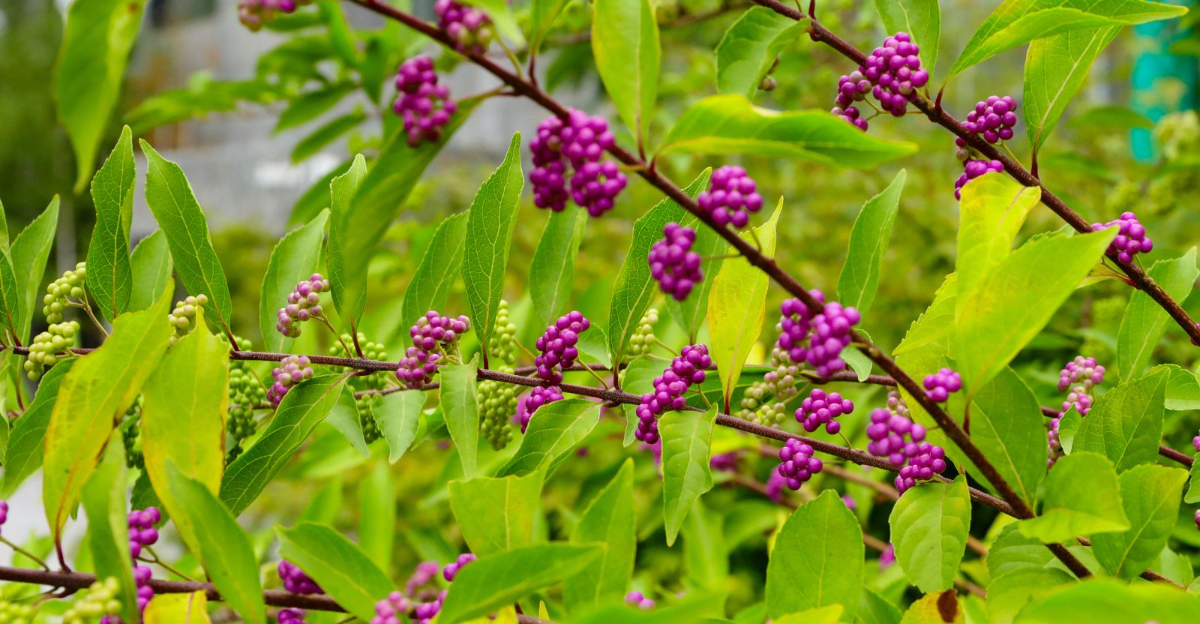
This deciduous native shrub brings something to a Texas landscape that very few other plants can pull off: clusters of berries so vivid and purple they look almost too good to be real.
Concentrated mainly in eastern Texas but surprisingly adaptable under the right conditions, American Beautyberry offers wildlife value, low-maintenance charm, and a visual impact that goes well beyond what you see during its showstopping fall display.
1. Purple Berry Clusters Bring Fall Color To The Landscape
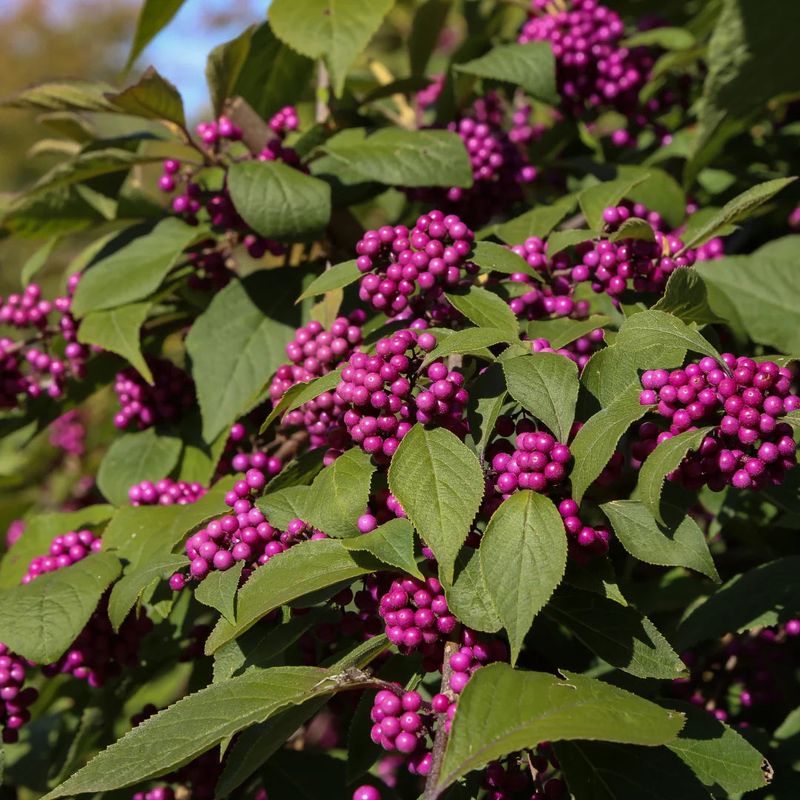
Bright clusters of purple to violet berries pressing close along the stems of American Beautyberry create one of the more striking seasonal moments a Texas yard can offer.
The fruit generally becomes most noticeable from late summer into fall, appearing in dense rings that wrap around the stems in a way that few other native shrubs can replicate.
When surrounding plants begin to fade and lose their summer color, those berry clusters can stand out sharply against bare wood and yellowing foliage.
The ornamental effect comes from the plant’s natural reproductive cycle rather than from any trait bred purely for visual appeal.
Fruiting depends on several factors working together, including plant health, adequate pollination, seasonal weather patterns, and how recently the shrub was pruned.
Gardeners should expect some variation in berry production from year to year rather than counting on an identical display each season.
Planting in fall gives the shrub time to settle its roots before the following growing season, which can support healthier overall growth and better berry production down the road.
Choosing a location with good drainage and appropriate light will give the plant its best chance at a strong start.
American Beautyberry’s fall color is genuinely eye-catching, and for Texas gardeners looking to add seasonal interest without a complicated maintenance routine, this native shrub can be a worthwhile choice when cooler planting weather arrives.
2. Birds Gain A Valuable Food Source As The Berries Ripen
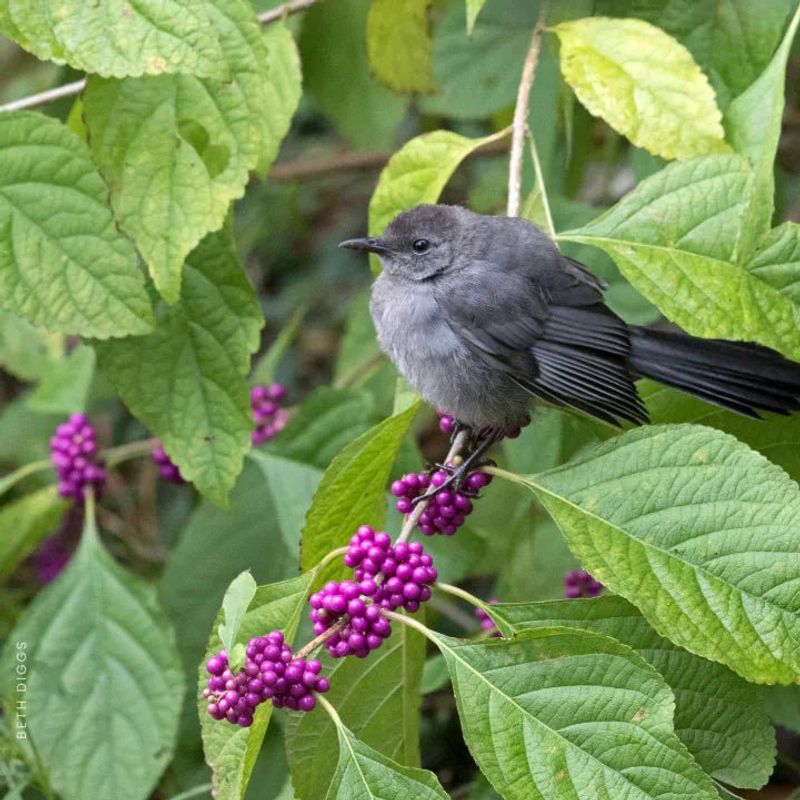
Walk past a loaded American Beautyberry shrub in fall and you may notice movement before you notice the birds themselves. Fruit-eating species can move through shrubs quickly, working through berry clusters with focused energy.
The berries ripen at a time when many natural food sources in Texas landscapes are winding down, which can make the shrub a useful resource for wildlife moving through or residing in the area.
Research and field observations have documented a range of bird species using American Beautyberry fruit, including Northern Mockingbirds, Brown Thrashers, American Robins, and Eastern Towhees, among others.
Mammals such as white-tailed deer, raccoons, and gray foxes have also been documented consuming the berries.
Your Texas Garden Changes Every Week. Your Plan Should Too.
Gardening in Texas changes quickly throughout the season. Every Friday you’ll receive a simple weekly plan showing exactly what to plant, prune, fertilize, harvest, and protect so you never miss the right timing.
The shrub’s value to wildlife comes from the timing and abundance of its fruit production relative to other available food sources in the fall landscape.
Planting a single shrub will not guarantee visits from specific bird species, since wildlife use depends on habitat, location, seasonal movement, and many other factors.
Adding American Beautyberry as part of a broader native planting, however, can contribute meaningfully to a yard’s overall value for local wildlife.
Fall planting allows the shrub to establish roots through the cooler months so it can support stronger growth and potentially heavier berry production in the seasons ahead.
For Texas gardeners interested in supporting backyard wildlife, this native shrub offers a well-documented and practical option.
3. Full Sun Or Partial Shade Gives Gardeners More Placement Options
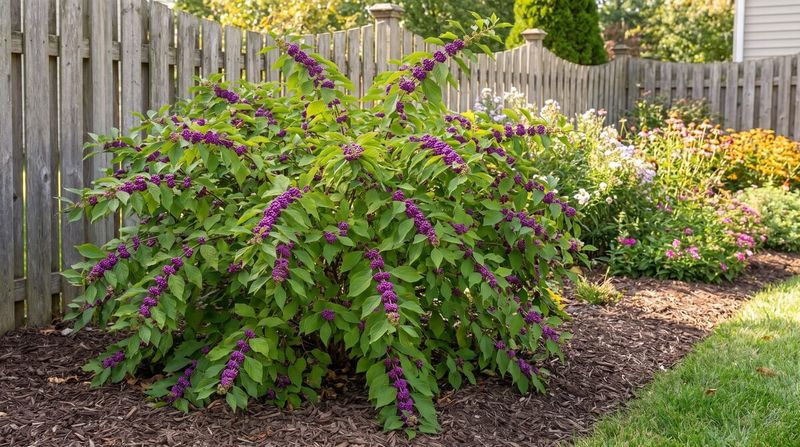
Changing autumn light across a Texas yard can reveal spots that are harder to evaluate during the intense brightness of summer. American Beautyberry’s ability to grow in full sun to partial shade gives gardeners real flexibility when deciding where to place it.
That adaptability makes it easier to work into existing landscapes without needing to completely rearrange other plants or structures.
Light levels do influence how the shrub performs. Plants growing in full sun tend to develop a more compact form and may produce flowers and berries more freely under the right conditions.
Shrubs planted in partial shade can grow with a somewhat looser, more open habit and may need a bit more attention to soil moisture during dry periods.
Deep shade is a different situation, and American Beautyberry generally performs better with at least some direct sun or bright filtered light during the day.
When selecting a planting spot in fall, consider how light will shift through the seasons. A location that receives morning sun and afternoon shade can work well in many Texas settings, reducing heat stress while still providing enough light for healthy growth.
Soil drainage matters in any spot you choose, since standing water after rain can create problems for roots that are still becoming established.
Thinking through light, drainage, and spacing together before planting will give American Beautyberry the conditions it needs to grow well from the start.
4. Adaptable Roots Handle A Wide Range Of Texas Soils
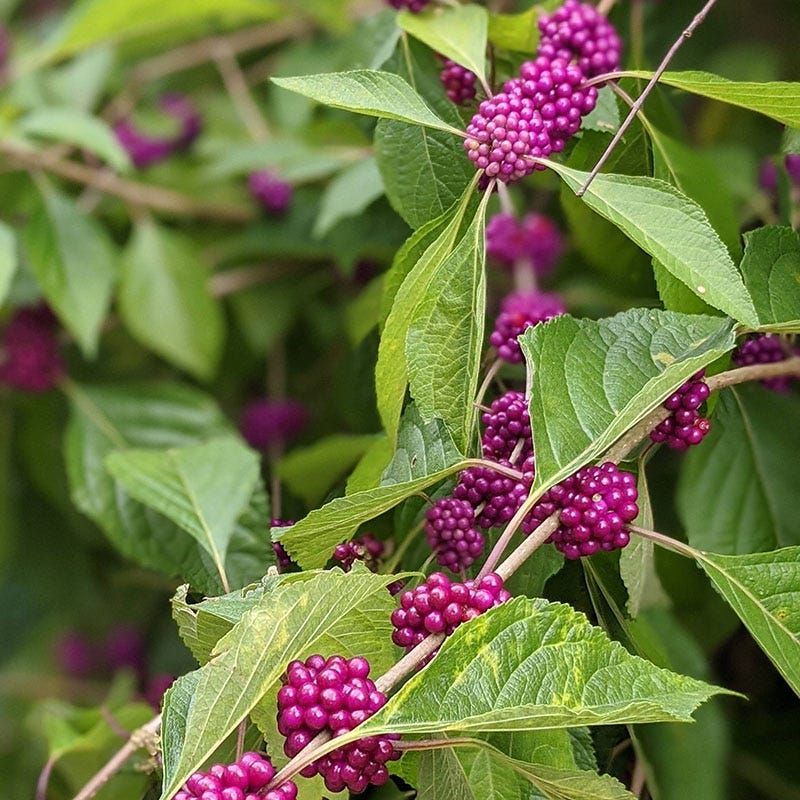
Texas soils do not follow a single profile. From the heavy black clay of the Blackland Prairie to the sandy loams of the Piney Woods and the rocky outcroppings found elsewhere across the state, soil conditions can vary dramatically even within a single county.
American Beautyberry has shown documented adaptability to a broad range of soil textures and pH conditions, which is part of what makes it a practical choice for many landscapes.
Texas A&M guidance describes this shrub as tolerant of different soil types, including both heavier and lighter soils. That adaptability does not mean soil quality becomes irrelevant.
Good drainage remains important, since roots sitting in waterlogged soil for extended periods can develop problems that undermine the plant’s long-term health.
Amending extremely compacted or poorly draining spots before planting can help the shrub settle in more successfully.
Fall planting takes advantage of soil temperatures that often remain warm enough to encourage root development even as air temperatures drop.
Getting roots established before winter arrives means the shrub enters spring with a stronger foundation for new growth.
Watering appropriately during the establishment period is still necessary, even in cooler weather, particularly if fall rainfall is limited.
Paying attention to drainage and consistent moisture during those first weeks after planting can make a meaningful difference in how well American Beautyberry performs in its new location through the following seasons.
5. Established Plants Can Tolerate Periods Of Dry Weather
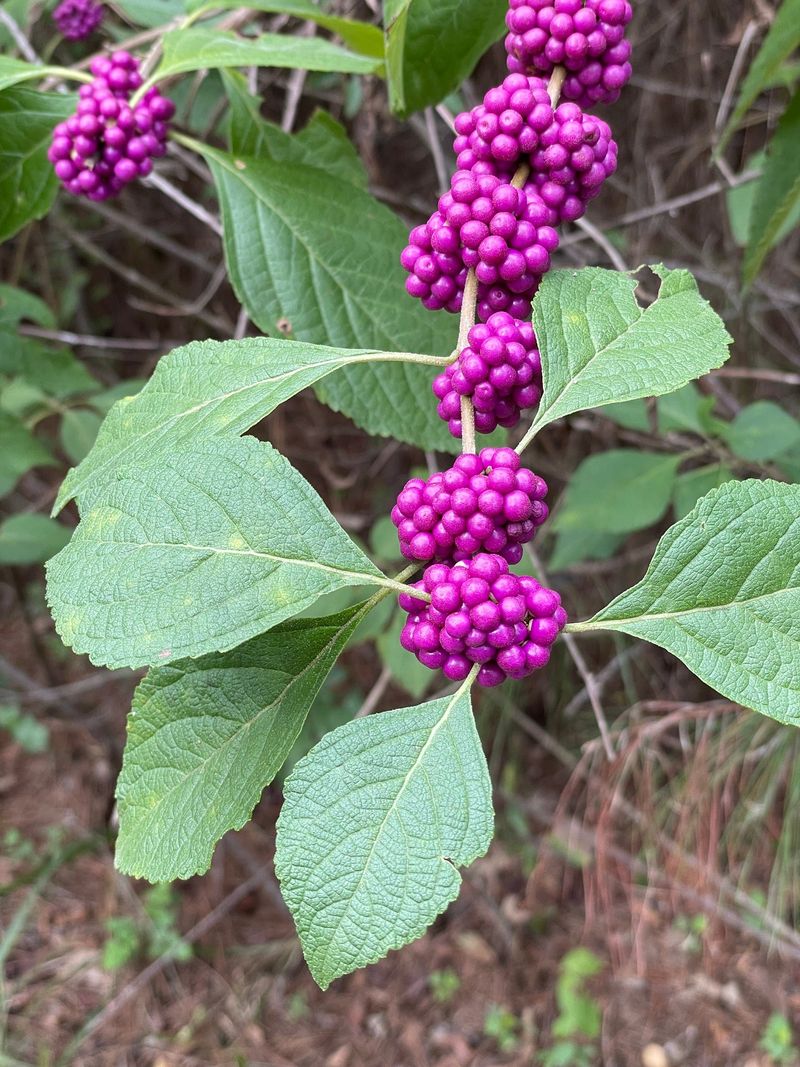
Dry stretches are a familiar part of gardening in Texas, and choosing plants that can handle those conditions once they are settled in makes long-term landscape management much more manageable.
American Beautyberry develops a degree of drought tolerance after its root system has had time to establish, which can take a full growing season or more depending on conditions.
That tolerance is a genuine characteristic of the species, not a shortcut to skipping irrigation entirely.
A newly planted beautyberry is not yet drought tolerant. During the weeks and months after fall planting, the shrub still depends on consistent moisture to develop the root structure it needs.
Cooler fall temperatures reduce some of the aboveground stress compared to summer, but they do not eliminate the need for watering, especially during dry Texas falls or mild winters with little rainfall.
Monitoring soil moisture and watering when the top few inches dry out remains important through the first season.
Once established, the shrub can manage through dry spells with less supplemental irrigation than many landscape plants require.
During extended drought or extreme heat, some wilting or leaf drop may occur, and supplemental watering during those periods can help reduce stress and support berry production.
Thinking of drought tolerance as a long-term benefit that develops with time, rather than an immediate feature of a new planting, leads to more realistic expectations and better outcomes for the shrub over the years.
6. A Five-Foot Shrub Size Fits Many Informal Garden Spaces
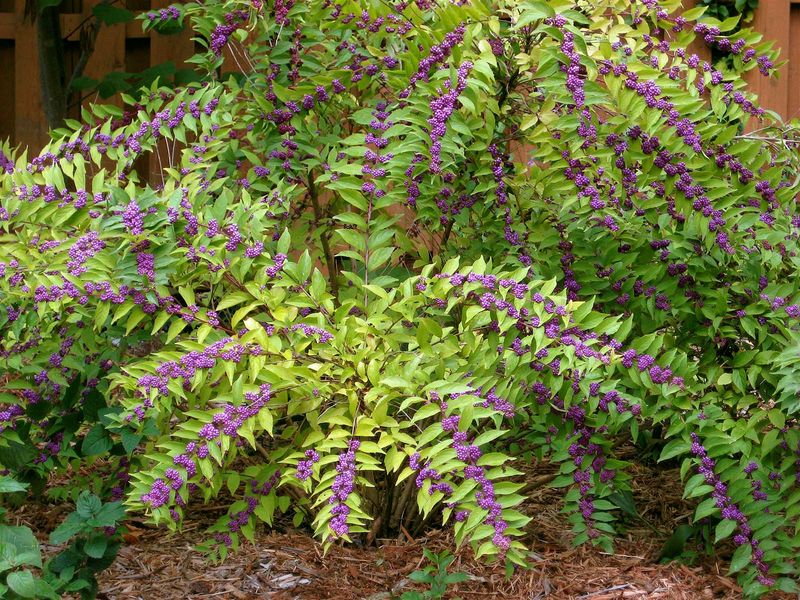
Garden spacing decisions often come down to knowing how large a plant will actually grow, and American Beautyberry gives gardeners a reasonably predictable size to work with in many landscape settings.
Texas Superstar guidance describes mature plants reaching around five feet tall and five feet wide under typical landscape conditions, though individual plants can vary based on soil quality, light, water availability, and pruning history.
That scale fits comfortably in informal borders, wildlife gardens, and woodland-edge plantings where a medium-sized shrub can fill space without overwhelming nearby plants.
The shrub’s naturally arching form spreads outward as it matures, giving it a relaxed, layered appearance that suits informal planting styles well.
Gardeners who prefer a more contained or tightly managed look may find that occasional pruning helps maintain a preferred shape, though heavy formal shearing is not typically the best approach for this species.
Allowing the natural form to develop tends to produce a more attractive and wildlife-friendly result.
Fall is a practical time to plant because the shrub can focus its energy on root development rather than supporting heavy top growth during the hottest months.
Choosing a spot with enough room for the plant’s mature spread avoids crowding issues later and reduces the need for corrective pruning.
Companion native plants like Possumhaw Holly or native grasses can work well alongside American Beautyberry in eastern Texas settings where their regional suitability has been established, adding seasonal interest across different parts of the year.
7. Winter Pruning Can Encourage Dense New Growth And More Berries
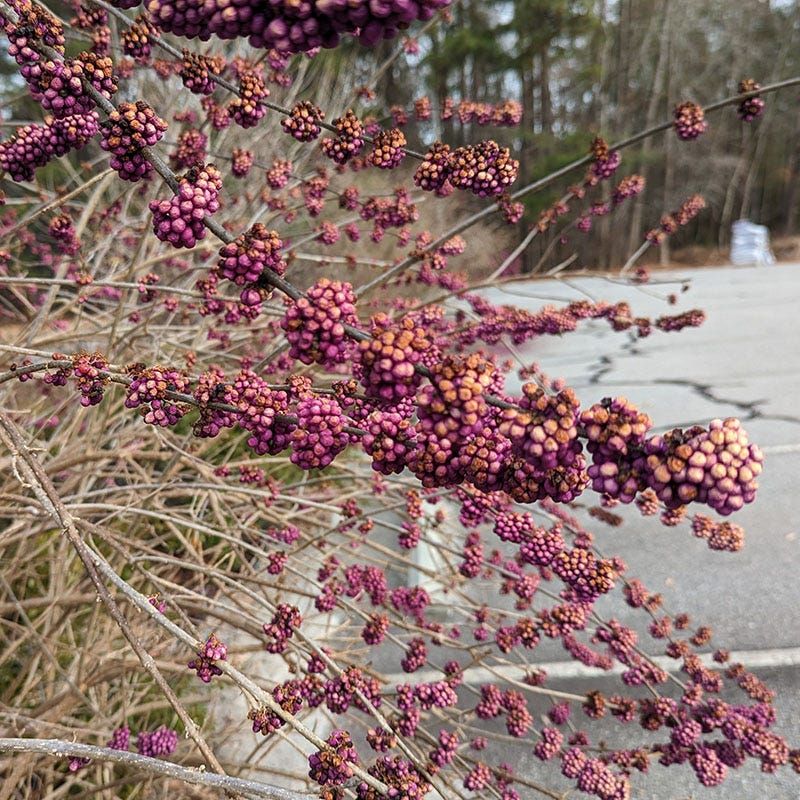
Bare stems and cooler temperatures in winter actually present a useful opportunity for gardeners who want to get more out of their American Beautyberry in the coming season.
Texas A&M guidance notes that cutting established plants back during winter can stimulate vigorous new shoots, and since flowers and berries develop on current-season growth, that fresh wood becomes the source of the next berry display.
Understanding this connection between pruning and fruiting helps gardeners make better decisions about when and how much to cut.
Timing matters with winter pruning. Waiting until the shrub is fully dormant and the risk of hard freezes has not yet passed for your area is a reasonable approach.
Cutting too early in a mild winter could push new growth that gets damaged by a late freeze. Checking current Texas A&M AgriLife Extension guidance for your specific region before pruning gives you the most reliable timing information for local conditions.
Not every beautyberry needs severe annual pruning. Gardeners who prefer a larger, more established form may choose lighter pruning or skip it in some years, depending on the plant’s size, condition, and the look they want in the landscape.
Pruning decisions work best when they reflect the gardener’s specific goals rather than a one-size approach.
Regardless of how much you cut back, removing spent or crossing branches helps maintain airflow and overall plant health through the growing season ahead.
8. Naturalized Plantings Let This Native Shrub Show Its Best Side
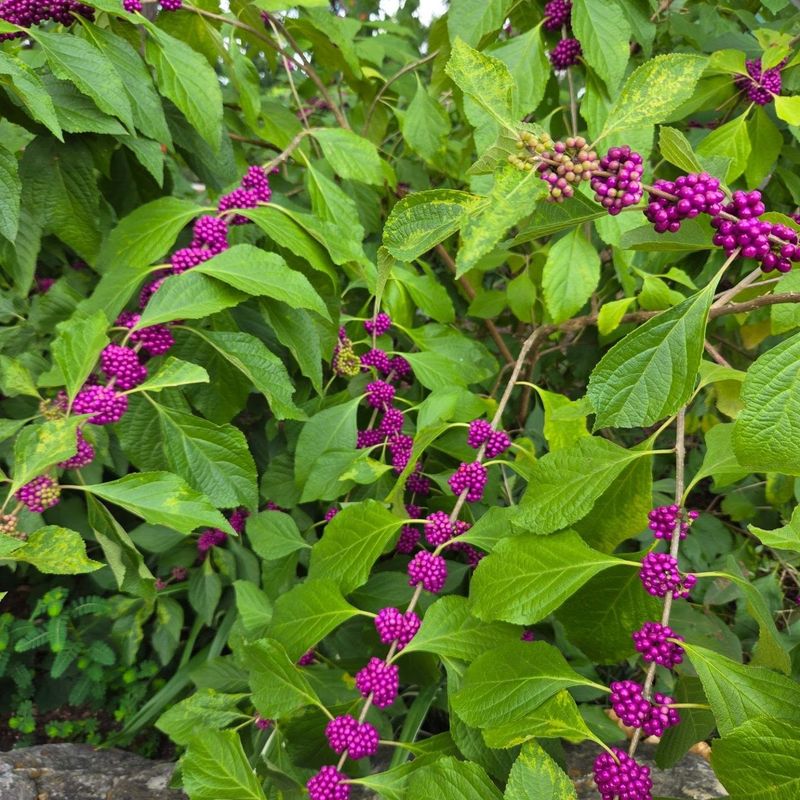
Loose, informal landscapes suit American Beautyberry in a way that tightly structured formal gardens sometimes do not.
The shrub’s naturally arching branches and open growth habit give it a relaxed quality that blends easily with other native Texas plants in a naturalized setting.
When allowed to develop its full form without heavy shaping, it can become a layered, visually interesting part of a planting that changes with the seasons and provides ongoing value for wildlife.
In naturalized plantings, American Beautyberry works particularly well along woodland edges, in native plant borders, and in wildlife-focused yards where the goal is to support local birds and other animals rather than maintain a manicured appearance.
Its seasonal progression from spring foliage to summer flowers to fall berries and then winter bare stems gives it year-round presence, even though the fall berry display is the most visually dramatic moment.
Gardeners in eastern Texas, where this species is native, may find it integrates most naturally into plantings that reflect the region’s plant communities.
For gardeners who want a polished, clipped look, American Beautyberry may require more management than its natural form invites. Accepting its arching habit and seasonal changes tends to produce the most satisfying results.
Pairing it with regionally appropriate native companions, chosen based on verified suitability for your specific area, can create a planting that supports wildlife, requires relatively modest upkeep, and looks genuinely at home in the Texas landscape through every season.