This Underrated California Shrub Deserves A Spot In Every Low-Water Yard
California coffeeberry might be the shrub hiding in plain sight.
It sits at the nursery looking calm, green, and almost too ordinary. No giant flowers. No dramatic tag. No obvious “pick me” behavior.
Then you learn what it does.
This native shrub stays handsome through dry months, feeds birds, handles tough soil, and fits the low-water life without turning the garden into a dusty compromise.
That is where the surprise begins.
Many California yards need plants that look polished and still understand summer. Coffeeberry already speaks that language. It grew up with dry slopes, coastal scrub, foothills, heat, and long stretches between rain.
So why does it get passed over while fussier shrubs get the cart space? Maybe it is too quiet at first glance.
Look closer, and the whole plant starts making sense. The glossy leaves, the wildlife value, the drought patience, the easy structure.
Your yard may not need another needy showpiece. It may need the shrub that does the work without making a scene.
Coffeeberry Is The Quiet Workhorse
A bare fence line or a dry, neglected border can feel like a design problem with no good answer. Coffeeberry is that answer, and most California gardeners have never even tried it.
Frangula californica grows naturally across much of the state, from coastal bluffs to foothill woodlands, and it has quietly been stabilizing slopes, sheltering wildlife, and filling in dry spaces for thousands of years.
What makes coffeeberry underrated is simple. It does not have showy blooms that grab attention in spring.
It does not show up on trendy plant lists very often. But what it does offer is steady, reliable performance in exactly the conditions that challenge most ornamental shrubs.
It handles heat, tolerates poor soil, and keeps its foliage when other plants start looking ragged.
UC ANR and California Native Plant Society resources both highlight coffeeberry as a strong choice for low-water California landscapes.
It comes in several cultivars, including compact forms like Eve Case and taller selections that work well as screens. Plants typically reach four to ten feet tall and wide depending on the variety and site conditions.
For gardeners who want structure, wildlife value, and drought tolerance without constant babysitting, coffeeberry delivers all three.
It is the kind of shrub that makes a yard look thoughtfully designed without requiring a complicated maintenance routine.
Evergreen Leaves Make The Yard Look Finished
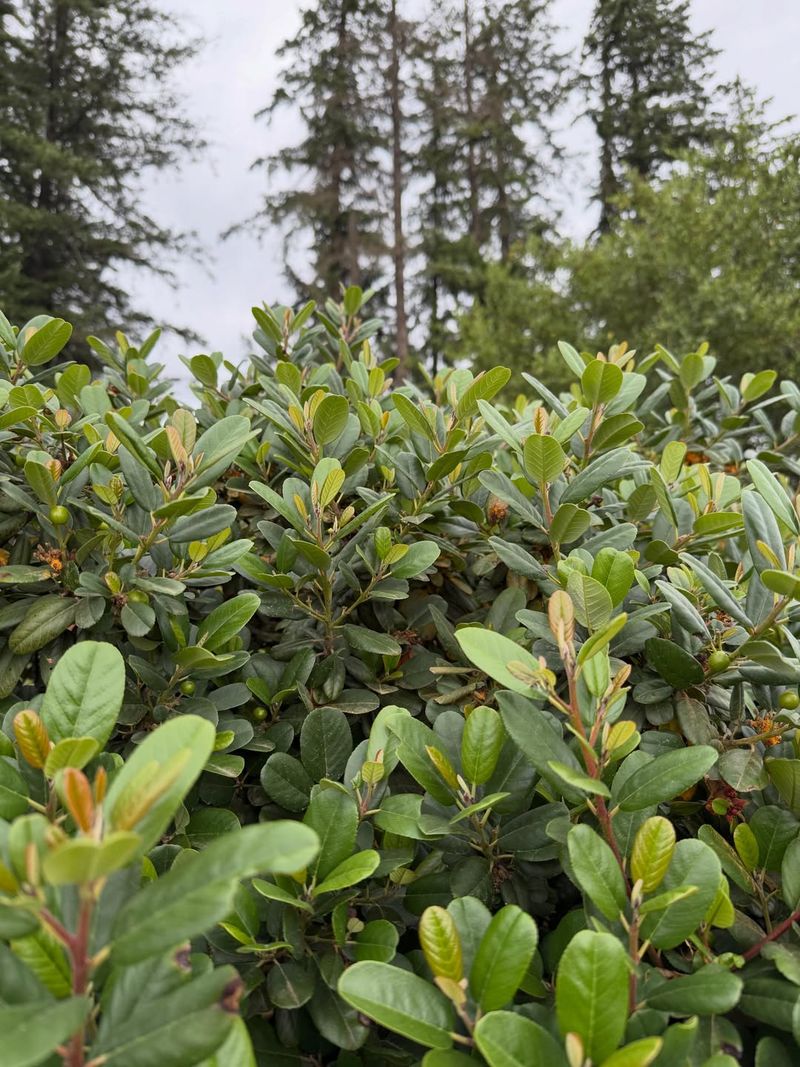
A yard that loses all its color and structure in winter can feel unfinished, like a room with no furniture.
Coffeeberry solves that problem without any extra effort. Its leaves stay on the plant all year, giving the garden a backbone of green even when deciduous shrubs and perennials have gone dormant for the season.
The foliage itself is worth a closer look.
Leaves are glossy on top with a lighter, slightly paler underside, and they catch light in a way that feels lively even on overcast days.
The texture is clean and refined, which means coffeeberry looks right at home next to ornamental grasses, other California natives, or even more formal landscape plantings.
Your California Garden Changes Every Week. Your Plan Should Too.
Gardening in California changes quickly throughout the season. Every Friday you’ll receive a simple weekly plan showing exactly what to plant, prune, fertilize, harvest, and protect so you never miss the right timing.
When you reduce irrigation, many plants go summer-dormant or look stressed. Coffeeberry stays consistent.
It holds its shape and its color through the dry season, which is exactly when California yards need it most.
That year-round presence adds visual weight and polish to borders, slopes, and foundation plantings without requiring extra water to maintain its good looks.
For anyone trying to create a yard that looks intentional in every season, coffeeberry brings that sense of calm, finished structure that makes a space feel complete.
Birds Notice The Dark Berries Fast
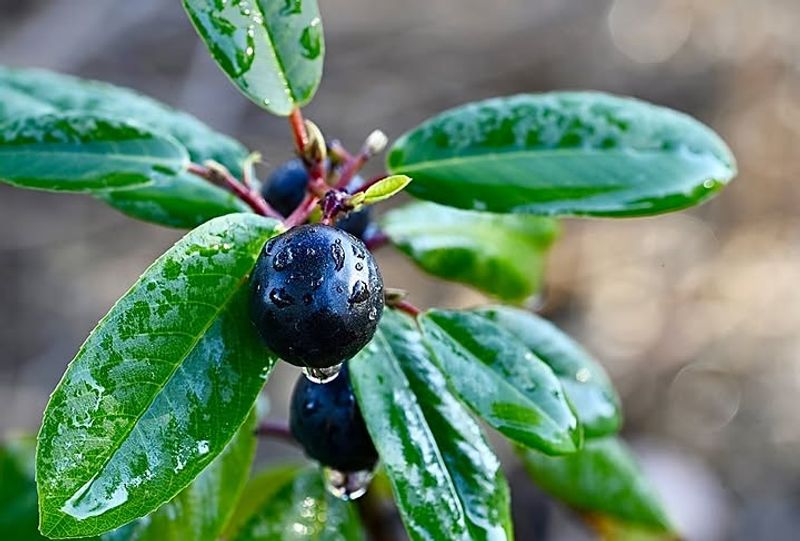
Put a coffeeberry in the ground and give it a season or two to settle in. Then watch what happens when the berries ripen.
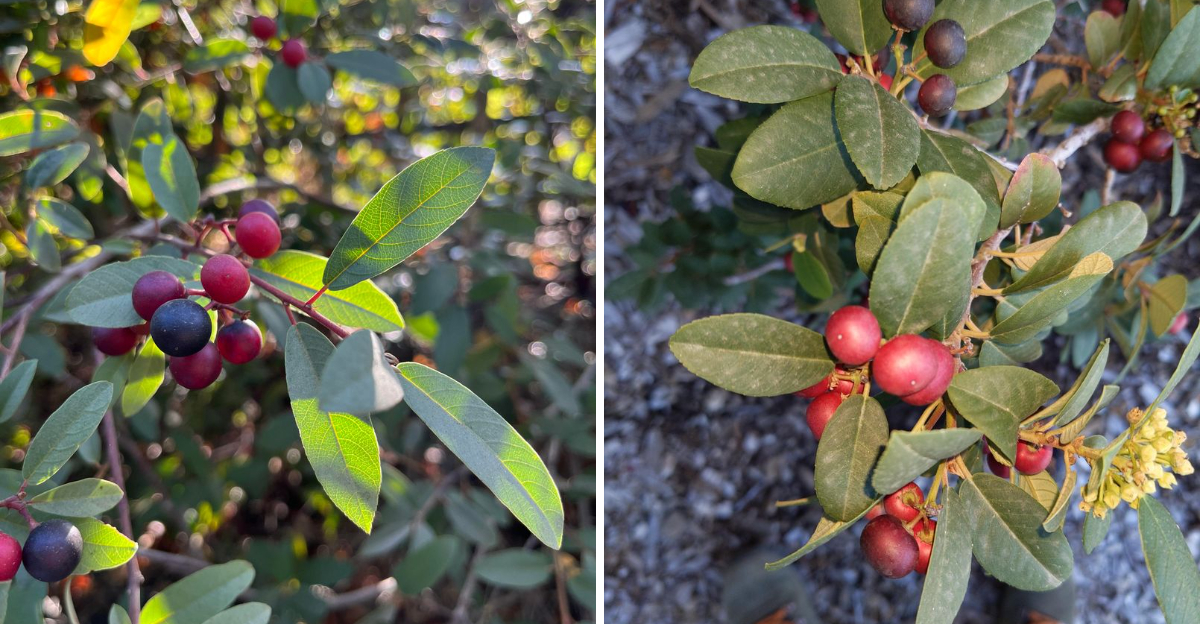
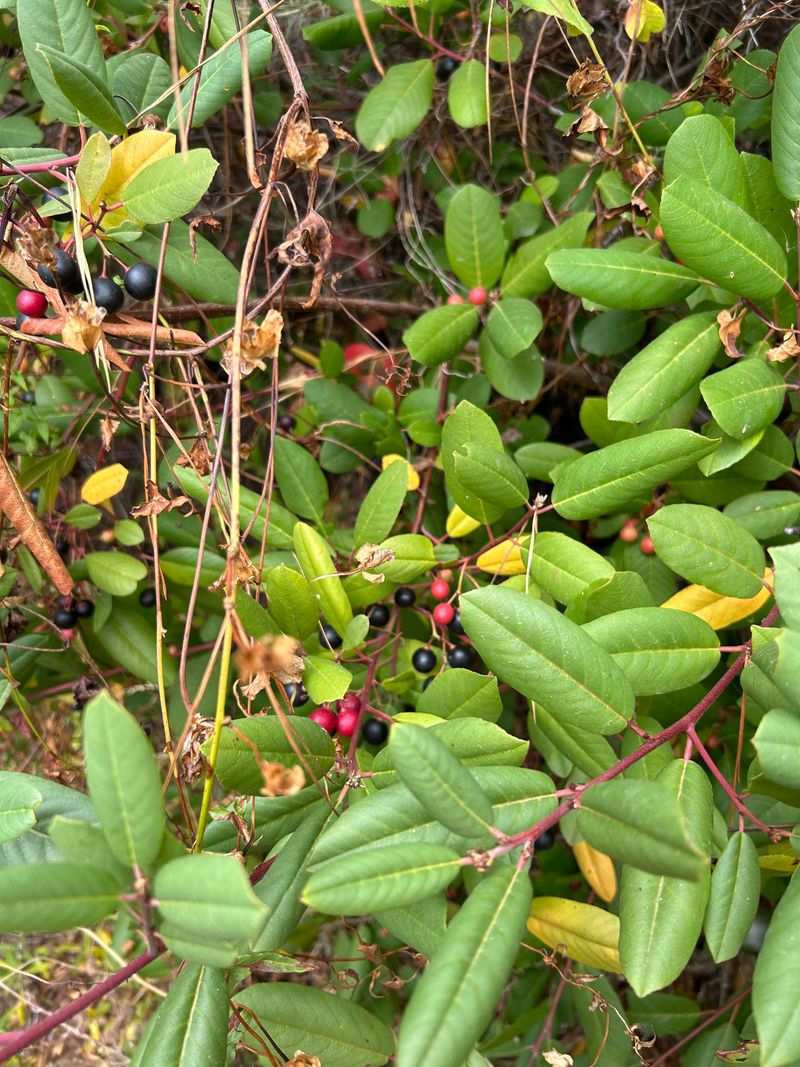
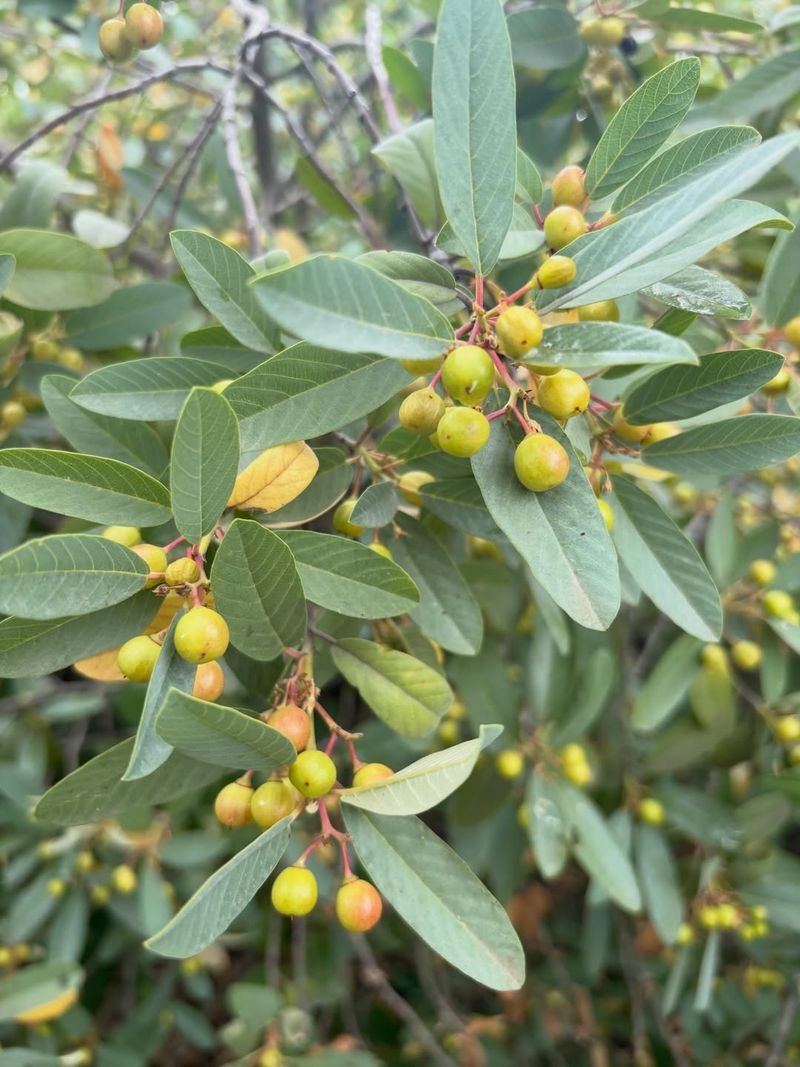
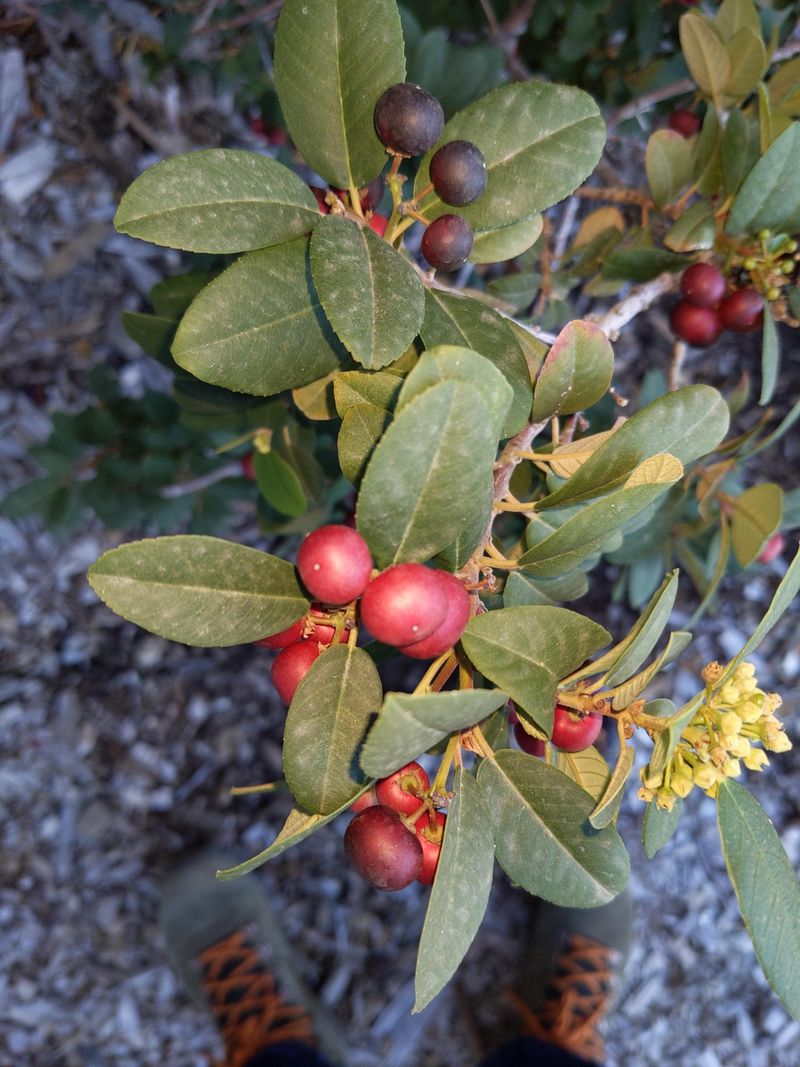
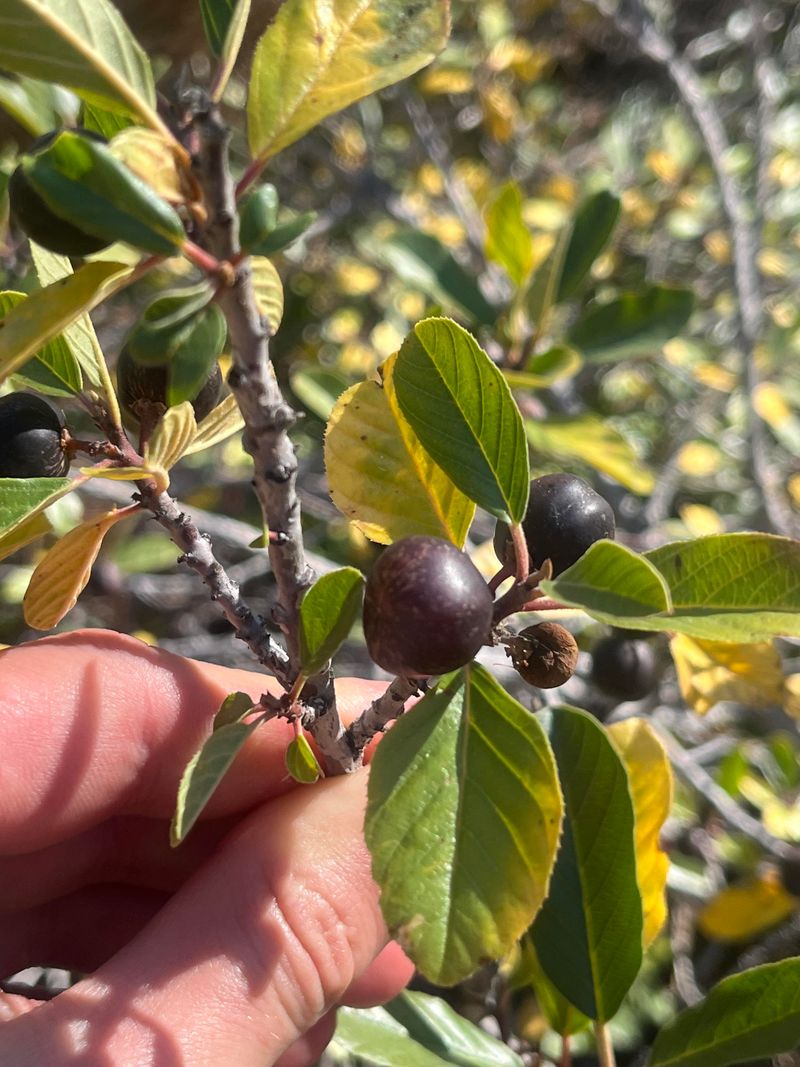
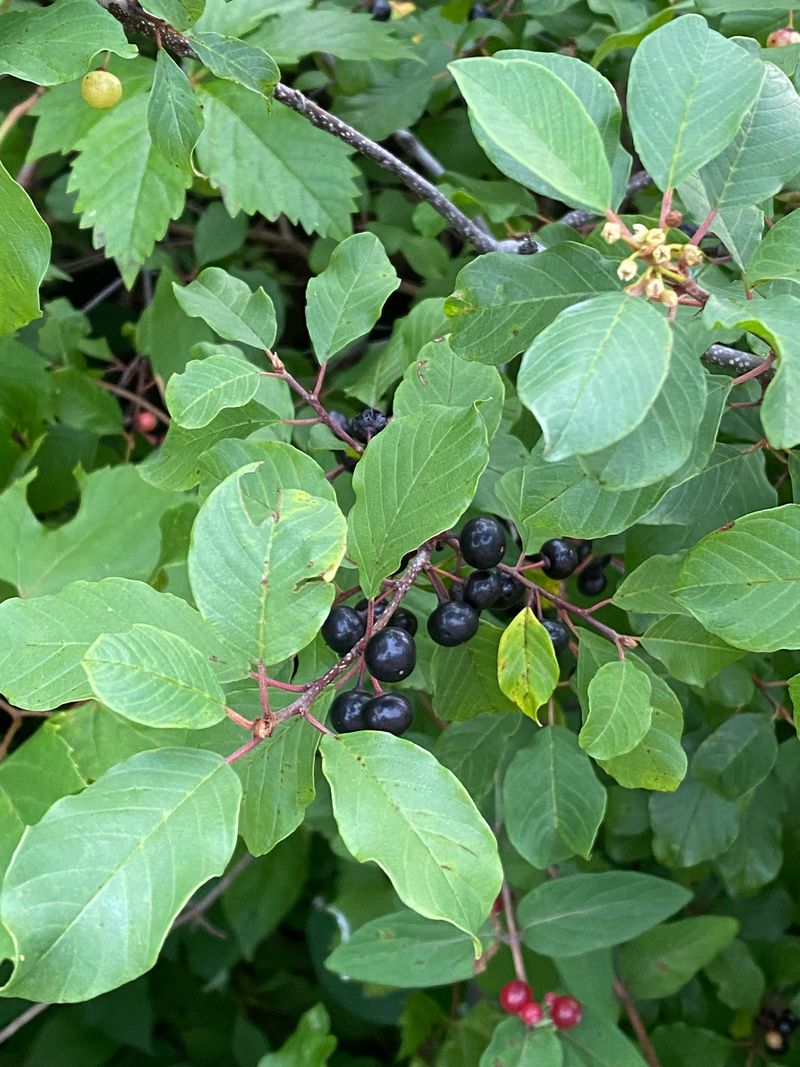
Birds find them fast. The fruit starts out green, turns red, and eventually ripens to a deep purple-black that looks almost like a coffee bean, which is exactly where the common name comes from.
The California Native Plant Society notes that coffeeberry berries are an important food source for many native bird species.
American robins, cedar waxwings, western bluebirds, and hermit thrushes are among the birds known to eat the fruit. Mockingbirds and towhees are often spotted in and around the shrub as well, using the dense branching for cover and nesting.
What makes the berry display especially useful is the timing.
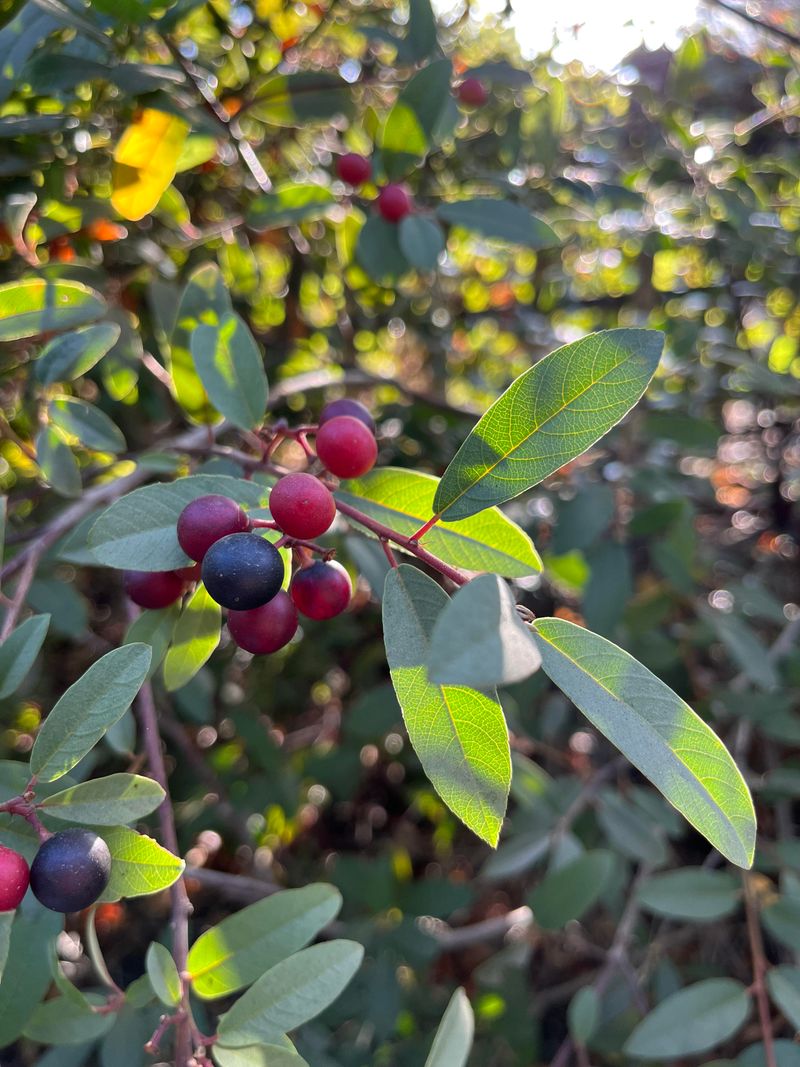
Coffeeberry does not ripen all at once. Different berries on the same plant move through color stages at different times, which means the plant offers food to birds over a longer window than many fruiting shrubs.
That extended availability is genuinely helpful for wildlife.
It also means the shrub stays visually interesting through summer and into fall, with clusters of green, red, and dark berries showing at the same time. That layered color is a quiet kind of beauty that rewards gardeners who pay close attention.
Shade And Sun Both Give It Options
Not every corner of a California yard gets the same light.
A sunny south-facing slope is a completely different environment than a shaded north wall or a spot under an existing oak tree. Most shrubs work well in one situation or the other. Coffeeberry handles both, which makes it unusually flexible for garden planning.
In full sun, coffeeberry tends to grow more compactly and produce heavier berry crops.
In part shade, it stretches a little more and takes on a slightly looser, more open form. Both versions look good and function well.
UC ANR resources confirm that Frangula californica grows naturally in a range of light conditions across California, from open chaparral to shaded woodland edges.
A shaded dry spot under established trees is one of the hardest places to plant successfully.
Many California gardeners leave those spots bare because nothing seems to grow well there without a lot of extra water. Coffeeberry is one of the few low-water shrubs that genuinely thrives in that situation.
It also works beautifully along sunny fence lines, at the back of a mixed border, or as a transition plant between a more formal garden area and a wilder native section.
Wherever you need a reliable, good-looking shrub that does not fuss about the light, coffeeberry steps up without complaint.
Low Water Needs Start After Establishment
Here is something important that every new coffeeberry grower needs to understand from the start.
This shrub is genuinely low-water once it is established, but it is not low-water on day one. That distinction matters a lot, and skipping the establishment phase is one of the most common reasons native plants struggle in new gardens.
When you first plant a coffeeberry, its root system is still small and contained to the original rootball.
During the first summer, plan to water deeply every one to two weeks, depending on heat and soil type.
In the second year, you can start backing off. By year two or three, a well-mulched coffeeberry in the right spot should need little to no supplemental irrigation through a normal California summer.
UC ANR and local Master Gardener programs consistently emphasize that the establishment period is the investment phase for native plants.
Water well during that window and the plant builds a deep, resilient root system that supports it for decades. Rush past it or underwater during those first seasons and the plant never reaches its full potential.
Timing also matters.
Planting in fall gives coffeeberry a full cool, wet season to settle in before facing its first dry summer.
That head start makes a real difference. Think of establishment watering as a short-term commitment that pays off with years of low-maintenance beauty.
Pruning Keeps It Polished Not Fussy
Some shrubs seem to demand constant attention. They get leggy, lose their shape, or send out random long shoots that make the whole plant look unkempt within weeks of a pruning.
Coffeeberry is not that kind of shrub.
A little light shaping once or twice a year is genuinely all it needs to stay looking good.
If you want a loose, natural form, you can leave coffeeberry almost entirely alone and it will develop a graceful, rounded shape on its own.
If you want something more structured, like a clipped hedge or a tidy screen along a fence, it responds well to shaping.
The key is to prune lightly and avoid cutting back into old wood heavily.
Removing crossing branches, tipping back long shoots, and clearing out any dead material keeps the plant healthy and attractive without stressing it.
Late winter or early spring, just before new growth flushes, is a good time for shaping.
California Native Plant Society resources suggest treating native shrubs like coffeeberry with a light hand rather than aggressive cutting. The goal is to work with the plant’s natural growth habit rather than forcing it into an unnatural shape.
That approach keeps pruning sessions short, keeps the plant healthy, and keeps the yard looking effortlessly well-maintained all year long.
Mulch Beats Constant Summer Irrigation
Summer in California can feel relentless, and the pressure to keep the garden alive by running the irrigation system constantly is real.
There is a smarter approach that costs less, wastes less water, and actually does a better job of supporting plants like coffeeberry through the dry season. That approach is mulch, and it is one of the best tools in a low-water gardener’s toolkit.
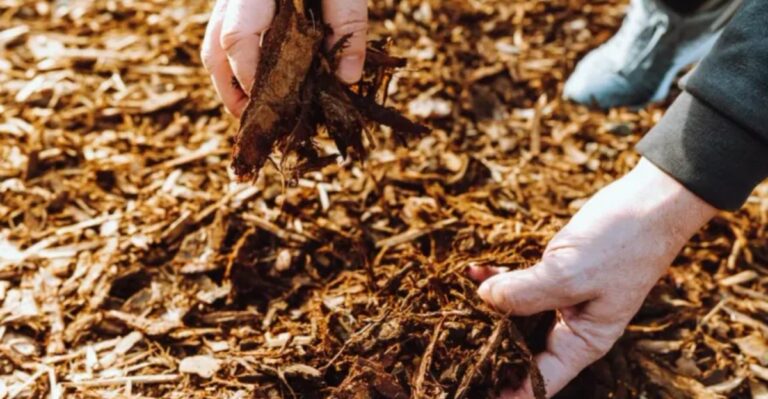
A three to four inch layer of wood chip mulch spread around the base of a coffeeberry shrub does several things at once.
It slows evaporation from the soil surface, which keeps moisture available to roots longer after each watering. It moderates soil temperature, keeping roots cooler on hot days.
Over time, it breaks down and improves soil structure, which helps roots grow deeper and access water from a larger area.
Keep mulch pulled back a few inches from the base of the shrub to allow good air circulation around the stem.
Piling mulch directly against the trunk can create conditions that encourage rot. Other than that, the process is simple.
Spread the mulch, refresh it every year or two as it breaks down, and let it do the heavy lifting.
You will likely find that a well-mulched coffeeberry needs far less water than you expected, even during the hottest stretches of a California summer.
Screens And Borders Get An Easy Upgrade
A bare fence with nothing growing in front of it is one of the most common missed opportunities in California backyards.
A privacy screen that relies on thirsty non-native plants is another. Coffeeberry solves both problems with a single planting decision, and it does the job with far less water and maintenance than most homeowners expect.
Planted in a row, coffeeberry fills in to create a dense, evergreen screen that provides real privacy.
The taller selections can reach six to ten feet, which is tall enough to block sightlines and reduce noise from neighboring properties.
The dense branching also creates excellent habitat for birds, which is a bonus that most fence-line hedges cannot offer.
Design-wise, coffeeberry pairs beautifully with other California natives.
Try it alongside toyon, native sages, or Cleveland sage for a layered, wildlife-friendly border that needs minimal irrigation once established.
It also works well at the back of a rain garden or bioswale where soil stays slightly moist after winter rains.
Reputable native plant nurseries across California regularly recommend coffeeberry for exactly these kinds of functional planting situations.
It earns its place in the garden by being useful, beautiful, and genuinely adapted to the California climate. That is a combination worth celebrating, and a shrub worth finally stopping for at the nursery.