This Underused Native Shrub Deserves A Spot In More Pennsylvania Yards
Walk through most Pennsylvania garden centers, and you’ll see the same shrubs over and over. Boxwoods. Burning bushes. Rows of hydrangeas and arborvitae. One of the state’s most interesting natives rarely makes the lineup.
This shrub grows naturally along Pennsylvania’s ponds, streams, and marshy edges, which makes it a great fit for rain gardens, low spots, and areas that stay wet after storms.
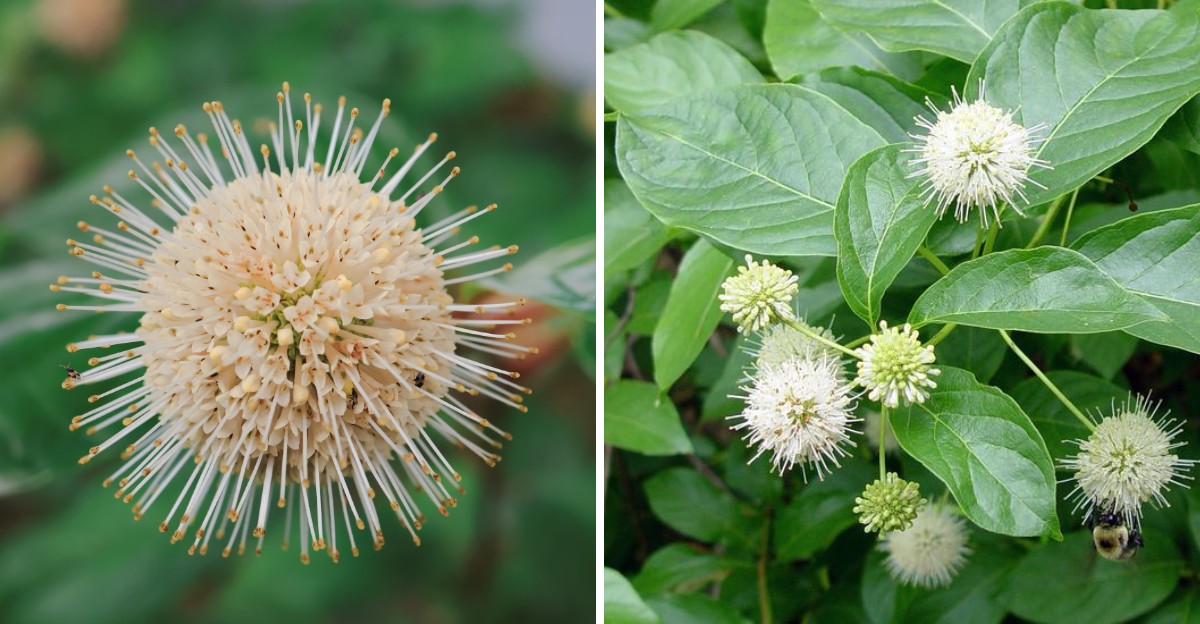
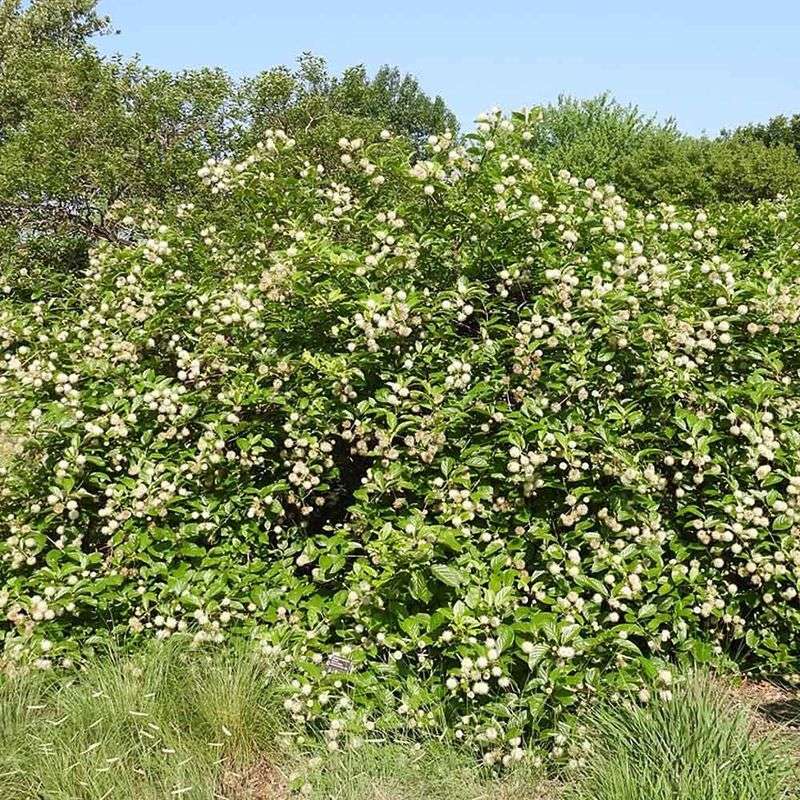
In midsummer, it’s covered in perfectly round white blooms with tiny spikes poking out in every direction, like little pincushions.
Butterflies swarm them, especially big, showy swallowtails. Bees and hummingbirds join in, too. Later, ducks and other birds feast on the seeds.
It’s beautiful, unusual, and incredibly useful for tricky wet areas. It just needs more people to give it a chance.
A Native Shrub Worth Knowing
Walk along almost any quiet creek in Pennsylvania, and you might pass a buttonbush without noticing. It blends right in with the cattails and willows. Once you learn to spot it, though, you will see it everywhere.
Buttonbush has a science name that sounds like a spell, Cephalanthus occidentalis. Most folks just call it buttonbush, and some people call it button willow or honey balls.
It is a native plant, which means it has grown here for thousands of years. Local bugs, birds, and soil all know how to work with it.
In the wild, you find it along stream banks, pond edges, and swampy wetlands. It likes to keep its feet wet. That is a big clue about where it will thrive in your yard too.
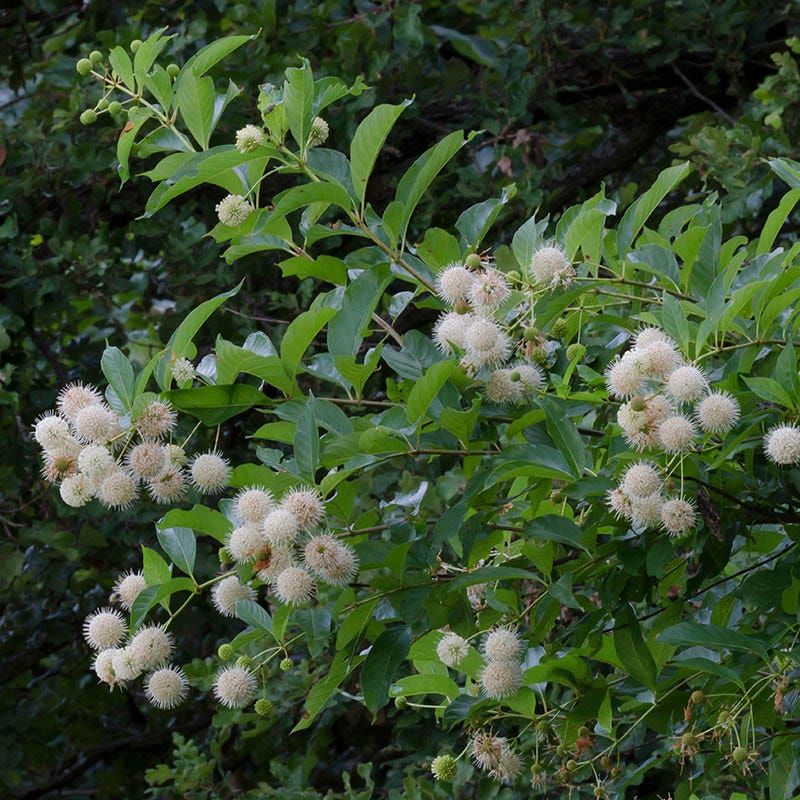
Size matters when picking a shrub. A full-size buttonbush usually grows about 5 to 12 feet tall and nearly as wide.
That makes it great for a large backyard, a property border, or the edge of a farm pond. It forms a loose, rounded shape with many stems.
Got a smaller yard? No problem. Compact varieties like Sugar Shack stay closer to 3 to 4 feet tall. Sugar Shack also has bright red seed heads and shiny leaves, so it looks great near a patio or front walk.
Here is a fun fact. Native Americans used parts of buttonbush in traditional remedies long before settlers arrived. Today, though, it is valued mainly for beauty and wildlife.
When shopping, ask your local nursery or native plant sale for it by name. Many Pennsylvania conservation districts hold spring sales with low prices. Buying local plants often means they are already used to our weather.
Flowers Unlike Anything Else In The Garden
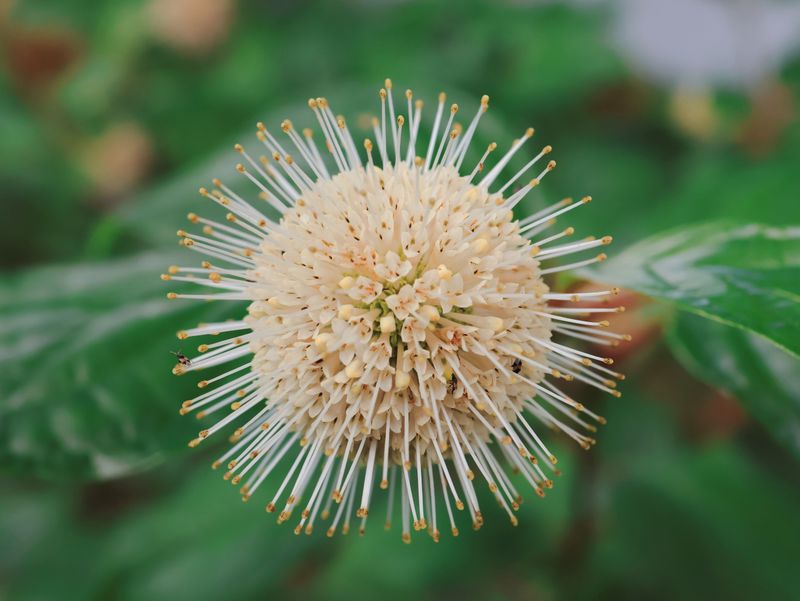
Ever seen a flower that looks like it came from outer space? Buttonbush blooms are just that strange and just that lovely. Kids often say they look like little white koosh balls.
The show starts in midsummer, usually in July in Pennsylvania. By then, many spring shrubs like lilac and forsythia are done blooming. Buttonbush steps in right when your garden needs a fresh burst of color.
Each bloom is a perfect sphere about the size of a golf ball. Look closer, and you will see it is not one flower at all. It is made of hundreds of tiny tube-shaped flowers packed tightly together.
Your Pennsylvania Garden Changes Every Week. Your Plan Should Too.
Gardening in Pennsylvania changes quickly throughout the season. Every Friday you’ll receive a simple weekly plan showing exactly what to plant, prune, fertilize, harvest, and protect so you never miss the right timing.
Thin threads stick out from each tiny flower. These are the parts that catch pollen. Together, they give the whole ball a fuzzy pincushion look, like someone stuck it full of pins.
The flowers carry a light, sweet scent. It is not strong enough to bother anyone. On a warm evening, though, you may catch a soft whiff as you walk past.
Behind the blooms, the leaves are dark green and glossy. They almost shine in the sun. That deep color makes the creamy white balls pop, so the shrub looks neat and bright at the same time.
Want a tip for enjoying them more? Plant buttonbush where you can see it from a window or porch. You will notice new blooms opening for several weeks.
The flowers also work well in a vase. Cut a few stems early in the morning and put them in cool water right away. They make a fun, unusual addition to summer bouquets, and friends will surely ask what they are.
A Magnet For Pollinators
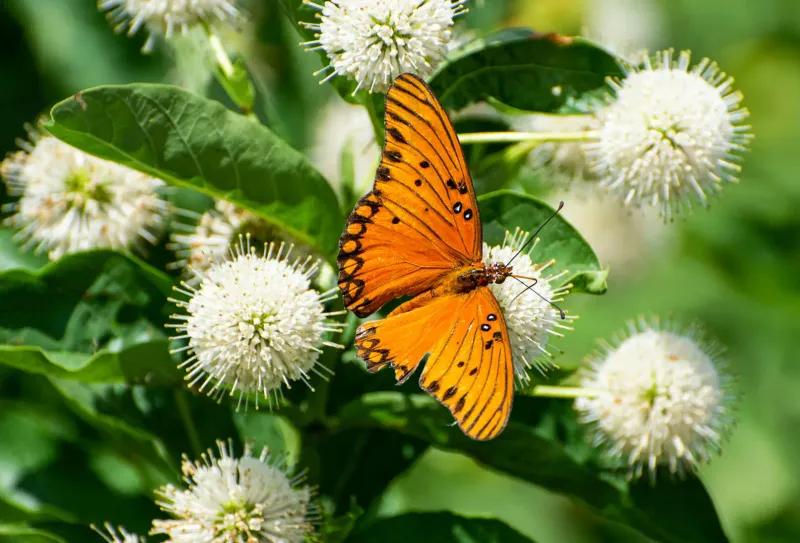
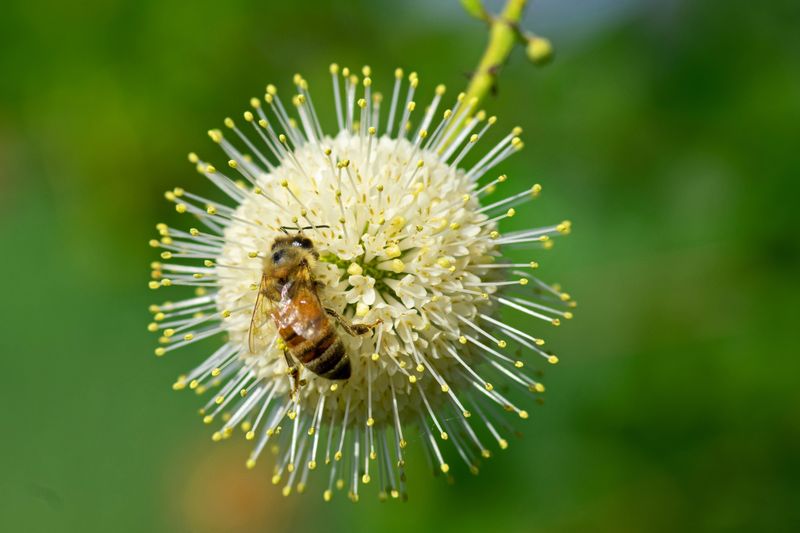
Stand next to a blooming buttonbush on a sunny afternoon, and you will hear it before you see it. The whole shrub hums. Bees, butterflies, and other visitors crowd every flower ball.
So why do they love it so much? The tiny flowers are packed with sweet nectar. For a hungry insect, each ball is like a buffet with hundreds of little cups to sip from.
Bumblebees and honeybees show up first. Native bees that most people never notice come too. These small bees are great at pollinating fruits and veggies, so they help your whole garden grow better.
Butterflies are the stars of the show. Eastern tiger swallowtails, the big yellow and black ones, adore buttonbush. You may also spot monarchs, fritillaries, and skippers resting on the blooms.
At dusk, the night shift arrives. Moths, including the fuzzy sphinx moths, come to feed. Some sphinx moths hover like tiny birds, which is fun to watch with a flashlight.
Hummingbirds stop by as well. The ruby-throated hummingbird, the only one that nests in Pennsylvania, will zip in for a quick drink. Keep an eye out in July and August.
Pollinator numbers have dropped in many places. Planting even one buttonbush gives them a reliable food source in the middle of summer. That is when many other plants have slowed down.
To help even more, skip bug sprays near the shrub. Chemicals can harm the very visitors you want to attract.
Add a shallow dish of water with pebbles nearby so bees can drink safely. Then grab a chair, sit back, and enjoy the busy little crowd.
Food For Birds And Wildlife
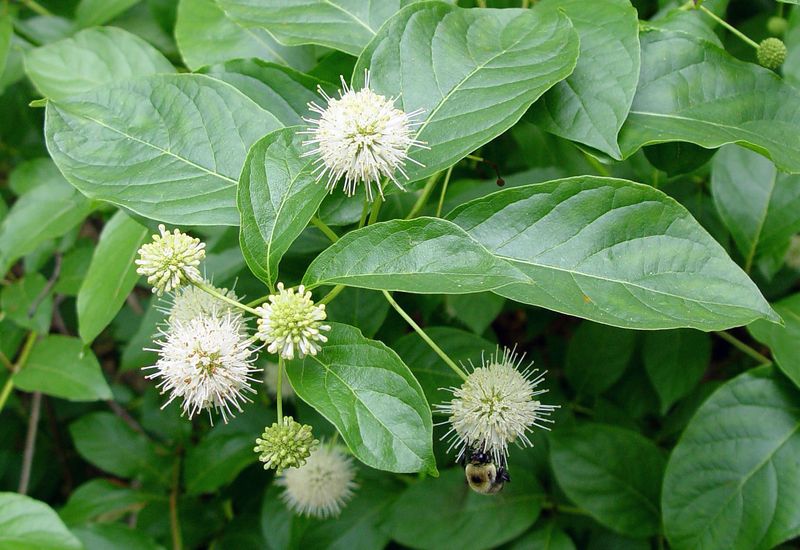
Long after summer ends, buttonbush keeps on giving. Most plants close up shop by fall. This one simply changes jobs, from flower shop to bird feeder.
Once the blooms fade, each white ball slowly turns into a round seed head. The color shifts to a warm reddish brown. These little balls hang on the branches through fall and often well into winter.
They add interest to a bare yard, too. When snow dusts the branches, the brown balls look like tiny ornaments. It is a nice view on a gray January day.
The seeds are a favorite meal for ducks. Mallards, wood ducks, and teal all eat them. Other water birds, like rails and herons, also use buttonbush thickets near ponds and marshes.
Songbirds benefit as well. The dense, twiggy branches make a safe place to hide from hawks and cats. Some birds, like red-winged blackbirds and yellow warblers, even build nests in it.
Small animals find shelter there too. Frogs, turtles, and rabbits use the shady cover near the base. In wetlands, the roots help hold soil in place, which keeps water cleaner for fish.
Did you know? Wood ducks often nest near buttonbush swamps because the shrubs give their ducklings cover right after they hatch.
Here is a simple tip for helping wildlife. Do not cut off the seed heads in fall. Leave them on so birds can find food when other sources run low.
Also, avoid clearing every leaf from under the shrub. A layer of leaves gives insects a place to spend winter. Those insects become food for birds in spring.
Thrives Where Other Shrubs Fail
Every yard seems to have that one spot. Water pools there after a storm, and the grass turns to mush. You have probably tried planting things there, only to watch them turn yellow and give up.
Good news. Buttonbush actually loves that kind of place. It grows naturally in swamps, so wet feet do not scare it one bit.
It can even handle standing water for weeks at a time. Most garden shrubs, like boxwood or azalea, would rot in those conditions. Buttonbush just keeps growing.
That makes it a top choice for rain gardens. A rain garden is a shallow dip in the ground that catches runoff from roofs and driveways. It lets water soak in slowly instead of rushing into storm drains.
Pennsylvania gets plenty of heavy summer storms. Rain gardens with plants like buttonbush help reduce flooding and filter out dirt and chemicals. That keeps local streams and the Chesapeake Bay cleaner.
Pond edges are another great spot. Plant it right along the shoreline, where roots can reach the water. It also works in ditches, low corners, and near downspouts.
As for light, buttonbush does best in full sun. It still grows well in part shade, though it may bloom a little less.
No soggy spot? You can still grow it. It adapts to regular garden soil, as long as you water it during dry spells. A thick layer of mulch helps hold moisture in.
When planting, dig a hole twice as wide as the root ball. Set the plant at the same depth it grew in the pot. Water deeply, and you are off to a great start.
Easy Care For Busy Gardeners
Between school, work, and soccer practice, who has time for fussy plants? Buttonbush gets that. It is about as low-stress as a shrub can be.
The first year is the only time it needs real attention. Water it once or twice a week if rain is scarce. After that, its roots go deep, and it mostly takes care of itself.
Fertilizer is rarely needed. Native plants are used to our soil. Too much plant food can actually make them floppy, so go easy.
Pests are not much of a worry either. Deer usually leave it alone, though hungry ones may nibble now and then. Serious insect or disease problems are uncommon.
Now, a heads up that saves a lot of worry. Buttonbush wakes up late in spring. While your neighbors’ shrubs are bright green in April, yours may still look like a bundle of sticks.
Do not panic or pull it out. It often waits until May to leaf out. Be patient, and it will catch up fast.
Pruning is simple. In late winter, around February or March, trim off any broken or crossing branches. You can also cut a few older stems near the ground to keep the shrub full and neat.
Overgrown plants bounce back well. If yours gets too big, cut it back hard to about a foot tall. It will regrow quickly that season.
One last tip helps a lot. Use clean, sharp pruners so cuts heal smoothly. Then step back and enjoy a shrub that gives so much while asking for so little.