What To Do If A Spotted Lanternfly Appears In Your Pennsylvania Yard
Spotted lanternfly is already well established across much of Pennsylvania, but that doesn’t mean every sighting should be treated as routine.
Where you find them, how many you’re seeing, and what plants they’re on all carry information that is still useful to researchers and pest management officials working to understand and slow the spread of this destructive insect.
A spotted lanternfly in your Pennsylvania yard is a call to action, not a reason to shrug.
The damage this insect causes is well documented, and the yards that respond thoughtfully to infestations rather than simply waiting for the problem to sort itself out tend to come through each season with significantly less damage.
Knowing exactly what to do when you find one, and what not to do, makes a real practical difference.
Here’s exactly what to do if a spotted lanternfly appears in your Pennsylvania yard, what to look for beyond the adult insects, and the steps that actually reduce their impact on your landscape.
1. Confirm That It Is A Spotted Lanternfly
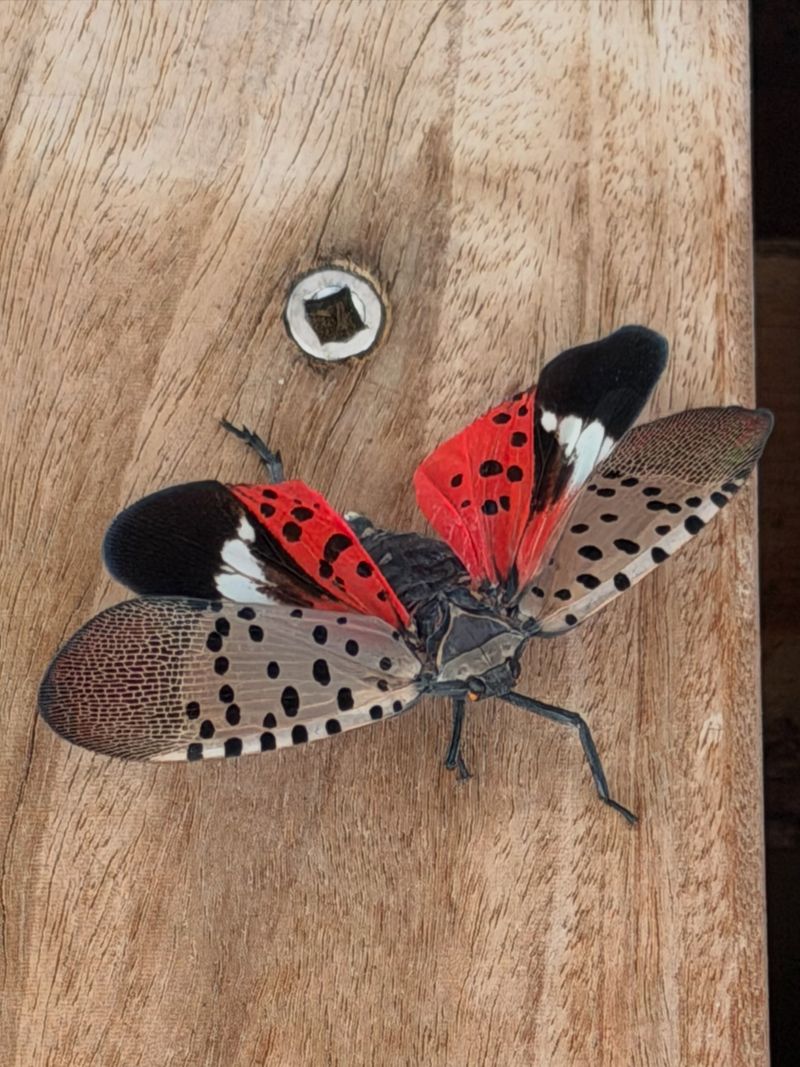
Before you do anything else, take a moment to make sure the bug you found is really a spotted lanternfly. Many harmless insects get blamed for damage they never caused, so a quick check saves you worry.
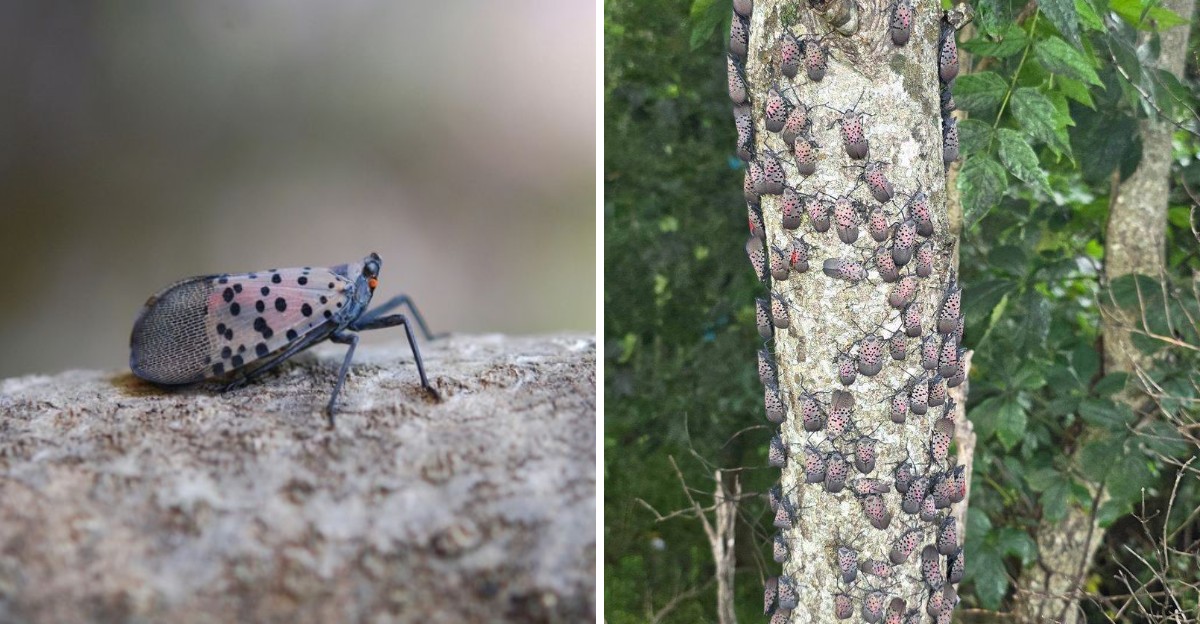
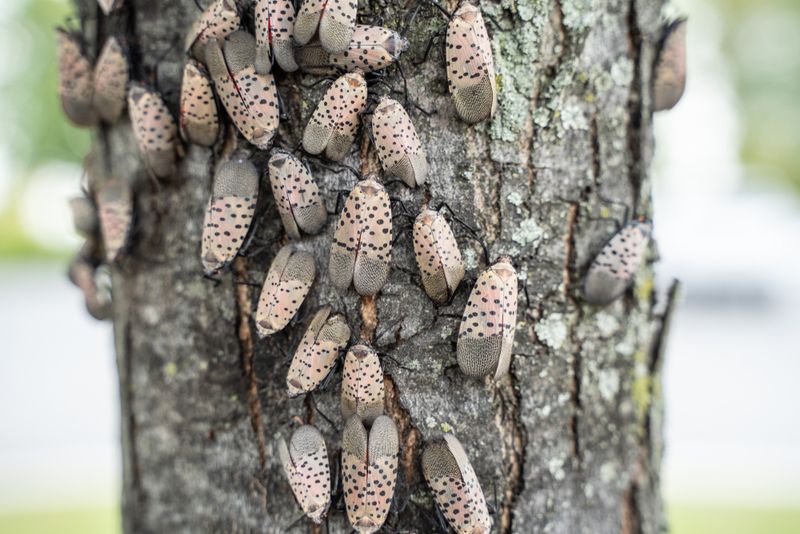
Adults have gray front wings covered in black spots, almost like tiny freckles. When they open up, you will see a flash of bright red on the back wings.
That splash of color is one of the easiest ways to tell them apart from moths or other flying bugs.
Young lanternflies look completely different. In their early stage they are black with white dots, and later they turn red with white and black markings.
Because they change so much as they grow, people often mistake the stages for separate species.
Grab your phone and snap a clear photo if you are unsure. You can compare it to pictures on the Pennsylvania Department of Agriculture website, which has helpful side-by-side images.
There are also free bug identification apps that give quick answers.
Fun fact: this insect first showed up in Berks County back in 2014 and has been spreading ever since. That history is why officials take reports so seriously.
Once you confirm it truly is a spotted lanternfly, you can act with confidence instead of guessing. Reporting a real sighting also helps experts track where the bug is moving.
Getting the identification right is the foundation for every other step you take, so it is worth those extra few minutes of careful looking before you move on.
2. Inspect Nearby Trees And Shrubs Carefully
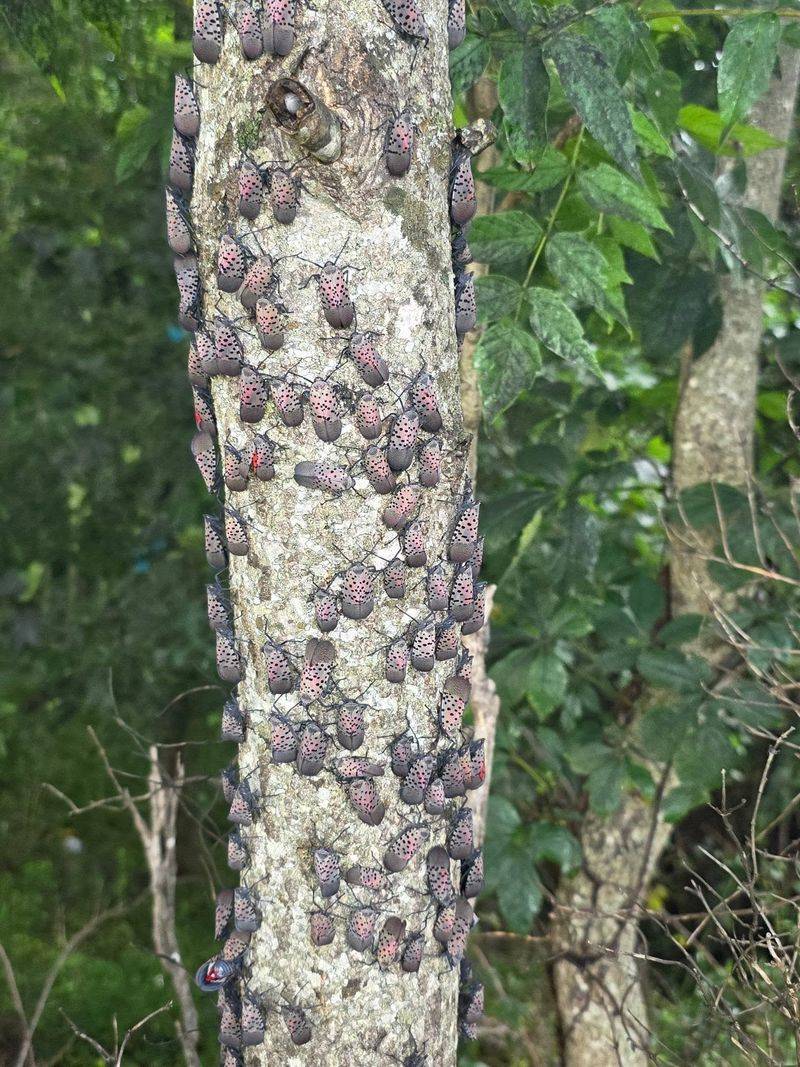
Finding one lanternfly usually means more are hiding close by. These insects love to gather in groups, so a single sighting is your cue to start looking around the rest of your yard.
Start with the trees and bushes nearest to where you spotted the bug. Walk slowly and check the trunks, branches, and the undersides of leaves.
Lanternflies often cluster on bark, blending in until you look carefully.
Your Pennsylvania Garden Changes Every Week. Your Plan Should Too.
Gardening in Pennsylvania changes quickly throughout the season. Every Friday you’ll receive a simple weekly plan showing exactly what to plant, prune, fertilize, harvest, and protect so you never miss the right timing.
Keep an eye out for a sticky, shiny coating on leaves or the ground below. This substance is called honeydew, and it drips from the bugs as they feed.
A black, sooty mold sometimes grows on top of it, which is another clue they have been feeding there.
Bring a small flashlight if the light is low. Shining it along the bark can reveal insects you might otherwise miss, especially in shady spots or early morning.
Pay attention to plants that seem stressed. Wilting leaves, oozing sap, or wasps and ants gathering around a tree can all point to lanternfly activity nearby.
Take notes or photos of what you find. Writing down which trees have the most bugs helps you focus your efforts and track changes over the following weeks.
Checking thoroughly now can stop a small problem from becoming a big one. The sooner you spot a group, the easier it is to manage before they multiply.
A careful inspection turns you into a detective for your own yard, and that early awareness gives your plants a much better chance of staying healthy through the season.
3. Look For Fresh Egg Masses On Outdoor Surfaces
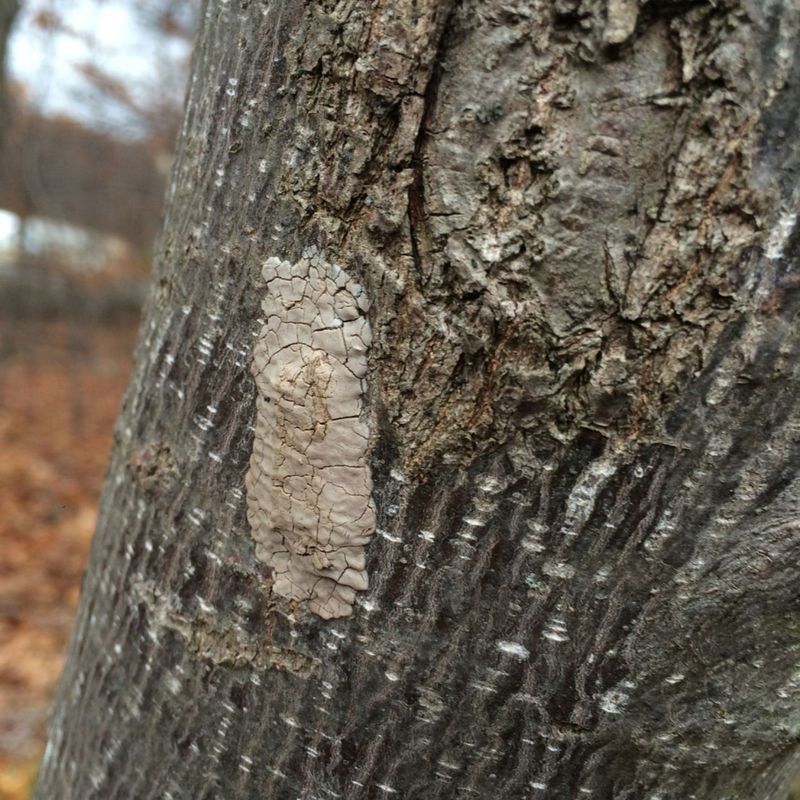
Some of the biggest trouble hides in plain sight, and egg masses are a perfect example. Each one can hold dozens of future lanternflies, so finding them early is a huge win.
Fresh egg masses look like smears of gray or tan mud. They have a smooth, waxy coating that the female places over the eggs to protect them.
Over time this covering cracks and looks scaly or dry.
Search flat surfaces where these bugs like to lay. Tree trunks are common, but they also use fences, rocks, outdoor furniture, grills, and even the sides of sheds.
Do not forget hidden or shaded areas. Undersides of branches, the back of a mailbox post, or the underside of a picnic table can all become hiding spots you might skip on a quick glance.
Females usually lay eggs in fall, and the masses can stay through winter until they hatch in spring. That means you can find and scrape them during the colder months when the bugs themselves are gone.
If you find a mass, you can carefully scrape it into a bag or container with rubbing alcohol. This simple action stops many insects from ever hatching in your yard next year.
Wear gloves and use a plastic card or putty knife for scraping. It only takes a minute per mass, and every one you remove makes a difference.
Spotting these hidden clusters gives you real power over next season’s population. A little searching now saves you a lot of headaches when warmer weather returns.
4. Avoid Carrying The Insect To Other Locations
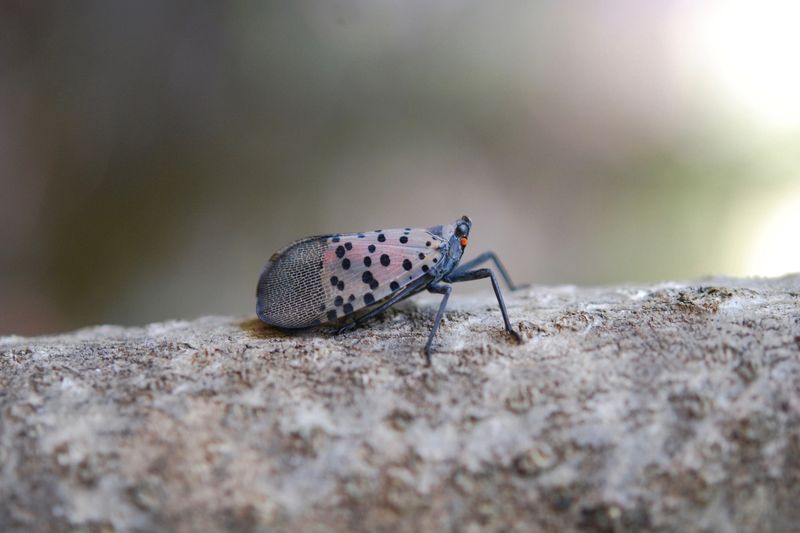
One reason this bug spread so fast is that it loves to hitch a ride. Lanternflies and their eggs travel easily on cars, trucks, and anything left outside, moving to brand new areas without flying at all.
Before you leave home, take a quick look at your vehicle. Check the tires, wheel wells, bumpers, and the roof for any hitchhikers clinging on for the trip.
Firewood is another sneaky carrier. Moving logs from an infested area can bring egg masses along, so it is smart to buy or gather wood close to where you plan to burn it.
Think about the gear you store outside too. Camping equipment, patio cushions, potted plants, and lawn tools can all hide eggs or insects when you move them somewhere else.
Pennsylvania has quarantine zones for a reason. Some counties have rules about checking items before transporting them, and following these guidelines helps protect places that are still bug-free.
If you spot one crawling on your stuff, remove it before you drive off. A few seconds of attention keeps you from accidentally becoming part of the problem.
Teach family members to do the same quick checks. When everyone in the house builds the habit, your whole household helps slow the spread across the state.
Being careful about what you carry might feel like a small thing, but it has a big impact. Every bug that does not make the journey is one less headache for another neighborhood.
Your simple caution helps keep new areas safe and gives everyone a fighting chance.
5. Pay Extra Attention To Tree Of Heaven
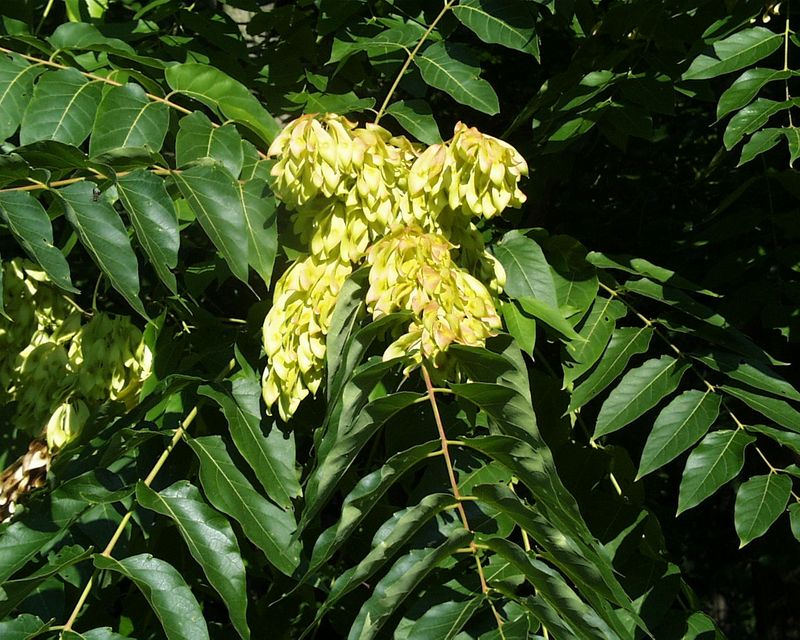
If lanternflies had a favorite restaurant, the Tree of Heaven would be it. This fast-growing plant is their top choice for feeding, so knowing how to spot it puts you a step ahead.
Tree of Heaven has long branches lined with many small leaflets, giving each leaf a feathery look. Crush a leaf and you might notice a strong, unpleasant smell that some people compare to rotten peanut butter.
This tree is invasive itself, meaning it does not belong here and spreads quickly. It often pops up along fences, in alleys, or in weedy corners where nobody planted it on purpose.
Because lanternflies flock to it, any Tree of Heaven on your property acts like a magnet. Removing or managing it can lower how attractive your yard is to the bugs.
If you decide to remove one, do a little research first. These trees can resprout aggressively from the roots, so simply cutting them down sometimes makes things worse without the right follow-up.
Some homeowners keep one tree as a trap plant, treating it so feeding insects are managed there. This trick is best done with guidance from a local expert or extension office.
Take a walk around your yard and note any of these trees. Marking their locations helps you focus your inspections and know where lanternflies are most likely to appear.
Understanding this plant connection gives you real insight into the bug’s habits. When you control the Tree of Heaven, you take away one of the lanternfly’s favorite hangouts and make your whole yard less inviting.
6. Check Your Yard Regularly For New Activity
Staying ahead of these bugs is really about building a routine. One good inspection helps, but regular checks are what keep your yard protected over the long run.
Make a habit of walking your property once a week during warmer months. A short stroll while you sip your morning coffee is often all it takes to catch new arrivals early.
Watch for the different life stages as the season changes. Early on you might see tiny black nymphs, then red ones, and finally the winged adults later in summer and fall.
Keep a simple log of what you see. Jotting down dates and locations helps you notice patterns, like which trees attract the most bugs year after year.
Sticky bands wrapped around tree trunks can help you monitor activity. Just be sure to cover them with wire mesh so birds and squirrels do not get stuck.
Report big sightings to the Pennsylvania Department of Agriculture. Your observations add to a statewide picture that helps experts respond where they are needed most.
Get your neighbors involved too. When several households watch and act together, the whole area becomes much harder for lanternflies to take over.
Consistency really is your secret weapon here. A problem caught in its first week is far easier to handle than one that has grown all summer long.
By making yard checks part of your normal routine, you turn a scary invasion into something manageable. Little by little, your steady attention keeps your trees healthier and your outdoor space more enjoyable for everyone who visits.