Those Green Clumps High In Bare Maryland Trees Aren’t Bird Nests
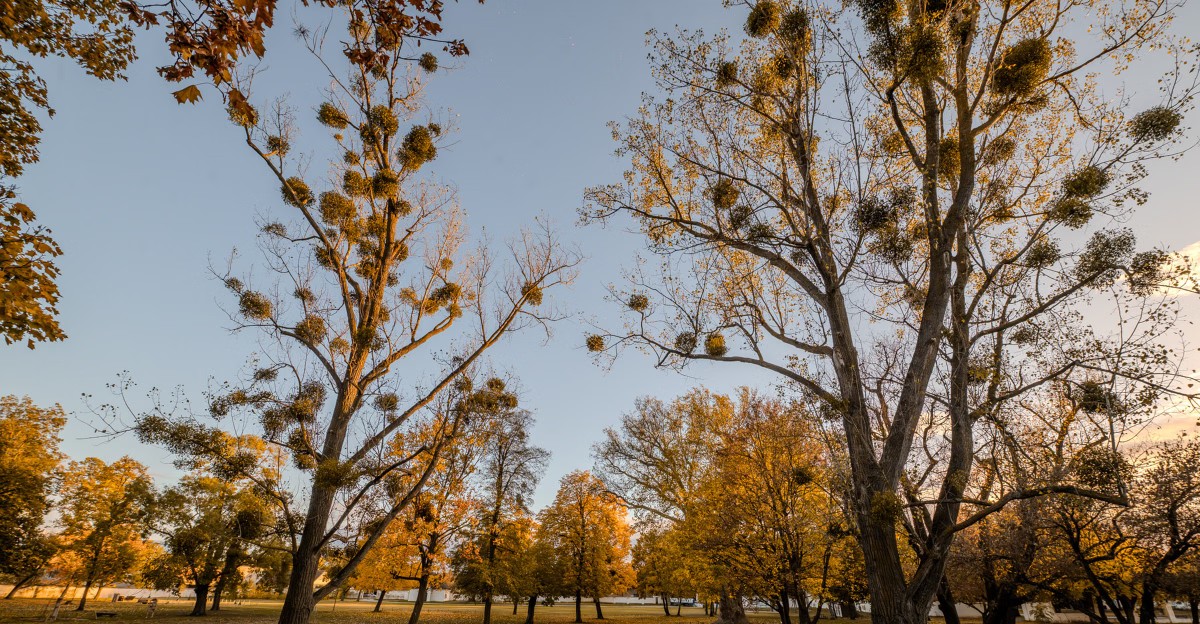
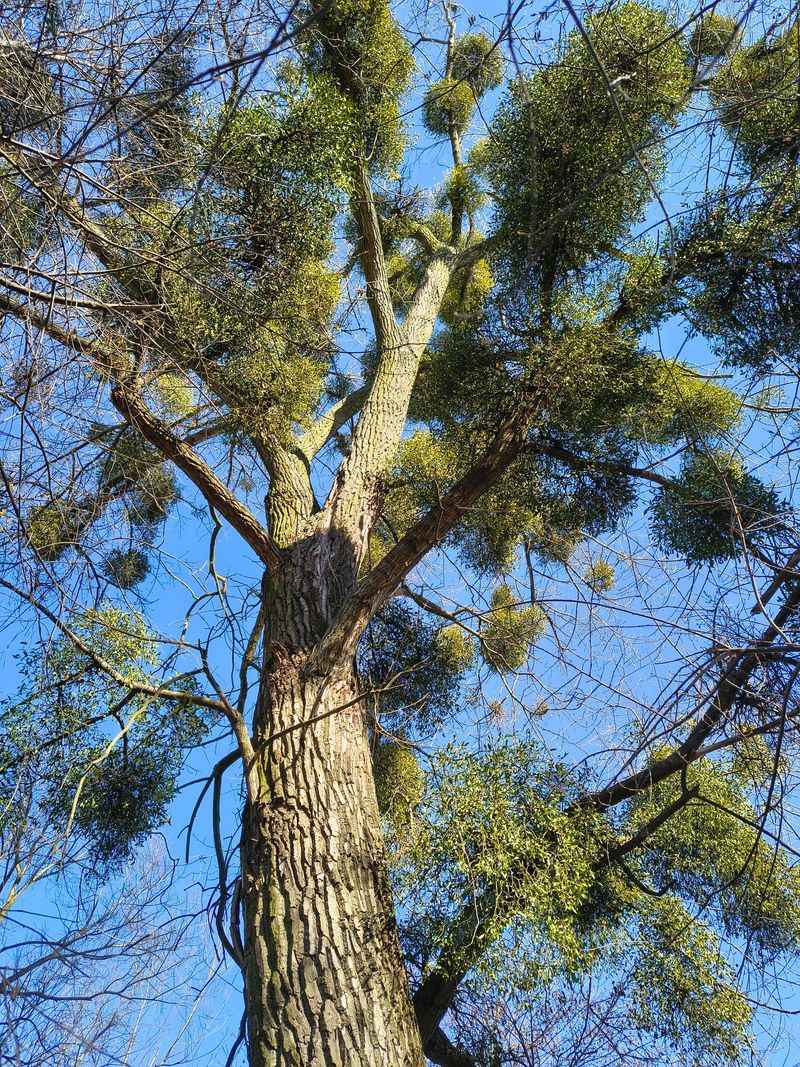
Some of the greenest leaves in a winter forest belong to a plant whose scientific name means tree thief. It sits high in bare branches, often 30 or more feet up, staying green all winter long.
Every winter, I squint up at those round green balls and think of abandoned crow nests. Truth is, I believed that for years. Nests are brown, twiggy, and messy, though, and these clumps stay bright green in January.
Here in Maryland, they show up along roadsides, in parks, and over backyard fences once the leaves drop. Birds help plant them, butterflies depend on them, and holiday shoppers pay good money for them.
So what exactly is living up there, and should you worry about it? I got curious, did some digging, and found a story stranger than any bird could build.
Those Evergreen Balls In Leafless Treetops Hold A Sneaky Secret
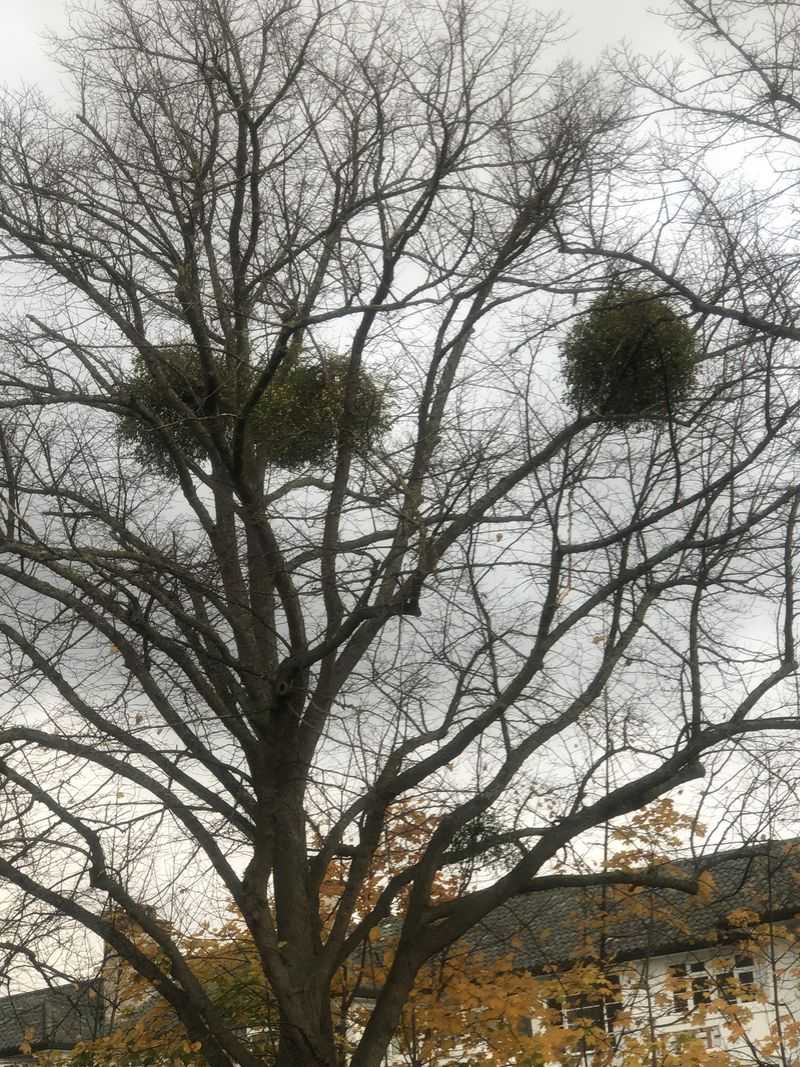
Bird nests rarely stay green. A nest is built from sticks, grass, and leaves, so it turns brown and scraggly fast. Those leafy clumps you see in December do the opposite, holding their color through snow and sleet.
Look closer with binoculars and you will notice thick, oval leaves and short, forking stems. Some clumps are as small as a softball. Others grow larger than a beach ball after many years in the same spot.
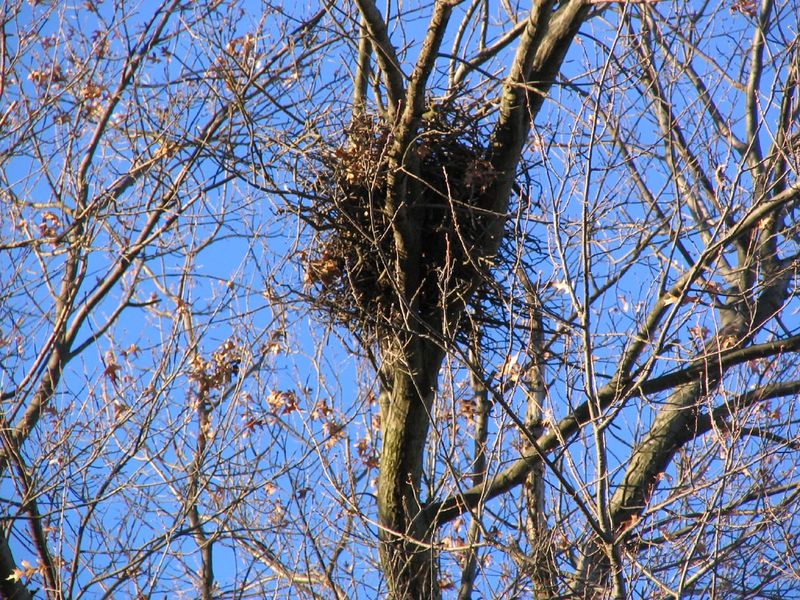
Squirrel nests can fool you too. Gray squirrels build leafy dreys high in oaks, but those leaves are brown and crumpled by winter. A drey looks like a lumpy pile, while the green clump looks alive and tidy.
Here is a simple field test I use. If it is green, round, and sprouting straight out of a branch, it is a plant, not a home. If it is brown and wedged into a fork, an animal probably built it.
That living green ball is not a random growth either. It is a flowering plant with roots of a sort, a feeding strategy all its own, and a famous holiday reputation. Once you learn the clues, you will spot them everywhere on winter drives.
American Mistletoe Is The Green Guest Sitting On Those Branches
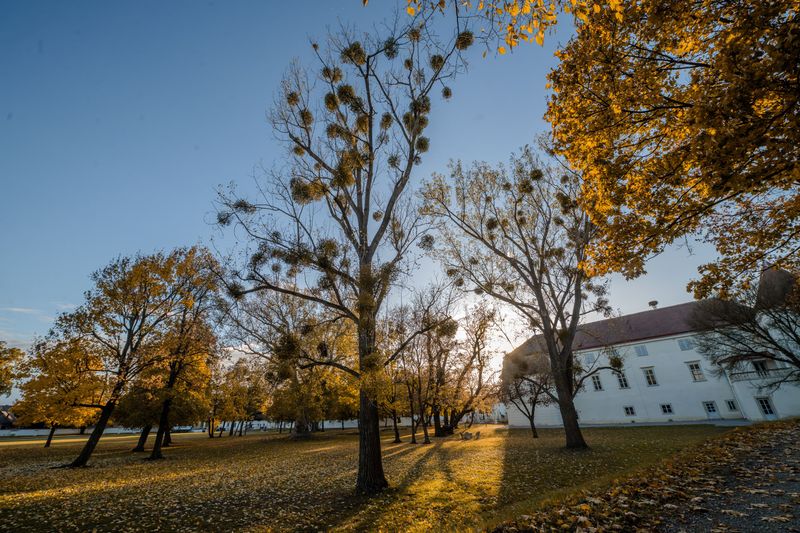
Meet the culprit by name. Those clumps are almost always American mistletoe, known to botanists as Phoradendron leucarpum. It is native to the eastern United States, including much of Maryland, so it belongs here.
Mistletoe is a hemiparasite. That fancy word means it makes some of its own food through photosynthesis in its green leaves. It still taps into the tree for water and minerals, which is why the genus name translates from Greek as tree thief.
Once the oaks and maples drop their leaves, the plant has nowhere to hide. That explains why so many people only notice it between November and March. In summer, it blends right into the canopy.
You can tell American mistletoe by its leathery leaves, about one to two inches long. Female plants carry small, waxy white berries in late fall and winter. Male plants have no berries at all, so not every clump looks the same.
A quick note on safety matters here. The berries and leaves can upset stomachs in people and pets, according to poison control guidance. Admire it from below, and keep any holiday sprigs out of reach of kids and curious dogs.
Hungry Birds Plant Mistletoe Seeds With Sticky Droppings
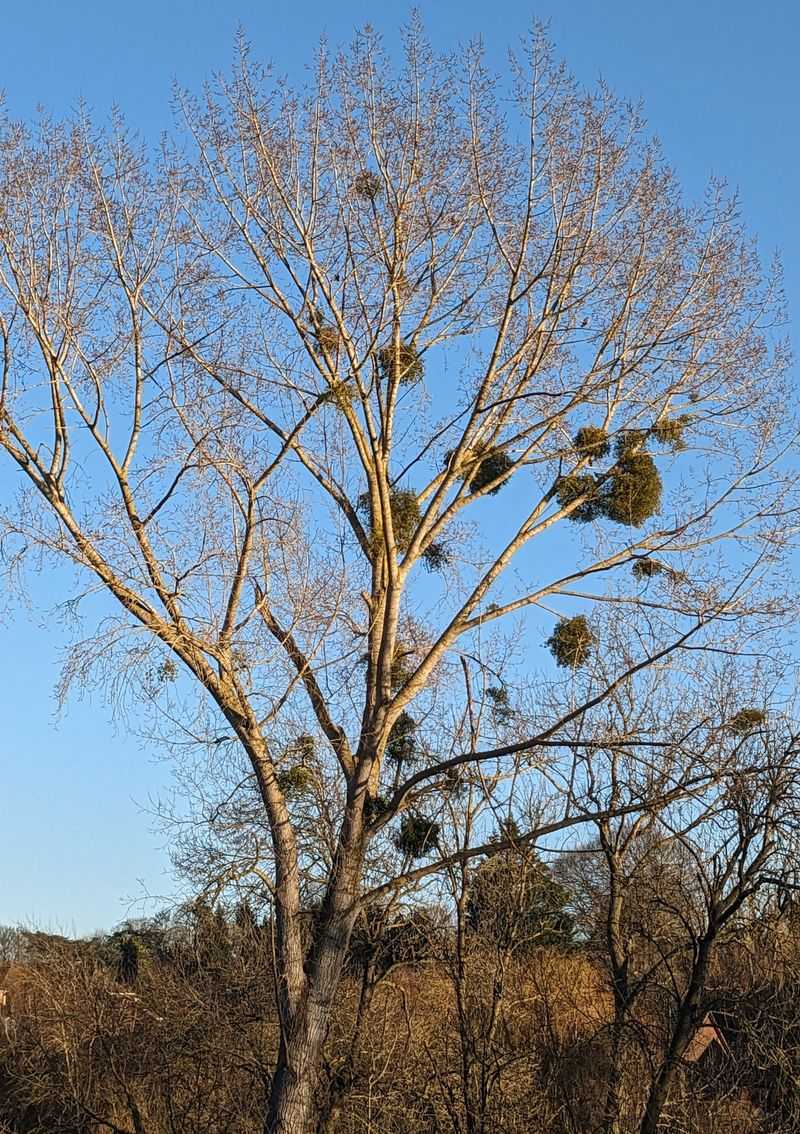
Mistletoe has a messy little secret. It cannot drop its seeds on the ground and hope for the best, because seedlings on soil go nowhere. It needs a ride straight up to another branch.
Birds handle that job. Cedar waxwings, eastern bluebirds, and other berry eaters gulp the white fruits in winter. The seeds pass through and land on bark in their droppings, often right where the bird perches next.
Each berry holds a gluey substance called viscin. It is so sticky that seeds sometimes cling to a bird’s beak, and the bird wipes them off on a twig. Either way, the seed ends up glued to fresh bark.
From there, the seed sends a special root-like structure called a haustorium into the branch. It grows slowly, and a new plant may take a few years to look like much. That is why big clumps usually mean mistletoe has been around a while.
I love this detail. One tree with mistletoe often ends up with more clumps nearby, simply because birds keep visiting the same buffet. If your neighbor’s maple has several balls, the trees around it are prime real estate.
Red Maples And Oaks Seem To Attract Most Mistletoe Clumps
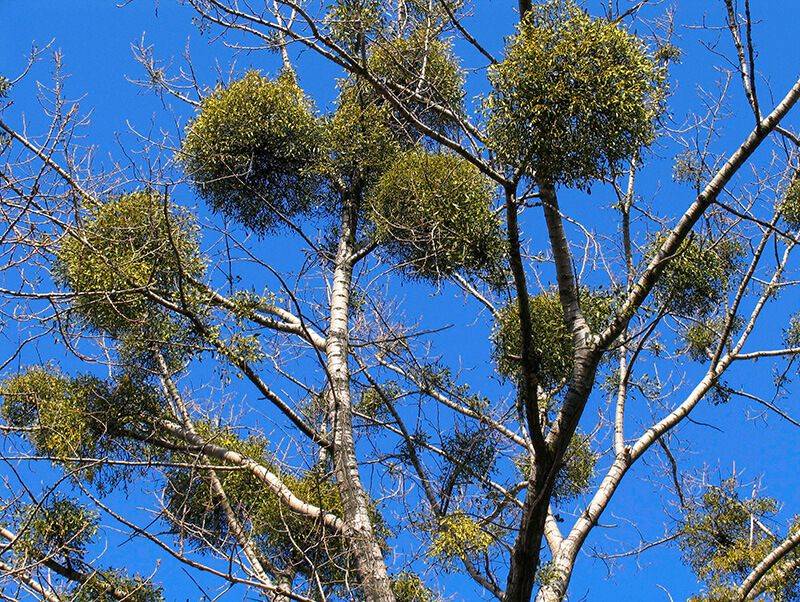
Ever notice that some trees get loaded while others stay clear? Mistletoe is picky about its hosts. It mostly grows on hardwoods, not pines or cedars.
In the Mid-Atlantic, red maple is a frequent host, and you will also find it on oaks, black gum, sycamore, and other broadleaf trees. Wet bottomlands and stream edges often have plenty. Roadside trees and open woodland edges are easy places to spot it too.
Geography plays a role in Maryland. Mistletoe is far more common on the Eastern Shore and in the southern counties than in the colder western mountains. Garrett County gardeners may rarely see it, while folks near the Chesapeake Bay spot it often.
Height matters too. Many clumps sit high in the crown, where birds like to perch and sunlight hits the leaves. That is great for the plant and tricky for anyone hoping to reach it.
If you want to find some, go for a winter walk along a creek or a quiet country road. Scan the tops of tall maples and oaks. Once you get your eye trained, those dark green dots will pop out against the gray sky.
Great Purple Hairstreak Butterflies Count On Those Green Clumps
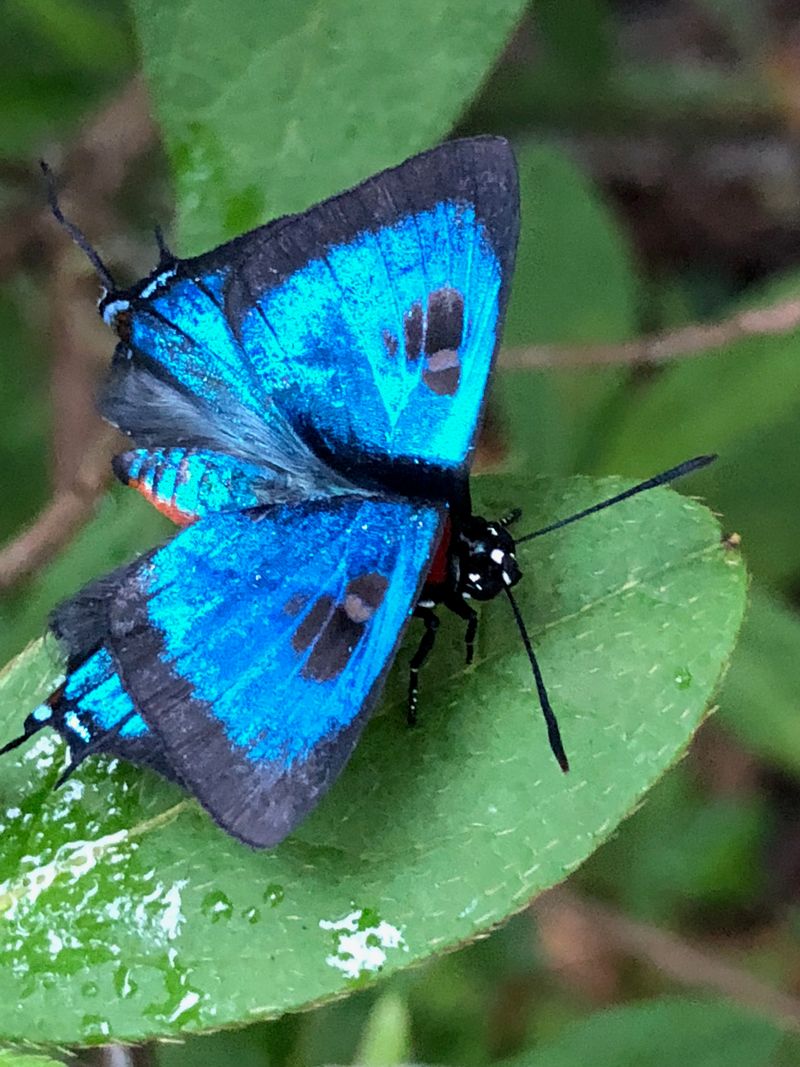
Few insects are as flashy as the great purple hairstreak. Despite the name, its wings shimmer a brilliant blue on top, with a bright orange belly underneath. And its caterpillars eat only mistletoe.
That makes those clumps a lifeline. Adult butterflies lay eggs on the plant, and the green caterpillars blend right into the leaves as they feed. Without mistletoe, this butterfly would not have a nursery.
Birds benefit as well. Bluebirds, robins, waxwings, and mourning doves snack on the berries when other food runs short in winter. Research in other parts of the country has found that areas with more mistletoe can support more bird species.
The dense clumps also give shelter. Small birds tuck into them on cold nights, and some species nest in or near them. Deer will nibble any sprigs that fall to the ground after a windstorm.
So the plant takes a little from its host, but it gives a lot back to the neighborhood. I find that trade pretty fascinating. A treetop clump that looks like a freeloader is actually a busy wildlife cafe and hotel rolled into one.
Your Healthy Shade Tree Can Usually Handle A Few Mistletoe Balls
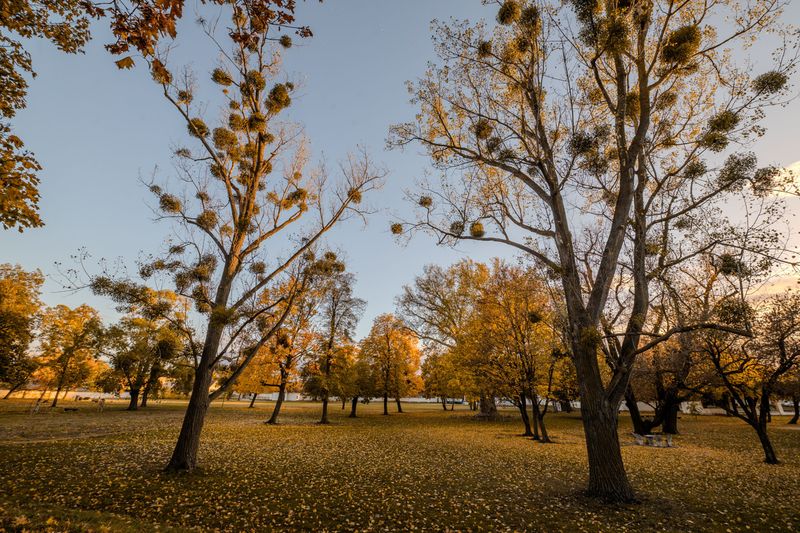
Relax for a moment. A vigorous tree with one or two clumps will usually carry on just fine for many years. Extension specialists generally say light infections are more of a curiosity than a crisis.
Trouble shows up when the numbers climb. Heavy infestations can pull enough water to weaken limbs, especially during dry summers. Branches beyond a big clump may thin out or decline over time.
Watch for a few warning signs. Swollen spots where mistletoe attaches, thinning leaves on infected limbs, or dozens of clumps on one tree all deserve attention. Trees already stressed by drought, root damage, or construction struggle the most.
Do not confuse American mistletoe with dwarf mistletoe. Dwarf mistletoes are tiny, leafless parasites that mostly attack conifers in the western states. They are a bigger forestry problem, but they are not what you are seeing on Maryland hardwoods.
My advice is simple. Count the clumps each winter and snap a quick photo from the same spot. If the number keeps growing or the tree looks tired, call a certified arborist to check its overall health before deciding anything.
Pruning The Whole Branch Works Better Than Yanking Off Mistletoe
I learned this one the hard way. Pulling the green ball off a low branch felt satisfying, but the plant grew back within a couple of seasons. The part you see is only half the story.
Mistletoe’s haustoria stay buried inside the wood. If you break off the top, those tissues often resprout. The most reliable fix is pruning the infected branch at least a foot below the attachment point, when that cut will not harm the tree’s shape.
Winter is a handy time for this job. The clumps are easy to see, and many hardwoods tolerate dormant pruning well. Make clean cuts just outside the branch collar.
If removing the branch is not practical, cutting the clump flush and wrapping the spot with dark material to block light can slow regrowth. Some arborists use this method on big limbs or trunks. Expect to repeat it now and then.
Please skip the ladder heroics. Most clumps grow high, and working at height with saws is risky. A certified arborist with proper gear can handle tall pruning safely and spot other issues while they are up there.
Moss, Lichen, And Leafy Squirrel Nests Can Fool You Too
Not every green patch on a winter tree is mistletoe. Moss, lichen, and algae often coat trunks and limbs, especially on shady, damp sides. They look flat, fuzzy, or crusty rather than round and bushy.
These growths simply use bark as a place to sit. They do not steal water or nutrients from the tree, so there is no need to scrape them off. Lichens are even a sign of fairly clean air.
Brown balls of leaves high in a fork are usually squirrel dreys. Big stick platforms may belong to hawks, crows, or herons. Odd lumps on twigs could be galls caused by insects or mites.
Here is my takeaway for your next winter walk. Grab binoculars, look for leathery green leaves and white berries, and enjoy the detective work. You will start telling mistletoe, moss, nests, and galls apart in seconds.
Leave healthy clumps alone when they cause no harm, since wildlife relies on them. Keep an eye on stressed trees, and call a pro for high work. A bare winter canopy has more life tucked into it than most of us ever expected.