Those Spotted Oak Leaves Falling In Missouri Yards Usually Aren’t A Sign Of A Sick Tree
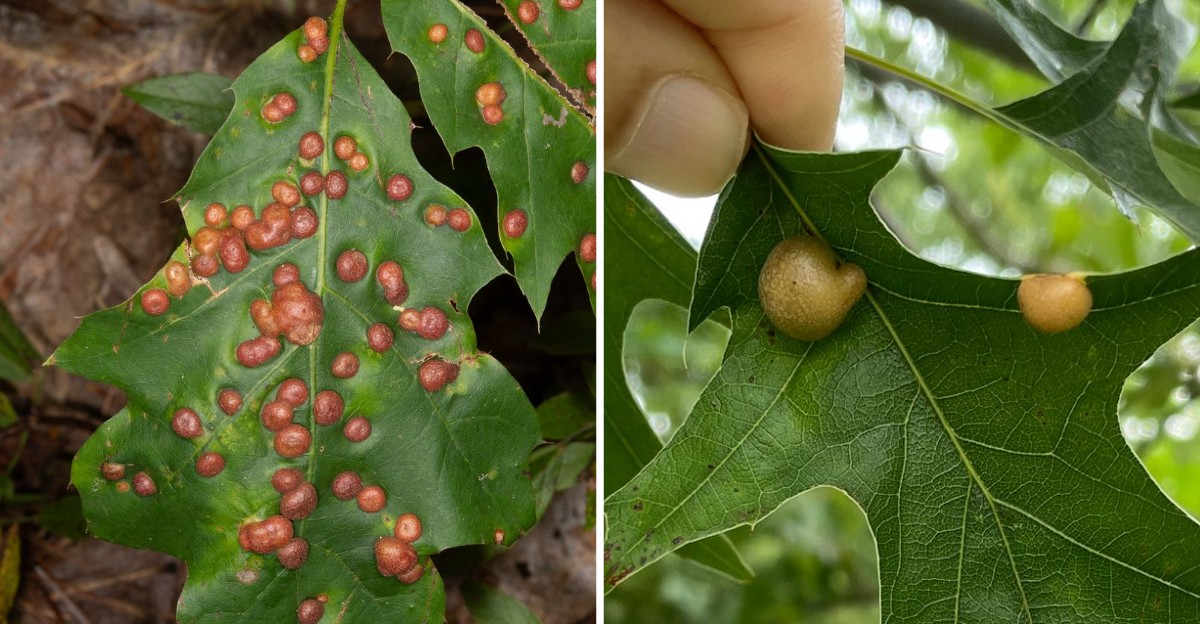
Many of the pale freckles on those fallen oak leaves sheltered a tiny baby fly, snug inside its own room. I still grin when I crunch through Missouri yards in October and remember that small secret.
Plenty of homeowners spot those blotchy leaves piling up near the porch and start worrying about their favorite shade tree. I understand that worry, because a big oak feels like part of the family after many years.
You’re in for a nice surprise, since most of those marks are harmless and fade from memory by next spring. The tree keeps growing strong while its leaves just look a bit rough this fall season.
I believe a quick look under one leaf can teach you more than an hour of nervous online searching. Turn a crisp leaf over in your palm, and you may notice something small staring back at you.
Across Missouri, these speckled leaves tell a quiet story about a tiny insect and the oaks it prefers. So which oak trees in your own backyard might be hiding these little leaf nurseries right now?
A Tiny Fly Larva Is Behind Many Of These Pale Spots
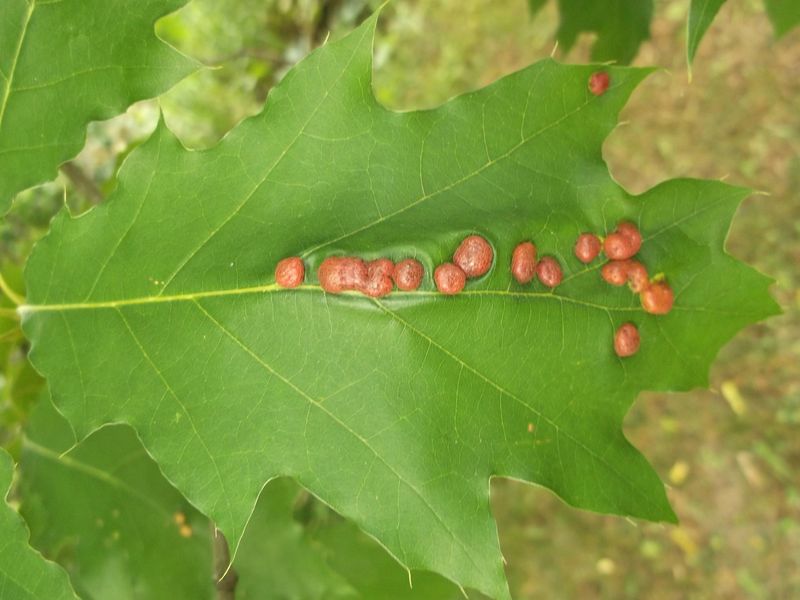
Back in spring, a tiny gall midge laid its eggs on soft oak leaves just as they unfolded. Each hatched larva settled into the leaf tissue, and the tree responded by building a small swollen pocket.
That pocket is called a gall, and it works like a cozy nursery with food built into the walls. The larva quietly feeds on plant juices inside, while the leaf around it slowly fades to a paler color.
Gall midges are true flies, though they are so small that most people rarely notice the adults flying. An adult looks a bit like a fragile mosquito, measuring only a few millimeters from head to wingtip.
In Missouri, these spots often show up as round tan or brown raised patches scattered across the leaf blade. Some leaves carry just a few spots, while others look heavily speckled after a busy midge season.
Fun fact for curious kids, scientists have described many different gall midge species that specialize on oak trees. Experts sometimes struggle to name the exact species without careful study, so identification can stay a little uncertain.
By October, many larvae have finished feeding, and they drop to the ground to spend winter in the soil. The spotted leaves stay behind and pile up beneath your oak.
You can gently tear open a pale spot with a fingernail and look closely with a magnifying glass. Sometimes you will find a tiny orange or white larva, which makes a fun backyard science lesson for families.
Look Closely At Each Spot To Find A Tiny Raised Bump
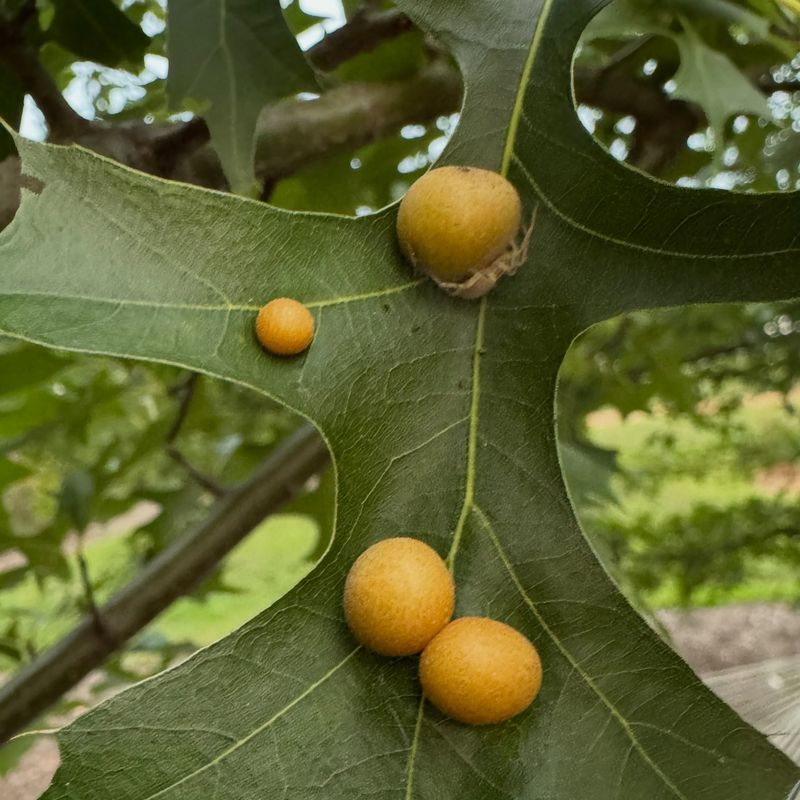
Looking closely at a spotted leaf feels a little like opening a secret door in a storybook. On the upper side, you will often see a small round raised spot, and on some oaks a tiny bump shows on the underside too.
That raised spot is the actual gall, and it usually measures about the size of a pinhead or slightly larger.
Your Missouri Garden Changes Every Week. Your Plan Should Too.
Gardening in Missouri changes quickly throughout the season. Every Friday you’ll receive a simple weekly plan showing exactly what to plant, prune, fertilize, harvest, and protect so you never miss the right timing.
Colors can vary from reddish brown to nearly black, depending on the leaf and how old the gall is. Some dots look shiny like a drop of dried paint, while others feel rough under your fingertip.
This simple flip test helps Missouri homeowners separate insect galls from fungal spots that look similar from above. Fungal spots usually stay flat on both sides, while a gall makes a tiny lump you can feel.
I like using my phone camera in zoom mode to get a better look at these little bumps. A cheap hand lens works even better, and kids often enjoy counting the dots on a single leaf.
Pick a dry afternoon for this check, since soggy fall leaves tear easily and hide small details. Collect a few leaves from different spots in the yard to see how widespread the galls really are.
If the raised spots are small, round, and easy to flick off the leaf, you are most likely looking at midge galls. That match gives you solid evidence, and it often brings real relief to worried oak owners this time of year.
Trees In The Red Oak Family Get Picked Most Often
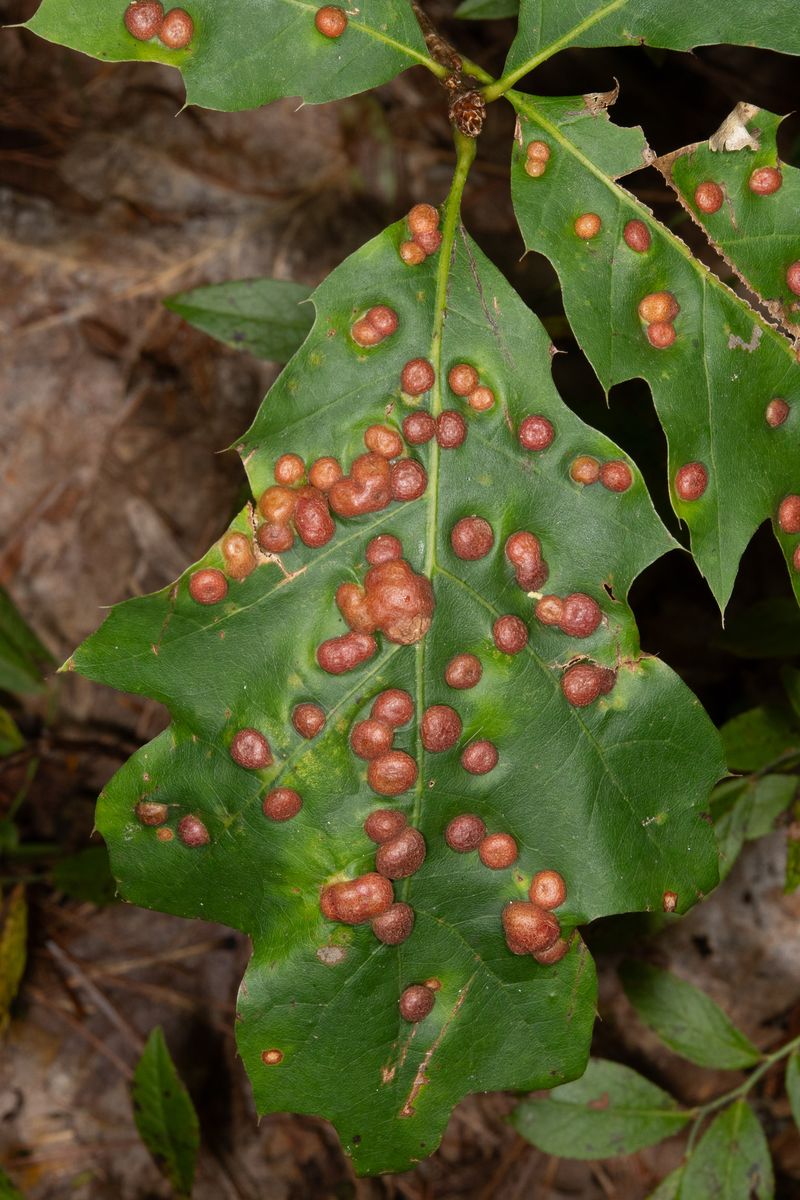
Pointy leaf tips are a handy clue, because oaks with bristle-tipped lobes belong to the red oak group. Gall midges that cause these spots seem to favor this group far more than white oaks with rounded lobes.
Pin oak is a very common yard and street tree in Missouri, so it often shows the heaviest spotting. Northern red oak and black oak can also carry speckled leaves by fall, and all of them belong to the red oak group these midges seem to favor.
Researchers are not fully certain why midges prefer these trees, though leaf chemistry and timing likely play a part. Red oak leaves may open at just the right moment for egg-laying adults flying around in early spring.
White oaks and bur oaks can still get galls, but they usually show far fewer of these particular spots. They host their own set of gall insects, which create very different shapes like woolly tufts and round balls.
A fun way to learn your tree is to compare a fallen leaf with photos from an extension resource. The Missouri Department of Conservation offers free tree identification help that works well for curious families.
Knowing your oak type helps you expect these spots each autumn instead of panicking when they appear again. A little knowledge can turn a scary sight into just another familiar sign of the changing fall season.
Your Oak Stays Healthy Despite The Spotty Look
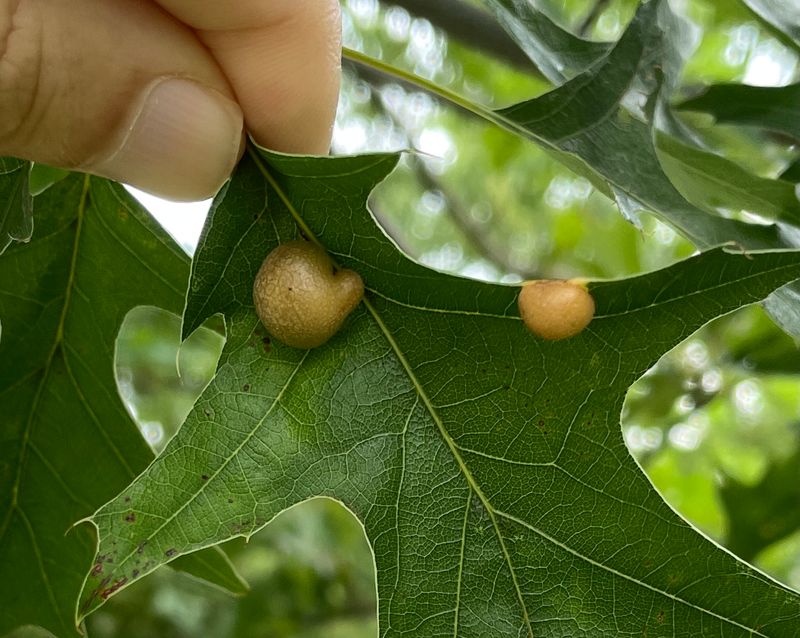
Honestly, those freckled leaves look worse than they really are, and that is a big relief for tree lovers. University extension experts describe these midge galls as mostly cosmetic, meaning they change appearance more than health.
A large oak holds tens of thousands of leaves, so a few spots per leaf barely dent its energy. Most of the green surface keeps making food from sunlight, even on leaves that look heavily speckled.
Some infested leaves may drop a little early, which can make the lawn look messy in October. Early leaf drop near the end of the season rarely causes lasting harm to a healthy, established oak.
Sprays are not recommended for these galls, since the larvae stay protected inside the leaf tissue all season. Treating a tall oak is also costly and can harm helpful insects that feed on many garden pests.
Nature handles a lot of the control work, because tiny parasitic wasps and birds feed on midge larvae. Gall numbers often rise one year and drop the next, so heavy spotting rarely repeats in the same way.
Raking and composting fallen leaves is a simple step that may reduce the number of larvae spending winter nearby. Experts disagree on how much this helps, but a tidy yard still feels nice heading into cold weather.
You can support your oak best with a deep watering during dry fall spells and a wide ring of mulch. Keep mulch a few inches away from the trunk, and avoid piling it up like a volcano around the base.
Don’t Confuse Midge Spots With Other Leaf Problems
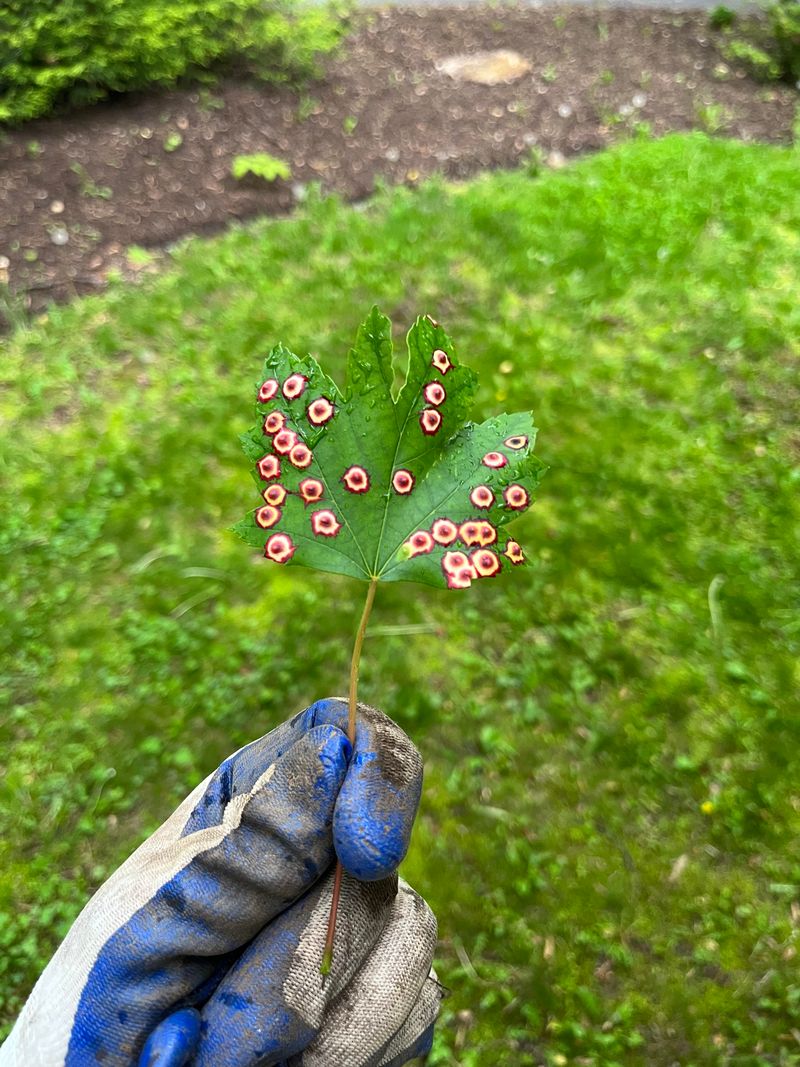
Oak leaves can pick up several kinds of blotches, and a few of them look surprisingly similar from the sidewalk. Learning the main differences can save you money and plenty of worry during the busy fall cleanup season.
Oak leaf blister is a fungal problem that makes raised, wrinkled, yellowish bulges on the upper leaf surface. Flip that leaf over and you will find a matching hollow dip instead of a hard dark bump.
Oak anthracnose shows up as brown blotches along the veins, especially after a cool and rainy spring season. Those patches have uneven edges, and they lack the neat round shape you see with midge galls.
Bacterial leaf scorch is more serious, causing browning that starts at leaf edges with a yellow band behind it. It often appears in late summer on pin and red oaks and returns on the same branches each year.
Leaf mites and lace bugs can also leave pale speckling, though the damage looks more like fine dusty stippling. Lace bugs leave tiny black specks of waste underneath, which differ from a single raised gall per spot.
In Missouri, a helpful step is snapping clear photos of both leaf sides before you ask an expert. University of Missouri Extension offices and Master Gardener hotlines can often identify problems from good pictures and samples.
I keep a few pressed leaves in an old notebook, which makes comparing spots from year to year easier. That small habit has helped me spot patterns long before I felt any real need to worry about them.
Some Oak Symptoms Really Do Deserve An Arborist Visit
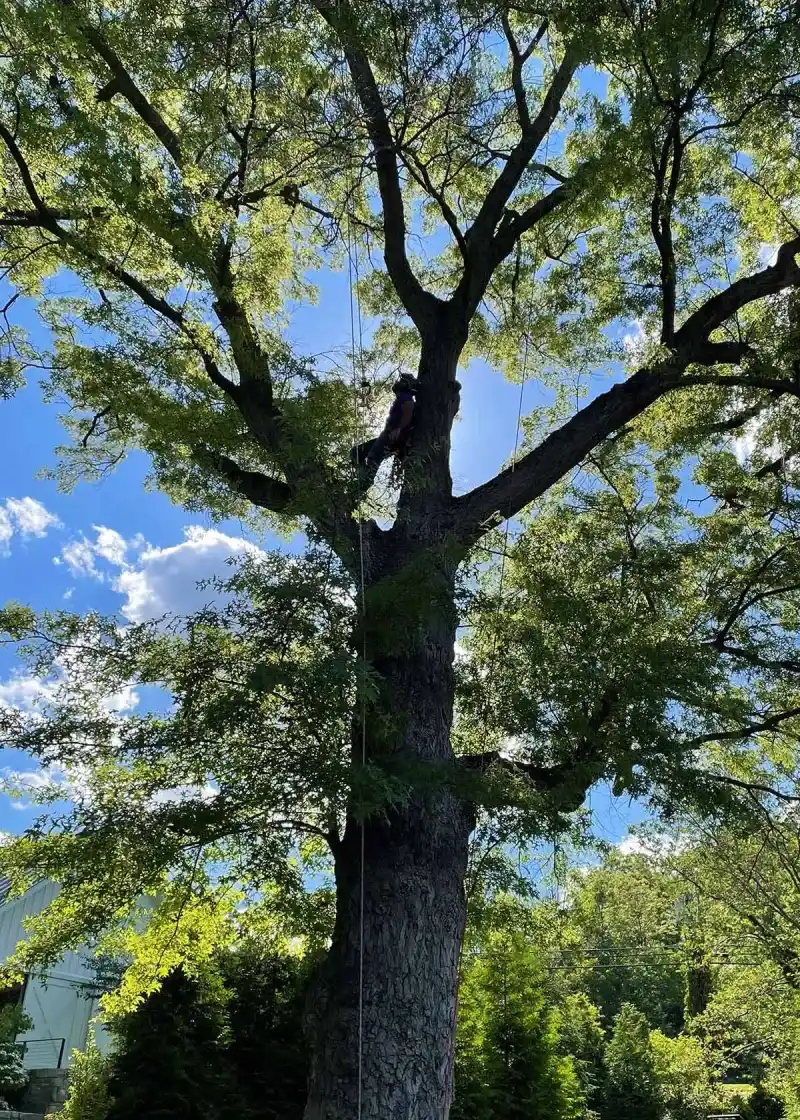
Spotted leaves are rarely a reason to call for help, but certain other oak problems deserve a closer professional look. Knowing these warning signs helps you act early, when a certified arborist has the most options to help.
Oak wilt is a serious fungal disease in Missouri, and red oaks can decline quickly once it takes hold. Watch for leaves turning dull bronze from the tips inward and dropping suddenly while still partly green.
Large leafless branches high in the crown can point to root stress, disease, or old construction damage nearby. Arborists can check soil, roots, and bark to figure out what is really going on underground.
Mushrooms growing at the base of the trunk may signal internal decay that weakens the wood over time. Deep cracks, oozing sap, or loose bark patches also deserve attention, especially on trees near your house.
A sudden lean after a storm is another red flag, since it can mean roots have shifted or snapped. Keep kids and pets away from that area until a professional has inspected the tree carefully.
You can find certified arborists through the International Society of Arboriculture website by searching with your zip code. Ask for proof of insurance and a written estimate before any pruning or removal work begins.
Fall is a smart time for checkups, because thinning leaves let experts see the branch structure more clearly. Missouri oaks can live for centuries, so a little care now keeps that shade around for many future families.