Turn Your Alabama Yard Into A Wildlife Magnet With This Purple-Berried Native Shrub
Purple clusters have appeared along quiet Alabama fence rows almost overnight this week. You cannot drive past this display without slowing down to stare. Birds found this stash weeks before your eyes ever did.
Deer have already started browsing those tender leaves back in July. Grandparents already read this color as the start of jelly season. Kids point out the window before anyone else even notices anything unusual.
Alabama summers hide plenty, yet this plant refuses to stay hidden. Old-timers rubbed crushed leaves on skin to chase off biting insects. Farmers swore by that clever trick during long, sweaty, buggy field afternoons.
Nobody quite agrees whether this plant deserves a mower or a mason jar. Fence rows across the rural South are having a serious moment right now.
Your own yard could host this exact spectacle by early fall. Everything you need to identify, use, and grow it waits just ahead.
Why The Purple Show Peaks In Early September
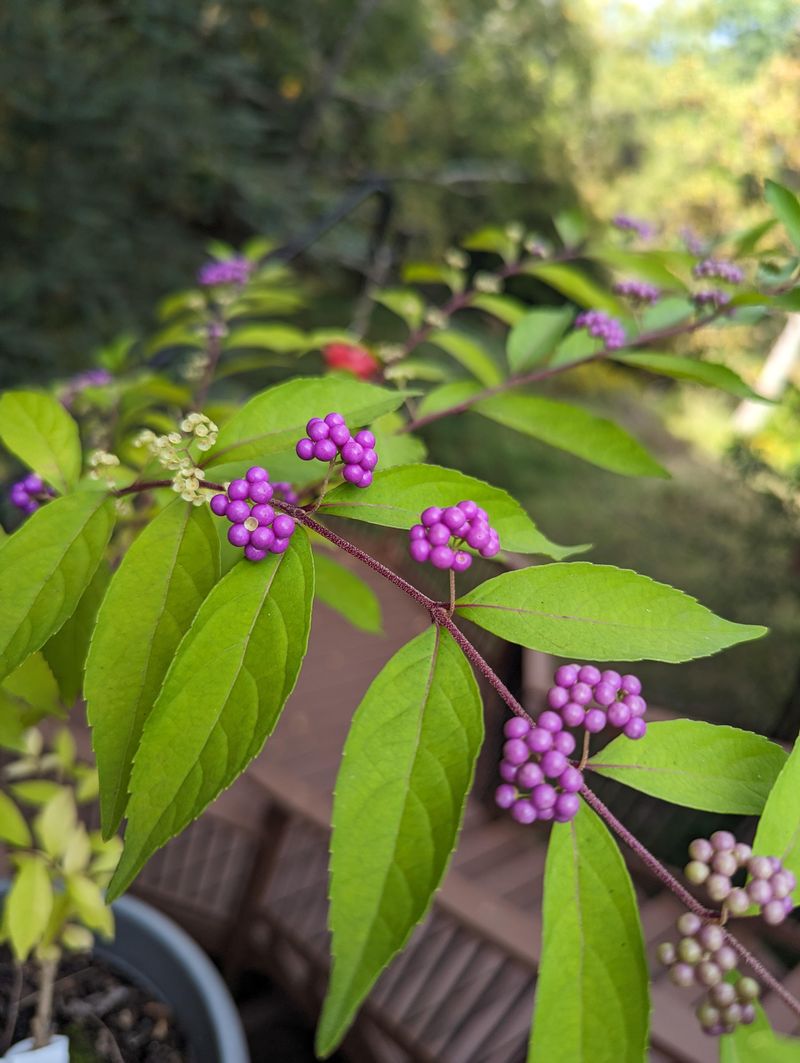
Walk along an Alabama fence line this week and you may spot color that looks almost painted on. Tight clusters of magenta beads circle gray stems like beaded bracelets.
The timing is no accident. Berries form in summer after tiny pink flowers fade, then they load up on pigment as nights start cooling in late August.
Early September usually brings the brightest tone of the year, somewhere between grape soda and neon. By late October, the color softens and birds have thinned the clusters out.
Heat and rainfall shape the show. A wet July and August help the shrub push heavy berry clusters, while a dry stretch can leave smaller, duller bunches.
Shade plays a role too. Plants growing at the edge of pines, with morning sun and afternoon shelter, often show deeper purple than plants baking in an open field.
Gardeners in Mobile and Baldwin counties may see color a little earlier than folks up near Huntsville, though the difference varies year to year.
Fun bit of history: early settlers called the shrub French mulberry, though it has no relation to mulberries at all. The name stuck in parts of the South for generations.
If you want photos, shoot in soft morning light. Bright noon sun washes the berries out, while cloudy days make that purple glow like stained glass.
Mark the spot on your calendar, because next year the display arrives on roughly the same schedule.
Spotting The Shrub Along Alabama Woodland Edges
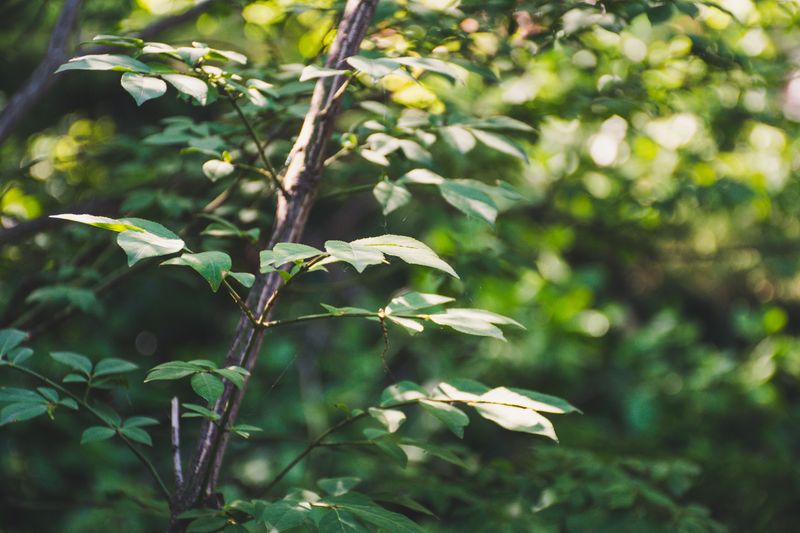
Identification gets easy once the berries arrive, but the plant gives clues long before that. Look for loose, arching stems that spread wider than they stand tall.
Leaves grow opposite each other, roughly four to six inches long, with soft fuzz underneath and toothed edges. Crush one and you get a faint minty, herbal smell.
Height usually lands between three and six feet in Alabama, though rich soil and steady rain can push a plant closer to eight.
The berries are the real giveaway. They ring the stem in tight balls right where each pair of leaves meets, rather than at the branch tips.
Your Alabama Garden Changes Every Week. Your Plan Should Too.
Gardening in Alabama changes quickly throughout the season. Every Friday you’ll receive a simple weekly plan showing exactly what to plant, prune, fertilize, harvest, and protect so you never miss the right timing.
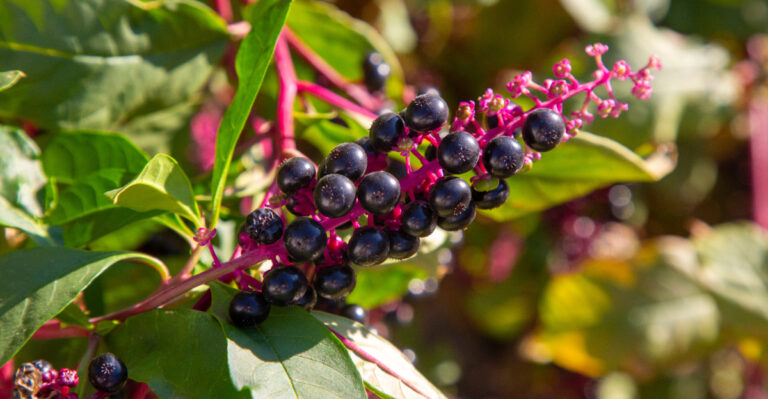
That stem-hugging pattern separates it from lookalikes such as pokeweed, which dangles dark fruit on drooping purple stalks. Pokeweed also grows fleshy, hollow stems instead of woody ones.
Common spots to find it include the shady side of a barn, the edge of a pine stand, roadside ditch banks, and old home sites. Birds drop seeds in fence rows, so hedgerows are prime hunting ground.
A white-berried form shows up now and then, usually as a garden variety, and it startles people who expect purple. Same leaves, same shape, different fruit color.
Winter offers one more clue. After leaves drop, thin brown stems keep a zigzag look, and a few shriveled berries often cling on into December.
Once you train your eye, you will notice the shrub on drives you have taken for years. It hides in plain sight until September.
Songbirds And Deer Feed On The Berries
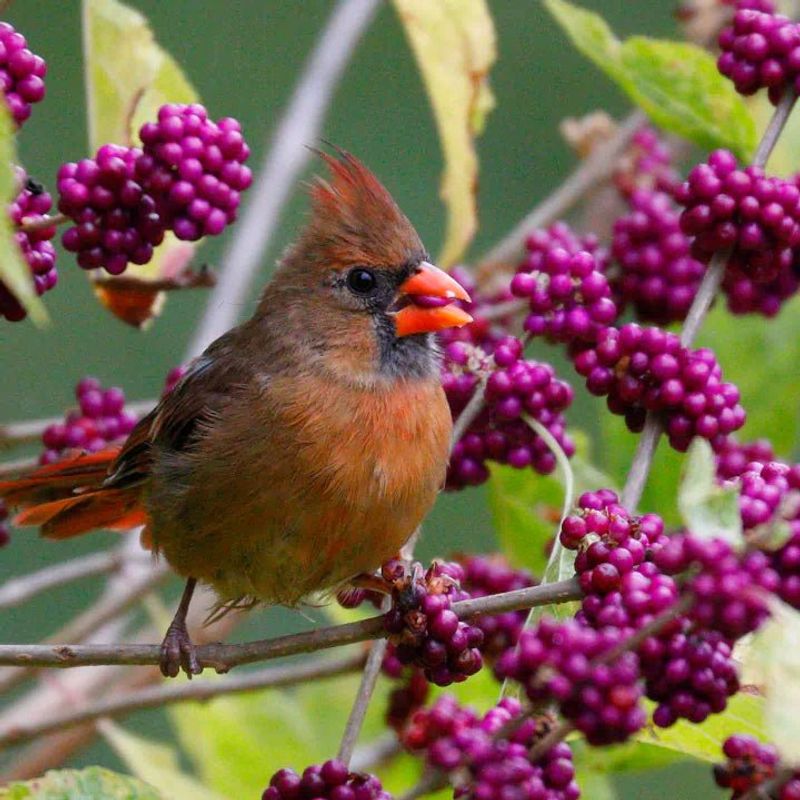
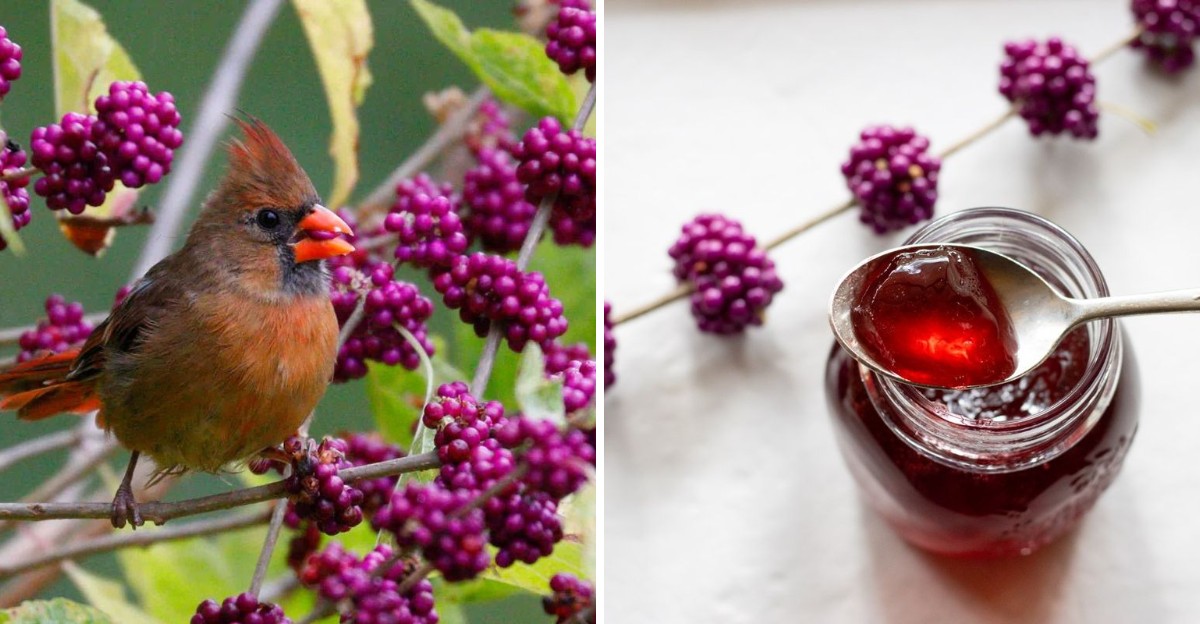
Dozens of bird species have been recorded feeding on the fruit. There is a reason the clusters hang around into fall.
The berries rank low on the tasty scale for birds, so they get eaten later, after sweeter fruit runs out.
That late-season timing makes the shrub valuable during winter cold snaps. When ice coats the ground, those purple beads become a backup pantry.
Deer browse the leaves through summer, and hunters in south Alabama often plant it near food plots for that reason. Foxes, raccoons, and opossums nibble fallen fruit as well.
Pollinators show up earlier in the year. Small pink blooms in June and July draw native bees and the occasional hummingbird.
If you want a front-row seat, set a chair about twenty feet away in the late afternoon. Birds work the clusters quickly, then move along.
Seeds pass through birds and sprout in odd places, which is how the shrub turns up beside mailboxes and under power lines. Volunteers transplant well while small.
A quick caution for households: the raw berries are not a snack for people or pets in quantity, so teach kids to admire rather than sample.
Leaving a few clusters unpicked pays you back in birdsong. A single mature shrub can host feeding traffic for weeks.
Some observers suggest the fruit holds moisture too, which may help birds get through dry autumn days.
Where To Plant It In A Home Landscape
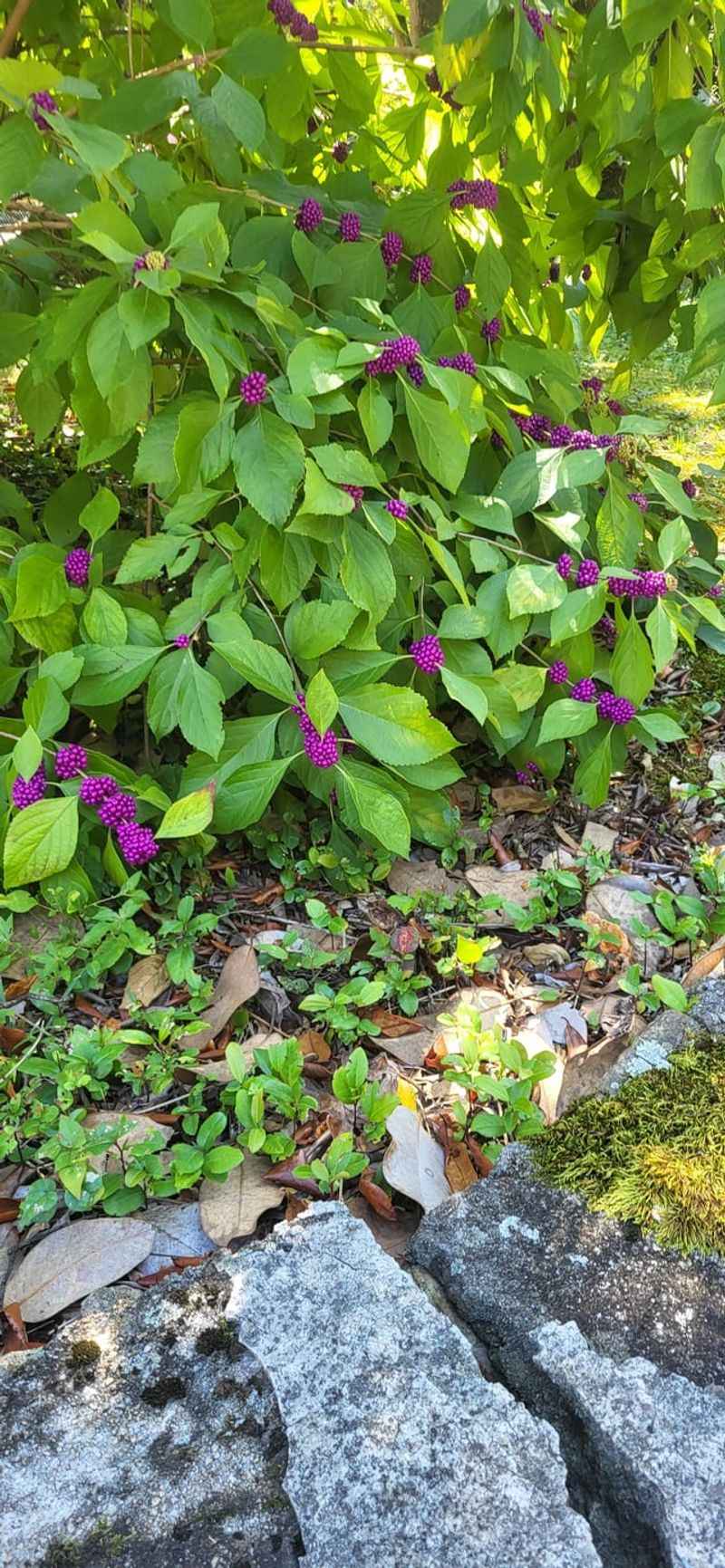
Homeowners sometimes yank this shrub out as a weed, then spend money on nursery plants for the same effect. Save yourself the trouble and work with what volunteers.
Site it where the loose, arching shape looks intentional: a woodland border, the back of a mixed bed, or a screen along a chain-link fence. Give each plant four to five feet of elbow room.
Light is flexible. Full sun grows denser plants with heavier fruit, while dappled shade brings out richer color and softer leaves.
Soil matters less than drainage. Sandy loam in the Coastal Plain and clay up in the Piedmont both work, as long as water does not stand for days.
Plant in fall while soil stays warm, water weekly for the first season, and mulch with pine straw a few inches deep. After that, rainfall usually handles the job.
Good neighbors include oakleaf hydrangea, muhly grass, native azalea, and yaupon holly. Purple berries against silver-pink grass plumes make an appealing pairing.
Keep it away from tight foundation plantings and narrow walkways. Stems arch outward and will lean into foot traffic by August.
Cold hardiness is not an issue anywhere in the state, and the plant handles humidity, heat, and short dry spells with little complaint. Roots are shallow and forgiving, so moving a young plant in winter is a simple weekend job.
Pruning Timing That Keeps Berries Coming
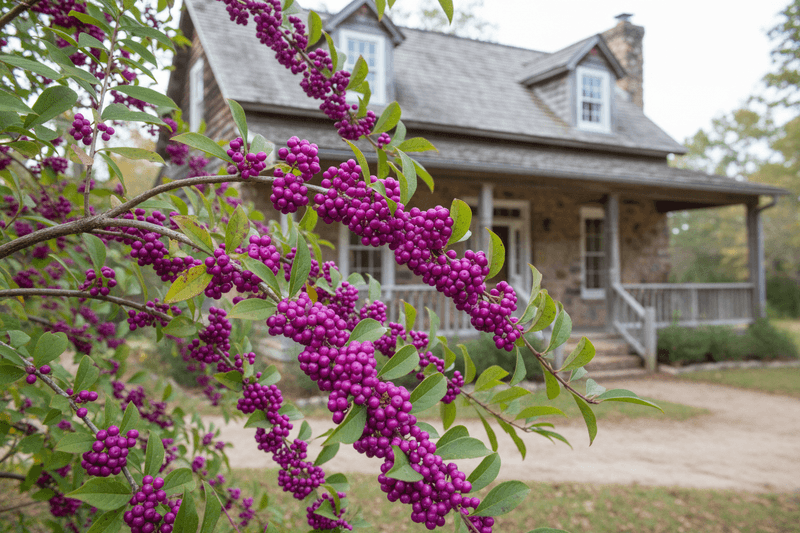
Here is the rule that trips people up: fruit forms on new growth. Prune at the wrong moment and you trade purple for plain green.
Late winter, roughly February in Alabama, is the window. Cut stems back hard, even down to a foot above the ground, and the plant answers with fresh shoots.
Hard pruning does two useful things. It keeps the shrub tidy instead of sprawling, and it produces thicker stems that hold heavier berry clusters.
Skipping the chore is fine as well. Unpruned plants get leggy and open in the middle, which some gardeners like for a wild, woodsy look.
Summer pruning is the mistake to sidestep. Snipping in June or July removes the very shoots carrying this year’s flowers.
If a plant looks tired, thin out a third of the oldest stems at the base rather than shearing the whole top. Renewal cuts spread the work over three winters.
Watch for suckers around the crown. Pull the extras while they are pencil-thin and pot them up for neighbors.
Pests rarely bother the shrub, though leaf spots can appear during soggy stretches. Better airflow from thinning usually settles that issue.
Fertilizer is seldom needed. A light handful of balanced fertilizer in March is plenty, and too much nitrogen grows leaves at the expense of fruit.
Sharpen your loppers, mark February on the calendar, and let the plant handle the rest. That one bit of timing decides how loud your September looks.
Jelly, Folklore, And The Bug-Repelling Story
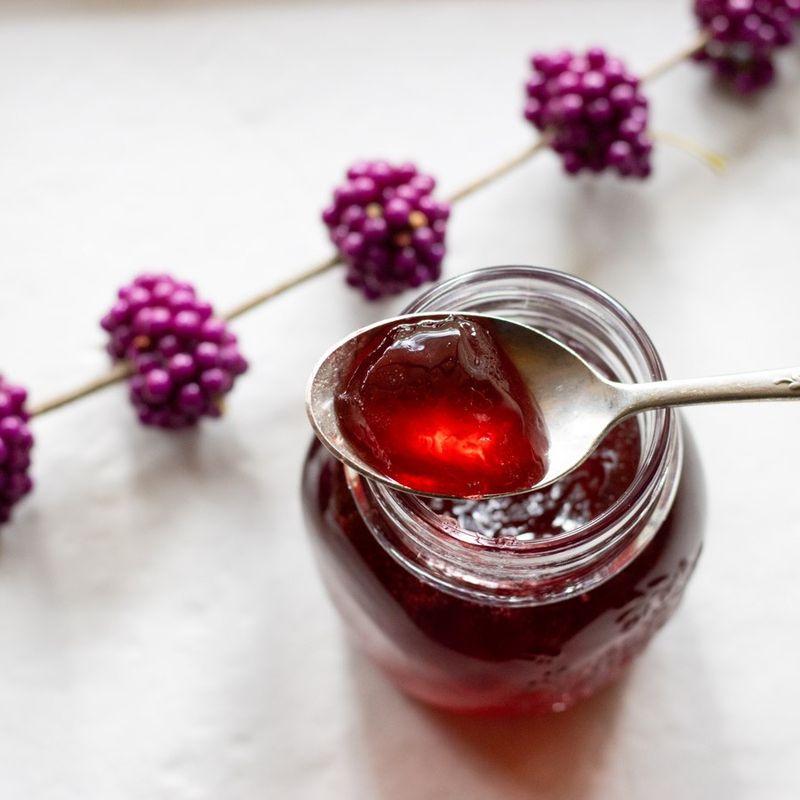
Grandmothers in south Alabama have been cooking these berries into jelly for generations, and the finished jars glow a rosy pink. The flavor lands somewhere near elderberry with a floral edge.
Cooking changes things. Raw fruit is bland and slightly astringent, so recipes call for boiling, straining, then adding sugar and pectin.
A typical batch calls for about six cups of berries simmered in water, strained through cheesecloth, then combined with sugar and lemon juice. Yield usually runs around four to six half-pints, depending on the recipe.
Folklore runs deep with this plant. Farmers once crushed the leaves and tucked them under mule harnesses to keep biting flies off the animals.
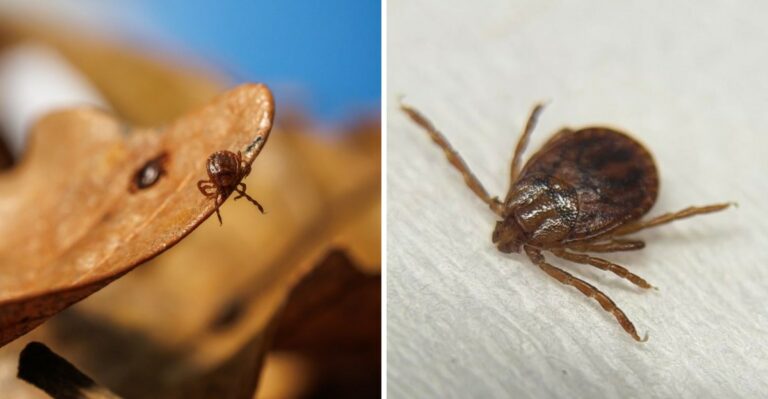
Government researchers looked into that old habit and identified compounds in the leaves, including callicarpenal, that discourage mosquitoes and ticks in laboratory settings.
You can try the folk version yourself. Crush a handful of fresh leaves, rub the pulp on arms and ankles, and test a small patch of skin first. Results vary from person to person, so pack your usual repellent as backup on a river trip.
Dyers use the berries too. Simmered with alum, they can tint wool in soft lavender-gray tones that may shift toward tan over time.
Leave plenty on the bush for wildlife when you harvest, maybe half of what you see. Fill a bucket and save the rest for the mockingbirds.
Between the jelly pot, the bug lore, and the color, one shrub offers several uses beyond its appearance.