What A Box Turtle In Your North Carolina Garden Beds Is Really Telling You About The Yard
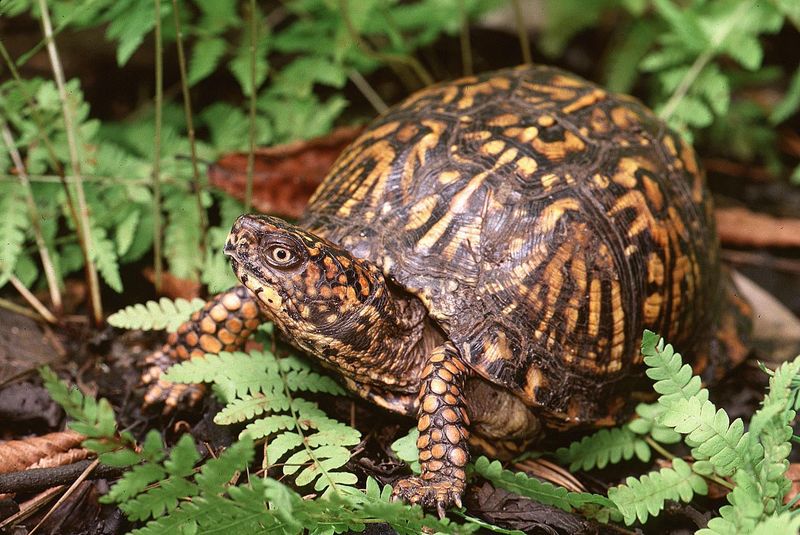
You’re pulling weeds on a warm July morning when something moves near the pepper plants, and it turns out to be a domed shell pushing slowly through the mulch. Finding an eastern box turtle in your North Carolina garden bed is not random luck. That turtle is responding to something specific about the ground right under your feet, and once you know what it is reading, you can make smarter choices about your whole yard.
The Turtle Is Reading Your Ground Layer
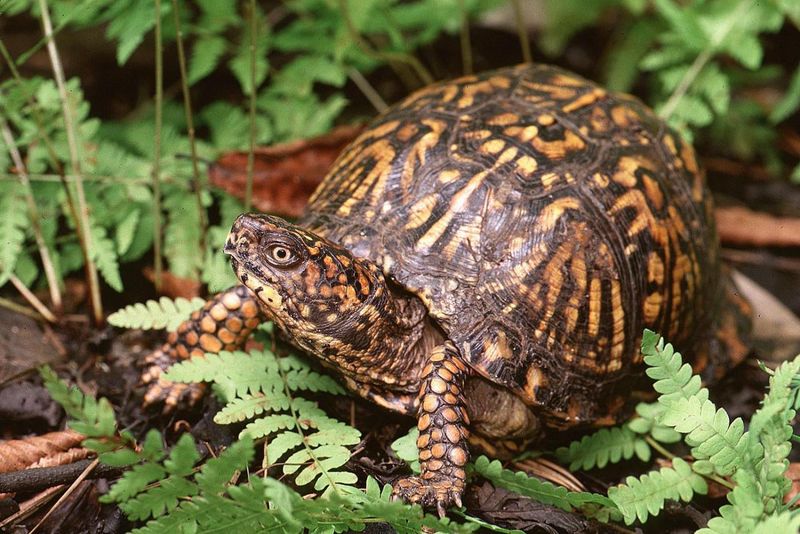
An eastern box turtle, Terrapene carolina carolina, is North Carolina’s native terrestrial turtle and the one most likely to turn up between your pepper plants or under the sprawling squash leaves. It did not wander in by accident. According to the NC Wildlife Resources Commission, eastern box turtles use forests, meadows, wetlands, field edges, and suburban yards across the state, from the mountains all the way to the coast.
What pulls one into a garden bed is ground-level habitat. Some combination of moisture, shade, leaf litter, low vegetation, hiding places, woody debris, or accessible prey made that spot worth visiting. The bed is not signaling that your soil is fertile, pesticide-free, or perfectly drained. It is telling you, more narrowly, that the immediate ground layer offered something the turtle needed right then.
Sightings tend to cluster in predictable windows. The NC Wildlife eastern box turtle species profile notes that these animals are most active during warm weather, often in the morning or after rain, and may slow down during the hottest stretch of a North Carolina summer. If you spotted one after a Piedmont afternoon storm or on a cool morning before 10 a.m., that timing fits exactly. The U.S.
Forest Service species review for Terrapene carolina confirms that moist soil and leaf litter are key resting features, which is why a garden bed with mulched edges and a little shade can look like a perfectly good stop.
The article ahead will walk through what the turtle actually reveals about moisture and cover, what it cannot tell you about pests or soil chemistry, how movement and hazards factor in, and what practical steps you can take without disturbing the visitor.
Look for Moisture and Cover, Not a Soil Diagnosis
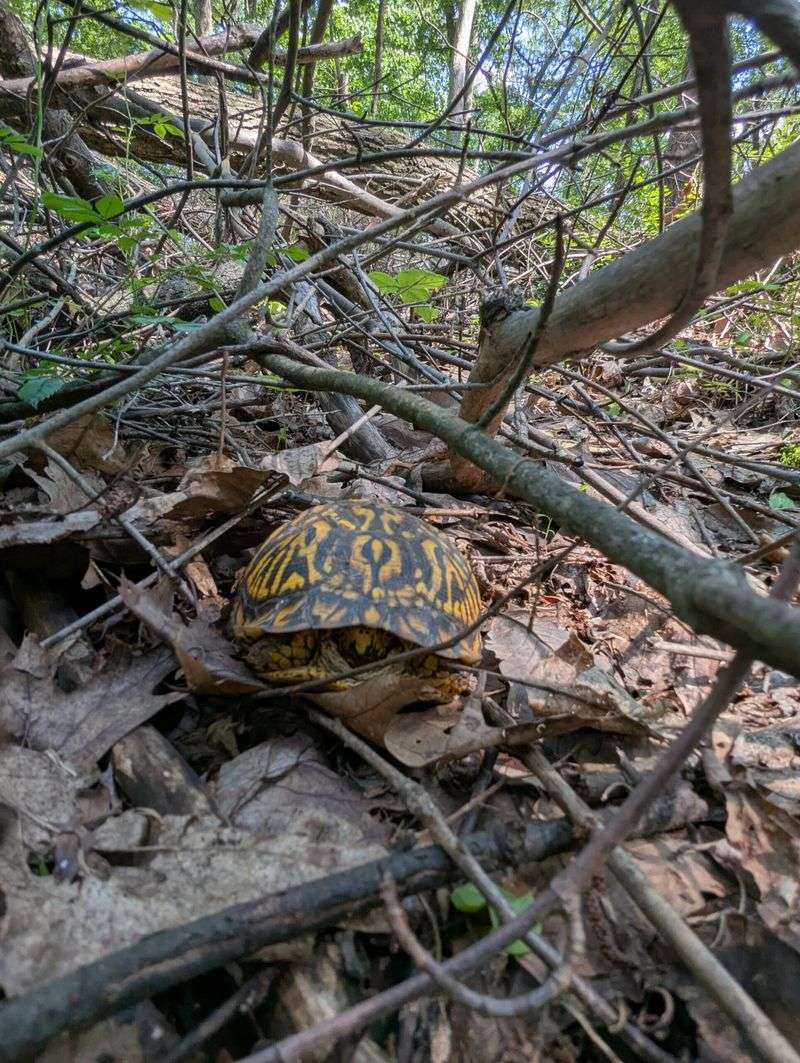
Here is where gardeners often get tripped up. When a turtle shows up in the beds, the temptation is to read it as a report card on the whole yard, healthy soil, good drainage, clean inputs. That interpretation goes further than the evidence supports.
What research actually connects to eastern box turtle habitat use is ground-level structure, not soil chemistry. A thermoregulation and habitat study of Terrapene carolina carolina found that temperature and humidity shape where these turtles rest and move, not the fertility or pH of the soil beneath them. A turtle can turn up in Piedmont red clay, sandy Coastal Plain soil, or mountain loam with equal comfort, as long as the microhabitat above the soil surface offers enough moisture and shelter.
Your North Carolina Garden Changes Every Week. Your Plan Should Too.
Gardening in North Carolina changes quickly throughout the season. Every Friday you’ll receive a simple weekly plan showing exactly what to plant, prune, fertilize, harvest, and protect so you never miss the right timing.
A 2020 spatial ecology study in the Journal of Wildlife Management found that eastern box turtles selected spots with deeper leaf litter, more low vegetation, greater visual obstruction, brambles, and coarse woody debris. Notice what is not on that list: pH, organic matter content, drainage class, or contamination history. One turtle visit cannot tell you whether your soil is ready to plant in, whether it needs lime, or whether it has ever seen a pesticide.
When you look at the bed where you found the turtle, check for the things the research actually names. Is the soil surface staying damp under the mulch? Is there enough low plant cover or a log nearby to break the wind and provide shade? Are there natural depressions or pockets where a turtle can tuck in?
Those features matter. A single turtle sighting is not a diagnostic result, it is a clue that at least one of those conditions was present on that morning.
Keep the habitat corner managed rather than abandoned. A tidy pile of stable logs, a few inches of leaf mulch, and a ring of native low plants can serve the turtle without creating drainage problems or tick habitat you cannot navigate.
A Turtle Will Not Solve Your Pest Problem
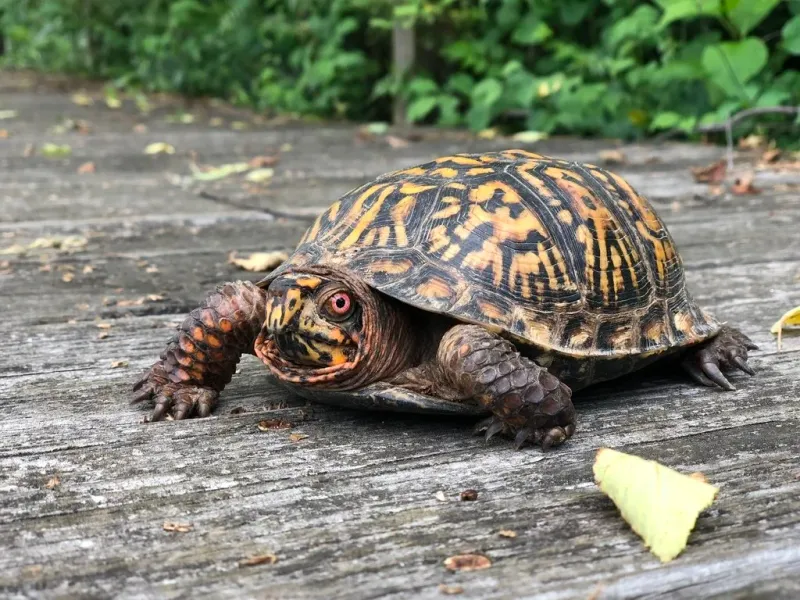
Many Piedmont gardeners spot the turtle, notice the slug trails on the hostas, and connect the dots in a hopeful direction. If the turtle is here, maybe it is cleaning up the pest problem. That connection is real in a limited sense, and misleading in a bigger one.
Eastern box turtles are genuine omnivores with a broad menu. The NC Wildlife Resources Commission documents their diet as including slugs, snails, beetles, caterpillars, worms, millipedes, spiders, mushrooms, berries, fallen fruit, flowers, grasses, carrion, and some small animals. Yes, slugs and snails are on that list. So are strawberries and fallen figs.
A turtle moving through your beds is eating whatever looks good at the moment, not working a targeted pest-control shift.
Research backs up just how varied that diet actually is. A study on eastern box turtle consumption patterns documented the generalist nature of their feeding, with animal and plant material both appearing regularly depending on season and availability. One turtle visiting your beds cannot establish whether Japanese beetles, stink bugs, ticks, or caterpillars are running high or low this year. Its presence does not signal a low pest load any more than it signals a high one.
Think of the turtle as one participant in a layered yard ecosystem rather than a solution to a specific problem. Slug pressure still calls for hand removal, copper barriers, or iron phosphate bait used according to the label. Japanese beetle populations still need scouting and targeted response. A turtle passing through may eat a few invertebrates along the way, and that is genuinely useful, but it is one small thread in a much larger web.
Counting on it to carry the pest-control load will leave you disappointed by August.
The Garden Bed May Be a Travel Stop
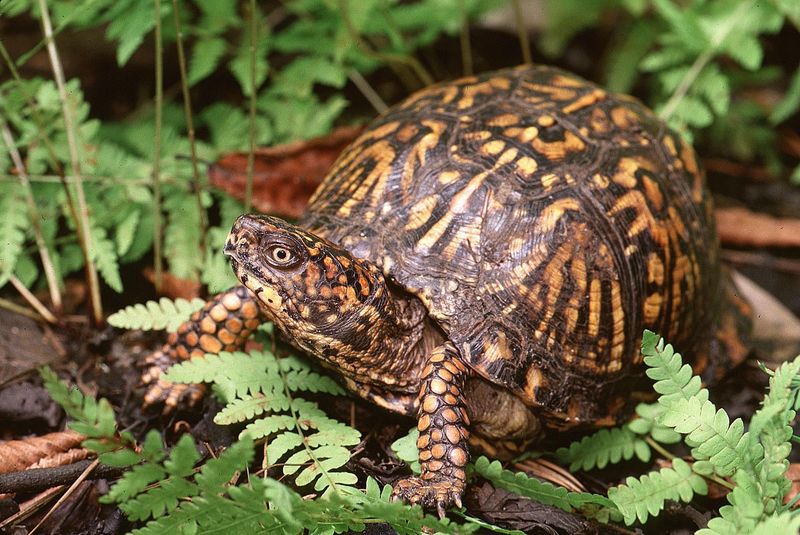
Spotting a turtle on Tuesday does not mean it will be there Friday. Eastern box turtles cover more ground than most people expect, and a garden bed visit is often a single frame in a much longer journey.
A USGS study on eastern box turtle movement and resource selection in an urban green space documented turtles moving through surrounding development, crossing into yards, pausing at food or cover sources, then continuing. That same study recorded a turtle becoming trapped under a garden fence and dying, which is a reminder that a yard a turtle can enter is not automatically a yard it can safely exit. The bed may be a feeding stop after rain, a cool refuge on a hot morning, or one waypoint on a home range that stretches well beyond your property line.
The NC Wildlife Resources Commission notes that box turtles can use forests, meadows, wetlands, field edges, and developed spaces across the full range of North Carolina. A single sighting does not prove a breeding population is living under your azaleas. It means one animal found something useful in your yard on that day.
Redefining what a safe yard actually means matters here. Roads bordering a neighborhood, solid fences with no gaps at the base, large dogs with yard access, lawn mowers running on thick summer grass, uncovered pools with steep walls, and pesticide runoff reaching low spots can all threaten a turtle that manages to get in. The question worth asking is not just why the turtle came but whether it has a clear path out. A yard that lets wildlife in but traps it is not actually safe, it is a one-way door.
Check the perimeter of your beds and fence line for gaps that allow passage at ground level. Turtles need roughly 6 inches of clearance to move through comfortably. Keeping at least one open corridor along a fence base or garden edge costs nothing and can make a real difference for a slow-moving animal trying to continue on its way.
Build One Safer Habitat Corner
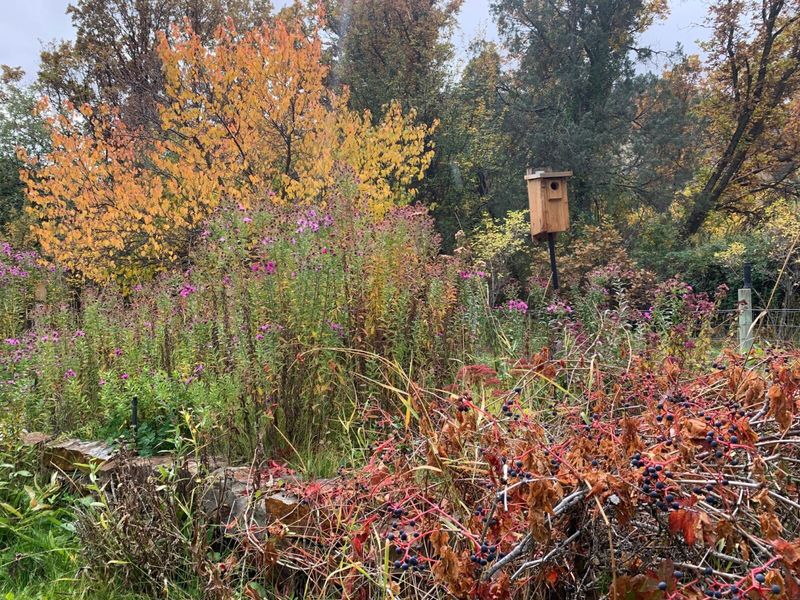
You do not need to rewild the whole property. One well-placed corner with a few specific features can make your yard genuinely more useful for a passing box turtle without turning your beds into a maintenance problem.
NC State Extension’s guide on reptiles and amphibians in your backyard recommends native plants, natural cover such as logs and branches, and reduced chemical use as the practical foundation for a reptile-friendly yard. That advice translates directly to a manageable habitat corner: keep some leaf litter in a defined area rather than blowing every leaf off the property, place one or two stable logs where they will not roll or create a tripping hazard, and let a patch of low native plants fill in around them.
Choosing the right natives makes the corner work harder. NC State Extension’s landscaping for wildlife with native plants resource points to species that support ground-level food webs. Goldenrod (Solidago spp.), Joe Pye weed (Eutrochium purpureum), and native sedges are well-suited to North Carolina yards and attract the invertebrates that feed turtles and other wildlife. Plant them within 10 to 15 feet of your log or brush area so cover and food stay close together.
On the log question, NC State Extension’s snags and downed logs guidance explains that decaying wood supports insects, fungi, and moisture retention, all things a turtle can use. Keep logs at least 10 feet from the house foundation to satisfy fire-safety and pest-management concerns, and position them where you can still see and access the area.
Water is not required. Box turtles are primarily terrestrial animals. The NC Wildlife and Outdoor Recreation Foundation notes that if water is present in a yard, shallow edges and easy exits matter most. A birdbath set at ground level with a ramp of flat stones works.
A steep-sided decorative pond does not need to be added on the turtle’s behalf, and it can actually become a drowning hazard if the walls are too smooth or tall.
Remove the Hazards You Can Control
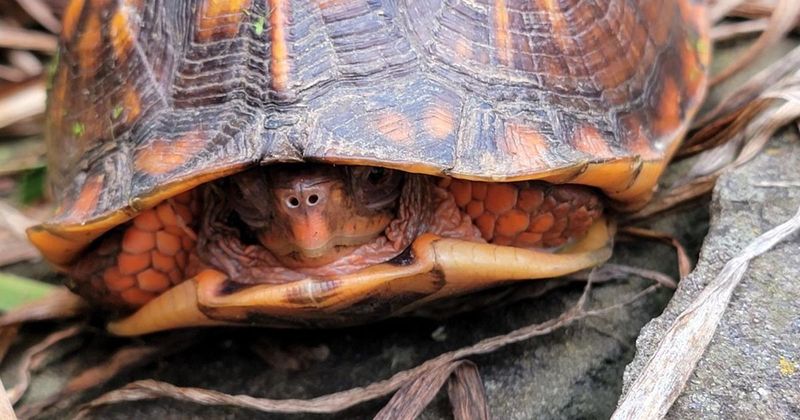
Building better habitat and reducing active hazards are two sides of the same effort. The turtle may have found something good in your beds, but that does not mean the rest of the yard is automatically safe for it.
Start with pets. NC State Extension’s reptile and amphibian guide specifically names outdoor pets as hazards and recommends limiting pet access around newly created habitat. Cats kill or injure small wildlife at high rates even when they are not hungry. Dogs can crush a turtle or flip it into a position where it cannot right itself.
Keeping cats indoors and walking dogs on leash around garden areas costs nothing and removes two of the most common yard-level threats.
Before mowing or clearing beds, walk the area first. Box turtles tuck into low vegetation and mulch and are easy to miss at mower speed. A few seconds of scanning before you pull the cord can prevent a collision that a turtle cannot survive.
On pesticides, a shell offers less protection than it looks like. The EPA’s T-HERPS risk guide for amphibians and reptiles evaluates exposure through contaminated prey, soil contact, foliage, spray drift, and runoff, not just direct spray. A turtle eating a slug that absorbed a pesticide can absorb that compound too. The EPA’s pesticide safety guidance recommends using nonchemical controls first, treating only the affected area, following label rates exactly, and never applying before rain or in windy conditions that carry drift toward low ground.
That advice applies whether the product is synthetic or labeled organic, because product safety depends on the specific active ingredient, rate, and timing, not just the marketing category.
Check fences for gaps that trap rather than guide. The USGS urban box turtle research documented a turtle that died after becoming trapped under a garden fence, which is a real and preventable outcome. A gap of roughly 6 inches at the base of a fence section along a garden edge gives a turtle a way through without creating a security problem for the yard.
Leave the Visitor Where It Is
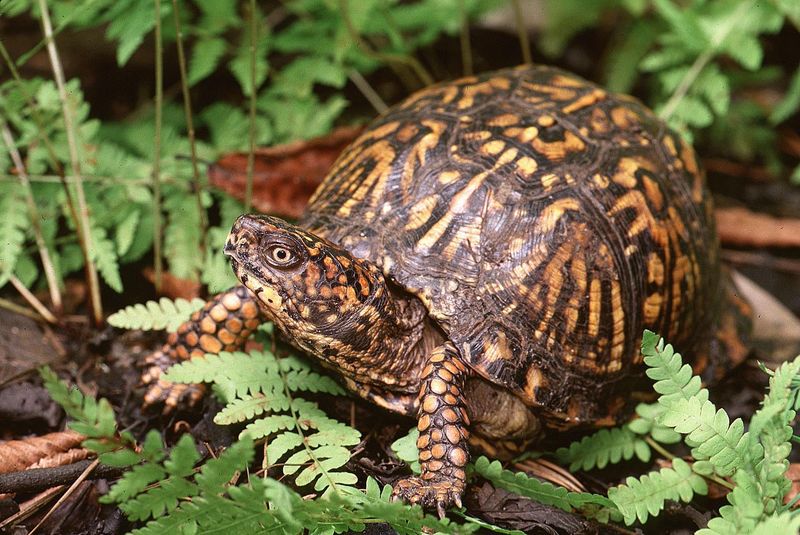
Finding a healthy turtle in your beds calls for one clear response: do nothing. Watch it from a few feet away if you want, but resist the urge to pick it up, relocate it to what looks like better habitat, or offer it food.
The NC Wildlife Resources Commission is direct on this point. Moving a healthy box turtle to a different part of the yard, a nearby woods, a pond, or another property can disorient it and cut it off from the shelter, food sources, nesting areas, and overwintering sites it already knows. Do not take it home. North Carolina classifies the eastern box turtle as a nongame species with no open season, meaning it cannot be legally kept or relocated without authorization.
If the turtle is in immediate danger, such as in a driveway where a car is about to back out, move it the shortest distance possible, ideally under 50 feet, to nearby cover. For a road crossing, the U.S. Fish and Wildlife Service guidance on helping turtles cross roads is clear: carry it across in the direction it was already traveling, and only do so when it is safe for you to step into the road. Do not turn it around.
A turtle crossing a road has a destination in mind and reversing its direction adds distance and risk.
A turtle that is bleeding, has a visibly cracked shell, cannot retract normally, or is unable to move is a different situation. Contact a licensed wildlife rehabilitator or your local NC Wildlife regional office rather than attempting home treatment. The NC Wildlife Commission specifically advises against taking a wild injured turtle home.
Females lay roughly 3 to 6 eggs per clutch, and young turtles may take 7 to 10 years to reach maturity, which means every individual that moves safely through a connected yard is worth protecting. The best thing you can do for the turtle is tend the habitat and stay out of its way, it genuinely knows where it is going.