What Florida’s August Fertilizer Ban Means For Your Yellowing Lawn
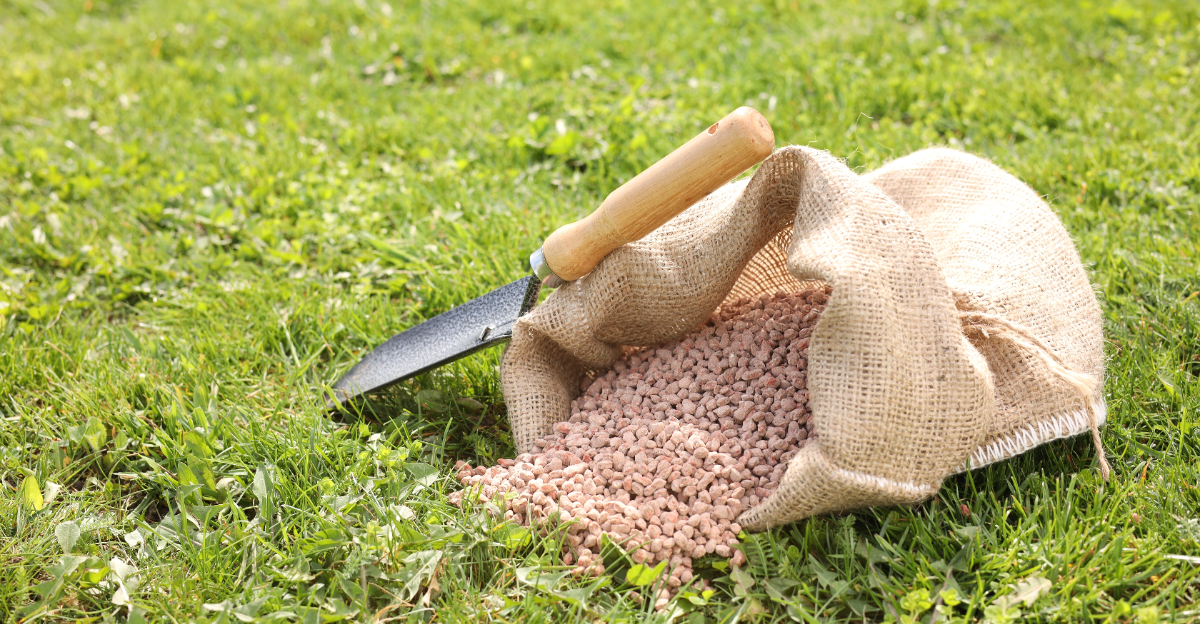
Your lawn is turning yellow right now, and the fertilizer bag sitting in your garage isn’t allowed to fix it. Many Florida counties enforce a summer blackout period on nitrogen and phosphorus fertilizer, and August falls right in the middle of it.
The ban exists to protect waterways from runoff during heavy rain season, but it leaves plenty of homeowners staring at pale, stressed grass with their hands tied.
The good news: fertilizer isn’t the only reason a lawn turns yellow, and it’s rarely the fastest fix even when it’s allowed.
A few other factors are likely doing more damage than a missed feeding ever could. Your lawn’s color problem has a solution that doesn’t involve breaking any rules.
It just requires looking at the right cause instead of reaching for the usual bag.
1. Check Your Address Before You Reach For Fertilizer
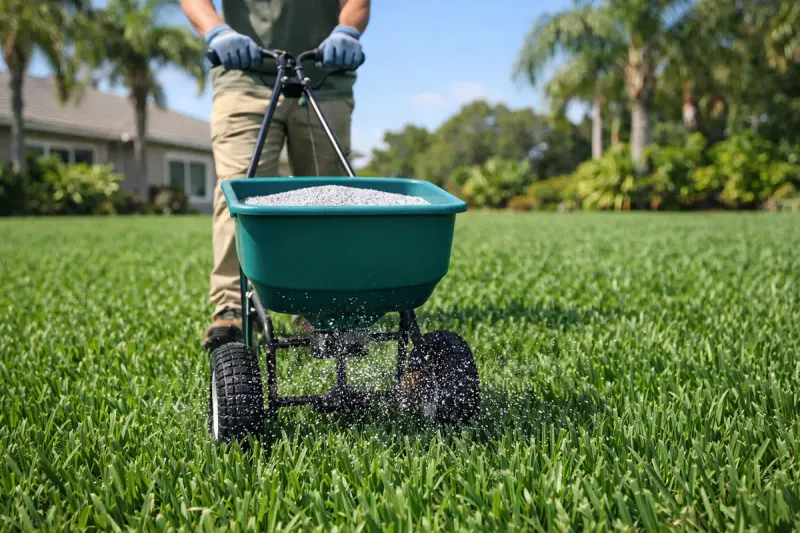
Not every neighborhood in Florida follows the same fertilizer calendar. Fertilizer rules are set at the county or municipal level, so dates and restrictions can differ significantly from one zip code to the next.
A restriction that applies in one city may not apply in the town just a few miles away.
Some local ordinances limit or prohibit nitrogen and phosphorus applications during part or all of the summer rainy season. Others focus only on nitrogen near waterways.
The details vary, and assuming your neighbor’s rules match yours can lead to a costly mistake.
The most reliable first step is to contact your county Extension office or check your county’s official government website. Look for the actual ordinance language, not a summary from a third-party source.
County Extension offices connected to UF/IFAS can point you toward the right document and explain what it covers.
Checking your address before buying or applying any product saves time and money. It also keeps you on the right side of local rules that exist to protect water quality during the rainy season.
The question is not whether a restriction exists somewhere in the state. The question is whether it applies where you live, right now, this month.
2. Yellow Grass Does Not Automatically Need Nitrogen
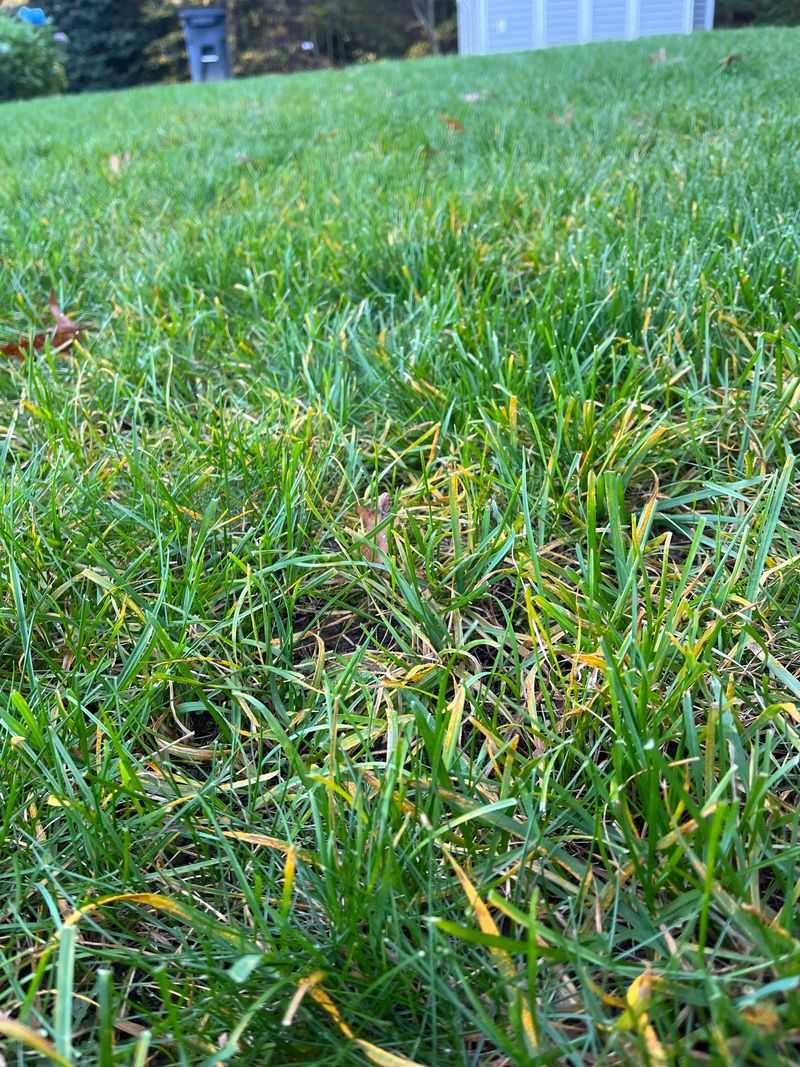
A pale or yellowish lawn is easy to misread. Color alone does not tell you which nutrient is missing, or whether a nutrient is the problem at all.
Several completely different conditions can turn grass yellow, and nitrogen deficiency is only one of them.
Poor irrigation coverage can leave dry spots that fade and thin out. Waterlogged soil from heavy summer rains can stress roots and turn blades pale.
Fungal diseases, insect feeding, soil compaction, and shade can all produce similar symptoms. Applying nitrogen fertilizer when the real cause is something else will not fix the problem.
UF/IFAS guidance consistently emphasizes diagnosis before treatment. Look at the pattern of discoloration first.
Is it spread evenly across the lawn, or concentrated in specific spots? Is it near a sprinkler head, a shaded area, or a low-lying spot that stays wet?
Your Florida Garden Changes Every Week. Your Plan Should Too.
Gardening in Florida changes quickly throughout the season. Every Friday you’ll receive a simple weekly plan showing exactly what to plant, prune, fertilize, harvest, and protect so you never miss the right timing.
Patterns give clues that color alone cannot.
Skipping the diagnosis step and applying fertilizer anyway wastes money and can create new problems. Nitrogen applied to already-stressed turf during wet weather may encourage disease rather than recovery.
Taking a few minutes to observe the lawn carefully before buying anything is a practical habit that pays off quickly.
3. Summer Color Can Fade Even While Grass Is Growing
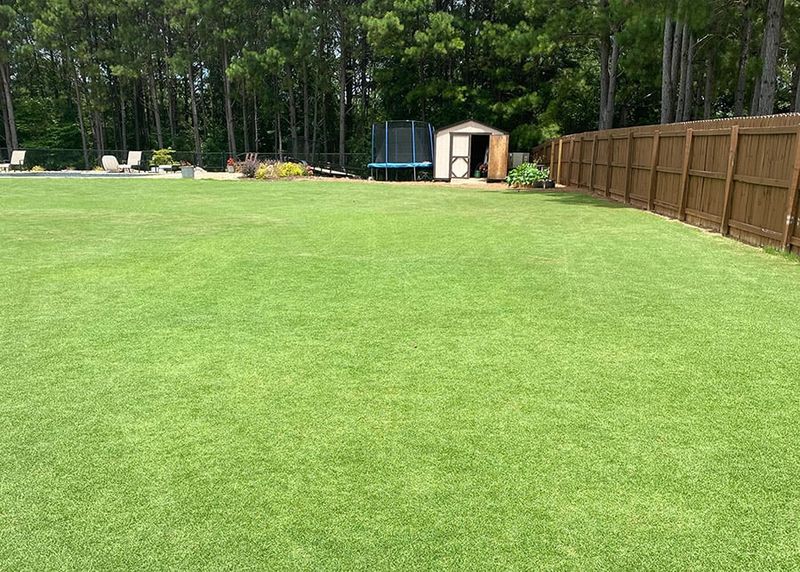
A lawn can look lighter in August than it did in May without anything being seriously wrong. Summer heat, intense rainfall, shifting soil chemistry, and natural growth cycles all affect color.
Chasing a deep green shade during the hottest months of the year can push homeowners toward treatments the turf does not need.
Different grass species have different natural color ranges. Bahiagrass tends to run lighter than St. Augustine.
Zoysia can look uneven during periods of rapid growth. Centipede naturally leans toward a lighter green even when it is perfectly healthy.
Comparing your lawn to a neighbor’s different grass type is not a reliable benchmark.
Excessive fertilizer applications during wet summer weather can actually create more problems than they solve. Fast growth during a period of high disease pressure and frequent rain puts turf under additional stress.
Mowing demand increases, thatch can build up faster, and fungal activity may follow.
A lawn that looks slightly lighter in August may simply be responding to summer conditions. If it is not thinning, developing withered patches, or slowing growth, the color change may not signal a serious problem.
Watching for actual decline rather than reacting to color is a more accurate way to judge whether the turf truly needs intervention right now.
4. Iron Can Improve Color Without Pushing Fast Growth
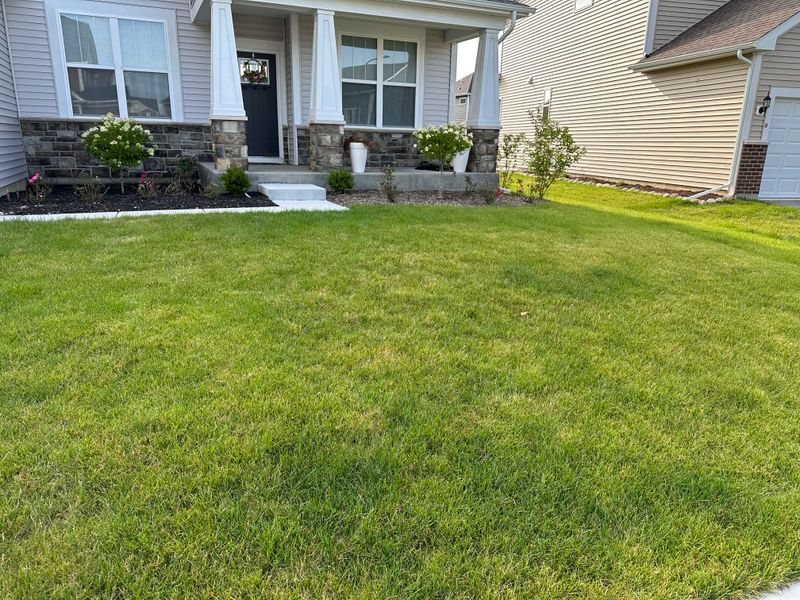
UF/IFAS guidance separates iron deficiency from nitrogen deficiency because they produce different symptoms and require different responses. Iron deficiency typically shows up as yellowing between the leaf veins while the veins themselves stay green.
Nitrogen deficiency tends to produce a more uniform pale color across the entire blade.
Iron products can improve the green color of turf when iron is actually the limiting factor. They work without stimulating the rapid shoot growth that nitrogen causes.
During a period when your local ordinance restricts nitrogen, an iron supplement may be a legal and useful option, but only if iron is what the lawn actually lacks.
Iron is not a substitute for nitrogen when the turf genuinely needs nitrogen. Applying iron to a nitrogen-deficient lawn will not correct the underlying problem.
Color may improve slightly in some cases, but the turf will not receive the building blocks it needs for healthy growth and recovery.
Before applying any iron product, read the label carefully and confirm that the product complies with your local ordinance. Some formulations include nitrogen or phosphorus alongside iron, which may not be permitted during a restricted period.
Diagnosis still matters here, and local rules still apply regardless of which product is on the shelf.
5. More Water Will Not Fix Every Yellow Lawn
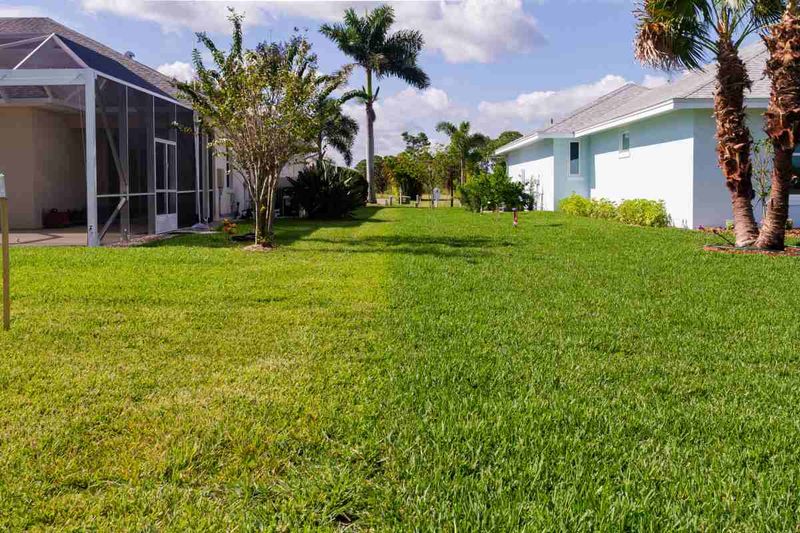
Reaching for the irrigation controller is a common reaction when grass starts looking pale. Sometimes that instinct is right, but often it leads to overwatering a lawn that already has enough moisture from summer rainfall.
Poor sprinkler coverage can create dry zones that turn yellow and thin even when the rest of the lawn looks fine.
Checking each zone by running the system manually and watching where water actually lands is a more useful step than simply increasing run time across the board.
On the other hand, too much water creates its own set of problems. Saturated soil limits oxygen around the roots, which can stress the turf and create conditions that favor fungal disease.
A lawn that is watered too frequently during a wet summer may look worse over time, not better, even without any nutrient shortage involved.
Soil moisture is easy to check by pushing a screwdriver or a thin probe six inches into the ground. If it slides in easily, the soil has enough moisture.
If it resists, the area may need water. Checking coverage and soil moisture before adjusting any irrigation schedule gives you real information to work with, rather than guessing based on color alone.
6. Bugs And Disease Can Look Like A Fertilizer Problem
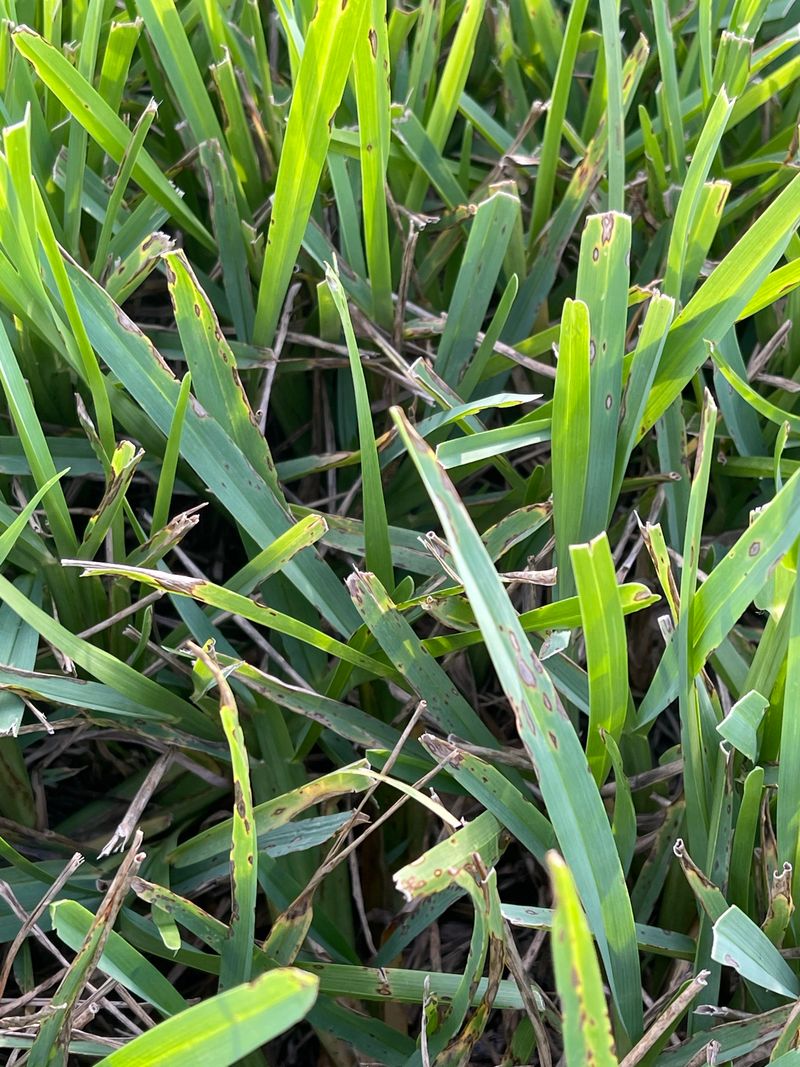
Late summer brings heat, humidity, and high insect and disease pressure to Florida lawns. Chinch bugs, fall armyworms, and sod webworms can all create yellow, brown, or thinning patches that look surprisingly similar to nutrient deficiency from a distance.
Fungal diseases are also common during the rainy season. Gray leaf spot and large patch can spread quickly under wet, humid conditions, producing discolored areas that a homeowner might mistake for a feeding problem.
Applying nitrogen fertilizer to a lawn struggling with active disease can make the situation worse, not better.
Looking at the pattern and location of damage helps narrow down the cause. Chinch bug damage often starts near pavement or sunny edges and spreads inward.
Armyworm feeding can appear quickly and cover large areas in a short time. Disease patches tend to have irregular edges and may show a darker border at the margin of affected turf.
UF/IFAS and local Extension offices provide identification resources for common Florida turf pests and diseases. Getting an accurate identification before choosing any treatment is the most direct path to actually fixing the problem.
Fertilizer cannot undo insect feeding or stop a fungal infection, so applying it without first ruling out those causes is a step that rarely helps.
7. The End Of The Ban Is Not A Signal To Dump Nitrogen
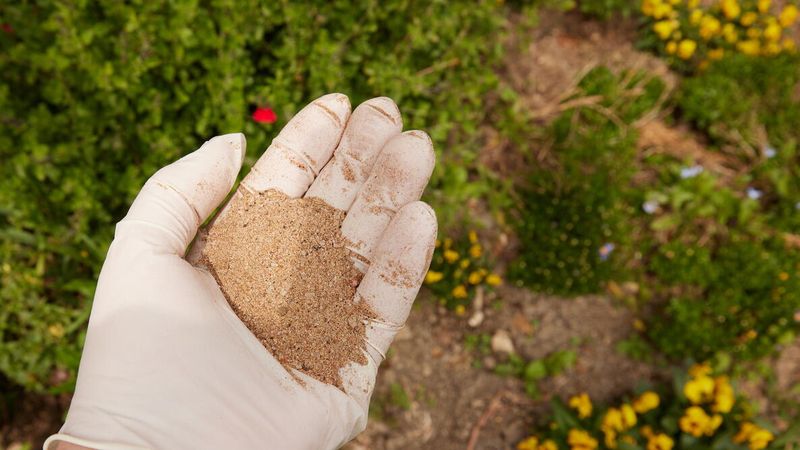
When a local restricted period ends, it can feel like a green light to make up for lost time. That reaction is understandable, but applying a large amount of nitrogen all at once is not how turf recovery works.
More fertilizer does not mean faster improvement.
Fertilizer rates should still follow the turf species, current season, product label, and current UF/IFAS recommendations for your region.
North, Central, and South Florida have different seasonal growth patterns, and what makes sense in one part of the state may not apply in another.
In North Florida, fall is a reasonable time to make a final nitrogen application before cool-season slowdown begins. In South Florida, warm-season grasses may stay active longer, but rate limits still apply.
Applying too much nitrogen at any time of year can push excessive growth, increase thatch, and raise the risk of disease.
The legal end of a restricted period gives you permission to fertilize again according to local rules. It does not change what the turf actually needs or how much it can use productively.
Checking the UF/IFAS recommendations for your specific grass type and region before applying anything is still the right move, even after the restriction lifts.
8. Let The Cause Of The Yellowing Decide Your Next Move
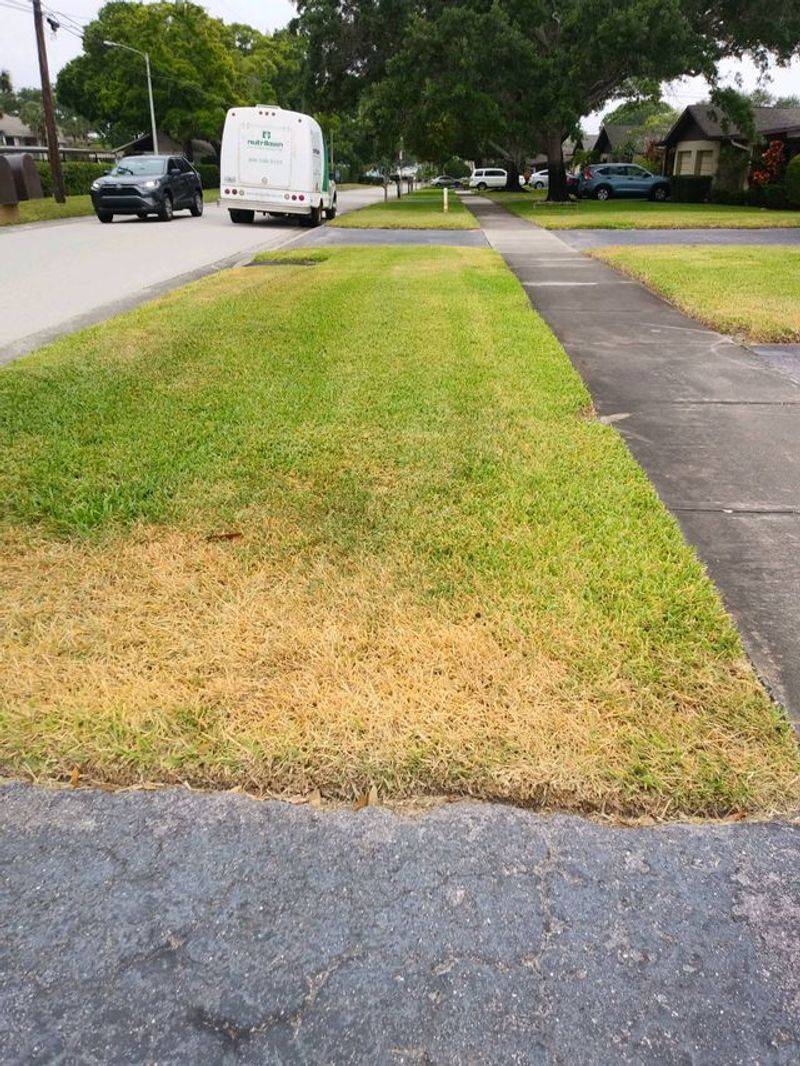
Go back to that yellowing lawn for a moment. The right response depends entirely on what is actually causing the problem.
A lawn with a real nutrient deficiency needs a different approach. Dry spots, waterlogged roots, insect feeding, and fungal infections each require their own response.
Start by observing the pattern, timing, and location of the discoloration. Check soil moisture with a simple probe test.
Run the irrigation system and watch for gaps in coverage. Look at the grass blades closely for signs of insect activity or disease symptoms.
Each of these steps gives you information that color alone cannot provide.
If you identify a potential cause, check whether your local ordinance allows the appropriate treatment right now. If nitrogen is restricted but iron is not, and iron deficiency is the actual problem, that changes your options.
If insects are feeding, no fertilizer product will correct that damage regardless of what the local rules say.
An August fertilizer restriction does not leave homeowners without options. It simply makes accurate diagnosis more important than ever.
First determine what the lawn actually needs and check the local rules. Then use the right treatment in the right amount instead of reacting to color alone.
Start with the cause, and the right next step usually becomes clear.