What It May Mean When You See a Curve-Billed Thrasher in Your Arizona Yard
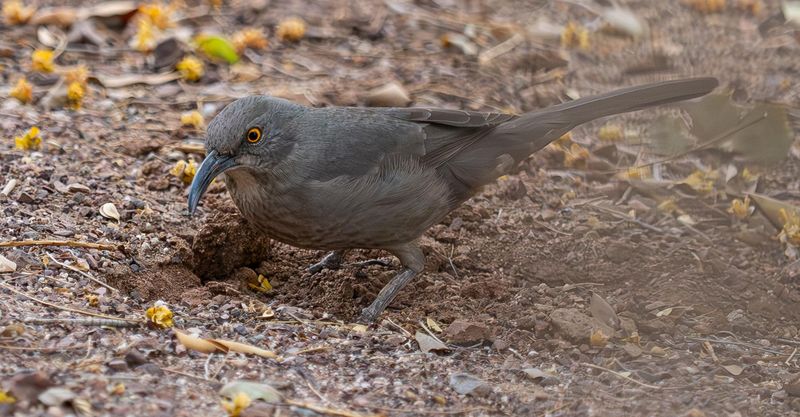
Spotting a Curve-billed Thrasher poking around your Arizona yard can make you wonder what brought it there and what it might do next. These striking birds are at home in desert landscapes, and a suburban yard with the right mix of plants and open ground can look a lot like natural habitat to them.
Understanding what a visit may actually mean, and what it cannot tell you, helps you respond in a way that is good for the bird and honest about what you are seeing.
A Sighting Does Not Prove the Bird Moved In
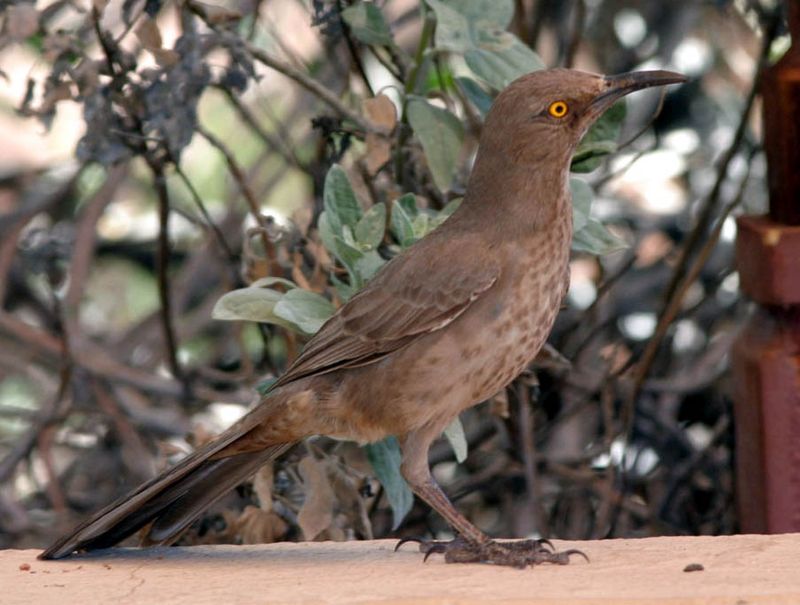
Seeing a Curve-billed Thrasher in your yard more than once is easy to interpret as proof that a new bird has settled in. That reading is understandable, but it skips over something worth knowing: Cornell Lab of Ornithology’s life history account describes the Curve-billed Thrasher as a year-round resident across its range, with pairs that may hold territories year-round as well.
A bird that suddenly becomes noticeable in your yard may simply be one that was always nearby, moving through a familiar patch of territory it has used for months or longer. Seasonal changes in vegetation, your own schedule, or shifts in where the bird forages can all make it more visible without any actual change in where it lives.
Repeated visits are reasonable evidence that your yard offers something useful, whether cover, foraging ground, or both. What those visits cannot confirm is that the bird just arrived, that it has formed a new pair, or that it has decided to nest in your yard.
Keeping that distinction in mind helps you stay curious without jumping to conclusions a single sighting cannot support.
Arizona Yards Can Offer Familiar Desert Habitat
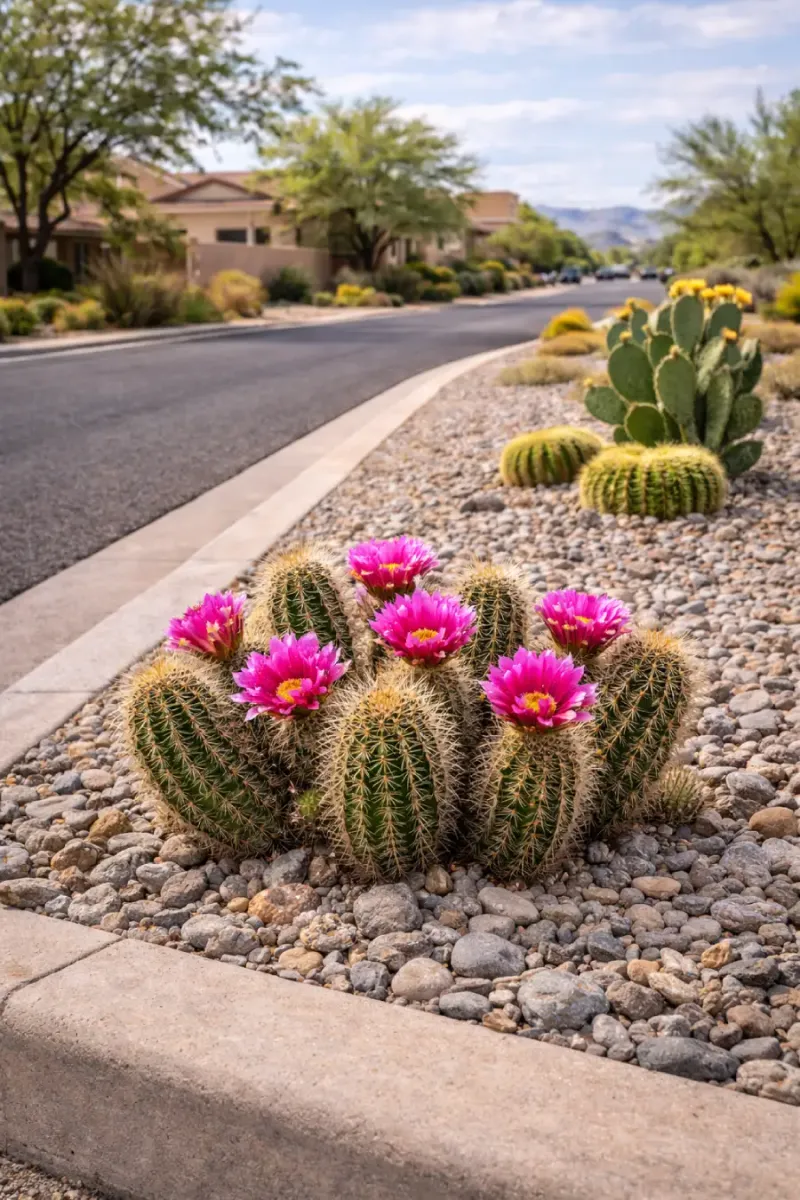
Curve-billed Thrashers evolved alongside the Sonoran Desert’s signature plants, including creosote, saguaro, palo verde, and cholla. Many Arizona yards, especially in the Tucson and Phoenix metro areas, contain enough of this same vegetation to read as familiar ground to a thrasher moving through a local territory.
Suburban neighborhoods do not automatically disqualify a yard from being useful to this species. Where shrubs and cactus provide cover and thorny structure, and where patches of open ground or leaf litter give the bird somewhere to work, a yard can function as a reasonable extension of desert habitat.
The bird is not necessarily making a deliberate choice about your property; it may simply be following a route that includes your yard because the conditions there are similar to what it uses elsewhere.
Habitat features like dense shrubs, low-canopy plants, and accessible soil can help explain why a thrasher returns repeatedly. What those features cannot do is prove that any specific plant drew a particular bird.
The connection between habitat and visits is real in a general sense, but it does not work as a precise cause-and-effect explanation for an individual sighting.
Ground Foraging Is Part of the Yard Visit
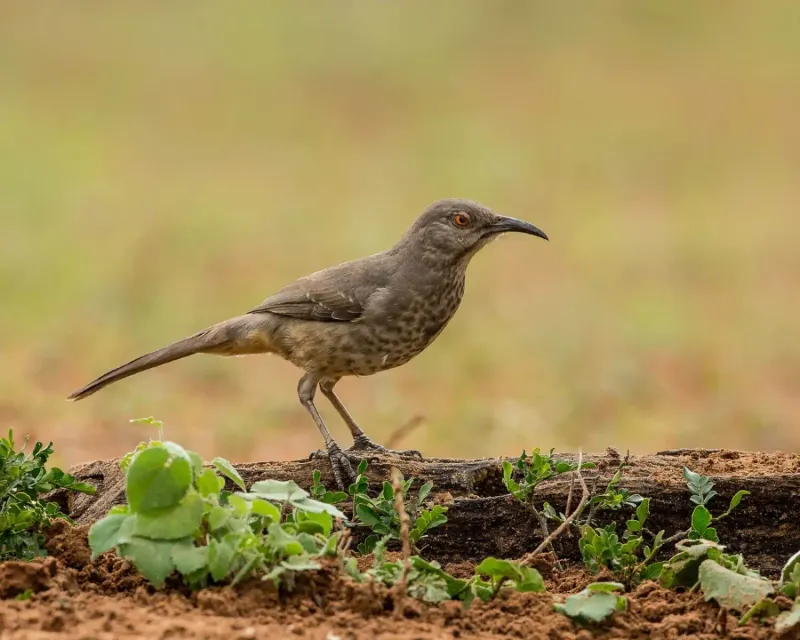
One of the most distinctive things about watching a Curve-billed Thrasher in a yard is how it moves across the ground. Rather than pecking at the surface, the bird uses its long, curved bill to sweep aside leaf litter and dig into loose soil, working methodically through an area in search of food.
Your Arizona Garden Changes Every Week. Your Plan Should Too.
Gardening in Arizona changes quickly throughout the season. Every Friday you’ll receive a simple weekly plan showing exactly what to plant, prune, fertilize, harvest, and protect so you never miss the right timing.
Its diet is varied. According to the Cornell Lab’s life history profile, thrashers eat insects and other invertebrates along with berries, cactus fruit, and seeds.
A peer-reviewed study of nestling diets in south Texas found that young thrashers were fed largely terrestrial arthropods, including grasshoppers, beetles, caterpillars, and arachnids. That research documents what chicks were fed in one region; it does not translate into a prediction about how many insects a thrasher will consume in your specific yard.
Watching the bird forage is worth appreciating on its own terms. The sweeping, digging behavior is ordinary and efficient, and the thrasher is simply doing what it does across whatever ground it uses.
Seeing it work through your yard’s soil or plant litter is a sign that the bird finds the area worth investigating, not a signal of anything unusual about your property.
Could the Bird Be Nesting in Your Yard?
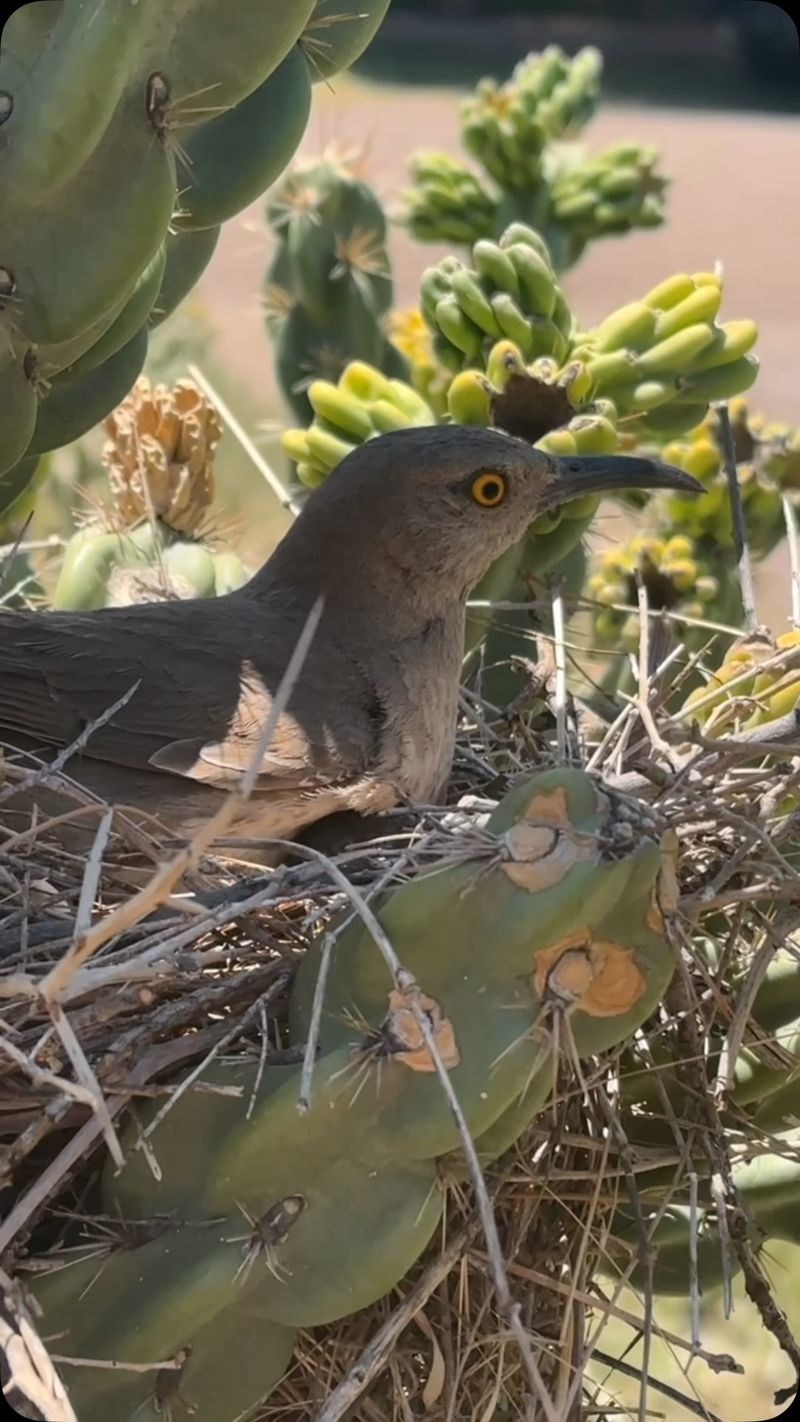
A visit does not confirm that a thrasher is nesting in your yard, even if the bird shows up regularly. Nesting requires a suitable site, a mate, and the right conditions, none of which can be assumed from observation alone.
When thrashers do nest, they typically place the nest a few feet above ground in thorny plants that offer protection, with cholla being a commonly documented choice. Mesquite, prickly pear, yucca, and other shrubs also serve as nest sites.
The structure itself is a loose cup of twigs lined with softer material, and it blends into spiny vegetation well enough that it can be easy to miss.
Timing in Arizona is not fixed. A Tucson Bird Alliance account drawing on Arizona Breeding Bird Atlas records describes Curve-billed Thrashers beginning nests as early as January or February following wetter winters, while drier winters can push first attempts back to April or May.
That documented range reflects historical observations from Tucson-area fieldwork conducted in the 1990s and is not a precise forecast for any particular yard or year.
If you suspect a nest is nearby, look carefully into cholla or dense shrubs before assuming. And if you do find one, the right response is to leave it alone and observe from a comfortable distance.
A Thrasher Is Not a Scorpion Forecast
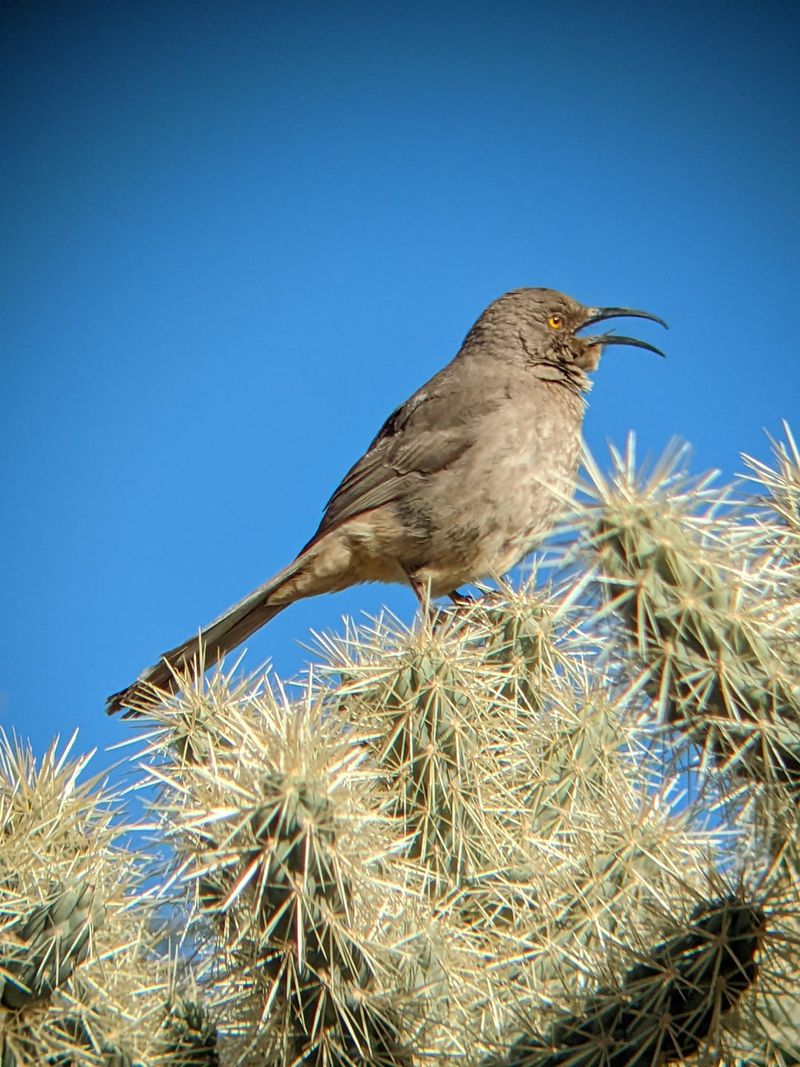
Homeowners who spot a thrasher sometimes wonder whether it means scorpions are nearby, or whether the bird will take care of a scorpion problem. Both ideas are worth setting aside.
Curve-billed Thrashers eat a wide range of food, including insects, arachnids, fruit, and seeds. That broad diet does not mean the bird tracks scorpion populations or that its presence in your yard signals anything about how many scorpions are there.
The sources available do not show any documented relationship between thrasher visits and scorpion abundance in a given location.
The same logic applies to pest control more generally. A bird that eats invertebrates as part of a varied diet is not the same as a bird that meaningfully reduces pest numbers in a specific yard.
General insect-eating behavior does not translate into a reliable or measurable reduction in scorpions, beetles, or any other particular invertebrate in your outdoor space. Enjoy the thrasher for what it is: a well-adapted desert bird doing its own thing.
Its diet is interesting and varied, but it is not a service the bird is providing to your property.
Support Wildlife With Habitat, Not Guarantees
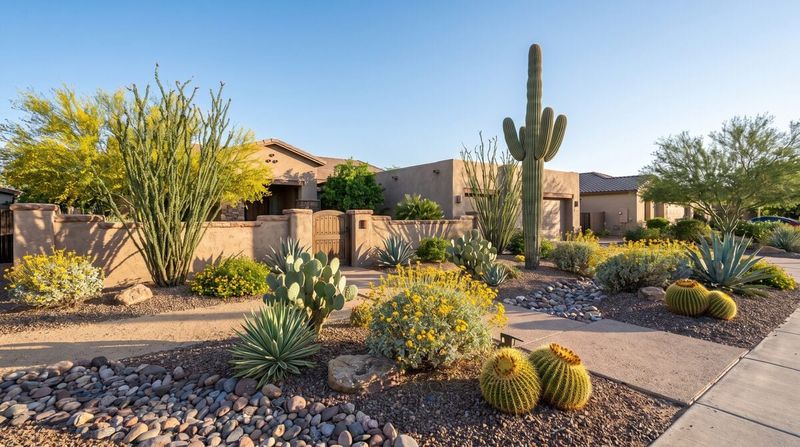
For homeowners who want their yard to be more welcoming to wildlife in general, a practical starting point is the food, water, cover, and space framework. Each element plays a role, and improving any one of them can make a yard more functional for a range of species, not just thrashers.
University of Arizona Cooperative Extension guidance on landscaping for wildlife notes that fruiting plants can provide food for birds while thorny vegetation can offer potential nesting sites. A shallow water source, kept clean and refreshed regularly, is useful to many birds and other desert animals, especially during Arizona’s hot months.
Plant choices should suit your property and your preferences. Native and desert-adapted species tend to perform better in low-desert conditions, and the University of Arizona Cooperative Extension’s guidance on choosing plants advises matching species to your site’s soil, sun exposure, and water availability rather than following a single prescribed list.
Thorny plants can be genuinely useful in a desert yard, but that does not mean every homeowner needs to install cholla or a specific cactus to benefit wildlife.
Making habitat improvements does not guarantee a thrasher will arrive or stay. What it does is give a broader range of desert wildlife a better chance of finding something useful in your yard over time.
Give Nests and Young Birds Space
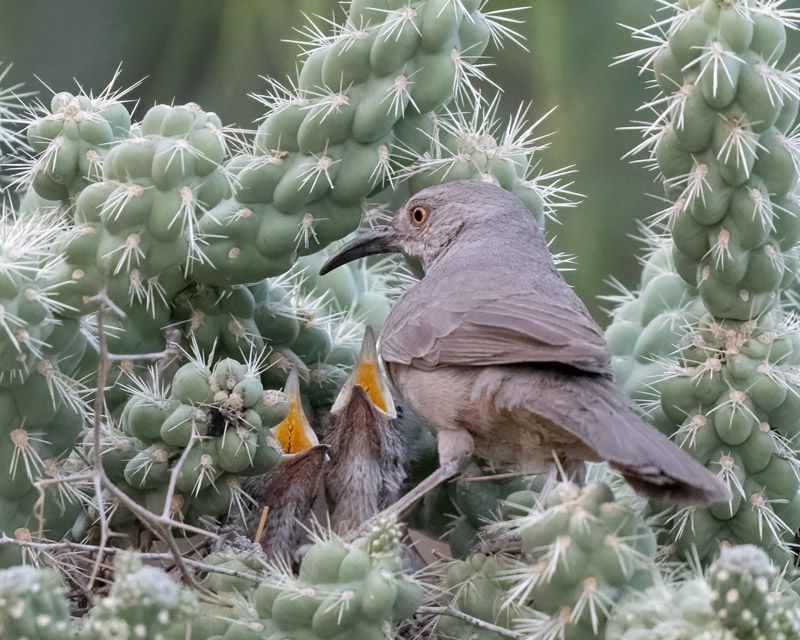
Finding a nest or a young bird in your yard can feel like a moment that requires action. Most of the time, the best response is to step back and give the birds room.
Parent thrashers remain attentive to their nests and young, but they will often stay away when people are nearby. According to Arizona Game and Fish Department guidance on baby wildlife, parents commonly return once people move away.
Staying at a distance, rather than approaching to check on the nest or chick, gives the adults the space they need to continue caring for their young.
Do not handle, relocate, or attempt to move a nest or young bird. If a fledgling appears to be on the ground and healthy, it is likely in the normal process of learning to move around outside the nest, with parents still nearby.
If an animal appears clearly sick or injured, the appropriate step is to contact a licensed wildlife rehabilitator rather than attempting to help the bird yourself.
On the question of nest removal, the U.S. Fish and Wildlife Service explains that taking migratory birds or their eggs is prohibited under federal law, and that removing an active nest carrying birds or eggs creates legal risk.
Empty nests do not carry the same automatic prohibition, but the rules are worth understanding before assuming any nest can be freely removed. When in doubt, leave the nest where it is and let the season run its course.
A yard that has hosted a thrasher nest once may well see one again.