What It Really Means When Bluebirds Suddenly Quit Your North Carolina Yard In Late Summer
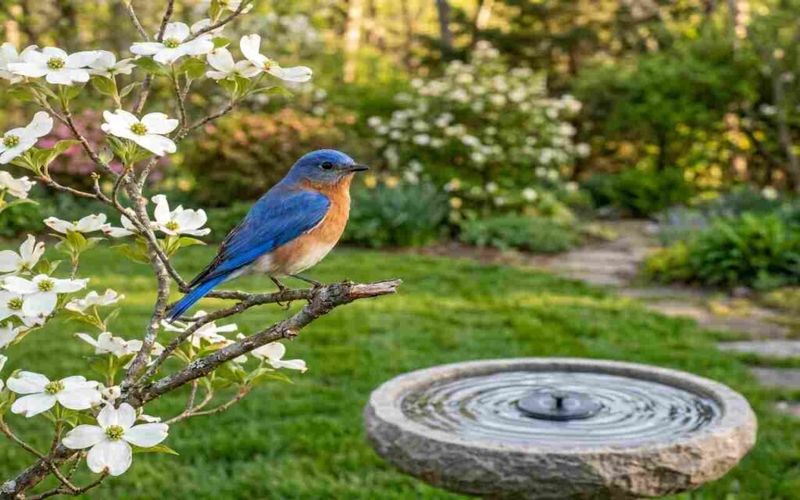
You step outside one August morning, coffee in hand, and the bluebird box is completely still. No flicker of blue at the entrance, no chatter from the fence post, nothing. If that box was busy all spring and early summer, the silence can feel like something went wrong. Most of the time, though, a quiet box in late summer tells a very different story than the one your gut is writing.
A Quiet Box Usually Marks the End of Nesting
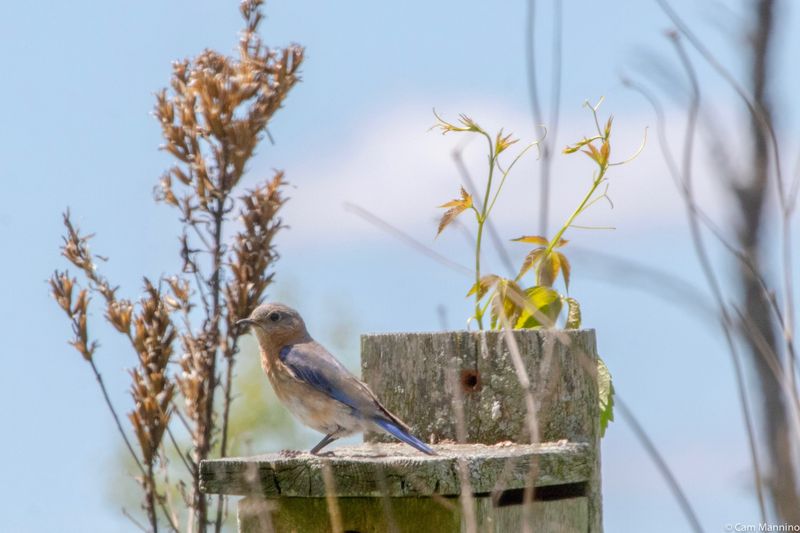
Around the time the heat really settles in across North Carolina, something shifts for Eastern Bluebirds, and most homeowners mistake it for bad news. After the final brood of the season fledges, the adults stop defending that one nest site entirely. The box does not get abandoned so much as it gets retired for the season.
According to the NC Wildlife Resources Commission’s Eastern Bluebird profile, bluebirds typically raise two or three broods in North Carolina. Once the last brood leaves, the family group stops anchoring itself to a single territory and starts moving around as a loose flock. That means the box you watched all spring may sit untouched for weeks, not because anything scared the birds away, but because they no longer need a nest.
The behavioral shift is real and well-documented. Eastern Bluebirds move from defending a nest site and delivering food to nestlings, to post-breeding flocking and broader foraging across a wider landscape. A yard that once felt like the center of their world becomes just one stop among many.
What this means practically is that a quiet box in August is most often a sign of success, not failure. The birds raised their young, the young flew, and the family moved on to the next phase of the year. The yard did not drive them off. The season simply turned, and the bluebirds turned with it.
The Birds May Be Nearby but Harder to See
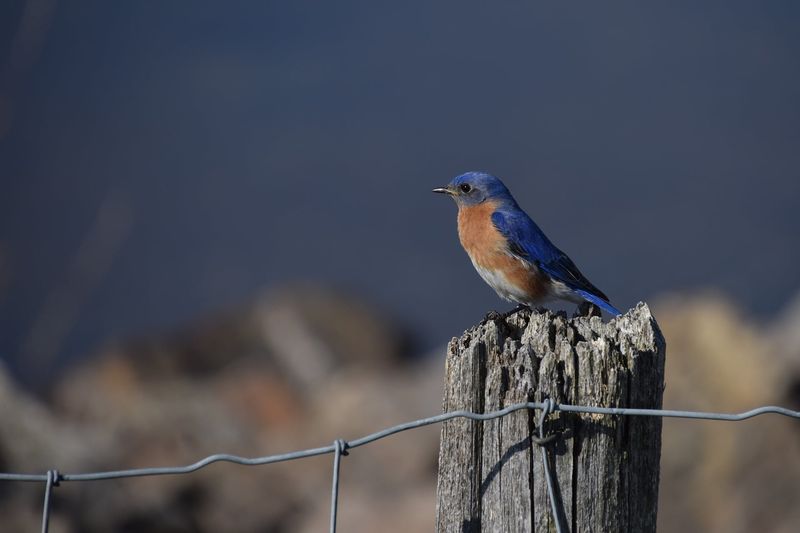
Here is where it gets tricky. The bluebirds may not have gone far at all, but you might never know it from the box alone. After nesting wraps up, adults and fledged young gather into loose flocks and roam a wider area in search of food. The familiar fence post and the box beneath it are no longer the center of their daily routine.
The U.S. Forest Service’s Eastern Bluebird species review describes this post-breeding movement as a normal shift, with birds ranging more broadly once the demands of raising nestlings are finished. A yard that hosted a pair all spring might see the same birds only occasionally in late summer, as part of a wider circuit that now includes neighboring fields, orchards, and open areas.
One thing worth clearing up: most North Carolina Eastern Bluebirds are not migrating south every August. The species is largely nonmigratory or moves only locally within the state. What can happen in fall is that birds from farther north join local flocks, which sometimes makes the numbers look different. But the birds you watched nesting are more likely still in the general neighborhood than somewhere in Florida.
Your North Carolina Garden Changes Every Week. Your Plan Should Too.
Gardening in North Carolina changes quickly throughout the season. Every Friday you’ll receive a simple weekly plan showing exactly what to plant, prune, fertilize, harvest, and protect so you never miss the right timing.
If you want to catch a glimpse, look beyond the box. Scan fence lines, power wires, and the tops of low shrubs at the edge of open areas. You may spot them foraging, perched, or moving through as a small group. They have not quit your property, they have just widened their territory considerably, and a quiet box is the most visible sign of that change.
Late-Summer Timing Offers a Clue, Not a Deadline
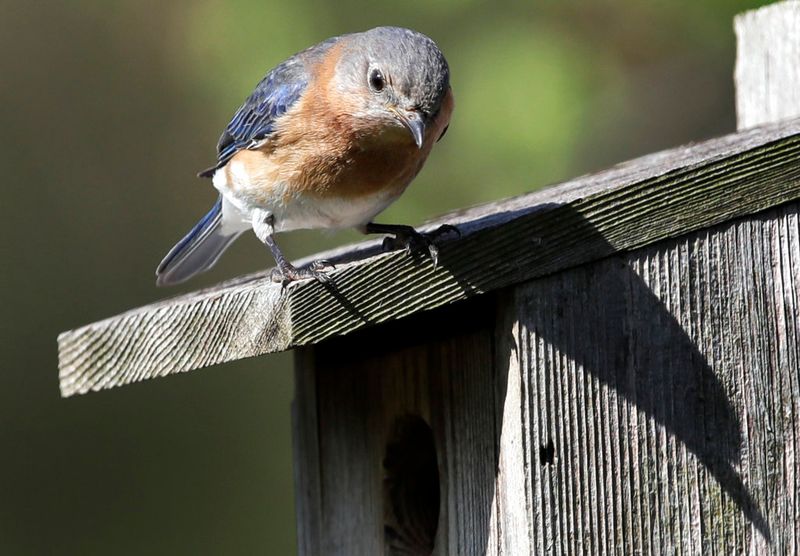
Knowing roughly when bluebird nesting wraps up in North Carolina helps you read a quiet box more accurately. NC Wildlife’s bluebird profile notes that the species commonly raises two or three broods here, with a possible third brood extending into early August. So a box that goes quiet in late July or early August is likely sitting right inside a completely normal seasonal window.
Timing, though, is not a strict statewide deadline. Local conditions matter, including how the spring nesting attempts went, what the weather did, and how quickly the first and second broods progressed. A pair that had a successful first brood early may finish their season sooner than a pair that lost a clutch and started over. Haw River State Park’s 2022 nesting season summary shows how closely observers tracked brood timing in one part of the Piedmont, and how much variation can show up even within a single site.
eBird’s Eastern Bluebird range and status data also reflects that bluebird activity patterns shift noticeably across the state as summer progresses into fall. Use what you observed in the box alongside the calendar. If the box had active young in late June or early July, and it went quiet by mid-August, the timing fits the seasonal pattern well. That context is more useful than any single date.
Know When a Disappearance Deserves Investigation
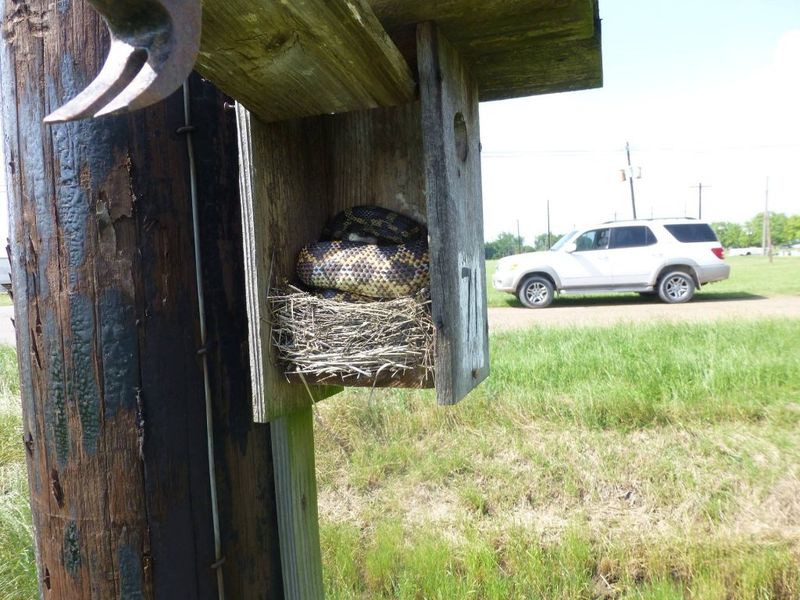
A box that goes quiet after fledging is one thing. A box that goes quiet in the middle of an active nesting attempt is something else entirely, and the difference matters. Most late-summer silences in North Carolina fall into the first category, but a few do not, and knowing which is which helps you respond correctly.
An empty box in August, by itself, does not tell you that heat, a summer storm, pesticide drift, someone mowing too close, or a predator visit caused the birds to leave. Those are possible explanations in some situations, but they are not the default reading.
NC Wildlife’s Eastern Bluebird species page is clear that post-breeding flocking is a normal and expected behavior, not a response to a problem.The warning signs that actually call for a closer look are concrete. Abandoned eggs still in the nest when no adults are returning. Dead nestlings inside the box. Damage to the box hardware, a missing entrance hole cover, or claw marks around the opening.
Nesting material that has been pulled out or scattered on the ground. Any of these alongside a sudden disappearance during what should have been an active nesting period is worth investigating.
On the question of nest cleaning, USGS-published research on Eastern Bluebird breeding dispersal found that whether old nests were removed was less connected to whether birds returned than the success of their nesting attempts. So if you cleaned the box at the end of the season and the birds did not come back the next spring, the cleaning is probably not the reason. Nesting success and habitat quality carry much more weight. Watch for physical evidence, not just absence, before drawing conclusions.
NestWatch’s guidance on nest box predators outlines the most common physical signs of predator access, which is the most useful checklist to run through if the box went quiet at an unexpected time.
Inspect and Clean Only an Inactive Box
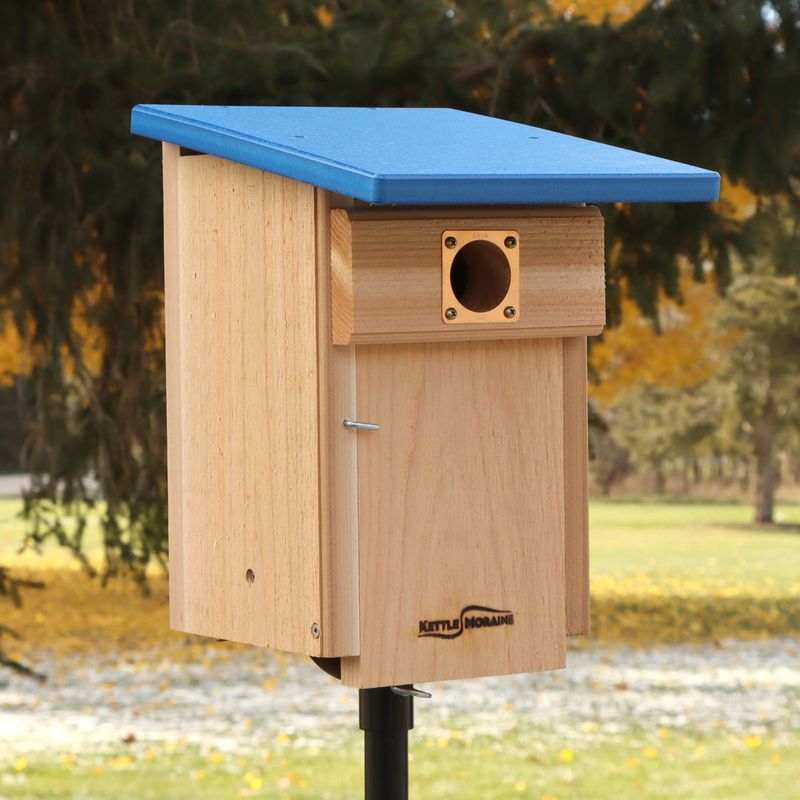
Once you are confident the box is genuinely inactive, meaning no eggs, no nestlings, and no adults making regular visits, that is the right moment to open it up and take stock. Trying to clean or repair a box while it is still in use is both disruptive and legally significant. The U.S. Fish and Wildlife Service notes that active nests with eggs or young birds receive protection under the Migratory Bird Treaty Act, and disturbing them generally requires a permit.
Waiting until the box is clearly empty protects both the birds and you.
Two common pieces of advice sometimes seem to conflict here. Some guidance, including from NC State Extension’s backyard habitat management publication, recommends cleaning boxes in February before the new nesting season begins. Other guidance says cleaning after each brood fledges is fine. Both can be correct, as long as the box is inactive at the time you open it.
The safe practical rule is simple: confirm the box is empty and quiet before you touch it.
When you do clean it, remove old nesting material completely. NestWatch’s cleaning guidance explains that accumulated material from multiple broods can raise the nest cup closer to the entrance hole over time, which may make it easier for predators to reach nestlings. A clean box gives the next occupants a fresh start at the correct depth.
A few firm limits apply during any box maintenance. Do not spray pesticides, insecticides, or any repellent inside the box. NestWatch specifically advises against pesticide use in nest boxes because residues can harm future nestlings long after the application. Also, if a native bird such as a Carolina Wren, a chickadee, or a Tree Swallow has claimed the box during breeding season, do not evict them.
Native birds and their active nests carry legal protection too, and the right move is to wait until their nesting is finished before making any changes. Check the NC State Extension songbird box guide for hardware specifications to inspect while the box is open.
Build Habitat That Supports the Next Visit
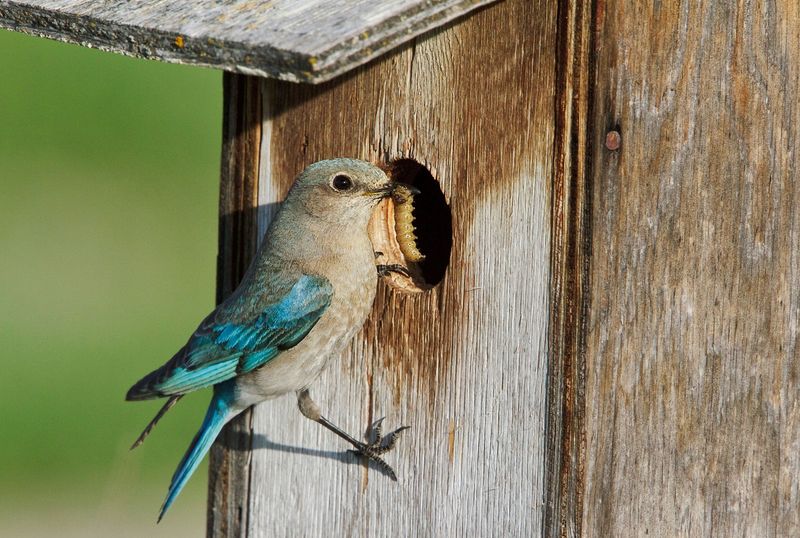
After a quiet August, the most useful thing you can do is look at the yard itself and ask whether it still offers what bluebirds need. The answer shapes whether they come back for another nesting attempt next spring or drift toward a neighbor’s property instead. NC Wildlife describes Eastern Bluebirds as birds of open and semi-open areas, and that preference runs through everything about their habitat needs.
Start with the view from the box. Bluebirds hunt insects by watching from an exposed perch and dropping to the ground, so they need clear sightlines across short grass or bare soil. Thick ground cover, dense shrubs right up to the box, or a yard that has filled in with tall vegetation works against them. Scattered fence posts, low tree branches, or even a simple wooden dowel mounted nearby gives them the perch structure they use constantly.
Food plants matter more in late summer and fall than most homeowners realize. Cornell Lab documents that bluebirds shift toward fruit during the nonbreeding season, relying on dogwoods, viburnums, hollies, sumac, and hackberries. NC Wildlife adds black and pin cherries to that list. Planting or preserving any of these native species near the yard gives the birds a documented food source during the months when insects are less available.
These plants will not guarantee a particular pair returns, but they make your property genuinely more useful.
Box hardware and placement are worth reviewing too. NC State Extension’s songbird box specifications call for an entrance hole of about 1.5 inches, a floor of roughly 5 by 5 inches, a box height of 8 to 12 inches, ventilation gaps, drainage holes, a rough interior surface below the hole for nestlings to grip, and no exterior perch. Mount the box on a freestanding metal pole at 4 to 6 feet above ground. NestWatch reports that boxes with predator guards had higher average nesting success than unprotected boxes, and NC Wildlife specifically recommends a baffle to reduce raccoon, cat, and snake access.
If you are adding a second box, NC State Extension recommends spacing bluebird boxes 200 to 300 feet apart. NestWatch’s placement guidance notes that habitat quality and whether you are pairing boxes for bluebirds and Tree Swallows can affect the right distance. Have the box ready and mounted by February, before the first prospecting pairs start checking sites. Penn State Extension’s bluebird habitat guide reinforces that open feeding areas and reduced broad insecticide use are the two yard-level factors with the clearest connection to bluebird presence.
Cutting back on insecticides preserves the ground-level insects that bluebirds actually hunt.
Use Water and Food as Optional Support
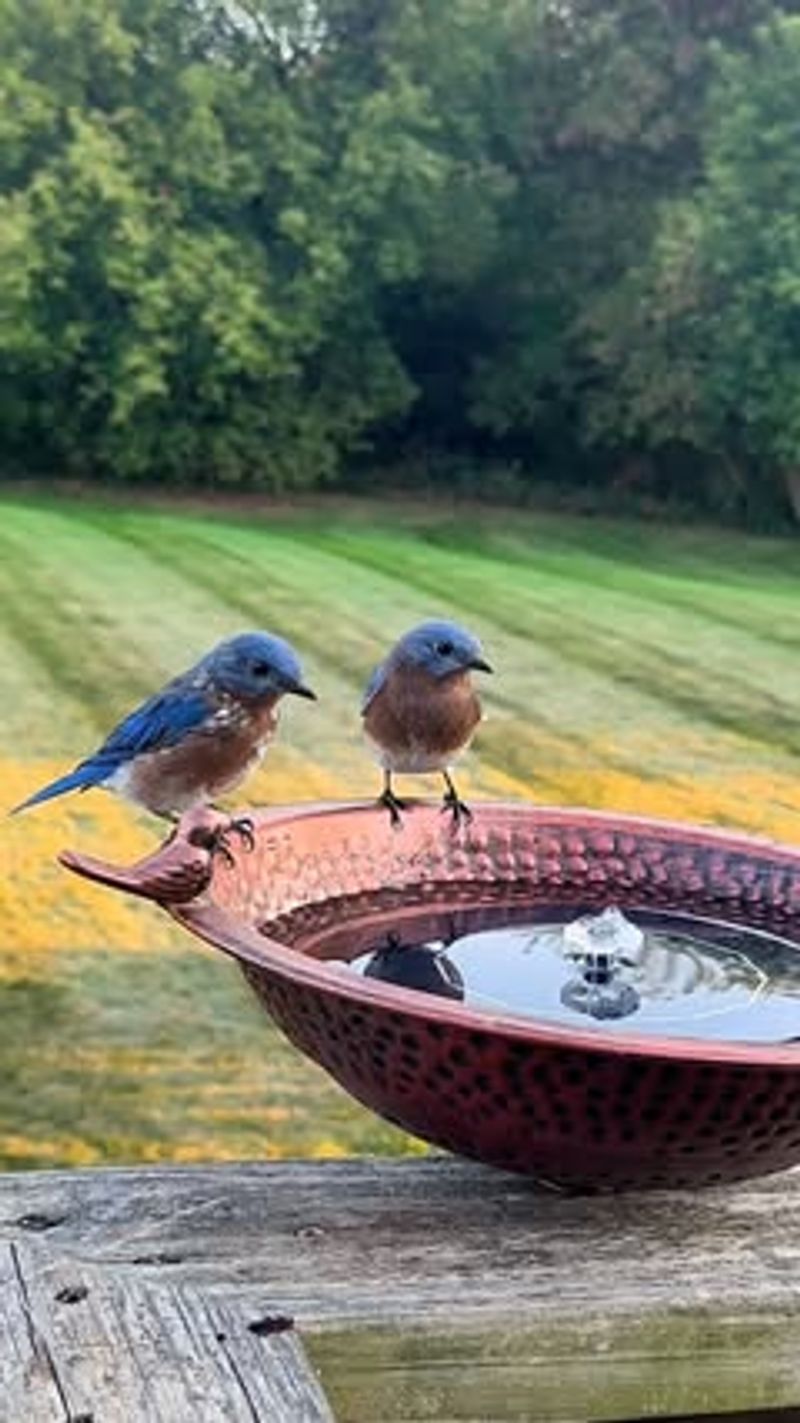
Two modest additions can make a yard more attractive to bluebirds without requiring major changes. Neither is a guaranteed fix, and both work best as support layered on top of good habitat, not as a substitute for it.
Water is the simpler one. Penn State Extension’s bluebird habitat guide recommends a shallow birdbath kept under 2 inches deep and fitted with flat stones or another textured surface so birds can stand securely. Bluebirds will use a reliable, clean water source, especially during hot North Carolina summers. Change the water every couple of days to keep it fresh and reduce mosquito breeding.
A moving water feature like a small dripper can draw attention, but a basic shallow dish works fine. Water will not recreate a nesting territory if the birds are in their normal post-breeding phase, so think of it as one more reason to linger rather than a lure.
Food is a bit more nuanced. Cornell Lab notes that Eastern Bluebirds eat primarily insects and wild fruit and do not often visit ordinary seed feeders. If you want to try a feeder, mealworms are the offering most likely to catch a bluebird’s attention. Cornell’s summer feeder guidance suggests placing mealworms in a shallow dish near an open area where bluebirds can spot them from a perch.
Live mealworms draw more interest than dried ones, though dried can work. Feeding is entirely optional and should not replace the habitat work that actually matters most.
A quiet bluebird box in August is usually the sound of a good season wrapping up, not a yard failing its birds. Keep the habitat solid, the box ready, and the water fresh, and you have done your part.