What It Really Means When Frogs Keep Visiting Your Texas Yard This August
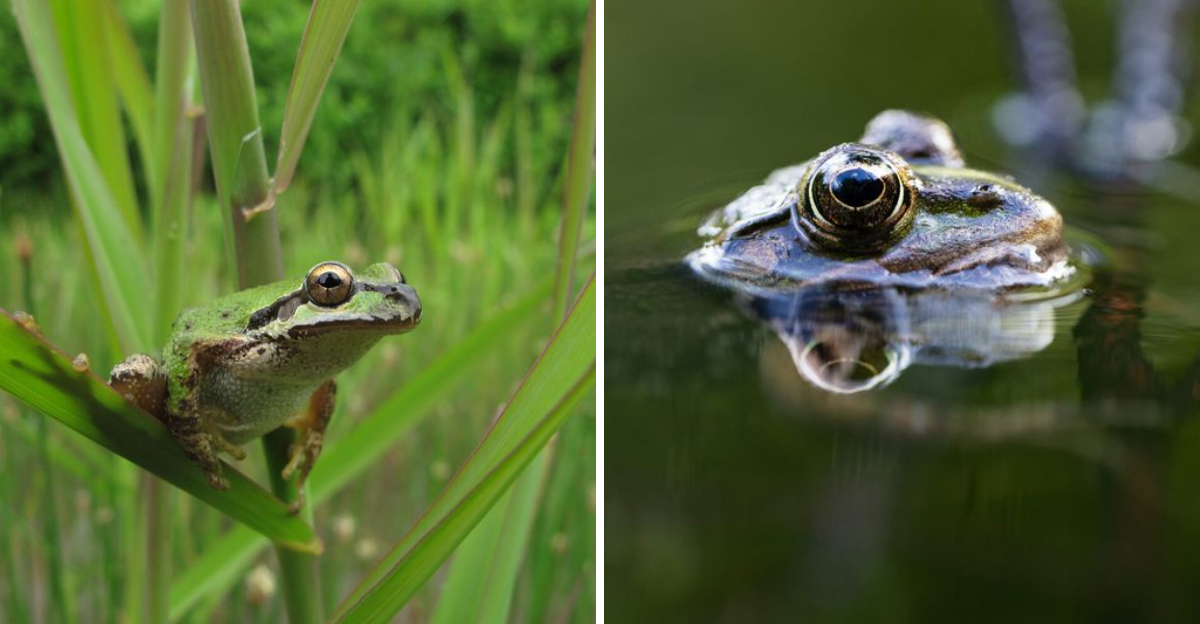
Frogs showing up in your Texas yard in August might feel surprising at first. The heat is intense, conditions seem dry, and amphibians don’t typically come to mind as creatures you’d expect to encounter in the middle of a Texas summer.
But if frogs have been making an appearance in your yard lately, they’re not there by accident. Their presence means something specific.
Frogs are highly sensitive to environmental conditions, and the yards they choose to visit are offering something that meets their needs in ways the surrounding landscape apparently isn’t.
In August, when drought pressure is real and reliable moisture becomes harder to find, frogs move toward the places that still have what they need.
Your yard is one of those places, and understanding why tells you something genuinely interesting about the conditions your property is creating.
A healthy frog population also carries ecological value that most Texas homeowners significantly underestimate.
Beyond the practical, frogs hold deep symbolic meaning across many cultures and traditions with deep roots in Texas life.
1. Recent Rain Almost Always Explains It
After a big summer rainstorm rolls through Texas, frogs seem to appear out of nowhere. Roads get slippery with them.
Yards fill with their calls. It can feel almost magical, but there is a very simple reason behind it all.
Frogs depend on water to reproduce. Most species need fresh, standing water to lay their eggs, and tadpoles need it to grow.
When August rain fills up ditches, retention ponds, and low spots in your yard, frogs recognize the opportunity immediately. They move quickly to take advantage of it before the water evaporates in the Texas heat.
A sudden wave of frog activity after a storm is not random. Frogs have been waiting, sometimes for weeks, for exactly the right conditions.
Rain triggers hormonal responses in many species that signal it is time to breed. Males begin calling loudly to attract females, which is why you hear so much noise the night after a good rain.
The timing in August can also feel more dramatic because the heat has been keeping things dry. When moisture finally arrives, every frog in the area responds at once. You might see dozens where you saw none the day before.
If your yard has any low areas that collect water, even temporarily, it becomes prime real estate for frogs almost immediately after rainfall. Roadside ditches and neighborhood retention ponds serve the same purpose on a larger scale.
The good news is that this activity is completely natural and healthy. Frogs showing up after rain is one of the most reliable signs that your local ecosystem is functioning exactly as it should.
Enjoy the chorus.
2. You Are Likely Seeing Rio Grande Leopard Frogs
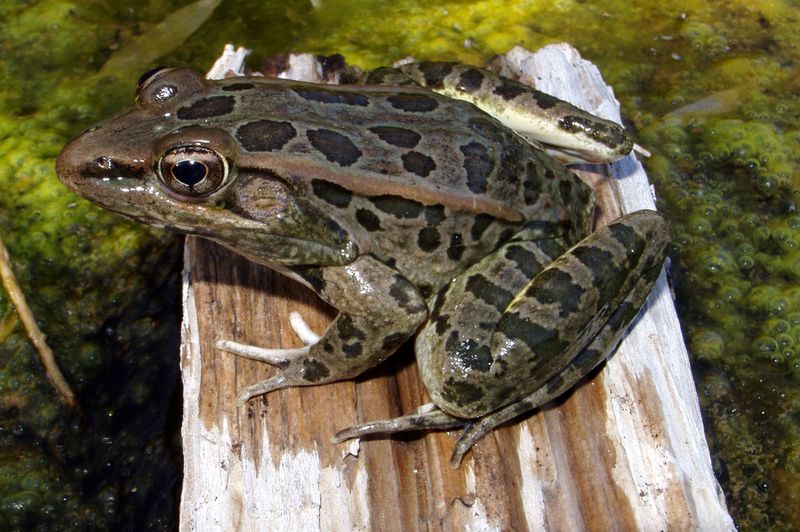
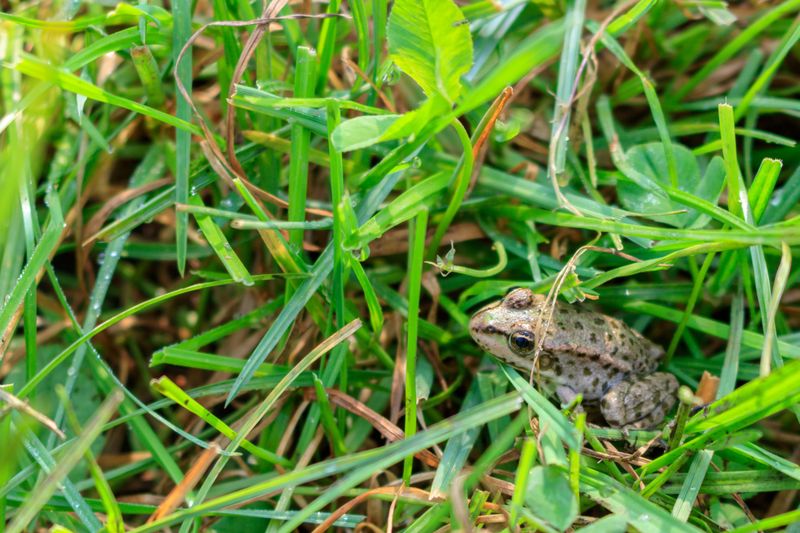
Spotted a frog taking giant leaps across your lawn? Chances are good you just met the Rio Grande Leopard Frog, one of the most common frogs across the entire state of Texas.
These frogs are adaptable in a way that most people find surprising. They show up in urban wetlands, country ponds, neighborhood drainage areas, and suburban backyards with equal comfort.
Your Texas Garden Changes Every Week. Your Plan Should Too.
Gardening in Texas changes quickly throughout the season. Every Friday you’ll receive a simple weekly plan showing exactly what to plant, prune, fertilize, harvest, and protect so you never miss the right timing.
They are not picky about their surroundings as long as there is some moisture nearby and enough insects to eat. That flexibility is a big reason they are so widespread throughout Texas.
The easiest way to identify a Rio Grande Leopard Frog is by watching how it moves. When startled, it does not just hop a few inches like a small toad might.
It launches itself in long, powerful leaps that can carry it several feet in a single bound. That impressive jumping ability helps it escape predators and cover ground quickly when searching for food or water.
Their coloring is another helpful clue. They have a brownish-green base color with dark spots scattered across their backs, which gives them that classic leopard look.
Their belly is usually pale or white. They blend surprisingly well into grass and leaf litter, which is why you often hear them before you see them.
Leopard frogs are mostly active at night, especially during the warm months of summer. If you spot one during the day, it has probably been disturbed from its resting spot.
Seeing one in August in Texas is very common and nothing to worry about. These frogs are simply doing what they have always done in this region.
3. Green Treefrogs Love Your Walls And Windows
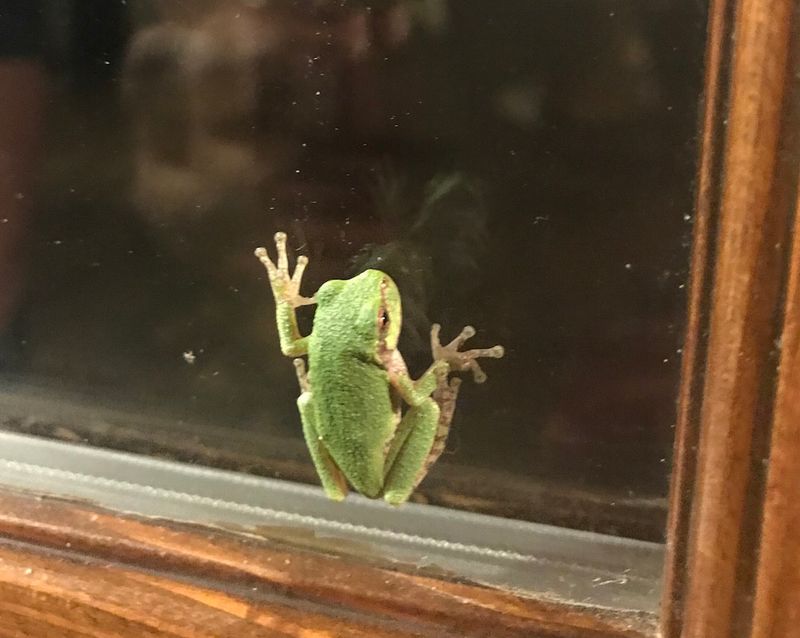
Finding a small, bright green frog stuck to your window screen at night is one of those classic Texas summer moments. It might seem odd at first, but it is actually one of the most normal things you can see during a warm August evening in this part of the country.
Green Treefrogs have special sticky toe pads that let them cling to smooth surfaces like glass, painted wood, and vinyl siding with ease. They are built for climbing, not just swimming.
While they prefer humid areas and are often found near wetlands, they regularly wander into gardens and onto the sides of houses, especially after dark when they start hunting for food.
These frogs are drawn to structures because structures attract insects. Porch lights, window lights, and doorway fixtures pull in moths, gnats, and other small flying bugs throughout the night.
A Green Treefrog quickly figures out that positioning itself near a light source means an easy meal is always close by. It is a smart survival strategy, not a strange behavior.
Their call is another thing worth knowing about. Green Treefrogs make a loud, nasal sound that repeats in a steady rhythm, often described as a honking or quacking noise.
On a warm summer night near a pond or wet area, you might hear dozens of them calling at once. The sound can carry a long distance.
If one shows up on your window, there is no need to move it. It is comfortable, safe, and doing your yard a favor by eating insects.
These frogs are harmless to people, pets, and plants. Consider it a free pest control service delivered right to your door.
4. Frogs Are A Genuine Compliment To Your Yard
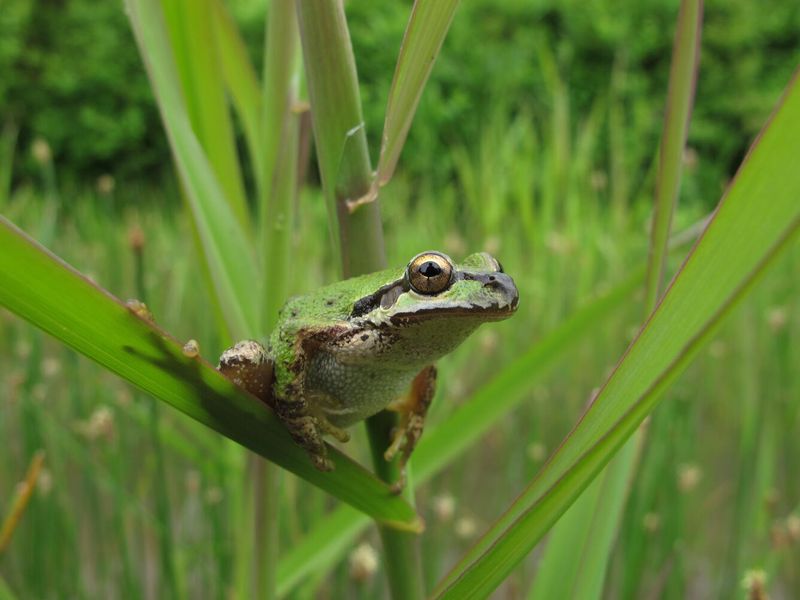
Here is something that might surprise you: wildlife experts consider frogs to be one of the best signs of a healthy yard. If frogs keep showing up on your property, it means your outdoor space is doing something right. That is not a small thing.
Frogs need three basic things to stick around: food, shelter, and moisture. If your yard provides all three, frogs will return consistently.
Food usually means a good supply of insects, which points to a yard that has not been heavily treated with pesticides. Shelter means places to hide, like leaf piles, dense ground cover, native plants, or areas with loose soil.
Moisture can come from a pond, a birdbath, or even just a consistently damp corner of the yard.
When frogs are present and appear healthy, it tells you that the local food chain is working well. Insects are thriving, which feeds the frogs, which in turn feeds larger animals like birds and small mammals.
Your yard becomes part of a functioning ecosystem rather than just a patch of grass. The warning sign actually runs in the opposite direction. A yard with no frogs, or one where frogs appear with deformities, often points to environmental stress.
Heavy chemical use, pollution in nearby water, or a lack of natural habitat can all push frogs away or harm them before they fully develop.
Seeing healthy frogs in August is worth feeling good about. It means your yard is offering something real to local wildlife.
You do not have to do anything dramatic to keep them coming back. Sometimes, doing less, like skipping a pesticide treatment or leaving some leaf litter in place, is the most helpful thing of all.
5. Your Outdoor Lights Are Basically A Frog Restaurant
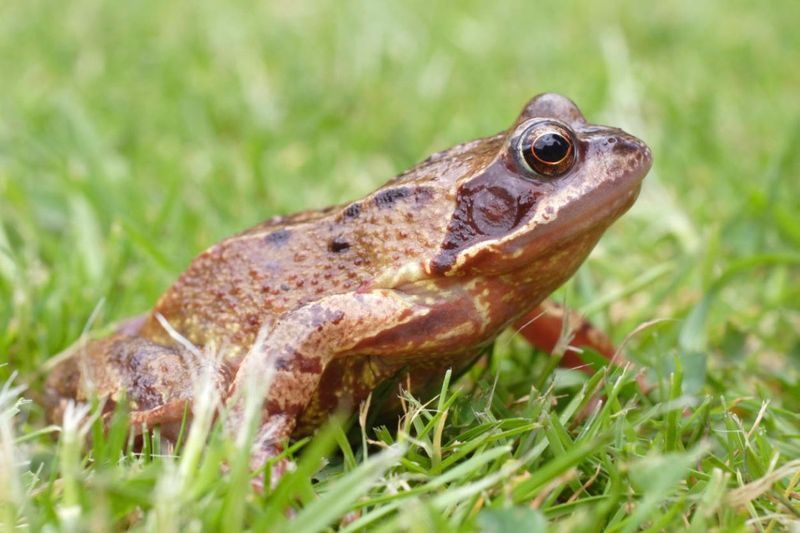
Most people do not realize that their porch light is running a nightly buffet. Every time you flip on an outdoor fixture after dark, insects start gathering around the glow almost immediately.
Moths, gnats, beetles, and other small bugs are irresistibly pulled toward artificial light. And where the insects go, hungry frogs follow.
This behavior has nothing to do with rain or breeding. A frog showing up near your front door light in August might simply be responding to an easy food opportunity.
Frogs are opportunistic hunters. They go where the meals are most available, and a porch light concentrating dozens of insects in one small area is hard to pass up.
You might notice frogs sitting very still near a lit doorway or patio fixture. They are not confused or lost.
They are being patient and strategic. A frog will wait near a light source for long stretches, snapping up insects as they land nearby. It takes very little energy compared to chasing prey across a yard in the dark.
Warmer bulbs and older incandescent-style lights tend to attract more insects than cooler LED bulbs. So if you have older outdoor lighting, you may be pulling in more frog visitors than your neighbors with newer fixtures.
Switching to yellow or amber LED bulbs can reduce insect attraction if you prefer fewer nighttime visitors.
But if frogs near the porch do not bother you, there is no reason to change a thing. They are eating mosquitoes, gnats, and other bugs that would otherwise be bothering you.
Letting them hang around the light is one of the easiest forms of natural pest management available, and it costs absolutely nothing.
6. A Water Source Brings Them Back Every Single Night
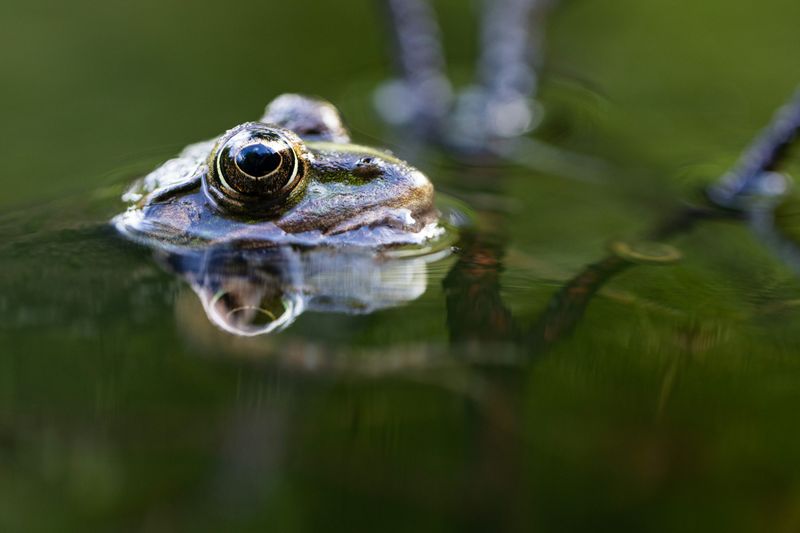
Frogs are creatures of habit when they find something good. If your yard has a reliable water source, do not be surprised to find the same frogs returning to it night after night. Water is not just a convenience for frogs. It is a necessity.
A birdbath, a small garden pond, or even a low spot in the yard that stays damp after rain can all serve as frog magnets. In larger wetland areas, choruses of frogs can number in the dozens, all gathered around the same water source.
Your yard does not need to be a swamp to attract them. Even a modest, consistent source of moisture is enough to establish your space as a regular stop.
The reason frogs return to the same spot repeatedly comes down to survival logic. Finding food, water, and shelter takes energy.
Once a frog discovers a reliable location that provides all three, it makes sense to keep coming back rather than searching for something new each night. Your yard essentially gets added to its mental map.
Keeping a birdbath filled or maintaining a small backyard pond can dramatically increase frog activity on your property throughout the summer.
Adding some aquatic plants or placing flat rocks near the water gives frogs spots to rest and hide, making the area even more appealing.
One thing to keep in mind is water quality. Standing water that sits too long without circulation can become a breeding ground for mosquitoes.
A small solar-powered fountain or bubbler keeps water moving, which frogs still enjoy, while reducing mosquito issues. Small adjustments like that can make your yard a welcome, balanced habitat for frogs all August long and beyond.