What Spongy Moth Caterpillars Are Doing To Michigan Oak Trees This Year
Walk through a Michigan woodlot this year, and you may have noticed something strange back in early summer. A soft, steady patter fell from above, almost like a gentle rain on a dry day, even though the sky was perfectly clear.
A closer look at the leaves revealed something munching busily away at the greenery overhead. Tiny travelers had climbed the trunks and settled into the treetops in surprising numbers.
They brought a big appetite and a knack for showing up when least expected, often stripping entire branches before anyone even noticed they’d arrived.
What they left behind matters a lot to the trees many of us love and rely on for shade every summer. Here are eight things worth knowing about what happened to our oaks this year.
1. They Are Eating Oak Leaves Before They Turn Into Moths
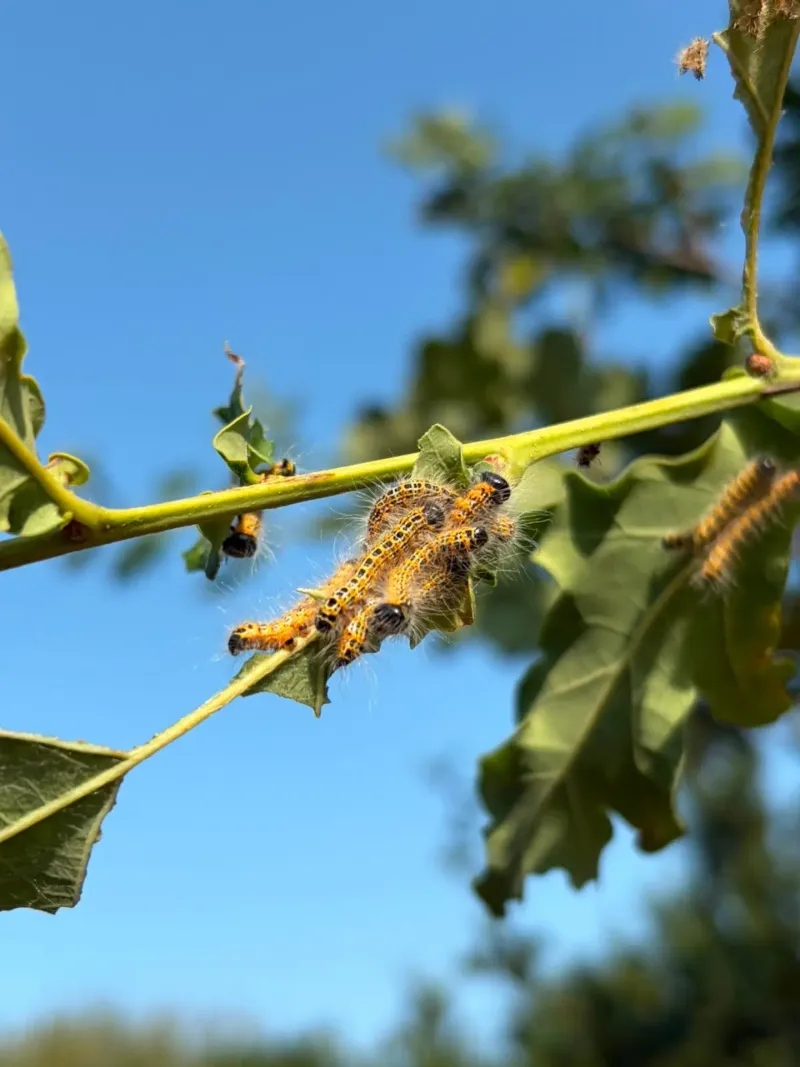
Before a spongy moth ever flutters through the air, it spends weeks as a hungry caterpillar. During that larval stage, it chews on tree leaves to gather the energy it needs to grow.
Oaks happen to sit near the top of this insect’s favorite menu. Michigan has plenty of oak trees, so the caterpillars find easy meals in forests, parks, and backyards across the state.
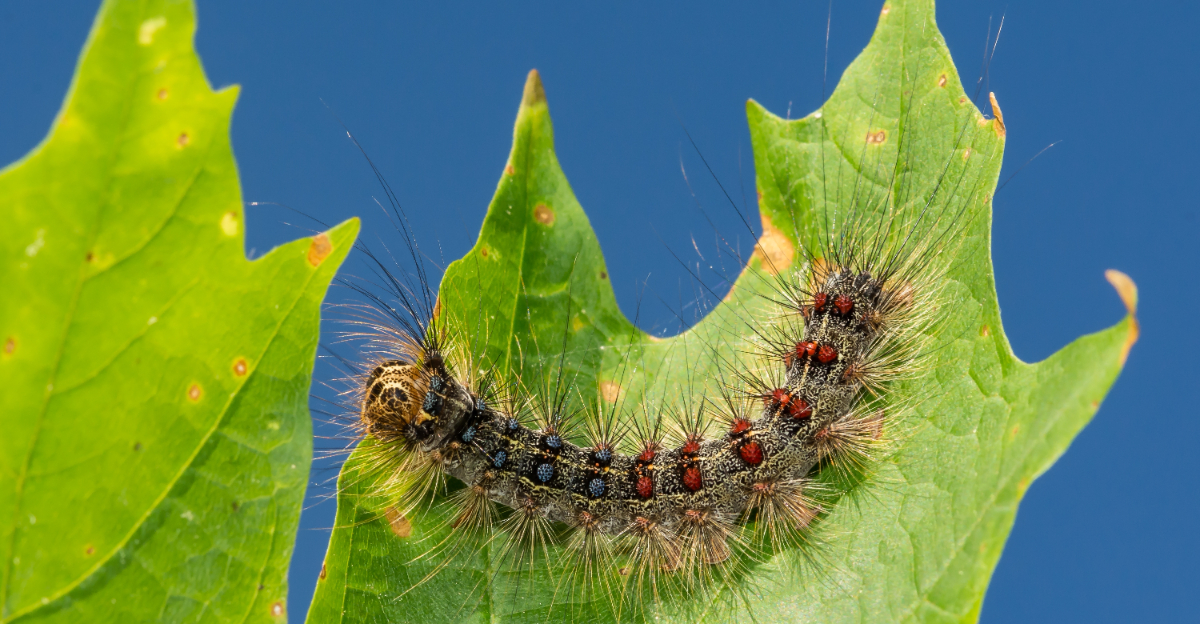
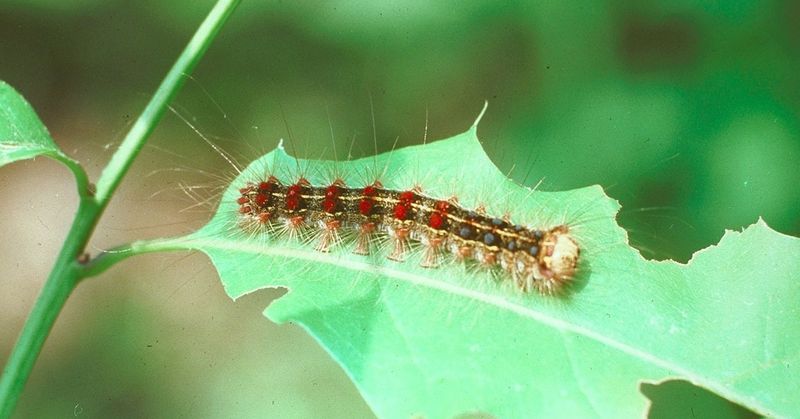
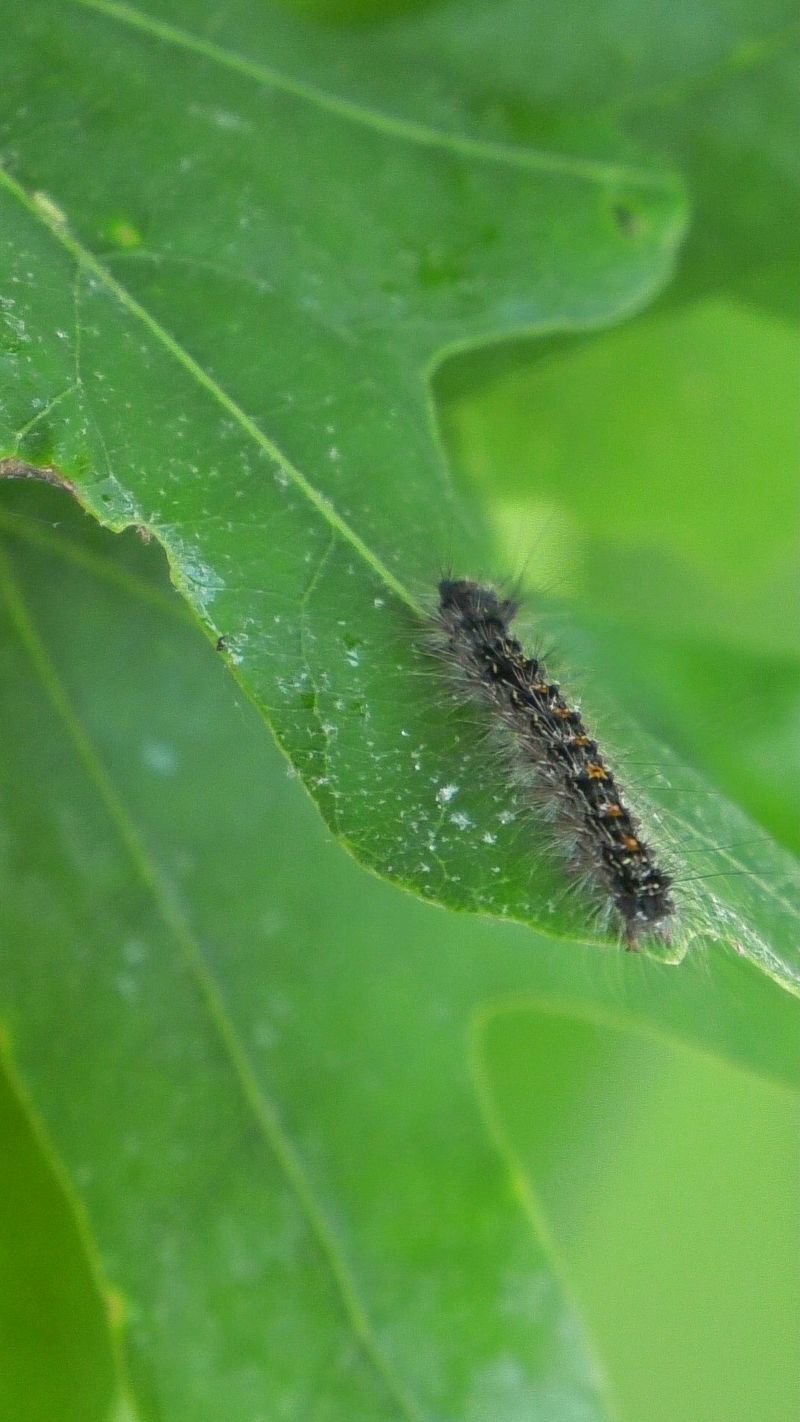
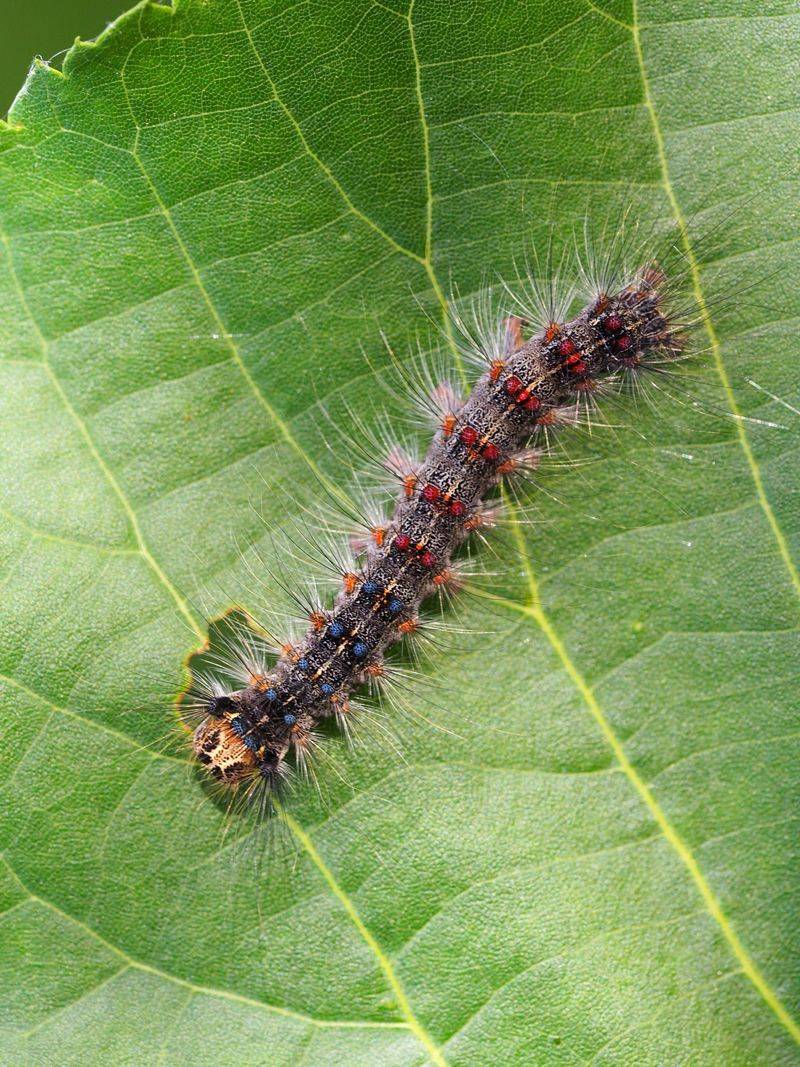
You can spot the caterpillars by their fuzzy bodies and the neat rows of blue and red dots along their backs. They start small in spring, then grow larger and eat much more as the weeks pass.
Most of the feeding happens from about May into early summer. A young caterpillar nibbles small holes at first, but a full-grown one can strip large sections of a leaf in a single sitting.
Interestingly, this pest was brought to North America in the 1860s and has been spreading ever since. It reached Michigan decades ago and now shows up in bigger numbers during certain years.
Knowing why oaks get targeted helps you plan ahead. If you have oaks on your property, keep an eye on the leaves during late spring so you catch feeding early.
The good news is that a single caterpillar does not do much on its own. The trouble starts when huge groups gather in the same tree, which is exactly what happens during a busy spongy moth year in Michigan.
2. Heavy Feeding Can Strip The Tree Canopy
One caterpillar makes small holes, but thousands together tell a very different story. When populations spike, they can remove most of the leaves from an oak in just a few weeks.
Foresters call this defoliation, which simply means the tree loses much of its green covering. During a heavy year, a full oak canopy can turn thin and see-through by early summer.
That is a stressful situation for the tree. Leaves are like little food factories, using sunlight to make the sugars the oak needs to grow and stay strong.
When those factories disappear, the tree cannot produce energy the way it should. It has to dip into stored reserves just to keep going, which drains its strength.
Your Michigan Garden Changes Every Week. Your Plan Should Too.
Gardening in Michigan changes quickly throughout the season. Every Friday you’ll receive a simple weekly plan showing exactly what to plant, prune, fertilize, harvest, and protect so you never miss the right timing.
You might even notice the ground under a heavily fed oak covered in droppings and bits of chewed leaf. Some people say it sounds like rainfall when the caterpillars are munching high above.
Michigan sees these outbreaks in cycles, with some years far busier than others. Weather, natural predators, and a helpful fungus all play a part in how big the numbers get.
If your oak loses most of its leaves, do not panic right away. Losing a canopy is rough, but it is not the whole story for a tree that started the season in good shape.
The key is understanding that heavy feeding is a serious stress, not an automatic loss. What happens next depends a lot on the tree’s overall health and the conditions around it.
3. Healthy Oaks Can Often Recover
Here is some reassuring news for worried tree owners. A strong, healthy oak has an amazing ability to bounce back after losing its leaves.
Many oaks in Michigan will push out a brand new set of leaves later in the summer. This second flush of growth helps the tree start making energy again before the season ends.
Trees store extra energy in their roots and trunk, almost like a savings account for tough times. When caterpillars strip the canopy, the oak taps into those savings to grow fresh leaves.
One season of heavy feeding usually will not spell serious trouble for a vigorous tree. Oaks have lived through insect outbreaks for a very long time, and they are built to handle occasional setbacks.
You may see the new leaves look smaller or a bit pale at first. That is normal, and the tree is simply working hard to catch up on lost time.
Think of it like a person recovering after being sick. They feel tired for a while, but with rest and good care they regain their strength.
The best thing you can do is give the tree a fair chance. Avoid piling on extra stress, like damaging the roots or cutting branches during this recovery window.
Patience really pays off here. Before reaching for a saw, give a defoliated oak a full season or two to show whether it is going to leaf out and carry on as usual.
4. Repeated Defoliation Is The Bigger Concern
A single bad year is one thing, but trouble builds when it happens over and over. Trees that lose their leaves several summers in a row face a much tougher road.
Each round of feeding drains a little more from the oak’s energy savings. If the tree never gets a chance to refill those reserves, it slowly grows weaker.
Other stresses can make matters worse. Drought, poor soil, packed-down earth around the roots, or damage from construction all pile extra pressure on a tree already fighting to recover.
Picture an athlete trying to run several races back to back with no time to rest or eat. Eventually the body runs out of fuel, and performance drops sharply.
Oaks work in a similar way. A well-fed, well-watered tree can shrug off a rough year, but a stressed one has far less in reserve to fall back on.
In Michigan, outbreaks tend to rise and fall in cycles that can last a few years. That means some trees may face feeding pressure across multiple seasons before nature reins the caterpillars back in.
Keep track of how your oaks look from one year to the next. If the same tree gets stripped season after season, it deserves extra attention and care.
Spotting a pattern early lets you step in with helpful support. Watering during dry spells and protecting the root zone can make a real difference for a tree carrying the weight of repeated stress.
5. Look For More Than Missing Leaves
Missing leaves grab your attention first, but a good tree checkup goes deeper. Some warning signs are easy to overlook if you only glance at the canopy.
Start by looking up and studying how full the treetop appears. A canopy that stays thin or patchy, even after other trees leaf out, can signal a tree that is struggling.
Next, scan the branches for twigs and limbs that have no leaves and look dry or brittle. Small bare branches scattered through the crown hint that the tree is having a hard time.
Pay attention to new growth too. A healthy oak sends out fresh shoots each spring, so weak or missing new growth is worth noting.
Compare the tree to others of the same kind nearby. If your oak looks noticeably thinner or slower than its neighbors, that difference tells you something.
Take a peek at the bark and trunk as well. Cracks, oozing spots, or loose bark can point to problems that have nothing to do with the caterpillars at all.
Writing down or photographing what you see each year is a smart habit. Over time, those notes reveal whether a tree is holding steady or slowly slipping.
When several of these signs show up together, it may be time to call a certified arborist. A trained eye can tell the difference between ordinary caterpillar damage and a deeper health issue that needs real attention.
6. Watch For Egg Masses After Summer
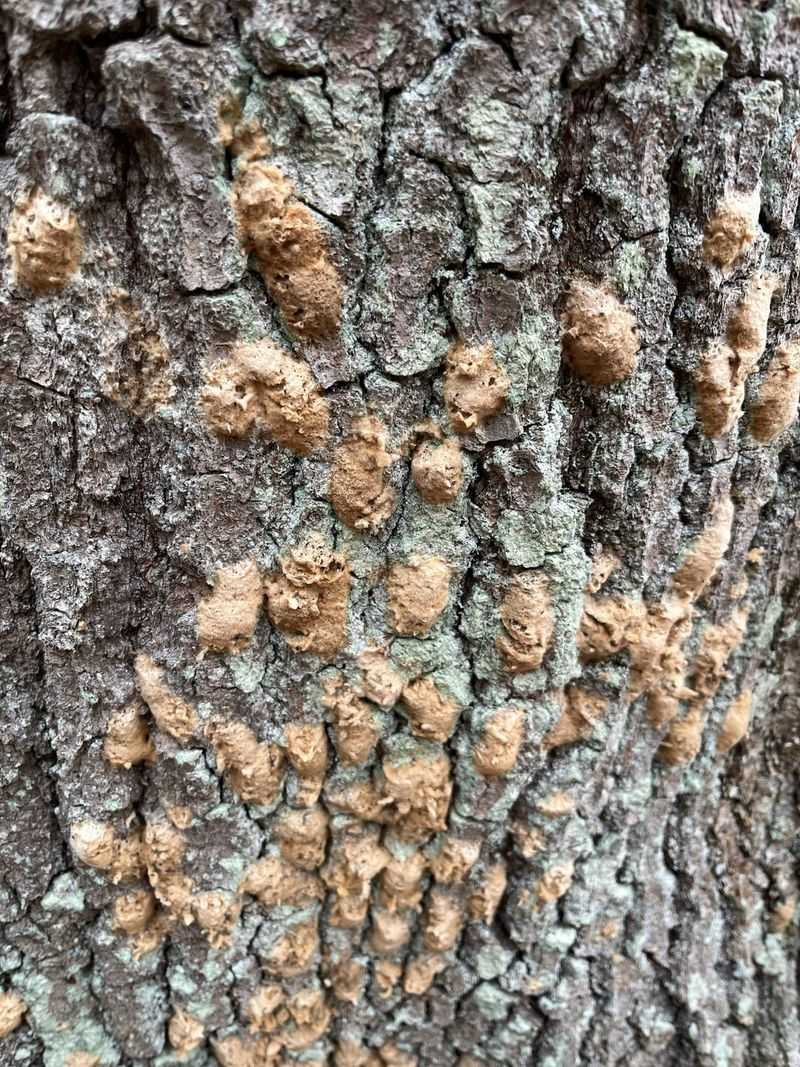
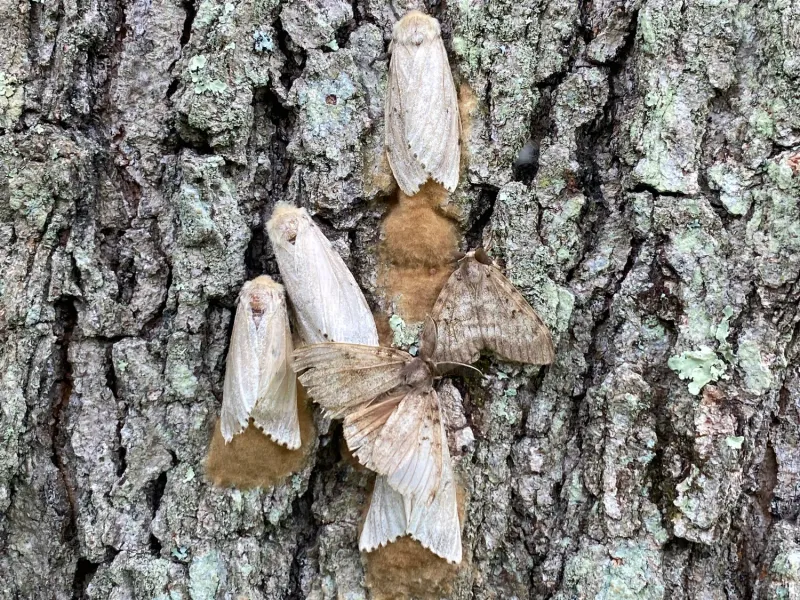
The caterpillars may disappear by mid-summer, but the story is not over. Adult moths lay eggs that will hatch into next year’s hungry crop.
These egg masses are easy to recognize once you know the look. They appear as tan or buff-colored patches, fuzzy like a bit of felt, usually about the size of a quarter or a little larger.
Females often place them on tree trunks, but they are not picky. You might also find them on fences, firewood, outdoor furniture, sheds, and even the underside of picnic tables.
Late summer into fall and winter is the best time to hunt for them. Since they stay put through the cold months, you have plenty of time to search and remove them.
Scraping egg masses off surfaces can reduce how many caterpillars show up next spring. Michigan experts suggest scraping them into a container of soapy water rather than just dropping them on the ground.
Wear gloves while you work, because the hairs on the masses can irritate some people’s skin. A putty knife or an old plastic card makes the scraping easier.
Checking outdoor items before you move them matters too. Firewood and camping gear can carry egg masses to new places, helping the insect spread farther.
Making egg-mass patrol a fall ritual is a simple, low-cost habit. Every mass you remove is one less group of leaf-munchers greeting your oaks when the weather warms up again.
7. Do Not Spray Without A Reason
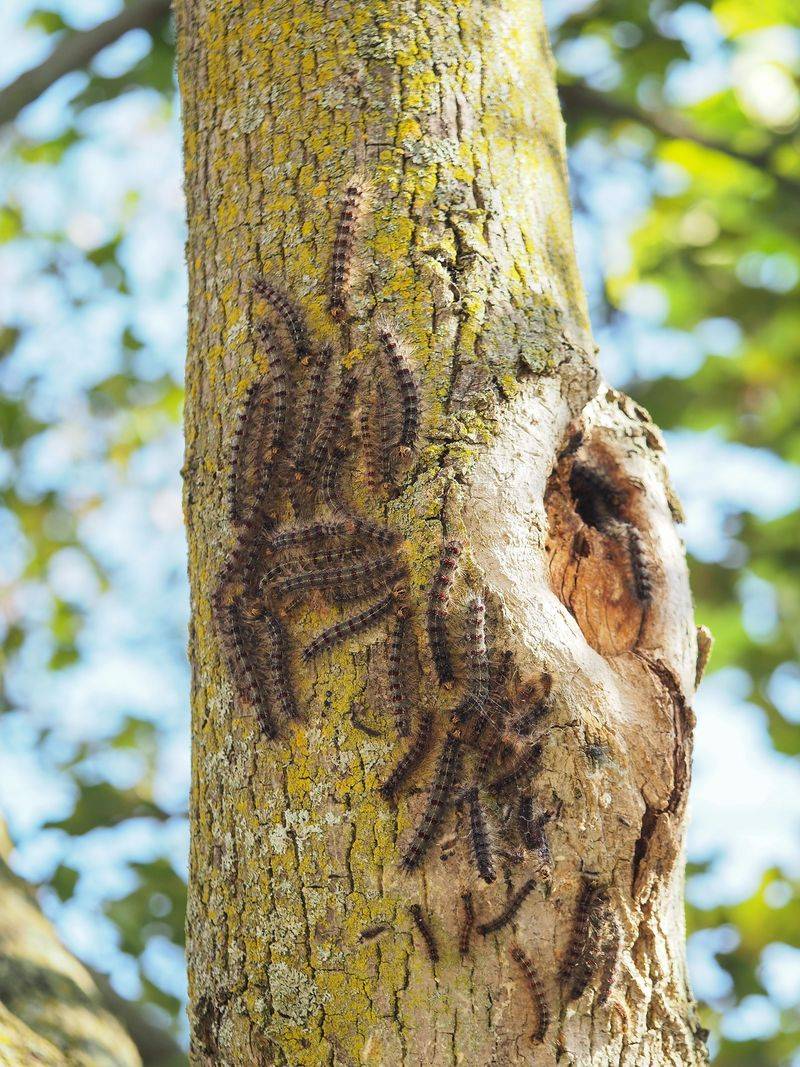
When caterpillars show up, the first instinct is often to grab a spray and go to war. Slow down, because that is not usually the smartest move.
A little leaf damage is normal and rarely a threat to a healthy tree. Spraying every oak that shows a few chewed leaves wastes money and can harm helpful insects too.
Good treatment choices depend on a few key questions. How many caterpillars are really out there, how valuable is the tree, and is the timing even right for a treatment to work?
Timing matters a great deal with this pest. Certain products only work well on young caterpillars, so spraying too late does little good no matter how much you use.
Big shade trees near your home or a special heirloom oak may be worth protecting. A forest edge with countless trees is a different situation, where treating everything is neither practical nor needed.
Nature also lends a hand more than people realize. A fungus and a virus in Michigan help knock spongy moth numbers down, especially during wet springs, without any effort from us.
If you think treatment is truly warranted, talk to a certified arborist or your local extension office first. They can help you read caterpillar numbers and pick a safe, well-timed approach.
Thoughtful action beats knee-jerk spraying every time. Protecting a prized tree is reasonable, but blanketing every oak with chemicals over minor damage usually causes more problems than it solves.
8. Help Oaks Recover After Feeding Damage
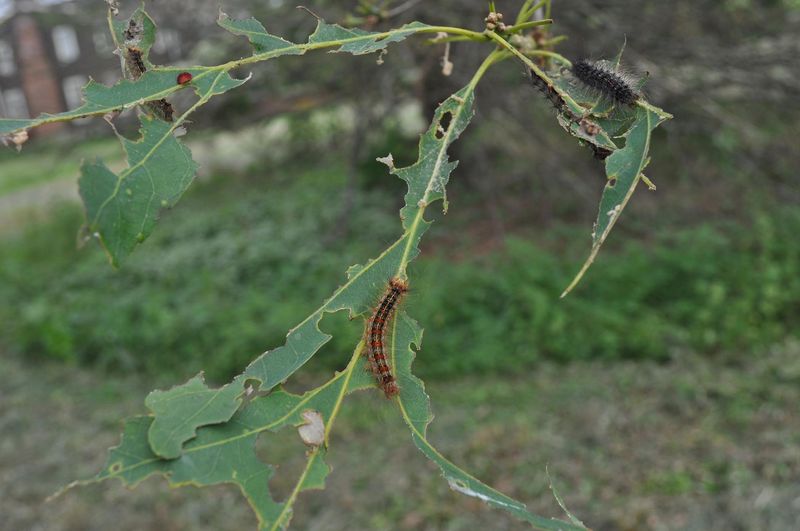
Once the caterpillars move on, your oak needs a little help to bounce back. The goal is simple: remove extra stress so the tree can rebuild its strength.
Water is the most important gift you can offer during a dry stretch. A defoliated oak works hard to grow new leaves, and that job goes much easier with steady soil moisture.
Aim to water deeply and slowly rather than with quick, shallow sprinkles. A long soak that reaches the roots does far more good than a light misting on the surface.
Protecting the root zone is another big win. Avoid parking cars, stacking heavy materials, or digging near the tree, since packed soil makes it hard for roots to breathe.
A ring of mulch around the base helps hold moisture and keep the soil cool. Spread it a few inches deep, but keep it from piling directly against the trunk.
Hold off on heavy pruning while the tree is recovering. Cutting away branches removes energy the oak may still be able to use, so save major trimming for a healthier season.
Skip the urge to fertilize a stressed tree right away. Too much fertilizer can push growth the tree is not ready to support, adding pressure instead of relief.
Give it time, and watch for steady improvement over the next year or two. With patient care and a bit of luck from the weather, most Michigan oaks can regain their leafy, healthy glory.