What To Do With Your California Plumeria In June Before The Heat Peaks
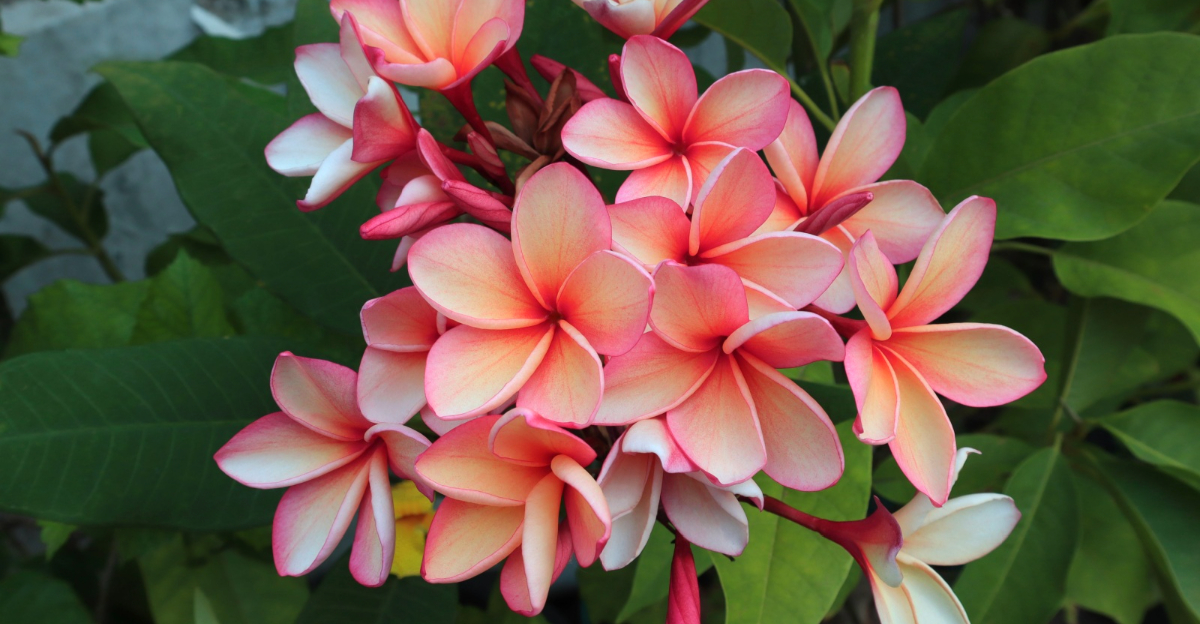
If you grow plumeria in California, June is basically your moment. These tropical showstoppers have spent the cooler months doing absolutely nothing, and honestly, fair enough.
But now the days are long, the sun is serious, and plumeria are waking up fast and ready to put on a show.
This is the month that sets the tone for everything that follows, and a little focused attention right now can mean the difference between a plant that just survives summer and one that absolutely thrives through it.
The trick is supporting that fresh new growth without going overboard. Too much water, too much fertilizer, too much enthusiasm, yes, that is a thing, and it can actually slow a plumeria down rather than speed it up.
Steady and smart wins this one every time.
1. Move It Into Enough Sunlight
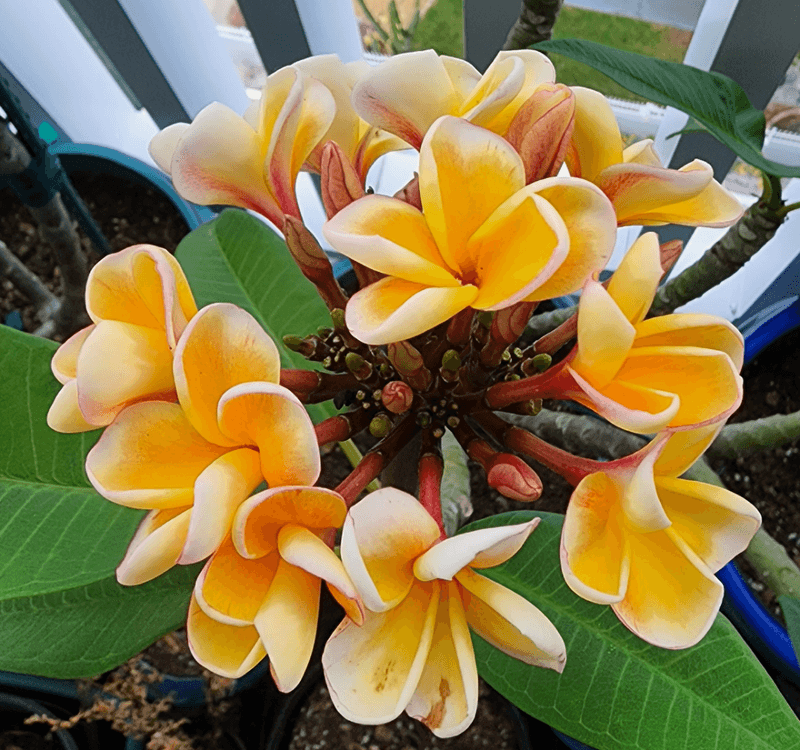
June sunlight in California carries real power, and plumeria absolutely thrives when it gets a solid six to eight hours of direct sun each day.
If your plant spent the cooler months in a sheltered spot or near a shaded wall, now is a good time to reposition it where the morning and midday sun can reach it fully.
Plumeria that sits in too much shade tends to produce weak, stretched stems and far fewer flower clusters.
For container growers in California, moving a pot a few feet in the right direction can make a noticeable difference. South-facing patios and west-facing walls tend to offer the most consistent sun exposure during summer.
If your plant is in the ground, check whether nearby trees or structures have grown enough to cast new shade since last year.
One thing worth knowing is that plumeria coming out of a low-light winter may need a gradual adjustment to full sun. Jumping straight into intense afternoon exposure can cause leaf bleaching or sunburn on tender new growth.
Start with morning sun and a bit of afternoon shade for the first week or two, then ease the plant into fuller exposure. Watching how new leaves respond will tell you a lot about whether the light level is working well for your plant right now.
2. Protect It From Harsh Inland Afternoon Heat
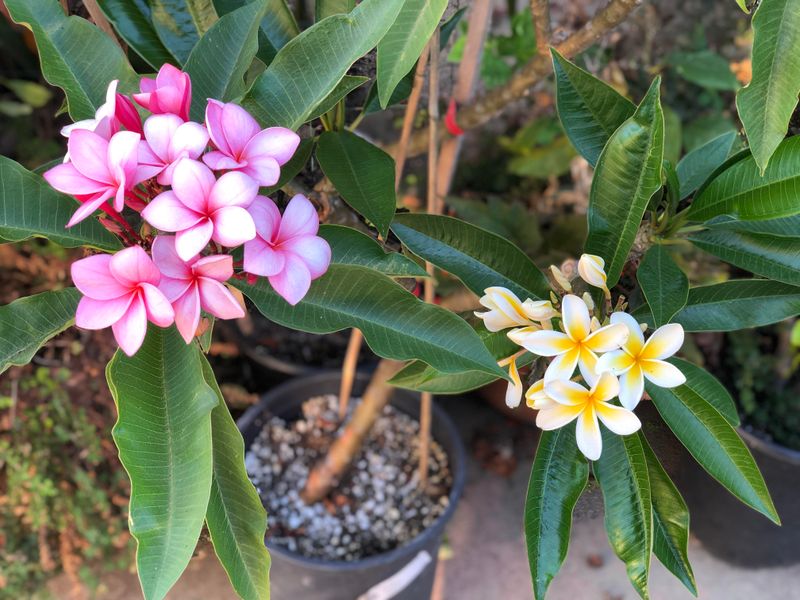
Inland California in June can surprise even experienced gardeners with how quickly afternoon temperatures climb.
Cities like Riverside, Fresno, and Bakersfield regularly see temperatures push past 95 to 105 degrees Fahrenheit by mid-afternoon, and plumeria sitting in direct exposure during those peak hours can show visible signs of stress.
That stress often shows up as drooping leaves or scorched tips on tender new growth, both worth keeping an eye on during the hottest stretches of summer.
Plumeria is a sun-loving plant, but there is a difference between warm, bright sun and intense radiant heat bouncing off concrete patios or stucco walls.
If your container plant sits near a reflective surface, afternoon shade from a patio umbrella, shade cloth rated around 30 to 40 percent, or even a nearby trellis can help reduce stress without cutting off the light the plant needs earlier in the day.
Your California Garden Changes Every Week. Your Plan Should Too.
Gardening in California changes quickly throughout the season. Every Friday you’ll receive a simple weekly plan showing exactly what to plant, prune, fertilize, harvest, and protect so you never miss the right timing.
Coastal California gardens generally face a milder version of this challenge, with marine layers keeping afternoon temperatures more moderate. But even in those areas, June can bring warm stretches that push plants harder than expected.
Paying attention to how your plumeria looks after a hot afternoon is a simple and reliable way to gauge whether it needs a bit of protection.
Leaves that stay firm and upright through the afternoon are a good sign the plant is handling the heat well for now.
3. Water Deeply, Then Let The Soil Dry Somewhat
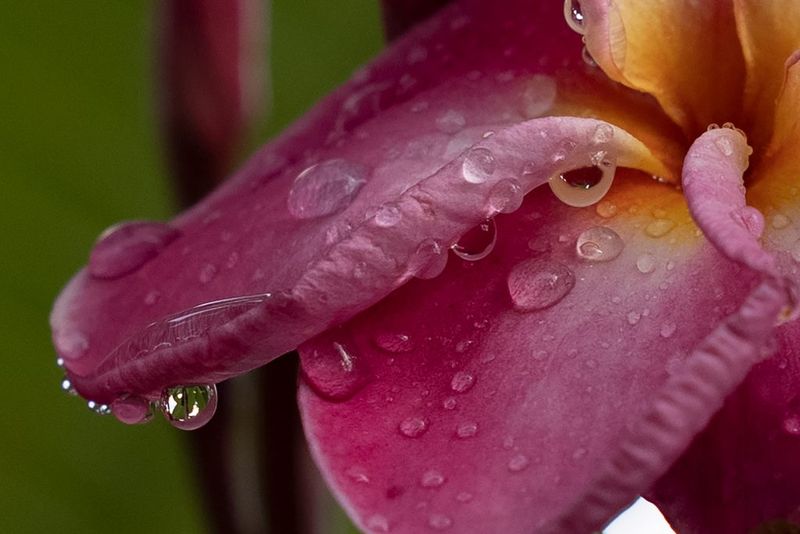
Getting the watering rhythm right in June is one of the most important things you can do for your plumeria in California.
The approach that tends to work best is watering deeply enough to moisten the entire root zone, then waiting until the top inch or two of soil feels dry before watering again.
This encourages the roots to grow downward and outward rather than sitting in soggy conditions near the surface.
June in California marks the beginning of the dry season, and plumeria actually appreciates a moderate dry-down period between waterings.
Unlike many garden plants, plumeria handles short dry spells reasonably well because of its succulent-like stems that store some moisture.
Overwatering is a far more common problem than underwatering among California growers, especially when warm weather tempts gardeners into watering too frequently.
For container plants, the size of the pot matters quite a bit. A smaller pot in an inland California garden can dry out within a day or two during a hot stretch, while a large container in a coastal area may hold moisture for four to five days.
Sticking a finger two inches into the soil is still the most reliable way to judge whether it is time to water again. Adjusting based on actual soil moisture rather than a fixed schedule tends to produce much better results through the summer months.
4. Make Sure The Pot Or Bed Drains Well
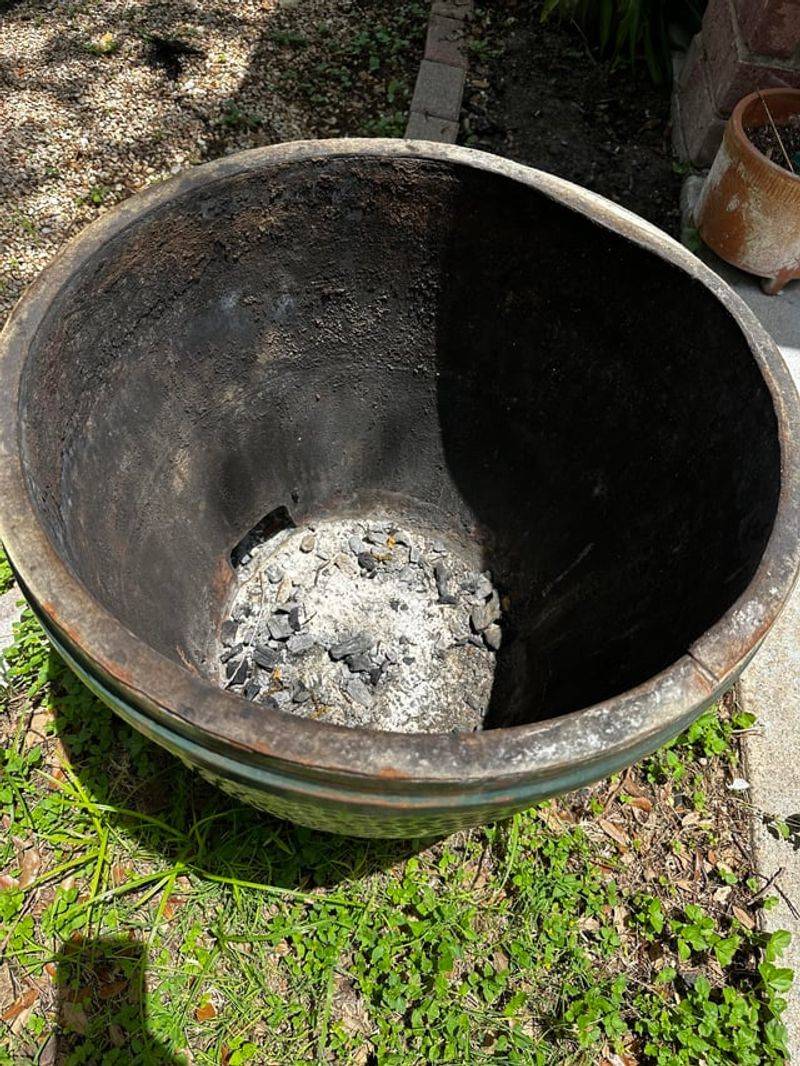
Drainage might sound like a basic concept, but it is one of the most overlooked factors in plumeria care across California gardens.
Plumeria roots are highly sensitive to sitting in water for extended periods, and a pot or garden bed that does not drain freely can cause root problems that show up slowly and are difficult to reverse once they take hold.
For container growers, checking that drainage holes are open and unblocked is a smart June task. Roots, compacted soil, and mineral buildup from hard water can gradually close off those holes.
Lifting the pot and looking at the bottom after a deep watering will tell you quickly whether water is flowing through or pooling inside.
A mix that contains coarse perlite, pumice, or coarse sand alongside potting soil tends to drain much more reliably than standard potting mix alone.
In-ground plumeria beds in California also benefit from good drainage, particularly in areas with heavy clay soil that is common in many parts of the state. Raised beds or mounded planting areas can help in those situations.
One helpful sign that drainage is working well is that the soil surface dries within a reasonable time after watering rather than staying visibly wet for many hours.
Catching a drainage problem in June, before peak summer heat arrives, gives you a much better window for correcting it without stressing the plant further.
5. Feed Lightly During Active Growth
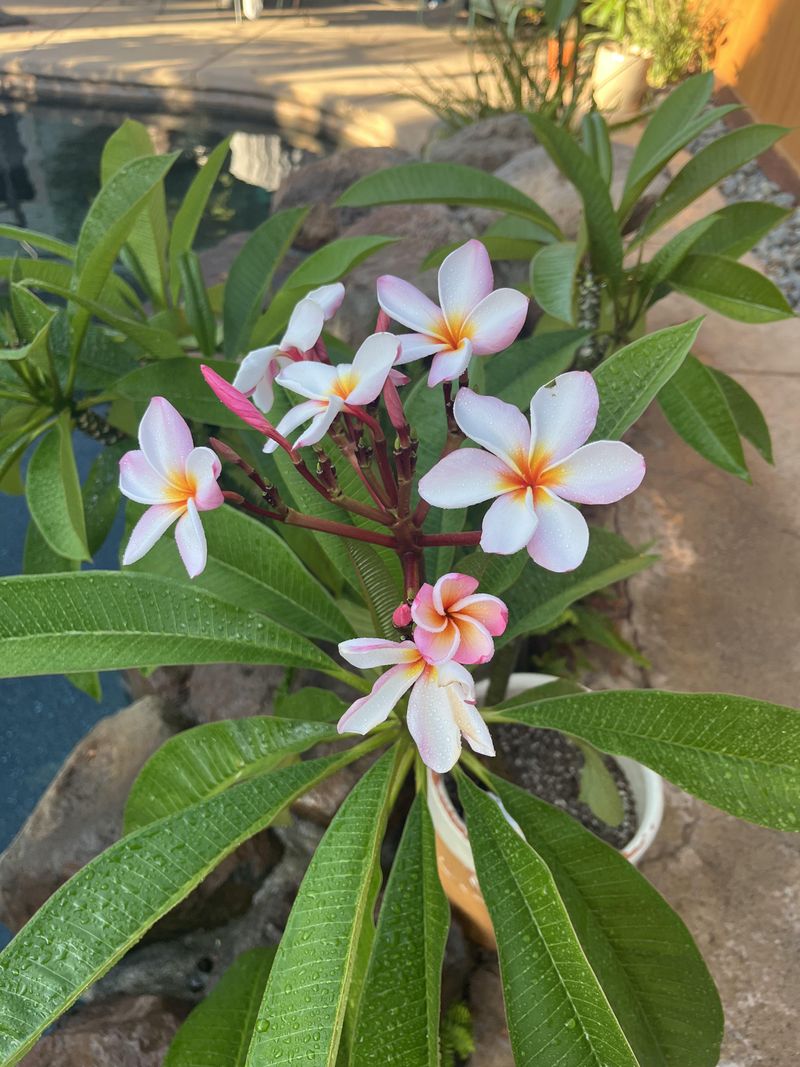
By June, most California plumeria plants have shifted into active growth mode, pushing out new leaves and beginning to build the energy they will need for blooming later in the season.
A light feeding during this period supports that growth without overwhelming the plant or pushing it into overly lush, soft foliage that can be more vulnerable to pests and heat stress.
Fertilizers formulated for tropical plants or specifically labeled for plumeria tend to be a reasonable starting point.
Many California growers use a balanced or bloom-boosting formula with a moderate phosphorus content to support both healthy stems and eventual flower development.
Granular slow-release fertilizers applied once in early June can offer steady nutrition over several weeks, while liquid fertilizers applied at half strength every two to three weeks give a bit more control over the timing.
One thing to keep in mind is that feeding a plant that is already stressed from heat, poor drainage, or incorrect watering tends to make the situation worse rather than better.
If your plumeria looks a bit off in June, addressing the environmental issue first before reaching for fertilizer is usually the smarter move.
Healthy, well-established plants respond to light feeding much more positively than those dealing with other challenges at the same time.
Starting with a modest amount and observing the plant over the following weeks is a sensible approach for most California gardeners.
6. Avoid Too Much Nitrogen Before Bloom Season
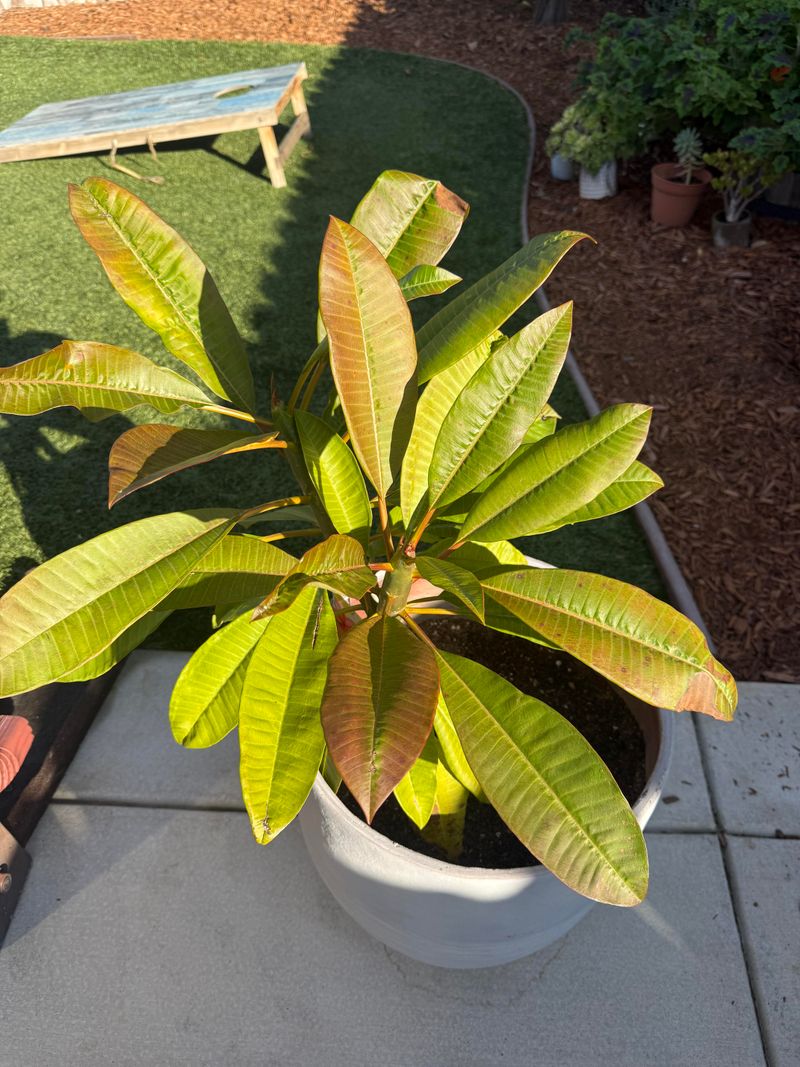
Nitrogen is the nutrient most associated with leafy, green growth, and while some nitrogen is useful for a healthy plumeria, leaning too heavily on it in June can steer the plant away from flowering and toward producing thick foliage instead.
Many gardeners in California make this mistake early in the season, especially when a plant looks a little sparse after winter and the instinct is to push it with a high-nitrogen formula.
Plumeria needs a certain balance to shift from vegetative growth into bloom production.
Phosphorus plays a bigger role in supporting that transition, which is why fertilizers with a higher middle number in the NPK ratio, such as 10-30-10 or similar, are often recommended closer to and during bloom season.
Using a nitrogen-heavy fertilizer repeatedly through June can result in a plant that looks lush and full but produces very few or no flower clusters by midsummer.
Reading fertilizer labels carefully before buying is a simple habit that pays off.
If the first number in the NPK ratio is significantly higher than the other two, that product is nitrogen-forward and probably better suited for lawns or leafy vegetables than for a plumeria heading into bloom season.
Scaling back nitrogen in June and shifting toward a more phosphorus-balanced option is one of those quiet adjustments that California plumeria growers often credit when they look back on a particularly good flowering season.
7. Check Leaves For Aphids, Mites, And Whiteflies
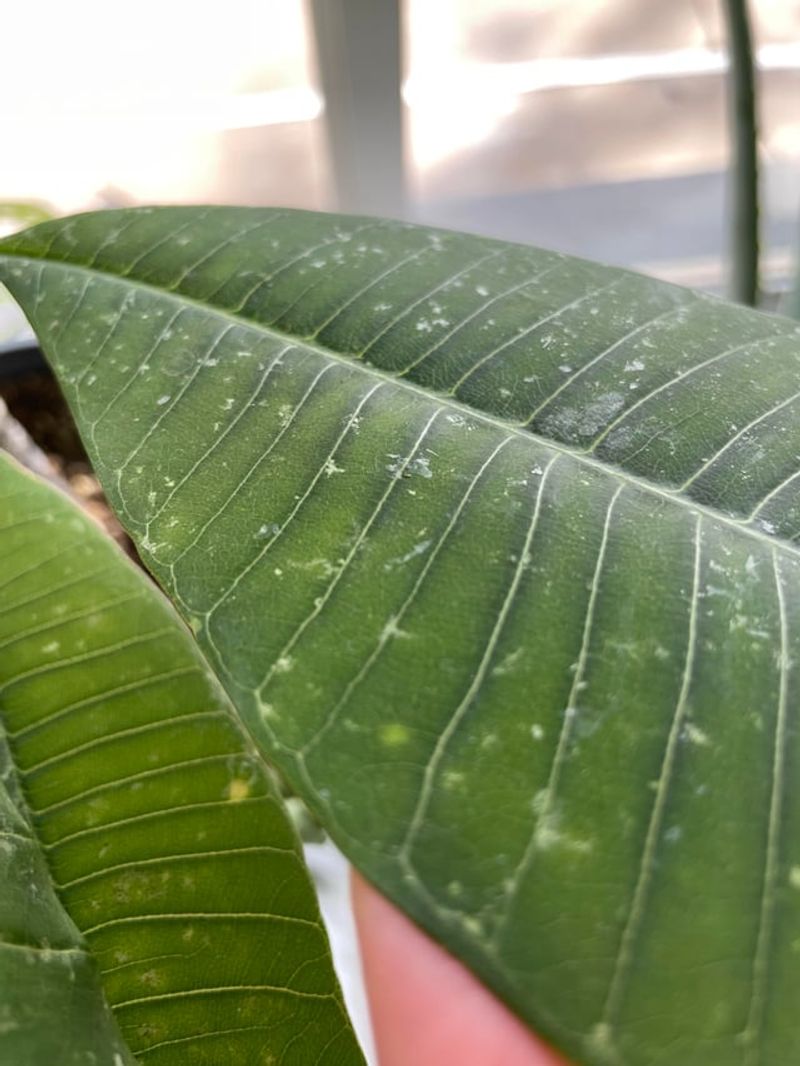
Warm June temperatures in California create exactly the kind of conditions that pest populations love, and plumeria is not immune to the usual suspects.
Aphids tend to cluster on new growth and the undersides of young leaves, while spider mites show up more often during hot, dry stretches, leaving a faint webbing and causing leaves to look dull or slightly stippled.
Whiteflies are another common visitor, especially in Southern California gardens, and they can multiply quickly once established.
Getting into the habit of flipping leaves over during your regular garden check is one of the easiest ways to catch a problem early. A small infestation is much easier to manage than one that has spread across the entire plant.
A strong stream of water from a hose can knock aphids and mites off leaves effectively, and this simple method is often enough when the problem is caught early in the season.
For more persistent issues, insecticidal soap or neem oil applied in the early morning or late evening, when temperatures are cooler and the sun is not directly on the leaves, can help reduce pest populations without harming beneficial insects as much.
Avoiding applications during the hottest part of the day also reduces the chance of leaf damage from the product itself.
Staying consistent with weekly checks through June keeps small pest problems from quietly growing into bigger ones before midsummer.
8. Keep Containers From Sitting In Standing Water
Saucers and trays under potted plumeria are convenient for keeping patios clean, but they can quietly create a drainage problem that builds over time.
When a container sits in standing water after a deep watering or a rare June rain event, the roots at the bottom of the pot stay wet far longer than they should.
Over time, this can lead to root problems that show up as yellowing leaves, soft stems, or a plant that simply stops growing despite good care.
Elevating containers slightly using pot feet, bricks, or a simple plant stand allows excess water to drain freely beneath the pot rather than pooling in a saucer.
This also improves air circulation around the base of the container, which can help the root zone dry more evenly between waterings.
In California’s warm June climate, that combination of good drainage and airflow makes a real difference for container-grown plumeria.
If you use a saucer for convenience, emptying it within an hour or two after watering is a reasonable habit to develop. Some gardeners place a layer of gravel in the saucer so the pot bottom sits above any water that collects rather than directly in it.
Checking saucers after unexpected June showers is also worth doing, since even a modest amount of rain can leave enough water sitting underneath a pot to cause problems if it goes unnoticed for several days in warm weather.