What To Do With Your Florida Mandevilla In August Before It Gets Leggy
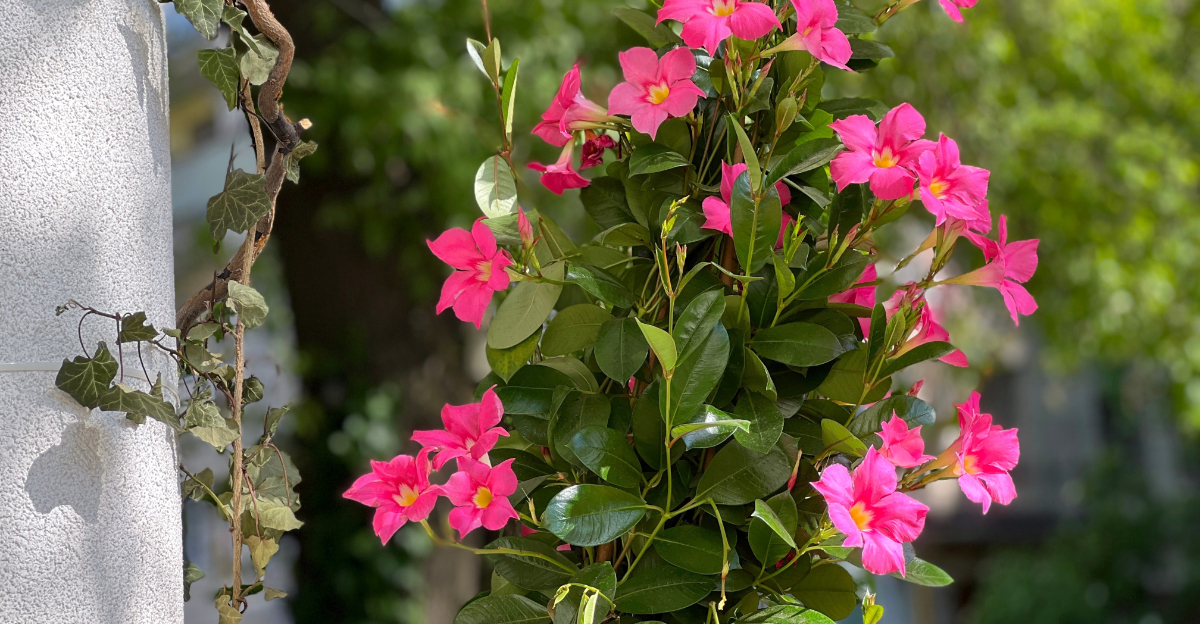
Florida mandevilla in August has a leggy problem that arrives before anyone notices it. Blooms still appearing at the tips.
Everything looking productive from a distance. Nobody intervenes until the plant has already committed to a shape that is hard to walk back without losing weeks of color.
August is when mandevilla makes structural decisions. Left alone, it puts energy into extension rather than bloom density.
Vines reach, the base thins, and September arrives with very little color in a very concentrated spot at the end of very long stems. One targeted move in August redirects that energy.
Not a hard cutback. A specific, restrained approach that keeps blooms coming while the structure stays manageable.
The window is open right now. It does not stay open long.
1. Pinch Fresh Tips Before Long Stems Start Running
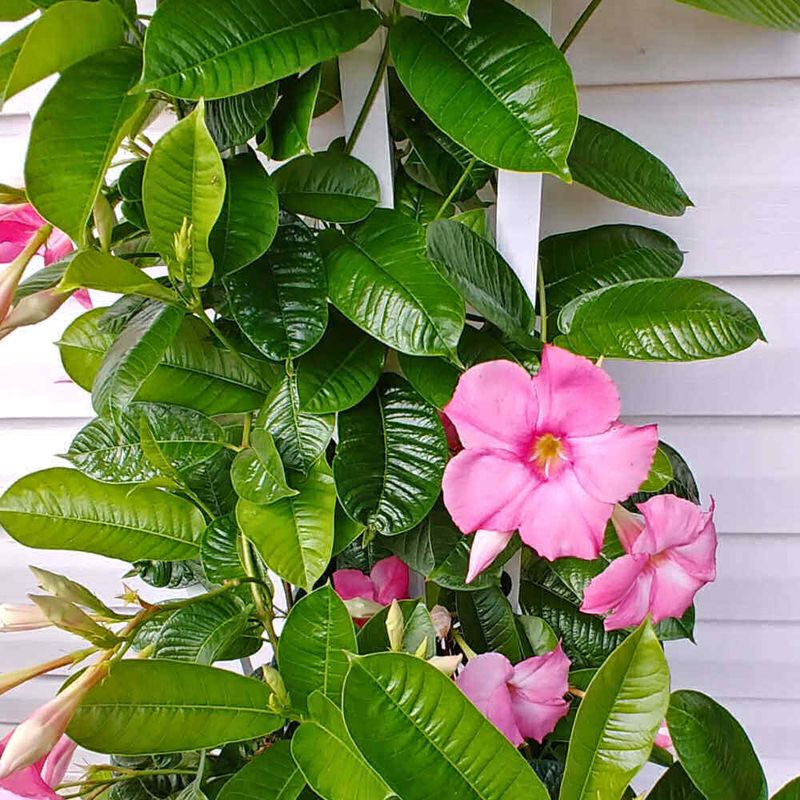
Soft, pale green tips at the end of new shoots are easy to overlook until the vine has stretched several feet past where you wanted it. Pinching those tips early, before the stem stiffens, is one of the simplest ways to encourage a fuller, bushier plant.
You just remove the tender growing point with your fingers or small snips.
Each pinched tip may send out two or more side shoots from nodes just below the cut. More side shoots generally means more flowering points later in the season.
That said, no single pinch guarantees a permanently compact plant, especially with vigorous cultivars that are simply bred to climb.
One honest caution: pinching removes whatever bud was forming at that tip. You may lose a few blooms in the short term.
Most Florida gardeners find that trade-off worthwhile, but if the plant is already blooming heavily, you might wait for a quieter flush before pinching.
Mandevilla produces a milky white sap that can irritate skin and eyes. Wearing lightweight gloves and washing your hands afterward is a simple habit worth keeping.
Keep the cuts modest, focus on the youngest growth, and repeat the process every few weeks rather than pinching everything at once.
2. Train Wandering Shoots Back Onto The Trellis
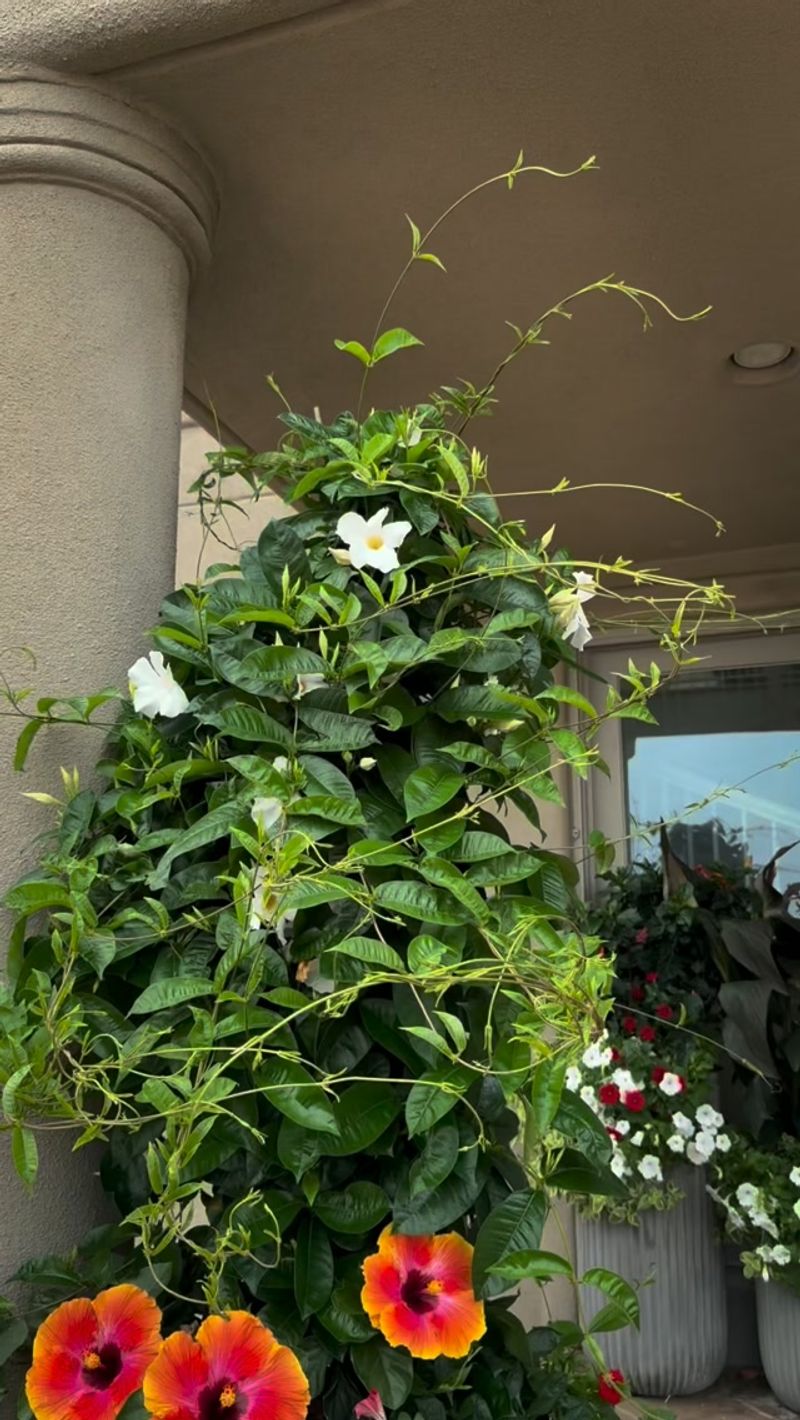
Before reaching for the pruners, take a slow walk around the plant and look at where the longest shoots are actually going. A healthy vine that has simply outpaced its support is often worth redirecting rather than cutting back.
Flexible young stems can usually be guided around a trellis panel, fence wire, or arbor post without much resistance.
Use soft plant ties, stretchy garden tape, or strips of old fabric. Avoid wire twist ties pressed directly against the stem because they can bite into the bark as the vine thickens.
Loose loops that hold the stem in place without squeezing are the right approach.
Check whether the trellis itself still has open space. A structure that is already packed with mature growth may need a few older stems thinned before new ones can be woven in cleanly.
Redirecting works best when there is actually somewhere useful for the shoot to go.
Never force a stiff or mature stem into a sharp bend. Older wood does not flex the same way young growth does, and forcing it may snap the stem or damage the bark.
Your Florida Garden Changes Every Week. Your Plan Should Too.
Gardening in Florida changes quickly throughout the season. Every Friday you’ll receive a simple weekly plan showing exactly what to plant, prune, fertilize, harvest, and protect so you never miss the right timing.
When a stem is too rigid to redirect without strain, that is the point where removing it becomes the better choice rather than injuring healthy tissue.
3. Open Crowded Growth Without Sacrificing The Flowers
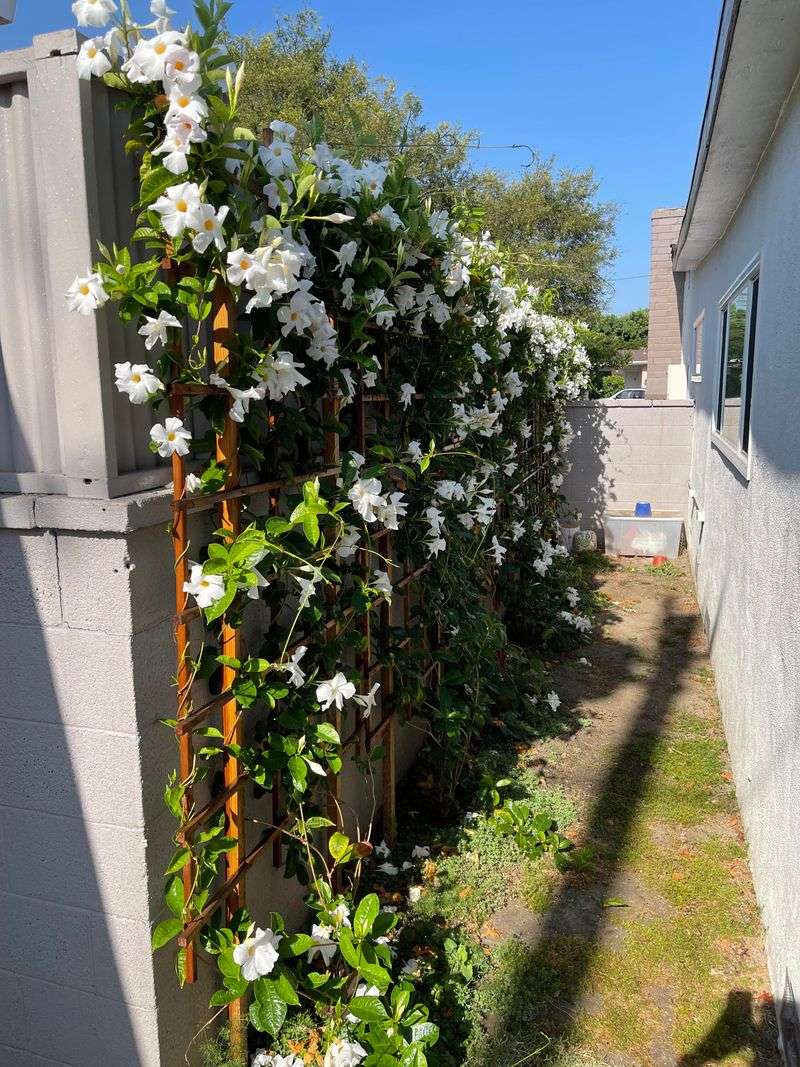
A mandevilla that has been growing hard all summer can develop a tangled interior where stems cross, rub, and block airflow. That kind of crowding is worth addressing, but the method matters.
Selectively removing weak, damaged, or badly placed stems is very different from shearing the whole plant back to a uniform shape.
Repeated shearing tends to remove the newer lateral shoots that carry the most flower buds. You end up with a tidy silhouette but far fewer blooms.
Targeted thinning, by contrast, opens the plant from within while leaving productive stems untouched.
Focus on stems that are growing inward, crossing others at sharp angles, or showing signs of physical damage. Removing those creates breathing room without hollowing out the plant.
Improved airflow also reduces the humid conditions that certain fungal issues prefer during wet summer months.
Keep August thinning modest unless you are dealing with serious storm damage or a genuinely overcrowded structure. Removing too much foliage at once can stress the plant during peak heat.
A reasonable rule is to remove no more than a quarter of the total growth in a single session, then step back and assess before deciding whether more is needed.
4. Give Full Sun A Bigger Role In Compact Growth
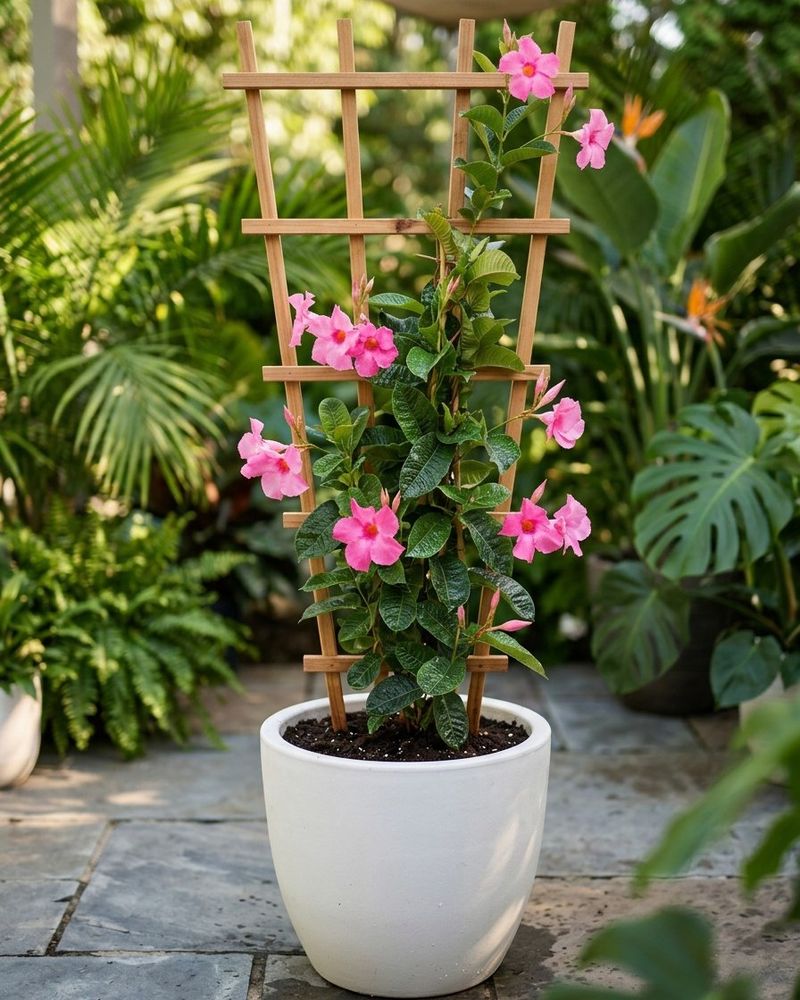
Stretched, loose stems on a mandevilla are sometimes less about pruning habits and more about how much direct sun the plant is actually receiving.
Strong sunlight encourages tighter internodes, meaning the space between each leaf node along the stem stays shorter.
Shade tends to produce the opposite effect, with longer gaps between nodes and fewer flower buds overall.
August is a good time to check whether anything has changed in the garden since spring. Trees that were bare in March may now cast significant shade by midday.
A neighboring shrub that was small in April might now be blocking several hours of morning light from your trellis.
Container plants have an advantage here. A pot can be shifted gradually over several days to a sunnier position, reducing transplant shock compared to an abrupt move.
Large in-ground vines are a different situation entirely, and digging up an established plant during peak summer heat is not a practical solution for a light problem.
Full sun alone does not fix every leggy plant. Cultivar habit, training history, and soil nutrition all play a role.
First, confirm that your mandevilla is getting at least six hours of direct sun each day. This simple check can help determine whether any cutting is actually necessary.
5. Match August Watering To Rain Instead Of The Calendar
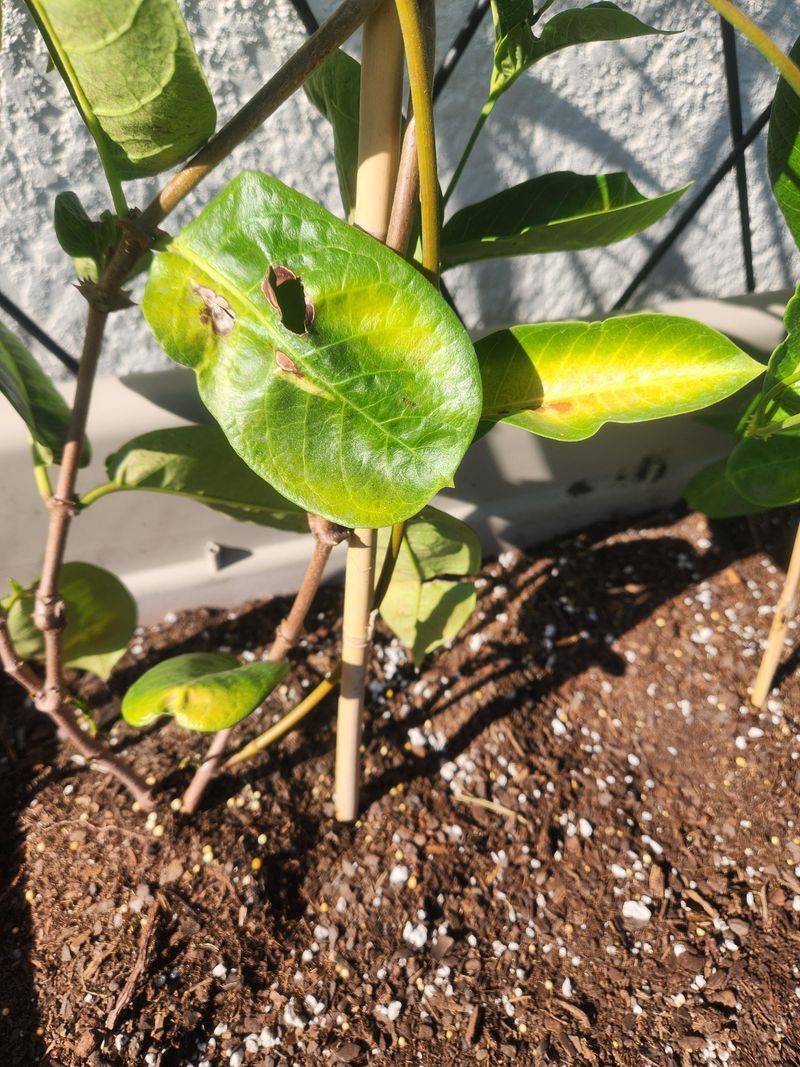
Afternoon thunderstorms are common across much of the state in August. As a result, an irrigation timer set in May may now be delivering far more water than the soil actually needs.
Overwatered roots can become stressed, and a stressed plant often responds with weak, soft growth that contributes to a leggy appearance.
Checking the actual soil moisture before running the hose or sprinkler is always more accurate than following a fixed schedule. Push a finger two inches into the soil near the root zone.
If it still feels damp, the plant does not need water yet. If it feels dry and crumbly, water thoroughly and let the soil drain.
Containers deserve special attention because they can behave very differently from garden beds. A pot sitting in a hot, sunny spot may dry out within a day or two even during a rainy week.
Always check the pot individually rather than assuming the rain took care of it.
Good drainage matters as much as watering frequency. Standing water around the base of a pot or in a low Florida garden bed can stress roots quickly.
Make sure containers have clear drainage holes and that the surrounding soil is not compacted in a way that traps water near the crown of the plant.
6. Ease Up When Fertilizer Produces More Vine Than Blooms
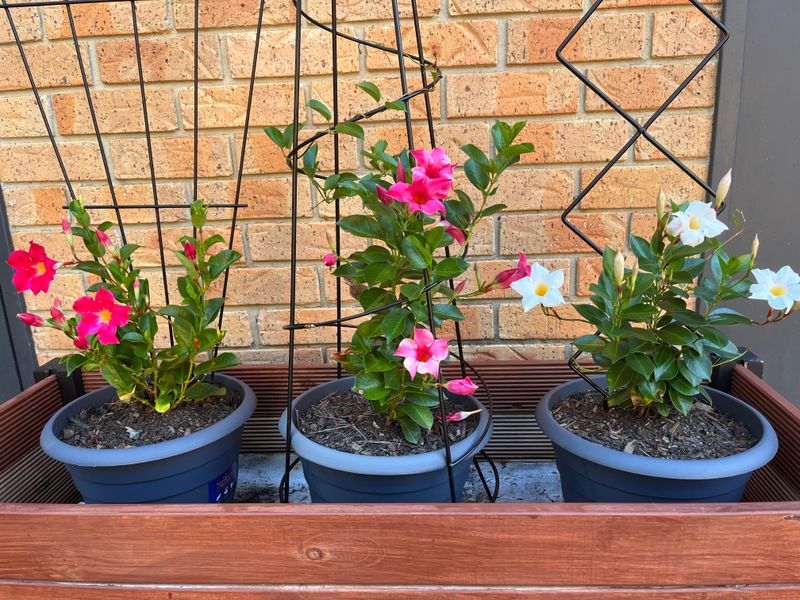
A mandevilla pushing out lots of dark green leaves and long stems but very few flowers might be getting more nitrogen than it needs.
Nitrogen is the nutrient most associated with leafy, vegetative growth, and an excess can sometimes shift the plant’s energy away from flowering.
That said, not every long vine is the result of overfertilizing.
Sunlight levels, the natural growth habit of a particular cultivar, and training history all influence how a plant develops. Blaming the fertilizer before checking those other factors can lead to unnecessary changes.
Observe the full picture before adjusting your feeding routine.
Many counties in the state have fertilizer blackout periods during the summer rainy season to protect local waterways. Check with your local UF/IFAS Extension office for current guidelines specific to your area before applying anything.
Following those Florida local rules is both responsible and practical.
If you do decide to fertilize, choose a product labeled for flowering vines and follow the package directions precisely. Resist the urge to apply more than recommended, thinking it will speed results.
More is rarely better when it comes to fertilizer. A modest, correctly timed application will serve the plant far better than a heavy dose applied out of frustration with slow blooming.
7. Catch Scale And Mealybugs Hiding On Fresh Growth
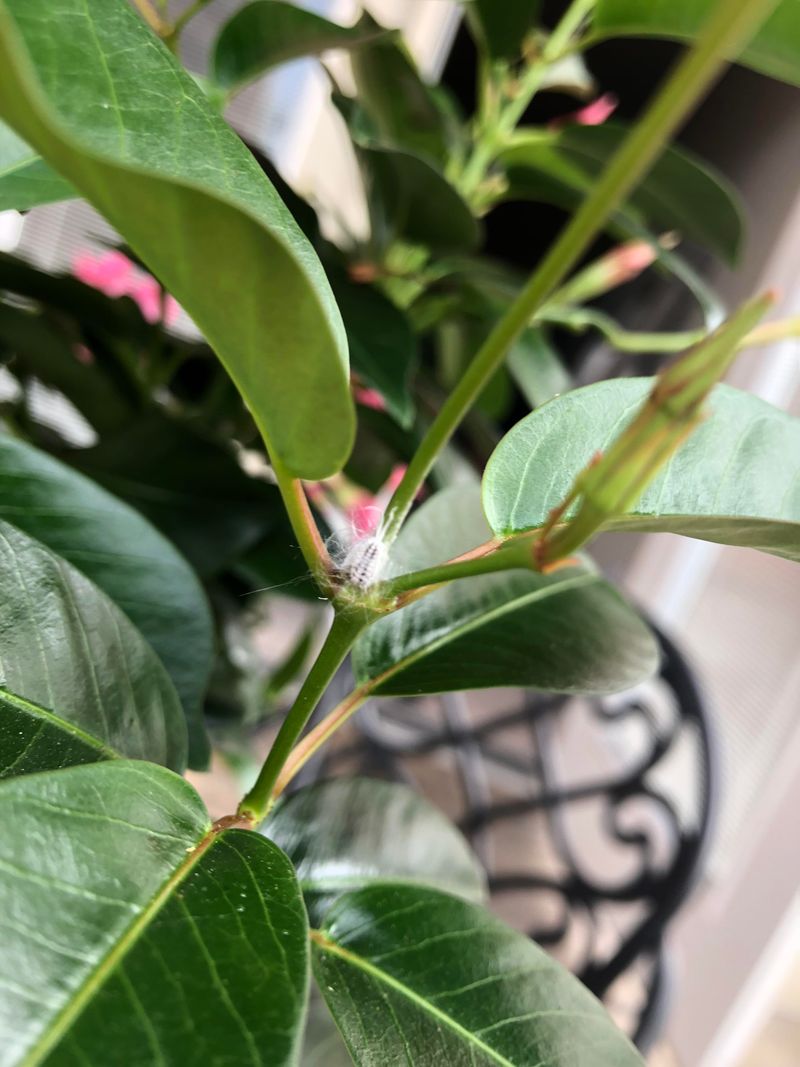
New growth on a fast-moving summer vine is prime real estate for certain soft-bodied pests. Scale insects and mealybugs are the two most commonly reported problems on mandevilla, and both tend to cluster in spots that are easy to miss during a casual glance.
Leaf joints, the undersides of newer leaves, and the base of fresh shoots are the places worth examining closely.
Scale insects look like small, flat, or slightly raised bumps attached to stems. They vary in color from tan to brown and do not move once settled.
Mealybugs are easier to spot because of the white, cottony wax they produce, which often gathers in clusters at stem nodes or near flower buds.
Both pests can produce a sticky residue called honeydew, which may lead to a black sooty mold on affected surfaces. If you notice sticky leaves or dark powdery patches, check the nearby stems carefully before assuming the cause.
Confirm the pest identity before treating anything. A sticky leaf could have other explanations, including plant sap from a fresh cut or residue from a nearby plant.
Once you have confirmed an infestation, insecticidal soap applied according to label directions is a commonly used option. Always test on a small area first and treat during cooler parts of the day.
8. Save The Hard Cutback For A Better-Timed Reset
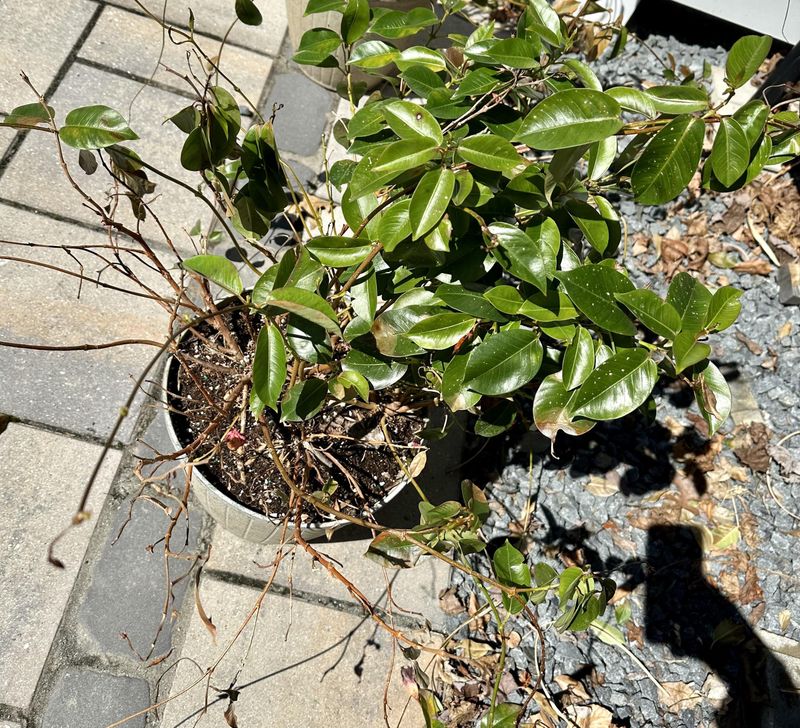
Reaching for the pruners and cutting a mandevilla back hard in August can feel satisfying, but the timing rarely works in the plant’s favor. A severe cutback removes foliage, developing buds, and the stems that would have carried flowers through the fall.
The plant then spends energy regrowing rather than blooming during one of the best display seasons.
How much cold a plant experiences in winter varies quite a bit depending on where in the state it is growing. In the warmest Florida southern areas, mandevilla may stay active year-round.
In northern regions, a hard freeze can cut the plant back naturally, making a late-winter or early-spring renovation more logical than a midsummer one.
Container plants often have more flexibility in seasonal planning because they can be moved indoors or under cover before cold arrives. An in-ground vine that has grown into a large structure may need a different approach entirely.
Its care should be timed to local frost patterns rather than a single statewide recommendation.
The real goal of August care is not a dramatic reset but a steady course correction. Pinching, training, thinning, and checking sun and water are all tools for guiding growth in a direction you want.
Saving heavier pruning for the right season means you get to enjoy the flowers now while setting the plant up well for what comes next.