8 Small-Space Plants That Grow Well Along Fences In Florida Yards
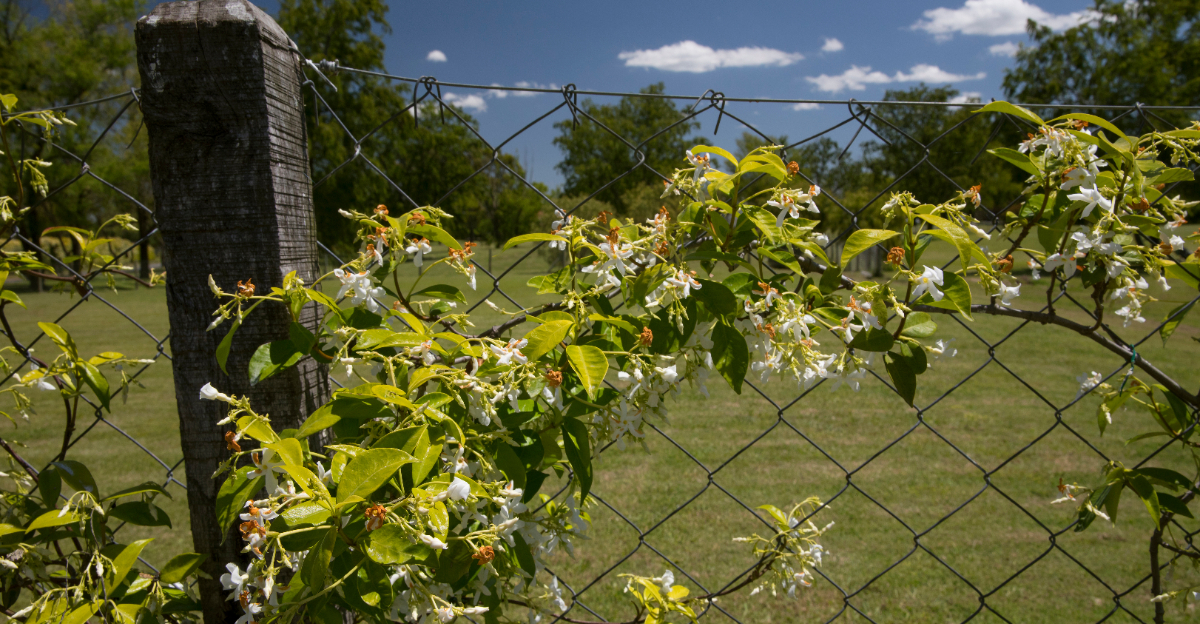
Florida fences often end up as quiet, overlooked edges of the yard, but they can become some of the most useful growing spaces when handled right.
Limited space does not have to mean limited greenery, especially in a climate where plants grow fast and respond quickly to warmth and moisture.
Along those narrow fence lines, the challenge is finding plants that stay compact while still handling Florida’s heat, humidity, and sudden rain shifts. Not everything fits that bill, but the right choices can turn a plain boundary into a living, layered strip of color and texture.
Once those spaces start filling in, the whole yard feels more finished, more intentional, and a lot less bare. It is often the smallest planting areas that end up changing the biggest impression.
1. Star Jasmine Adds Fragrance Without Taking Over Fence Lines
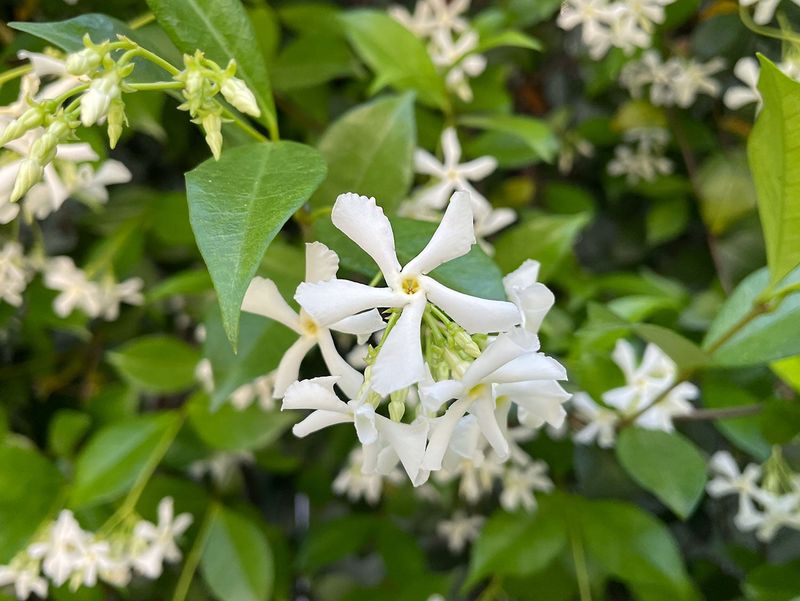
Few things make a fence line feel more inviting than the sweet scent of Star Jasmine drifting through the yard on a warm Florida evening. Trachelospermum jasminoides is a manageable evergreen climber that works beautifully along fences without the aggressive sprawl that makes some vines a headache to deal with.
It clings and twines rather than gripping with adhesive pads, which means it is much less likely to damage wood, vinyl, or chain-link fence surfaces.
In Florida, Star Jasmine performs well across most of the state, tolerating both full sun and partial shade. It grows at a moderate pace, which gives you time to guide and shape it before it gets ahead of you.
Tying new growth loosely to fence rails or horizontal wires every few weeks during the growing season keeps it trained and neat without much effort.
Spacing plants about three to five feet apart along the fence gives each one enough room to fill in without crowding. Light pruning after the main spring bloom keeps the vine from getting too thick or tangled.
In South Florida, it may bloom more than once a year. If you notice any runners heading in the wrong direction, simply redirect or trim them back.
This is one of the most rewarding fence plants you can grow in a Florida yard.
2. Dwarf Podocarpus Creates A Clean Green Screen In Narrow Spaces
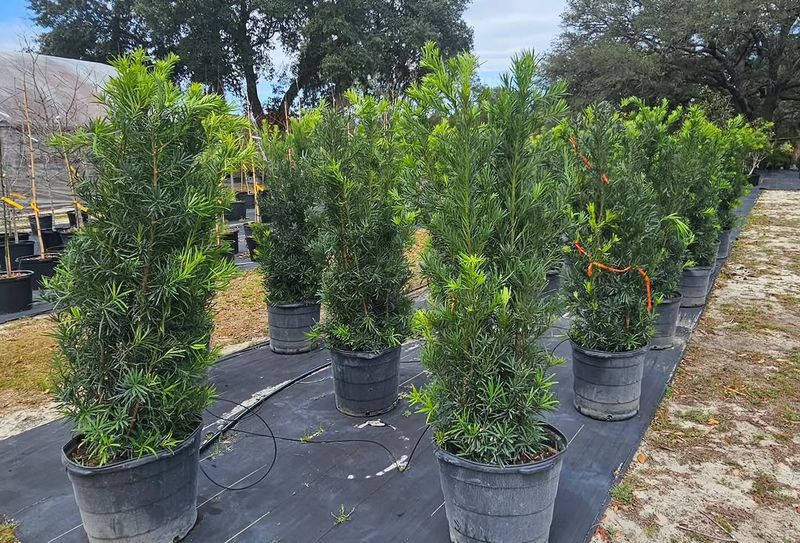
Upright, tidy, and incredibly well-suited for tight fence lines, Dwarf Podocarpus is one of the most reliable evergreen shrubs you can plant in a Florida yard. The compact form, often sold as Podocarpus macrophyllus ‘Maki,’ grows in a naturally columnar shape that stays narrow without constant fighting.
That upright habit makes it a smart pick when you need height for privacy but cannot afford to lose several feet of yard width to a spreading shrub.
Growth rate is slow to moderate, which is actually a benefit in Florida where many plants race ahead faster than expected. You get time to enjoy the clean, dark green foliage before it needs serious shaping.
Plan on spacing plants about two to three feet apart if you want a solid green screen, or up to four feet apart for a softer, more open look along the fence.
Your Florida Garden Changes Every Week. Your Plan Should Too.
Gardening in Florida changes quickly throughout the season. Every Friday you’ll receive a simple weekly plan showing exactly what to plant, prune, fertilize, harvest, and protect so you never miss the right timing.
Podocarpus handles full sun to partial shade and adapts to a range of soil types, including the sandy soils common across much of Florida. Light pruning two or three times a year keeps the profile narrow and the top flat if you prefer a formal look.
Avoid heavy shearing all at once, as gradual trimming produces denser, more attractive foliage. UF/IFAS recommends this plant as a low-maintenance screening option well suited to residential landscapes throughout Florida.
3. Coral Honeysuckle Climbs Lightly Without Becoming Overgrown
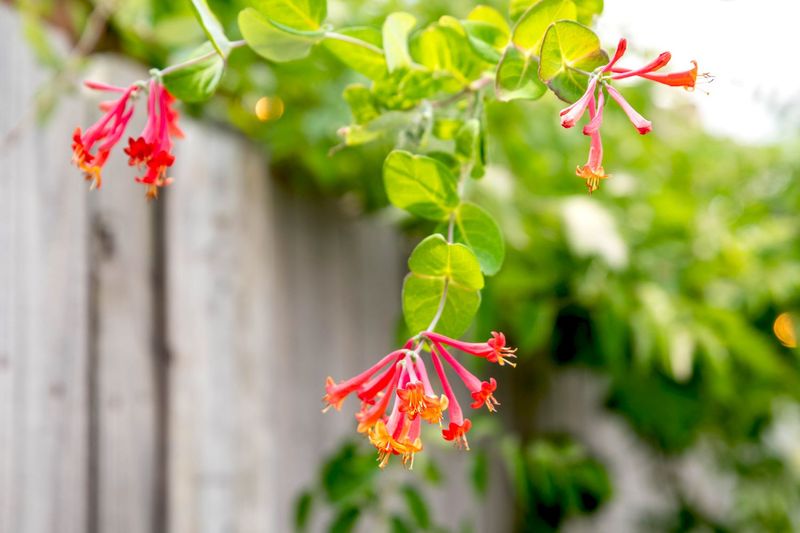
Native plants often earn their place in Florida yards by simply doing what they were meant to do, and Coral Honeysuckle is a perfect example of that.
Lonicera sempervirens produces vivid red tubular flowers that attract hummingbirds and butterflies throughout much of the year, making a fence line feel alive in a way that few other vines can match.
Unlike its invasive Japanese cousin, this native species climbs with a light touch and does not take over surrounding plants or structures.
Coral Honeysuckle does best in full sun to partial shade and appreciates good airflow around its stems, which helps prevent fungal issues in Florida’s humid climate. Training it along a fence rail or simple trellis attached to the fence is straightforward.
The vine twines naturally, so you mainly just need to guide new growth in the direction you want it to go during the first season.
Spacing plants about four to six feet apart gives each vine room to climb and fill in without overcrowding. Pruning once or twice a year, ideally after a bloom cycle, keeps the growth manageable and encourages fresh flowering stems.
As a Florida native, it is well adapted to local rainfall patterns and does not need much supplemental irrigation once established. For pollinators and fence coverage without the drama, Coral Honeysuckle is genuinely hard to beat.
4. Firecracker Plant Brings Color To Tight Fence Line Gaps
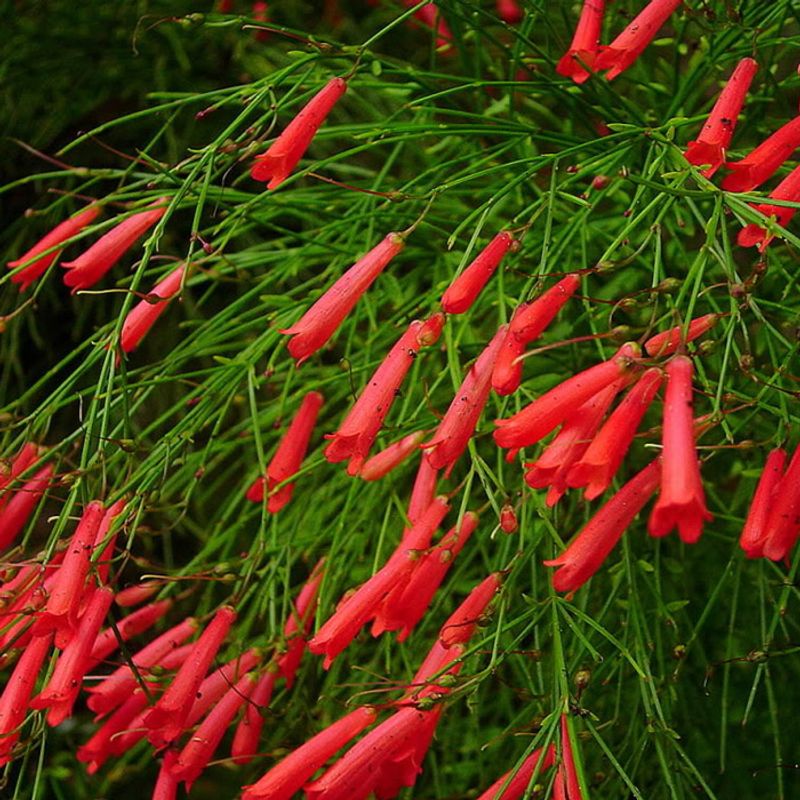
There is something almost playful about the way Firecracker Plant grows. Russelia equisetiformis produces long, arching stems covered in small, bright red tubular flowers that cascade outward like a burst of color from a narrow planting strip.
That arching habit is actually what makes it so useful along fence lines where space is tight but visual impact matters.
In Florida, Firecracker Plant thrives in full sun and handles heat and humidity without complaint. It is also reasonably drought-tolerant once established, which is a real advantage in yards with sandy soil that drains quickly.
The stems grow outward rather than straight up, so placing it in a spot where it can spill slightly toward open space, rather than over a walkway or driveway, keeps things tidy and manageable.
Spacing plants about two to three feet apart along the fence creates a continuous flowing line of color without individual plants merging into one tangled clump. Cutting stems back by about one-third after a heavy bloom cycle encourages fresh growth and keeps the plant from looking too sprawling.
Hummingbirds are regular visitors to the flowers, which adds even more life to a fence line planting. Firecracker Plant works particularly well in gaps between taller shrubs where a burst of low, colorful growth fills the space without competing for vertical room.
5. Dwarf Ixora Stays Compact While Adding Bright Blooms
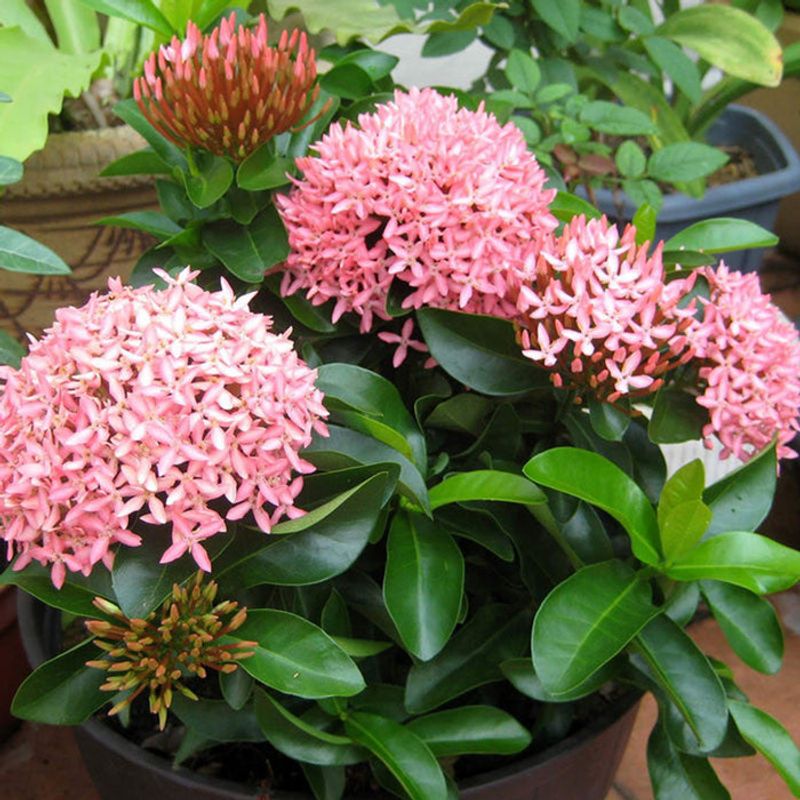
Clusters of small, jewel-bright flowers packed together in rounded heads make Dwarf Ixora one of the most eye-catching compact shrubs you can grow in Florida.
Compact Ixora cultivars, such as ‘Nora Grant’ or ‘Petite,’ stay low and rounded without the aggressive growth that larger Ixora varieties can show.
That controlled size makes them a natural fit for narrow fence-line planting strips where height and width need to stay in check.
Ixora thrives in full sun to light shade and genuinely loves Florida’s warm, humid climate. One key detail to get right is soil pH.
Ixora prefers slightly acidic soil in the range of 5.0 to 6.5, and Florida’s naturally acidic sandy soils often work well. If your soil leans alkaline, applying an acid-forming fertilizer formulated for Ixora and similar plants will help prevent the yellowing leaves that signal nutrient deficiencies.
Spacing compact cultivars about two to three feet apart creates a neat, low hedge along the fence without plants crowding each other. Light pruning after each bloom cycle, rather than heavy shearing, encourages more flowering and keeps the rounded shape intact.
Avoid cutting back into bare wood, as Ixora recovers slowly from aggressive cuts. In Central and South Florida, Dwarf Ixora can bloom nearly year-round, keeping the fence line colorful through multiple seasons with very little extra effort.
6. Society Garlic Fills Sunny Fence Edges With Minimal Care
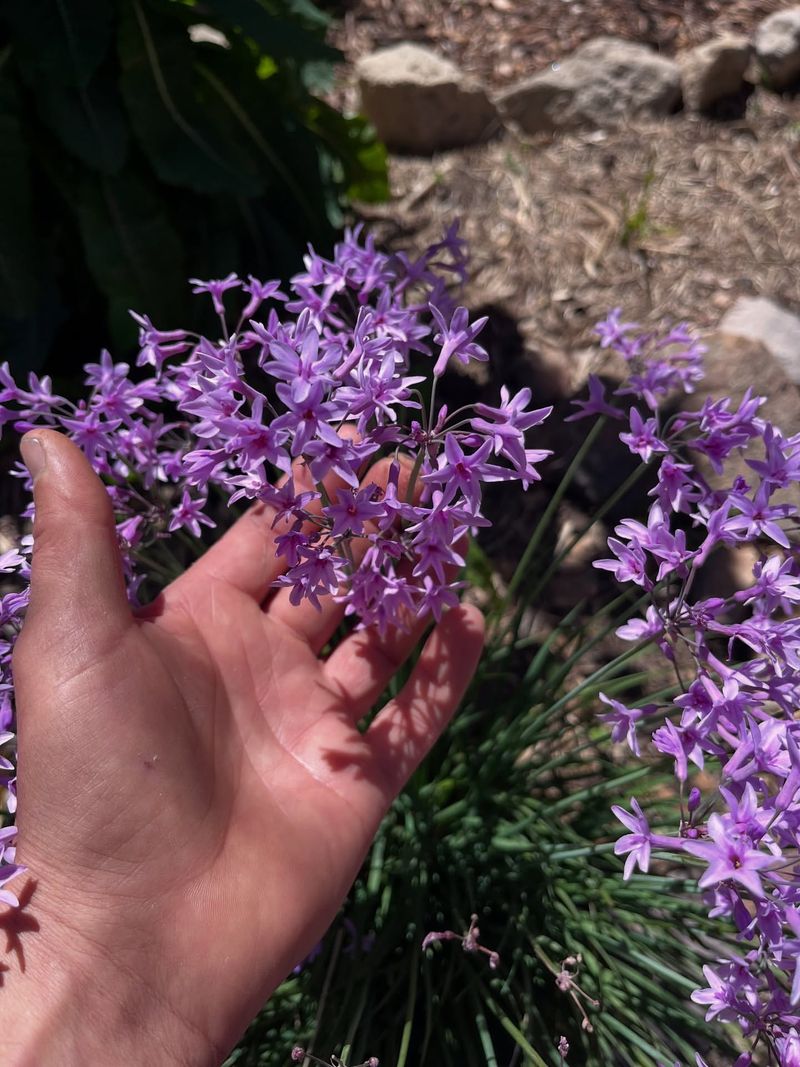
Gardeners who want something that practically takes care of itself along a sunny fence edge should get familiar with Society Garlic. Tulbaghia violacea forms neat, upright clumps of slender, strap-like leaves topped with clusters of soft lavender-purple flowers that appear repeatedly throughout the warm months.
The plant gets its common name from the mild garlic scent released when the foliage is brushed or crushed, though the flowers themselves smell pleasantly sweet.
Full sun brings out the best in Society Garlic, and Florida’s long, bright growing season suits it well. It handles heat, humidity, and periods of dry weather with equal ease, making it one of the most forgiving plants for a fence-line border where conditions can vary.
The clumping growth habit means each plant stays in its own defined space and does not spread aggressively into neighboring areas.
Planting about one to one and a half feet apart creates a full, cohesive border along the fence without individual clumps merging too quickly. Removing spent flower stalks encourages the plant to push out new blooms rather than putting energy into seed production.
Every two to three years, dividing clumps that have grown large keeps plants vigorous and productive.
Society Garlic is also reported to have some deer-deterring qualities due to its scent, which can be a practical bonus in Florida neighborhoods where deer pressure is a real gardening challenge.
7. Muhly Grass Adds Height And Movement Without Crowding
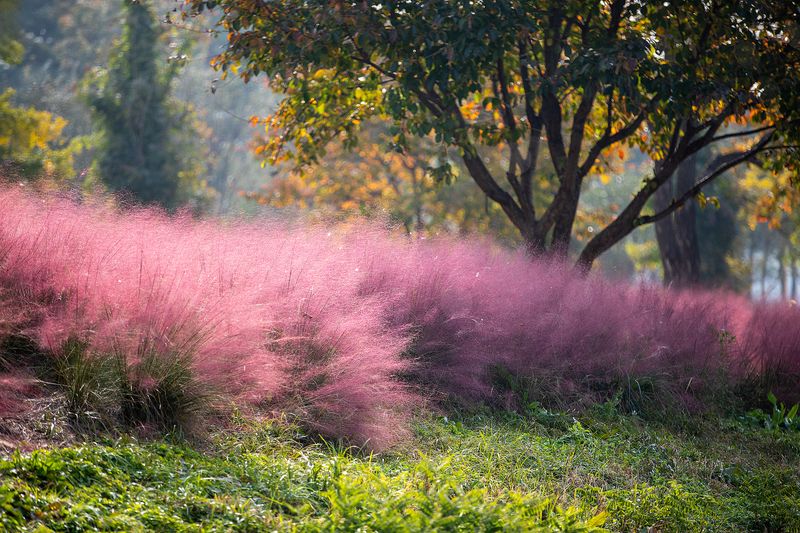
When fall arrives in Florida and most of the garden starts to wind down, Muhly Grass puts on one of the most spectacular shows of the entire year.
Muhlenbergia capillaris is a Florida native ornamental grass that sends up clouds of feathery pink-purple plumes in autumn, transforming a plain fence line into something genuinely stunning.
The upright clumping growth stays contained throughout the growing season, making it an excellent choice for narrow planting strips where spreading grasses would quickly become a problem.
Muhly Grass grows best in full sun and performs well in Florida’s sandy, well-drained soils without needing much fertilizer or supplemental irrigation once it has settled in.
Plants typically reach about three to four feet tall and wide at maturity, with the flower plumes adding another foot or more of height during the fall bloom period.
That vertical interest gives fence lines a layered, natural look without the bulk of a large shrub.
Spacing plants about three feet apart allows each clump to develop its full, graceful form without crowding its neighbors. Cutting plants back to about six to eight inches in late winter or early spring encourages healthy new growth for the coming season.
Because it is a Florida native, Muhly Grass supports local wildlife and requires far less maintenance than many non-native ornamental grasses. It is a low-effort, high-reward plant that earns its spot along any sunny fence line.
8. Twinflower Spreads Soft Color Along Low Fence Edges
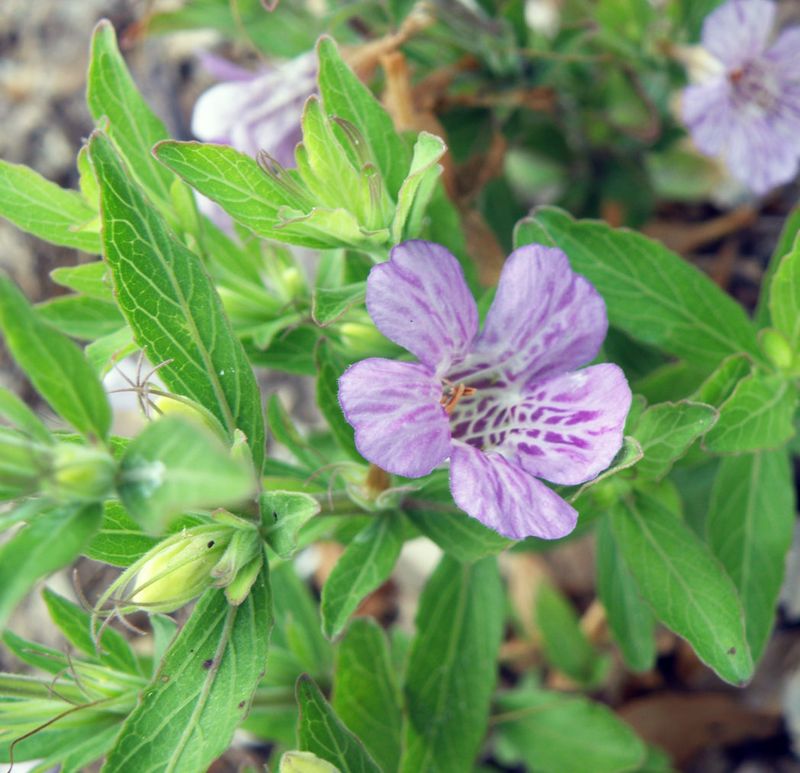
Along the base of a fence where taller plants leave a bare, awkward gap, Twinflower quietly fills in with a carpet of soft green foliage dotted with small purple blooms.
Dyschoriste oblongifolia is a Florida native groundcover that spreads at a steady but manageable pace, making it one of the most practical low-growing options for fence-line edges where you want coverage without constant maintenance.
The flowers are small but charming, and they appear repeatedly from spring through fall in most parts of Florida.
Twinflower adapts well to both full sun and partial shade, which gives it real versatility along fences where light conditions shift throughout the day.
It handles Florida’s sandy soils and periods of dry weather reasonably well once established, though it appreciates occasional watering during extended dry spells.
The spreading habit fills horizontal space along the base of a fence rather than climbing or growing tall, which keeps it from interfering with whatever is planted above it.
Planting about one foot apart creates a solid groundcover layer within one to two growing seasons. Unlike some spreading groundcovers, Twinflower is not considered invasive in Florida and stays within reasonable bounds without aggressive management.
Trimming back any stems that creep beyond the intended border is all the maintenance it really needs. For gardeners wanting a native, low-maintenance solution for bare fence edges, Twinflower is a genuinely overlooked gem worth adding to the planting plan.