What Yellowing Arborvitae Really Means During An Oregon Drought Year
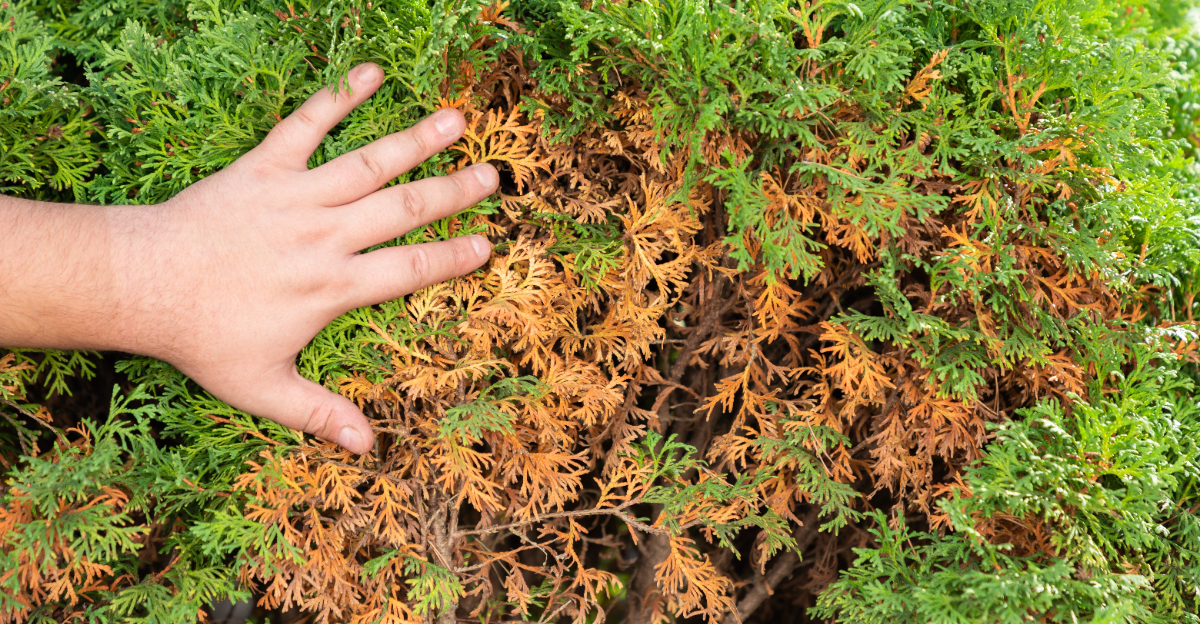
Arborvitae are supposed to be the dependable green walls of the yard, so seeing sections turn yellow can feel instantly alarming.
One week they look dense and healthy, and the next you are staring at pale foliage wondering if the whole hedge is quietly heading downhill. Not exactly the privacy-screen aesthetic anyone had in mind.
During a dry year in Oregon, those color changes can be especially confusing. Heat, limited moisture, soil conditions, and seasonal stress can all affect evergreens in ways that are not always obvious at first glance.
A little yellowing might seem minor, while a larger patch can send gardeners straight into emergency mode with the hose.
The tricky part is that yellow foliage does not tell the whole story by itself. Where the discoloration appears, how quickly it develops, and what the rest of the plant looks like can all offer useful clues.
Before assuming your arborvitae are finished, take a closer look at the pattern. What you are seeing may say much more about current conditions than the color alone.
1. Drought Stress Can Show Up As Yellowing Before Browning
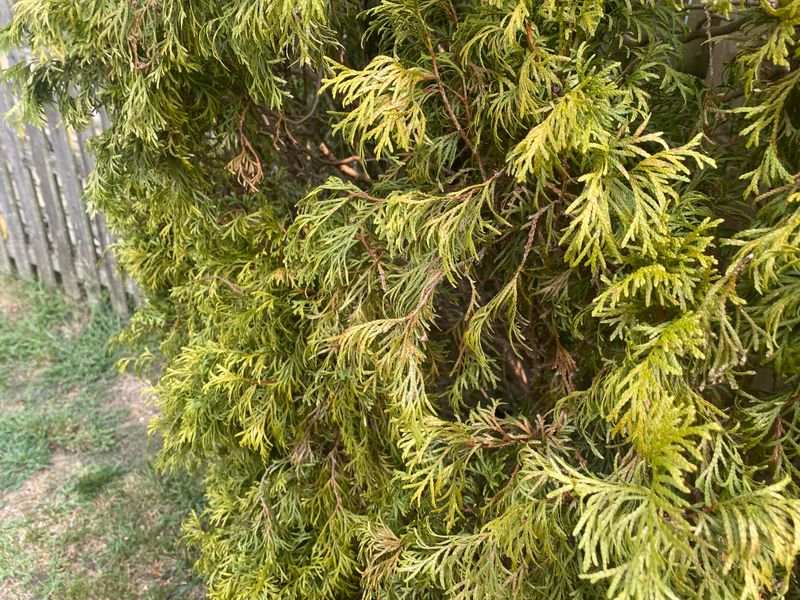
Most people expect drought stress to show up as brown, crispy foliage right away. But yellowing often comes first, and that window of time is actually your best chance to help the tree recover.
When water becomes scarce, arborvitae slow down their normal processes and start sending distress signals through color change.
The foliage shifts from its usual deep green to a pale, washed-out yellow. This happens because the tree cannot move nutrients and water efficiently through its system.
Chlorophyll, which gives foliage its green color, starts to break down when the plant is stressed.
Catching yellow foliage early is a real advantage. At this stage, the tree is still alive and actively trying to survive.
A deep, thorough watering at this point can sometimes reverse the yellowing over the following weeks. The key is not to panic and not to overwater in response.
Check your soil before you water. Push a screwdriver or your finger several inches into the ground near the base of the tree.
If it feels bone dry that far down, the tree is likely under drought stress. Water slowly and deeply, allowing moisture to soak into the root zone rather than just wetting the surface.
Yellow before brown is a warning, not a final answer. Acting on that warning quickly can make a real difference in how the tree bounces back.
2. Shallow Watering May Leave Deeper Roots Too Dry
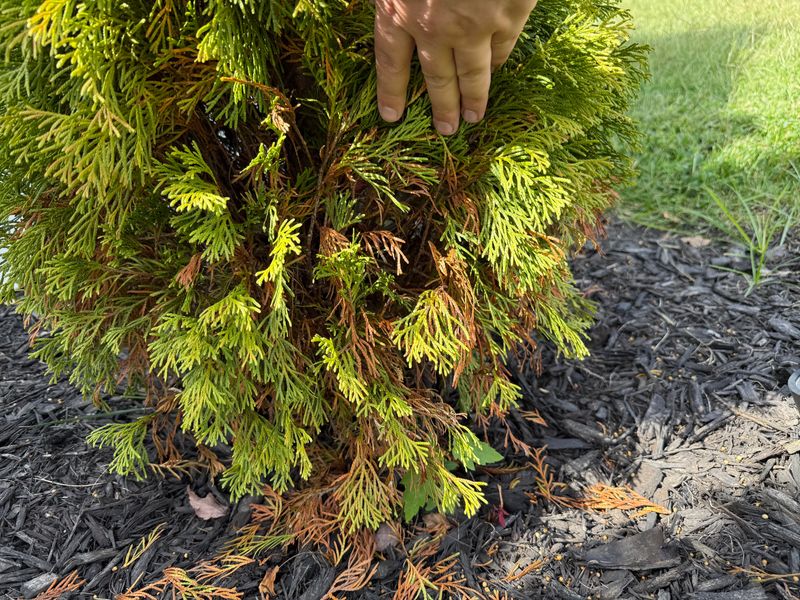
A lot of people water their trees regularly but still end up with stressed, yellowing foliage. The problem is often not the frequency of watering but the depth.
Shallow watering only wets the top inch or two of soil, which is not where most of the important roots are.
Arborvitae roots spread wide and reach down several inches into the soil. When you water quickly or lightly, those deeper roots never get the moisture they need.
The surface looks damp, but just a few inches down, the soil is completely dry.
Your Oregon Garden Changes Every Week. Your Plan Should Too.
Gardening in Oregon changes quickly throughout the season. Every Friday you’ll receive a simple weekly plan showing exactly what to plant, prune, fertilize, harvest, and protect so you never miss the right timing.
To water deeply, use a slow trickle from a hose or a soaker hose placed near the base of the tree. Let the water run for 20 to 30 minutes at a low flow rate.
This gives water time to soak down to where the roots actually are.
You can test your watering depth by pushing a wooden dowel or a long screwdriver into the soil after watering.
If it slides in easily several inches, the water has reached deep enough. If it stops short, you need to water longer or more slowly.
During a dry summer, deep watering once or twice a week is usually more effective than light watering every day. Consistency and depth together make the biggest difference for keeping roots healthy and foliage green.
3. Hot Wind Can Pull Moisture From Foliage Fast
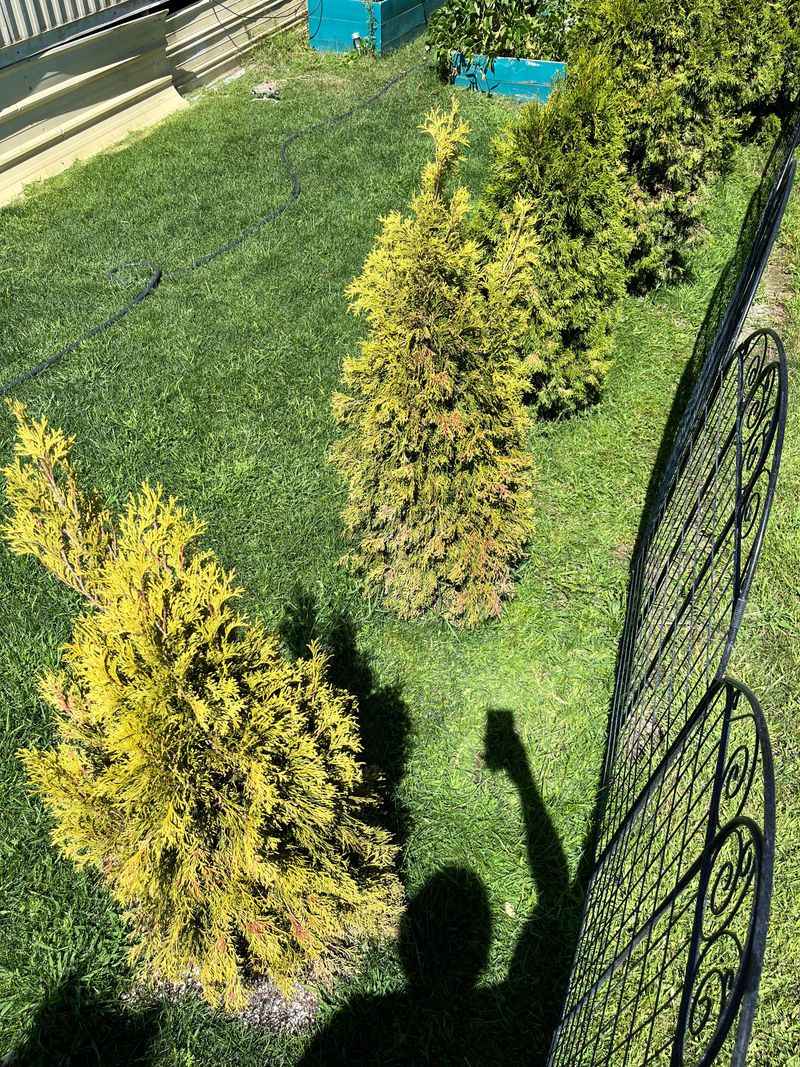
Wind might not be the first thing you think of when you see yellowing foliage, but it plays a bigger role than most people realize. Hot, dry wind pulls moisture directly out of the foliage through a process called transpiration.
When the wind is strong and the air is dry, the tree loses water faster than its roots can replace it.
This is especially common during heat waves when temperatures spike and wind picks up at the same time. The foliage on the windward side of the tree, the side facing the wind, often shows yellowing first.
You might notice one side of the tree looks worse than the other, which is a strong clue that wind is involved.
There is not a lot you can do to stop the wind, but you can help the tree manage moisture loss better. Keeping the soil consistently moist during windy stretches is the most important step.
Mulching around the base of the tree also helps the soil hold onto moisture longer between waterings.
If wind is a consistent problem in your yard, consider planting a secondary windbreak or installing a temporary burlap screen on the exposed side of the tree. Even a partial barrier can reduce the amount of moisture the foliage loses on a hot, breezy day.
Wind stress and drought stress often happen together, making the situation harder on the tree. Addressing both at once gives the best results.
4. Older Interior Foliage May Yellow First
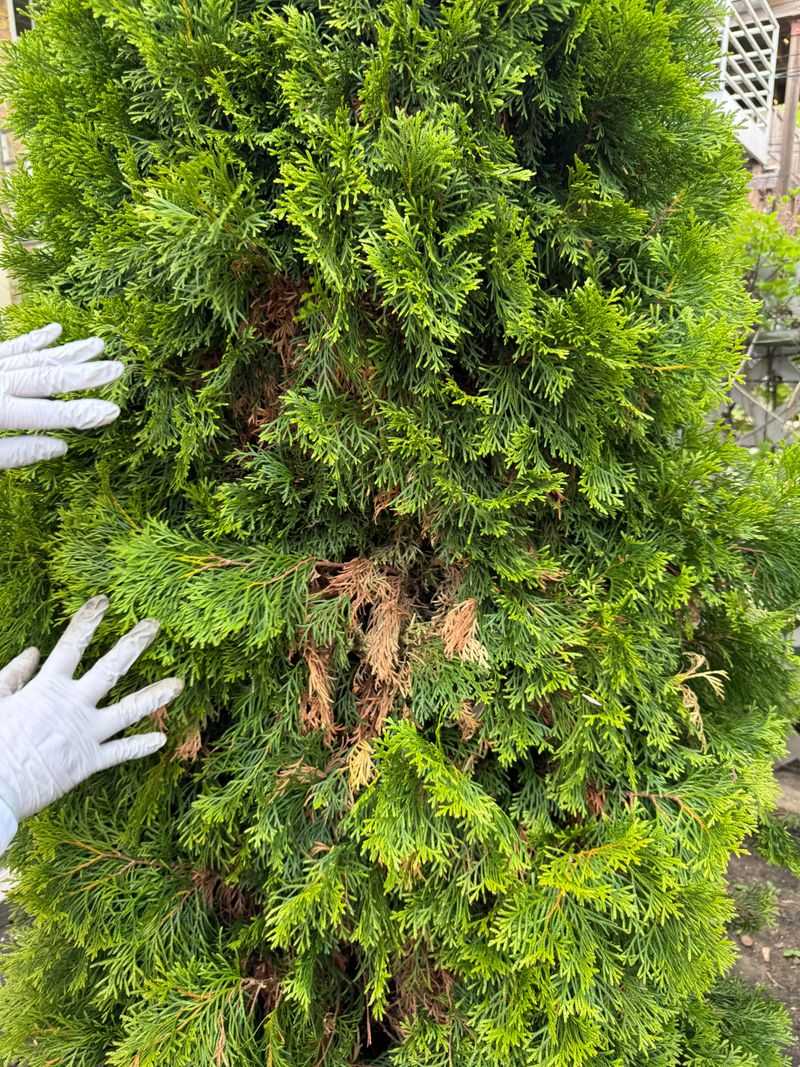
Not every case of yellowing arborvitae is a sign of drought or disease. Sometimes the tree is doing something completely normal.
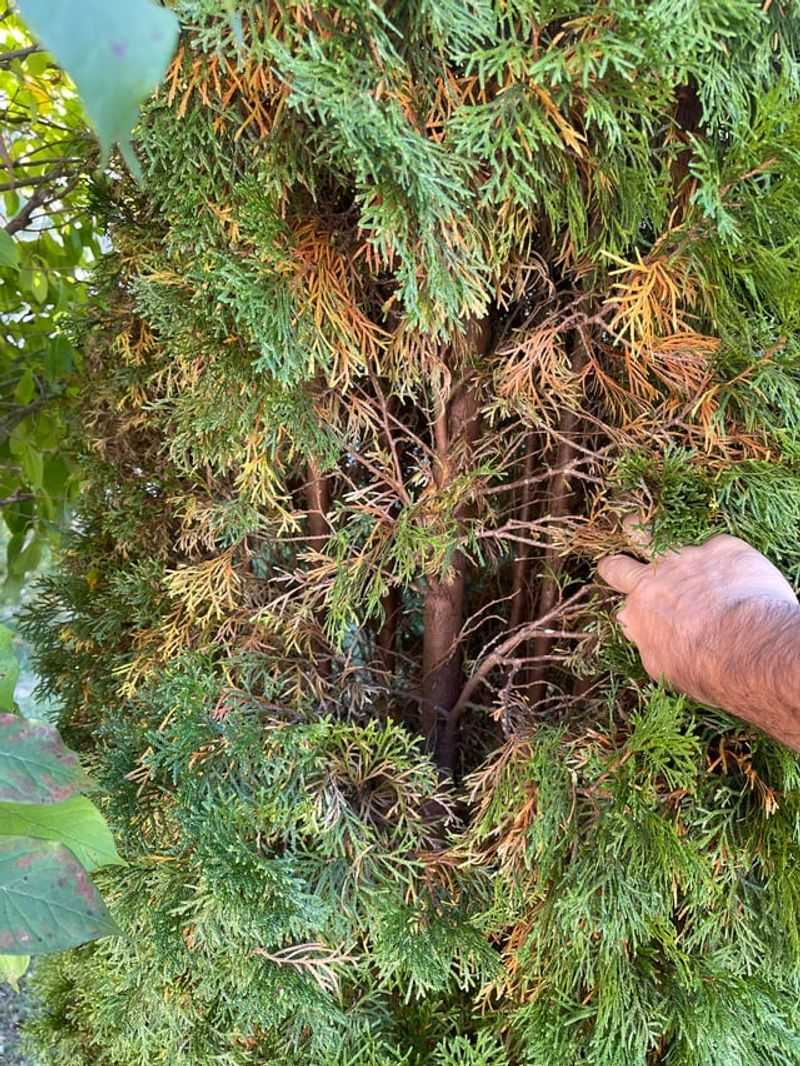
Every year, arborvitae shed their older, interior foliage as part of a natural cycle. This inner foliage turns yellow and drops off, making room for new growth on the outer branches.
This natural yellowing usually happens in late summer or early fall. It tends to affect foliage deep inside the canopy, not the tips of the branches.
If you look closely and the outer foliage still looks healthy and green, the yellowing you see inside is probably just the tree doing what it always does.
During a drought year, this natural cycle can look more dramatic than usual. Stress from dry conditions may cause the tree to shed interior foliage earlier or more heavily than it would in a normal year.
That can be alarming if you do not know what to look for. The easiest way to tell natural shedding from drought stress is to check where the yellowing is.
Interior yellowing with healthy outer tips is usually normal. Yellowing that starts at the branch tips and works inward is more likely a sign of stress.
Keep an eye on the overall pattern. If the yellowing stays confined to the inside of the canopy and the tree otherwise looks fine, you probably do not need to worry. Continue regular care and monitor for changes over the next few weeks.
5. Too Much Water Can Mimic Drought Stress
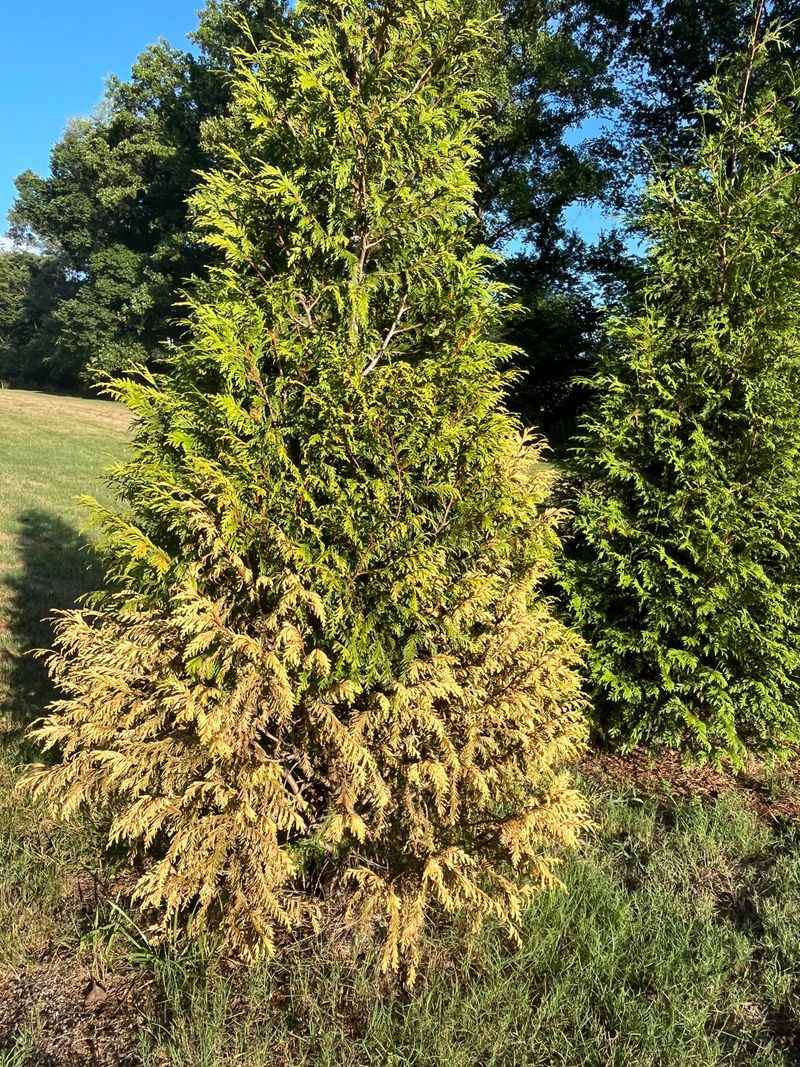
Here is something that surprises a lot of gardeners: overwatering and underwatering can look almost identical on an arborvitae.
Both cause yellowing foliage, both cause the tree to look unhealthy, and both can get worse quickly if you do not identify the real problem.
When soil stays waterlogged for too long, the roots cannot get the oxygen they need. Roots need air as much as they need water.
Saturated soil pushes all the air out and essentially suffocates the root system. Once the roots are damaged, they cannot absorb water or nutrients properly, even though there is plenty of water right there in the soil.
This is why watering more when you see yellowing can sometimes make things worse. If the problem is already too much water, adding more sends the tree further into trouble. Before you water, always check the soil first.
Dig down four to six inches near the base of the tree. If the soil feels wet and heavy, or if water pools in the hole, overwatering is likely the issue.
Let the soil dry out somewhat before watering again, and make sure the planting area has good drainage.
Raised planting beds and well-amended soil with good structure can prevent waterlogging in the future.
If your yard has heavy clay soil, which is common in parts of Oregon, drainage can be a chronic problem that needs a longer-term fix.
6. Dry Soil Several Inches Down Is The Real Warning Sign
Checking the surface of the soil tells you almost nothing useful about whether your arborvitae is getting enough water. The surface dries out fast, even after a good watering.
What really matters is what is happening several inches below the surface, where the roots are actually feeding.
A simple test can tell you a lot. Push a long screwdriver, a wooden skewer, or your finger as far into the soil as it will go near the base of the tree.
If it stops within the first two or three inches because the soil is hard and dry, your tree is likely not getting enough water. If it slides in easily four to six inches, moisture is reaching the deeper root zone.
Dry soil at depth is one of the clearest warning signs of drought stress. It means the tree has been working from a depleted water supply and may already be showing stress through yellowing foliage.
Acting quickly at this point can make a real difference. Water deeply and slowly when you find dry conditions below the surface.
Use a soaker hose or a slow-drip method and let the water run long enough to soak several inches down. Check the soil again after watering to confirm the moisture has reached the right depth.
Make this soil check part of your regular routine during dry stretches. Checking every few days during a heat wave or dry spell helps you stay ahead of problems before they get serious.
7. Newly Planted Arborvitae Struggle Most In Dry Years
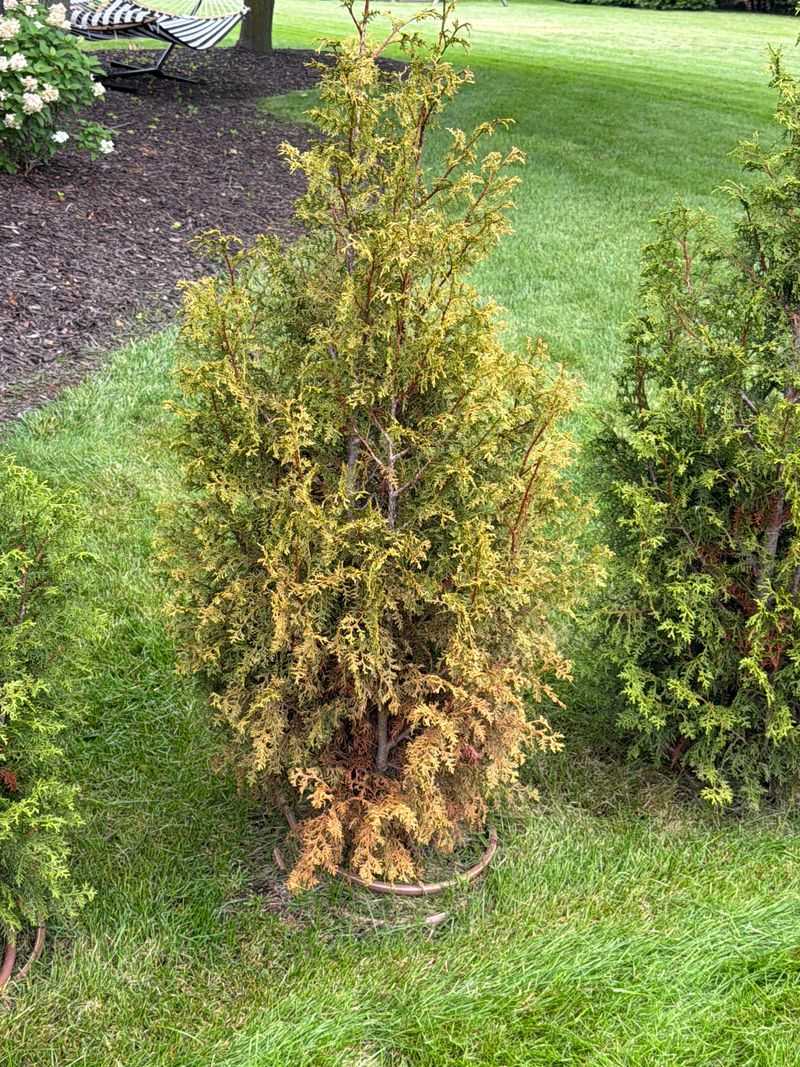
Young trees have a much harder time dealing with dry conditions than established ones do. A newly planted arborvitae has not had time to grow a deep, wide root system.
Its roots are still mostly contained to the small area where it was originally planted, which means it depends almost entirely on the water you give it.
During a dry summer, that limited root zone dries out fast. The tree cannot search for water the way an older, established tree can.
Without regular, consistent watering, a newly planted arborvitae can go from healthy to severely stressed in just a week or two.
Yellowing foliage in a new tree during a drought year is almost always a watering issue. The first year after planting is critical.
Experts generally recommend watering new trees deeply two to three times per week during hot, dry weather. That schedule might need to increase during extreme heat.
Keep the root ball consistently moist but not soaking wet. The goal is to encourage the roots to grow outward and downward into the surrounding soil.
Once the roots spread beyond the original planting hole, the tree becomes much more resilient. Mulching around the base of newly planted trees is especially helpful.
A three-inch layer of wood chip mulch can dramatically slow down soil moisture loss and keep the root zone cooler on hot days.
New trees need extra attention in dry years, and that attention pays off long-term.
8. Mulch Helps Keep The Root Zone From Heating Up
One of the simplest and most effective things you can do for arborvitae during a dry year costs very little and takes less than an hour to apply.
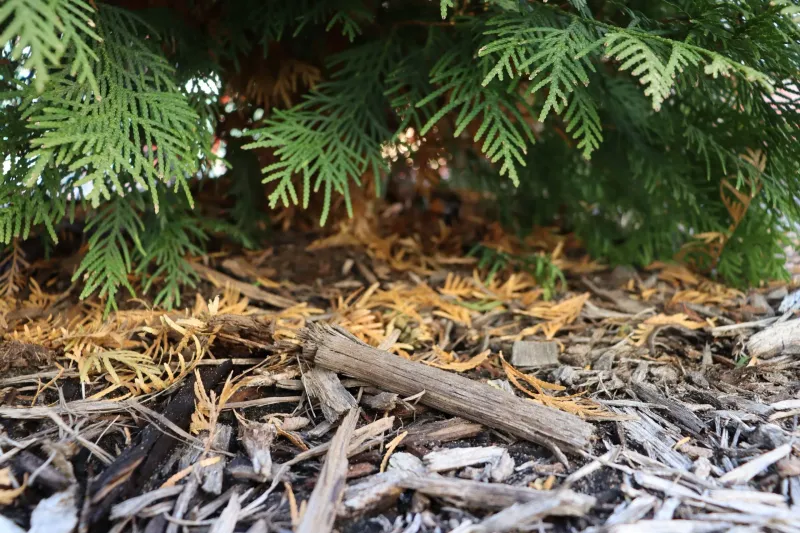
A good layer of mulch around the base of the tree does several important things at once. It slows moisture evaporation, keeps the soil cooler, and reduces competition from weeds.
Without mulch, the soil around the tree can heat up dramatically on a sunny day. Hot soil dries out much faster than shaded soil, which means your watering efforts are less effective.
The roots sitting in that hot, dry zone are under constant stress even if you water regularly. Wood chip mulch is one of the best options for arborvitae.
Apply it in a layer about two to three inches thick, spreading it out at least two to three feet from the trunk in all directions.
Avoid piling mulch directly against the trunk, which can cause moisture buildup and other problems at the base.
Mulch also breaks down slowly over time and adds organic matter to the soil, which improves its ability to hold water. That is a long-term benefit that compounds with every passing season.
In Oregon, where summer drought conditions can stretch for weeks, mulch is not just helpful – it is one of the smartest investments you can make for your landscape.
Reapply it each spring before the dry season starts to keep the benefits going all summer long.