These Oregon Plants Suppress Weeds In The Spots Most Gardeners Have Completely Given Up On
Every Oregon yard has that one stubborn spot. It might be a damp corner, a dry strip under trees, or a narrow edge where weeds seem to win every time.
Pulling them helps for a while, but bare soil usually invites the same problem back. The right plants can change that pattern.
Instead of leaving open ground for weeds to claim, they fill space with steady growth that works like a living cover. Some handle shade better than expected.
Others settle into rough areas where fussy plants refuse to cooperate. The goal is not a perfect garden overnight.
It is finding plants tough enough to take over the job you are tired of doing by hand. Once they settle in, those problem spots can finally start looking intentional instead of forgotten.
1. Fringe Cup Fills Damp Shade Under Trees
Most gardeners stare at the dark, soggy patch under a big maple or fir and just give up. Nothing seems to grow there, and weeds still find a way.
Fringe Cup, known scientifically as Tellima grandiflora, was practically made for that exact spot.
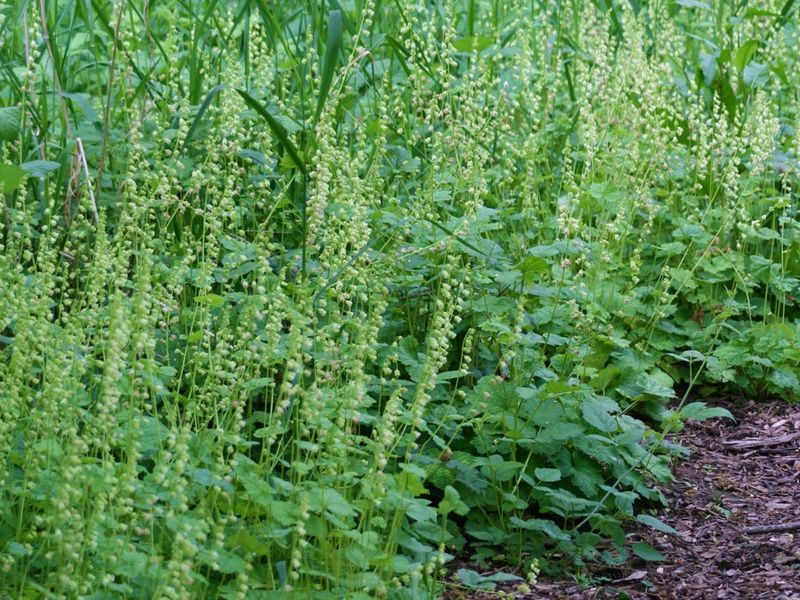
Native to moist forests across the Pacific Northwest, this plant thrives in the deep shade and wet soil that most garden plants refuse to touch. It forms wide, low rosettes of rounded, hairy leaves that stay green for most of the year.
Those leaves spread outward and overlap, creating a thick mat that blocks weed seeds from getting any light at all.
In spring, it sends up tall, slender stalks covered in tiny pinkish-white flowers with fringed edges. Those blooms attract early pollinators and add a delicate charm to an otherwise dark corner.
After flowering, the plant spreads slowly by self-seeding, filling in gaps over time without becoming invasive.
Fringe Cup handles tree root competition surprisingly well. It does not need rich soil or regular fertilizing.
Once established, it mostly takes care of itself. Water it occasionally during dry summer stretches, and it will reward you with reliable coverage season after season.
Plant it in groups of three or five for faster coverage. It pairs beautifully with ferns and bleeding heart.
For gardeners tired of fighting weeds under trees, this plant is one of the most practical and low-effort solutions Oregon has to offer.
2. Pacific Bleeding Heart Spreads Through Loose Shade
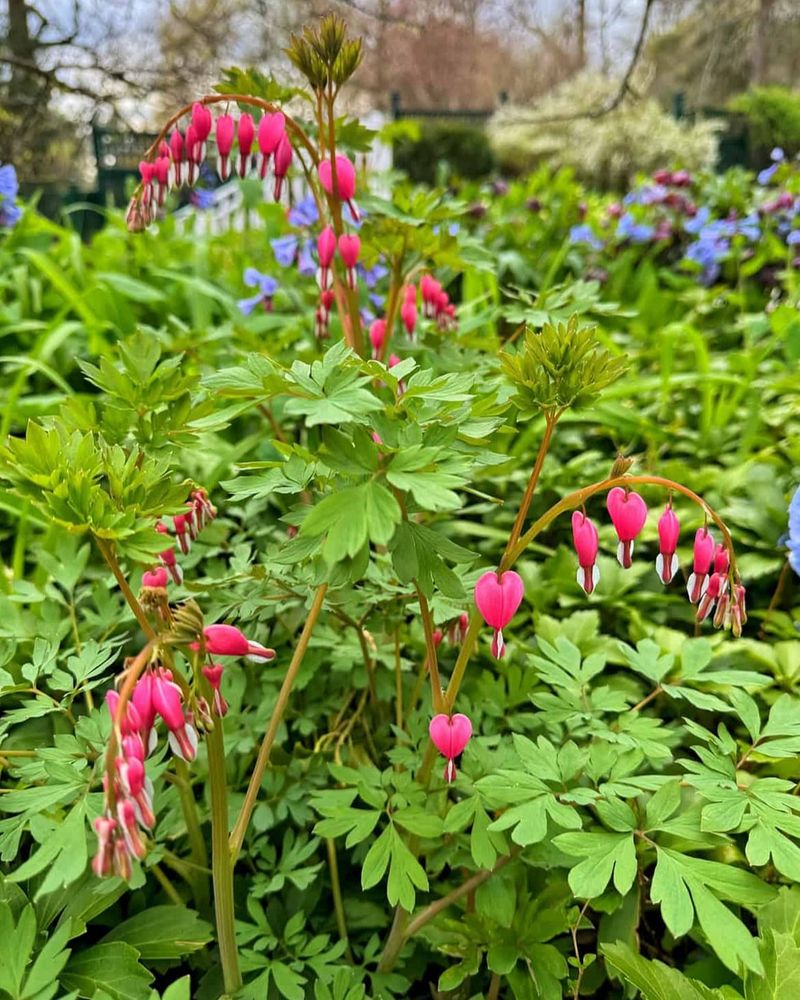
Few native plants earn as many compliments from visitors as Pacific Bleeding Heart. Those arching stems loaded with rosy, heart-shaped flowers are genuinely hard to walk past without stopping.
But beyond looking beautiful, Dicentra formosa is a powerhouse ground cover in loose, shaded soil.
Found naturally along shaded stream banks and forest floors across the Pacific Northwest, this plant knows how to move.
It spreads through underground rhizomes, slowly pushing outward and filling empty ground before weeds get the chance.
In the right conditions, a single plant can colonize a surprisingly large area within a few seasons.
The ferny, blue-green foliage is attractive even when the plant is not in bloom. It stays relatively low, forming a soft, layered carpet that shades the soil effectively.
Your Oregon Garden Changes Every Week. Your Plan Should Too.
Gardening in Oregon changes quickly throughout the season. Every Friday you’ll receive a simple weekly plan showing exactly what to plant, prune, fertilize, harvest, and protect so you never miss the right timing.
Weed seeds that land on top rarely get enough light to sprout and establish.
Blooming runs from early spring into summer, depending on location and shade levels. After blooming, the plant may go partially dormant in hot, dry summers, but it bounces back reliably each fall and spring.
Planting it alongside evergreen companions helps maintain ground coverage during those quieter months.
Loose, humus-rich soil gives it the best start, but it tolerates a range of conditions. Avoid heavy clay or waterlogged spots.
For shaded slopes or woodland garden edges where weeds creep in constantly, this plant offers one of the most reliable and visually rewarding solutions available across Oregon.
3. False Lily-Of-The-Valley Covers Moist Woodland Ground
Walk through a shaded forest in the Coast Range and you will almost certainly step near a patch of False Lily-of-the-Valley.
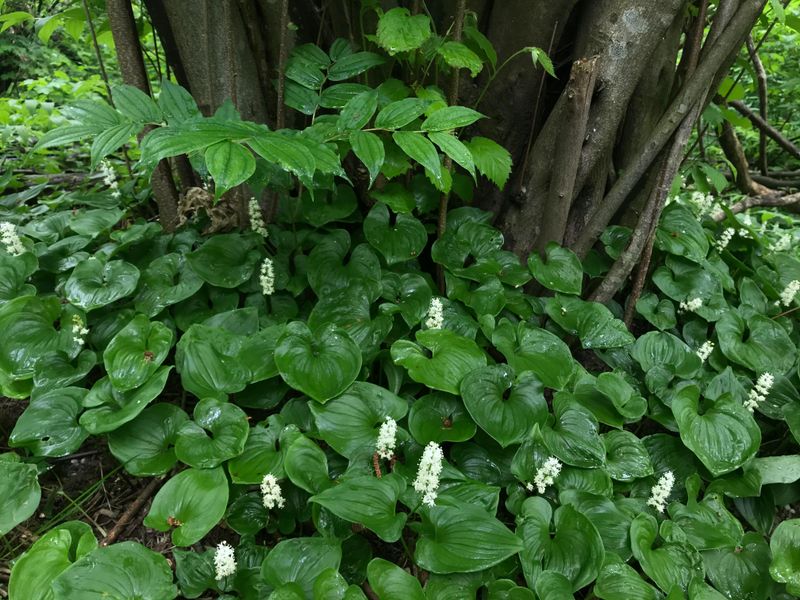
Maianthemum dilatatum forms dense colonies of broad, glossy leaves that cover the forest floor so completely that weeds simply cannot compete.
Bringing that same energy into your garden is easier than most people think.
This plant loves moisture and shade, two things that plenty of gardens have in abundance. It spreads aggressively through underground rhizomes, making it one of the fastest-spreading native ground covers available in Oregon.
That spreading habit is exactly what makes it so effective at suppressing weeds in moist, shaded areas.
In spring, it produces small clusters of white flowers that carry a light, sweet fragrance. By late summer, those flowers turn into small red berries that birds love.
The combination of ecological value and weed suppression makes it a genuinely useful plant beyond just looks.
The leaves are large and overlapping, which means very little light reaches the soil below. That dense canopy effect is what stops weed seeds from germinating in the first place.
Once this plant is established, the ground beneath it stays remarkably clean.
Plant it in groups along shaded walkways, under large shrubs, or beside water features. It does best in consistently moist soil but can handle brief dry spells once established.
For wet, shady spots that seem impossible to manage, this plant is a reliable and low-maintenance answer.
4. Oregon Stonecrop Handles Rocky, Dry Edges
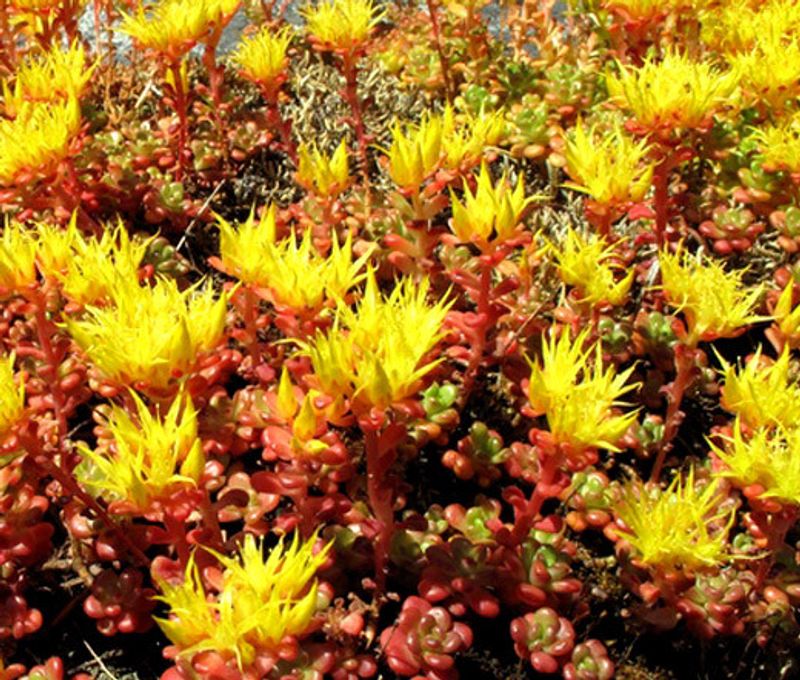
Rocky edges, gravel strips, and dry retaining wall cracks are basically weed magnets. Nothing much grows there, so weeds move right in.
Oregon Stonecrop, or Sedum oreganum, flips that script entirely. This tough little succulent was built for exactly those harsh, dry, rocky conditions.
Native to rocky outcrops and cliff faces throughout Oregon, it stores water in its thick, fleshy leaves. That adaptation means it can handle long dry stretches without irrigation.
It spreads slowly but steadily across rocky surfaces, filling in the gaps where weeds would otherwise take over.
In summer, it produces cheerful clusters of bright yellow, star-shaped flowers that attract native bees and butterflies.
The low-growing rosettes stay just a few inches tall, making them perfect for edges and borders where you want ground coverage without height.
After flowering, the foliage often takes on reddish or bronze tones, adding color interest into fall.
Poor, fast-draining soil is actually preferred by this plant. Adding compost or rich amendments can sometimes do more harm than good.
Just plant it in a sunny, rocky spot, water it during the first few weeks, and then step back and let it work.
It also works beautifully in green roof applications and rock gardens.
For dry, sunny slopes and rocky edges that seem too harsh for anything useful to grow, this native stonecrop offers a surprisingly charming and effective solution that requires almost zero ongoing maintenance from you.
5. Yerba Buena Softens Shady, Rooty Soil
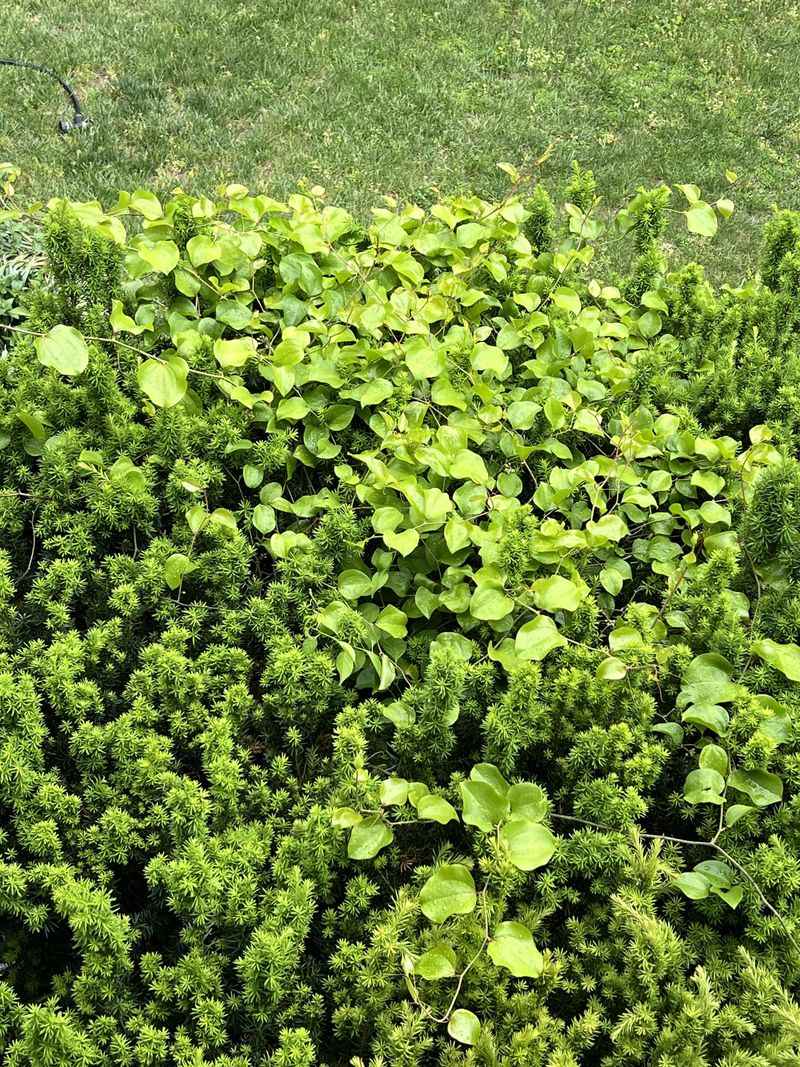
There is something almost magical about a plant that smells like mint, survives deep shade, and quietly chokes out weeds without any fuss. Yerba Buena, or Clinopodium douglasii, is exactly that plant.
It has been used for centuries by Indigenous communities across the West Coast for both its fragrance and its calming properties.
This low-growing creeper hugs the ground tightly. Its small, rounded leaves release a sweet minty scent when brushed, which makes it a favorite near garden paths and seating areas.
It spreads by sending out thin, wiry stems that root wherever they touch the soil, slowly forming a weed-suppressing carpet.
Rooty, compacted soil under established trees is no problem for this plant. It is incredibly adaptable and can handle poor soil conditions that would stop most ground covers cold.
Once it settles in, it fills gaps steadily without taking over nearby plants.
Tiny white flowers appear in summer, attracting small native bees and adding subtle beauty to shady spots.
The plant stays relatively low, usually just a few inches tall, so it does not block views or crowd out taller companion plants.
Water it well during the first season to help it establish. After that, it needs very little attention.
For shady, rooty corners where nothing else seems to stick, Yerba Buena brings both practicality and a pleasant sensory experience to a tough garden problem.
6. Self-Heal Knits Together Open Lawn Gaps
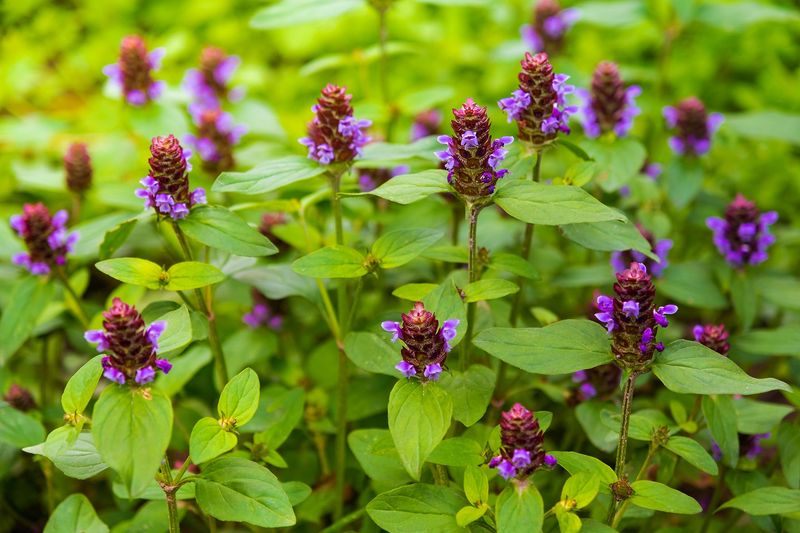
Bare patches in a lawn are basically open invitations for weeds. Dandelions, crabgrass, and bindweed all move into those gaps fast.
Self-Heal, or Prunella vulgaris, takes a different approach to that problem. Rather than fighting weeds after they arrive, it fills the space before they get the chance.
This low-growing native herb forms a tight, mat-like layer of small green leaves that knits into open lawn areas naturally.
It tolerates foot traffic better than many ground covers, which makes it a smart choice for high-use areas where grass struggles to fill back in.
It also handles partial shade and dry spells well once established.
Short spikes of purple flowers appear from late spring through summer. Those blooms are a favorite of bumblebees and other native pollinators, turning a problem patch of lawn into a mini pollinator habitat.
The flowers are small enough that the plant still looks tidy and lawn-like from a distance.
Mowing actually keeps Self-Heal looking neat and encourages it to spread sideways rather than upward. It blends into mixed lawn areas without looking out of place, especially in more relaxed or naturalistic garden styles.
It is not aggressive enough to take over healthy grass but fills gaps reliably.
For gardeners dealing with patchy, tired lawns or bare strips along driveways and paths, this plant offers a surprisingly simple fix.
It is one of the few native plants that actually improves with regular mowing, making it uniquely suited to lawn environments across the region.
7. Woolly Sunflower Covers Dry, Sunny Banks
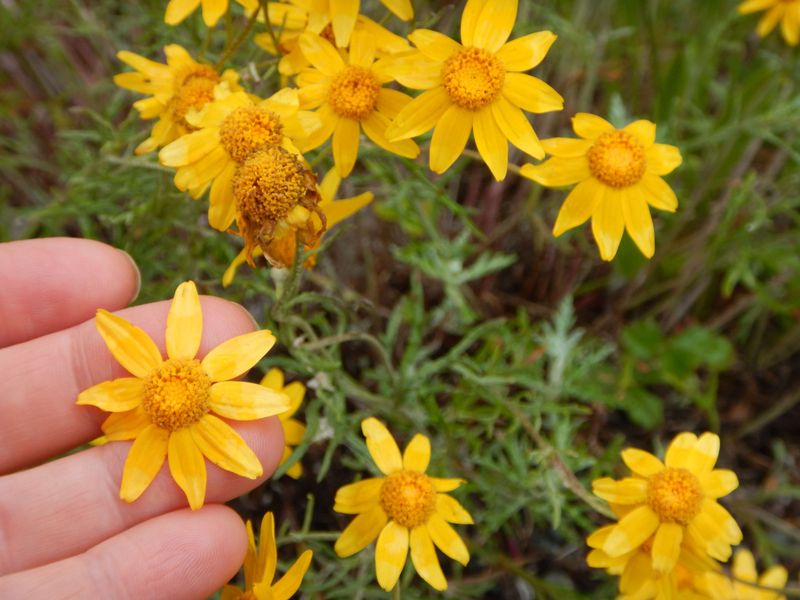
Hot, dry, south-facing banks are some of the toughest spots in any garden. The soil bakes in summer, water runs off before it soaks in, and most plants just give up.
Woolly Sunflower, or Eriophyllum lanatum, was practically designed for those brutal conditions.
The silvery, woolly texture of its leaves is not just for looks. That fuzzy coating reflects intense sunlight and reduces water loss, allowing the plant to thrive where others struggle.
It forms low, spreading mounds that cover dry slopes effectively, crowding out weeds through sheer density of growth.
Bright yellow, daisy-like flowers bloom prolifically from late spring into summer, turning a bare, weedy bank into a cheerful display of color.
Native bees and butterflies flock to those blooms, making this plant a strong ecological contributor in addition to its practical weed-suppressing function.
Well-drained soil is essential. Heavy clay or poorly drained areas will cause problems, so it works best on slopes, gravel beds, and rocky banks where water moves through quickly.
Once established, it rarely needs supplemental watering, even during the hot, dry summers that are common across much of Oregon.
Cutting it back lightly after flowering encourages fresh growth and keeps it looking tidy. Plant it in drifts of five or more for the best coverage effect.
For gardeners who have struggled with weedy, sun-baked banks for years, this native plant finally offers a solution that works with the conditions rather than against them.
8. Slough Sedge Tidies Damp Shade Strips
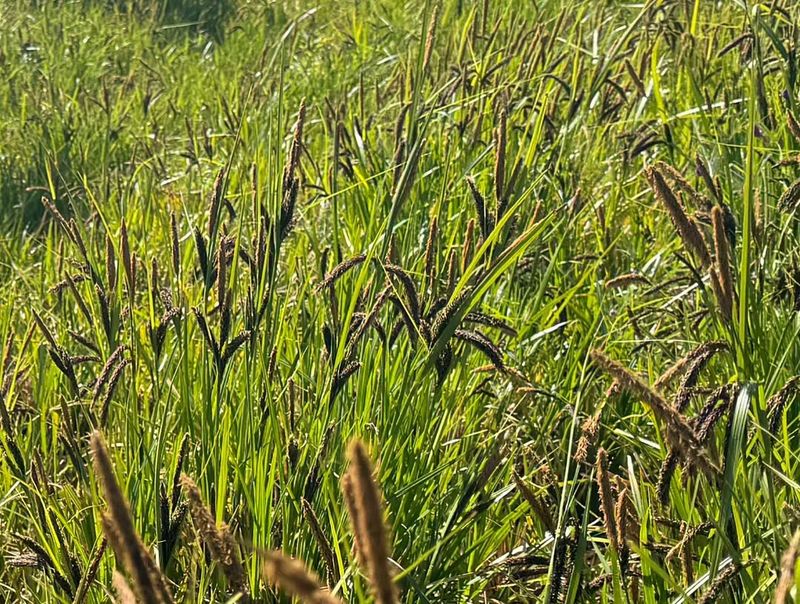
That narrow, damp strip along the north side of a fence or building is one of the most neglected spots in any garden. It is too shady for most plants, too wet for others, and weeds seem to love it.
Slough Sedge, or Carex obnupta, thrives in exactly that kind of forgotten space.
Native to wet meadows, stream banks, and shaded wetland edges across Oregon, this sedge forms dense, arching clumps of dark green, grass-like foliage.
The clumps grow close together, and their overlapping leaves shade the soil so thoroughly that weeds rarely find enough light to establish below them.
Unlike ornamental grasses that can spread aggressively, Slough Sedge stays in well-behaved clumps. It does not run or take over nearby beds.
That clumping habit makes it easier to control and position in tight spaces like narrow strips or borders along shaded walls.
It handles consistently moist to wet soil with ease and can even tolerate brief periods of standing water. For areas near downspouts, rain gardens, or low-lying spots that stay wet after rain, this plant offers reliable coverage where almost nothing else will grow.
The foliage provides year-round interest and a clean, tidy appearance that works well in both naturalistic and more structured garden styles. Pair it with Fringe Cup or False Lily-of-the-Valley for a layered, low-maintenance planting.
For damp, shady strips that have been a constant source of frustration, this sedge is a calm and practical solution.
9. Bunchberry Carpets Cool Woodland Corners
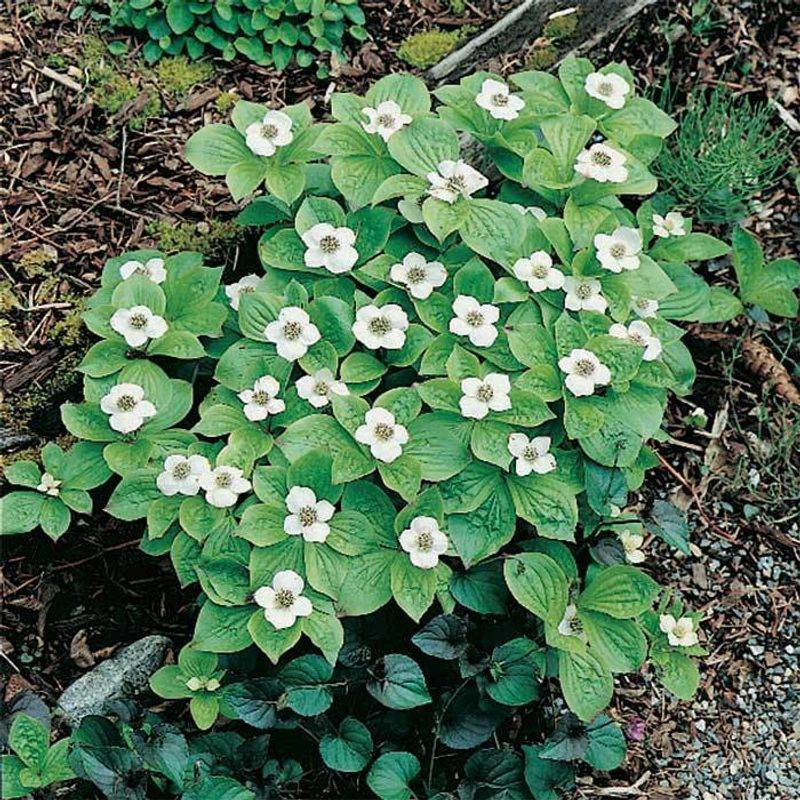
Cool, shaded corners under conifers are notoriously difficult. The soil is often acidic, dry in summer, and full of surface roots.
Most ground covers refuse to settle there at all. Bunchberry, or Cornus canadensis, is one of the rare plants that actually prefers those conditions.
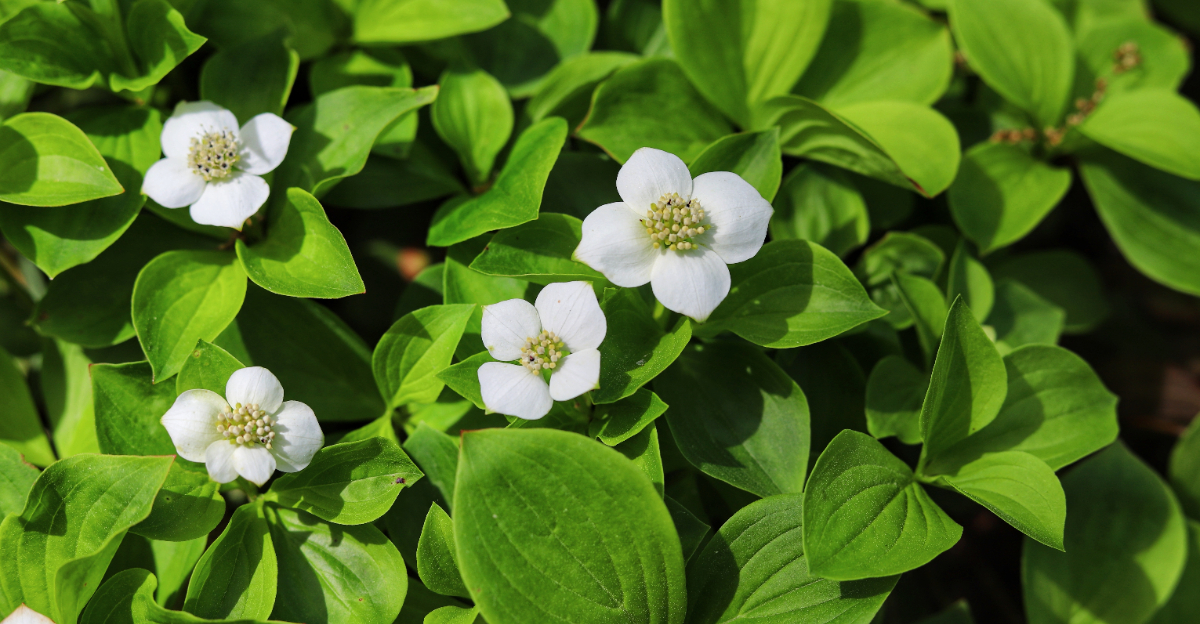
Related to dogwood trees, this miniature version grows just four to six inches tall and spreads through underground rhizomes to form a dense, weed-suppressing carpet.
Its whorled leaves are unmistakably attractive, and in late spring it produces charming white four-petaled flowers that look like tiny dogwood blossoms.
By late summer, those flowers become clusters of bright red berries that wildlife absolutely love.
The plant needs cool, moist, acidic soil to really perform well. Under Douglas fir, western red cedar, and other conifers, those conditions naturally exist, making Bunchberry one of the best-matched native plants for that specific microclimate.
It fills in steadily over several seasons, building coverage that becomes increasingly weed-resistant over time.
Patience is key with this plant. It establishes slowly in the first year or two but then spreads with growing confidence.
Mulching lightly around new plants helps retain moisture and keeps the soil cool during establishment.
For Oregon gardeners in cooler, wetter parts, especially at higher elevations or in shaded northern regions, Bunchberry is a standout choice.
It brings four-season beauty, ecological value, and genuine weed suppression to the corners of the garden that most people have simply stopped trying to manage.