What You’re Actually Doing To Your Tennessee Crape Myrtle Every Time You Trim It The Wrong Way
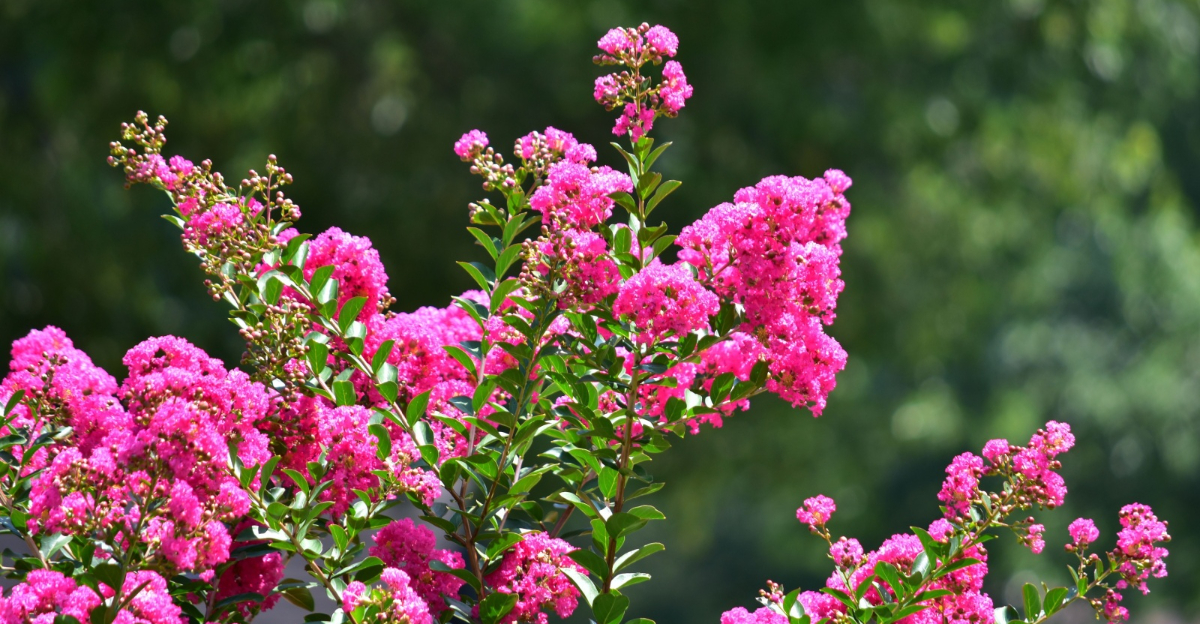
Every summer, Tennessee neighborhoods turn into something out of a painting. Crape myrtles explode in pink, red, and white, and people slow down just to look.
Then February rolls around. Pruning shears come out, and the damage begins.
Most homeowners trimming their crape myrtles think they’re helping the tree along. They’re not.
Wrong trimming is one of the most quietly destructive habits in Southern gardening. The tree survives, sure, but it never quite recovers its natural shape.
Year after year, the cuts get worse, and the tree gets stranger looking. Those knobby little stumps at the top? That’s not normal growth.
That’s the result of the same mistake repeated every single winter. If your crape myrtle has looked a little off lately, the problem probably started with a pair of shears.
Read on, and you might never look at your pruning routine the same way again.
The Slow Damage That Starts With Your Pruning Shears
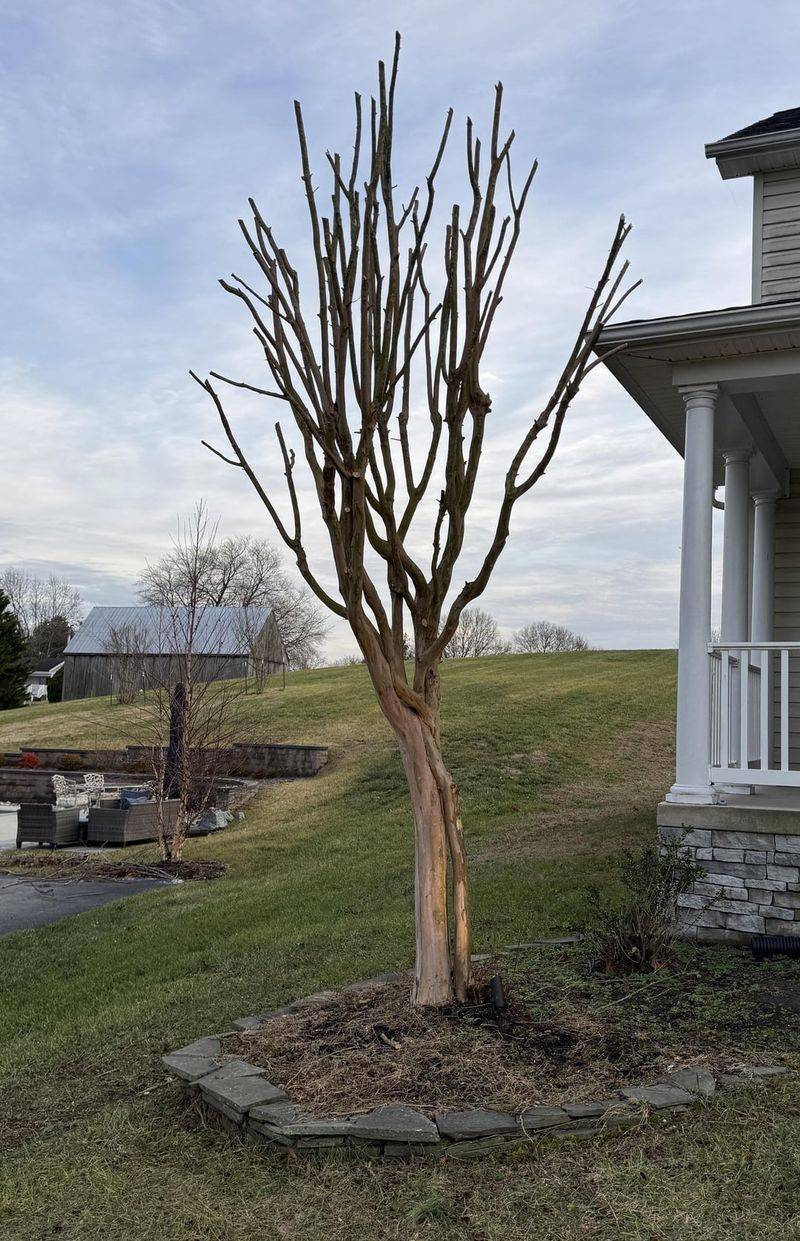
That satisfying crunch of the shears feels like progress. For your crape myrtle, it marks the beginning of a slow, visible decline.
The plant panics and pushes out a burst of weak, spindly shoots from the cut point.
Those new shoots grow fast but they’re fragile. They can’t support the weight of blooms the way healthy branches can.
Over time, the tree develops ugly knobs at every cut site, and those knobs never go away.
Crape myrtle trimming done wrong also opens the tree to fungal problems. Fresh wounds on thick branches invite moisture, and moisture invites disease.
The bark around those cuts can crack and peel, leaving the inner wood exposed for months.
Repeated bad cuts stack up year after year. Each season of topping weakens the tree’s natural structure a little more.
What started as a graceful, arching tree slowly becomes a gnarled, stubby version of itself.
The good news is that understanding the damage is the first step toward stopping it.
Your tree is more resilient than you think, and with the right approach, recovery is absolutely possible.
The Trimming Method That Took Over
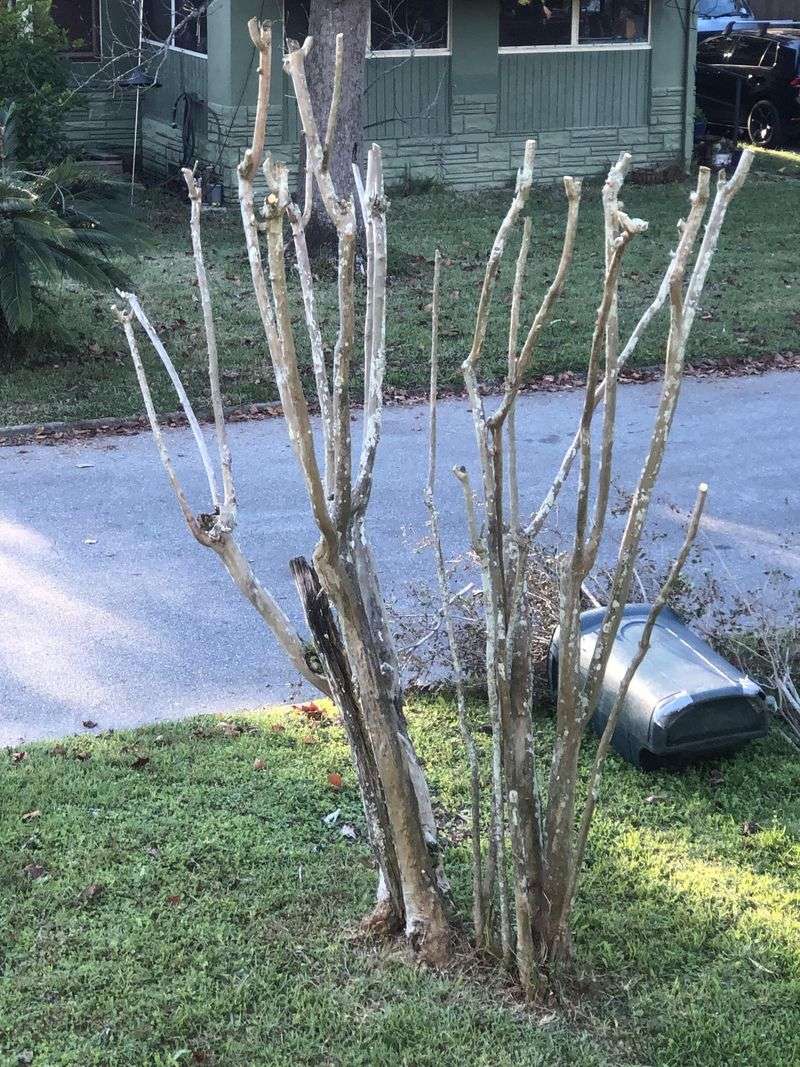
Somewhere along the way, horticulturists gave this habit a name: crape murder.
It describes the practice of lopping off the entire top of the tree, and the term stuck because the results speak for themselves.
The practice likely caught on because it looks tidy. A flat-topped, evenly cut tree gives the illusion of control.
Landscapers started doing it to save time, homeowners copied what they saw, and suddenly an entire generation of gardeners thought this was just how it was done.
Some people also believed topping made the tree bloom better. That idea stuck around even though it’s completely backwards.
Heavy topping actually stresses the plant and can reduce the quality of summer blooms over time.
Crape myrtle trimming culture in the South got so out of hand that professional arborists began speaking out publicly. Extension offices across the South began addressing the habit publicly, urging gardeners to put the shears down.
Your Tennessee Garden Changes Every Week. Your Plan Should Too.
Gardening in Tennessee changes quickly throughout the season. Every Friday you’ll receive a simple weekly plan showing exactly what to plant, prune, fertilize, harvest, and protect so you never miss the right timing.
Understanding where this habit came from helps you break the cycle with confidence.
You’re not just saving one tree. You’re pushing back against decades of well-intentioned but harmful landscaping tradition.
Where To Cut (And Where To Never Touch)
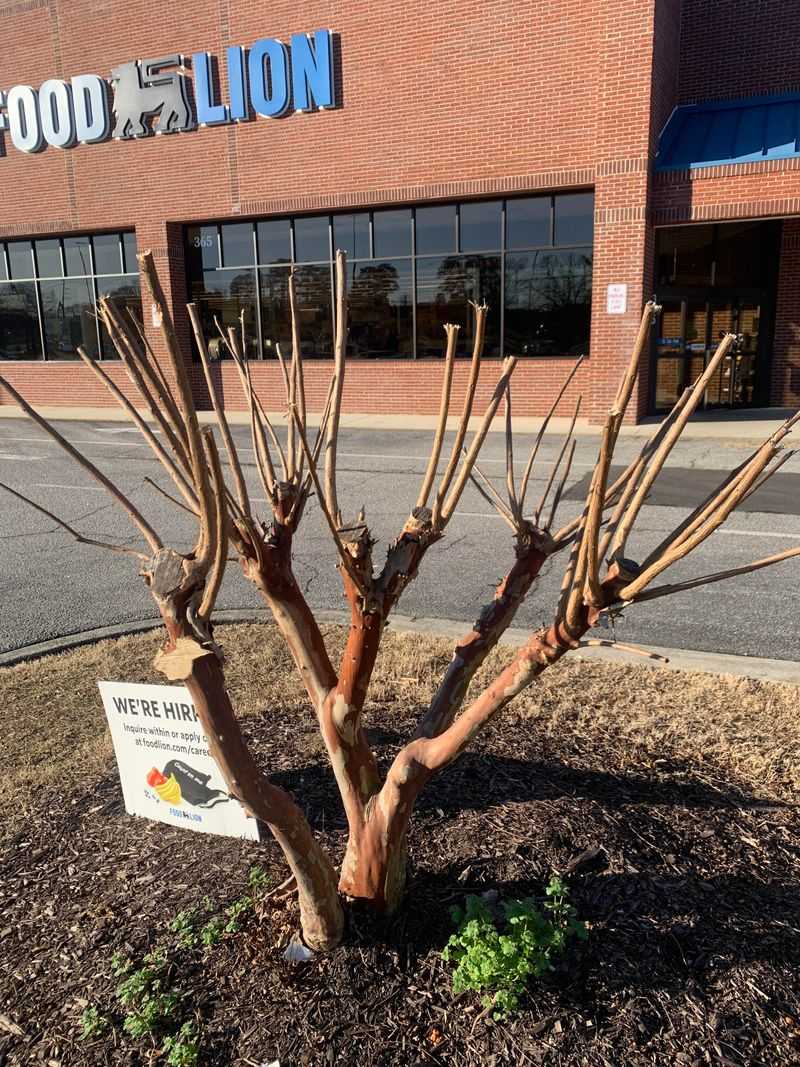
Knowing exactly where to make your cut changes everything about how a crape myrtle responds.
The right spot is just outside the branch collar, which is the slightly swollen ring where one branch meets another. That collar contains the cells the tree uses to seal off a wound naturally.
Cut too close to the collar and you damage those healing cells. Cut too far out and you leave a stub that rots and invites pests.
The sweet spot is a clean, angled slice just beyond that ring of bark.
Never touch the main trunk or the primary scaffold branches. Those are the backbone of the tree’s structure.
Once you remove them, the tree cannot rebuild its natural shape no matter how many seasons pass.
The only branches worth removing are ones crossing each other, rubbing together, or growing inward toward the center.
Suckers shooting up from the base should also go. Anything else is better left alone.
Crape myrtle trimming should feel minimal, almost conservative. If you step back and the tree looks dramatically different, you’ve likely gone too far.
A well-pruned crape myrtle should look like a slightly tidier version of itself, nothing more.
The Right Time To Trim Your Crape Myrtle In Tennessee
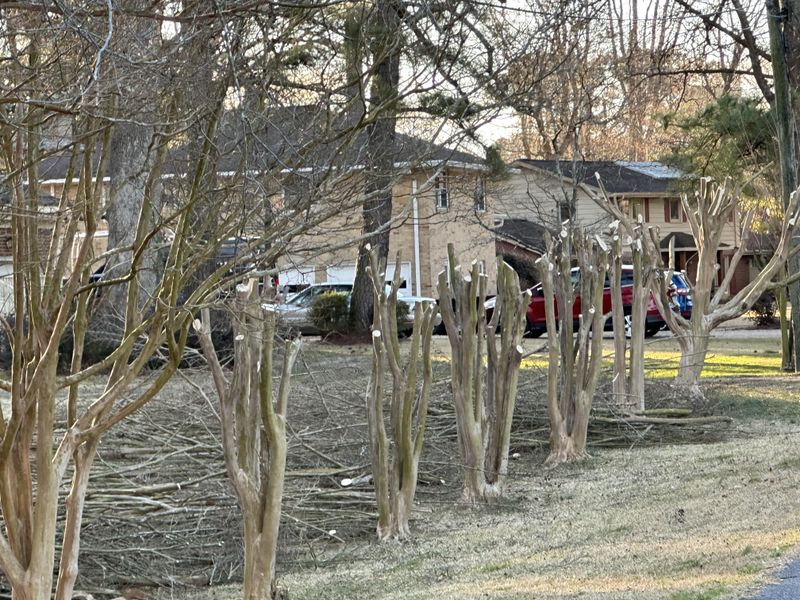
Timing your pruning can be the difference between a thriving tree and a struggling one.
Late winter is the window most experts recommend, specifically just before new growth begins to push through. In Tennessee, that usually falls somewhere between late February and mid-March depending on the year.
Pruning too early in winter leaves fresh cuts exposed to harsh cold snaps. Those open wounds can suffer frost damage that slows healing and weakens the branch.
Waiting until late winter means milder temperatures are already on the way.
Pruning too late is its own problem. Once a crape myrtle starts pushing new leaves, cutting disturbs the energy the tree has already invested in that growth.
You end up wasting the tree’s stored resources right when it needs them most.
Watch for the tiny red or green buds beginning to swell at branch tips. That’s your signal that the moment is right.
The tree is waking up, and a light, careful trim at that point works with the tree’s natural rhythm instead of against it. Getting the timing right feels like a small detail, but it has a big impact on how well your crape myrtle performs all summer long.
The blooms you see in July start with the decisions you make in February.
Your Over-Trimmed Crape Myrtle Is Not A Lost Cause
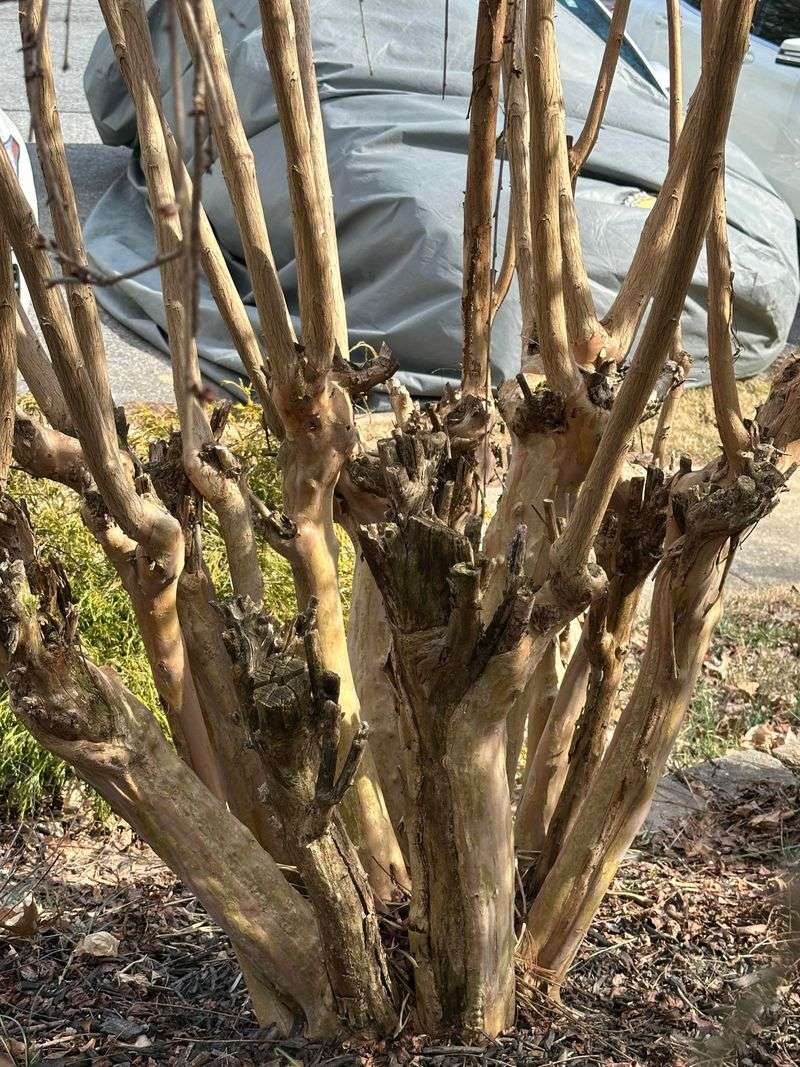
Spotted the knobby stubs on your tree and felt a wave of regret? You’re not alone, and the situation is far from hopeless.
Crape myrtles are tough, forgiving plants that can bounce back from years of bad cuts with the right approach.
Start by resisting the urge to fix everything at once. Trying to correct years of topping in a single season shocks the tree and slows recovery.
Instead, work gradually over two or three years, removing problem branches in stages. Select the strongest new shoots growing from each stub and let those become the tree’s future branches.
Remove the weaker, crowded ones around them.
This process is called remedial pruning, and it slowly restores a more natural branching pattern.
During recovery, feed the tree with a balanced slow-release fertilizer in early spring. Good nutrition helps the plant redirect energy toward healthy new growth.
Keep the soil around the base mulched to hold moisture and regulate temperature. Patience is genuinely your most powerful tool here.
A crape myrtle that has been topped for five years won’t look perfect after one good season. But give it consistent care and thoughtful cuts, and you’ll watch it transform into something worth being proud of.
Signs Your Crape Myrtle Is Finally Thriving

Few things in a summer garden feel as satisfying as a crape myrtle that’s truly doing well.
When the tree is healthy, you’ll notice the difference before you even look closely. The whole shape feels balanced and alive, not forced or stubby.
Healthy crape myrtles produce long, arching branches that sway gently in the breeze. The bark peels naturally in papery strips during summer, revealing smooth, colorful layers underneath.
That peeling is completely normal and actually one of the most beautiful features of the tree. Bloom clusters appear at the tips of new growth, not from old stubs or knobby cuts.
The flowers are full and heavy, bending the branch tips downward in a graceful arc. A tree producing blooms like that is one that hasn’t been stressed by repeated topping.
Look at the leaves too. Deep green, evenly sized foliage with no yellowing or spotting is a strong indicator of a well-nourished, properly pruned plant.
Stressed trees often show pale or distorted leaves even in peak summer.
Get the timing right and the cuts minimal, and your crape myrtle will practically manage itself. One good season of proper trimming can undo years of damage.
That tree in your yard has more potential than you think. Give it the chance to prove it.
How to Keep It Looking Good Year After Year
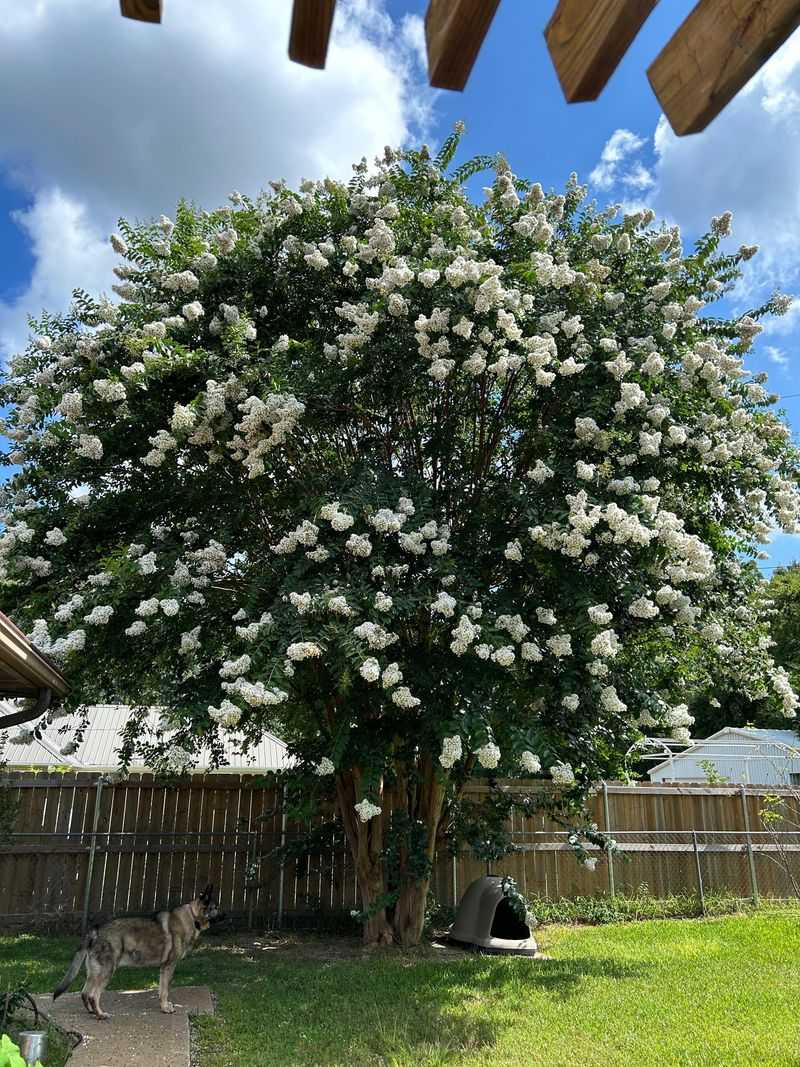
Building a long-term care routine is where the real magic happens with crape myrtles.
Once you understand how the tree grows, maintaining it becomes straightforward and even enjoyable. The goal is always to work with the tree’s natural habits, not against them.
Each late winter, do a quick walk-around assessment before you pick up any tool. Look for branches that are crossing, rubbing, or growing straight down toward the ground.
Those are your targets, and everything else can stay. Crape myrtle trimming should take no more than twenty minutes on a mature, well-maintained tree.
If you’re spending an hour cutting, you’re probably taking too much. Less really is more with this particular plant.
Fertilize once in early spring with a slow-release formula designed for flowering trees and shrubs. Skip heavy feeding in midsummer, which can push leafy growth at the expense of blooms.
Water during dry spells, especially in the first two or three years after planting.
Your crape myrtle can live for decades and grow more stunning with each passing year. The trees that get the least interference often end up being the most impressive ones on the block.
Treat it well, trim it thoughtfully, and this Tennessee favorite will reward you every single summer.