Why A Bald Eagle Circling Your Florida Property Isn’t Random
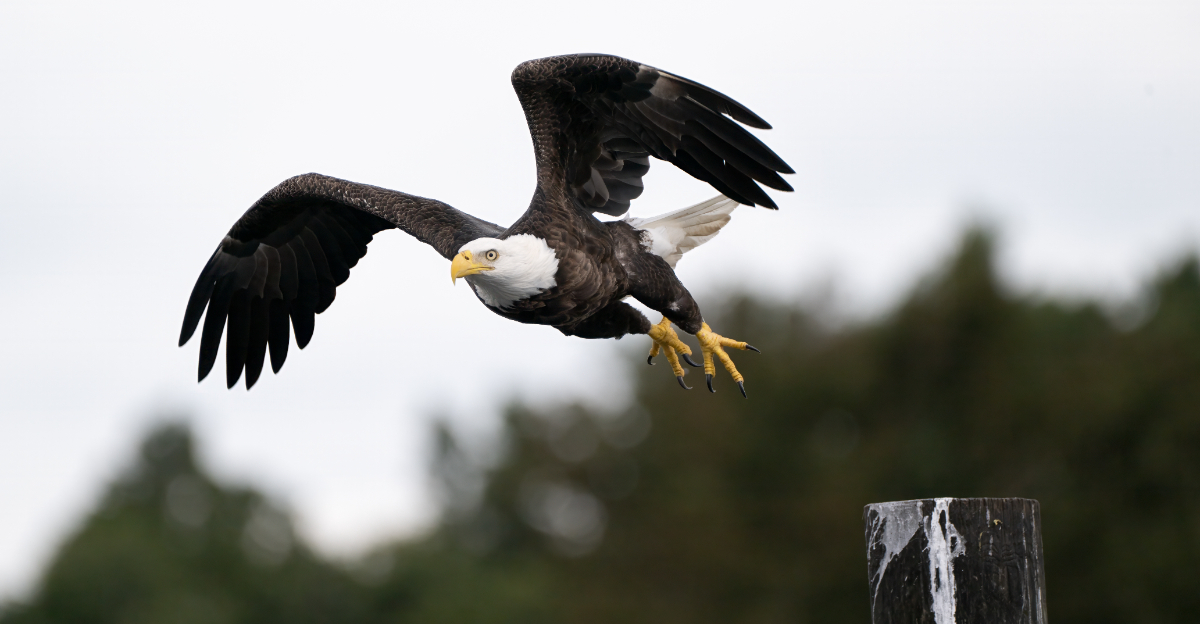
A bald eagle circles a Florida property and time does something strange. Whatever was happening before that wingspan appeared overhead becomes immediately beside the point.
The phone comes out. The sentence goes unfinished.
The bird moves on eventually and leaves behind a question that the afternoon cannot quite shake. Why here.
Bald eagles apply a standard to every body of water, every open stretch of land, every thermal column they ride over a Florida property. A yard or waterfront they return to has passed that standard repeatedly.
The prey is there, the sight lines work, the landscape reads as productive hunting territory to a bird that has been reading landscapes longer than the neighborhood surrounding it has existed. Florida’s bald eagle population has been growing.
The sightings are moving closer to residential properties and further from the remote assumption that used to define them. What circled your property was not lost.
It was looking. And it found something.
1. Warm Rising Air Can Turn One Circle Into Twenty
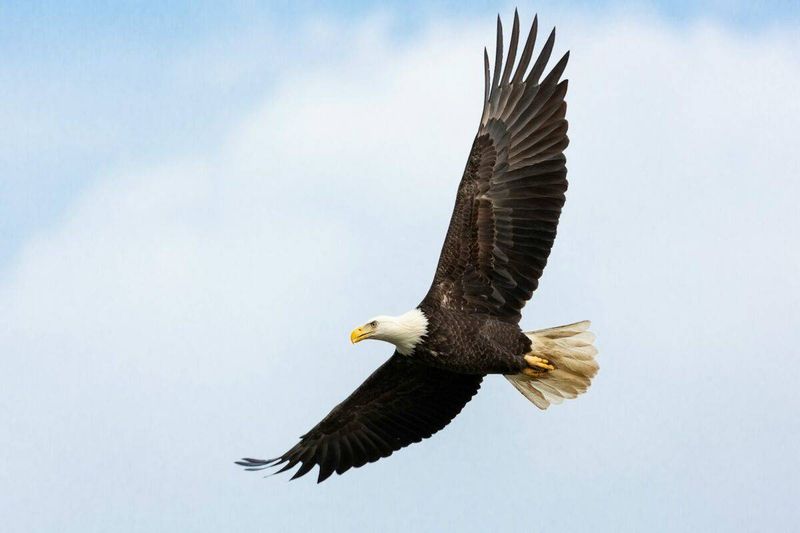
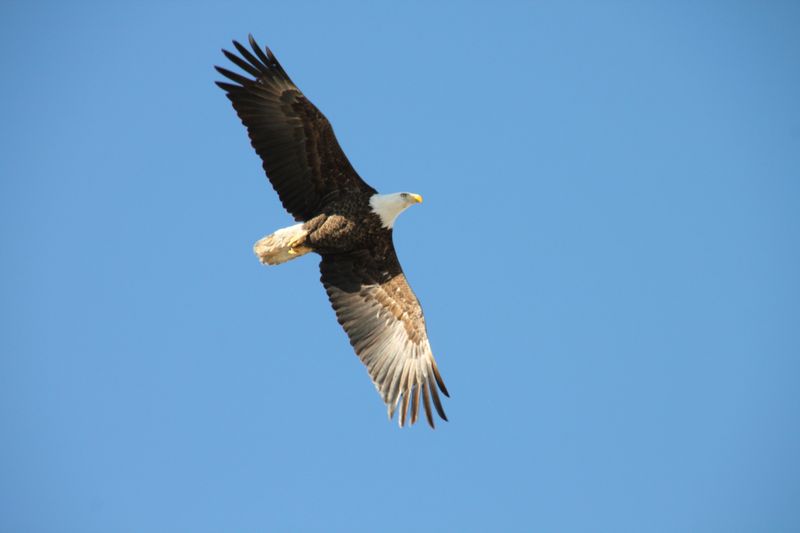
Picture a bald eagle making loop after loop above your roof without flapping its wings once. That kind of effortless circling usually points to something invisible but very real: a thermal.
A thermal is simply a column of warm air that rises from the ground when sunlight heats pavement, rooftops, or open fields unevenly.
Large birds like Haliaeetus leucocephalus are built to use these rising columns. By spreading their wide wings and banking in a circle, they stay inside the warm updraft instead of flying straight through it and losing the benefit.
Each orbit carries the bird a little higher with almost no energy spent.
Once enough altitude is gained, the eagle can tilt its wings and glide across a long stretch of landscape without a single flap. That gliding efficiency is one reason raptors are so good at covering large areas.
Circling is simply the most effective way to climb inside rising air.
Sunny Florida afternoons are especially good at producing thermals over dark surfaces like roads and parking lots. So if an eagle is making repeated loops above your neighborhood on a warm afternoon, the ground beneath it may be doing most of the work.
The bird is not inspecting your property; it is riding an elevator made of air.
2. Nearby Water Gives That Wide Loop A Practical Purpose
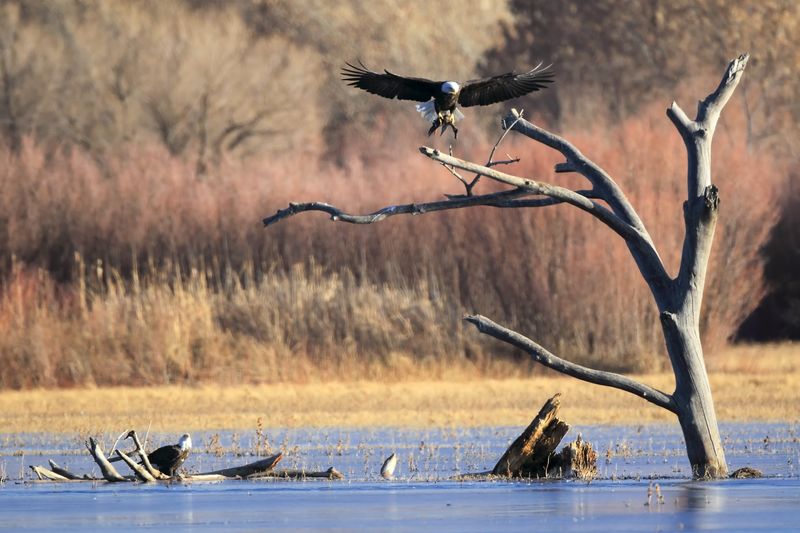
Water is at the center of almost every bald eagle story. The Florida Fish and Wildlife Conservation Commission notes that fish make up the primary diet of these birds.
As a result, productive lakes, rivers, wetlands, canals, and coastal estuaries anchor eagle habitat across the state.
A property that sits near any of these water bodies may regularly fall beneath eagle flight paths. The bird overhead could be traveling between a roosting tree and a productive fishing spot several miles away.
Your yard might simply be part of that route without holding any special attraction itself.
Eagles survey habitat across a much wider area than any single homeowner can see from a backyard. A loop that looks centered over your garden may actually stretch over several neighborhoods, a retention pond, a canal, and a section of shoreline all at once.
The bird is reading a landscape, not a property line.
FWC guidance consistently links eagle presence to aquatic habitat. The best clue about why an eagle appears overhead is often found by looking at water sources within a mile or two.
Not every pond qualifies as prime eagle habitat, but even modest water bodies can draw these birds when fish are accessible and perch trees are nearby.
3. Fish Below Can Keep An Eagle Working The Same Area
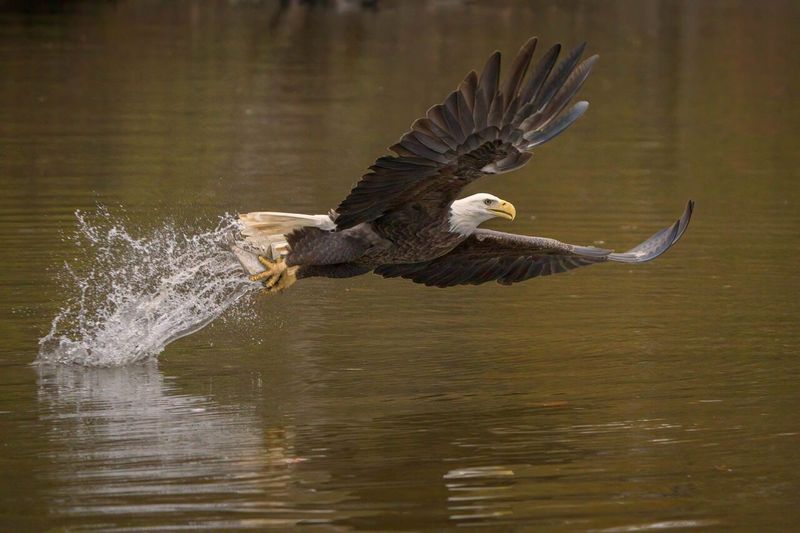
Few hunters in the sky are as visually sharp as a bald eagle scanning for prey. Working from height, these birds search water surfaces for fish that come close to the top, making them vulnerable to a fast, low strike.
An area with reliable fish activity can hold an eagle’s attention across multiple passes and repeated visits.
Repeated circling over a productive stretch of water is simply good foraging strategy. The bird may be watching for movement, waiting for the right moment, or reassessing after an unsuccessful attempt.
That kind of patient, methodical searching can look very deliberate from the ground.
Eagles are opportunistic feeders and will occasionally take other prey or scavenge when the opportunity arises. They are also known to pursue ospreys and pressure them into dropping a catch, a behavior FWC acknowledges as part of their foraging toolkit.
Still, fish remain the main target.
What homeowners should not read into this behavior is any threat to pets. Authoritative sources do not list cats or dogs as routine bald eagle prey.
A circling eagle near a canal or pond is almost certainly focused on the water, not the yard beside it. Keeping the focus on natural aquatic prey gives the most accurate picture of what that bird is actually doing up there.
4. A High Circle Gives Those Sharp Eyes More Ground To Search
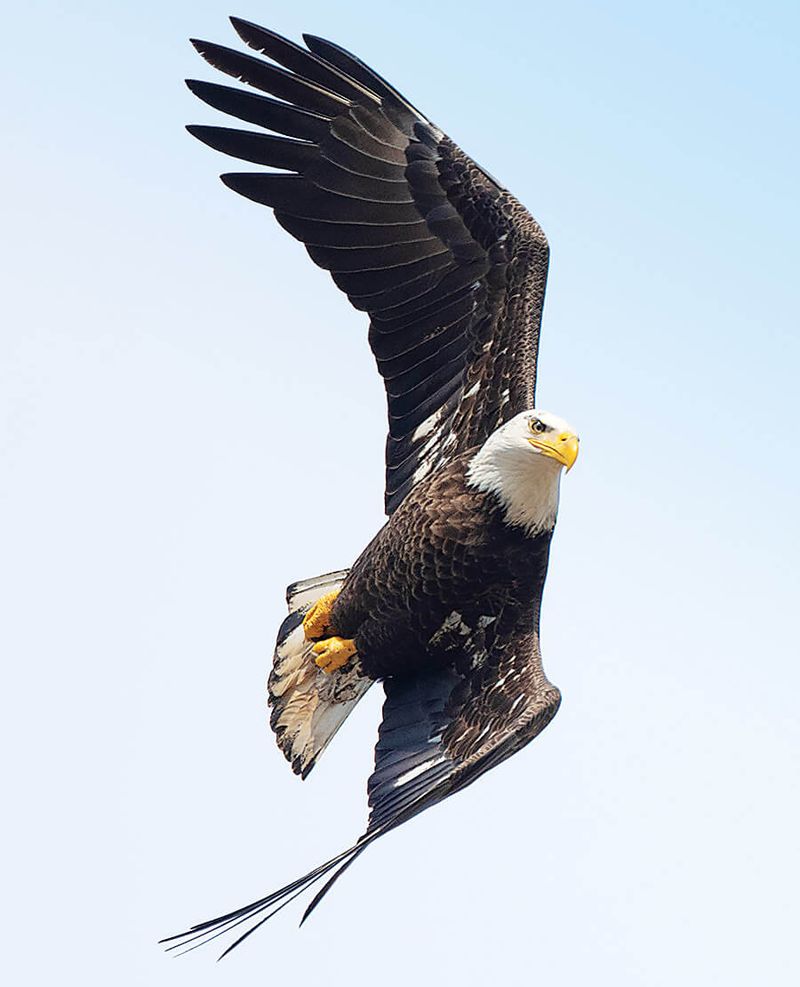
Altitude is a tool. When an eagle climbs high on a thermal or ridge lift, it gains something more valuable than just elevation: a dramatically wider view of the landscape below.
From several hundred feet up, a single circle can sweep the bird’s gaze across multiple Florida ponds, open fields, and stretches of shoreline at once.
That wide visual sweep is part of what makes soaring so effective for a bird that hunts by sight. A large, slow circle at altitude covers far more ground than a low, fast pass ever could.
The bird is essentially running a visual scan of a broad territory with each orbit.
What looks like a tight circle above one backyard may cover a much larger area. The eagle could actually be passing over several city blocks, a road, a retention pond, and preserved wetland.
The geometry of a high circle is deceptive when viewed from directly below.
Eagles also use elevated perches, such as tall deceased trees or utility poles, to survey habitat without flying at all. Circling and perching serve similar purposes: expanding the search area with minimal energy.
So when an eagle makes repeated loops overhead, it is running an efficient visual search of a landscape that likely extends well beyond your fence line. Your yard is part of a much bigger picture.
5. Repeated Flyovers May Trace A Familiar Feeding Route
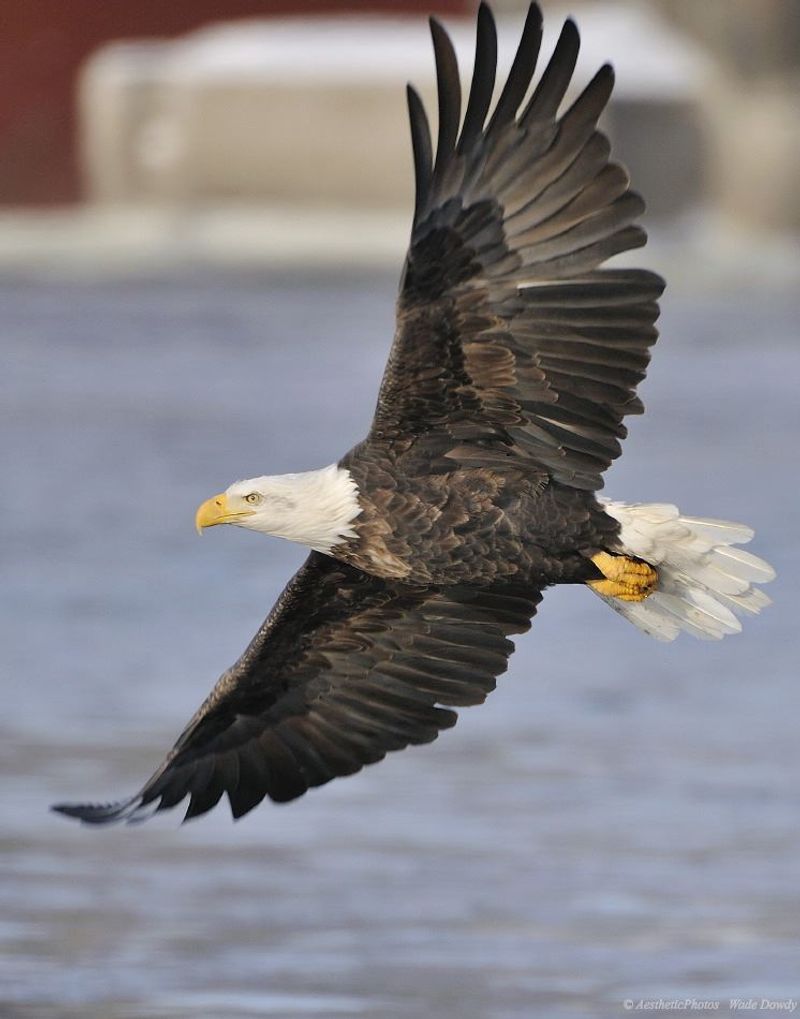
Reliable food and good habitat have a way of pulling wildlife back to the same places again and again. When an eagle finds a stretch of shoreline, a productive canal, or a patch of open water that regularly offers feeding opportunities, that area becomes worth revisiting.
Over time, the routes connecting nest sites, perch trees, and feeding waters can become well-worn paths through the sky.
Homeowners who notice an eagle passing overhead on multiple days may be watching a bird follow one of these familiar corridors.
Roads, rivers, lake edges, and open canopy gaps often shape where birds prefer to travel because they offer easier flying and better visibility.
Your property may sit directly beneath one of those natural corridors.
Repeated sightings do not prove the same individual bird is involved. Several eagles may use the same productive habitat and travel similar routes without coordinating in any way.
What looks like one loyal visitor could be two or three different birds following the same landscape logic.
None of this makes your property special in a way the eagle has consciously chosen. Landscape features, not Florida homeowner identity, drive these patterns.
Understanding that repeated appearances reflect habitat geography rather than personal attention makes the sightings easier to interpret and just as exciting to watch. The sky above your yard may simply be prime real estate for eagles on the move.
6. A Tall Nest Tree Could Be Somewhere In The Wider Landscape
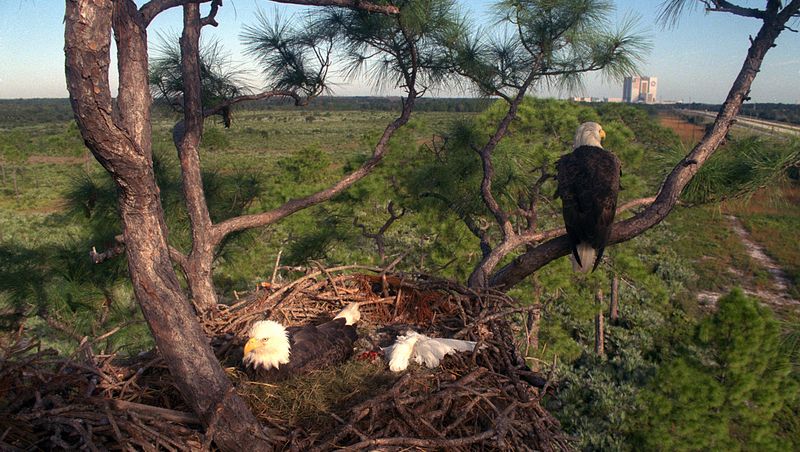
Bald eagles are famous for building some of the largest bird nests in North America. They tend to choose tall trees with strong upper branches and an open view of the surrounding habitat, particularly near water.
A nest that gets reused and added to over several seasons can eventually weigh hundreds of pounds.
If an eagle regularly passes over your property, a nest site could exist somewhere in the broader landscape, though it may be farther away than you would expect.
Adults travel considerable distances between nests and feeding areas, so a circling bird does not automatically signal that a nest sits in a nearby tree.
Two eagles appearing together is not proof of nesting activity either.
Nest trees have been documented in tall pines, cypress, and even on certain human-made structures in some Florida areas.
Established nests are often reused across multiple breeding seasons, which can make some locations consistently active year after year.
If you find a nest on or very near your property, check current FWC and USFWS guidance first. Do that before starting construction, tree work, or other disruptive activity nearby.
Bald eagles remain protected under federal law, and disturbing an active nest can carry serious legal consequences. Reaching out to wildlife authorities early keeps both the birds and the homeowner protected.
7. The Time Of Year Changes What Those Circles Might Mean
Context matters a great deal when interpreting eagle behavior, and the calendar is one of the most useful tools available. FWC defines the bald eagle nesting season as October 1 through May 15.
Nest building or gathering of nesting material can begin as early as late September in some parts of the state.
Circling near established habitat during those months could relate to nest-site travel, territorial movement, foraging, or active nest use. Outside that window, eagles are still present and active.
Their behavior is more likely tied to feeding, dispersal, or routine movement through the landscape than to nesting activity.
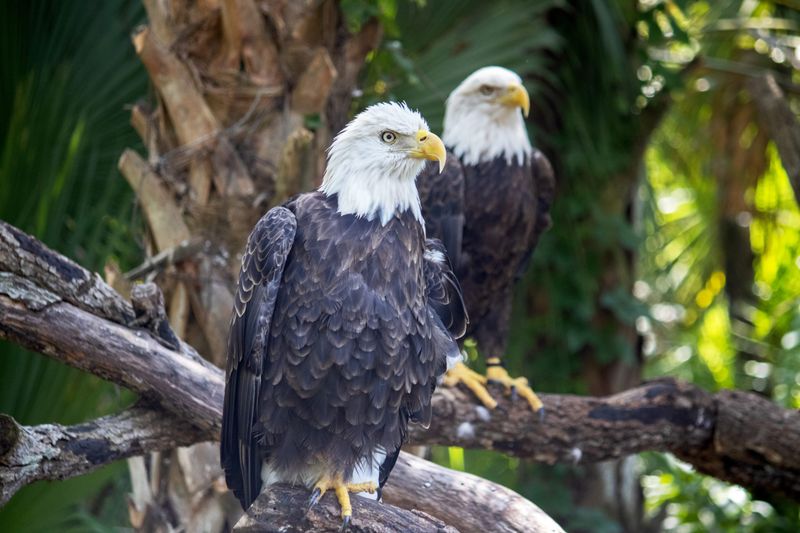
Not every large eagle overhead is a breeding adult. Immature bald eagles, which lack the distinctive white head and tail for several years, are also present in the state and may soar and forage in the same areas as adults.
Seeing a large brown raptor circling does not necessarily mean a nesting pair is nearby.
Seasonal context keeps interpretation grounded in reality. A bird circling in July is probably foraging or soaring for efficiency.
A pair seen making repeated passes near tall pines in November might prompt a closer look at the habitat. Assigning a single meaning to every sighting misses the variety of reasons these birds move through the sky at different times of year.
8. Watching From A Distance Is Usually The Best Response
A circling eagle overhead is genuinely exciting, and the best way to enjoy it is simply to watch. Binoculars offer a close-up view without requiring you to move toward the bird, which is always the right instinct.
Approaching a perched or nesting eagle too closely can cause stress to the animal and may put you in conflict with wildlife protection laws.
Feeding eagles or leaving food out to attract them is a bad idea for several reasons. It can create dependency, alter natural foraging behavior, and draw birds into unsafe situations near roads or structures.
Letting eagles find their own food in their own habitat is always the healthier outcome for the bird.
Bald eagles remain protected under the federal Bald and Golden Eagle Protection Act as well as state rules.
Activities that disturb nesting eagles, including certain types of construction or vegetation removal near active nests, may require guidance or permits.
Always check current FWC and USFWS rules before taking any action near a suspected nest site, since specific legal distances and restrictions can change.
Repeated circles above your home almost always have an ecological or aerodynamic explanation. Rising air, nearby water, foraging routes, and seasonal movement patterns are more than enough to account for what you are seeing.
The eagle is using the landscape, and your Florida yard happens to be part of it. That is worth appreciating exactly as it is.