Why Ants Cover Illinois Peonies, And What It Actually Means For The Plant
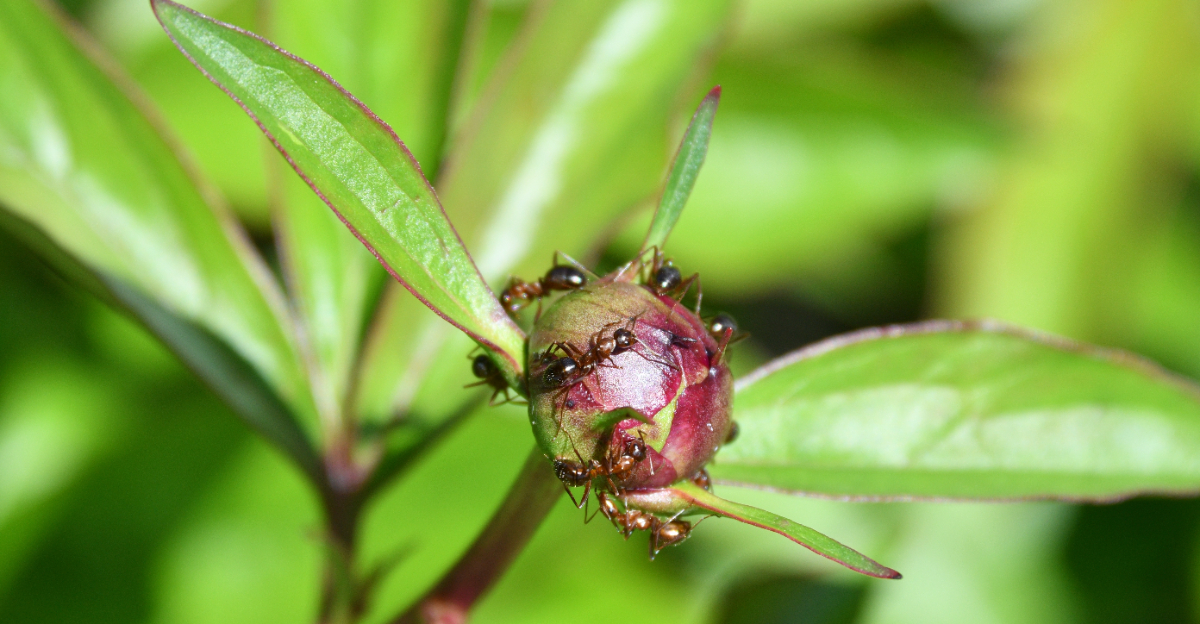
Peonies look like they belong on a postcard, until you get close enough to see the ants. They swarm the buds in tight little clusters, marching up and down the stems like they own the place.
Most gardeners freeze at this exact moment. Some panic and reach for the nearest spray bottle, convinced their prized blooms are under attack.Others just stand there, puzzled, watching dozens of ants work the same flower over and over.
Neither reaction quite captures what is actually happening, because the ants are not there to cause trouble at all.
Peony buds release a sugary substance while they develop, and ants are strongly drawn to it. The relationship is old, mutual, and mostly harmless, though it raises plenty of questions once you notice it.
Ants Are Drawn To Peony Buds For A Reason
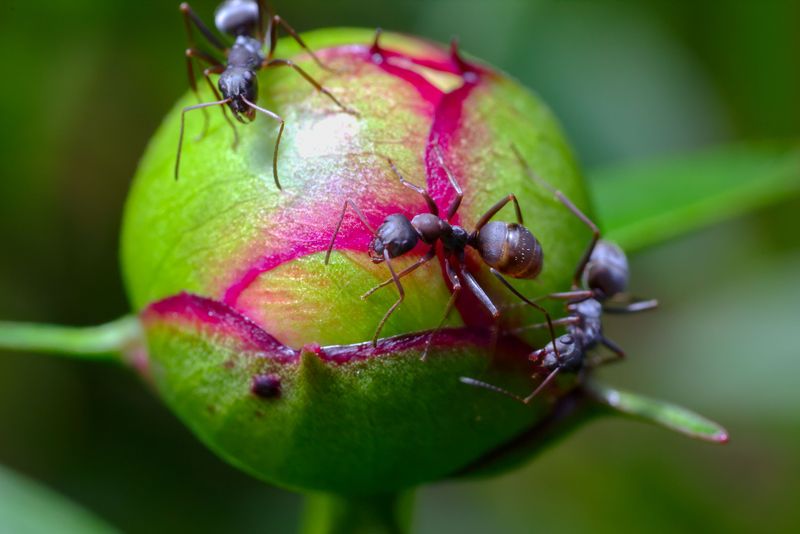
Walk outside on a warm May morning and you will find them there. Dozens of tiny ants marching up and down peony stems like they own the place.
The reason ants are drawn to Illinois peonies is not random at all. These plants produce something ants find hard to pass up.
Peony buds are covered in small structures called extrafloral nectaries. These are not inside the flower but sit right on the outer surface of the bud.
The nectaries release a sweet, sugary liquid that acts like a natural ant magnet. Ants can detect this sugar from surprisingly far away.
Once one ant finds the bud, it leaves a scent trail for others to follow. Soon, the whole colony knows about the snack sitting in your garden.
This behavior is entirely instinctive and has nothing to do with the plant being stressed or sick. The peony is simply doing what it evolved to do.
Scientists have studied this relationship for decades and found it consistent across peony species worldwide. Illinois peonies, especially the classic Paeonia lactiflora varieties, are particularly generous nectar producers.
Gardeners sometimes mistake the ant activity for a sign of trouble. In reality, the plant is working exactly as nature intended.
Understanding why ants show up changes how you feel about seeing them. They are not invaders; they are guests the peony literally invited over for breakfast.
The Sweet Nectar That Attracts Illinois Ants
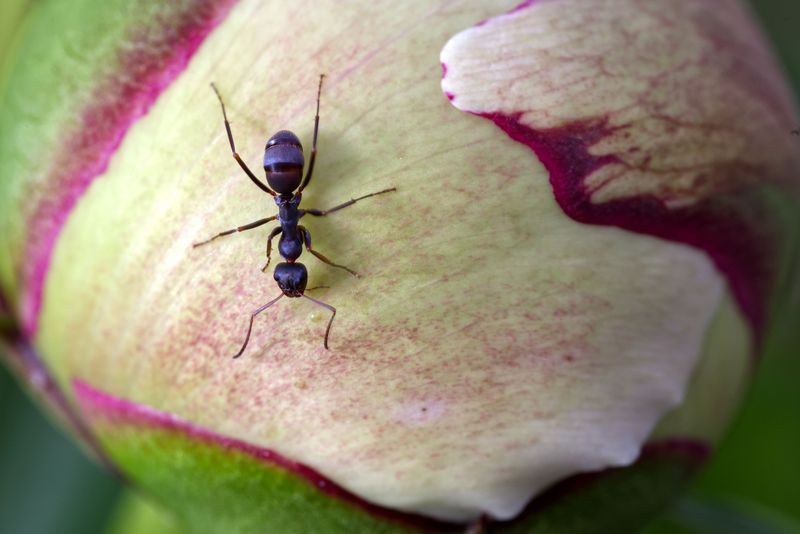
Sticky, sweet, and impossible to ignore: that is what peony nectar is to an ant. The buds basically put out a welcome sign every single spring.
Extrafloral nectaries are the tiny glands responsible for this sugary output. They sit on the sepals, which are the green leaf-like parts that wrap around the bud before it opens.
The nectar they produce is rich in sugars like sucrose and glucose. For an ant colony, this is high-quality fuel that supports the whole nest.
Worker ants gather the nectar and carry it back to share with larvae and the queen. A single peony plant can feed hundreds of ants across a whole foraging season.
What makes this especially interesting is that the plant starts producing nectar before the flower even opens. The bud stage is peak nectar time, which is why you see the most ants before the bloom appears.
Your Illinois Garden Changes Every Week. Your Plan Should Too.
Gardening in Illinois changes quickly throughout the season. Every Friday you’ll receive a simple weekly plan showing exactly what to plant, prune, fertilize, harvest, and protect so you never miss the right timing.
Once the flower fully opens, nectar production from the nectaries slows down significantly. Ants gradually lose interest and move on to other food sources.
This timing is not a coincidence. The plant evolved to attract ants during the period when the bud is most vulnerable to damage from other insects.
Think of the nectar as a trade offer. The peony gives ants a meal, and the ants provide something useful in return.
That sweet exchange has kept this relationship going for thousands of years, long before Illinois gardens ever existed.
This Relationship Does Not Harm The Plant
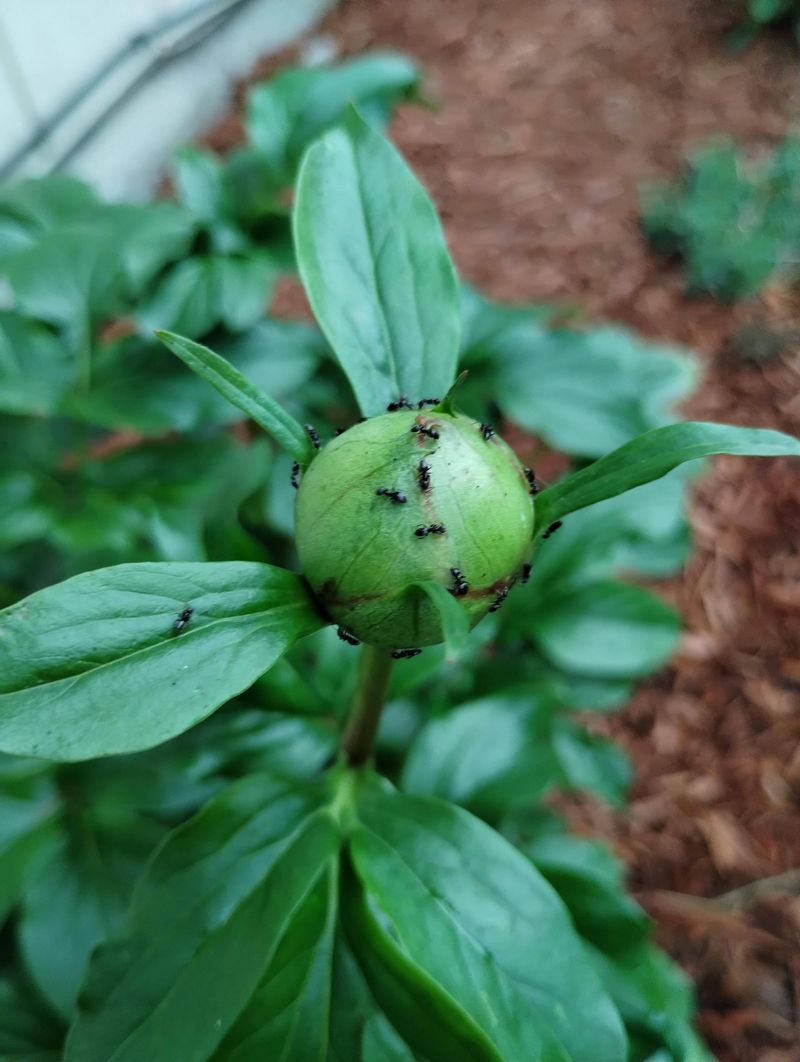
Seeing bugs on your plants almost always sets off alarm bells. With peonies, though, you can take a breath and relax.
Ants do not chew through peony petals or damage the root system. They are after the nectar, not the plant tissue itself.
No studies have shown that ant feeding on peony nectar reduces bloom quality or plant health. The plant produces the nectar specifically to be consumed.
Some gardeners worry that ants attract aphids or other harmful pests nearby. That concern is understandable, but ants on peonies are generally not the cause of secondary pest problems.
In fact, ants are known to be aggressively territorial around their food sources. If a caterpillar or beetle tries to snack on your peony bud, ants will often chase it off.
This protective behavior is a genuine side benefit of having ants around. The plant essentially gets a small security team in exchange for some sugar water.
The root system, leaves, and stems are left largely untouched by foraging ants. Their focus stays entirely on the nectar-producing surfaces of the buds.
Experienced Illinois gardeners often say that peony plants with heavy ant traffic tend to look just as healthy as those without. There is no measurable downside to the relationship.
So when you spot a bud swarming with ants, remind yourself this is a feature, not a flaw. Your peony is thriving, not struggling.
Ants May Actually Help Peony Blooms Open
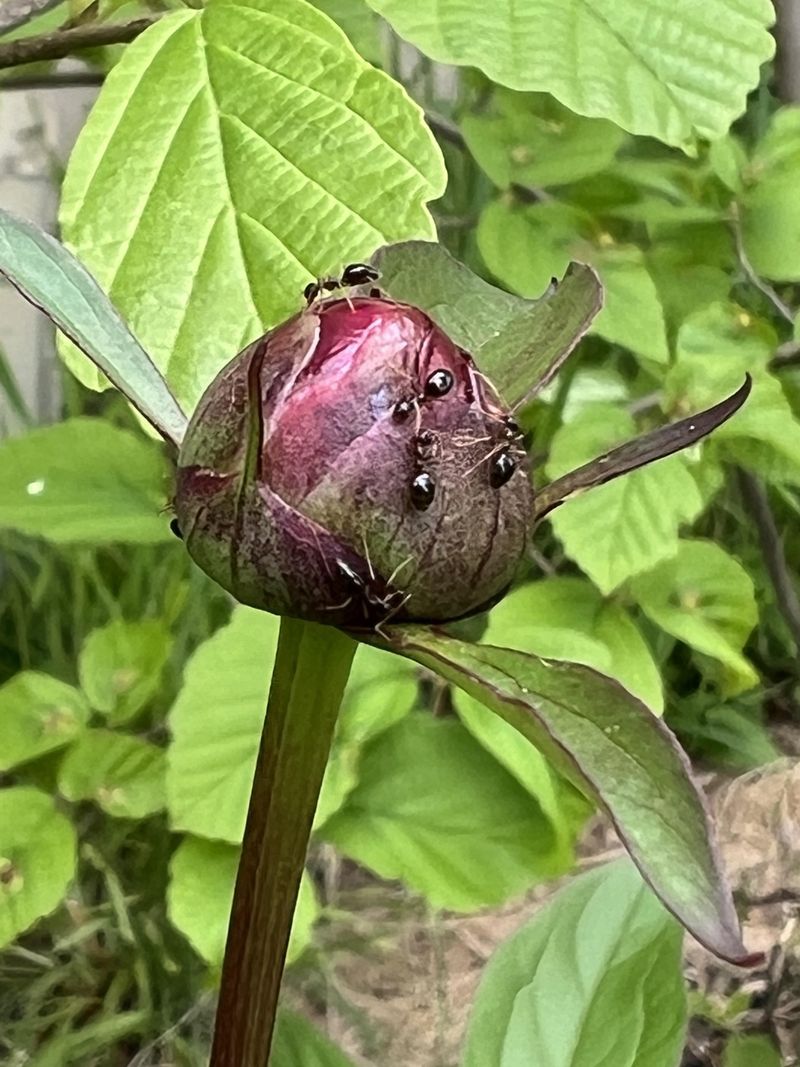
Here is where things get genuinely interesting. For years, gardeners believed ants were necessary for peonies to bloom at all.
The old folk wisdom said that without ants, the buds would stay sealed shut forever. That story has been passed down through generations of American gardeners.
Modern research has mostly debunked the idea that ants are strictly required for blooming. Peonies grown in ant-free environments still open successfully on their own.
However, some botanists suggest ants may speed up the opening process in subtle ways. Their constant movement across the bud surface can help loosen the sticky resin that holds the sepals together.
Peony buds produce a natural resin alongside the nectar. This resin can make the outer layers cling tightly, especially in cool or damp Illinois spring weather.
When ants crawl repeatedly over the bud, their feet and bodies create small amounts of friction. That friction may gently encourage the sepals to separate a little earlier than they would otherwise.
No large-scale study has confirmed this as a primary function of the ant-peony relationship. Still, the anecdotal evidence from gardeners across the Midwest is hard to completely dismiss.
What we do know is that the presence of ants does not slow the blooming process. Helping or not, they tag along for the nectar either way, and the outcome for the flower is positive.
So next time your peonies bloom beautifully, those tiny workers may have played a small but meaningful role.
Signs Ant Activity Means Something Else
Ants on peony buds are normal and harmless. But ants swarming the stems and leaves below the bud zone deserve a second look.
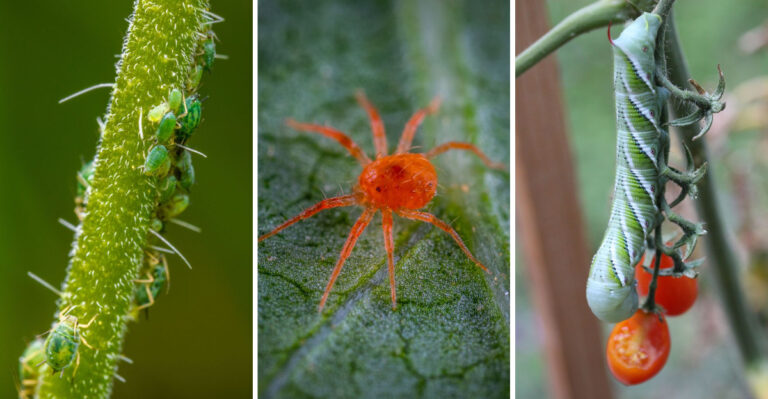
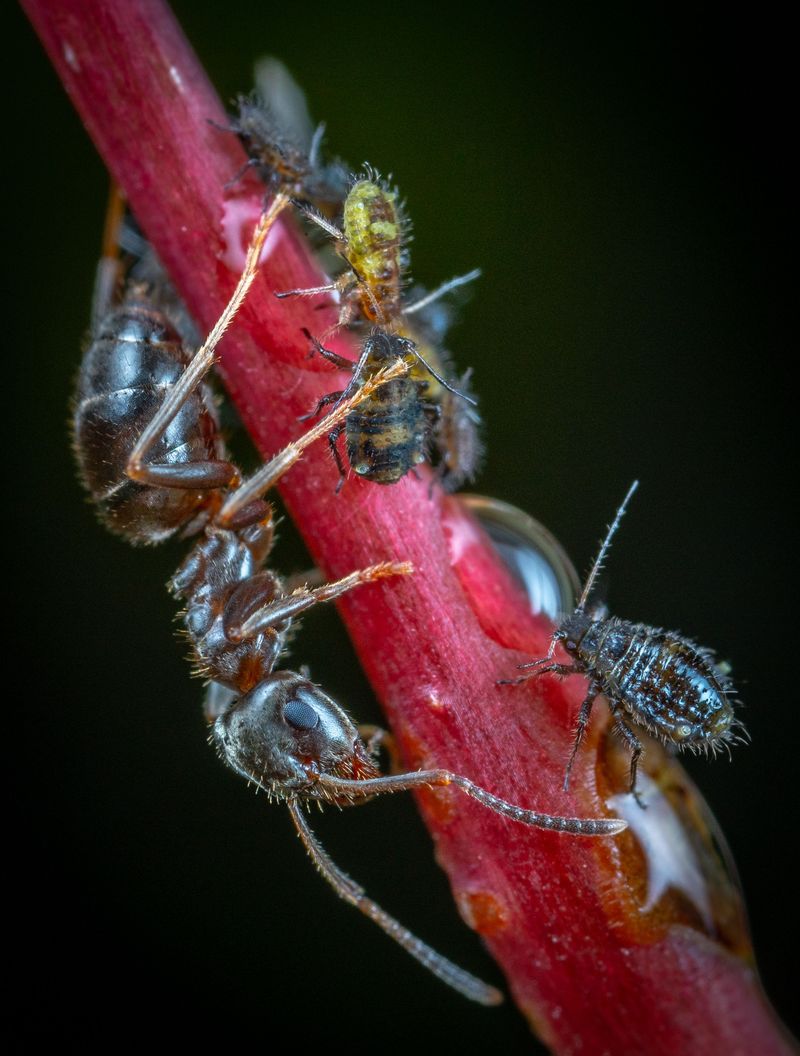
When ants congregate heavily on stems or the base of the plant, they may be farming aphids. Aphids are tiny soft-bodied insects that suck plant sap and excrete a sweet substance called honeydew.
Ants actively protect aphid colonies because honeydew is another food source they love. If you see ants moving up and down the stem in a line, check closely for small clusters of insects.
Aphids on peonies usually appear as pale green or yellowish specks grouped near new growth. A strong spray of water from the hose can knock them off without harming the plant.
Another signal worth watching is ants gathering near the soil line around the base of the stem. This could indicate a pest issue underground or a fungal problem creating extra moisture.
Botrytis blight is a common fungal condition in Illinois peony gardens. It causes stems to turn brown and mushy, which can attract both insects and moisture-loving bugs.
If you notice wilting, dark spots on stems, or foul-smelling soil near the base, the ant activity may be a clue rather than a cause. Investigate the plant more carefully before assuming everything is fine.
Ants on buds mean nectar. Ants on stems and leaves mean it is time to look a little closer at what else is going on.
Should You Remove Ants Before Cutting Blooms
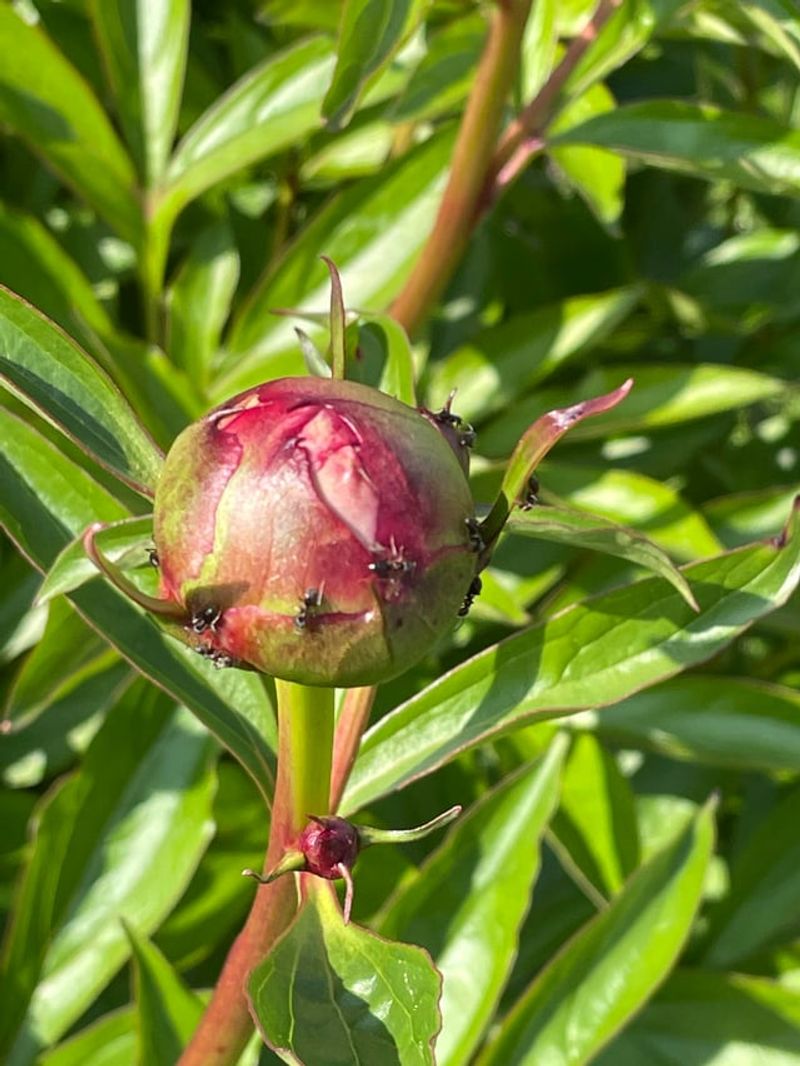
Cutting peonies to bring inside is one of the great pleasures of a spring garden. The ant situation, though, can make it feel a little complicated.
Removing ants before bringing blooms indoors is simple and takes about thirty seconds. No chemicals needed at all.
The best method is to cut the stems and give them a gentle shake outdoors. Most ants will drop off immediately when the stem moves.
For stubborn stragglers, hold the stem over a bucket of water and swish the bloom gently through the surface. Ants cannot hold on and will float free without harming a single petal.
Avoid spraying cut peonies with insecticide before bringing them in. The chemicals can damage the petals and are unnecessary for a problem this easy to solve.
Some gardeners lay cut stems on a towel in the shade for a few minutes before heading inside. The ants walk off on their own once the stem stops smelling like the plant.
If you plan to cut blooms regularly throughout the season, try harvesting in the early morning. Ant activity is lower when temperatures are cooler, making the job even easier.
Cut peonies when the buds are just beginning to show color but have not yet opened. At that stage, nectar production is slowing and fewer ants will be present anyway.
With a little timing and one gentle shake, your Illinois peonies are ready for the vase, ants and all worries left behind in the garden.