Why Tennessee Barrel Planters Keep Rotting This Season
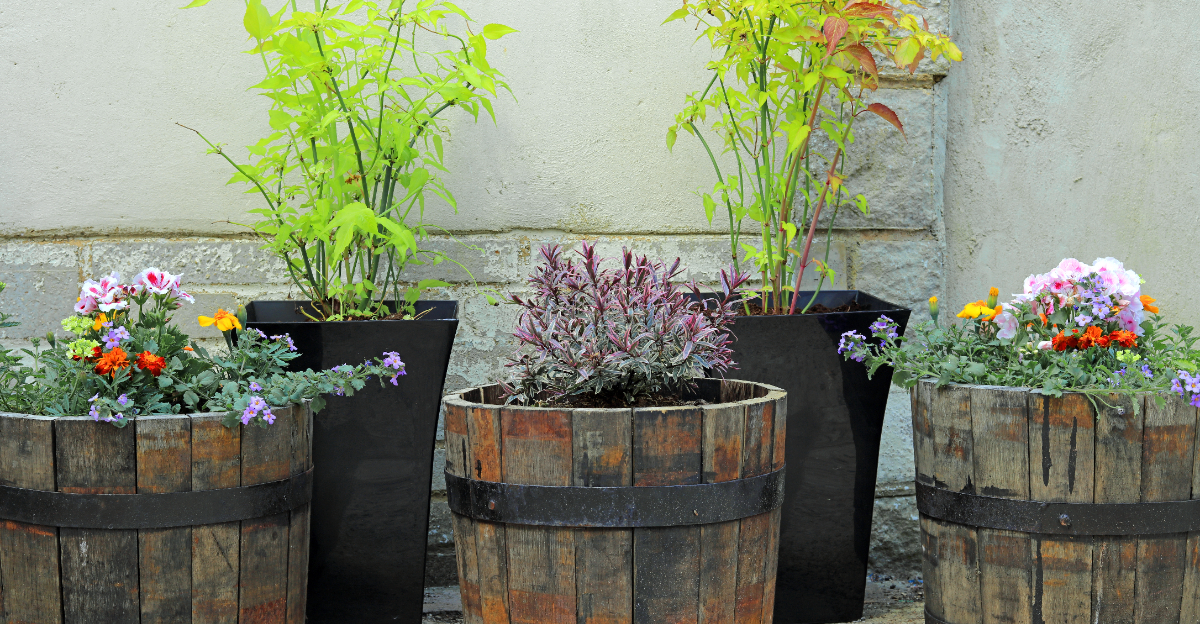
That barrel planter held up beautifully all through April. By July, the staves are spongy, the bottom hoop is loose, and a chunk of the rim gives way when you lean on it. Something changed, and it was not the weight of your petunias.
Tennessee summers trap moisture in ways most gardeners never expect. Thick humidity settles into the wood grain overnight and never fully burns off before the next rain arrives.
Add a drainage hole that clogged months ago, and that barrel becomes a slow-motion swamp instead of a planter. The wood is not failing you. It is absorbing water it was never built to hold, day after day, with nowhere for that moisture to go.
Once you see how these barrels actually break down, from the inside, staying one step ahead becomes far less complicated. A few small changes in how you set up and maintain that planter can add years to its life.
1. Trapped Moisture Turns Barrel Planters Into Rot Traps
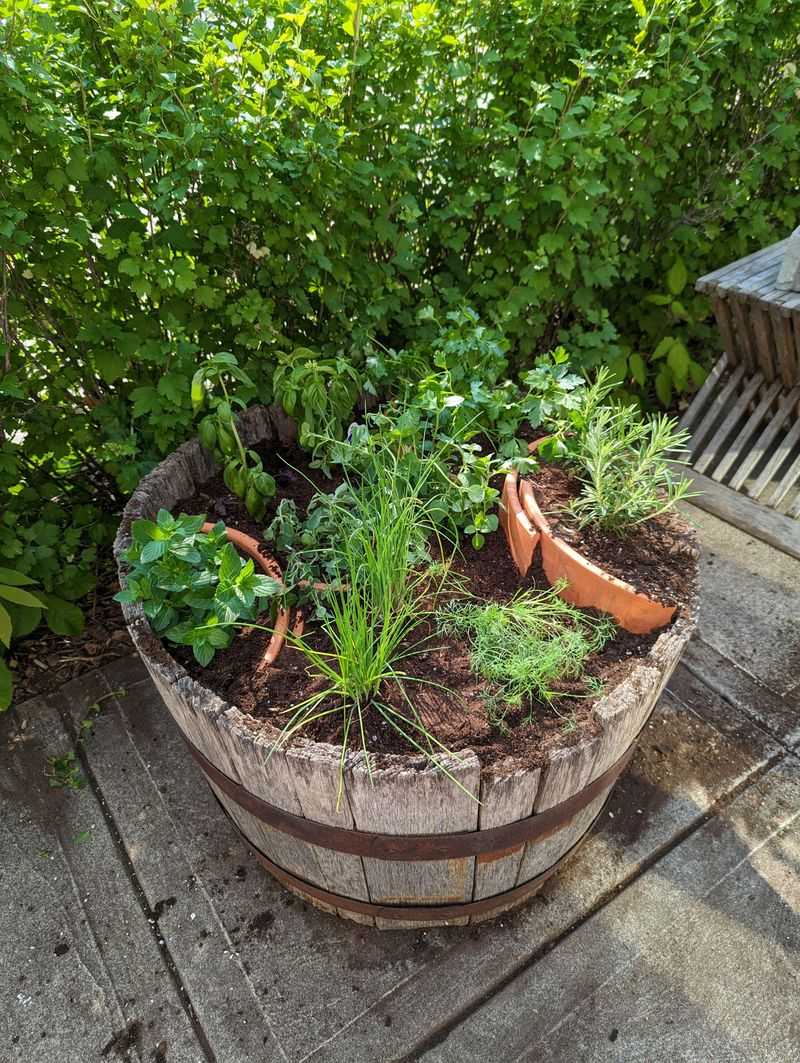
Soggy wood is a barrel’s worst enemy. When water gets trapped inside a barrel planter, it has nowhere to escape, and the wood stays wet for days at a time.
Wet wood becomes a feeding ground for fungi and bacteria. Those organisms slowly break down the wood fibers, turning solid staves into soft, crumbling material you can poke with your finger.
Most people assume rain is the main culprit. But the bigger problem is water that collects between the soil and the barrel’s inner wall, staying trapped long after the surface looks dry.
Wood expands when it absorbs water and contracts as it dries. That constant swelling and shrinking cracks the wood’s natural fibers, making it even easier for moisture to sneak deeper inside.
Poor airflow around the base is often the real culprit behind a rotting barrel. Planters sitting flat on patios or soil have no room for air to circulate underneath.
Lifting your barrel just two inches off the ground using pot feet or bricks makes a significant difference. That small gap lets the base breathe and dry between watering sessions.
Check the inner walls of your barrel after a heavy rain. If the wood feels spongy or dark patches have appeared, moisture is already doing damage that will spread fast.
Catching the problem early gives you a real shot at stopping the rot before it reaches the structural staves that hold your planter together.
2. Tennessee Humidity Adds Extra Pressure On Wood Barrels
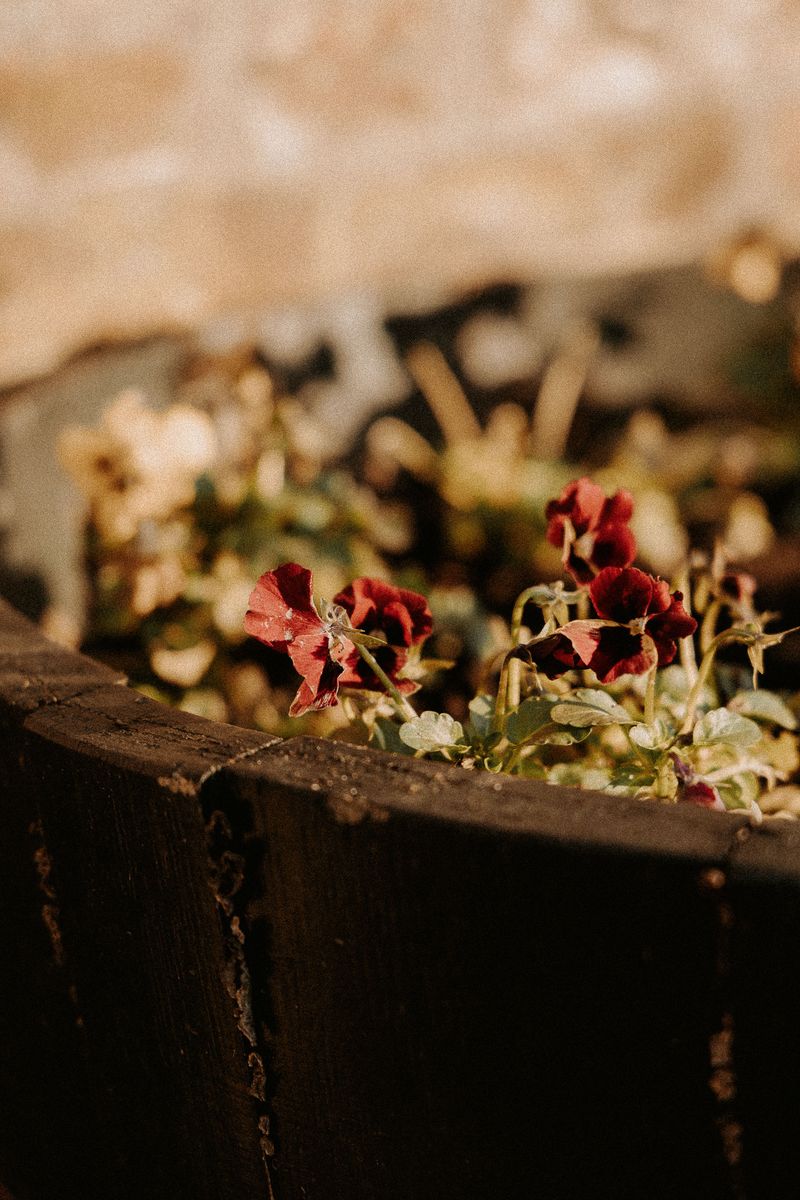
Summers here are not just hot. They are thick, heavy, and relentlessly humid in ways that punish untreated wood hard.
Tennessee summers regularly bring humidity levels that climb above 80 percent in the early morning hours, before easing off later in the day. That moisture-saturated air clings to every surface, including the outside of your barrel planter.
Even when it has not rained in days, the wood absorbs ambient moisture from the air around it. The barrel never fully dries out, which means rot-causing organisms always have the damp conditions they need to thrive.
Your Tennessee Garden Changes Every Week. Your Plan Should Too.
Gardening in Tennessee changes quickly throughout the season. Every Friday you’ll receive a simple weekly plan showing exactly what to plant, prune, fertilize, harvest, and protect so you never miss the right timing.
Thick industrial hardwood barrels were originally built to handle constant moisture exposure like this. But most garden barrel planters sold at home improvement stores are made from softer, thinner wood that cannot handle the same pressure.
Placing your barrel in a spot with good air circulation helps combat humidity’s effects. Avoid tucking it into corners or against walls where airflow is blocked and moisture pools.
Morning sun followed by afternoon shade is an ideal setup for barrel planters in this region. That pattern helps the wood dry out early in the day before nighttime humidity creeps back in.
Placement alone can make or break how long your barrel survives the season. A few feet of repositioning can dramatically change how long your planter lasts.
Humidity is not something you can control, but you can outsmart it with smart placement and a little seasonal awareness that most gardeners overlook.
3. The Drainage Holes Growers Often Get Wrong
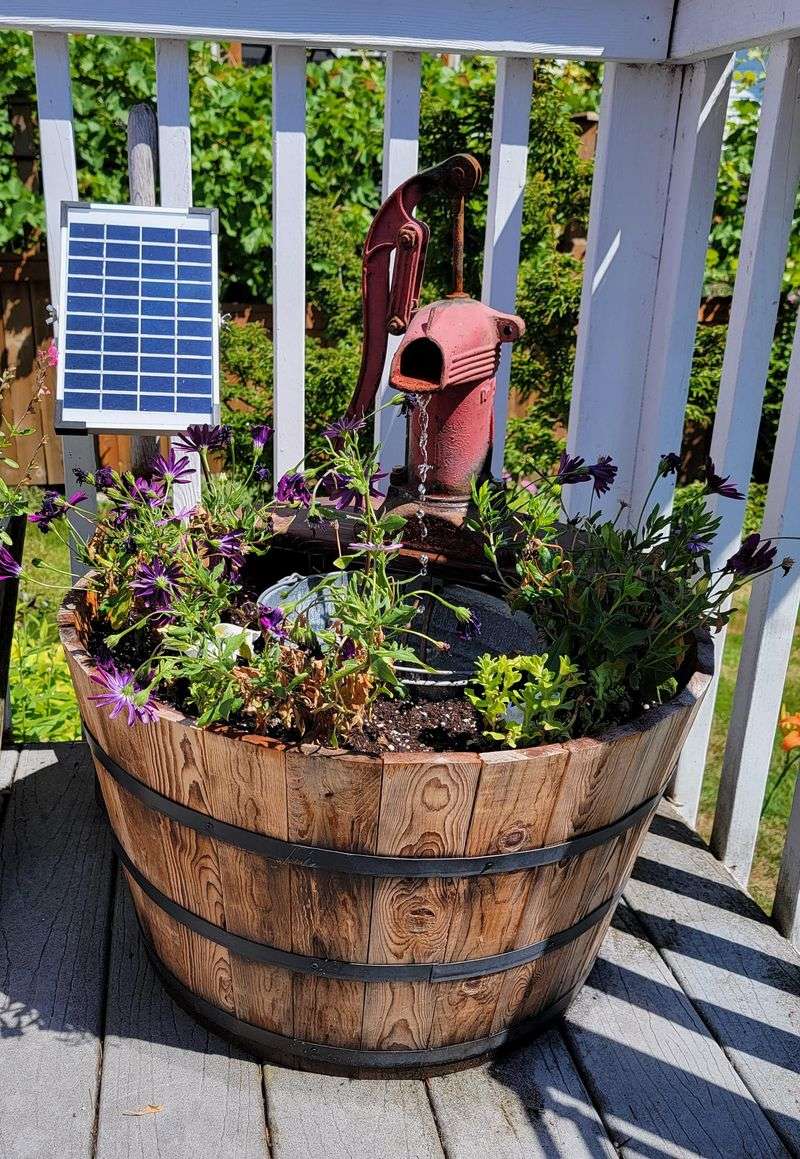
Drainage holes sound simple, but most gardeners are doing them wrong in ways that speed up wood decay significantly.
A single hole drilled in the center of the barrel bottom is rarely enough. Soil compacts over time and blocks that one opening, leaving water with nowhere to go.
Standing water at the bottom of the barrel is one of the fastest ways to destroy the wood from below. The base staves soak up that pooled water constantly, and rot sets in within a single season.
A good rule of thumb is at least four to six drainage holes spread across the bottom of any barrel planter. That pattern keeps water moving out evenly, no matter how the soil settles inside.
Hole size also matters more than people think. Holes smaller than half an inch tend to clog with roots and debris much faster than larger ones.
Lining the bottom with a layer of gravel or broken pottery before adding soil creates a buffer zone. That layer keeps soil from pressing directly against the wood and blocking your drainage holes.
Checking your drainage after every heavy rain is a habit worth building. Tip the barrel slightly and watch whether water flows freely or drips slowly, which signals a blockage forming inside.
Sometimes it really is that simple: one clogged hole, ignored for a season, is all it takes. Fix the flow, and you protect the whole barrel.
4. Untreated Wood Breaks Down Faster Than Expected
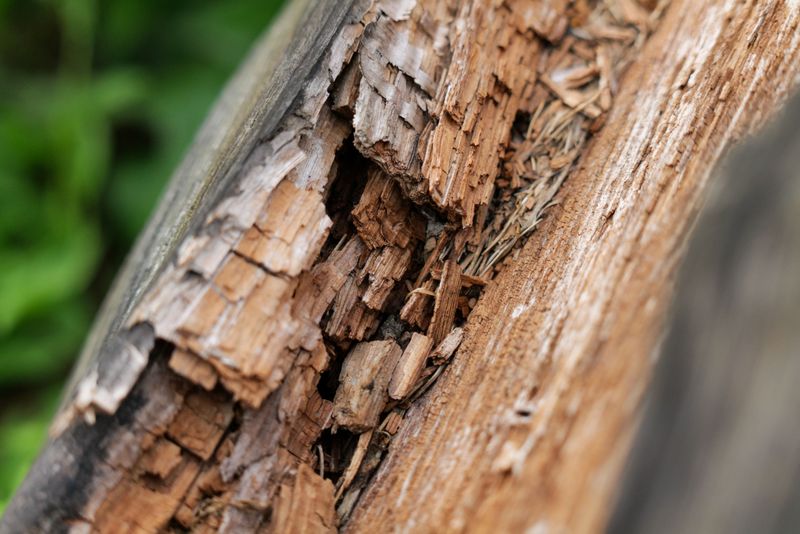
Raw, untreated wood has a short lifespan when it spends every day in contact with soil and moisture. Most people are shocked by how quickly it goes.
Without a protective barrier, wood absorbs water on contact. Fungi spores, which float freely in outdoor air, land on that wet surface and immediately begin breaking down the wood’s cellular structure.
Some barrel planters sold at garden centers come with a light exterior stain that looks protective but offers only minimal moisture resistance. That coating often wears off after one rainy season.
The interior of the barrel is where the real vulnerability lives. Soil pressed against untreated inner walls transfers moisture constantly, and that inside surface almost never dries out completely.
Applying a food-safe wood sealant to the interior before planting is one of the most effective protective steps a gardener can take. Products made with linseed oil or beeswax penetrate the wood and slow moisture absorption dramatically.
Exterior treatments matter too, especially along the bottom rim and base where ground contact is highest. Reapplying sealant each spring takes about twenty minutes and adds years to the barrel’s life.
Cedar and redwood naturally resist moisture better than pine or poplar. If you are shopping for a new barrel planter, checking the wood species before buying is a smart move that pays off long-term.
Untreated wood in a humid climate is simply working against itself, and a basic seasonal sealing routine changes that outcome completely.
5. Soil Mix Choices That Trap Water Against The Barrel
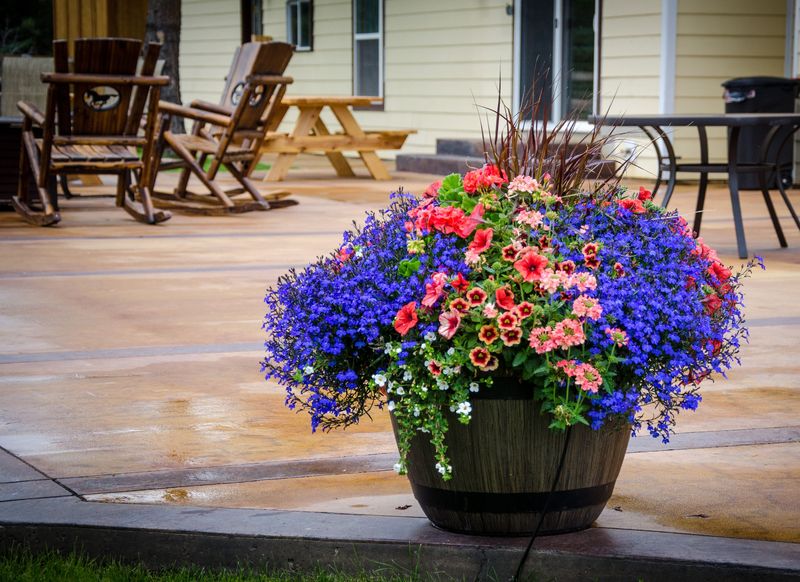
Not all potting soil is created equal, and the wrong mix can quietly destroy your barrel from the inside out all season long.
Heavy, clay-based soils hold water for far too long. When packed tightly against wooden walls, that moisture-saturated soil acts like a wet sponge pressed against the wood around the clock.
Standard garden soil is one of the worst choices for barrel planters. It compacts quickly, drains poorly, and creates the perfect conditions for the rot process to accelerate through the stave walls.
A well-draining potting mix should feel light and loose in your hand. If it clumps heavily when damp or feels dense when dry, it is holding too much water to be safe for a wooden container.
Mixing perlite or coarse sand into your potting medium improves drainage significantly. A ratio of about 30 percent perlite to 70 percent potting mix keeps water moving through the soil rather than pooling against the wood.
Raised soil mounds inside the barrel also help. Planting on a slight mound in the center encourages water to flow outward and downward toward the drainage holes rather than sitting flat against the walls.
Refreshing your soil mix every two seasons prevents compaction from building up over time. Old compressed soil loses its drainage capacity and starts behaving more like clay, even if it started out light and airy.
Your soil choice is one of the easiest fixes available, and it costs almost nothing to get right this season.
6. Simple Fixes That Extend A Barrel Planter’s Life
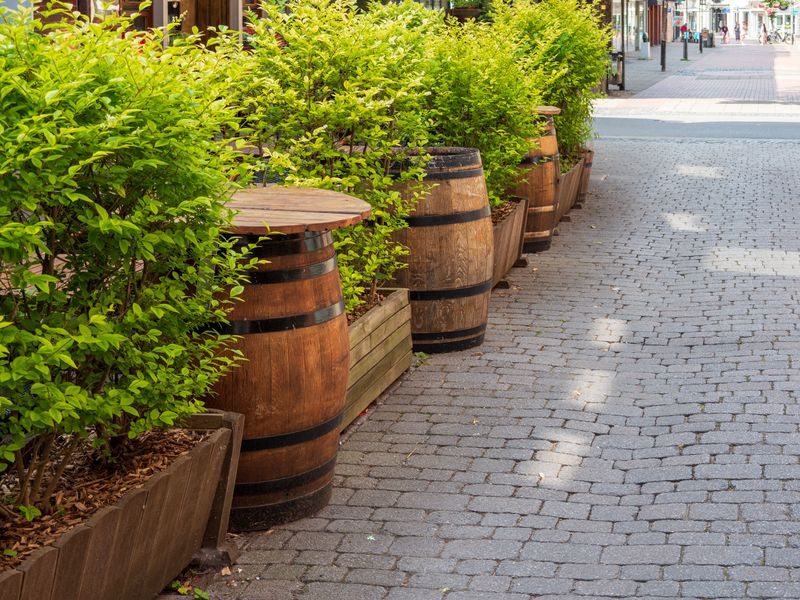
Saving your barrel planter does not require replacing it. A few targeted changes made right now can add seasons of healthy life back to the wood.
Start by elevating the barrel on pot feet, bricks, or a cedar platform. Lifting it off the ground immediately improves airflow and stops the base from soaking up ground moisture between waterings.
Seal the interior walls with a food-safe wood preservative before you replant each spring. Linseed oil, tung oil, or a beeswax-based product soaks into the grain and creates a moisture barrier that slows absorption dramatically.
Drill additional drainage holes if your barrel currently has fewer than four. Space them evenly across the bottom and keep them at least half an inch wide to prevent clogging from roots and debris.
Switch to a lightweight, perlite-heavy potting mix this season. That one swap alone reduces how long moisture stays pressed against the inner walls after each watering or rainfall.
Position your barrel where morning sun can reach it for at least four hours. That daily drying window gives the wood a chance to shed overnight moisture before the next humid afternoon arrives.
Inspect the stave seams every few weeks through the growing season. Catching a soft spot early lets you treat it with a wood hardener before the damage spreads to neighboring boards.
Almost every case of barrel rot traces back to something fixable. Small, consistent habits protect your investment and keep your garden looking exactly the way you imagined it.