Why Are Giant Garden Spiders Showing Up In Georgia Yards Right Now?
Georgia backyards can feel normal one morning and slightly enchanted the next.
You step outside with coffee, round the tomato cage, and suddenly there it is: a huge web stretched between the fence and the basil, with a bold spider sitting perfectly still in the middle.
The size makes it feel like something arrived overnight, but most of these spiders have been in the yard for weeks. They were just too small to notice.
Late summer changes everything.
By August and September, female orb weavers have reached adult size, insect numbers are high, webs are larger, and mating season is underway.
That combination makes garden spiders look sudden, dramatic, and everywhere at once.
So why are giant garden spiders showing up in Georgia yards right now?
Because the season has finally made them big, visible, hungry, and ready to reproduce. Most are harmless, useful, and better left alone unless their webs block a place people need to walk.
1. Females Have Finally Reached Full Size
The giant spider in the garden did not appear from nowhere.
She has probably been there for much of the summer, growing quietly through several molts while staying small enough to escape notice.
By late July, August, and September, female orb weavers reach the size that makes homeowners stop mid-step. That is when the same spider that blended into the background suddenly looks like the main event.
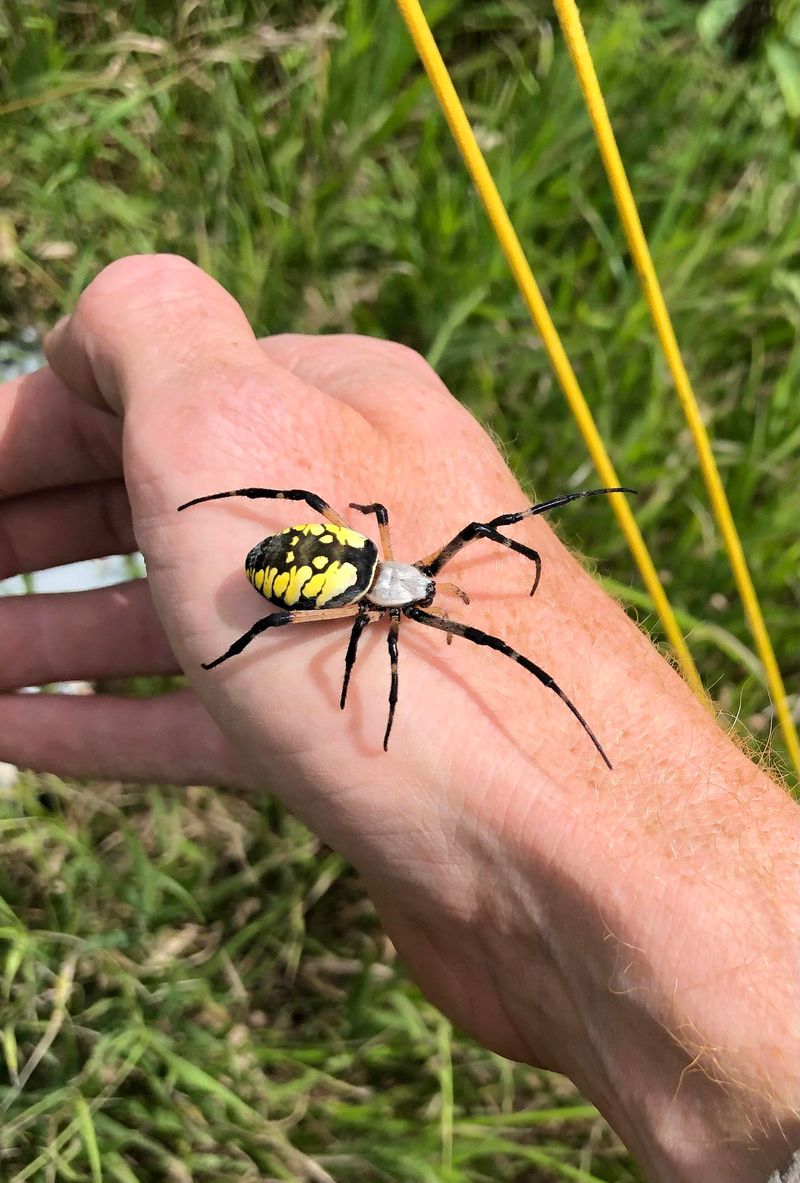
Female yellow garden spiders can look especially large because their long legs stretch far beyond the body.
The body alone may be close to an inch long, and the swollen abdomen can make the spider appear even more impressive as the reproductive season approaches.
Males stay much smaller. In many orb-weaving species, the male can be only a fraction of the female’s size. He does not build the big dramatic web that catches your attention.
He usually wanders near female webs, searching for a mate and trying not to become part of the wrong vibration signal.
That size difference makes people think only one spider exists, when the yard may actually hold tiny males and juveniles that go unnoticed.
Earlier in the season, young spiders built smaller webs in more sheltered places. They were low, delicate, and easy to miss during daily garden routines. Mature females need larger webs to support their larger bodies and bigger prey needs.
The spider looks sudden because your attention caught up with her life cycle.
Late summer is simply the moment when her size finally matches her presence.
2. Webs Are Expanding Across Insect Flight Paths
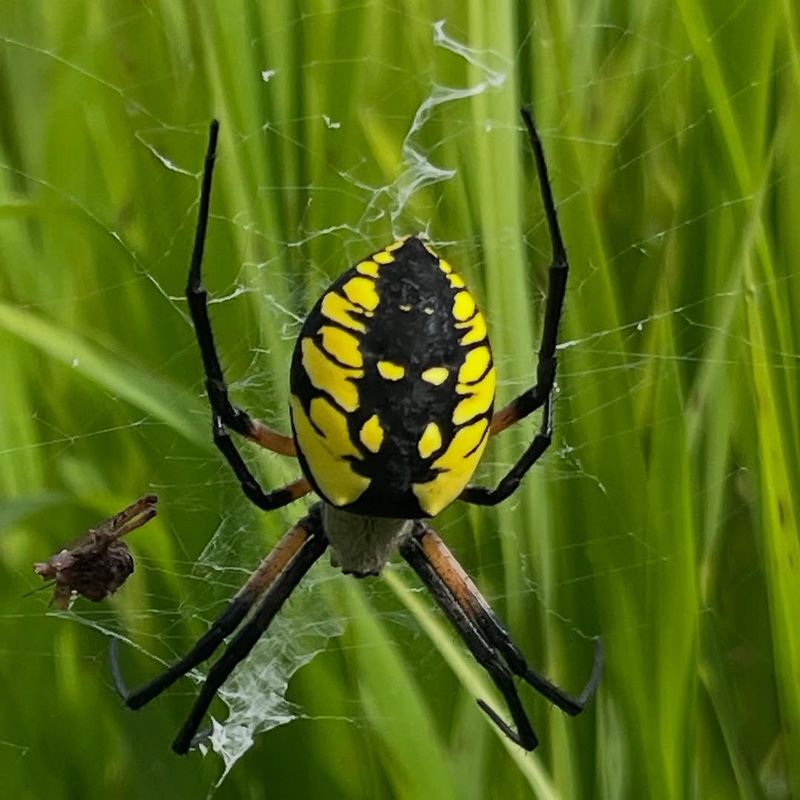
The web gets bigger because the spider gets bigger.
A mature female orb weaver needs a larger trap to catch enough food, and by late summer, she has the body size and silk production to build one.
That is why webs suddenly appear across porch corners, garden paths, tomato cages, shrubs, fences, and gaps between low branches.
She is not choosing those spaces randomly.
Orb weavers build where flying insects travel. Open gaps act like insect highways. Moths, flies, beetles, leafhoppers, mosquitoes, gnats, and other small insects move through those spaces while traveling between plants, lights, moisture, and shelter.
Your Georgia Garden Changes Every Week. Your Plan Should Too.
Gardening in Georgia changes quickly throughout the season. Every Friday you’ll receive a simple weekly plan showing exactly what to plant, prune, fertilize, harvest, and protect so you never miss the right timing.
A web across a gap gives the spider the best chance of catching dinner without chasing anything.
The design is beautifully efficient. The spider starts with anchor lines, adds support threads, and then creates the familiar spiral with sticky capture silk. She sits at the center or nearby, touching the silk with her legs and waiting for vibrations.
A strong web can appear quickly. Some orb weavers repair or rebuild at night, which is why a path that was open yesterday may have a web across it this morning.
Web placement often repeats. If a spider keeps rebuilding in the same spot, that location is probably productive. The insects keep passing through, so the spider keeps investing energy there.
This can feel inconvenient when the web crosses a doorway or walkway, but it is not aggressive behavior. The spider is not trying to meet you.
She is reading the yard the way a gardener reads sunlight and soil.
Late summer just gives her more reason to build big and build where the traffic is best.
3. Late-Summer Insects Are Feeding The Webs
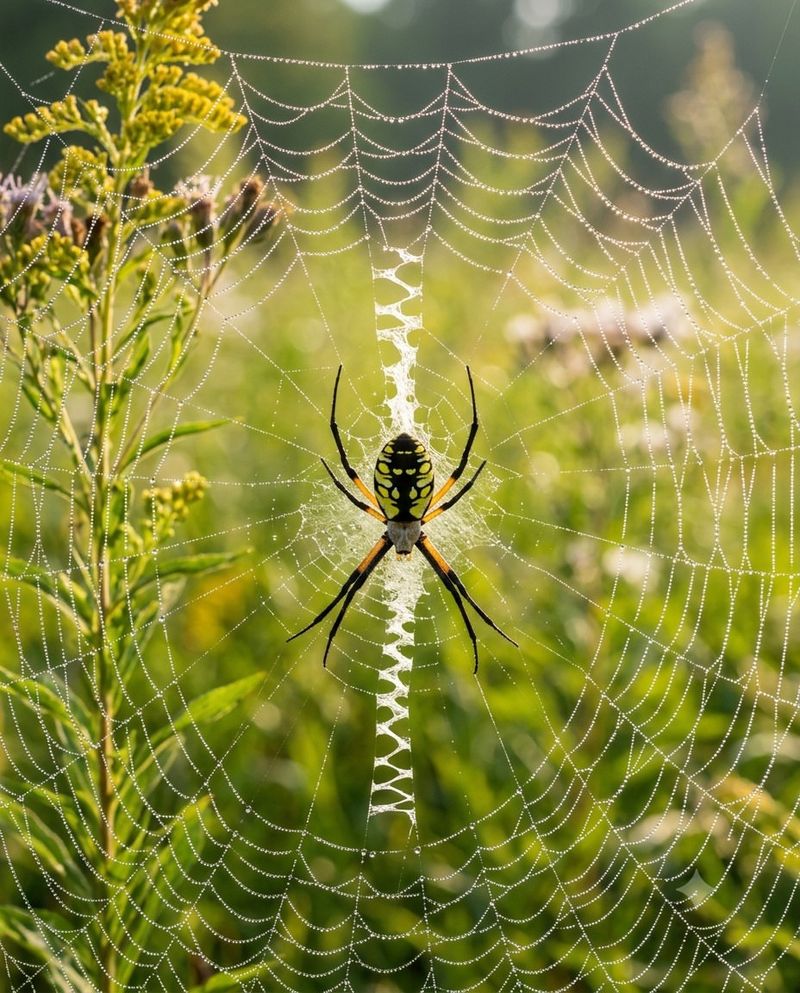
Georgia late summer is busy, buzzing, and full of prey.
That matters because big spiders need a steady food supply. By August and September, gardens are full of moths, flies, grasshoppers, stink bugs, leaf-footed bugs, beetles, mosquitoes, and other insects moving through warm evenings and humid mornings.
A large orb web placed in the right spot can catch a little of that traffic every day.
That abundance helps explain why garden spiders seem so successful right now.
They are not gathering because your yard is dirty, neglected, or unsafe. They are there because the landscape has insect movement, plant cover, and good anchor points for webs.
A healthy, active garden often supports more spiders because it supports more of the small creatures spiders eat.
This is usually good news.
Orb weavers are generalist predators. They catch whatever hits the web, which means they may capture pest insects and harmless insects alike.
They are not selective garden bodyguards, and they will not solve every pest problem. But their work still adds a valuable layer of natural insect control.
A web near a vegetable bed may catch moths, beetles, flies, or other insects moving around crops. A web near a porch light may catch night-flying insects drawn toward brightness. A web near shrubs may intercept small insects traveling through the foliage edge.
Removing every web removes that quiet service.
The spider does not charge rent, does not need food from you, and does not damage plants. She simply uses silk and patience to catch insects that cross her chosen space.
Late summer feeds the spider because late summer feeds everything.
The web is proof that the yard is active.
4. Reproductive Season Is Bringing Adults Into View
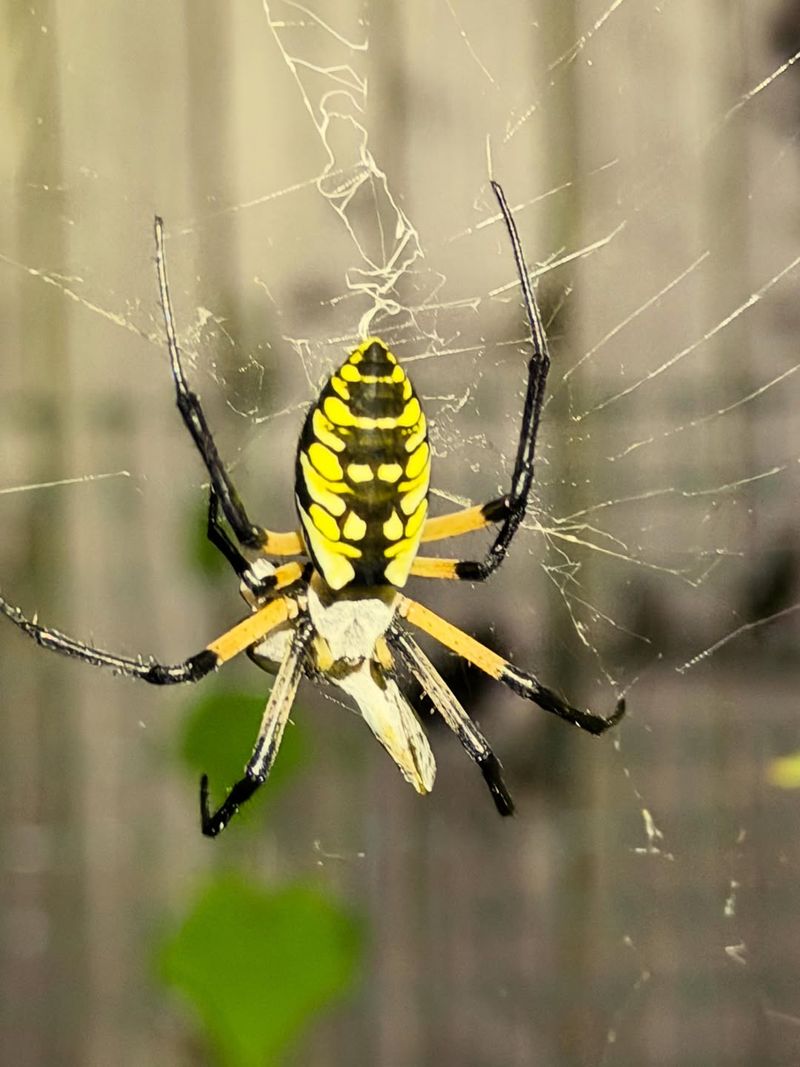
By late summer, the spider calendar changes.
The females are full size, the webs are larger, and the males begin searching for mates. That reproductive timing makes adult orb weavers much more visible in Georgia yards during August and September than they were earlier in the season.
A female yellow garden spider may stay centered in her web day after day, feeding and conserving energy.
Males may appear along the edges of her web, much smaller and easier to miss. Their movements are cautious because the silk is also the female’s hunting tool.
Courtship involves vibration. The male has to signal his presence without sounding like prey. That alone makes the season fascinating to observe from a respectful distance.
After mating, the female produces an egg sac. For yellow garden spiders, the sac is often brownish, papery, and rounded, sometimes attached to nearby vegetation or a sturdy part of the web structure.
It can hold many eggs inside, protected through the colder months.
The adult female usually does not live far beyond the season, especially once frost arrives. The egg sac carries the next generation through winter, and tiny spiderlings emerge the following spring.
That cycle explains the sudden-feeling appearance. It is not a population explosion overnight. It is a synchronized stage of development.
Many individuals reach maturity around the same part of the season, and their webs become large enough to notice at the same time.
A Georgia yard in late summer is not being invaded by random giant spiders.
It is hosting a normal seasonal peak.
The drama belongs to the life cycle, not a crisis.
5. Yellow Garden Spiders Are Easier To Recognize Now
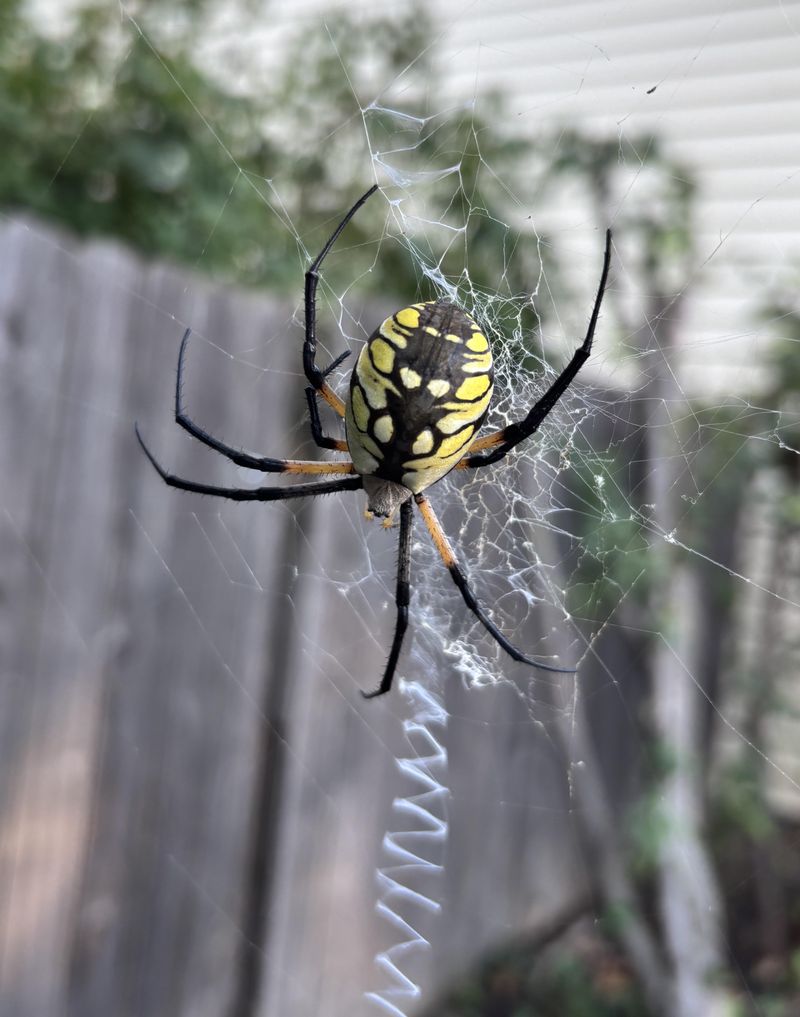
The native yellow garden spider is one of the most eye-catching spiders in Georgia.
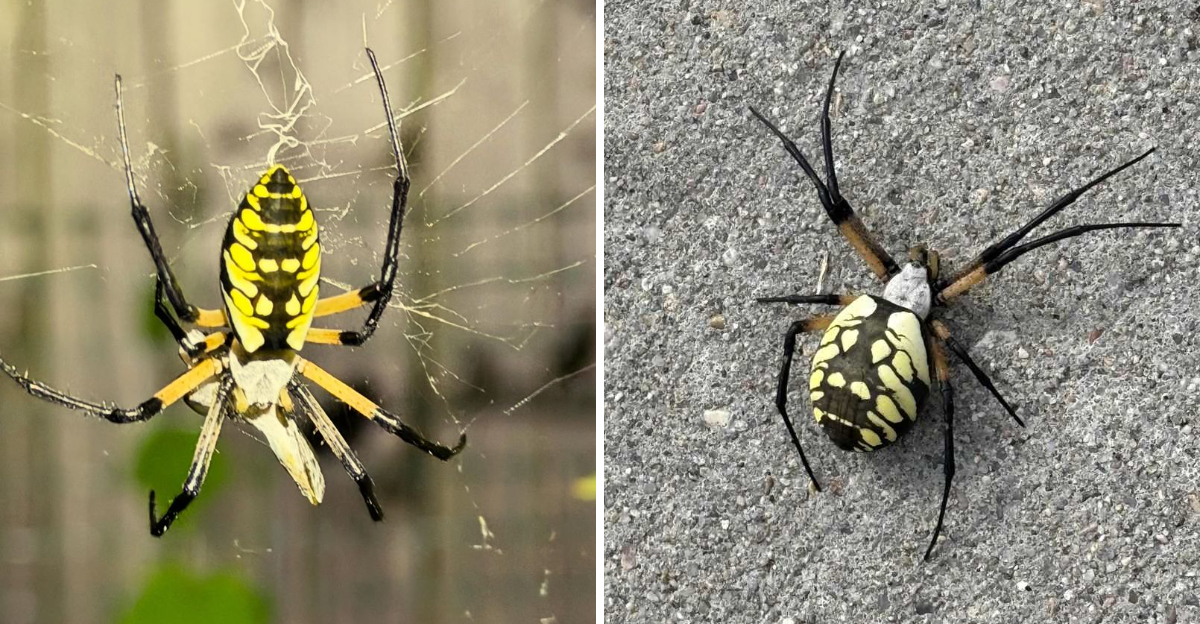
Once mature, the female is hard to confuse with something ordinary. Her abdomen carries bold yellow and black markings, often with touches of white.
Her legs are banded. Her posture at the center of the web looks almost deliberate, as if she knows she is the most interesting thing in the garden.
The web often gives away the identification before the spider does.
Yellow garden spiders commonly build a flat orb web with a white zigzag band running through the center. That zigzag is called a stabilimentum.
Scientists have several ideas about what it does, including making the web more visible to birds, helping stabilize the structure, or influencing insect behavior.
For homeowners, it is a helpful visual clue. A large black-and-yellow spider sitting in a flat web with a vertical white zigzag is very often the native yellow garden spider.
This species is not looking for trouble with people. It stays with its web and uses vibration to understand the world. If disturbed, it may shake the web, drop down, or retreat rather than move toward a person.
Bites are uncommon and usually happen only when the spider is trapped or handled. For most people, this spider is best treated as a beneficial garden neighbor.
It helps reduce passing insects, adds wildlife interest, and gives children and adults a chance to watch real predator behavior safely from a distance.
The reason you notice it now is simple: the female is mature, her color is vivid, and her web has reached showpiece size.
She has been part of Georgia yards all along.
Late summer just makes her impossible to overlook.
6. Joro Spiders Are Adding To The Confusion
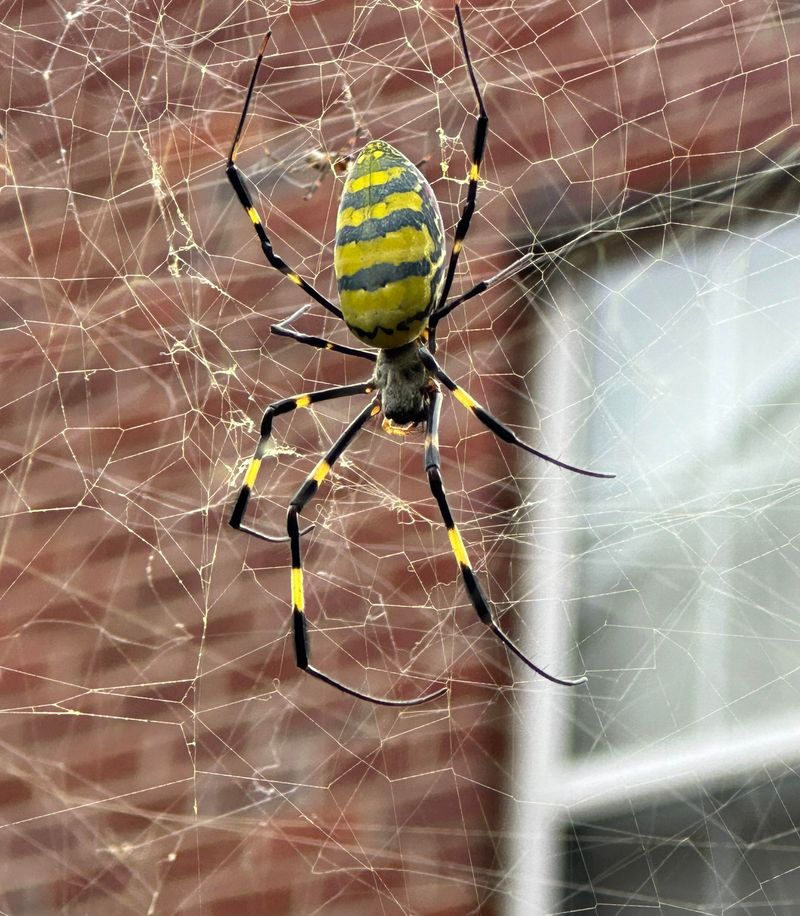
Some large Georgia orb weavers are not yellow garden spiders.
The introduced Joro spider has become more visible in parts of the state, and its size, color, and large webs can make homeowners wonder what exactly they are seeing.
That confusion is one reason late-summer spider questions have become so common.
Joro females are large and colorful, but their look is different from the native yellow garden spider. They often show bright yellow and blue-green patterns on the abdomen, with red markings near the rear of the body.
Their legs are banded in yellow and dark sections.
The web is another clue. Joro webs are often large, three-dimensional, and slightly golden in color. They may look layered rather than like a single flat dinner-plate spiral. Yellow garden spider webs are flatter and often include the central white zigzag.
Both spiders can be startling. Both are generally considered harmless to people. Neither wants to chase anyone around the yard.
The difference matters because Joro spiders are introduced, and researchers continue to track their spread. Clear photos can help with identification, especially if you capture the abdomen pattern and the web structure.
Do not assume every giant spider is a Joro. Native orb weavers are still common and deserve recognition.
If you want confirmation, take a photo from a safe distance and use a reliable identification source, Extension office, or citizen-science platform. Avoid handling the spider.
The rise of Joro spiders has made people more aware of every large web in the yard.
That awareness is useful, but it should come with careful identification rather than panic.
7. Safe Webs Are Providing Natural Pest Control
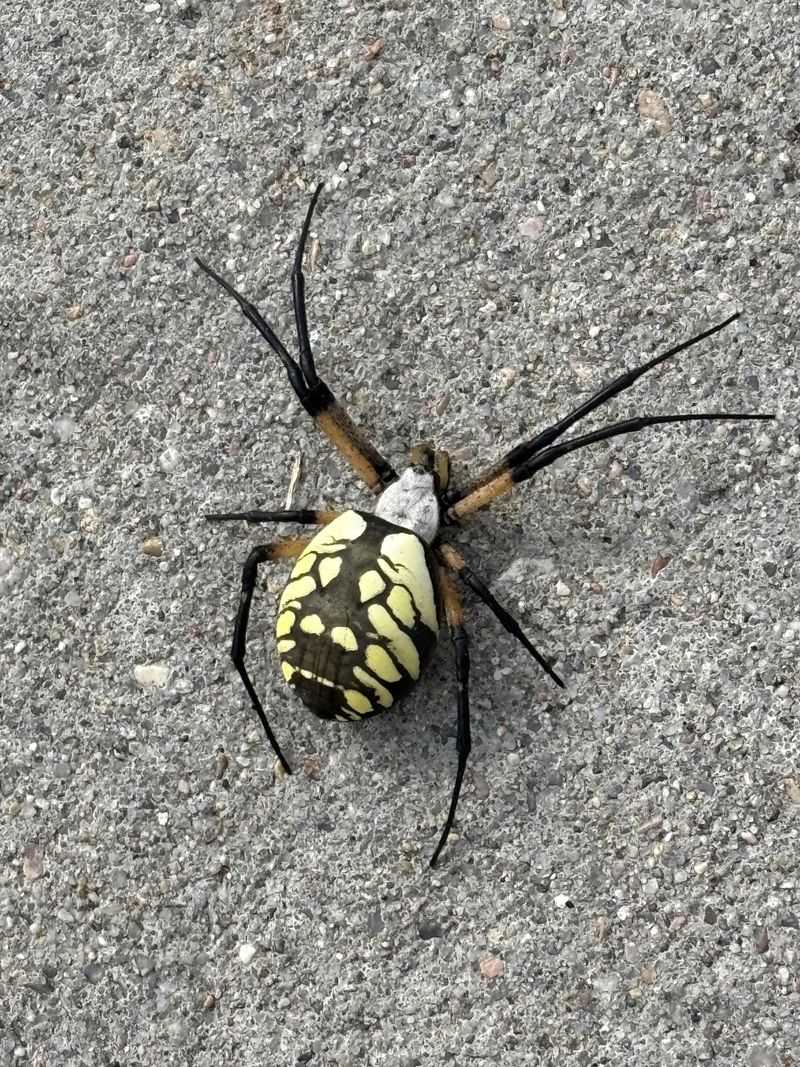
A web in the back corner of the garden is usually doing more good than harm.
Orb weavers catch insects without damaging plants, disturbing soil, or requiring any work from the gardener.
A web between shrubs, along a fence, near a compost area, or at the edge of a vegetable bed is a small natural trap working all day and night.
Leaving safe webs in place is often the best option.
The spider is not interested in people, pets, or vegetables. She is interested in vibrations from insects hitting the silk. If the web is not blocking a daily path, doorway, gate, mailbox, or seating area, there is usually no reason to interfere.
Broad pesticide use around webs can create more problems than it solves. Sprays that affect insects may harm spiders directly or reduce the prey they need to survive.
They can also affect bees, butterflies, predatory insects, and other beneficial wildlife in the same area.
A garden with spiders is often a garden with active ecological balance.
That does not mean every insect in the web is a pest. Orb weavers catch whatever lands there. But their overall presence adds predator pressure to the yard, especially during a season when insect numbers are high.
Observation can also turn fear into curiosity. Watch from a few feet away after dew settles on the web. Notice how the spider stays still until the silk vibrates.
Watch how quickly she responds to prey. The whole system is more impressive once you understand what is happening.
A safe web is not a sign your yard has a spider problem.
It is a sign your yard has working habitat.
Letting that web stay is usually the calmest and smartest choice.