Why Arizona Gardeners Are Adding Desert Marigold To Hot Front Yards
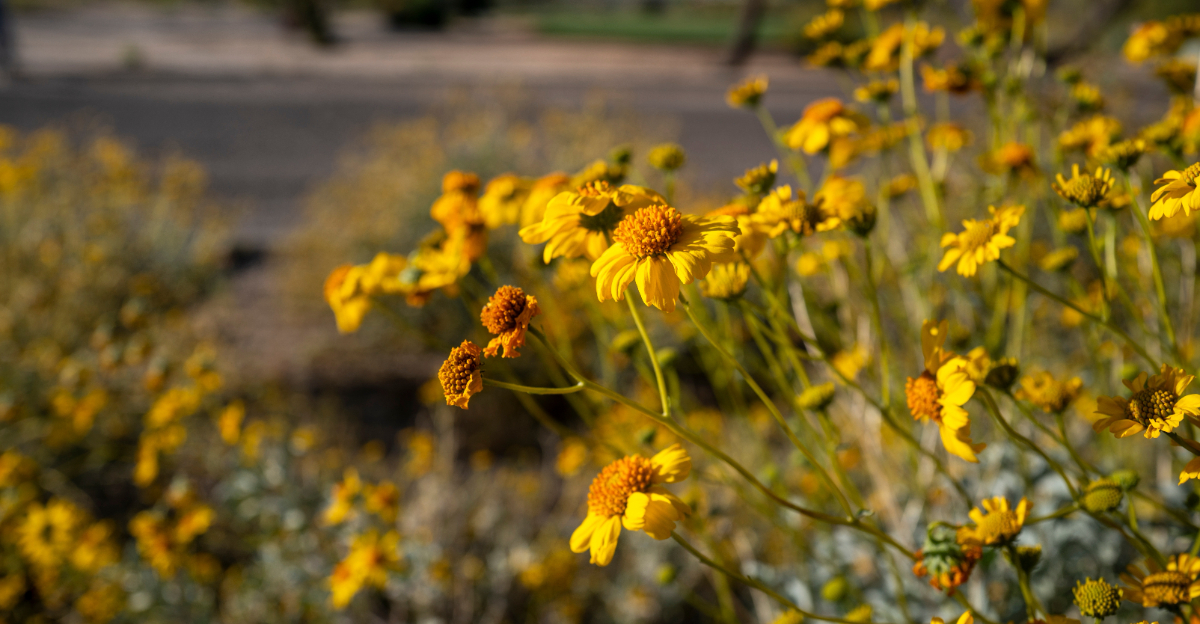
Front yards exposed to relentless heat can quickly expose which plants truly belong there. Desert marigold is earning attention because it brings something different to these demanding spaces.
Its cheerful yellow blooms look surprisingly fresh against gravel, stone, and sunbaked planting beds. That contrast gives even simple landscapes a brighter, more intentional appearance.
For Arizona gardeners, appearance is only part of the appeal. A front yard plant also needs to handle conditions that make many common choices difficult to maintain.
This native flower brings several qualities together without making the landscape feel overly complicated. That combination explains why it fits so naturally into challenging sunny areas.
Consider what your hottest planting spots actually demand before filling another empty space. The prettiest option is not always the most practical.
Desert marigold manages to make a strong case for both.
1. Desert Marigold Handles Hot Sunny Spots With Ease
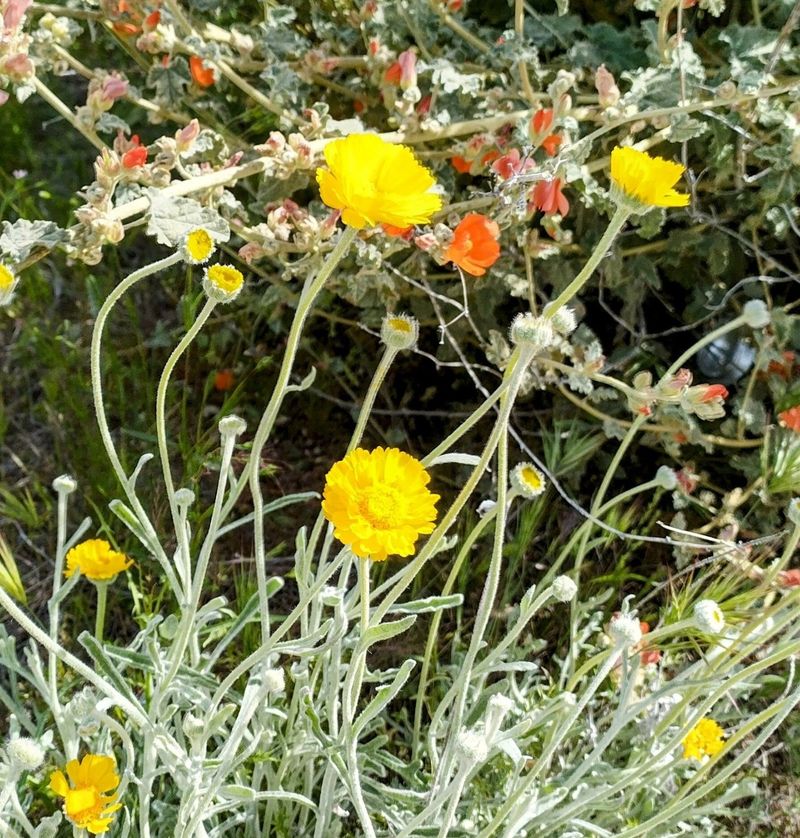
Not many flowering plants can sit in full sun all day and still look good. Desert marigold does exactly that.
Native to the Sonoran and Chihuahuan deserts, it evolved to handle intense heat and direct sunlight without wilting or losing its blooms.
Front yards facing south or west get the harshest sun exposure. Most plants placed there struggle within weeks.
Desert marigold thrives in those spots because its roots and leaves are built for that kind of punishment.
Gardeners in Phoenix and Tucson have tested it in some of the hottest corners of their yards. Results tend to be strong.
Plants stay upright, keep their color, and push out new flowers even during peak summer heat.
Placement matters a lot. Putting it near a west-facing wall or a concrete driveway means it gets reflected heat on top of direct sun.
Even then, established plants usually hold up well, though younger plants may need a bit more attention during their first hot season.
One thing worth knowing is that desert marigold prefers good air circulation. Crowded spots with poor airflow can cause problems over time.
Giving each plant enough space helps it stay healthy and continue blooming through the hottest months of the year.
2. Silvery Leaves Help It Cope With Desert Conditions
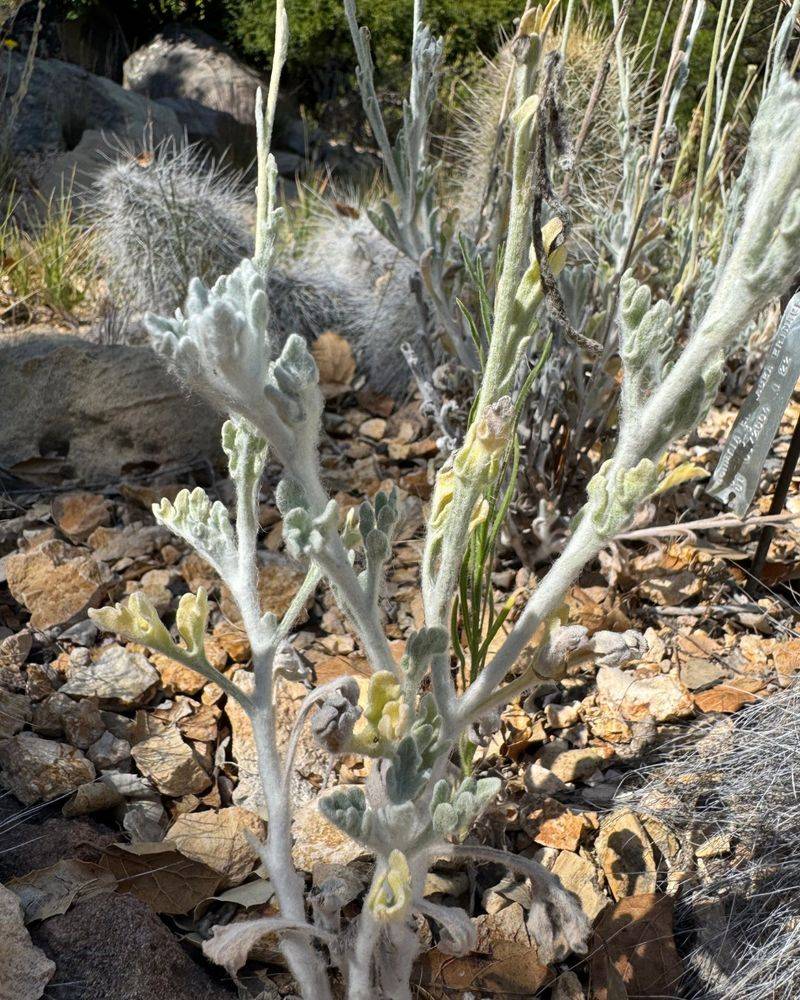
Look closely at a desert marigold leaf and you will notice something unusual. It has a soft, woolly texture with a silvery or grayish-green color.
That coating is not just for looks.
Those tiny hairs on the leaf surface reflect sunlight. Less sunlight absorbed means less heat building up inside the plant.
It is a natural cooling system that took thousands of years to develop in harsh desert environments.
Moisture loss is a real threat in dry climates. Leaves without protection lose water fast through tiny pores called stomata.
Desert marigold’s fuzzy coating slows that process down, helping the plant hold onto moisture longer between waterings.
Compared to soft, glossy-leaved plants, desert marigold handles dry spells much better. Gardeners who forget to water for a week or two often find it still standing strong.
That kind of resilience is hard to find in most flowering plants.
Your Arizona Garden Changes Every Week. Your Plan Should Too.
Gardening in Arizona changes quickly throughout the season. Every Friday you’ll receive a simple weekly plan showing exactly what to plant, prune, fertilize, harvest, and protect so you never miss the right timing.
The silvery leaves also add visual interest on their own. Even when the plant is not in bloom, the foliage has a soft, attractive appearance that works well in desert-style landscaping.
Paired with rocks, gravel, or other native plants, the leaf color creates a natural, layered look that suits hot front yards in the Southwest region quite well.
3. Bright Yellow Flowers Add Color For Months
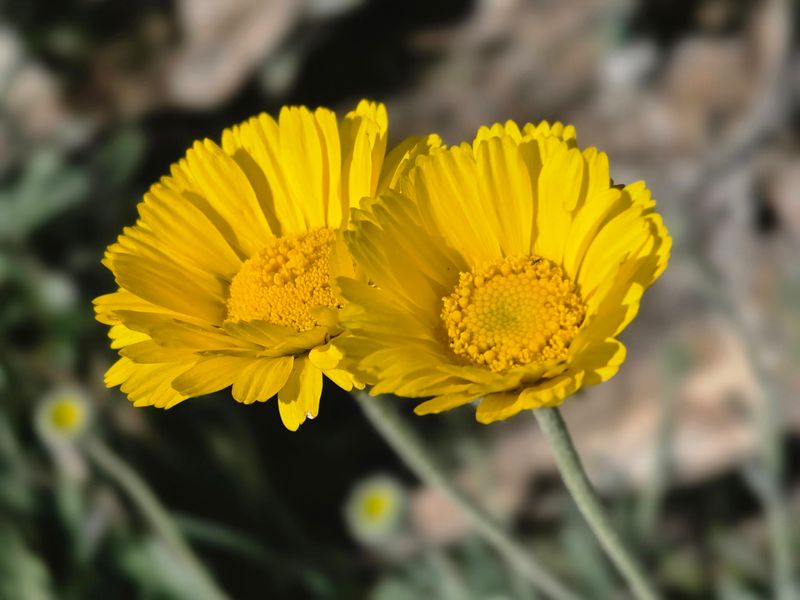
Yellow flowers covering a plant for months at a time is not something most gardeners expect from a low-maintenance native. Desert marigold delivers that without much effort on your part.
Blooming typically starts in spring and can continue well into fall under the right conditions. Some plants push out flowers even during summer heat waves, which is rare for flowering perennials in hot climates.
Each flower head is about an inch to two inches wide with bright yellow petals surrounding a small yellow center. The color is vivid and warm, making it stand out clearly against gravel mulch, pale soil, or adobe-colored walls.
Front yards often lack consistent color because most plants bloom briefly and then fade. Desert marigold solves that problem by producing wave after wave of blooms over a long season.
Removing spent flowers can encourage even more growth, though the plant will continue blooming with or without that step.
Mixing desert marigold with purple or blue flowering plants like salvia or verbena creates a strong color contrast that looks sharp all season. Yellow pairs naturally with those cooler tones.
Gardeners who want a yard that looks intentional and put-together often start with desert marigold as their base plant and build color combinations from there.
4. Low Water Needs Make It Easier To Maintain
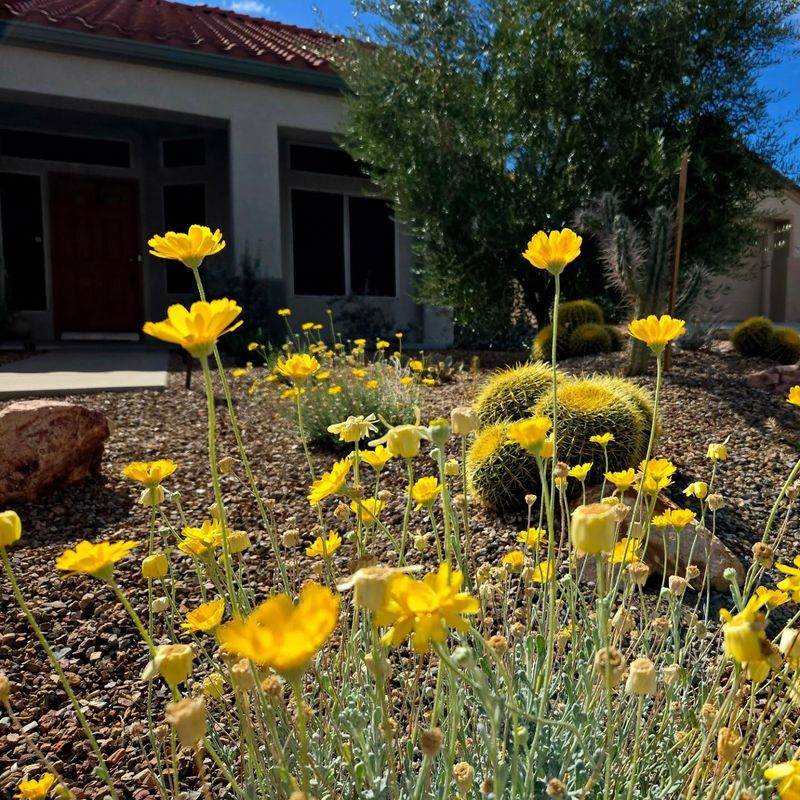
Watering schedules can become a real burden in hot climates. Some plants need water every other day just to survive summer.
Desert marigold is not one of those plants.
Once established, it can get by on rainfall alone in areas that receive at least 12 inches of rain per year. In drier spots, occasional deep watering every few weeks during the hottest months is usually enough to keep it healthy and blooming.
Deep watering beats frequent shallow watering every time with this plant. Letting water soak down encourages roots to grow deeper into the soil.
Deeper roots give the plant better access to moisture stored below the surface, which helps it handle dry spells more easily.
Overwatering is actually a bigger risk than underwatering with desert marigold. Soggy soil leads to root problems that can weaken or finish off a plant faster than drought stress.
Letting the soil dry out between waterings is the smarter approach.
Drip irrigation works well for desert marigold. Set it to run deeply but infrequently, and let the soil dry between cycles.
Gardeners who switch to this plant from thirstier options often notice a real drop in their water use. For anyone trying to cut down on outdoor water consumption, desert marigold is a practical and attractive choice worth considering.
5. Fast-Draining Soil Helps Plants Stay Healthy
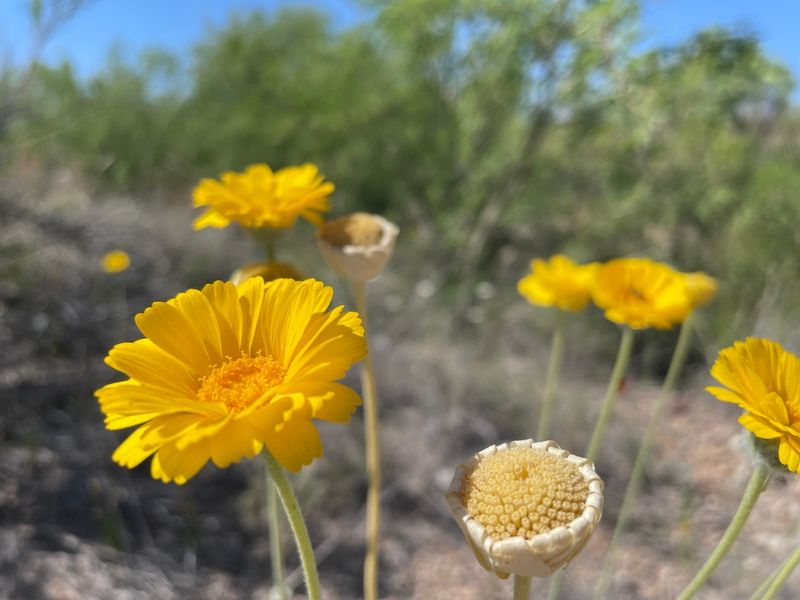
Soil drainage might not sound exciting, but it makes a huge difference for desert marigold. Put it in heavy clay soil that holds water and the roots will struggle.
Put it in sandy, gritty soil that drains fast and the plant takes off.
Desert marigold evolved in rocky, loose desert soils. Its root system is designed for that environment.
Water moves through quickly, air gets back into the soil fast, and roots stay healthy rather than sitting in moisture for too long.
Many front yards in suburban neighborhoods have compacted or clay-heavy soil from construction. Amending that soil with coarse sand, gravel, or decomposed granite before planting can improve drainage significantly.
A raised planting area also helps in spots where water tends to pool.
Gravel mulch on top of the soil serves two purposes. First, it keeps the soil surface from crusting over, which helps water penetrate more easily.
Second, it slows evaporation so the soil holds just enough moisture without becoming waterlogged.
Soil pH is another factor worth checking. Desert marigold prefers slightly alkaline to neutral soil, which is common in desert regions naturally.
Most native desert soils in the Southwest already fall within a range that suits this plant. If you are unsure about your soil, a basic test kit from a garden center can give you a clear starting point before planting.
6. Blooms Bring Pollinators Into The Yard
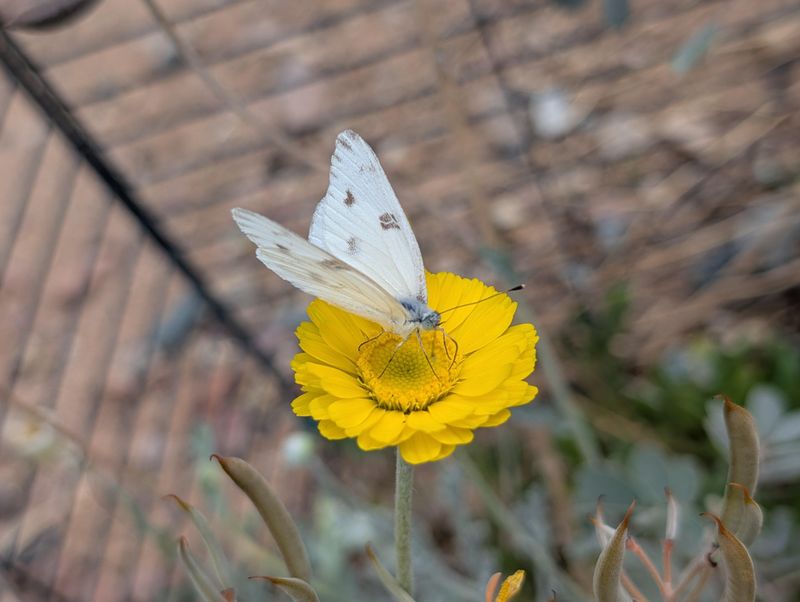
Pollinators need food sources, and desert marigold is one of the better native options for providing that. Bees, butterflies, and other beneficial insects are drawn to the bright yellow flowers from spring through fall.
Native bees in particular seem to favor desert marigold. They visit frequently and efficiently, moving from flower to flower across the plant.
Watching that activity up close is genuinely interesting, especially if you have kids who are curious about the natural world.
Butterfly species like painted ladies and sulfurs also visit the blooms regularly. Having a plant that attracts multiple types of pollinators adds life and movement to a front yard that might otherwise feel flat and quiet.
Pollinators are under pressure across many regions. Habitat loss and reduced food sources have affected their populations in measurable ways.
Planting natives like desert marigold gives them a reliable food stop without requiring any special effort from the gardener.
One practical benefit worth noting is that more pollinators in your yard can support nearby vegetable or fruit gardens. Better pollination generally leads to better production.
So planting desert marigold in your front yard might actually benefit whatever you are growing in the back. It is a simple choice that creates a small positive ripple through your entire outdoor space without adding any real cost or complexity to your routine.
7. Removing Spent Flowers Can Support More Blooms
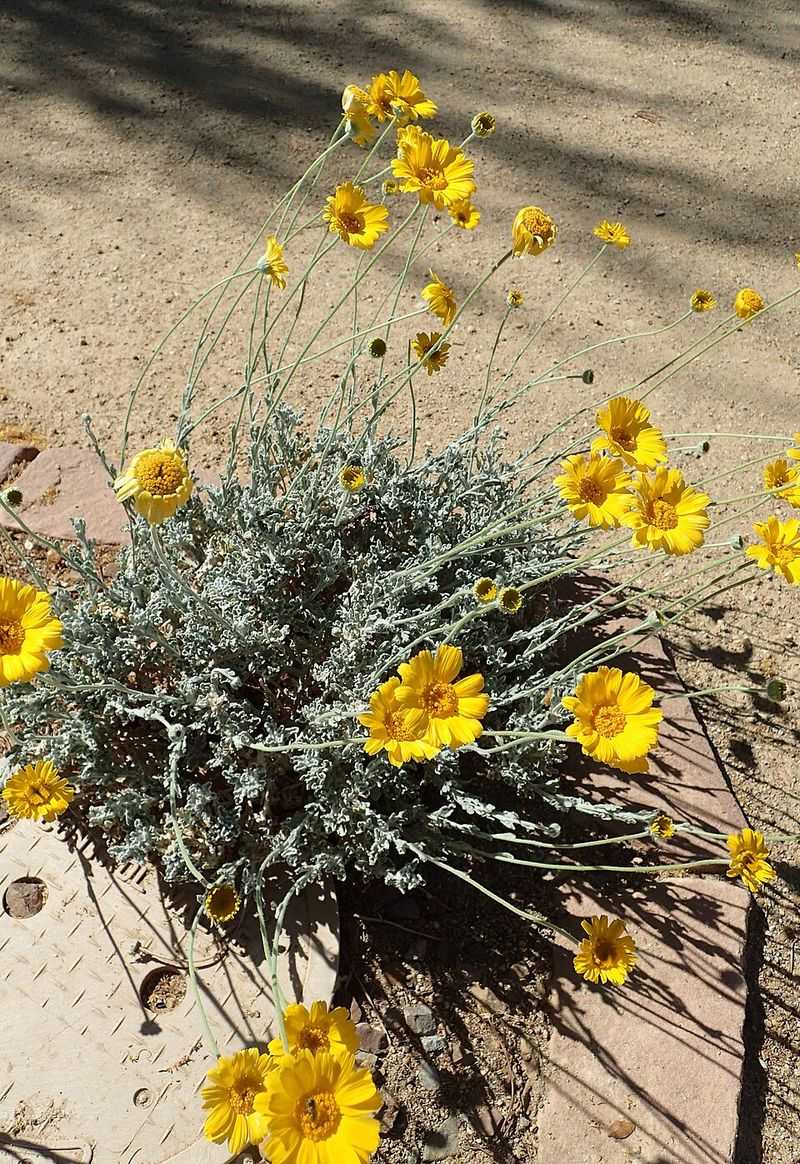
Spent flowers left on the plant eventually form seeds. Once a plant shifts its energy toward seed production, flower output tends to slow down.
Removing those faded blooms redirects energy back toward producing new ones.
Deadheading desert marigold is straightforward. Pinch or snip off the flower head once the petals start to fade and the center begins to dry out.
You do not need any special tools. Clean garden scissors or even your fingers work fine for most stems.
Doing this every week or two during the blooming season can noticeably extend the show. Plants that get regular deadheading often produce more flowers over the course of the season compared to those left completely alone.
That said, skipping deadheading is not the end of the world. Desert marigold will still bloom without it.
The plant is resilient enough to keep producing flowers even if you miss a few cycles. For gardeners who prefer low-effort maintenance, occasional removal is better than none at all.
Leaving some spent flowers toward the end of the season is actually beneficial. Seeds that fall to the ground can produce new plants the following year.
In Arizona, self-seeding desert marigold plants often pop up naturally around the base of established ones. Letting that happen means you get more plants without buying or planting anything extra.