Why Arizona Yards May See More American Kestrels This Fall (And How To Support Their Visits)
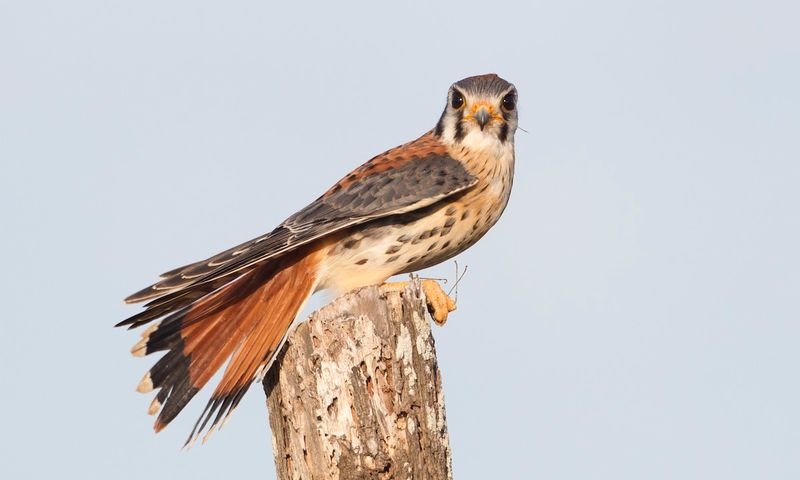
Each September and October, Arizona skies quietly shift as migratory raptors move through the desert Southwest, and one of the most colorful visitors is the American Kestrel. If you live in the Phoenix or Tucson area, fall is a reasonable time to watch for this compact falcon perching on a wire or hovering above an open patch of yard.
Knowing what draws them, how to recognize them, and how to keep your yard safe for occasional visits can make the season a little more rewarding for both you and the bird.
Why Arizona may offer more fall raptor sightings
Fall in Arizona brings a genuine shift in raptor activity, and September through October sits at the center of it. According to Arizona Game and Fish guidance on living with raptors, the state’s raptor populations generally increase during migration and winter, running from September through April, as northern birds arrive and some individuals move to lower elevations.
The agency specifically identifies September and October as the peak of autumn migration, which means Arizona open spaces, including suburban yards, may see more raptor activity during those two months than at almost any other time of year.
For the American Kestrel in particular, that seasonal pattern is real but not simple. Kestrels are partly migratory: birds nesting at higher latitudes or elevations tend to move south or downslope as days shorten and food becomes harder to find, while many populations in warmer southern areas remain in the same territory year-round.
The range map for American Kestrels in Arizona reflects this complexity, with some birds present through every season and others passing through only during migration windows.
Migration timing and distance depend on a combination of factors: food availability, weather, day length, geography, and local habitat conditions all play a role. A cold snap that pushes grasshoppers and rodents underground in northern Arizona can nudge resident birds toward lower desert areas, but the same conditions do not guarantee kestrel arrivals in every Phoenix or Tucson neighborhood.
Elevation matters too, since birds moving off the Mogollon Rim or the sky islands may appear at lower desert elevations in fall without traveling far at all.
The practical takeaway for Arizona homeowners is this: fall is a plausible time to spot an American Kestrel in or near your yard, particularly in open suburban areas with good sightlines. That possibility is worth watching for, even if it is not a promise that one will show up on your fence post by October 1.
How to recognize an American Kestrel in an Arizona yard
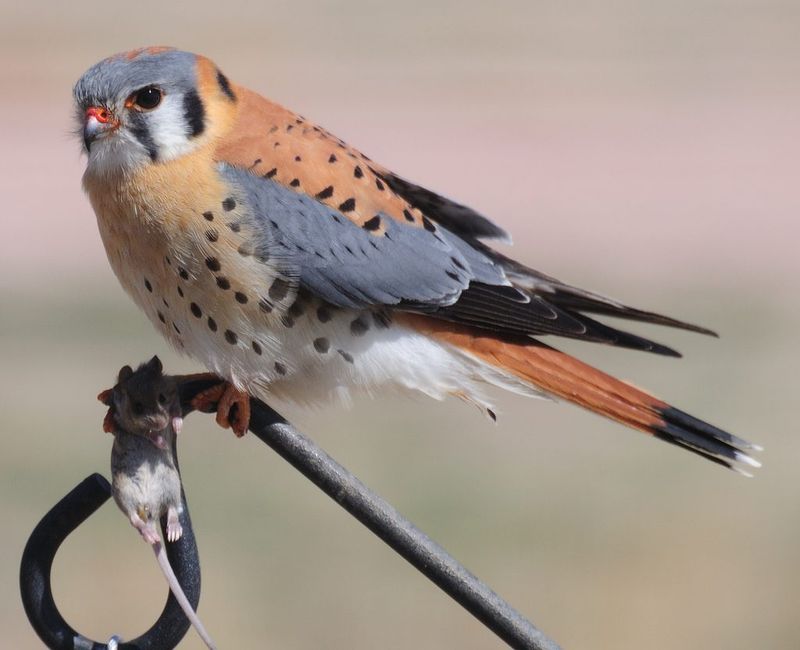
Arizona is home to several small falcons and hawks, and telling them apart matters before you start drawing conclusions about what a bird might be doing in your yard. The American Kestrel is the smallest falcon in North America, roughly the size of a large thrush, with a pointed falcon-wing silhouette and a notably long tail that it often pumps up and down while perched.
That combination of small body, pointed wings, and long tail separates it from most of the Cooper’s Hawks and Sharp-shinned Hawks that also cruise Arizona neighborhoods in fall.
Your Arizona Garden Changes Every Week. Your Plan Should Too.
Gardening in Arizona changes quickly throughout the season. Every Friday you’ll receive a simple weekly plan showing exactly what to plant, prune, fertilize, harvest, and protect so you never miss the right timing.
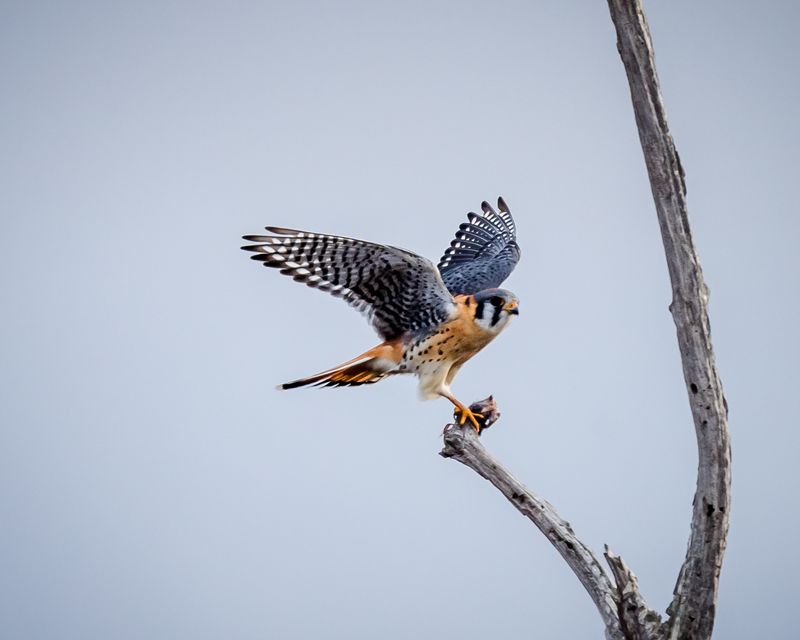
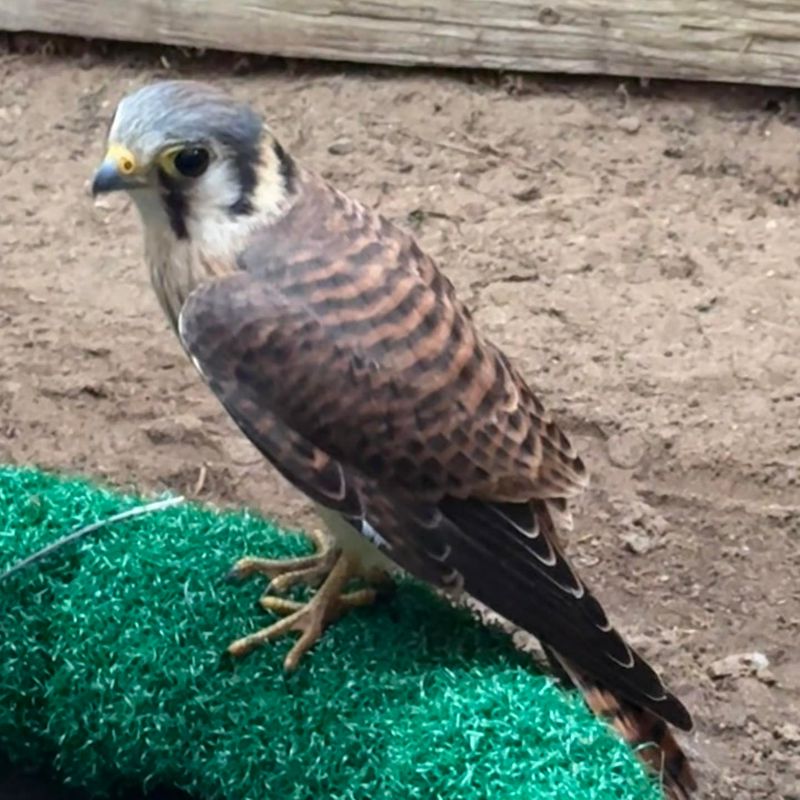
Coloration helps when you can see it clearly. A male American Kestrel carries blue-gray wings paired with a rusty-orange back and tail, making it one of the more striking birds you might spot on a wire or fence post.
Females are streaked brown overall with rusty barring, which can look more generic at a distance. Both sexes share a distinctive facial pattern with two vertical black marks on each side of a white face, visible through binoculars.
Behavior is often the fastest clue in an Arizona yard. Kestrels frequently hunt by hovering in place, facing into the wind with rapidly beating wings, while scanning the ground below for prey.
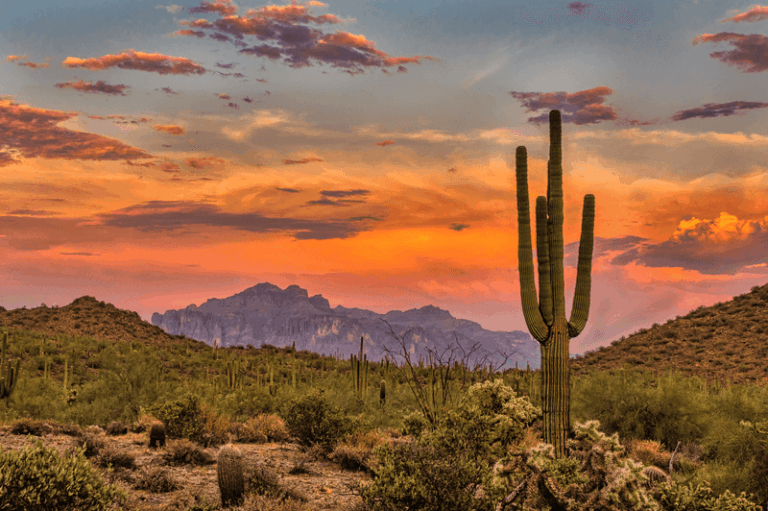
No other small raptor common to low-desert Arizona hovers as consistently or as conspicuously. They also favor exposed perches, utility wires, the top of a saguaro, a bare branch, or a fence post, where they can watch open ground below.
Getting the identification right before interpreting a bird’s presence matters. A Merlin or a small Cooper’s Hawk visiting your yard tells a different story than a kestrel, and acting on a misidentification, such as assuming a yard has a rodent problem because a raptor appeared, can lead you in the wrong direction.
What a kestrel may-and may not-do for Arizona pest control
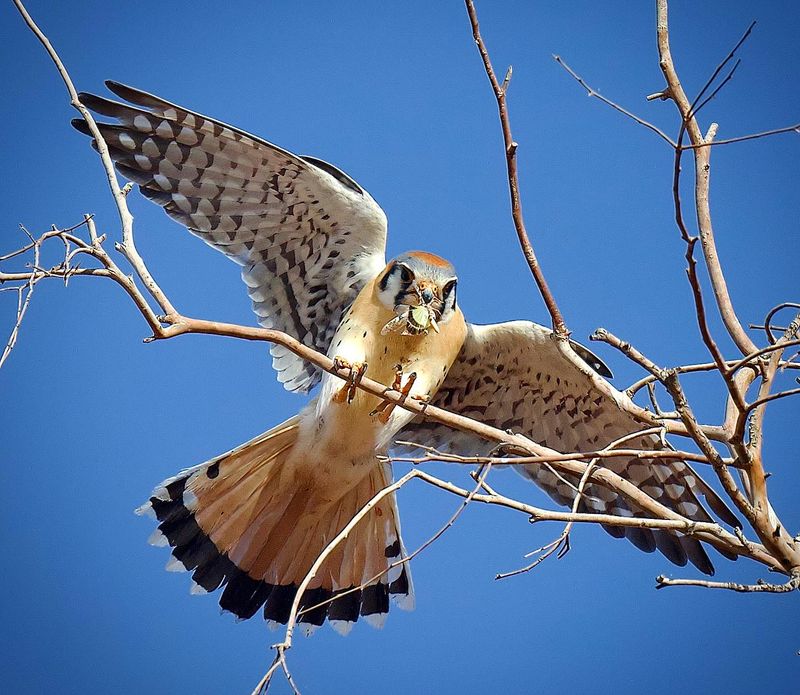
Watching a kestrel work a yard is genuinely satisfying, partly because the bird is beautiful and partly because it is hunting something. American Kestrels eat a wide range of prey, including grasshoppers, beetles, and other large insects, spiders, scorpions, small rodents, lizards, small snakes, frogs, and occasionally small birds.
In Arizona’s low desert, where grasshoppers and lizards are abundant in fall, a visiting kestrel is almost certainly hunting something real and nearby.
That varied diet means a kestrel can serve as a natural predator across several pest categories at once. A bird hunting your yard in September may take a scorpion one morning and a large grasshopper the next.
Where this gets complicated for Arizona homeowners is the gap between what a kestrel eats and what it actually controls. A single bird hunting a half-acre lot will take some prey items, but it cannot eliminate a roof rat colony, clear a scorpion population from a block wall, or provide the kind of consistent pressure that changes household pest numbers in a measurable way.
Kestrels are also not targeting your home specifically; they are hunting wherever prey is most accessible, and that might be your neighbor’s open lot one day and a nearby park the next.
Scorpions in particular deserve a realistic note. Kestrels do eat them, but no evidence supports treating a visiting bird as a substitute for sealing entry points, removing harborage, or using targeted scorpion control around the foundation.
Think of a kestrel’s pest-control contribution as a welcome ecological service from a wild neighbor, not a reliable household management strategy.
Make an Arizona yard usable with open space and safe perches
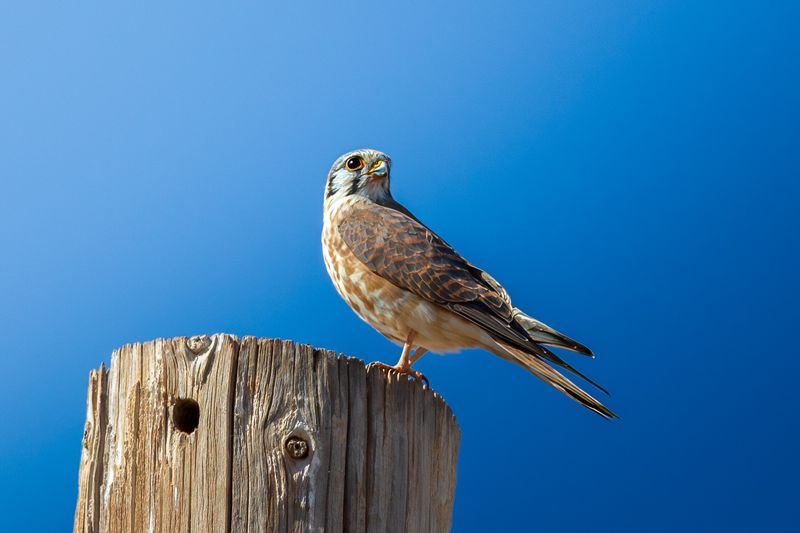
The single most useful thing an Arizona homeowner can do to support a kestrel visit is preserve some open ground with a clear sightline from above. Kestrels hunt visually, scanning from a height for movement below, so a yard packed wall-to-wall with dense shrubs or a patio cover that blocks the view from a perch is simply less useful to them.
Open desert-style landscaping with native ground cover, gravel, and scattered desert plants like palo verde or desert willow gives a hunting bird the sightlines it needs without requiring you to strip the yard bare.
A safe, elevated perch makes that open space usable. In natural Arizona habitat, kestrels regularly use the tops of saguaros, dead snags, fence posts, utility poles, and power lines as hunting platforms.
In a suburban yard, a sturdy wooden post set at a height of ten feet or more at the edge of an open area can serve the same purpose. Arizona Game and Fish identifies high perches and access to food and shelter as features that may support raptor use of a property, though no single feature guarantees a visit.
Perch placement matters in an Arizona yard. Position it away from windows that could cause collision risk, away from areas where cats or dogs roam freely, and away from high foot traffic that would make a bird uncomfortable landing.
A perch overlooking a relatively open patch of gravel or native ground cover, with some distance from the house wall, gives a kestrel a practical hunting platform without putting it in unnecessary conflict with household activity.
Water, food, and shelter features can support general wildlife use, but none of them reliably draw kestrels on their own. Preserve open hunting space and add a sturdy perch first; those two changes do more for a visiting kestrel than almost any other yard modification.
Treat a kestrel nest box as a long-term habitat project
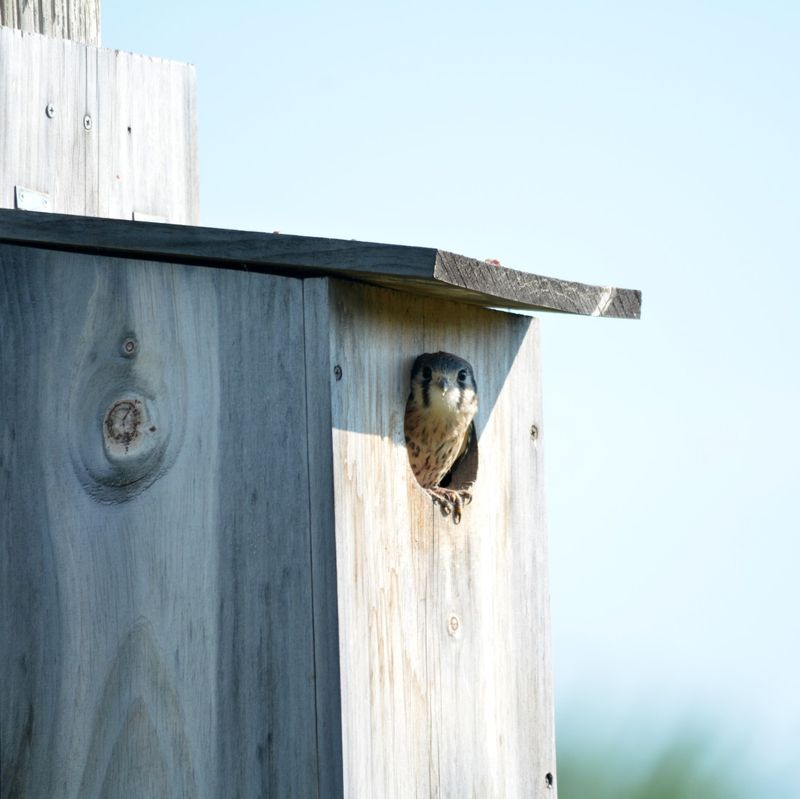
A nest box can expand the breeding habitat available to American Kestrels in Arizona by substituting for natural tree cavities, which kestrels cannot excavate themselves. When a property has open hunting ground, nearby perches, and enough space away from heavy human activity, a properly installed box gives a kestrel pair a ready cavity that might otherwise be scarce in a developed neighborhood.
The catch is that a nest box is primarily a breeding-season tool, not a way to attract a bird during fall migration. Installing one in October may eventually benefit a pair that discovers the box during a future breeding season, but it will not pull a migrating kestrel into your yard this September.
Several sources offer nest-box specifications, and the consistent points across them include a roughly 3-inch entrance hole, secure elevated mounting in or beside open habitat, nearby perches for the adult birds, drainage holes in the floor, ventilation near the top, and a design that allows for inspection and cleaning between seasons.
Recommended mounting heights vary by source. Some guidance suggests a minimum of about 10 feet, while other wildlife agencies recommend 10 to 20 feet or 15 to 20 feet as a general range.
The USDA’s nest-box plan for kestrels, developed as part of grasshopper integrated pest management work, emphasizes secure mounting and open surrounding habitat over any single required height. Avoid placing a box near busy windows, roads, or areas where pets have regular access, since fledglings that leave the box early are vulnerable at ground level.
Plan installation well ahead of the locally relevant breeding period rather than waiting until spring is already underway. The exact timing that applies to low-desert Arizona sites can vary, so checking with Arizona Game and Fish or a local birding group for site-specific guidance is a reasonable step.
Also accept that another cavity-nesting species, a small owl, a starling, or even a squirrel, may claim the box first. That outcome is not a failure; it just means the habitat is being used.
Control Arizona rodents with exclusion and sanitation
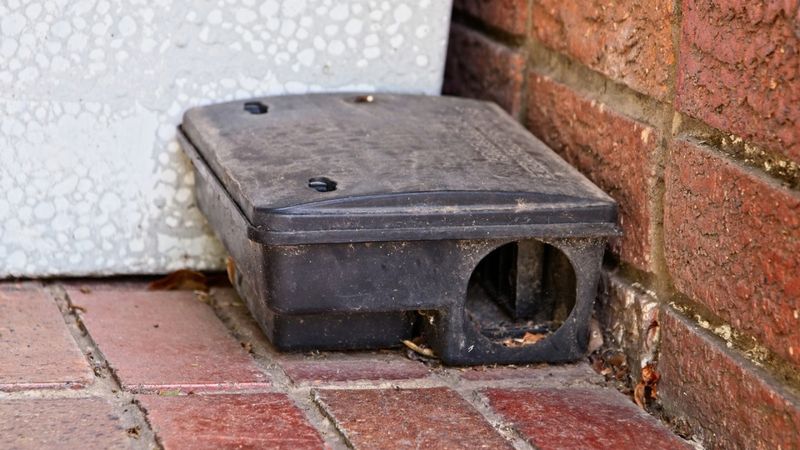
Roof rats, deer mice, and pack rats are real concerns in low-desert Arizona neighborhoods, and the appeal of a wild predator handling the problem is understandable. The trouble is that no visiting kestrel can substitute for the physical and sanitation work that actually keeps rodents out of a home.
Sealing entry points is the first and most durable step: gaps around pipes, weep holes in block walls, spaces under doors, and cracks in the foundation are all potential rodent access points that exclusion materials can close permanently.
Each of those steps directly reduces rodent pressure in ways that a hunting bird simply cannot replicate.
Rodenticides are a different matter entirely in an Arizona yard where raptors might be present. Poison bait kills rodents slowly, and a kestrel or other raptor that catches a poisoned rodent before it dies can absorb a dangerous dose of the toxin.
Second-generation anticoagulant rodenticides are particularly hazardous because a poisoned rodent may feed on bait repeatedly over several days before dying, accumulating residues in its body that then transfer to any predator that eats it. The EPA notes that non-target wildlife, including raptors, can be poisoned through this secondary exposure pathway even when the bait itself is physically inaccessible to pets and children.
Keeping rodenticides out of an Arizona yard where you want to support raptor visits is the safest and most consistent approach. Exclusion and sanitation address the source of the problem without creating a secondary hazard for the wildlife you are hoping to attract.
Protect kestrels from common Arizona yard hazards
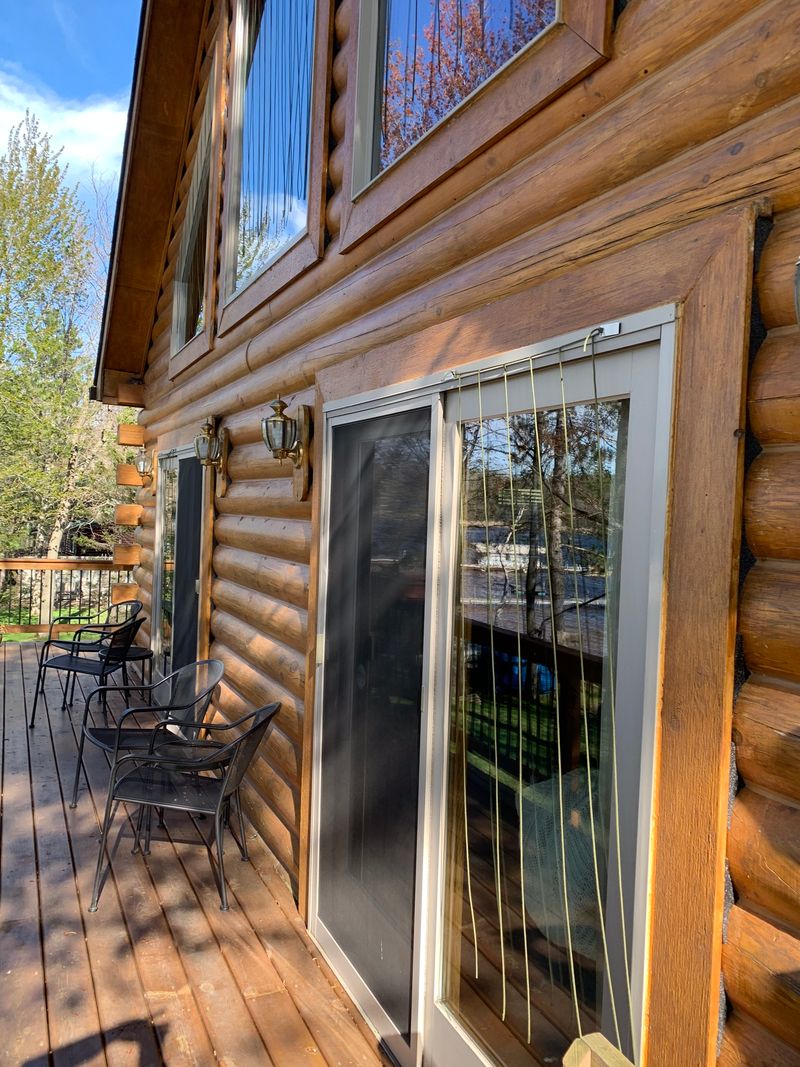
Welcoming a kestrel as an occasional visitor also means taking responsibility for the hazards a yard can create. One of the clearest is reflective glass.
Windows and sliding doors that mirror the sky or surrounding vegetation can cause a bird flying at speed to strike the glass without warning. Arizona Game and Fish recommends covering reflective windows with non-reflective cellophane, screening, or a similar material to break up the mirror effect and give birds a visible surface to avoid.
Placing a perch or any habitat feature near a large window increases the collision risk, so position those additions with the window layout in mind.
Small pets are a two-way concern during the September-through-April raptor period. A kestrel is small enough that a large cat or dog poses a real threat to it, particularly to fledglings that may spend time on or near the ground before they are fully capable fliers.
At the same time, a kestrel large enough to carry a very small animal could theoretically attempt an attack on a tiny pet. Arizona Game and Fish advises keeping small pets indoors or in roofed enclosures during the fall and winter raptor season, a step that protects both the bird and the animal.
Feeding wildlife and setting out birdbaths deserve careful thought in an Arizona yard. Placing meat, mice, or other prey outside to attract a kestrel is unsafe and unnecessary; kestrels hunt live prey and do not need supplemental feeding.
Bird feeders can indirectly increase raptor activity by concentrating doves, pigeons, and small songbirds in one area, but that concentration also raises disease transmission risks. Arizona Game and Fish specifically warns that birdbaths and concentrated bird activity can contribute to conditions that spread illness among birds, including trichomoniasis.
A birdbath is not a reliable kestrel attractant and may create problems that outweigh its benefits in a dense Arizona neighborhood.
The safest approach is to focus on habitat structure, open space, a well-placed perch, and a rodenticide-free yard, rather than food or water features that carry their own complications.
Know when to leave a kestrel alone and when to call for help
American Kestrels are protected under federal and state wildlife law, and that protection applies whether the bird is alive or dead. Picking up, transporting, or possessing a raptor without the required permits is illegal in Arizona, regardless of the intention behind it.
If you find a kestrel on the ground or in a situation that looks like trouble, the right first step is to observe from a distance rather than intervene immediately.
Fledglings on the ground are often mistaken for injured birds. Young kestrels leaving the nest for the first time may spend hours or even a full day at or near ground level before they are capable of sustained flight.
A bird that is alert, holding its body upright, and moving around on its own is likely going through a normal developmental stage. The most helpful thing you can do in that situation is keep cats, dogs, and curious people away from the bird and leave it alone.
The signs that actually indicate a problem are different: a bird that is fluffed up and lethargic, shaking or trembling, unable to stand or walk normally, or has a visible wound needs professional attention. Arizona Game and Fish advises calling a licensed wildlife rehabilitator for birds showing those signs rather than attempting to handle or house the animal yourself.
Contact information for Arizona wildlife rehabilitators is available through Arizona Game and Fish, and reaching out to that agency directly is the right path when you are uncertain.
Active nests containing eggs or nestlings should never be disturbed or removed. If a kestrel nest in a tree, a box, or a building cavity creates a conflict, direct that concern to Arizona Game and Fish or an authorized wildlife professional rather than handling it independently.
The population of American Kestrels has declined substantially in long-term survey records despite the species remaining widespread, which makes every successful nest worth protecting. The best thing a low-desert Arizona homeowner can offer a kestrel is a yard that is safe to visit and, if the habitat fits, safe to raise a family in.