Why Virginia Homeowners Are Removing Bradford Pear Trees
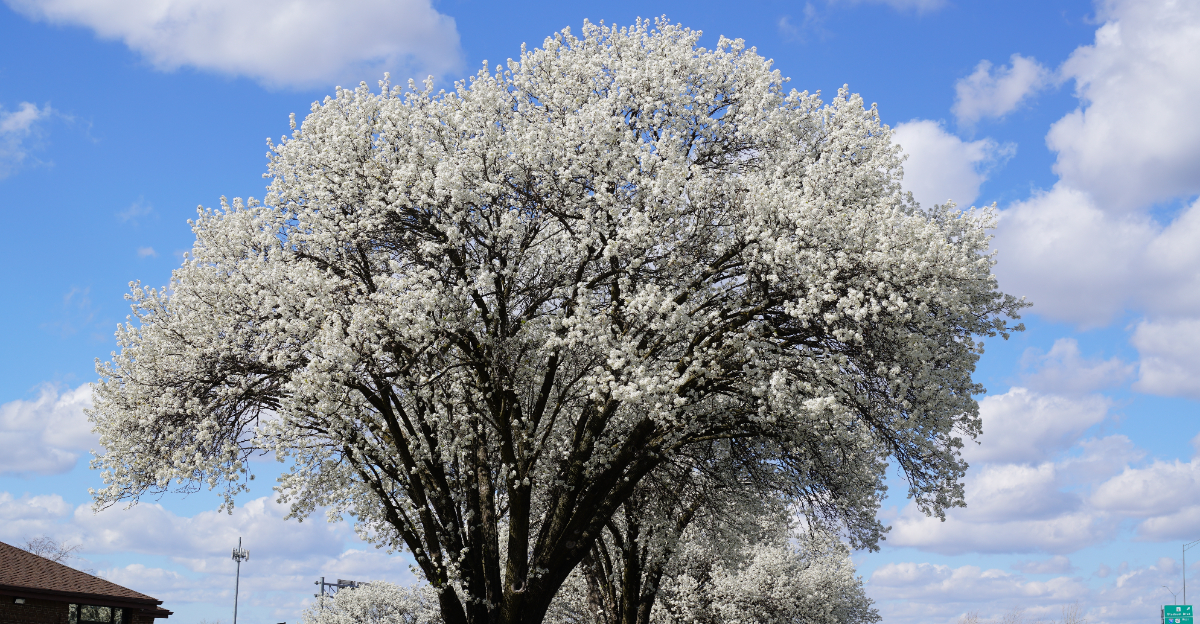
You notice those white blossoms crowding every Virginia street. Builders sold you a shortcut tree instead of a real option back then. Your neighbors believed that convenient promise without asking real questions.
Chainsaws now answer loudly for that early mistake in your yard. Nobody warned you about the unpleasant smell hiding inside those white blooms. Something quietly weakens at the very core of every tree you admire.
Branches near you can snap suddenly when strong wind hits. Birds carry its seeds far beyond your quiet fence line. Wild pear thickets now spread across quiet roadsides near you.
Arborists field steady calls about your struggling trees. Science finally confirmed what your gut had already suspected. Virginia extension experts stopped recommending this tree to you.
Homeowners like you want something sturdier than a pretty facade. Smarter native trees are replacing the ones you planted. Here’s why you’re about to lose yours too.
1. Brittle Branches Split Apart Easily
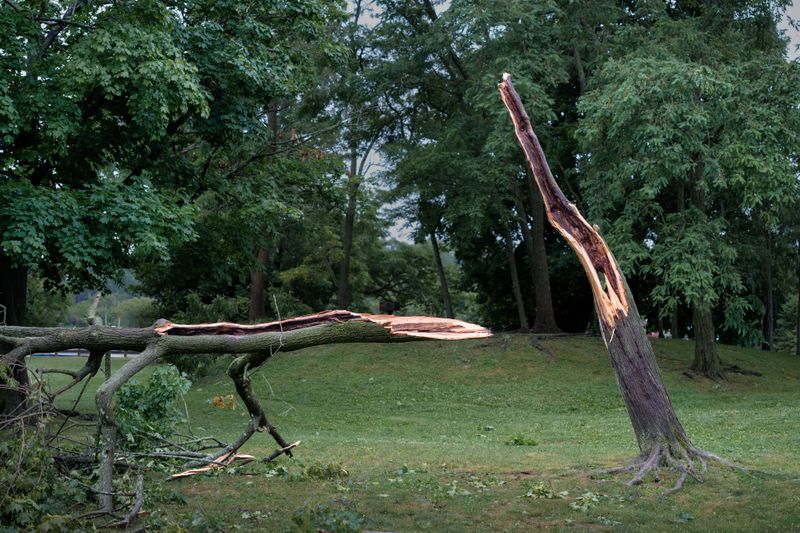
Picture this: a calm Sunday morning, coffee in hand, and then a loud crack from your backyard. Bradford pears are known for splitting along the trunk without much warning.
The problem starts with their structure. These trees grow multiple large branches from one central point, called a narrow crotch angle. That tight cluster creates serious pressure as branches get heavier each year.
Wood experts call this a co-dominant stem problem. Two or more trunks compete for the same space, and neither one wins gracefully. Eventually, the whole thing gives way under its own weight.
You do not even need a storm for the damage to happen. Heavy snow or strong wind can cause limbs to break and fall onto nearby structures.
Arborists across the Mid-Atlantic region consistently rank Bradford pears among the most structurally dangerous ornamental trees available. Their appeal often outweighs the practical drawbacks, at least at first.
Once a major limb falls, the rest of the tree often follows within a few seasons, making early removal the smartest financial move a homeowner can make.
2. Invasive Seedlings Spread Into Wild Areas
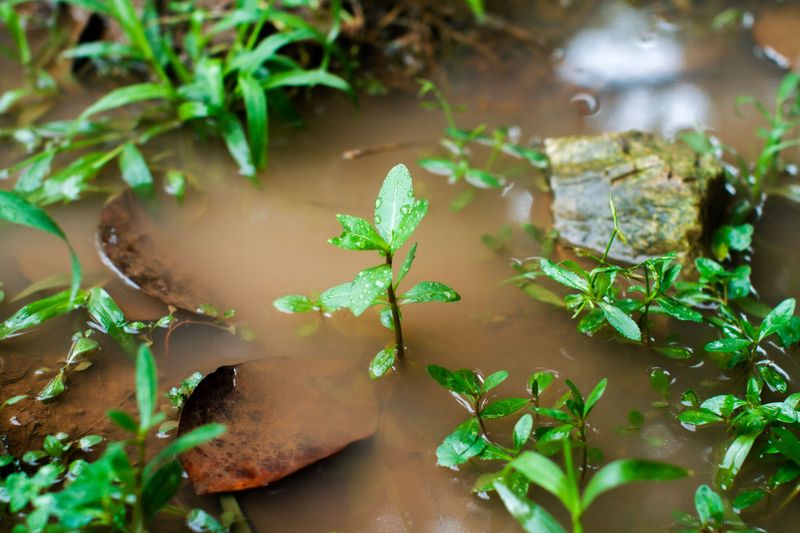
Bradford pears were supposed to be sterile. That was the whole selling point back when nurseries first pushed them on suburban buyers. Nobody told the bees.
When bees cross-pollinate Bradford pears with other Callery pear varieties nearby, the trees produce fertile seeds. Birds eat those small fruits and fly off, dropping seeds into fields, roadsides, and forest edges across the state.
Those seeds sprout into wild Callery pears that are nothing like the neat ornamental version in your yard. They grow thorny, aggressive, and dense, forming thickets that crowd out native wildflowers, grasses, and shrubs.
Hikers in Shenandoah foothills have noticed these dense thorny thickets spreading across open meadows.
Virginia’s Department of Conservation and Recreation lists Callery pear as an invasive species with a moderate-to-high invasiveness rank. That designation means it actively threatens native ecosystems, not just looks a little out of place.
Once established, these thickets are incredibly difficult to remove without heavy machinery or repeated herbicide treatments.
Your Virginia Garden Changes Every Week. Your Plan Should Too.
Gardening in Virginia changes quickly throughout the season. Every Friday you’ll receive a simple weekly plan showing exactly what to plant, prune, fertilize, harvest, and protect so you never miss the right timing.
Every Bradford pear left standing in a neighborhood is essentially a seed factory for the surrounding landscape. Choosing to remove one is not just a personal yard decision.
It is a small but meaningful act of ecological responsibility that benefits the wild spaces everyone loves to enjoy on weekends.
3. Foul-Smelling Blooms Bother Nearby Residents
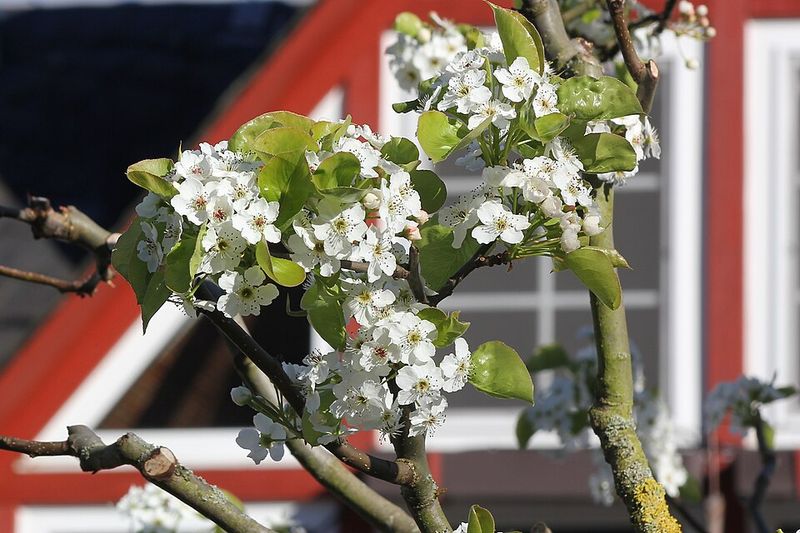
Spring arrives, the Bradford pear bursts into white blossoms, and then the odor becomes noticeable. Neighbors have compared it to rotting fish, old gym socks, and things even less printable in a family article.
The odor comes from trimethylamine and other compounds released by the flowers. These chemicals are the same ones responsible for the smell of decay in animal matter. Nature uses them to attract flies and beetles as pollinators instead of bees.
For two to three weeks each spring, entire streets can carry that unpleasant scent. Opening windows for fresh air becomes impossible when a row of Bradford pears lines the block.
Outdoor gatherings get relocated or cancelled entirely because of the overwhelming stench.
People with sensitive noses or respiratory issues report headaches and nausea during peak bloom. Children playing outside sometimes come in early just to escape the smell.
It sounds dramatic until you have actually stood downwind of a mature Bradford pear in full flower.
The smell is commonly cited as one of the main reasons homeowners decide to remove the tree. Homeowners tolerate the structural risk and the invasive spread for years, but the annual stink is often the breaking point.
Once a neighbor cuts theirs down and the spring air suddenly smells like spring again, everyone else on the block starts reconsidering their own trees pretty quickly.
4. Weak Wood Snaps During Storms
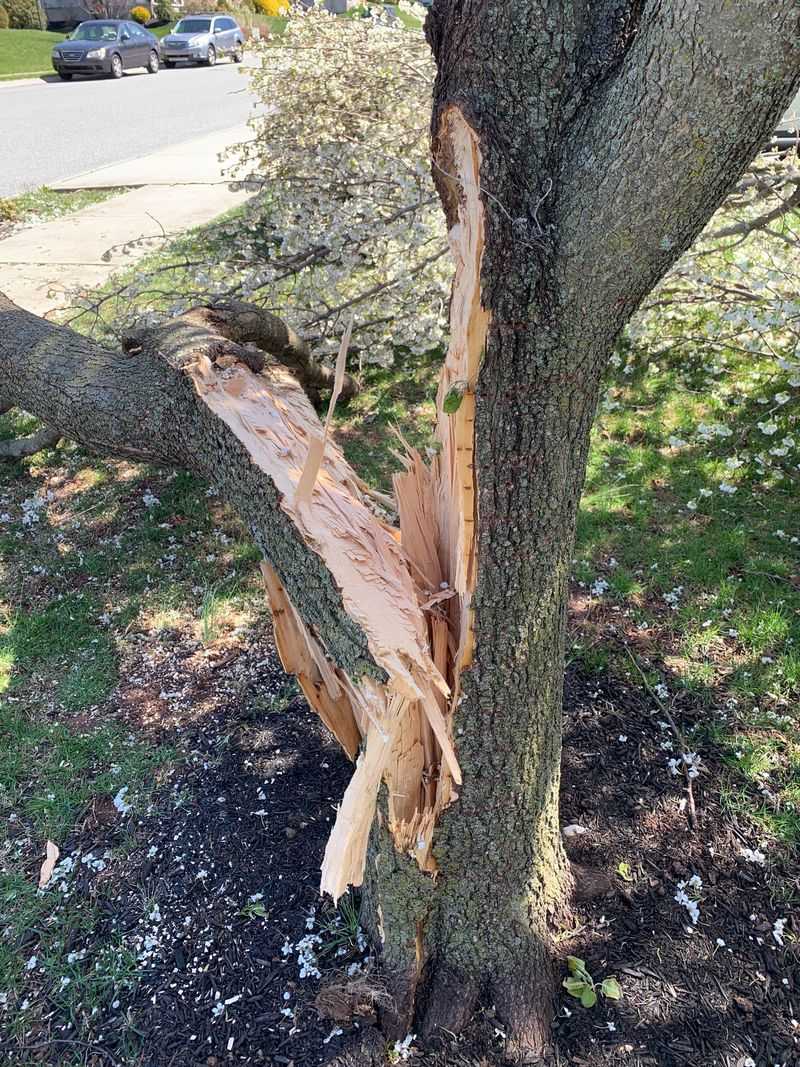
Storm season in Virginia is no joke. Thunderstorms roll through fast, and the trees left standing are the ones built to withstand stress. Bradford pears are not built to withstand stress.
The wood itself is relatively soft and brittle compared to native hardwoods like oak or hickory. When a fast-moving storm hits with strong wind gusts, Bradford pear limbs become projectiles. Fences, vehicles, and siding all absorb the impact.
Property damage linked to Bradford pear limb failure is a documented risk. State foresters recorded widespread breakage among Callery pears during a 2021 ice storm, more than any other tree species. Bradford pear damage claims spike after every major storm season.
Homeowners in some Virginia neighborhoods have reported storm damage to fences, roofs, and decks caused by falling Bradford pear limbs.
The narrow branch angles mentioned by arborists make this worse during wet weather. Rain adds significant weight to already-stressed limbs.
A branch that looked perfectly fine on a dry Tuesday can split off completely by Wednesday morning after a soaking overnight storm.
Removing a Bradford pear before a storm hits costs a fraction of what post-storm cleanup and repairs will run. Professional tree removal costs vary widely depending on tree size and location.
That investment looks very reasonable when compared to a crushed car or a damaged roof that insurance may not fully cover.
5. Short Lifespan Limits Long-Term Value
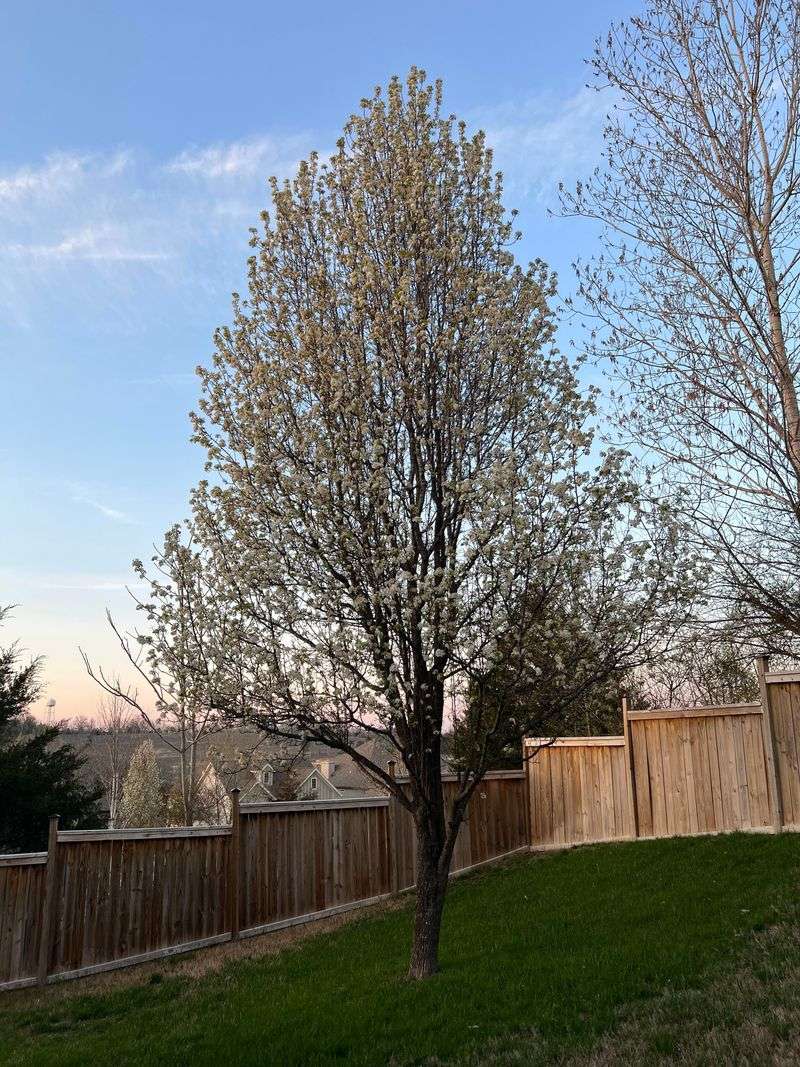
Most trees planted in a yard are meant to last generations. Oaks grow for centuries. Maples shade grandchildren and great-grandchildren alike. Bradford pears tap out around 20 years old.
That short lifespan is not just a minor inconvenience. It means the tree a builder planted when your neighborhood opened is already approaching the end of its useful life. Decline sets in fast, and the visual appeal fades even faster than the structural integrity.
As Bradford pears age, they become increasingly hollow at the core. Fungal infections move in, cankers form on branches, and the once-dense canopy starts looking thin and patchy.
The tree that impressed buyers at an open house becomes a liability within two decades. Replacing a tree every 20 years is also expensive in time, money, and effort.
A native redbud, serviceberry, or river birch planted today can provide shade, wildlife habitat, and visual beauty for 40 to 80 years with proper care. The math strongly favors planting something with real staying power.
Nurseries that once promoted Bradford pears as low-maintenance miracles rarely advertise them that way anymore.
The short lifespan became impossible to ignore as neighborhoods planted in the 1980s and 1990s started showing mass decline simultaneously.
Block after block of struggling, visibly declining Bradford pears finally convinced even the most loyal fans that this tree was never the long-term investment it was marketed to be.
6. State Programs Now Offer Removal Incentives
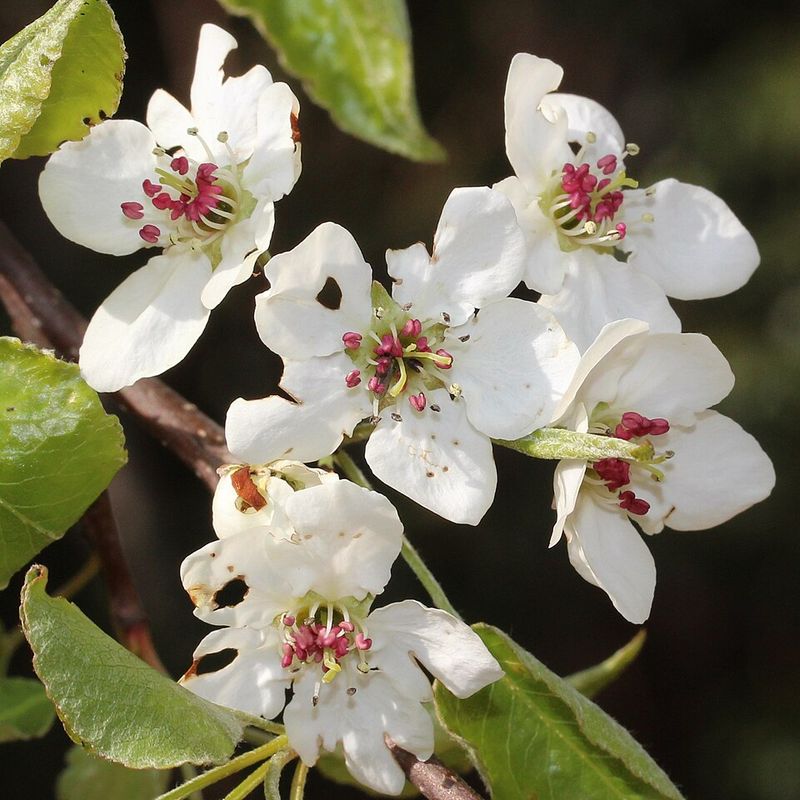
Here is something most Virginia homeowners do not know: the state will actually help pay to remove Bradford pears. Several programs now offer free replacement trees or direct removal assistance to qualifying residents.
The Virginia Department of Forestry runs the Callery Pear Exchange Program, offering residents a free native replacement tree for every Callery pear they remove from their own property.
The program became so popular that trees ran out quickly during its first seasons. Demand showed just how ready people were to make the switch once a financial incentive appeared.
Local municipalities have joined the effort as well. Community groups in regions like New River Valley partner with local nurseries to offer their own native tree exchanges.
A homeowner who qualifies can receive a free native replacement tree, though removal costs are typically the homeowner’s own responsibility.
Local extension offices can often provide guidance on tree removal and replacement programs.
Master Gardener volunteers often help neighbors navigate the paperwork and identify which native species suit their specific yard conditions. The process is simpler than most people expect.
Taking advantage of these programs is one of the smartest moves a Virginia homeowner can make right now. The combination of free removal help and a free native replacement tree turns a potentially costly project into a low-cost upgrade.
Bradford pears are getting ripped out faster than ever partly because the state made saying yes incredibly easy.
7. Native Alternatives Provide Better Wildlife Support
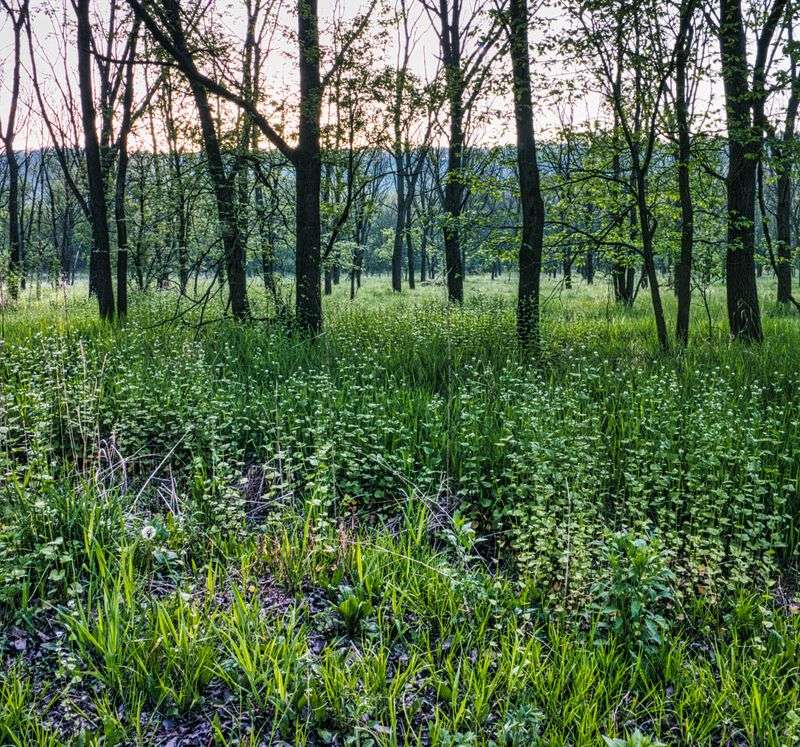
Swap out a Bradford pear and suddenly your yard becomes a neighborhood wildlife hub. Native trees offer food, shelter, and nesting spots that ornamental imports simply cannot match.
Eastern redbud bursts into pink flowers before its leaves even open, feeding early pollinators when little else is blooming.
Serviceberry produces small fruits that birds absolutely love, drawing in cedar waxwings, robins, and bluebirds through late spring and summer. Both trees stay compact enough for most suburban lots.
Native oaks support over 500 species of caterpillars alone, according to entomologist Doug Tallamy’s research. Those caterpillars feed nesting birds raising their young in spring.
A Bradford pear supports almost none of that food web activity, providing minimal ecological value.
Flowering dogwood brings four-season interest with spring blooms, summer foliage, fall color, and bright red berries that persist into winter.
River birch adds texture and peeling bark that looks beautiful even when bare. Both species are widely available at Virginia nurseries and garden centers.
Choosing a native replacement is not just an environmental gesture. It changes how your yard feels and functions every single season.
Mornings become livelier with birdsong, evenings fill with fireflies, and pollinators work your garden harder than ever before.
Bradford pears are getting ripped out across Virginia yards partly because homeowners discovered that what replaces them offers more ecological and seasonal benefits.
8. Overplanting Created Monoculture Street Trees
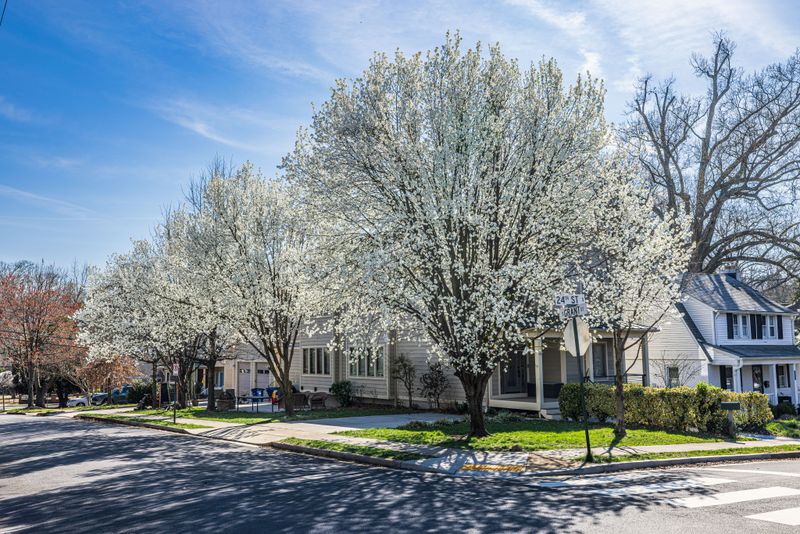
Drive through almost any Virginia suburb built between 1970 and 2005 and the pattern jumps out immediately. Same tree, same spacing, same shape, block after block after block. That reflects a lack of species diversity, which increases long-term risk.
When one species dominates a street tree population, a single disease or pest can significantly reduce an entire neighborhood’s tree canopy.
The emerald ash borer already proved this point clearly with ash trees. Bradford pears set up the same fragile situation in thousands of Virginia communities.
Municipal planners in the mid-20th century loved Bradford pears because they were cheap, fast-growing, and uniform. Developers planted them by default because nurseries had them in bulk.
Nobody thought about what a street lined with 200 identical trees would look like when all 200 started declining at the same time.
Urban foresters now recommend planting no more than 10 percent of any street tree population with a single species. Diversity protects the entire canopy from catastrophic loss.
A mix of native oaks, maples, dogwoods, and cherries creates resilience that a Bradford pear monoculture never could.
Cities like Virginia Beach have already begun targeted removal of Bradford pears from public rights-of-way. The shift is slow but steady, driven by the hard lessons that monoculture planting always teaches eventually.
Bradford pears are getting ripped out because communities finally learned that variety is not just beautiful; it is survival.