Why Callery Pear Trees Are Still Everywhere In Ohio Even After The Sale Ban
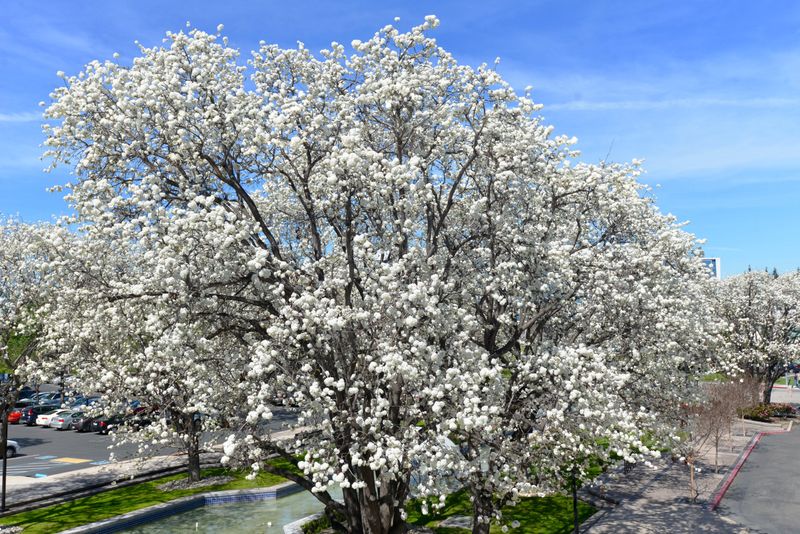
A tree that was banned from sale in Ohio still covers entire highway medians in white every April. Not going to lie, the first time I learned that, I drove past a blooming roadside thicket and laughed out loud.
Those bright clouds of flowers show up before almost anything else wakes up. Up close, the blossoms carry a sharp, funky smell that many people compare to old fish. Once you notice it, you can’t stop noticing it.
Truth be told, I used to admire these trees. They looked tidy, grew fast, and gave a gray March yard some much-needed cheer. I had no idea how much trouble was hiding inside those tiny fruits.
So why would a tree that nobody can legally plant anymore keep popping up in ditches, fields, and forest edges? The answer has more to do with birds, seeds, and old yards than you’d guess.
Those White Pear Blossoms Along The Highway Have A Head Start
Every spring, I play a little game on long drives. I count the white trees along the road. By the second exit, I usually give up because there are too many.
That flood of white blossoms comes from Callery pear, the tree many folks know as Bradford pear. It flowers in late March or April, often weeks before oaks, maples, and most native trees leaf out. That early timing makes it stand out like a spotlight against brown woods.
Here’s the twist. The Ohio sale ban stopped new trees from entering the market, but it did nothing to the millions already growing. Decades of planting gave this tree a massive head start in neighborhoods, parking lots, and business parks.
Those older trees keep flowering and fruiting each year. Their offspring have already escaped into fields and roadsides, where nobody planted them at all. Many of the trees you see along highways today are wild seedlings, not landscape trees.
So the ban works more like closing a faucet than draining a full bathtub. The water stops pouring in, yet the tub stays full for a long time. Spotting that difference helps you understand why change feels slow, even when the law is doing its job.
Ohio’s Bradford Pear Ban Left Existing Yard Trees Standing
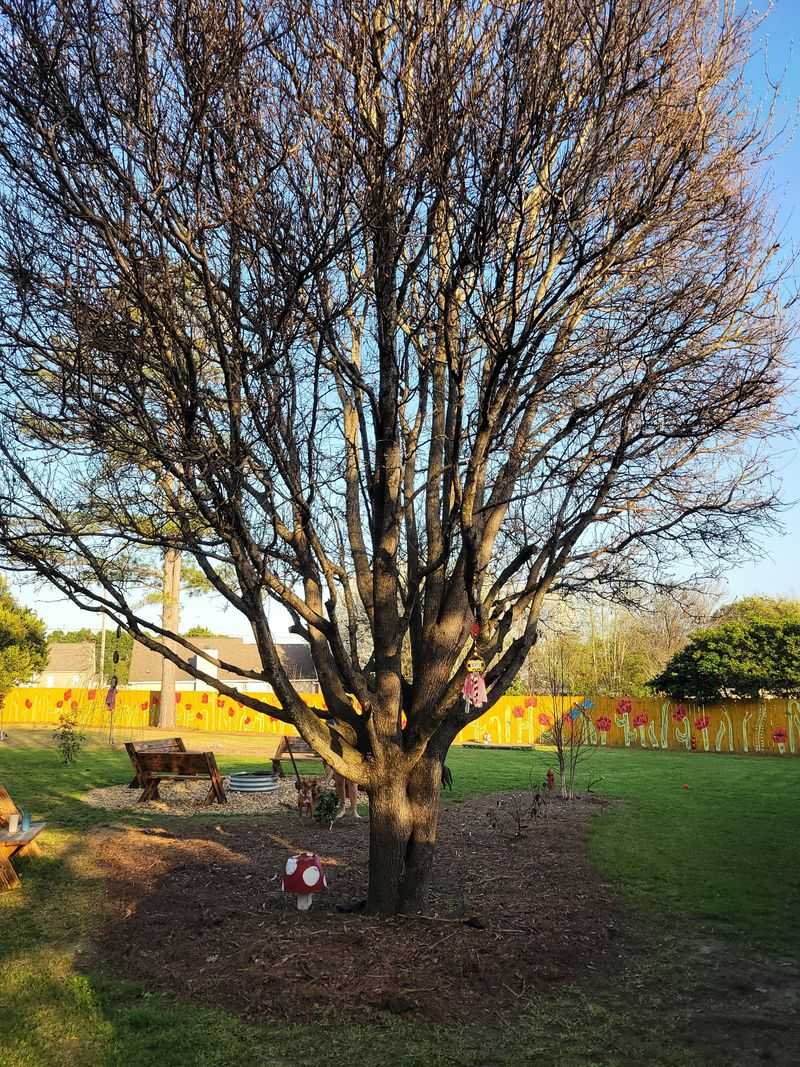
Okay, a quick history lesson. The Ohio Department of Agriculture added Callery pear to its invasive plant list in 2018. Sellers got a five-year grace period to clear out stock.
Starting January 1, 2023, it became illegal to sell, propagate, or plant Callery pear in the state. That covers popular cultivars like Bradford, Cleveland Select, Aristocrat, and Chanticleer. Ohio became one of the first states to take this step, and others like Pennsylvania and South Carolina have followed with their own rules.
The law has one big gap that surprises people. Homeowners do not have to remove trees already growing on their property. If your yard has a pear planted back in 2005, it can legally stay right where it is.
That choice made sense from a practical view. Forcing removal would have meant huge costs for families, towns, and businesses. Still, every one of those standing trees can keep producing seeds.
So when you see a pear blooming in a front yard, nobody is breaking any rule. The owner simply hasn’t removed it yet. That single detail explains a big share of why these trees remain such a familiar sight.
Mixed Pear Cultivars Cross Pollinate And Make Fertile Seeds
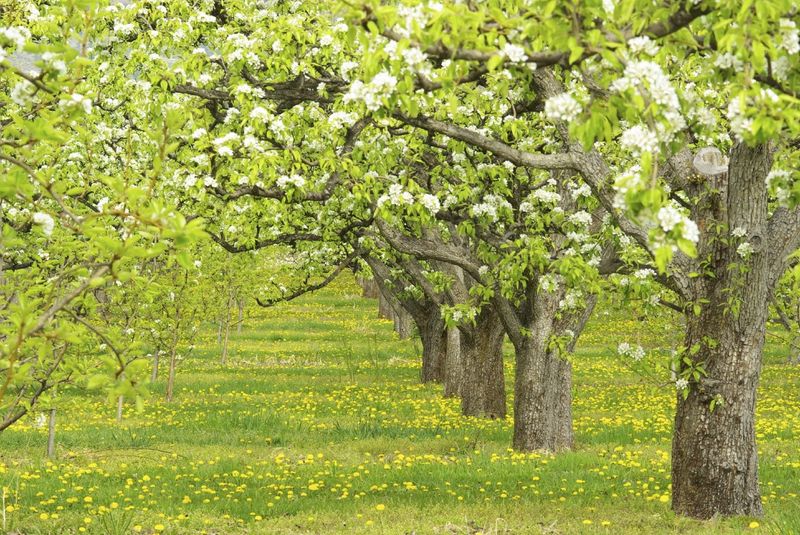
For years, nurseries promised that Bradford pears were sterile. Many gardeners, including me, believed it. Sadly, that promise only told half the story.
A single Callery pear cultivar can’t pollinate itself well. A Bradford next to another Bradford usually sets little fruit. The trouble started when growers introduced new cultivars like Cleveland Select and Aristocrat to fix the Bradford’s weak branches.
Once different cultivars grew near each other, bees and other insects carried pollen between them. That cross-pollination produced plenty of fertile seeds. Rootstock sprouts at the base of grafted trees added even more genetic variety to the mix.
Researchers in Ohio and other states have tracked how quickly wild pear populations grew after this mixing began. The trees spread rapidly in many areas once fertile seed became common. What started as a neat street tree turned into a seed machine.
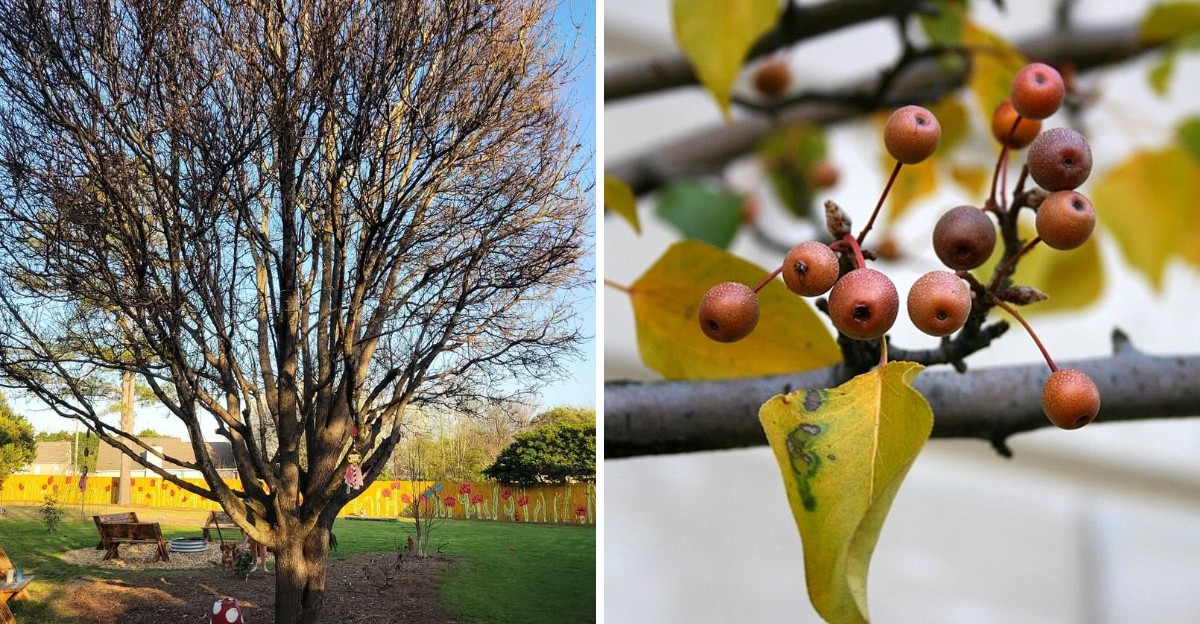
Here’s a practical tip from my own yard walks. If you see small brown fruits hanging on a pear in fall, that tree is making seeds. Knowing which trees are fruiting helps you decide which ones to remove first, since those are the ones feeding the spread.
Birds Snacking On Tiny Pear Fruits Plant Trees Miles Away
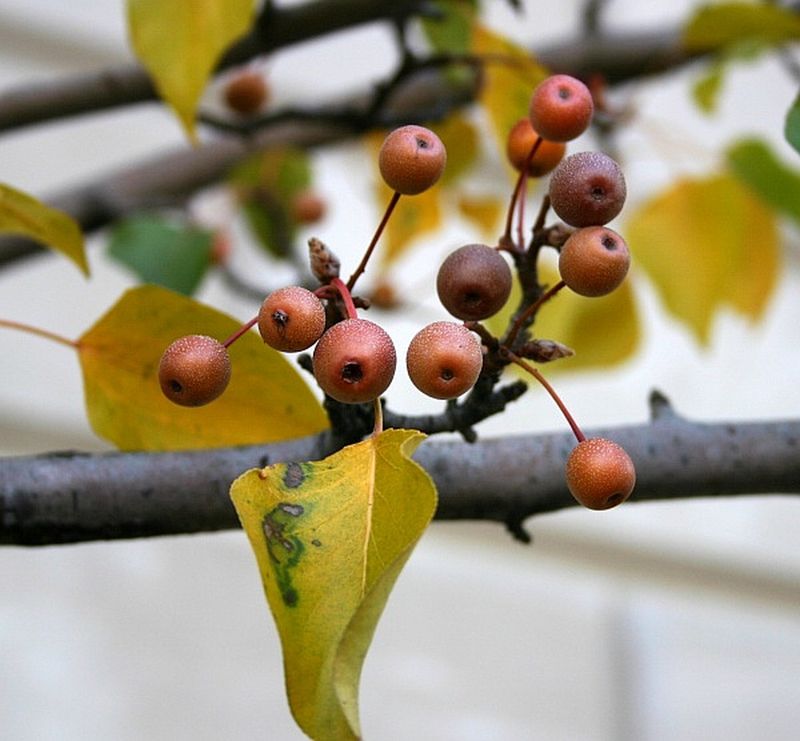
Guilty as charged, I once thought those little pear fruits were harmless. They’re about the size of a pea or small marble and look like nothing special. Birds see them very differently.
The fruits stay hard and bitter through early fall. After a few frosts, they soften and become easier to eat. Starlings, robins, and other birds gobble them up during the lean months of late fall and winter.
The seeds pass through the birds and land wherever they perch. Fence lines, power lines, and woodland edges get a steady sprinkle of new seeds. That explains why pear seedlings often appear in long straight rows under wires along fields.
This bird-powered delivery service means new trees can sprout far from any planted parent. A single fruiting yard tree can seed land you’ll never visit. The sale ban can’t stop that movement once trees are already fruiting.
Want to help? Check pear trees on your property in October and November for fruit clusters. Removing fruiting trees cuts off the supply birds rely on. Planting native fruiting shrubs like serviceberry or winterberry gives those same birds a better meal instead.
Thorny Wild Pear Thickets Crowd Out Native Meadow Plants
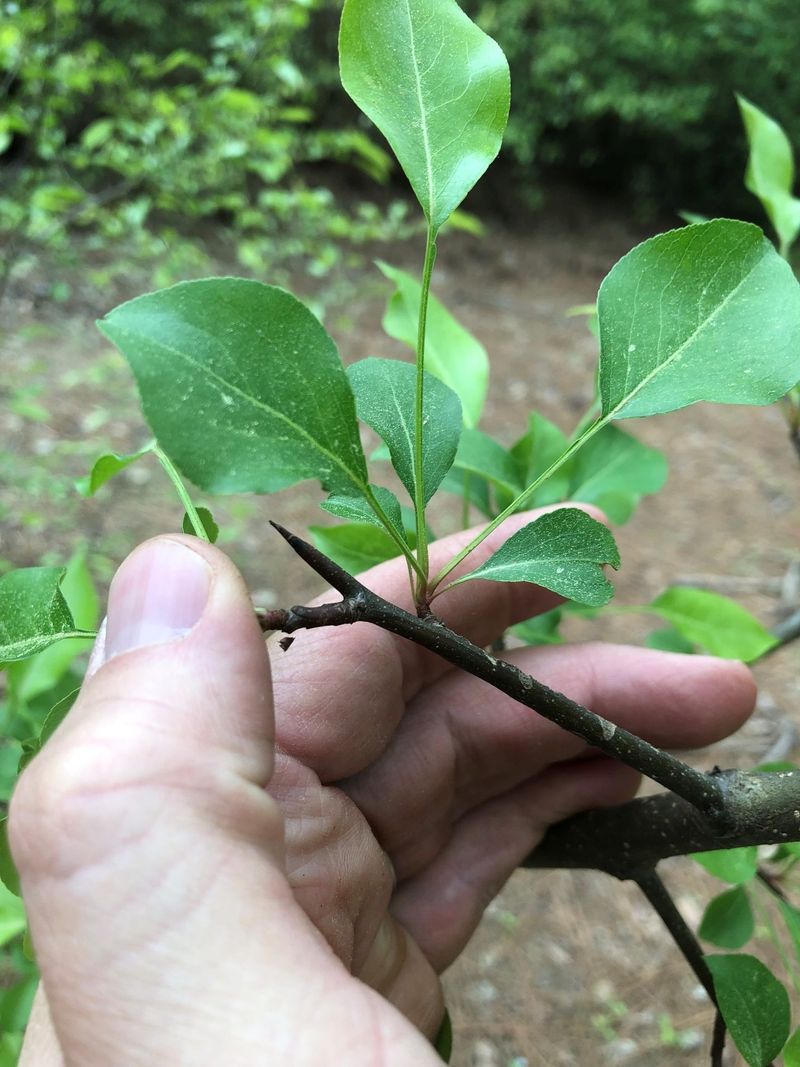
Ask anyone who has mowed a fallow field in southern Ohio. Wild pears can poke right through tractor tires. Those thorns are no joke.
When Callery pear seeds grow on their own, the young trees often look different from tidy landscape cultivars. Many develop stiff, sharp thorns that can reach a few inches long. They also grow fast and handle poor, compacted soil without complaint.
In old pastures, reclaimed mine land, and roadsides, these seedlings can form thick stands. They shade out native grasses and wildflowers that pollinators and grassland birds depend on. Some former open fields slowly turn into pear woodlands.
Native caterpillars rarely feed on Callery pear leaves. That matters because caterpillars are a main food source for baby songbirds. Fewer native plants mean fewer insects, and fewer insects mean less food moving up the chain.
Wear thick gloves and long sleeves if you plan to pull or cut wild pears. Small seedlings come up easiest when the soil is moist after rain. Catching them young saves you a thorny wrestling match later, and gives native meadow plants room to bounce back.
Split Bradford Pear Trunks Show A Hidden Weakness
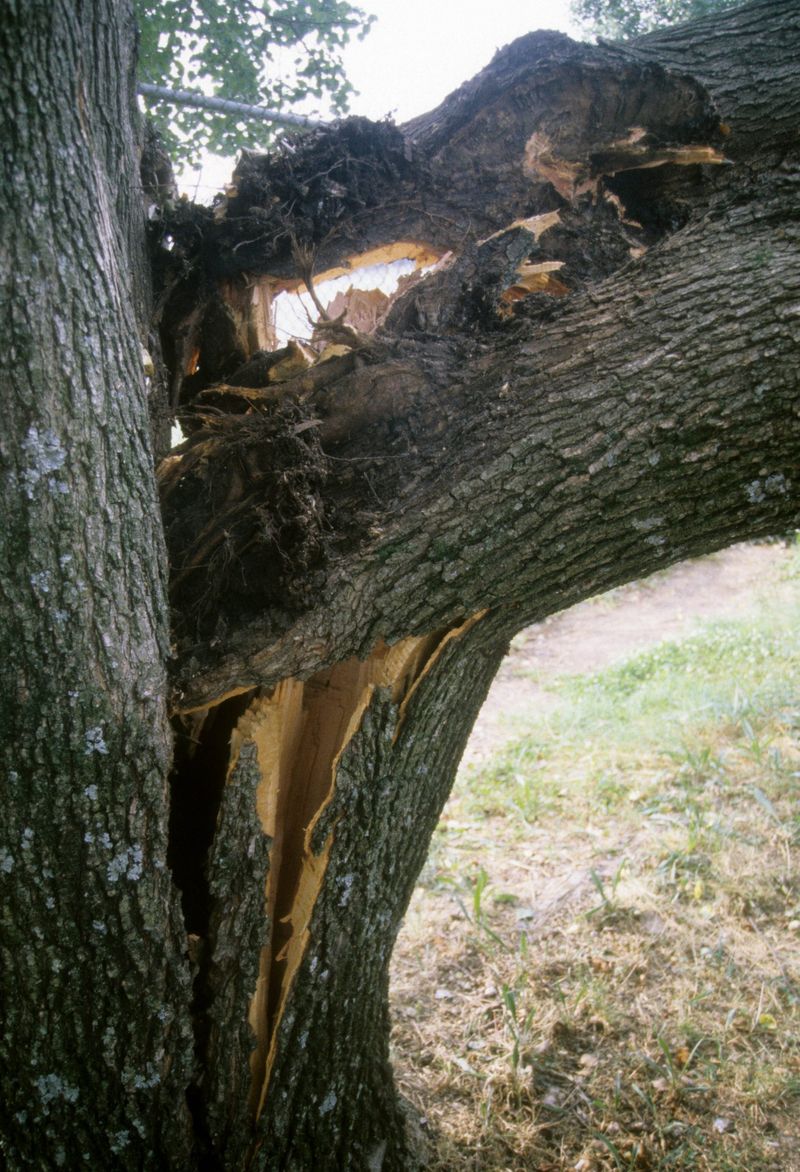
I learned the hard way after an April windstorm. Half of a neighbor’s Bradford pear landed across our shared fence. The tree had looked perfectly healthy the day before.
Bradford pears grow with many upright branches that join the trunk at tight, narrow angles. Bark gets pinched inside those joints, so the wood never forms a strong connection. As the tree gets heavier with age, those weak spots give way.
Ice storms, heavy wet snow, and spring gusts are the usual triggers. Trees around 15 to 25 years old often split, sometimes right down the middle. That leaves jagged trunks, damaged roofs, and pricey cleanup bills.
Many homeowners in Ohio first decide to remove their pear after a storm like this. Honestly, that moment can become an opportunity. Instead of patching a broken tree, you can swap it for something sturdier and better for wildlife.
Look for warning signs before trouble hits. Cracks at branch unions, oozing bark, or one side leaning heavily are red flags. A certified arborist can judge whether the tree poses a hazard. Spending a little on an inspection may save you a big repair later.
Cut Pear Stumps Resprout Unless You Treat Them Right
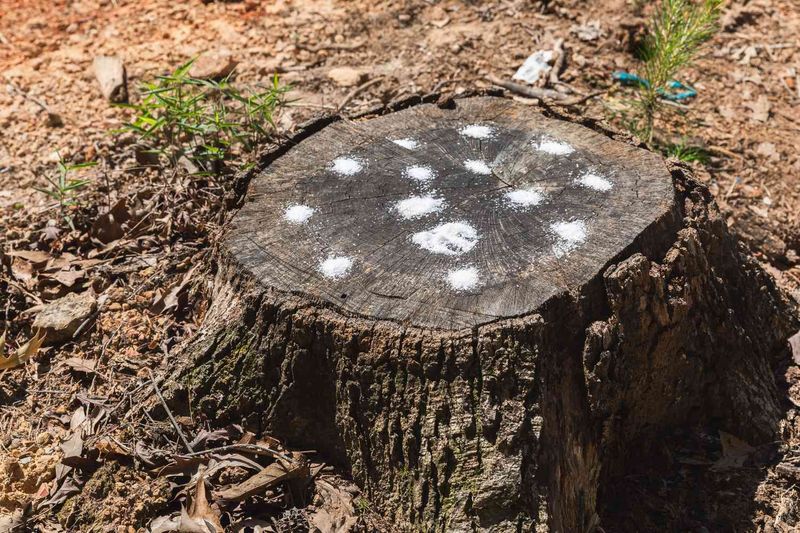
Fair warning, a chainsaw alone rarely finishes the job. Cut a Callery pear down and walk away, and you may see a ring of new shoots by summer. Those sprouts grow fast and often come back thorny.
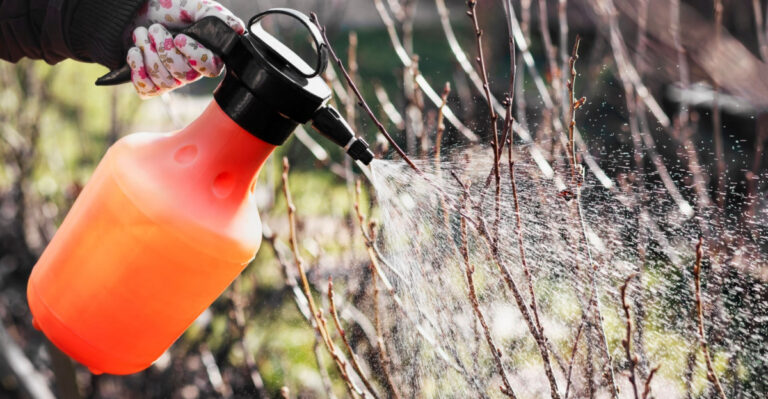
Ohio State University Extension and the Ohio Department of Natural Resources recommend treating the stump right after cutting. Apply a labeled herbicide such as glyphosate or triclopyr to the fresh cut surface, focusing on the outer ring just inside the bark. Timing matters, so treat within minutes.
For small saplings, a basal bark treatment can work. That method uses an oil-based triclopyr product sprayed on the lower trunk. Late summer and fall are often good times, since the tree moves resources down to its roots.
Tiny seedlings can be hand-pulled when the soil is soft. Get as much root as you can. Grinding the stump is another option, though roots may still send up shoots.
Always read and follow the herbicide label closely. It is the law, and it protects you and nearby plants. If a tree is large or close to your house, hiring a licensed tree company is the smart move.
Free Native Trees Await When You Swap Out Your Callery Pear
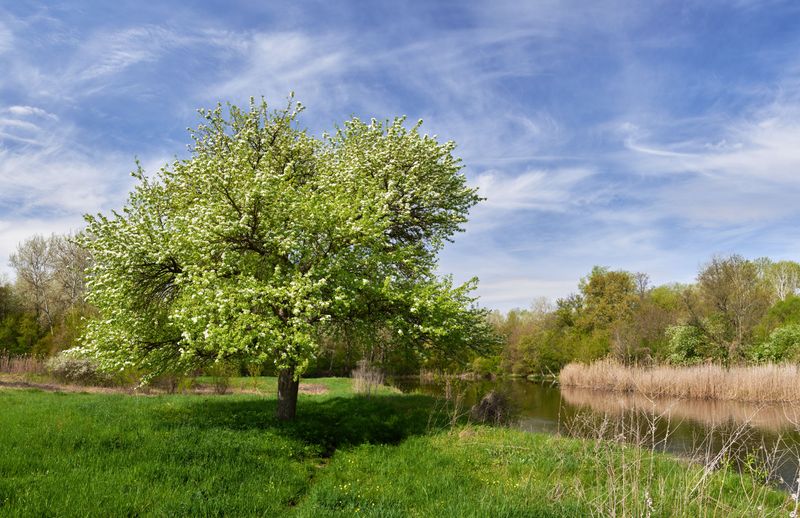
Here’s my favorite part of this whole story. Ohio communities have started paying people back, in trees, for removing their pears. That makes the job feel a lot more rewarding.
Park districts, soil and water conservation districts, and local groups in several Ohio communities have hosted Callery pear bounty programs. Homeowners who remove a pear and send proof can receive a free native tree. Programs vary by county, so check what’s happening near you.
Great replacements bring the spring flowers without the problems. Serviceberry offers white blooms and berries birds love. Eastern redbud covers branches in pink-purple flowers, and flowering dogwood fits shady spots. Blackgum and American hornbeam work well when you want a tougher shade tree.
Plant replacements in spring or fall, when temperatures are mild and rain is more reliable. Water deeply through the first summer. A ring of mulch, kept away from the trunk, helps hold moisture.
Each pear you replace means fewer seeds for birds to spread. One yard won’t fix the whole state. Yet if enough neighbors make the switch, those white roadside clouds could slowly fade, giving native trees their moment again.