Why Colorado Tomato Plants Are Splitting Open After Recent Storms
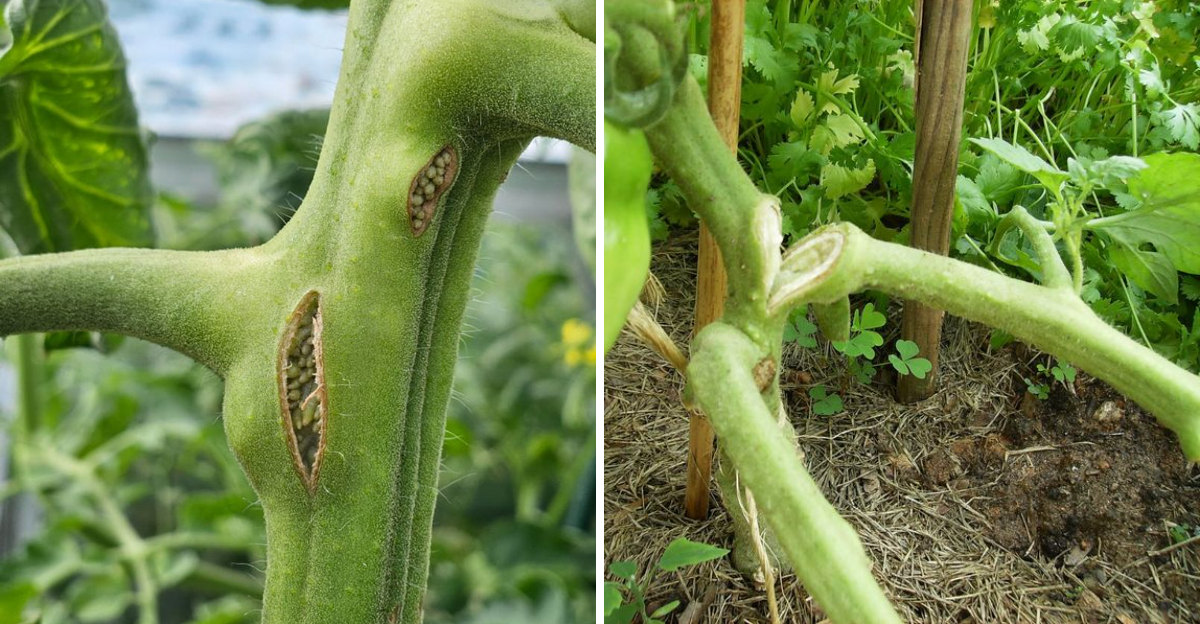
Split tomatoes greeted you the moment you stepped out. Compromised skins and flooded rows told you a fast story. Trouble arrived long before your morning alarm went off. Colorado storms move quickly, but your plants react slower.
Rain filled your soil faster than roots could handle. Pressure built inside your fruit until something shifted. Weeks of dry stress primed your garden for change. Thirsty roots pulled water into your plants too fast.
Soil structure and drainage decided what your harvest lost. Puddles near your drip line hint at deeper issues. Clay-heavy ground holds water longer than you expect. Front Range storms reach your Colorado garden without warning.
Timing mattered more than you probably realized last night. Damaged skin does not mean your harvest is worthless.
Something in your garden moved fast overnight. Answers exist, and fixes are simpler than you think. You need each detail before the next storm arrives.
1. Sudden Rain After A Dry Spell Swells Fruit Too Fast
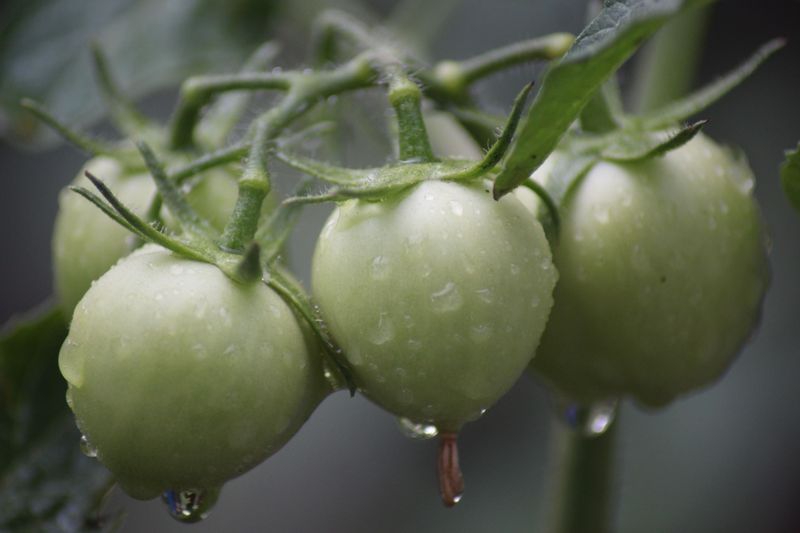
Picture a water balloon filling from a fire hose. That is roughly what happens inside a tomato when three-quarters of an inch of rain lands on soil that had been bone dry for ten days.
The roots grab all that moisture at once and push it straight into the fruit. The flesh inside expands quickly, but the skin has already toughened up during the dry stretch and cannot stretch to match.
Something has to give, and it is usually the skin. You get those long vertical splits running from the shoulder down the side, sometimes deep enough to see seeds.
Colorado makes this worse because our summer pattern swings between weeks of dry heat and sudden afternoon storms rolling off the foothills. Soil dries out fast at altitude with low humidity and intense sun.
The fix starts with consistency. Water deeply two or three times a week rather than waiting for the plant to droop, so the fruit never experiences that boom-and-bust cycle.
A moisture meter costs about ten dollars and takes the guesswork out of it. Aim for soil that feels like a wrung-out sponge six inches down.
When the forecast shows storms, skip your scheduled watering a day ahead. Letting the soil run slightly on the dry side before rain arrives softens the shock.
Fruit that already split can still be eaten if the crack is fresh and clean. Slice away the damaged area and use it that same day.
2. Hail Bruises Set Up Splits You Notice Days Later
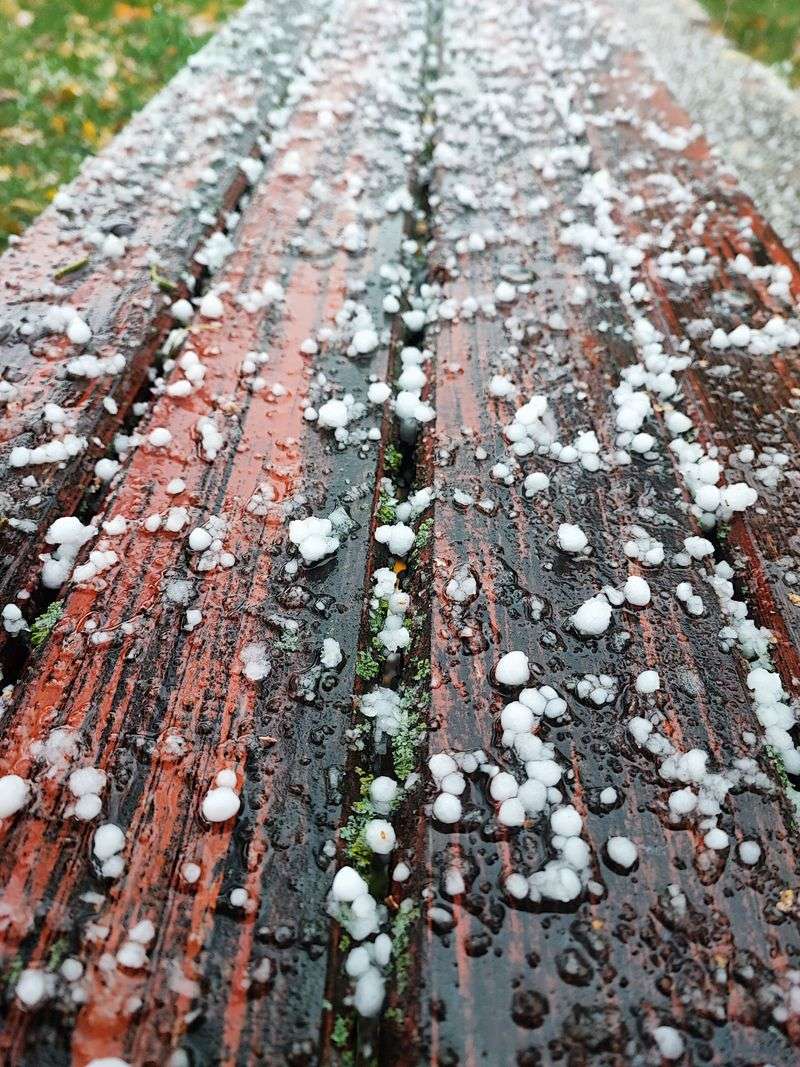
Colorado sits in the heart of Hail Alley, and the Front Range averages several damaging hail events every growing season. Even pea-sized stones leave their mark.
What throws gardeners off is the delay. A tomato hit by hail may look fine at first, showing only a small dimple or a pale bruise on the shoulder.
Underneath, the cell walls have been crushed. Within two or three days that weak spot opens into a crack, and gardeners blame the rain when hail did the initial damage.
Your Colorado Garden Changes Every Week. Your Plan Should Too.
Gardening in Colorado changes quickly throughout the season. Every Friday you’ll receive a simple weekly plan showing exactly what to plant, prune, fertilize, harvest, and protect so you never miss the right timing.
Walk your rows within a day of any hailstorm and inspect fruit carefully, turning each one to check the top side. Mark or harvest anything with a visible dent.
Green tomatoes with shallow bruises will ripen fine indoors on a counter away from direct sun. Pull them rather than gambling on the vine.
Prevention comes down to cover. Keep a roll of frost cloth, old bedsheets, or shade fabric stashed near the garden, along with a few tomato cages or hoops to hold it above the plants.
Hardware cloth arches or a simple PVC hoop frame with clips lets you throw protection on in under five minutes when the sky turns that eerie green-gray.
Some Colorado gardeners keep large plastic storage tubs upside down beside their beds for emergency covers. It looks odd for an afternoon, and it can protect the fruit. Damaged foliage usually regrows, so focus your rescue effort on the fruit.
3. Concentric Rings Near The Stem Point To Humidity Swings
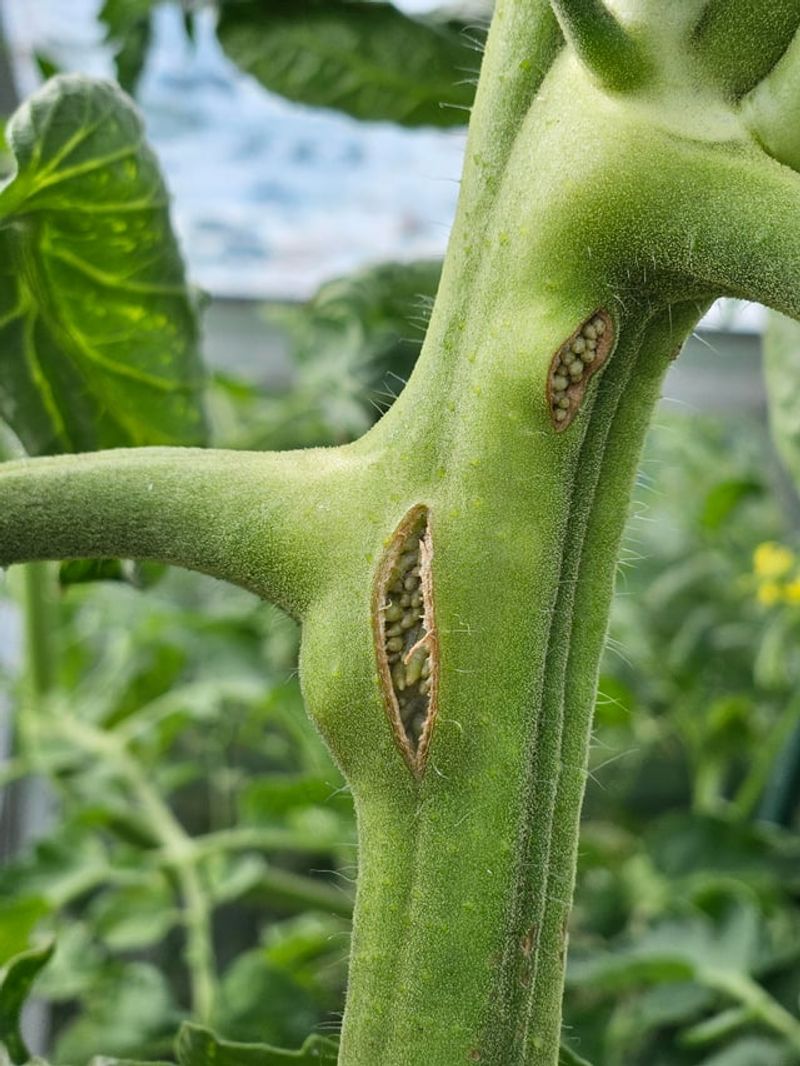
Not all cracks look the same, and the pattern tells you a story. Circular rings that ripple outward from the stem like a target mean something different from a long vertical tear.
Those ring cracks, called concentric cracking, show up when humidity and temperature bounce around dramatically. Colorado storms deliver exactly that, dropping temperatures sharply and spiking humidity within a short window.
The shoulder of the fruit near the stem is the thinnest, most exposed part of the skin. It also gets the most direct sun, which toughens it further.
Cracks here tend to be shallow and often heal over into corky brown scars. Fruit is still perfectly edible, though it will not win a beauty contest at the farmers market.
Reducing exposure helps a lot. Let your plants keep more upper foliage instead of pruning aggressively, since those leaves shade the fruit shoulders and buffer temperature swings.
Determinate varieties and heirlooms with thin skin crack this way more often. Brandywine and other big heirlooms are famously prone to it.
If concentric rings are your yearly frustration, try planting a few thicker-skinned varieties alongside your favorites as insurance.
Harvest a shade early, at the breaker stage when the blossom end just blushes pink. The fruit finishes ripening on your counter with full flavor and no risk from the next storm. Check plants every evening during unsettled weather rather than waiting for the weekend.
4. Bare Soil Lets Storms Overwhelm Root Zones
Here is a habit that pays for itself in a single season. Three inches of mulch around every tomato plant changes how the entire root zone handles rainfall.
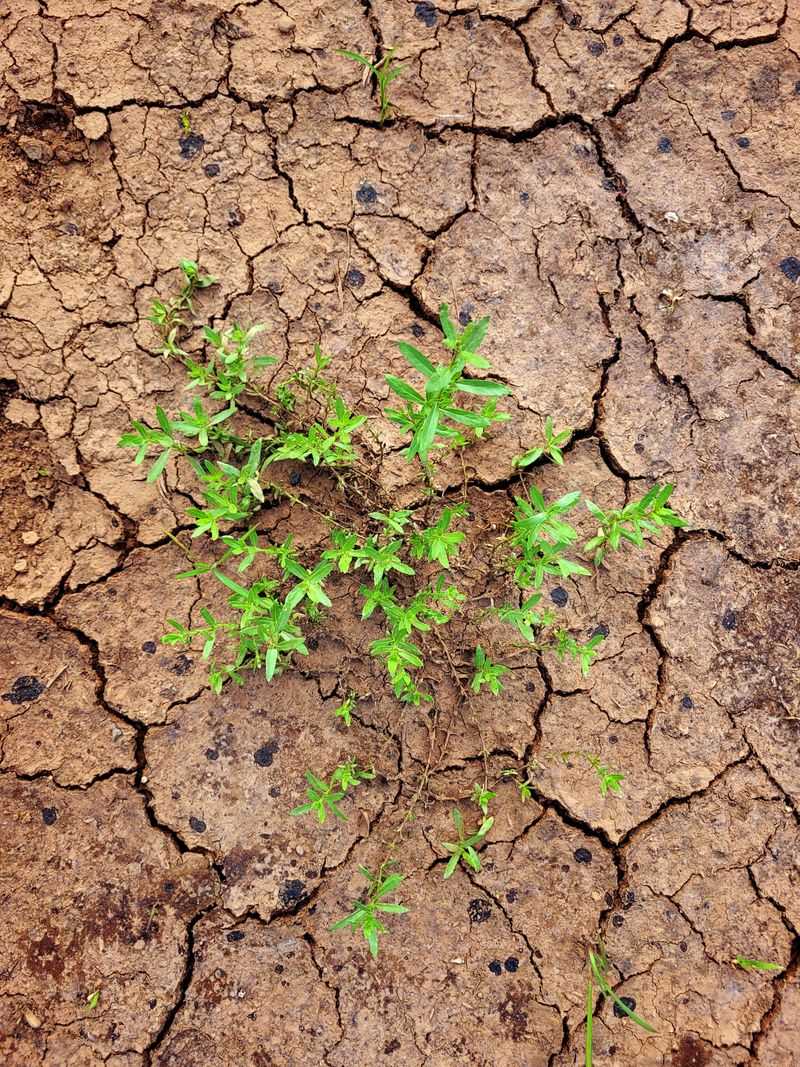
Bare soil in Colorado forms a hard crust under our sun. Rain hits that crust, runs sideways, then pools and soaks in all at once through cracks.
Mulch breaks the fall of raindrops and lets water enter the soil at a steady pace. It also slows evaporation between storms, keeping moisture levels far more even.
Straw, shredded leaves, grass clippings that have dried, or untreated wood chips all work well. Keep the layer a couple inches back from the main stem so the base can breathe.
A bonus benefit is soil temperature. Mulched beds stay cooler during hundred-degree afternoons, which reduces the stress that makes skins toughen in the first place.
Weeds drop off dramatically too, meaning less competition for water. Fewer weeds also means fewer hiding spots for pests near the stem.
Refresh the mulch mid-season if it thins out, especially after a windy stretch. Colorado gusts move lightweight straw around more than you would expect.
Gardeners in clay-heavy soil should combine mulching with compost worked into the bed each spring. Better structure means water moves through instead of sitting.
Once you mulch consistently, split fruit becomes an occasional annoyance rather than a common post-storm outcome. The plants simply stop riding that moisture roller coaster.
5. Overripe Fruit Left On The Vine Splits First
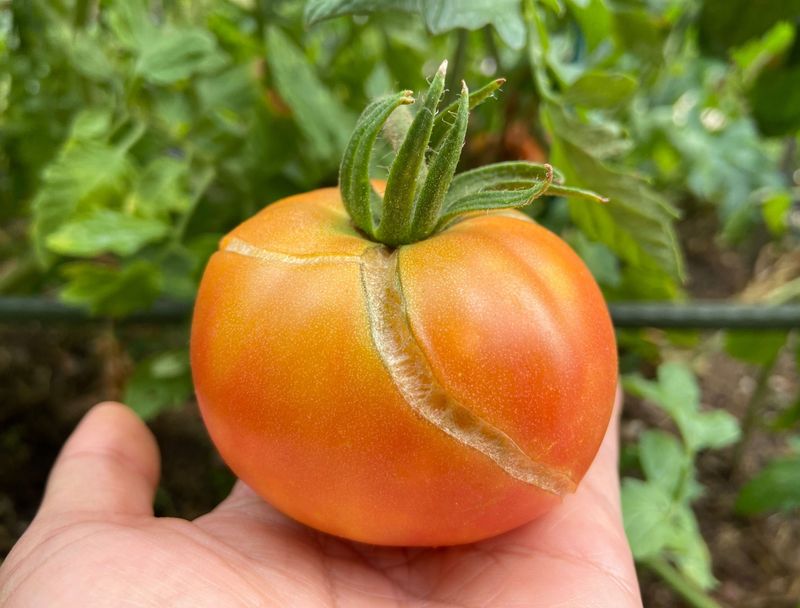
Waiting one more day for peak color is the single most common reason a tomato ends up cracked. Fully ripe fruit tends to have the least flexible skin on the plant.
Think of it like an overinflated tire. There is no give left, so any extra water pressure forces an opening.
Harvesting at the breaker or half-ripe stage solves the problem before it starts. A tomato picked when it shows first color will ripen on your counter with essentially the same flavor.
Common horticultural guidance supports this. Once the fruit begins changing color, it stops drawing nutrients from the plant and finishes the process on its own.
Keep ripening tomatoes stem side up at room temperature, out of the fridge. Cold storage below fifty-five degrees flattens the taste in a hurry.
During monsoon season in July and August, make a quick pass through the garden every evening. Anything blushing goes in the basket.
Cherry tomatoes deserve extra attention because their small size and thin skin make them the first casualties. A single storm can crack an entire truss overnight.
Split fruit should be used within a day or two since open cracks invite mold and fruit flies. Cut out the damaged section and toss the rest into sauce, salsa, or a quick roast.
Treat the vine as short-term storage rather than long-term. Your counter is safer than the weather.
6. Uneven Hand Watering Trains Skins To Be Brittle
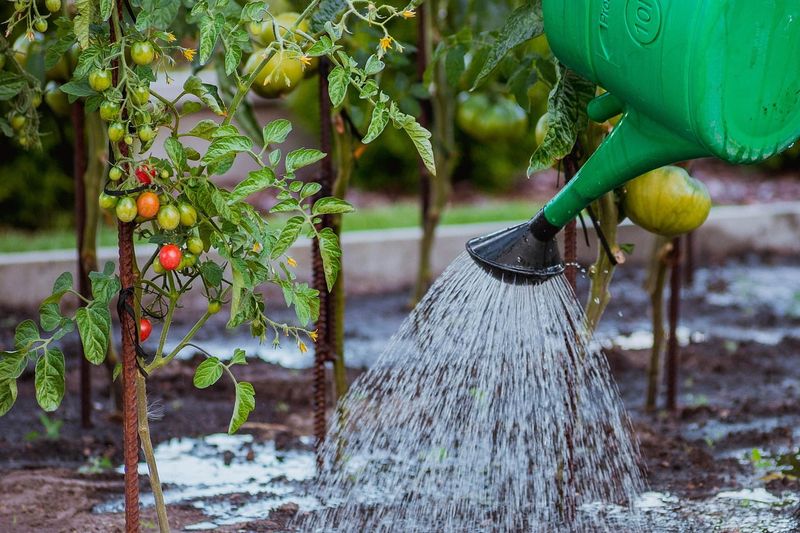
Most gardeners water when they remember, which usually means a heavy soak after noticing wilted leaves. That pattern quietly builds conditions that contribute to splitting.
Plants adjust to whatever they get. A stretch of drought signals the fruit to thicken its skin as protection, and then a flood arrives with nowhere to go.
Drip irrigation on a simple battery timer removes most of the human error. A basic kit runs thirty to fifty dollars and takes an afternoon to set up.
Set it for early morning, three or four days a week, long enough to wet the soil six to eight inches deep. Deep, infrequent watering generally outperforms shallow, daily watering.
Soaker hoses under mulch are the budget version and work nearly as well in small beds. Loop them so each plant gets contact.
Container tomatoes need special care in Colorado since pots dry out very quickly. Self-watering planters or a saucer reservoir help hold that middle ground.
Adjust for the weather rather than blindly following the timer. Turn the system off before a forecast storm, then resume once soil dries slightly.
A rain gauge near the garden gives you real numbers instead of guesses. One inch of rain often equals roughly a week of typical watering for established plants, depending on soil and heat.
Consistency is one of the most important factors. Plants that get steady moisture develop skins that flex with the fruit instead of fighting it.
7. Some Varieties Handle Front Range Weather Better Than Others
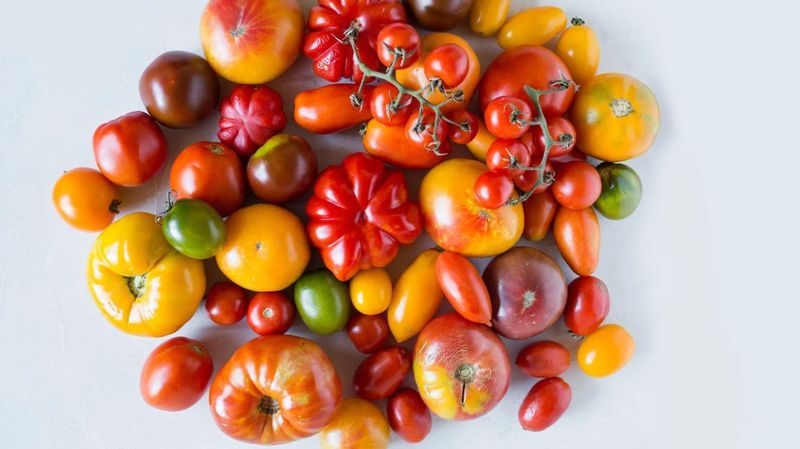
Genetics matter more than most people realize. Two plants side by side under identical conditions can produce wildly different results after the same storm.
Thin-skinned heirlooms like Brandywine, Cherokee Purple, and Black Krim taste incredible and crack if you look at them wrong. That tradeoff is real.
Breeders have developed varieties specifically for crack resistance. Celebrity, Mountain Merit, Jet Star, Juliet, and Sun Gold cherry all hold up notably better in wet-dry swings.
Extension experts generally recommend short-season varieties for our climate anyway. Early Girl and Stupice mature quickly and dodge late-summer storm season.
A smart approach is planting a mix. Grow two or three heirlooms for flavor and eating fresh, plus a few reliable hybrids for volume and sauce.
Grafted tomato plants are becoming more common along the Front Range. The vigorous rootstock handles moisture fluctuations with more resilience than standard roots.
Check seed catalogs for the phrase crack resistant or crack tolerant in the description. It is not marketing fluff, it reflects actual breeding traits.
Local nurseries in Denver, Boulder, and Colorado Springs often stock varieties tested for regional conditions. Ask staff what performed well last summer.
Keeping a small garden journal helps enormously. Note which plants split and which shrugged it off, then adjust your seed order next February. Over a few seasons you will build a lineup suited to exactly your yard.
8. Open Cracks Invite Rot, So Act Quickly
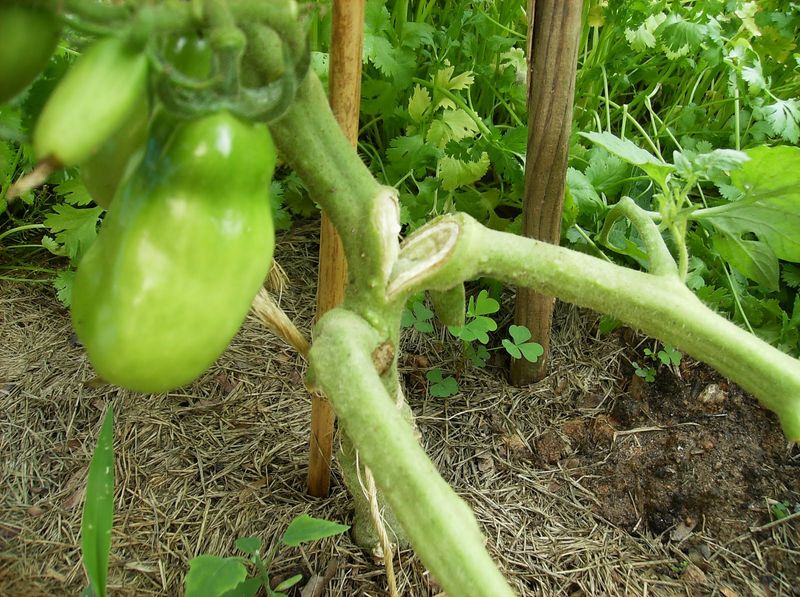
A crack by itself is cosmetic. What sneaks in afterward is the real concern. Fungal spores and bacteria float around constantly, and a split skin hands them a direct route into moist flesh. Warm, humid post-storm conditions accelerate everything.
Within two days you may see fuzzy gray growth or a soft, sunken area darkening around the opening. Fruit flies show up soon after and lay eggs in the wound.
Pull cracked fruit promptly rather than leaving it to sort itself out. Even green tomatoes with splits should come off the vine.
Sound fruit with a shallow, clean, dry crack can be rinsed, patted dry, and used right away in salsa, sauce, soup, or a sheet-pan roast. Cut generously around the damage.
Anything mushy, smelly, or showing mold belongs in the trash rather than the compost pile if you suspect disease. Home compost rarely gets hot enough to neutralize pathogens.
Cleaning up fallen fruit from the soil surface matters too. Rotting tomatoes on the ground feed problems that carry into next season.
Improve airflow by pinching lower leaves that touch soil and keeping plants staked upright. Drier foliage means fewer fungal issues overall.
Wash your hands and tools between handling damaged and healthy plants during wet stretches. Simple hygiene stops a small problem from spreading down the row. Quick action turns a disappointing morning into a batch of fresh sauce.