Why Deer Browse Some Michigan Yards In August And Walk Right Past Others
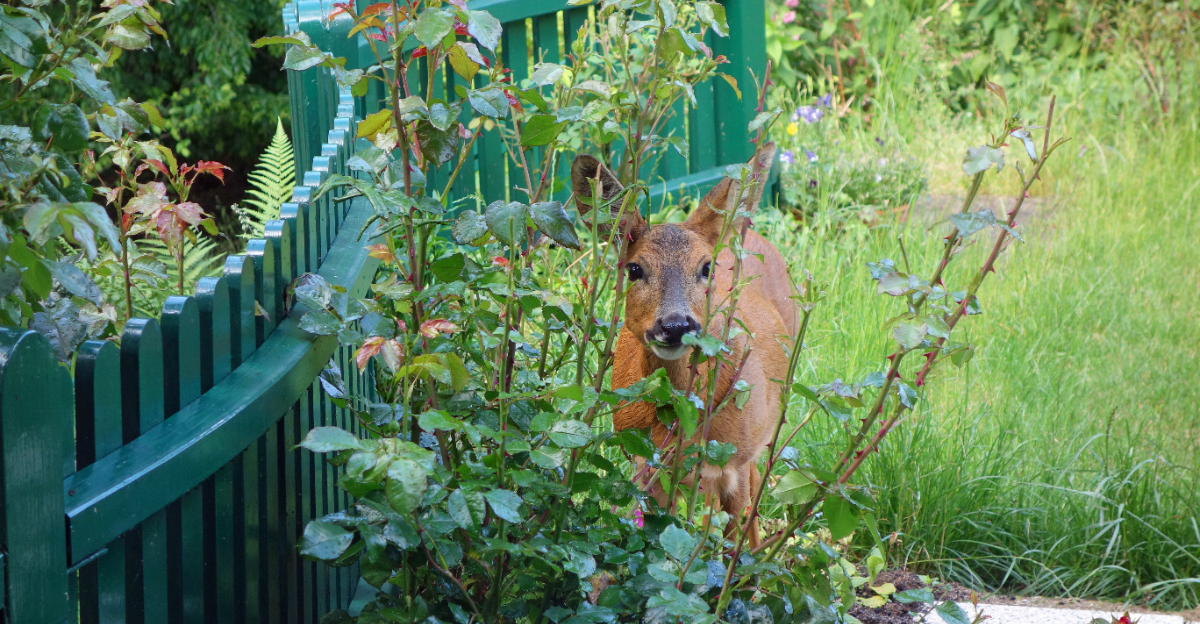
August deer pressure in Michigan feels random to homeowners on the wrong side of it, especially when the property next door loses nothing while the garden that received more attention and investment loses significant ground overnight.
Deer are not making arbitrary choices. They are navigating toward yards that offer specific combinations of plant palatability, low disturbance, easy entry and exit points, and reliable food density.
The yards they walk past consistently are not always fenced or sprayed. Many of them are simply structured in ways that make the cost-benefit calculation come out unfavorably for a deer deciding where to spend its feeding time.
Those structural choices are learnable and replicable in any Michigan yard willing to examine what it is currently offering.
1. Some Yards Have More Deer Favorite Plants

Walk through almost any Michigan neighborhood in August and you will notice something interesting: deer seem to have strong opinions about which yards are worth stopping at. The answer often starts with what is growing there.
Yards packed with hostas, daylilies, roses, tender annuals, and young fruit trees are practically sending out an invitation, because Michigan State University lists many of these plants among those deer frequently target.
Hostas are a perfect example. Their broad, soft leaves offer a lot of food with very little effort, making them a popular snack for deer passing through suburban areas.
Daylilies and roses add to the appeal, especially when they are in active growth and producing fresh, tender new shoots that are easy to chew and digest.
Young fruit trees are another big draw. Their bark and leaves are both soft and nutritious, which makes them especially vulnerable during summer months when deer are actively feeding to build up body condition.
Even a single young apple or cherry tree in a yard can be enough to pull deer off their regular path.
Tender annuals planted in summer beds, like impatiens or begonias, round out the buffet. A yard that combines several of these plant types in one space is simply offering more reasons to stop and browse.
If your yard has a mix of these favorites growing in open, accessible beds, you may be seeing more deer traffic than your neighbors with different plantings. Swapping even a few of these plants for less appealing options can help shift the pattern.
2. Less Appealing Texture Can Make Deer Move On
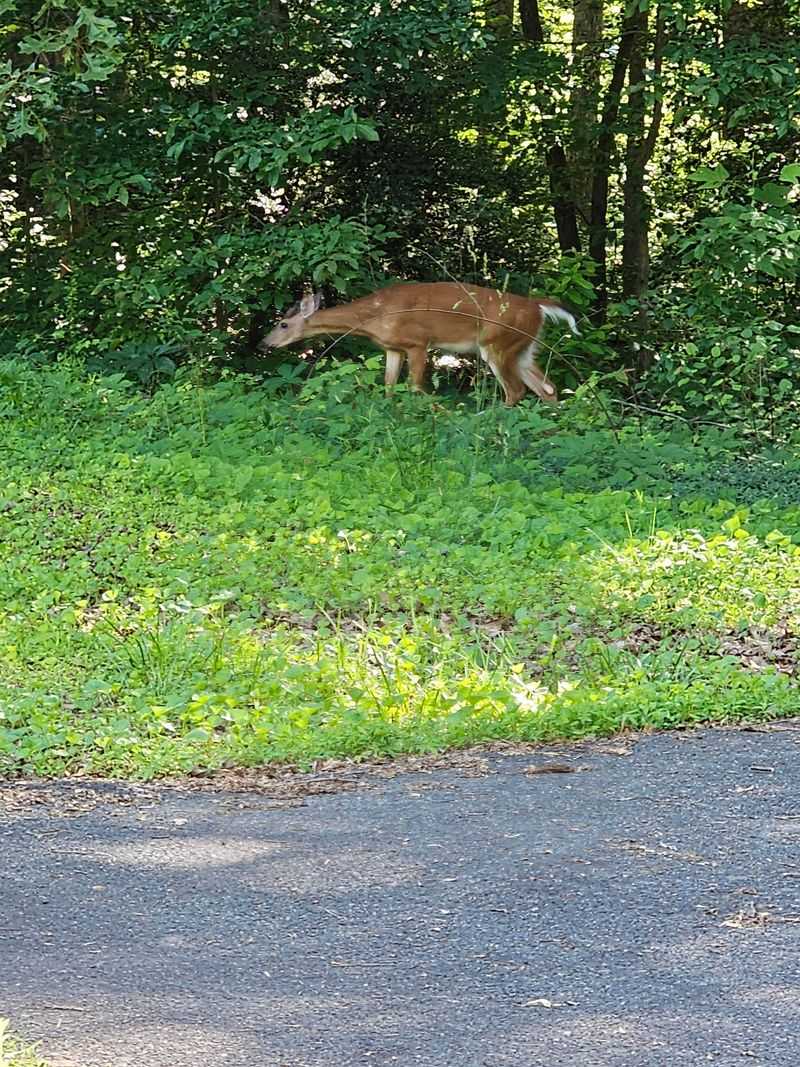
Not every plant is equally tempting to a deer, and texture plays a bigger role in that decision than most gardeners realize.
Plants with fuzzy, rough, spiny, or strongly scented foliage tend to get passed over in favor of softer, more palatable options.
Yards that feature these types of plants may simply not be worth the effort for a deer that has easier choices nearby.
Lamb’s ear is a great example of this principle in action. Its thick, woolly leaves feel unpleasant to browse, and deer typically leave it alone even when surrounding plants get nibbled.
Catmint, lavender, and Russian sage all carry strong fragrances that can overwhelm a deer’s sensitive nose, making them far less likely to stop for a taste.
Your Michigan Garden Changes Every Week. Your Plan Should Too.
Gardening in Michigan changes quickly throughout the season. Every Friday you’ll receive a simple weekly plan showing exactly what to plant, prune, fertilize, harvest, and protect so you never miss the right timing.
Ornamental grasses add another layer of protection because their coarse, stiff blades are uncomfortable and not particularly nutritious.
Ferns offer a similar advantage. Their leathery, divided fronds are less appealing than the broad, soft leaves deer prefer, so a garden that leans heavily on fern plantings may see fewer visits.
Spiny plants like globe thistle or sea holly can also discourage browsing simply by making access uncomfortable.
The good news is that building a deer-resistant garden does not mean sacrificing beauty. Many of the plants deer tend to ignore are genuinely attractive and easy to grow in Michigan’s climate.
Mixing these textures and scents throughout your beds creates a yard that is naturally less inviting, without requiring fencing or repellents to get results. Small plant swaps can add up to a big difference over a single season.
3. Irrigated Yards Can Look Like A Fresh Buffet
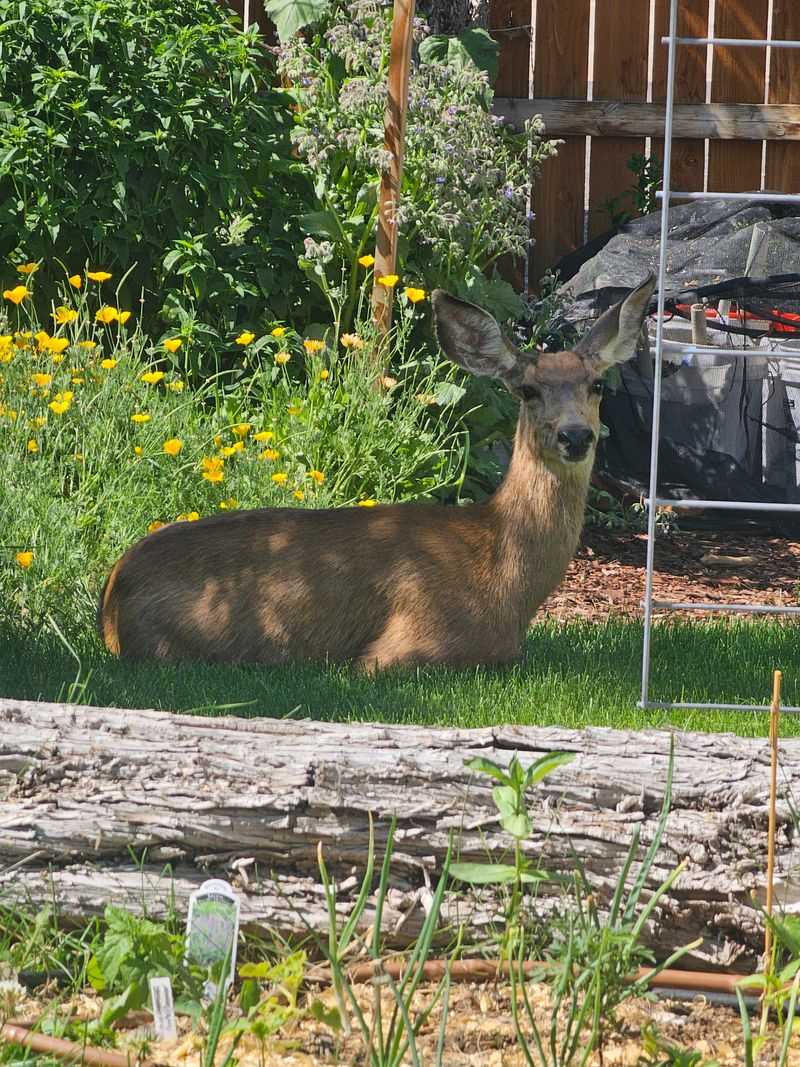
August in Michigan can bring stretches of heat and dry weather that slow plant growth across fields, roadsides, and woodlands.
When natural food sources become tougher and less fresh, a well-watered garden can stand out like a neon sign to a hungry deer.
The contrast between dry, stressed wild vegetation and a lush irrigated yard is sometimes all it takes to redirect deer traffic straight into your garden beds.
Irrigation keeps soil moisture consistent, which encourages plants to keep pushing out soft, tender new growth even during hot spells. That fresh growth is exactly what deer prefer.
Older, tougher leaves are harder to chew and less nutritious, so actively growing garden plants offer a nutritional advantage that deer notice and respond to quickly.
This is one reason why a yard that never had deer problems might suddenly start seeing visits during a dry August. The garden has not changed, but the food landscape around it has shifted.
Nearby fields may have dried out, roadside vegetation may have gone tough and seedy, and the irrigated yard suddenly becomes the freshest option in the area.
Gardeners who hand-water or use drip irrigation may actually attract slightly less attention than those running overhead sprinklers, since drip systems keep foliage drier while still feeding roots.
Reducing irrigation frequency slightly during low-risk periods can also help.
Combining smart watering habits with deer-resistant plant choices gives you more control over how appealing your yard looks to passing deer on a hot Michigan August evening.
4. Open Access Makes A Yard Easier To Browse
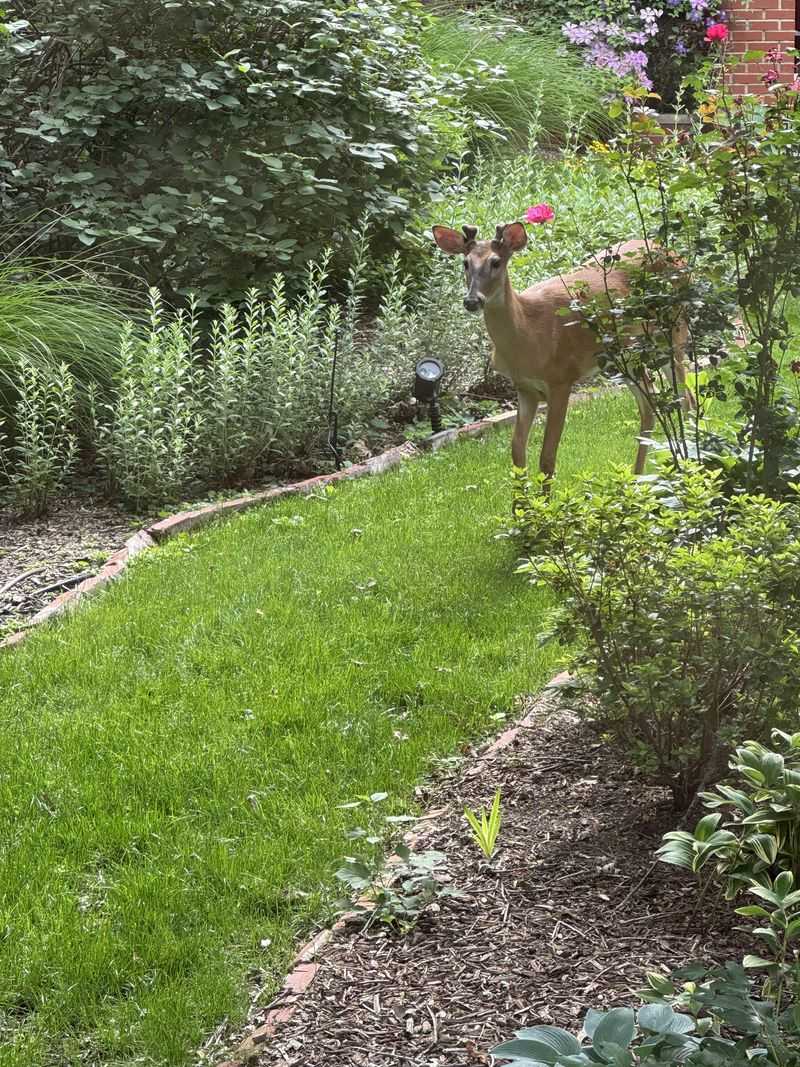
Deer are smart, cautious animals that spend a lot of energy managing risk. They prefer routes that feel predictable and safe, and a yard with wide-open entry points fits perfectly into that pattern.
When there are no barriers, no fencing, and no obstacles between the street or woods and your garden beds, deer can walk in, browse, and leave without feeling exposed for long.
Yards that sit along natural corridors get the most traffic. A property that backs up to a tree line, runs beside a drainage ditch, or connects to a neighbor’s shrub border gives deer a natural path to follow.
They often use the same routes repeatedly, which means once a yard becomes part of a regular travel pattern, it tends to stay that way through the season.
Shrub borders along property lines can actually work against you if they provide cover right up to the edge of your garden beds. Deer feel safer moving through dense cover and stepping into open feeding areas when the transition is short and quick.
A garden tucked close to a shrub line or wooded edge is much easier to browse than one sitting in the middle of an open, exposed lawn. Adding even small physical changes to entry points can redirect deer movement.
Planting thorny shrubs along the yard’s edge, positioning decorative boulders near common entry spots, or simply breaking up the open corridor with a row of dense plantings can make your yard feel less accessible.
Deer tend to follow the path of least resistance, so making entry slightly harder often encourages them to keep moving.
5. Nearby Cover Can Make Deer Feel Safer
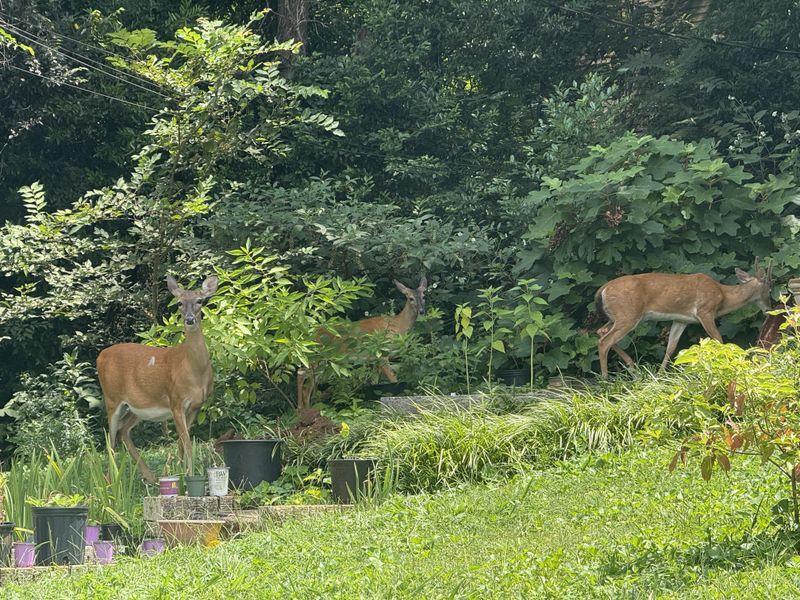
Deer rarely wander far from cover if they can help it. Their instinct is to stay near trees, shrubs, ravines, and natural corridors that offer quick escape routes if something startles them.
A yard that sits right next to woods, a shrub-filled fence line, or a natural ravine is essentially offering deer a safe dining experience, because they can step in, eat, and retreat without ever crossing open ground.
This is why two identical gardens in the same neighborhood can have completely different experiences with deer.
The one closest to a wooded lot or a brushy field edge will almost always see more browsing than the one surrounded by open lawn and pavement.
The cover nearby is the deciding factor, even when the plants inside both yards are similar.
Michigan has a lot of wooded suburban edges, wetland corridors, and shrubby fence lines that give deer plenty of options for cover close to residential areas.
Properties along these edges tend to see more consistent deer pressure through the summer months, especially in August when deer are actively feeding and building condition before fall.
Understanding this pattern helps you make smarter decisions about where to place your most valued plants.
Keeping prize plantings closer to the house, where human activity creates some natural deterrence, is a practical adjustment that many Michigan gardeners have found helpful.
Deer are much less comfortable browsing right next to a door or a frequently used patio. Putting distance between your best plants and the wooded edge can reduce how often those plants become a target.
6. Repellents Work Better When Used Consistently
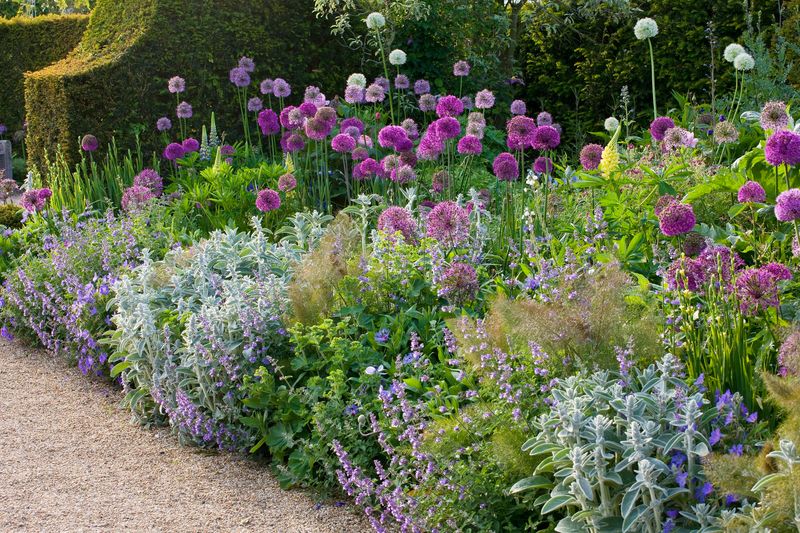
Some yards seem to get skipped by deer not because of what is planted there, but because the gardener has been diligent about repellents.
When used correctly and consistently, repellents can absolutely make a difference in how often deer choose to browse a particular yard.
The key word, though, is consistently, because skipping applications or sticking with a single product can reduce effectiveness quickly.
Michigan State University notes that repellents can be a useful part of a deer management plan, but they come with limitations.
Deer can become familiar with the same scent or taste over time, gradually learning to ignore a product that initially worked well.
Rotating between two or three different repellent types throughout the season helps prevent that kind of habituation and keeps the deterrent effect stronger.
Weather is another factor that undermines repellent performance. Rain, irrigation, and heavy dew can wash sprays off leaves within a day or two, leaving plants unprotected just when deer are most active in the evening hours.
Reapplying after any significant rainfall and after irrigation cycles is one of the most important habits a gardener can build.
Fresh plant growth also needs attention. New leaves that emerge after an application are not covered by the repellent and can become easy targets even when older leaves are still protected.
Checking beds every week and touching up coverage on new growth keeps the barrier more complete.
A yard where the gardener stays ahead of these details tends to see noticeably less browsing than a yard where repellent use is occasional or inconsistent throughout August.
7. Barriers Change The Deer Path
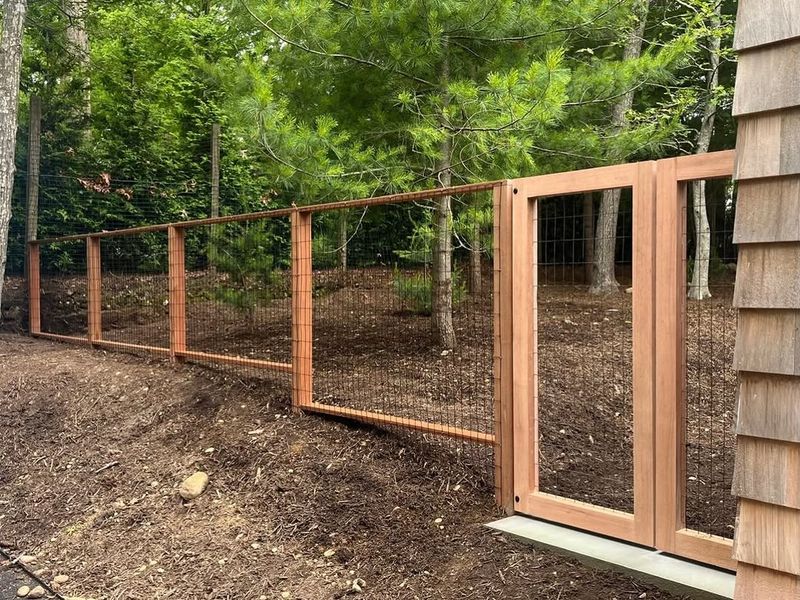
Sometimes the simplest reason a deer walks past one yard and stops in another is purely physical. Barriers work.
Fencing, netting, wire cages, trunk guards, and protective covers all create obstacles that make plants harder to reach, and deer generally prefer not to work harder than they have to when easier food is available nearby.
Full perimeter fencing is the most reliable option, but it is also the most expensive and not always practical in a typical Michigan suburban yard. The good news is that targeted barriers around specific plants can still make a meaningful difference.
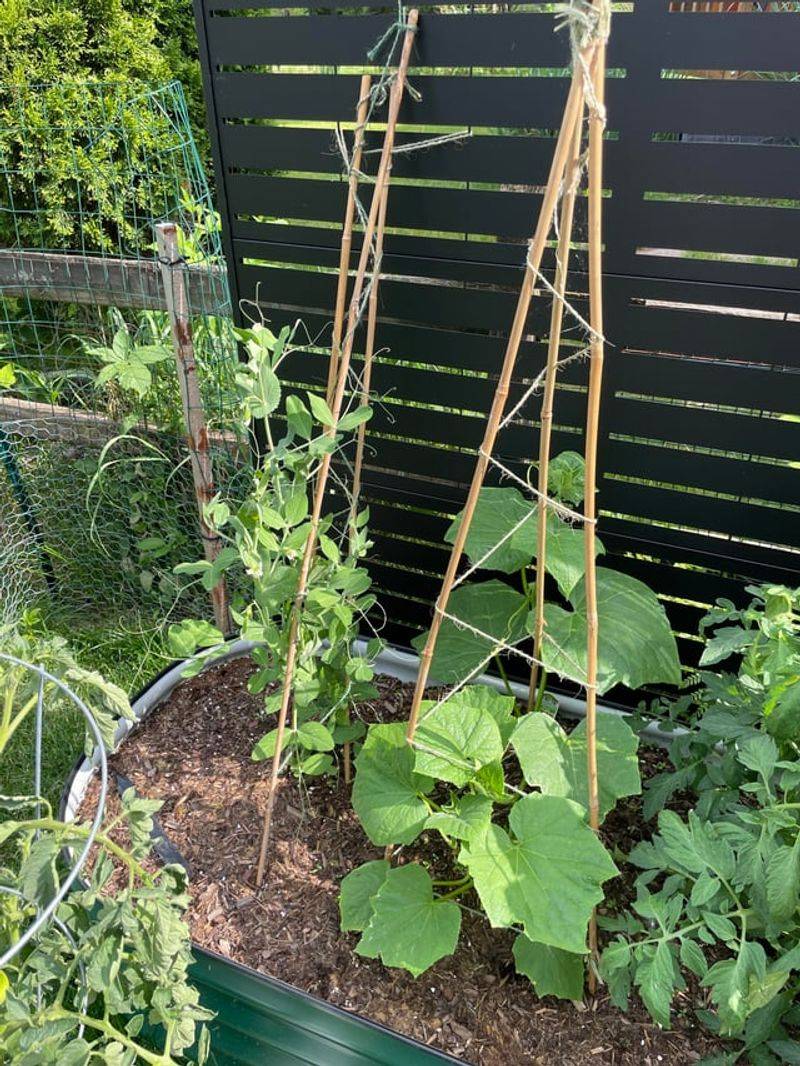
Placing a wire cage around a prized hosta, wrapping trunk guards around young fruit trees, or draping netting over a rose bush can protect the plants deer are most likely to target without requiring a full fence installation.
Even simple deterrents like stakes and fishing line strung around a garden bed can create enough of an unexpected obstacle to redirect deer.
Deer are cautious about anything they cannot easily see or predict, so an invisible barrier at chest height can be surprisingly effective at keeping them out of a specific area.
The contrast between protected and unprotected yards becomes especially clear in August when deer are moving through neighborhoods more frequently.
A yard where every vulnerable plant has some form of physical protection simply offers fewer easy opportunities than an open bed with no barriers at all.
Gardeners who combine barriers with repellents and smart plant choices tend to see the best results. Layering multiple strategies creates a yard that requires more effort than a deer is usually willing to put in.
8. Deer Pressure Changes With Food Availability
One of the most puzzling things for Michigan gardeners is watching a yard that was completely ignored last August suddenly become a regular deer stop this year. The plants are the same, the layout has not changed, but the deer have found it.
The most likely explanation is that something in the broader food landscape has shifted, and your yard has moved up on the priority list as a result.
Deer are flexible feeders that adjust their diet based on what is available and accessible at any given time. A summer with average rainfall might keep wild vegetation lush and appealing, reducing pressure on garden plants.
A drier or hotter August can push deer toward irrigated yards and gardens that are still producing fresh growth when natural food sources have slowed down or become less palatable.
Deer population shifts also play a role. If a neighboring property was developed, a wooded lot was cleared, or a food source nearby was removed, deer in the area may redistribute their travel routes and feeding patterns.
A yard that was previously off the beaten path might suddenly sit right along a new corridor that deer have adopted in response to habitat changes.
Seasonal crop availability in nearby agricultural fields can also influence when and where deer move through residential areas.
As summer field crops mature and become less accessible, deer sometimes shift more attention toward suburban gardens.
Staying observant from one August to the next, and adjusting your protection strategies when pressure increases, is the most practical way to stay ahead of these natural shifts in deer behavior.