Why Georgia Homeowners May Find Acorns Dropping Earlier Than Expected
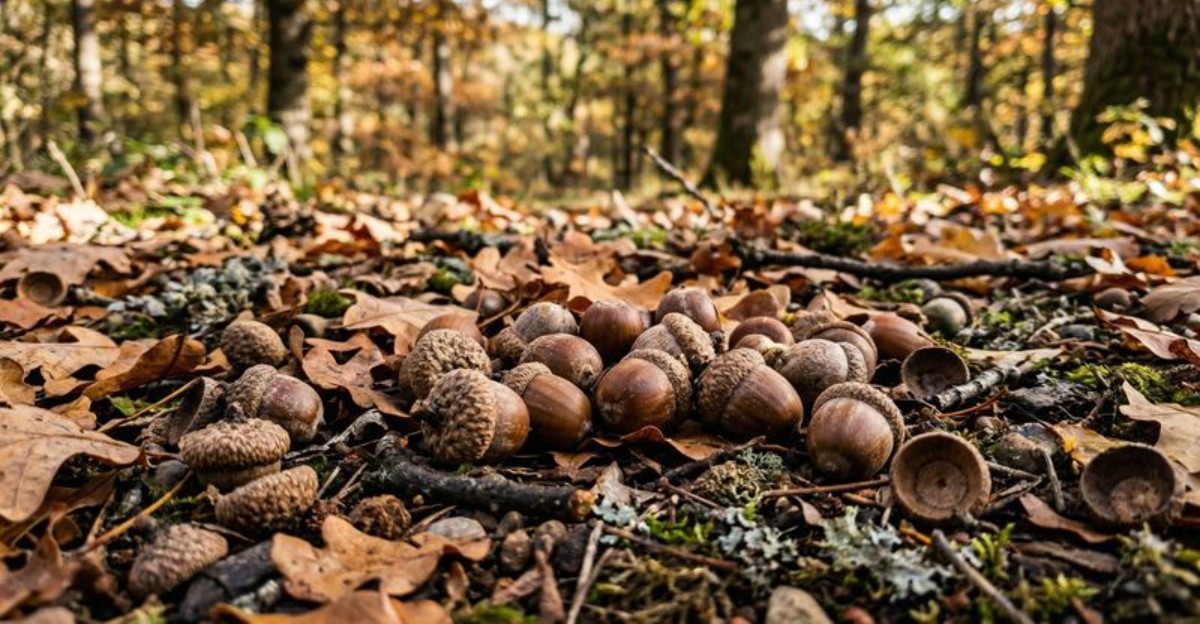
Acorns scattered across the lawn can seem strangely early when the trees above still look fully dressed for summer. Yet an early drop can have several explanations.
That timing often reflects what the oak has experienced during the growing season.
Weather, tree condition, and normal differences between oak species can all influence when acorns begin falling. In Georgia, those factors can make one yard look noticeably different from another nearby.
So an early layer of acorns does not automatically point to a serious tree problem.
Look at the entire oak before judging what the falling nuts might mean. Healthy foliage and normal growth can provide useful context when the timing seems unusual.
Understanding what influences acorn drop can help you separate an ordinary seasonal shift from something that deserves a closer look.
1. The Ground Can Tell You Something About Your Oak
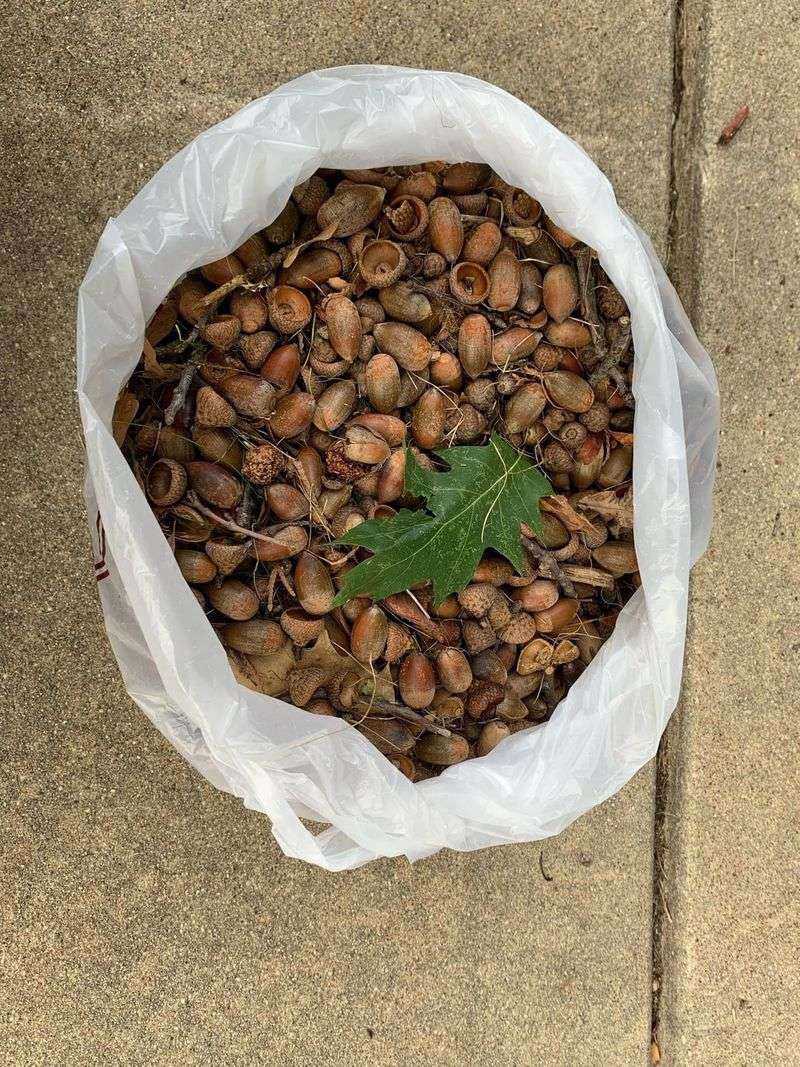
Your driveway becomes a report card in late summer. Whatever the oak lets go of, you get to examine at eye level.
Start by scooping up a small handful and spreading them on a step. Look at size, color, and whether the cap is still attached.
Fully mature acorns tend to be plump, brown, and firm, and they usually separate cleanly from their caps.
Green nuts still wearing their caps often came down before finishing. That combination points to stress or damage rather than a normal harvest.
Weight matters too, since a healthy acorn feels solid while an empty shell feels oddly light.
Shake a few near your ear. A rattle or hollow sound often means something has been feeding inside.
Homeowners across Georgia see this pattern every year, and it varies from block to block depending on tree age and species.
Keep a rough count if you are curious. Comparing a paper bag from this season to next season gives you a simple record without any special tools.
Fallen twigs mixed into the pile are worth noting as well, because squirrels and certain insects clip small branch tips.
Nothing on the ground gives you a full diagnosis, but the pattern usually narrows things down quickly.
When the crop looks mostly mature and clean, early timing is rarely a cause for concern.
2. Some Acorns Fall Before They Finish Growing
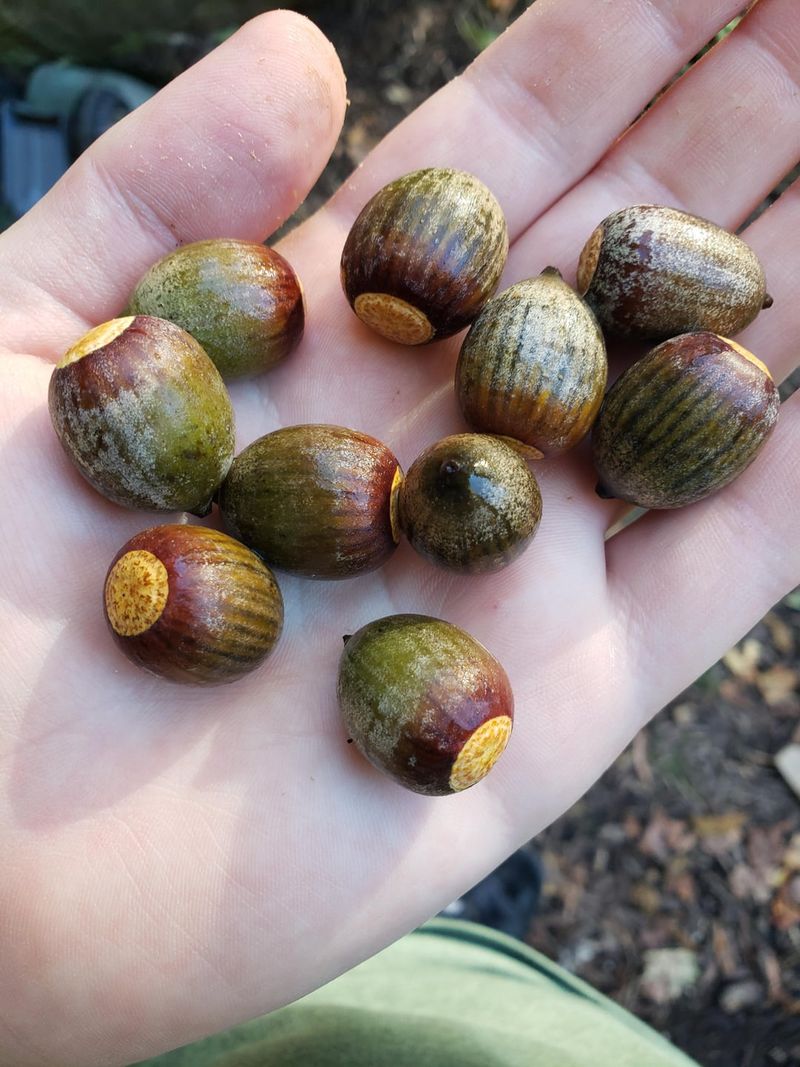
Not every acorn that hits the pavement was ready to leave.
Oaks set far more nuts in spring than they can realistically carry through summer. When resources run short, some of that load gets released early.
Immature drops usually look small and green, and the cap often stays stuck on tight.
Pollination problems can also play a role, since a nut that was never properly fertilized will not develop and eventually lets go.
Wind and thunderstorms knock down plenty of half-formed acorns too. A single strong August storm can leave a surprising mess on the walkway.
Timing differs by species as well, which is why one oak in the yard may be busy while another stays quiet.
White oaks generally mature acorns in a single season, while red oak group species take about two years to finish theirs.
Your Georgia Garden Changes Every Week. Your Plan Should Too.
Gardening in Georgia changes quickly throughout the season. Every Friday you’ll receive a simple weekly plan showing exactly what to plant, prune, fertilize, harvest, and protect so you never miss the right timing.
That two-year schedule means a red oak can carry both young and nearly ripe nuts at once, and the younger ones sometimes drop by mistake.
Homeowners in Georgia often notice this overlap and assume the tree is struggling.
Sweeping up the immature nuts keeps them from sprouting in flower beds later. A stiff broom handles the job faster than a rake on hard surfaces.
Early loss of unfinished acorns is common and usually just part of how oaks manage a heavy set.
3. Hot Dry Weather Can Push The Timing Forward
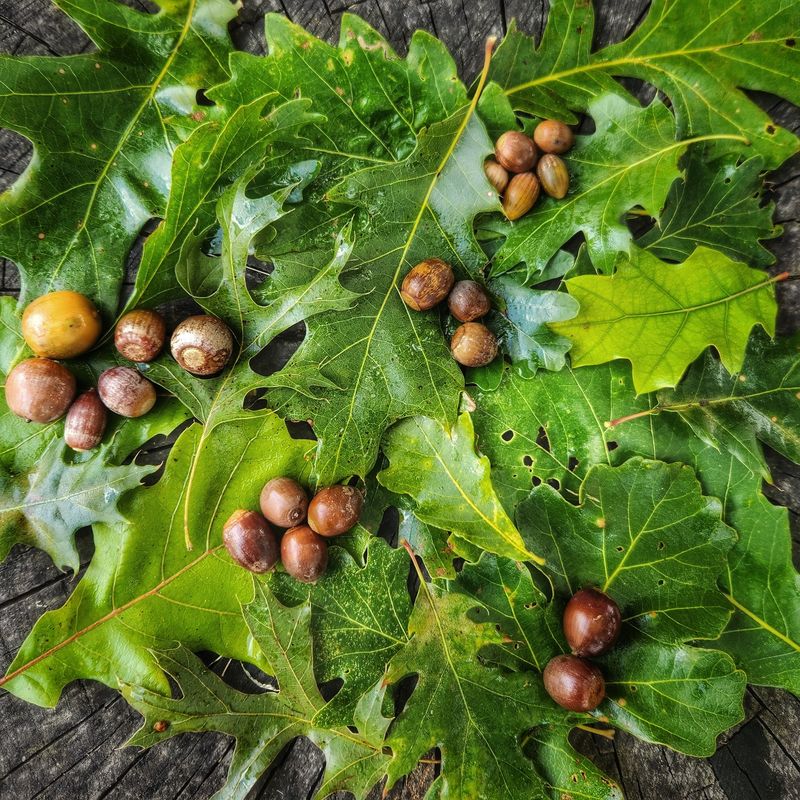
Heat and drought change what a tree can afford to support.
When soil moisture drops through July and August, oaks shift water toward leaves and roots. Developing acorns often get cut from the budget first.
Long dry spells across north Georgia can trigger noticeable drops weeks ahead of the usual schedule.
Trees on thin, rocky, or compacted soil tend to feel it soonest, since roots there hold less reserve moisture.
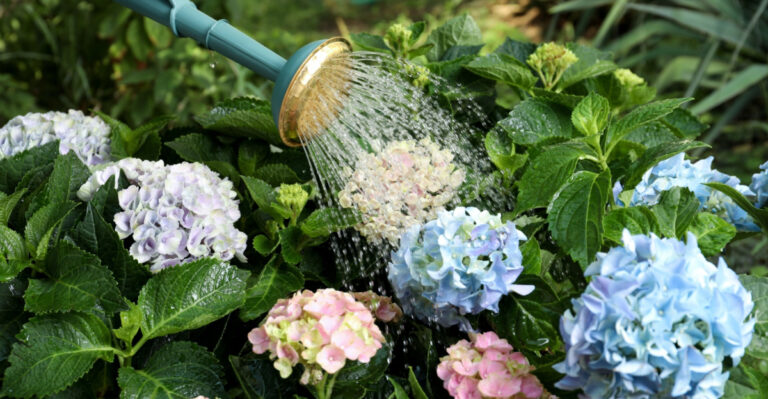
Watering a mature oak is not always practical, but it can help during extended dry stretches. Slow soaking at the outer edge of the canopy works better than a quick spray near the trunk.
Mulch spread a few inches deep holds moisture and keeps mower damage away from roots.
Skip piling mulch against the trunk, because that traps dampness where the bark meets the soil.
Results vary a lot depending on tree size, root spread, and how long the dry period lasts.
Yard sprinklers rarely reach deep enough to matter for a big oak, so a soaker hose left running low for a couple of hours is a better bet.
Leaf scorch showing up alongside early acorn drop is a stronger hint that moisture is the issue.
Most oaks recover once normal rainfall returns and set a regular crop the following year.
4. Insects May Cause Nuts To Drop From The Canopy
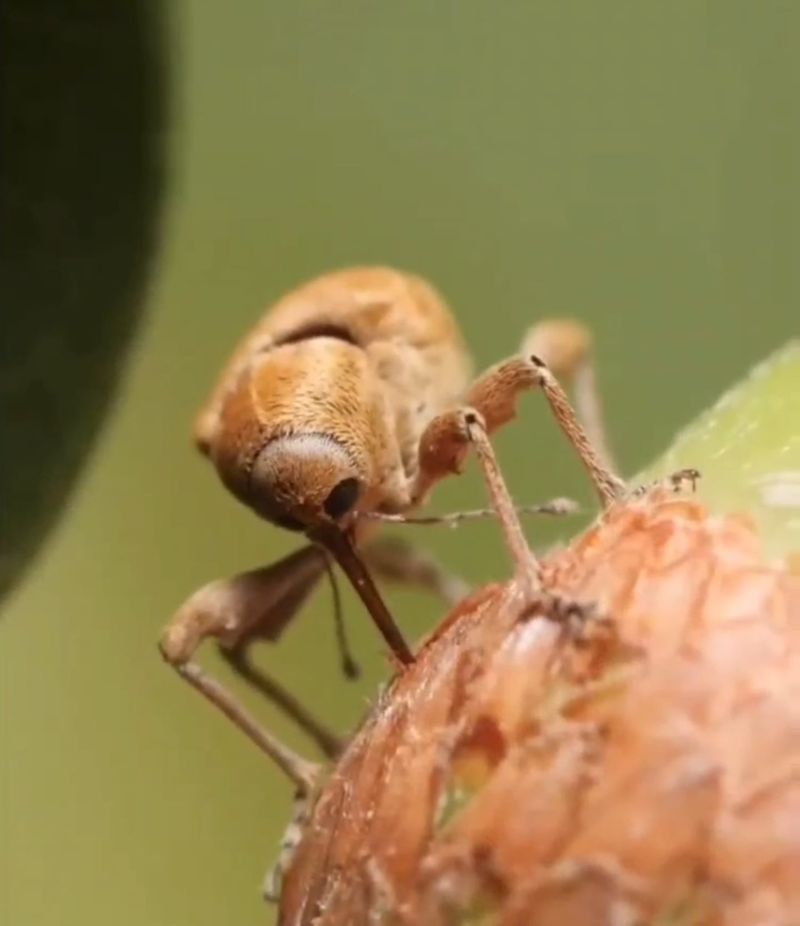
Tiny holes in a shell tell a bigger story.
Acorn weevil larvae commonly develop inside acorns that fall normally, then emerge from the fallen acorn and enter the soil. A weevil-infested acorn on the ground does not establish that the insect caused premature drop.
Look for a small round hole about the size of a pinhead, usually near the cap end.
Filbertworms cause similar trouble and leave behind crumbly debris inside the shell.
Cut a few suspicious acorns in half with garden pruners. Seeing hollowed tunnels or fine powder confirms insect activity pretty quickly.
Spraying a large oak for these pests is generally not realistic or recommended for home landscapes.
Raking and removing infested acorns can reduce how many larvae finish their cycle in your soil, though results are modest at best.
Georgia yards with several oaks often see weevil damage every year without long-term harm to the trees themselves.
Squirrels usually ignore the badly damaged nuts, which is why hollow shells sometimes pile up while good ones disappear.
Gall wasps are another possibility, since certain species cause twig damage that lets small clusters of acorns fall together.
Insect-related drop looks alarming on the driveway, but oaks produce far more acorns than needed, so a heavy loss rarely affects the tree’s health.
5. Large Crops Can Send Plenty Down At Once
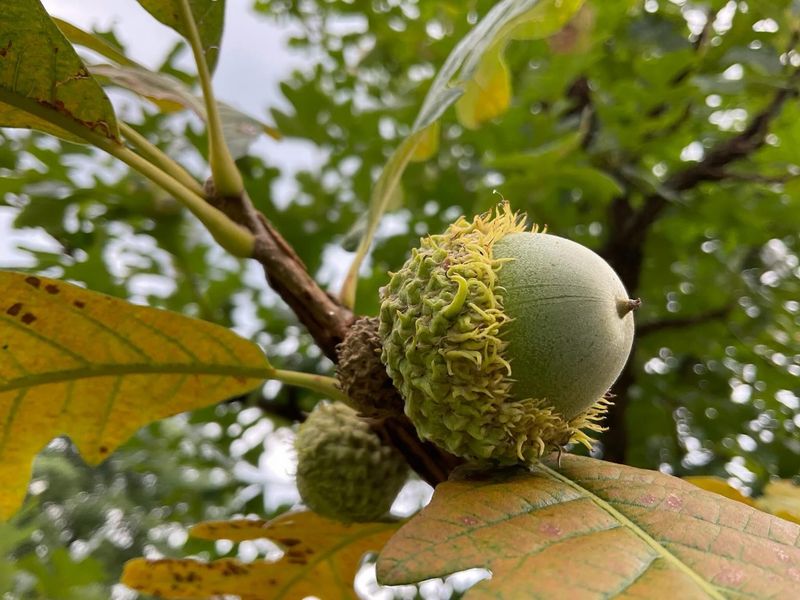
Some years the ground practically disappears under acorns.
Oaks go through cycles, and a heavy production year is often called a mast year. During those seasons the sheer volume makes the drop feel early and endless.
Trees cannot support every nut they set, so a big crop naturally sheds a portion ahead of schedule.
Mast years do not follow a neat pattern, and weather during spring pollination plays a large part in how much a tree sets.
Neighborhoods full of mature oaks tend to sync up somewhat, which is why entire streets in Georgia get buried in the same season.
Expect more squirrel and deer traffic during those heavy years.
Clearing acorns off walkways matters for safety, since a layer of round nuts on concrete gets slippery underfoot.
A yard vacuum or a rolling nut gatherer saves a lot of time compared to raking, especially on a large lot.
Acorns left in lawn areas will sprout the following spring, and pulling seedlings while they are small is far easier than later.
Skip dumping thick piles into garden beds, because a dense layer can mat down and hold moisture against plant stems.
Heavy years usually get followed by lighter ones, so the mess rarely repeats at the same scale.
6. A Quick Look At Fallen Acorns Offers Useful Clues
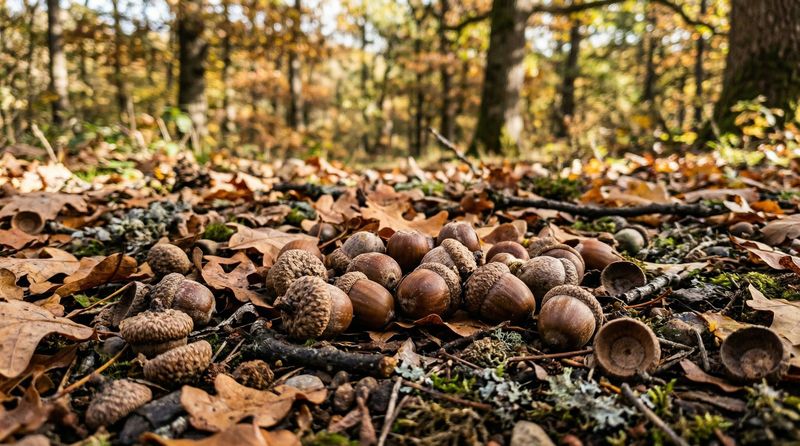
Five minutes with a handful of acorns beats guessing.
Gather twenty or so from under the canopy and sort them into rough groups. Firm brown nuts go in one pile, green or capped ones in another.
Anything with holes, cracks, or a rattle belongs in a third group.
A pile dominated by mature brown acorns suggests normal ripening, even if the date feels early.
Mostly green and undersized nuts point toward stress, and dry weather is usually the first suspect. Checking soil moisture a few inches down helps confirm that hunch.
Lots of holes shift the answer toward weevils or similar feeders.
Mixed results are extremely common, and more than one cause can be at work in the same season.
Note which trees are dropping and which are not, since species differences explain a good deal of the variation in Georgia landscapes.
Take a photo of your sorted piles for reference next year.
Consider calling a certified arborist if you also see thinning leaves, dark seeping spots on bark, or declining growth in the upper branches.
Acorns alone rarely justify a service call, but combined symptoms are worth a professional set of eyes.
Simple observation gives you a practical read on the tree without any expense.
7. Early Drop Does Not Always Signal A Tree Problem
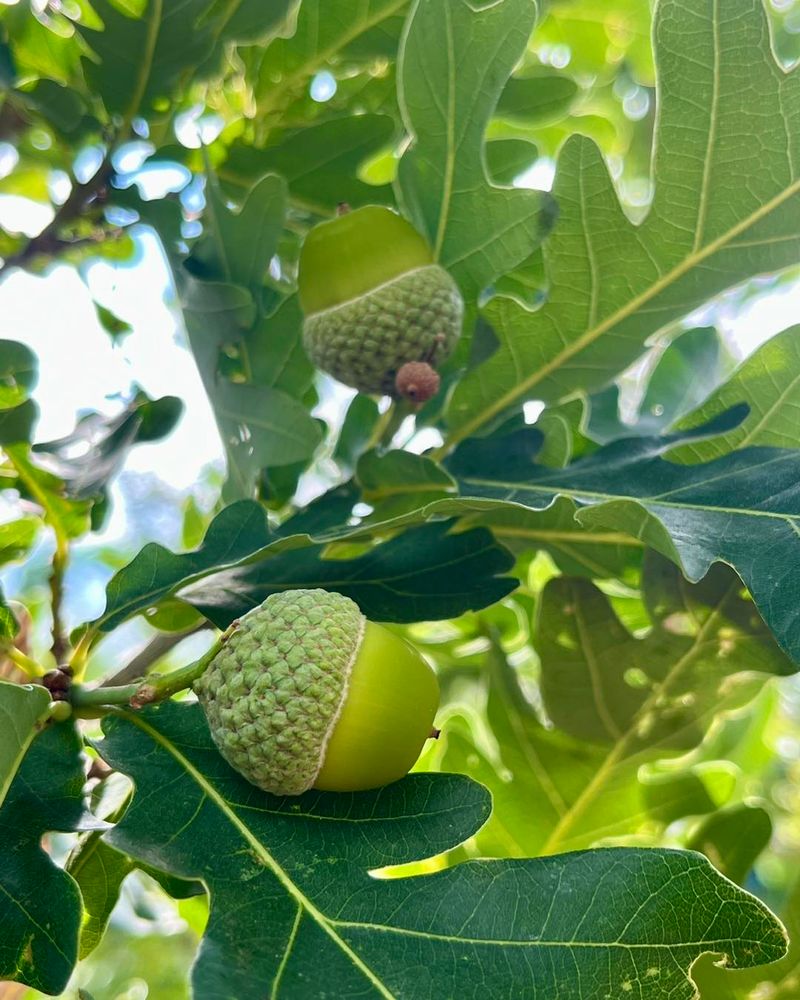
Relax a little before assuming the worst.
Oaks shed acorns for many reasons, and most of those reasons have nothing to do with declining health. Trees have been managing seed loads far longer than any of us have owned lawns.
A full, green canopy is one of the better signs that things are fine.
Bark that looks intact, steady new growth in spring, and normal leaf color all point in a reassuring direction.
Warning signs look different and tend to show up in the leaves and limbs. Sudden browning, large bare sections, or mushroom growth at the base deserve attention.
Georgia homeowners often report early drops during hot summers with little rain, and those same trees usually leaf out normally the next spring.
Give a stressed oak basic support instead of drastic action.
Deep watering during dry stretches, a ring of mulch, and less foot traffic over the root zone all help more than fertilizer.
Avoid heavy pruning during a stressful season, since removing live limbs adds another demand on the tree.
Keep records of what you notice each year, because patterns become obvious over time and make future surprises easier to interpret.
Early acorns mostly mean the season moved faster than expected, not that your oak is in trouble.