Why Indiana Black-Eyed Susans Get A White Coating In June And What You Can Do About It

That white powder on your Black-Eyed Susans is not dust. It is not residue from a recent spray. It is a fungal problem, and June in Indiana is practically designed to bring it on.
It looks like a cosmetic issue at first. Just a light coating on a few leaves, easy to ignore. But this thing moves fast, and it shows up right when your plants should be building toward their strongest performance of the season.
Indiana gardeners see this every June, and most of them are caught off guard the first time. Once you know what is driving it, the whole picture changes. The weather, the spacing, the way you water, it all connects.
Your Black-Eyed Susans are tough plants. They can push through a lot. But this particular problem has a way of quietly gaining ground while you are focused on everything else in the garden.
Here is what you need to know.
White Powder On Black-Eyed Susans In June Has A Reason

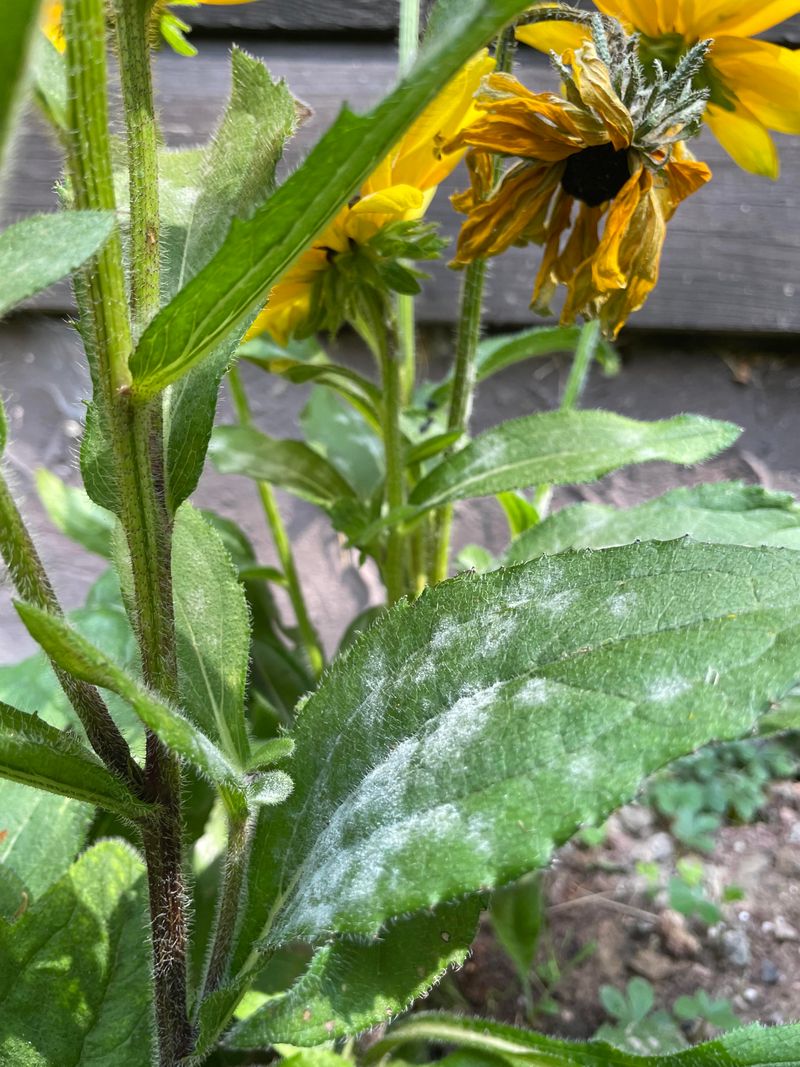
That white dusty coating on your Black-Eyed Susans is not dirt and it is not frost. It is a fungal disease called powdery mildew, and it tends to show up every June without much warning.
Powdery mildew is caused by a group of fungi that love warm days and cool nights. Indiana summers create exactly that kind of weather pattern in late spring and early June.
The fungus spreads through tiny spores that float through the air. Those spores land on your plant’s leaves and start growing fast.
Unlike most fungi, powdery mildew does not need wet leaves to take hold. It actually thrives in dry conditions with high humidity in the air around it.
This makes Indiana’s early summer weather particularly favorable for powdery mildew to take hold. Warm afternoons and cooler evenings create the humid air the spores love most.
The white coating you see is actually the fungal growth living on the surface of the leaf. It feeds on the plant tissue just underneath the coating.
Black-Eyed Susans on Indiana Black-Eyed Susans are especially vulnerable because they grow in dense clumps. Poor air circulation between stems lets moisture and spores build up fast.
Knowing the cause helps you choose the right fix. You are not dealing with a soil problem or a watering mistake at this stage.
Powdery mildew is treatable and manageable once you know what you are looking at. Catching it early gives your plants the best chance of staying healthy and blooming strong through the season.
It Spreads Faster Than It Looks
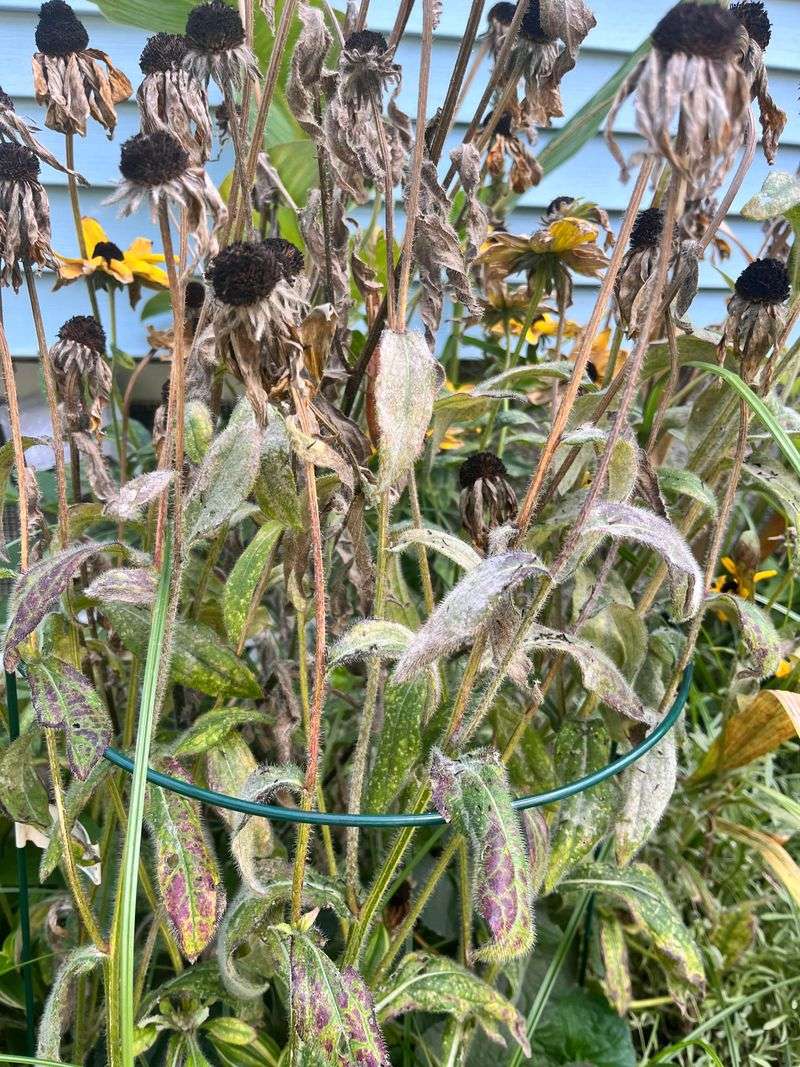
One morning you see a few white spots on a single stem. A few days later, much of the plant can look coated in chalk dust.
Powdery mildew spreads at a surprisingly fast pace once it gets going. The spores are microscopic and travel easily on the wind.
A single infected leaf can release large numbers of spores in one day. Those spores drift onto nearby plants and start new colonies almost immediately.
Your Indiana Garden Changes Every Week. Your Plan Should Too.
Gardening in Indiana changes quickly throughout the season. Every Friday you’ll receive a simple weekly plan showing exactly what to plant, prune, fertilize, harvest, and protect so you never miss the right timing.
Touching an infected plant and then touching a healthy one can transfer spores too. Even insects walking across your garden can carry them from plant to plant.
The fungus does not need rain to spread to a new host. Dry and breezy conditions can help spores travel farther across your garden.
This is why a problem that starts in one corner of your garden bed can stretch across the whole row within a week. It moves quietly and quickly.
Many gardeners underestimate the spread because the early signs look minor. A small patch of white fuzz seems harmless until you check back a few days later.
The coating blocks sunlight from reaching the leaf surface. Leaves that cannot absorb sunlight cannot feed the plant properly.
Over time, affected leaves turn yellow and start to curl. The plant puts more energy into surviving than into blooming.
Acting fast is not about being dramatic. It is about giving your plants the best chance before the fungus takes a stronger hold on your entire garden bed.
Overcrowding And Overhead Watering Can Make It Worse

Planting Black-Eyed Susans too close together is one of the most common gardening mistakes in the Midwest. It looks lush and full at first, but it creates serious problems by June.
When stems are packed tightly, air cannot circulate between them. Stale, humid air sitting around leaves is exactly what powdery mildew spores need to settle and grow.
Good airflow is one of the simplest defenses against fungal disease. Spacing plants about 18 to 24 inches apart makes a noticeable difference in plant health.
Overhead watering adds another layer of trouble to the mix. Spraying water directly onto leaves creates wet surfaces that invite fungal problems.
Even though powdery mildew can grow in dry conditions, wet leaves weaken the plant’s natural defenses. A stressed plant tends to be more vulnerable to disease.
Watering at the base of the plant keeps the leaves dry and the roots happy. A soaker hose or drip system works well for this purpose.
Morning watering is smarter than evening watering for any garden plant. Any moisture that does land on leaves has time to evaporate before cooler night air arrives.
If your garden bed already feels crowded, consider thinning it out this season. Removing a few plants now protects the rest of the bed later.
Thinning feels counterintuitive when your goal is a full, beautiful garden. But fewer, healthier plants tend to outperform a crowded bed fighting off disease all summer long.
Your Plant Is Not Gone But It Is Struggling
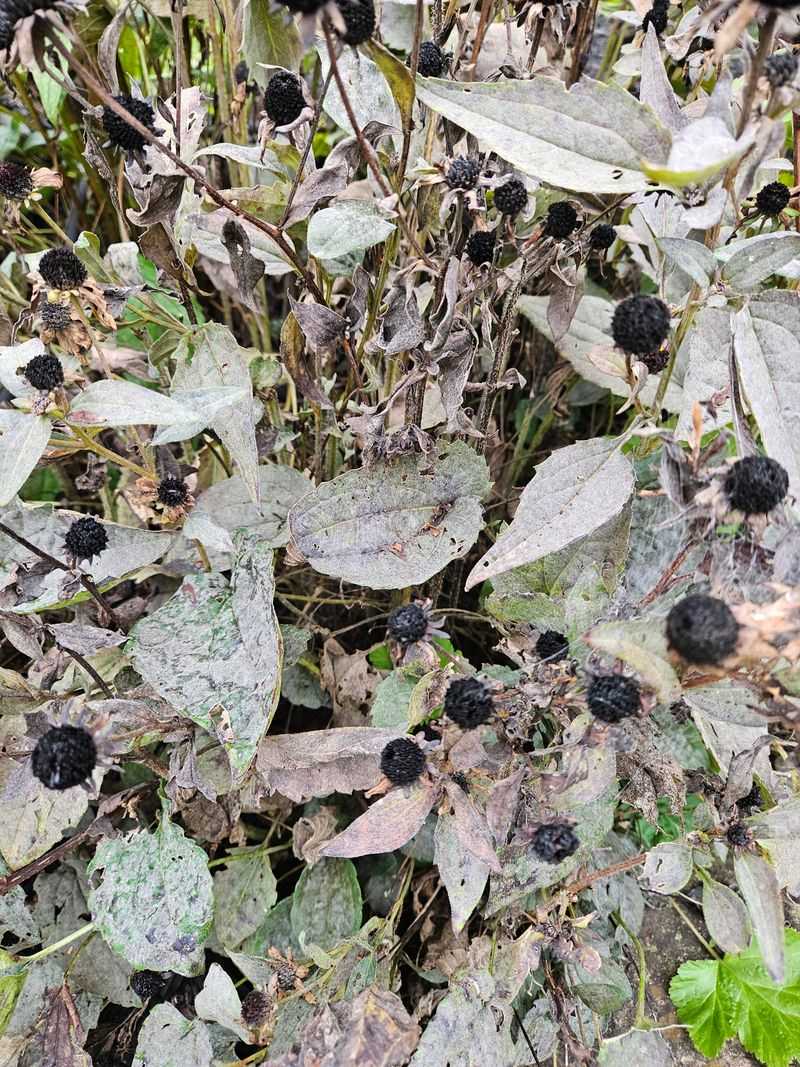
Seeing a white-coated plant can feel like the worst news your garden has handed you all season. Take a breath because the plant is still very much alive and worth saving.
Powdery mildew rarely destroys a Black-Eyed Susan completely in a single season. The plant is tough and has strong root systems that keep it anchored.
What the fungus does do is drain the plant’s energy over time. Leaves covered in white coating cannot photosynthesize properly.
Less photosynthesis means less food for the plant. You will start to notice fewer blooms, smaller flowers, and leaves that look tired and pale.
The plant may also drop its lower leaves earlier than normal. This is its way of redirecting energy to the parts that are still functioning.
Stems can start to look weak and leggy as the season drags on. A plant fighting disease rarely puts on the kind of bold display you planted it for.
Indiana Black-Eyed Susans are perennials, which means they come back each year from the same root system. Even a rough summer does not erase next year’s potential.
Treating the plant now protects not just this season’s blooms but next year’s growth too. The roots store energy all winter to fuel the following spring.
Think of the plant as a neighbor going through a rough patch. It needs some attention and support right now, and it can recover well with the right attention.
Here’s What To Do When You Spot It On Your Plants
Spotting powdery mildew on your plants does not mean you need to rush out and buy expensive chemicals. Several simple treatments can be effective on early outbreaks.
Some gardeners use baking soda sprays, but test first and avoid hot sun.
Spray the mixture directly onto affected leaves, covering both the top and underside. Repeat every seven to ten days until the white coating stops spreading.
Neem oil is another reliable option worth trying. It disrupts the fungus’s ability to reproduce and also works as a general pest repellent.
Mix neem oil according to the package directions and apply it in the early morning or evening. Applying it in direct midday sun can scorch the leaves.
Removing heavily infected leaves before spraying gives your treatment a better chance of working. Less fungal material means less for the spray to fight through.
Commercial fungicides labeled for powdery mildew are also available at most garden centers. Look for products with potassium bicarbonate or sulfur as the active ingredient.
Consistency in application matters as much as the product you choose. Applying any of these treatments regularly and early keeps Indiana Black-Eyed Susans healthy and blooming strong all season long.
What To Do Now To Prevent It Next Year
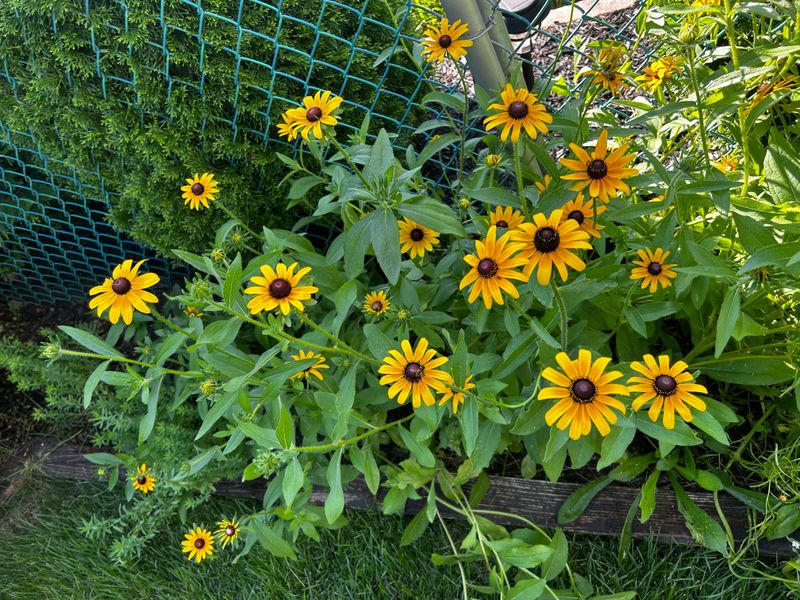
Treating this year’s outbreak is a win, but setting up your garden to avoid the same problem next June is the real goal. A few smart habits now can reduce a lot of headaches later.
Dividing your Black-Eyed Susan clumps every two to three years keeps them from getting too crowded. Crowded plants are generally more vulnerable to fungal problems.
Fall is a great time to divide and replant. The cooler weather gives roots time to settle before winter arrives.
Clean up old plant material at the end of each season. Old stems and leaves left on the ground can harbor fungal spores through the winter.
Bag and dispose of that debris rather than leaving it in the garden bed. Composting infected material is generally not recommended since spores can survive and spread the following season.
Choosing mildew-resistant varieties is another smart move for next season. Some cultivars of Rudbeckia have been bred specifically to resist powdery mildew.
Ask your local nursery which varieties perform best in Midwest growing conditions. A plant that naturally resists disease can save you time and treatment costs season after season.
Mulching around the base of your plants helps regulate soil moisture and temperature. Consistent soil conditions keep plants healthier and better able to fight off stress.
Feeding your plants with a balanced fertilizer in spring also helps. Well-nourished plants are generally better equipped to resist disease than those lacking nutrients.
Prevention is not complicated, but it does require consistency. Taking small steps each season keeps Indiana Black-Eyed Susans thriving year after year without the white coating returning.